Connect with us

society

5 Most Romantic Places For Honeymoon In France!

Published

on

10 Most Romantic Places For Honeymoon In France!
5 Most Romantic Places For Honeymoon In France!


With a capital like Paris, it’s actually no big surprise that France is filled with flawless towns ideal for romantic escapes. To decide the best places for a romantic rendezvous, we’ve listed 5 romantic, provincial, and magnificent spots for you to praise your honeymoon in France more than ever. There’s no question that these well-known places are the best honeymoon places in France for any couple to commend the beginning of their new life! From lavish green prairies to snow-covered mountains, there’s enough for both of you to enjoy.


1. Annecy


10 Most Romantic Places For Honeymoon In France!


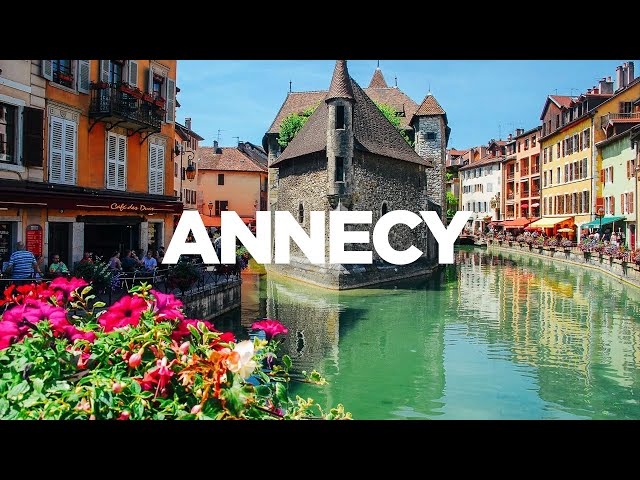
Wandering through the most energetic and happy houses painted in pastel tones, Annecy is an outstanding place amongst other France honeymoon spots. With a wow element in-store at each niche and corner of the city, let Lake Annecy guide you to a heaven that feels a ton better than your most prominent dreams. So for those who’re anticipating all the harmony and calm on their vacation in France, this high town is the spot to be!


https://survey.stanbicibtc.com/survey/runtimeApp.app?invitationId=0Ki1v000002a4nB&surveyName=adetutu_survey_copy&UUID=ec4e2348-4c5b-43e9-ae58-92c743aadd50


2. Paris


A honeymoon in France is impossible without arranging a honeymoon in Paris. Being quite possibly the most famous, prime, and predictable France honeymoon location, no place envelops you in romance as Paris does. From the brilliance of the Eiffel Tower to the supernatural design of the Louver Museum, everything about the city of Paris is amazing. From individuals to culture, style centres to exhibition halls, art displays to high-end cafés, one can’t resist the opportunity to fall in love with the magic of Paris.


5 Amazing Reasons To Visit France


3. Cassis


The harbour town of Cassis is a complete pleasure. Simply a short distance from Marseille and arranged on the edge of the Calanques National Park, you can’t request a prettier or more heartfelt town like this to explore. Its harbour-side cafés, beautiful rock seashore, and long, radiant Mediterranean days are the ideal establishments for romance.


4. Dordogne


With its neighbourhood being the highlight, your honeymoon vacay in France makes guaranteed to be a hit as the city of Dordogne is phenomenally roosted between the massive Pyrenees mountain and the wonderful Loire Valley. Overwhelmed by old royal residences, and age-old towns of the middle age period, Dordogne offers the ideal rest to the individuals who love to relax by the reviving open town. Additionally, do add a scramble of experience to your honeymoon by exploring the ancient caves in this town.

5. Reims


The couple who truly believes in “eat, drink, dance” as their adage throughout everyday life, won’t ever have a dull second in a city like Reims on their honeymoon in France. Eminent to be the champagne capital of France, couples can go on amazing tasting visits and explore basements that have been set inside most of the champagne houses in Reims. It is a severe no for couples to miss the gothic design of Cathédrale Notre-Dame de Reims.


 

society

Lagos Assembly Steps Down LASPA GM Nominee, Confirms Others

Published

on

Lagos Assembly Steps Down LASPA GM Nominee, Confirms Others

Lagos Assembly Steps Down LASPA GM Nominee, Confirms Others


The Lagos State House of Assembly has stepped down the nomination of Mrs. Adebisi Adelabu as the general manager of the Lagos State Parking Authority (LASPA), citing serious procedural breaches linked to her earlier tenure.


During Thursday’s plenary session presided over by the Speaker, Rt. Hon. (Dr.) Mudashiru Ajayi Obasa, members questioned Mrs. Adelabu for having occupied the office of General Manager of LASPA since 2021 without ever submitting herself to the constitutionally required screening process.


Lawmakers described her prolonged, unapproved stay in office as a clear violation of legislative authority. This infraction had led the House to nullify her appointment on November 18, 2025.


Despite being nominated again, persistent irregularities and failure to convince the House during the screening exercise led to a unanimous decision to again step down her confirmation for deeper review.


Conversely, other nominees forwarded by the Governor faced no such controversies and were screened and confirmed. These include Mr. Kehinde Durosinmi‑Etti as Chairman of the Lagos State Security Trust Fund; Engr. Olopade Adekunle, Barr. Mrs. Temitope George, Mr. Alexander Akinwunmi, Mr. Falola Olakunle and Mr. Bello Wasiu Oladimeji into various leadership and membership roles within the Lagos State Electricity Regulatory Commission.

Lagos Assembly Steps Down LASPA GM Nominee, Confirms Others

The House thereafter adjourned sine die.

Continue Reading

society

MediaSphere Africa: Africa’s Premier Online Training Event for Christian Filmmakers

Published

on

MediaSphere Africa: Africa’s Premier Online Training Event for Christian Filmmakers

January 23, 2026 | Abuja, Nigeria – The International Christian Visual Media (ICVM) in partnership with Christian European Visual Media Association (CEVMA), and in collaboration with multiple Christian Film and Drama organizations across Africa, proudly present MediaSphere Africa, a groundbreaking one-day online event set for January 24, 2026, designed to empower and train Christian filmmakers across Africa. This virtual event promises to provide cutting-edge insights into filmmaking, distribution, technology, AI, and producing for both film and television.

MediaSphere Africa is tailored for emerging and established African Christian creatives, offering an unparalleled opportunity to learn from leading global Christian filmmakers, producers, and industry professionals—all from the comfort of home. Participants will gain practical skills, discover innovative storytelling techniques, and connect with a vibrant network of like-minded creators across the continent.

“MediaSphere Africa is not just a training event; it’s a launchpad for African Christian storytellers to elevate their craft and amplify their impact,” said Mr. Paul Sirmons, President of ICVM. “Our mission is to equip creatives with the tools, knowledge, and networks they need to thrive in a rapidly evolving media landscape.”

Key highlights of MediaSphere Africa include:

Hands-on film production workshops to develop practical skills.
Film and television producing insights from global experts.
Technology & AI sessions transforming modern filmmaking.
Distribution strategies to help creators reach wider audiences.
Networking opportunities with African Christian creatives.

The International Christian Visual Media (ICVM) is a global organization committed to empowering Christian storytellers to produce media that informs, inspires, and transforms communities worldwide. ICVM provides training, mentorship, and networking opportunities to creatives seeking to serve God through impactful visual media.

The Christian European Visual Media Association (CEVMA) is a network of Christian film and media professionals across Europe dedicated to encouraging excellence, collaboration, and faith-centered storytelling in visual media. It hosts annual conferences and the CEVMA Jewel Awards, fostering training, fellowship, and creative growth among filmmakers and media creatives.

The event is open to all Christian creatives across Africa. Registration is now live at https://www.mediasphereafrica.com


For media inquiries, interviews, or more information, please contact:
Bright Wonder Obasi
Nigeria Partner
Email: [email protected]
Website: https://www.mediasphereafrica.com

Continue Reading

society

When Silence Became Policy: The Case for Rethinking Nigeria’s Unity. By George Omagbemi Sylvester

Published

on

When Silence Became Policy: The Case for Rethinking Nigeria’s Unity. By George Omagbemi Sylvester | Published by SaharaWeeklyNG.com

When Silence Became Policy: The Case for Rethinking Nigeria’s Unity.

By George Omagbemi Sylvester | Published by SaharaWeeklyNG.com

“From Unheard Appeals to External Proposals. A Nation at the Crossroads”


Nigeria today finds itself in a swirling vortex of political discord, moral contradiction and public skepticism. a nation where appeals for peace were too often met with indifference, where allegations of mass violence were muted by the very authorities expected to respond and where leadership remained silent amid rising tensions that threatened the country’s stability. Now, when an external actor (United States Deputy Secretary of State Railey R. Moore) suggests examining Nigeria’s political architecture and even entertains the idea of PARTITION as part of long-term stability planning, the federal government swiftly denounces such proposals and pronounces empty rallies for “unity.”


This juxtaposition (between past silence and present outrage) has left many Nigerians questioning whether unity should be a given, or whether it must be earned through consistent justice, national integrity and equitable governance.


The Silence That Echoed Across the Nation. When Nigerians appealed for genuine peace amid rising violence in various regions in the past, the responses from the authorities was often either slow, ambivalent or superficial.


In communities across the North, cries that sounded alarm bells over what some local voices described as ethnoreligious targeting went largely unaddressed at the national level. Scholars such as Wole Soyinka have warned against dismissing local security alerts simply because they are politically inconvenient. As he has written, “Indifference to local distress today becomes the broader apathy of national character tomorrow.” Yet, the lack of proactive federal engagement only reinforced public frustration.


Similarly, when high-profile figures such as Turji Bello (known for militancy in parts of northern Nigeria) were reported to be implicated in violence against civilian populations, the official response was perceived by many as too muted, too slow and too politically calibrated to serve immediate optics rather than justice. For numerous Nigerians (especially those directly affected) such omissions were far from “neutral.” They were betrayals of moral responsibility.


At the same time, mediators like Sheikh Ahmad Gumi were sent to negotiate the release of kidnapped civilians, even as families questioned why state power was not marshaled more forcefully to protect them. The optics of negotiated settlements (and of negotiated silence) left deep emotional and political scars.


When leadership remains silent in the face of mounting distress, the consequences extend beyond immediate insecurity. They erode trust, which is the foundation of any cohesive nation.


The Railey Moore Proposal: Catalyst or Controversy? Against this backdrop comes the US diplomatic suggestion put forward by Deputy Secretary of State Railey R. Moore: a call to reassess Nigeria’s national framework and entertain dialogue on structural reforms (including federal restructuring) to better reflect the aspirations and security needs of its regions.


Although, before we proceed, it is crucial to state unequivocally that no credible international actor has formally called for an immediate PARTITION of Nigeria. Instead, what Moore suggested in diplomatic engagements was intellectual consideration of structural reforms and an encouragement, not an imposition. However, national spin doctors and political opportunists seized on selective framing, pronouncing it a “CALL FOR BREAKUP” and turning it into a rallying cry for nationalistic sentiment.


In a press statement, the Nigerian government rejected the notion of division, reaffirming commitment to national unity, though yet failed to acknowledge the HISTORICAL context that has led citizens to even consider such ideas.


Political scientist Professor Kunle Adebayo has stated that “Unity imposed without justice and equitable participation becomes a brittle unity, vulnerable to fracture when tested.” This reflects a fundamental political truth. Families do not hold together simply because they share geography; they stay together because they share justice, opportunity and mutual respect.


Unity Without Justice: A Fragile Construct. Is it not hypocritical to decry external suggestions for structural assessment when internal voices have long called for reform?


Nigeria’s federal structure (born at independence and modified through military and democratic transitions) has struggled to balance the tensions between centralization and regional autonomy. The creation of states, local government divisions and revenue-sharing formulas were all intended to give voice and agency to diverse ethnic, cultural and religious groups. Yet persistent governance failures have meant that many Nigerians increasingly feel excluded.


Economist Dr. Aisha Bello once remarked, “If a nation’s unity does not translate to shared prosperity and security, it becomes a slogan rather than a lived reality.” This point cannot be understated. When regions feel marginalized in terms of security, economic development and political representation, unity becomes an abstract ideal rather than a practical foundation.


The reaction to Deputy Secretary Moore’s comments reveals this tension starkly. Government representatives denounced the idea without engaging its substantive points. They invoked national pride, yet did not seize the opportunity to explain how ongoing governance reforms would address Nigerians persistent concerns.


For many youths, activists and regional leaders even more especially those in the Middle Belt, the South-South and certain Northern communities, the reaction smacked of performative patriotism. It was unity for optics, not unity grounded in reform.


Should Nigeria “Go Its Separate Ways”? Here we must be absolutely clear: Advocating for informed structural dialogue is not advocating for dissolution of the state. The question should never be about breakup or preservation alone, but it should instead focus on how Nigerians can live together justly and productively.


The suggestion to examine federal arrangements is not unique to Nigeria. Federal states around the world (including Canada, Spain and Belgium) have undertaken constitutional reforms to reconcile diversity with unity. These are conversations of maturity not weakness.


The philosophical foundation for any serious discussion about Nigeria’s structure comes from the principle that a nation must serve all its citizens equitably or it fails its own social contract. Historical grievances, economic inequalities and security asymmetries cannot be dismissed merely with patriotic slogans.


Reform does not equal secession. Federation does not equate to fragmentation. What it means is listening to voices that feel unheard, restructuring governance to be more inclusive and ensuring that unity is not merely a concept, but a daily practice.


Global Perspectives on Internal Reform. International scholars have often reinforced this point.


Political theorist Dr. Francis Fukuyama wrote that “nations enduring internal conflicts must be willing to reform institutions to reflect the diverse needs of their people, rigid insistence on old frameworks only deepens division.” This insight affirms that reform is not external meddling. It is modern governance.


Similarly, Nigerian legal scholar Professor Itse Sagay emphasized that “the sustainability of any nation is determined less by its borders and more by the justice embedded within its constitution and institutions.” This wisdom cuts to the heart of the matter: borders may hold on a map, but justice holds a people together.


What Nigerians Should Demand Today. If the objective is a stronger, more peaceful Nigeria, then the demands must be clear:


Transparent National Dialogue: Initiate open, inclusive national debates on structural reform, not in secrecy, not on social media soundbites, but through legislated frameworks that involve citizens, experts and civil society.


Security Recalibration: Address regional security asymmetries honestly, without denial or politicization. Communities deserve protection as a basic right not a negotiable luxury.


Equitable Resource Distribution: Revise revenue allocation formulas to ensure that regions contribute to and benefit from national wealth fairly, reducing perceptions of extraction without return.


Justice for All: Strengthen the justice system to ensure that allegations of human rights abuses (regardless of perpetrator) are investigated and adjudicated fairly.


Educational and Economic Opportunities: Invest in regions that have been historically marginalized. Economic inclusion is more powerful than patriotic chants.


Final Take: Unity Through Reform, Not Denial. Nigeria’s destiny should not be held hostage by fear of conversation. Unity that denies grievances is not unity, it is suppression. Unity that embraces justice, reform and inclusion is sustainable.


The reaction to Railey Moore’s proposal illustrates a critical national moment: Nigeria can either confront its challenges with honesty and courage or it can retreat into slogans that serve no one.


As Professor Chinua Achebe once wrote, “The trouble with Nigeria is simply and squarely a failure of leadership.” Leaders must show courage by inviting dialogue not suppressing it. Citizens must demand that unity be real not rhetorical.


The real question for Nigeria today is not whether citizens should accept or reject suggestions from abroad, but whether the nation has the courage to reform itself from within.


If Nigeria truly desires unity (not just in word, but in deed) then it must be willing to face its challenges squarely, debate structural reform openly and ensure that the promise of Nigeria is a promise kept for every Nigerian.


When Silence Became Policy: The Case for Rethinking Nigeria’s Unity.

By George Omagbemi Sylvester | Published by SaharaWeeklyNG.com

Continue Reading

Cover Of The Week

Trending