
society
AGF Lateef Fagbemi Clarifies State of Emergency in Rivers State

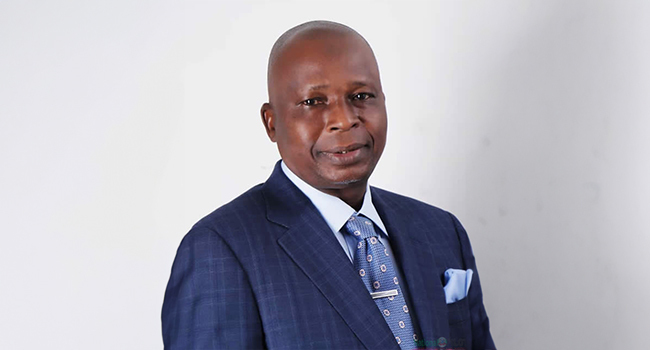
AGF Fagbemi Explains Suspension of Governor Fubara, Others
The Attorney General of the Federation and Minister for Justice, Lateef Fagbemi, has, in detail, explained the declaration of the State of Emergency in Rivers State by President Bola Tinubu.
Mr Fagbemi made clarification on the turn of events in the oil-rich state that led to the suspension of Governor Siminalayi Fubara and other elected officials at a press conference on Wednesday, March 19, 2025 at the State House Abuja.
Transcript of the engagement at the press conference is reproduced below…
It’s no longer news that the president of the nation, President Bola Ahmed Tinubu GCFR, yesterday, took the bull by the horns to do what was required of a statesman, a patriot and a head of State and commander in chief of the armed forces.
The events in Rivers State started long ago, and he tried to intervene many times. Apart from that, well-meaning Nigerians, leaders of thought, and concerned citizens have also attempted to settle the matter without any result. The president came out boldly yesterday to say the situation cannot be allowed to continue, a situation in which the critical economic life of the nation, what is giving lifeline to the nation to be, you know, criminally touched without any response from those who would ordinarily be expected to do so, cannot continue.
But don’t forget, the whole thing started or crystallised with the judgment of the Supreme Court that was handed down on the 28th day of February 2025 in which the Supreme Court, that’s the highest court in the land, made a categorical pronouncement after making very profound findings of breaches of the Constitution by the parties involved, particularly the governor of Rivers state, concluded that he was acting like a despot and that, as the situation is in Rivers State, there is no Government. These are very serious and very weighty allegations that only an irresponsible head of state or leader will fold his arms and ignore.
As I said, he made a very bold decision. We were all there when he addressed the public and chronicled all the facts from Genesis to Revelation.
So, I’m here. If there is any question to be asked on that, then I will be able to respond. But before then, don’t forget that the judgment of the Supreme Court had been widely reported and published in the papers. So, the President was not a party to it, so the question of trying to influence anything would not arise. And by virtue of certain provisions of the Constitution, everybody has a duty to ensure that the judgment of the court is obeyed, particularly coming from the highest court in the land; there is no other person to appeal to. There is no other body to appeal to. It’s not subject to any further test of validity. As things are, we all have a duty, collectively and individually to ensure that we give maximum respect and obedience to the judgment of the Supreme Court.
So, gentlemen, I’m available to answer any questions, clarify, or make observations. Thank you.
Q: Did the situation in Rivers State warrant the declaration of a state of emergency? Because some people say the president’s decision was hasty?
Let me start on a note of how we got to where we are today. How did it all start? That is about the genesis. We all know how we got there since 2023. Towards the end of 2023, things have not been going well to the extent that the governor took the law into his hands and demolished and brought down the House of Assembly. Don’t forget the role of the House of Assembly. They are the lawmakers. They are to consider the budget. They are to, you know, pass the budget. They are also to be approached in matters of appointment of commissioners for ratification and all other things. They are to do oversight functions. So, since that happened, things have not been the same at all.
In a community of 32, you expect that at least 15 or 16 people will be there to do the job. The governor, as I said, and it is no longer news, harboured three or four of the members, constituted them to the House of Assembly and gave them preferential treatment, and moved them to the Government House to perform legislative functions. This situation got to the court. There were about 10, 15, 16 cases, and at the end of the day, the Supreme Court came out and made very profound findings of breaches of the Constitution, mainly against the governor.
You see, you rise or fall based on what you took to court and what court decision is on it. The court came to the decision that the governor had long anticipated, wrongly, that he might be impeached, and because of that, he knew that the House of Assembly was a critical structure, or organ, so he brought down the House of Assembly. 14 months after that is as at yesterday, there was no effort to rebuild the House of Assembly.
The government stands on the tripod, the executive, the legislature, and the judiciary, and you have made the functioning of government impossible. It is not enough for the executive, to say, we are spending money, even the money you want to spend must have been appropriated for by the House of Assembly. These are some of the findings that the Supreme Court made. And at the end of the day, the Supreme Court said, or came to a decision, that the governor’s behaviour was like a despot, and that as the situation was, there was no government in Rivers. If there was no government in Rivers, what would we be looking for?
I’m so sorry for bringing in this issue. In the Bible, they asked Jesus Christ, are You the Son of God? And he said, Yes. Then others chorused, what further evidence do we need from this man? So the stage is set, but no action was taken immediately in the expectation or hope that good sense will prevail, the governor would create an enabling environment, and that the House of Assembly too would be reasonable enough to ensure that the people of Rivers got a return for their voting of members of the House of Assembly and the governor and other elected officials to enjoy dividends of democracy. We are in a democracy.
So then, there was what I will call telegraphing of the militants, I will say, by the governor. And I said so when he beckoned to them that, oh, he will let them know when it was time to act, to the militant. Let us say it was wrong. Did he come out to disown them? The answer is no. And a week after, they swung into action; you see or witness the vandalisation of oil pipelines.
Don’t also forget that before now, that is when this government came into office. Nigeria was producing about 900,000 barrels of oil a day. With the efforts and all the ingenuity that the President had, he ensured that the production rose to about 1.5 million barrels per day. That’s about 45% increase; governors were smiling home at the end of the month with about 60% increase in their take home to their various states. Then somebody rose or encouraged or became inactive when he was supposed to act. There was not a word dissuading the militants who issued this threat.
In today’s Nigeria, maybe with the efforts of Mr President, Agriculture will come in. But as at today, we still rely largely on oil. Anyone who touches these pipelines is not only the enemy of Rivers but he is also the enemy of Nigeria. All Nigerians in all 36 states, share in what comes in from the production of this oil. And I believe that the decision of Mr President is anchored on the decision of the Supreme Court .
The second one is the inability of those involved, both the House of Assembly and the governor, to create an enabling environment for the people of Rivers to enjoy the dividends of democracy. The third part of the series is about the security situation in that place. You know, if the President had waited maybe a day longer, only God knows what would have followed. And as a result, he came out to say, I am not only the head of state, I’m commander in chief of the armed forces, and declared a state of emergency.
Q: What would you say to those who said Mr President’s decision was hasty?
I will ask rather rhetorically, when do you think he should have acted? When everything has collapsed? No, the law envisages that you come in when there is imminent danger to the security of lives and property. People were killing themselves. It’s no longer news. It’s not a question of making up the story. We all read papers every day. Those who live there are living in fear. So, there is undoubtedly the need to come in. We have about two years into the administration in the state, if he didn’t come in now, when do you think he should come in? Is it when everything has been destroyed? I don’t think so.
The President has acted timeously. He had allowed all the people involved, the parties involved, to make amends; before then, he assembled them, he tried to mediate. Some said he had no constitutional power after agreeing. And what they agreed to at the meeting were not implemented. So, to answer your question, I am certain that the President has acted timeously after giving them enough rope, and as the Commander-in-Chief of the armed forces, it was a tough decision for him to make.
It doesn’t present anybody with joy, to disrupt the flow of democracy or practice of it. But the Constitution itself envisages that there may be this type of situation, and that was why it is provided in section 305 of the Constitution that extraordinary situations might arise. This is one of such extraordinary situations.
Q: People have expressed divergent views about the suspension of the governor, his deputy and members of the State House of Assembly. How legal would you say the suspension was?
You see, you decide each case on its own peculiar facts and circumstances. Who are the people involved? Who are the parties involved in this saga? They are the governor and members of the House of Assembly. So, who else should have been affected? I’ve heard this funny argument. I’m sorry for saying it. It’s funny because it doesn’t make any sense to me. Oh, that the President should have just gone there to secure the pipelines and then come back when some people are there encouraging vandals to come in. The action of the President, you know what happened, is the effect of a fundamental cause, and you cannot be treating the effect to cure the cause. What was the cause? The governor and members of the House of Assembly. So, you have to behave responsibly, and you must have the gut. If it happens again, I will encourage Mr President to do the same, maybe this time with even greater vigour and vitality. So, the question of separating, treating, or giving preferential treatment to anybody does not arise. If you give preferential treatment to anybody, you are giving preferential treatment to hooliganism. Just call a spade a spade.
This is where I believe that we should put up our patriotism cap. It shouldn’t be about individuals. It should not be about anybody. It should be about the entity called Nigeria, but in this case, it is Rivers State. So, it is Rivers State’s turn today, it can be anybody’s turn tomorrow. Let the signal be clearly sent for those who want to foment trouble, who want to make the practice of democracy and enjoyment of democracy a mirage, to think twice.
So, I will answer the question by saying, I return resounding no to the quest that the governor and deputy governor should have been spared, or the members of the House of Assembly, they were all in it.
Q: Would you say, that the declaration of state of emergency in Rivers State was some compromise to save the governor and his deputy from impeachment?
It appears so. Don’t forget, I think yesterday (Tuesday), there was a notice of impeachment from the House of Assembly. If that impeachment had been allowed to take its full course, then the governor would have lost wholly and entirely. So, in a way, if you say it’s a compromise, I will agree that instead of allowing the impeachment process to continue, and which in the end, would have seen both the Governor and the deputy governor out of office and would have been out for the entirety of the four-year term with the remainder of what it we have. We are one year, I think about nine months now, leaving a balance of two years and three months. So, if normalcy returns, Fubara Sim may come in. But for now, it could be a compromise. I will agree.
What do you say to people who feel the President has a stake in this and he appears to be playing the playbook of the minister of the FCT, Wike, who appears to be the one that is winning in all this?
About the playbook of the Honourable Minister of Federal Capital Territory. You see, there are occasions especially when it comes to national issues, we have to come out plainly and sincerely. Where do you put the Minister of FCT in this case? Was he the one who asked for the demolition of the House of Assembly? Was he the one who said the governor should not present his budget to the House of Assembly? Was he the one who advised the governor not to go through the House of Assembly to ratify the commissioner-nominees? I don’t know. Because if you want to look at a case, you look at the facts presented. The Supreme Court made these critical findings. The FCT minister did not feature. Whatever the situation, assuming he featured, he would have featured, maybe on the side of the legislators. But you have is: let everybody go home for the first six months. So I don’t see his hands here in what we have.
Look, I will encourage you to read that judgment of the Supreme Court. There were about 11 of 12 findings against the governor. What sentiments are we bringing on this matter? There isn’t any sentiment. If the National Assembly feels that the President has not done well, then you won’t have the two-thirds majority required to validate his action. Certainly, you know it is like a situation in which they veto, veto usually is on the side or with Mr President when a bill is presented. But the converse is the same here: It is the President who is initiating a move: I want to declare a state of emergency. He has to make that move. He made that clear in his speech and broadcast yesterday that I’ve made this decision and referred the matter to the National Assembly. It is for the National Assembly to now say we veto. That is to say, we don’t give you approval. And since the National Assembly is still in session, we expect that within 48 hours, something will come out for it.
So, whoever has any misgiving or concern, I will say, should channel it to the National Assembly to say, don’t give the required two-third approval. Otherwise, we should all, like I said, continue to put up our patriotism cap.
Q: When Mr. President was in the opposition, particularly in 2014, he criticised the declaration of state of emergency by then President Goodluck Jonathan on three states for elections to take place due to security emergencies. What has changed? Did the President explain to you why his position has changed on declaring the state of emergency and suspending an elected governor, his deputy and the entire legislature of the state.
About what happened during President Jonathan’s period. Don’t forget, like I said, every matter depends on the peculiar facts and circumstances of the case. You can declare an emergency in a variety of ways. It is like a man who is suffering from a disease, they say oh it’s cancerous, they say, oh, I hope it has not spread to so-so area, then you now excise the portion affected. I think that was what happened during President Jonathan’s period. If it’s about the COVID period, it has its own, Boko Haram has its own. Boko Haram was located or confined to a particular area. The governor then said please come to our aid. But the governor who is at the centre of it here has not made any such request and it would have been grossly irresponsible for Mr President to fold his arms. So, the situation in the era of former President Goodluck Jonathan is different from what we have here. What we have here is everybody is involved. You can exercise your rights but don’t forget, there are always lines, you don’t cross them, if you cross them, then you also suffer the consequences.
Q: With the state of emergency, who is going to reconcile them?
The people themselves, now that this situation has arisen, I believe, will call themselves to order. The President has intervened, 1,2,3, times without any result, and he alluded to this in his broadcast, that he had done his own. Well-meaning Nigerians have done their own to no avail, and that was why he had to come out and make the decision that he took yesterday. So, the people are left to allow good sense to prevail, so it is left to them to decide what they want, whether they want reconciliation or a continuation of the ugly situation.
Q: Are we going to see FCT Minister playing a role in this reconciliation journey?
That will be an affair of the people of Rivers State, if they want. They can call him. If he likes, he can call them. But I assure you that with this situation, a platform has been created for them to come together in the interest of the good people of Rivers State who have voted to have dividends of democracy.
Q: The NBA argued that the political crisis in Rivers State does not justify the emergency rule. What’s your reaction to that nation?
When you talk of a state of emergency, it is an extraordinary situation, demanding the suspension or putting in abeyance the normal situation that would have been. Normally you allow the legislature, the executive and the judiciary to continue to function. But like I said, section 305 envisaged that there might be a situation in which extraordinary matters or events will come up which will require suspending the normal rights or privileges of those who are involved, and that is why the justification for suspension of the people involved comes in.
I don’t see how you would have spared the governor and the legislature, they are both involved. Things are not working in Rivers. So, the justification is those who brought this to be, who caused this must be shown in clear terms that you don’t do it and get away with it. There must be consequences for our action. If section 305 were to be absent, then you can be talking of what justification do you have. But section 305 clearly spells out conditions in which the government, the President, will come out and say, I am suspending the normal operation of things. In times of war between Nigeria and another country, God forbid, that can come in. In other situations, yes, and you expect the governor to make supplication to Mr President, to say the situation I have in my state is such that we need you to come in, and that was why the President alluded to this in his broadcast. He said, the governor had failed to make the request, and I, as the President, have assessed the situation. I believe that a state of emergency should come in. A state of emergency presupposes the suspension of ordinary rights and privileges that you enjoy.
Q: Will the seized funds be released to the Rivers State Sole Administrator?
An extraordinary situation has arisen in Rivers State. When the administrator comes, he may request for these funds, and to me, it will be in order for the release of that fund, because the extraordinary situation has brought them out of the normal situation of things.
Transcript Released by the Office of the Special Adviser to the President on Information and Strategy





NASRE: Building A Safety Net For Nigeria’s Journalists
At a time when Nigeria’s media industry is strained by economic uncertainty, job instability, and shrinking newsroom resources, the Nigerian Association of Social and Resourceful Editors (NASRE) is redefining professional solidarity. More than a network of editors, it is emerging as a critical support system for journalists navigating an increasingly precarious landscape.
Founded on the principles of welfare, solidarity, and professional growth, NASRE has positioned itself as a responsive and forward-looking body within the media ecosystem. While many professional associations remain focused on advocacy and training, NASRE distinguishes itself by combining these roles with direct and practical support for journalists and their families.
At the core of its mission is a clear proposition that no journalist should be abandoned in times of need. Through financial assistance, targeted outreach, and sustained engagement, the association has supported members facing hardship, as well as widows and families of deceased practitioners. These largely understated interventions have steadily earned NASRE credibility and respect across the industry.
The organisation’s approach reflects a keen awareness of the pressures confronting media professionals, including irregular pay, job insecurity, and limited institutional backing. In such an environment, NASRE’s welfare initiatives are not merely charitable, they are essential.
Beyond welfare, the association is investing in professional resilience. Through collaboration, networking, and knowledge-sharing platforms, it is equipping editors and practitioners to remain competitive in a rapidly evolving digital media space, where adaptability is no longer optional.
Headquartered in Lagos, NASRE continues to broaden its reach, attracting a growing membership united by the need for a more responsive and supportive professional community. Its expansion signals a shift in expectations within the industry, away from symbolic affiliations towards institutions that deliver measurable value.
For many observers, NASRE represents a necessary evolution, a professional body anchored not just in ideals, but in impact. By combining empathy with structure, it offers a model of what media associations can become in challenging times.
As the industry continues to evolve, organisations like NASRE may prove indispensable. In a profession devoted to telling society’s stories, it is ensuring that the storytellers themselves are not left behind.
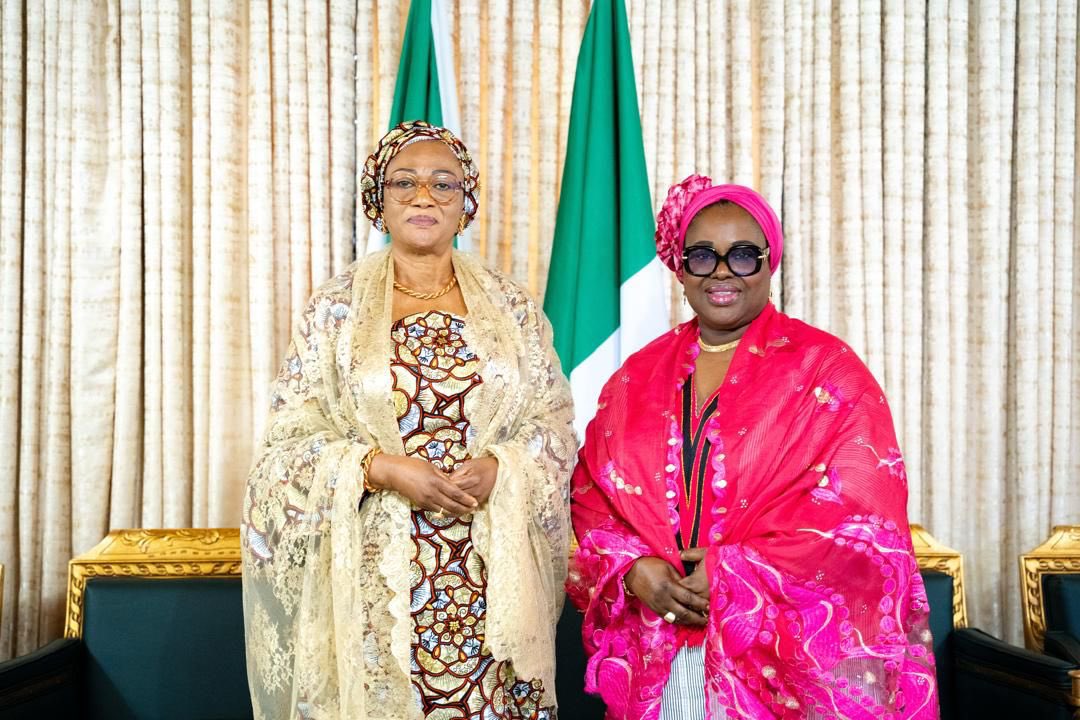
Oluremi Tinubu Hosts Wife of New IGP, Talks Welfare, Empowerment for Police Families
The First Lady of the Federal Republic of Nigeria, Senator Oluremi Tinubu, today welcomed Mrs. Mutiat Disu, wife of the Inspector General of Police, at the State House in Abuja.

During the meeting, the First Lady encouraged Mrs. Disu to continue championing the welfare and wellbeing of police officers’ families, especially through impactful support for their wives.
Speaking after the meeting, Mrs. Mutiat Disu shared her excitement about partnering with the First Lady’s Renewed Hope Initiative (RHI), noting that she is ready to leverage its programs to empower police officers’ wives across the country.
Mrs. Disu, who also serves as the National President of the Police Officers’ Wives Association (POWA), described the meeting as insightful and inspiring. She emphasized her commitment to using RHI platforms to improve healthcare, welfare, and economic empowerment for POWA members nationwide.
“The purpose of this visit is to tap into her wealth of experience and explore how POWA can benefit from her programs,” she said.
She added that her engagement with the First Lady has already provided valuable direction, especially in areas of social intervention and healthcare support for police families.
“I’m ready to work closely with Mama to ensure our women benefit fully, especially since RHI focuses on uplifting women, and POWA is largely made up of women.”
Mrs. Disu assumed leadership of POWA following the appointment of Tunji Disu as Inspector General of Police on February 24, 2026, succeeding Kayode Egbetokun.
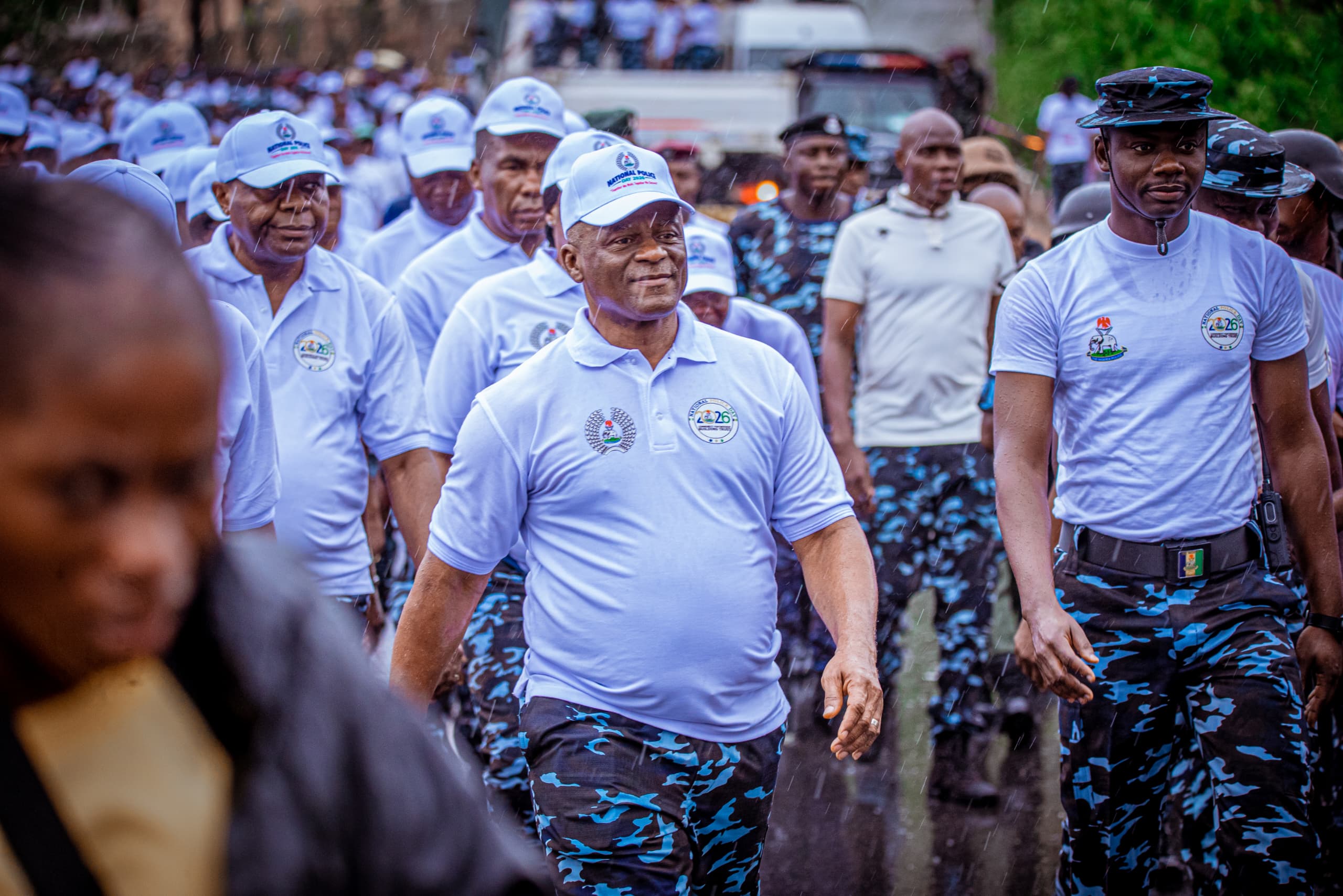
Police Day 2026: IGP Disu Leads Nationwide Walkathon To Strengthen Community Trust
The Inspector-General of Police, Olatunji Disu, on Tuesday led the management team, alongside officers and personnel of the Nigeria Police Force, in a nationwide walkathon to commemorate the 2026 National Police Day.
The event, held across state capitals and the Federal Capital Territory, formed part of activities marking Day Two of the annual celebration, themed “Community Partnership: Building Trust.”
The symbolic exercise, which drew participation from both police personnel and members of the public, was aimed at showcasing unity, discipline, and a renewed commitment to community policing and public safety.
According to the Force leadership, the walkathon underscores the Nigeria Police Force’s resolve to strengthen public trust, deepen engagement with citizens, and enhance collaboration in tackling security challenges across the country.
Participants described the initiative as a practical step toward bridging the gap between law enforcement and the communities they serve, while also promoting physical fitness and mental well-being among officers and civilians alike.
With the theme reflecting a shared responsibility for safety, the Police reiterated that sustainable security can only be achieved through active partnership with the public.
The event concluded with a renewed call for collective action under the banner: “Together We Walk, Together We Secure,” emphasizing unity of purpose in building a safer and more secure society for all Nigerians.


-

 society6 months ago
Religion: Africa’s Oldest Weapon of Enslavement and the Forgotten Truth
-

 news4 months ago
WHO REALLY OWNS MONIEPOINT? The $290 Million Deal That Sold Nigeria’s Top Fintech to Foreign Interests
-

 society6 months ago
“You Are Never Without Help” – Pastor Gebhardt Berndt Inspires Hope Through Empower Church (Video)
-

 celebrity radar - gossips2 months ago
Dr. Chris Okafor Returns with Power and Fire of the Spirit -Mounts Grace Nation Altar with Fresh Anointing and Restoration Grace on February 1, 2026