
Politics
ANGO ABDULLAHI: Is This the Leadership the North Deserves st a Time Like This? – Ndi Kato

I refuse to put my elders through this.
Through the pain of remembering each injustice meted out against them with each derogatory word aimed at lowering them to a level they were constantly pushed to.
I refuse to put my elders through the stress of responding to words they are older than; because I know that my elders have outgrown these words. Not that my elders have ever stooped to the bottom of the verbal barrel but they have outgrown having to listen to it or acknowledging it.
I refuse to let them expend any form of emotions on these tantrums so I will do it myself. A young woman from the Middle Belt who was born years after Professor Ango Abdullahi served as Vice Chancellor of Ahmadu Bello University will respond to this and if Ango Abdullahi wants to keep descending beyond this, the old gentleman is welcome to by all means… I love the idea of dancing naked in the market square; it is amusing to us onlookers.
I grew up witnessing crisis after crisis in my region with the mass murder of people I hold dear being at the centre of it all; I am now almost in my 30s and there is no change, NOTHING! We are still losing lives for any reason at all and the reasons are thrown at us with no second thought because THE LIFE OF THE NIGERIAN, INCLUDING THE LIVES OF MY PEOPLE IN THE MIDDLE BELT HAVE BEEN GREATLY DEVALUED.
My elders had to live through occupation of their land under the pretext of this “Northern Unity” Ango Abdullahi speaks of, many did not get to the expected apexes of their careers, many sacrificed their dreams and the dreams of their people for this unity; Mr Abdullahi should be all too familiar with this. It is worthy of note that a man with such a mindset was once a Vice Chancellor of a Federal University and any serious country would investigate his tenure and the treatment of people who do not come from his region.
How were students and lecturers from other parts of Nigeria treated? Did you wake up thinking that two Southern lecturers shaking hands in the morning were planning to destabilize the school to topple you as VC? Did you go into your office with thoughts of how to dismiss them in a fit of paranoia? Your utterances beg the question.
Every single time we see statements from you, we are tempted to review your actions.
Moving forward, Ango Abdullahi referred to us Middle Belters as “Our Middle Belters”; a region so tired of bloodshed, a region trying to reclaim itself is still referred to by Mr Abdullahi with a sense of ownership. When did we become “Our”? A professor knows all too well semantics and the politics of words; he didn’t just say it, he meant ownership.
Sir, it is 2018, feudal behaviours have no place here. No region owns another. If no one else will tell you, I will.
Here is where it gets even more troubling, Ango Abdullahi was asked if he was trying to justify the herdsmen killings and he maintained “I AM JUSTIFYING IT VERY STRONGLY BECAUSE HERDSMEN ARE BEING UNJUSTLY TREATED IN THIS COUNTRY”.
Let us look closely at what Ango Abdullahi, a former Vice Chancellor of a Federal University in Nigeria is justifying.
• Continuous mass murder of Nigerians spread from Zamfara to South East, South West and South South.
• A breakdown of law and order which Senator Kabiru Marafa cried about in the senate where these armed groups have constituted themselves an authority over the populace, operating as a mini government while terrorising the people. THIS IS THE CASE IN ZAMFARA.
• Pending starvation and shortage in food production from farming communities who can no longer sustain the Nation because their farms are now death traps.
• Erasure of the culture and entire heritage of Nigerians who have to flee their communities and are often replaced by these attackers who end up settling after displacing the people.
• RAPE: YES!!! Ango Abdullahi’s response said he was justifying these actions strongly. I know Ango Abdullahi reads the news, I know he knows of the young girls and women kidnapped in Zamfara during these attacks. I know he reads about the women raped and killed in Plateau and Southern Kaduna YET Ango Abdullahi STRONLGY JUSTIFIES THESE ACTIONS.
• He justifies theft, kidnapping and armed robbery too.
• Ango Abdullahi justifies the killing of policemen; last week one of the policemen had his eyes and other vital organs gouged out. Ango Abdullahi thinks this is right.
• The displacement of 100s of thousands of Nigerians and the Nigerian government dealing with IDP situations that the Nation’s present economic situation and policies are not equipped for.
• Ango Abdullahi justifies widespread insecurity in the Federal Republic of Nigeria.
What Ango Abdullahi is thus saying is that if he feels within himself that he is not being treated the way he wants to, He can turn Nigeria upside down as he pleases and that is EXACTLY WHAT HE IS DOING WITH HIS WORDS.
Departing from my region, let us look at his words in the context of the North seeing as he is the spokesperson of the Northern Elders Forum (NEF). The same North the good people of Zamfara State belong to. I do not know how the people of Zamfara are coping at the moment, suffering this unfathomable pain of murder, poverty by way of horrendous leadership and a complete lack of representation by the people who should stand in for them; How are they coping knowing that the spokesperson of the Northern Elders Forum, THEIR OWN ELDERS think that the attacks against them are justified?
Zamfara state suffered meningitis outbreak, no word from their elders. The rest of the nation watched as meningitis ravaged part of the North with the government doing little to nothing and BLAMING the people saying their iniquities brought this upon them. Hunger and strife has visited the people now more than ever and NO WORDS, NO INTERVENTION FROM THE ELDERS. Add all these to the complete disregard for the life of the average Northerner by those who should protect them and then we can discuss who is playing politics with what.
And now we have the SPOKESPERSON OF THEIR ELDERS FORUM SAYING HE JUSTIFIES THE KILLINGS AGAINST THEM. Did the babies slaughtered in Zamfara in your own region attack anyone? Why do you, Ango Abdullahi think they deserve to die?
This was to be in response to Ango Abdullahi for his paranoia laced, derogatory comments against other parts of the country but I cannot help but cry out for the people under the Northern Elders Forum, the people of the North who are suffering and dying while the likes of Ango Abdullahi play politics with their very existence and beat the drums of war knowing very well that neither he nor any of his descendants will be here to dance to the tune.
I have searched through everything and every bit of history and I cannot see what the people of Northern Nigeria have done to deserve this kind of leadership; it is unacceptable for any region that intends to survive and stand a chance at growth; AREWA DESERVES BETTER!
Someone has to speak up for the North as others are rising up to speak up for their own people and represent them in a civil manner. Someone has to say that Arewa deserves better from the people they consider leaders, someone has to say that the life of the average Northerner who is a poor man trying to get by matters, someone… ANYONE, has to stand up and say this deliberate underdevelopment by the leaders in Northern Nigeria should be switched for a better deal. That the schools and the hospitals should be built better, that there is a drug problem that needs fixing, that young boys and girls should be given proper education.
That policy and research centres should be set up and that maternal mortality should be given a very near future exit date.
SOMEONE HAS TO SAY THESE THINGS and as it stands, Ango Abdullahi and the era, the mindset and social construct he represents IS NOT THAT PERSON.
THIS IS NOT THE REPRESENTATION THE NORTH DESERVES.
Leaders from other regions are not perfect but at least you can see efforts and remorse and an effort to right missteps and patch the leadership vacuum facing our ailing nation not parading ostentatiously at a time like this.
In conclusion, regions coming together to celebrate friendship with each other is not your problem. Celebrating murder is not what you were put on earth to do; God frowns on it. We are a nation facing an existential crisis and all well meaning leaders are standing up to see how they can stabilize things, it is a shame that this is what you have to contribute at a time like this.
I did start by saying that I will not let my elders go through the distress of responding to what you have said and I will end by calling you to order and reminding you of the duty you owe Northerners as an elder and that is sensible leadership at a time like this not drumming the beat of war.
Wisdom is profitable to direct.
Thank You.
Ndi Kato,
Coordinator of Public Communication for the Middle Belt Forum




Politics
APC Group Endorses Fubara for 2027, Calls on Tinubu and APC to Prioritise Performance Over Politics in Backing Governor’s Second Term Ambition
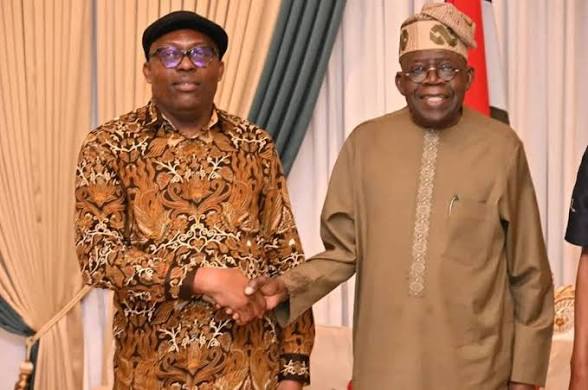
*APC Group Endorses Fubara for 2027, Calls on Tinubu and APC to Prioritise Performance Over Politics in Backing Governor’s Second Term Ambition*
The APC National Vanguard has appealed to President Bola Ahmed Tinubu and the leadership of the All Progressives Congress (APC) to support a second term in office for Siminalayi Fubara, citing what it described as “impressive and verifiable developmental strides” across Rivers State.
In a statement issued on Thursday by its National President, Dr Gbenga Salam (JP), the group said its position followed an extensive assessment tour of key infrastructure and public service projects executed under the Fubara administration.
The APC National Vanguard said the appeal was based strictly on performance, arguing that governance outcomes should outweigh partisan considerations, particularly in a state as economically significant as Rivers.
“We respectfully urge President Bola Ahmed Tinubu and the leadership of the All Progressives Congress to support the continuity of Governor Siminalayi Fubara beyond his current tenure, in recognition of his commitment to development, prudent resource management, and people-focused governance,” the statement read.
According to the group, its delegation visited multiple project sites across the state, observing ongoing and completed works spanning road construction, urban renewal, and public infrastructure upgrades.
It noted that the scale and distribution of these projects reflect a deliberate effort by the state government to extend development beyond traditional urban centres and into underserved communities.
“Our findings from the tour reveal a government that is not only active but intentional in its development agenda. The execution of capital projects across various parts of Rivers State demonstrates a clear understanding of the needs of the people and a commitment to addressing them,” Dr Salam said.
The group particularly commended what it described as prudent financial management by the administration, noting that the projects reviewed showed evidence of careful planning and efficient allocation of resources.
“At a time when economic pressures are evident across the country, it is commendable that the Rivers State government has managed its resources in a way that delivers visible and impactful development without signs of fiscal recklessness,” the statement added.
The APC National Vanguard further observed that despite political tensions in the state, the Fubara administration has maintained focus on governance, ensuring continuity in project execution and service delivery.
The group argued that such stability is critical for sustained development and should be encouraged rather than disrupted.
“Leadership must ultimately be judged by results. In Rivers State, there is clear evidence of progress—projects that are not only announced but executed, and policies that translate into real benefits for citizens,” Dr Salam noted.
The group warned that discontinuity in leadership could stall ongoing projects and reverse gains already recorded, stressing the importance of allowing a performing administration to consolidate its achievements.
“Rivers State is at a pivotal stage where continuity will allow for the completion of ongoing initiatives and the deepening of development gains. Supporting Governor Fubara for a second term is, therefore, a decision in the best interest of the people,” the statement said.
In addition to its call on the APC leadership, the group reaffirmed its support for President Tinubu, expressing confidence in his administration’s broader economic and governance reforms.
The APC group urged Nigerians to remain supportive of efforts aimed at stabilising the economy and strengthening public institutions.
“We reiterate our endorsement of President Bola Ahmed Tinubu for a second term in office, in recognition of his leadership and commitment to national development. With sustained support, the administration can consolidate its reform agenda for the benefit of all Nigerians,” Dr Salam added.
The APC National Vanguard concluded by calling on political actors to prioritise development and public interest over partisan divides, insisting that governance should always be guided by performance and accountability.
“Where leadership demonstrates prudence, delivers development, and remains focused on the welfare of the people, it deserves continuity. This is the position we have reached after a careful and independent assessment of Rivers State,” the statement added.
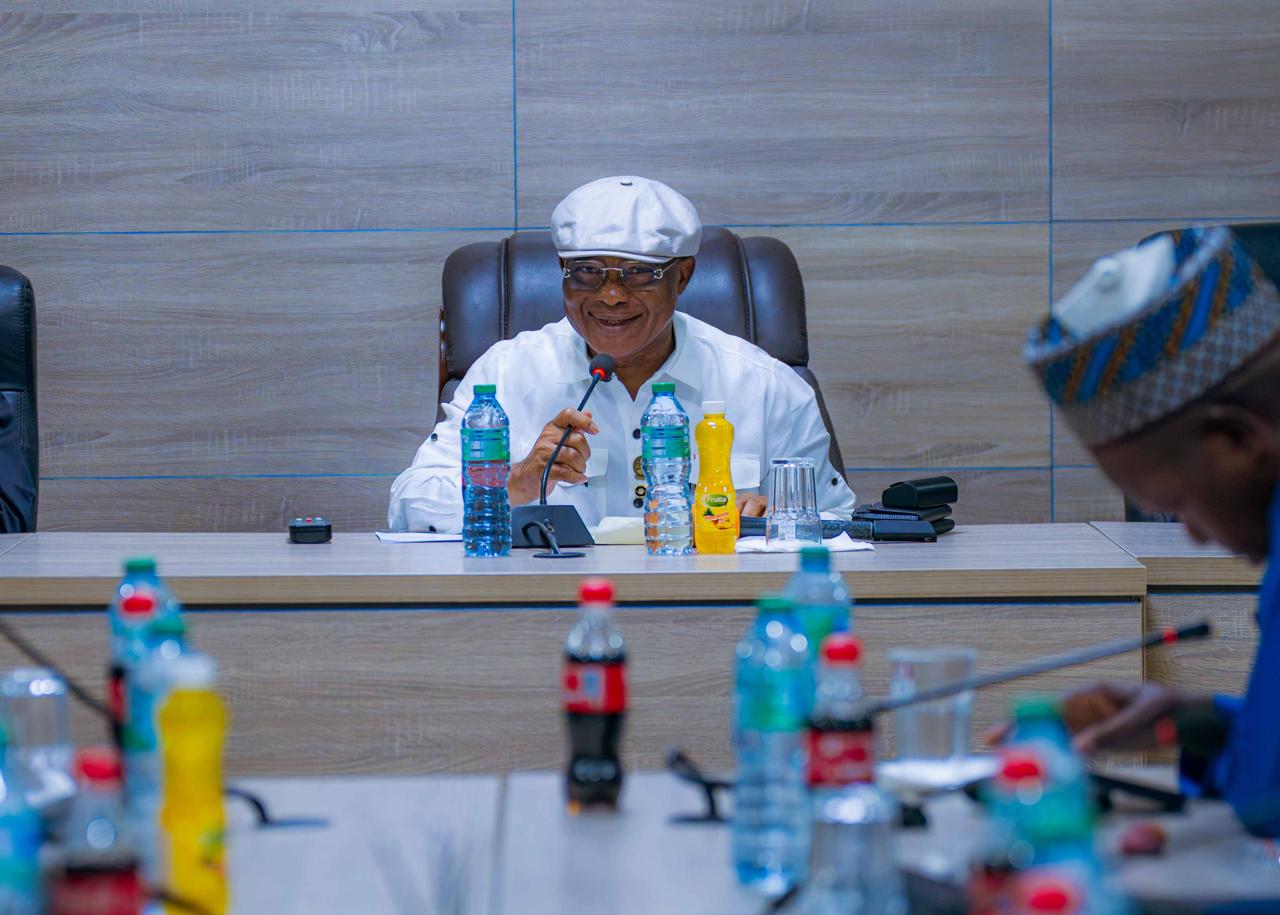
*Renewed Hope Ambassadors Step Into the Next Phase
Fresh from the successful APC 2026 National Convention, the Renewed Hope Ambassadors National, Zonal, and State leadership gathered in Abuja over the weekend, for its fourth strategic meeting, setting the tone for nationwide grassroots activation ahead of 2027.
Chaired by Governor Hope Uzodinma (Imo State) the Director General and National Coordinator of the Renewed Hope Ambassadors, alongside Deputy Director-General, Governor Uba Sani of Kaduna State, and Governor Inuwa Yahaya of Gombe State as Secretary, the session reinforced one clear direction: One Party. One Message. One Mobilization whilst also laying out a strategic roadmap for the activation of the network across all communities in Nigeria.
Backed by the strength of 31 APC-led states, the Renewed Hope Agenda is taking Bola Ahmed Tinubu’s message of progress and reform to every corner of Nigeria.
From bold economic restructuring to initiatives like NELFUND, the increase in the national minimum wage from ₦30,000 to ₦70,000, and strategic investments in critical sectors, including PNiCGI, the mission remains clear: helping Nigerians understand both the purpose and the progress of the Renewed Hope vision.
This is coordination at scale. This is grassroots engagement with purpose. This is the next phase of Renewed Hope with One Party, One Message, and One Mobilisation framework
#RenewedHopeAmbassadors #APC #WeAreAPC


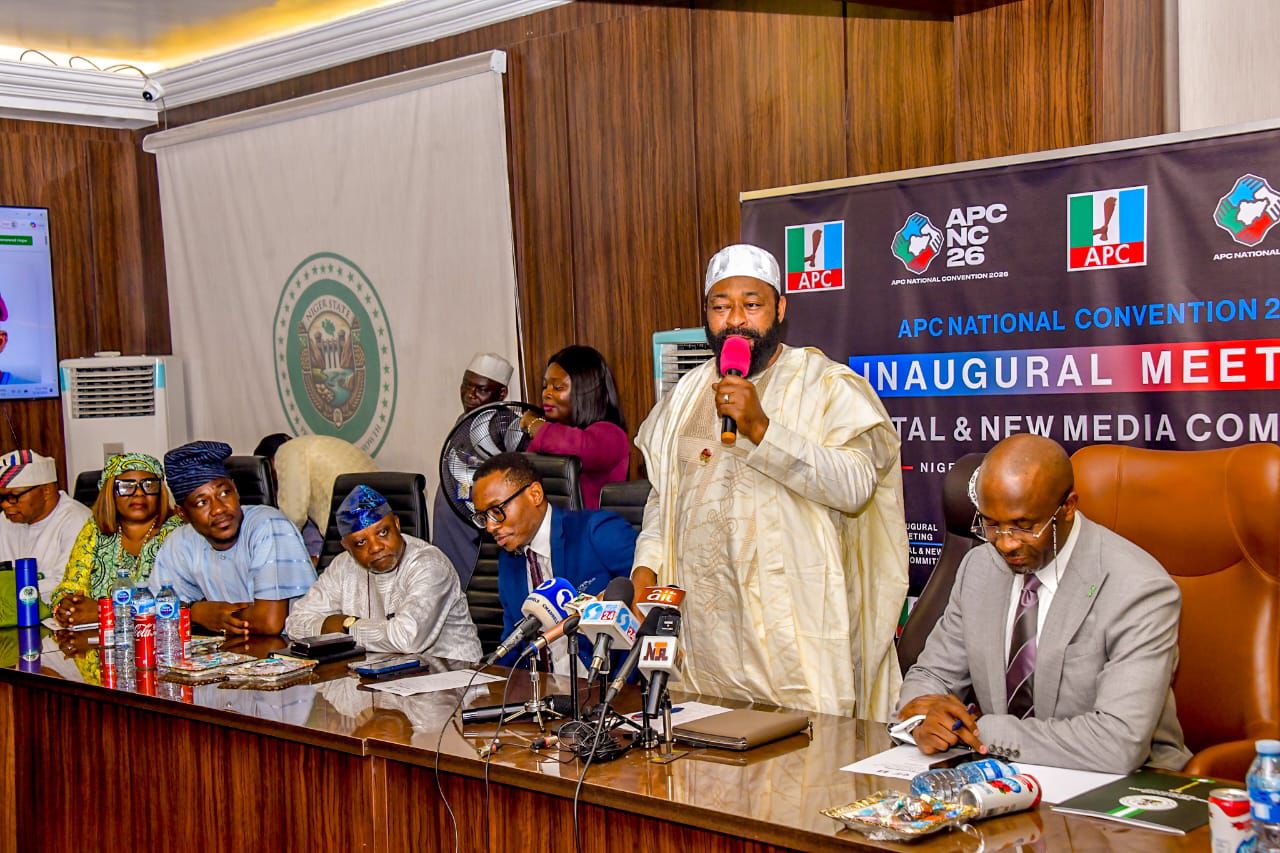
Governor Bago Inaugurates APC Digital Media Sub-Committee Ahead of National Convention.
Governor Umaru Bago has inaugurated the Digital Media Sub-Committee for the forthcoming National Convention of the All Progressives Congress (APC), scheduled to hold on March 27 and 28, 2026 in Abuja.
Chairing the sub-committee, Governor Bago tasked members with the responsibility of effectively communicating the party’s manifesto to the public.
He emphasized the need to leverage social media platforms to highlight the achievements and ongoing efforts of President Bola Ahmed Tinubu, noting that communication gaps have posed challenges that must now be decisively addressed.
The Co-Chair of the sub-committee, Hon. Benjamin Kalu, Deputy Speaker of the House of Representatives, echoed the Governor’s position, urging members to project the activities of both the party and the government to a broader audience.
He called for a deliberate and coordinated effort to showcase the party’s achievements and policy direction, stressing the importance of shaping a compelling and consistent narrative across all digital platforms.
Delivering a presentation to the committee, Otega Ogra, SSA to the President on New Media, who serves as Secretary of the sub-committee, outlined strategic focus areas to guide the team’s operations.
His presentation highlighted communication priorities and actionable steps to achieve the committee’s mandate and strengthen the party’s digital engagement.


-

 society6 months ago
Religion: Africa’s Oldest Weapon of Enslavement and the Forgotten Truth
-

 news4 months ago
WHO REALLY OWNS MONIEPOINT? The $290 Million Deal That Sold Nigeria’s Top Fintech to Foreign Interests
-

 society6 months ago
“You Are Never Without Help” – Pastor Gebhardt Berndt Inspires Hope Through Empower Church (Video)
-

 celebrity radar - gossips2 months ago
Dr. Chris Okafor Returns with Power and Fire of the Spirit -Mounts Grace Nation Altar with Fresh Anointing and Restoration Grace on February 1, 2026
You must be logged in to post a comment Login
You must log in to post a comment.