
society
Art impresario Emmanuel Eni “Blackman in European Kitchen” Plans Investment in Nigeria By Gbenga Shaba


Art impresario Emmanuel Eni “Blackman in European Kitchen” Plans Investment in Nigeria
By Gbenga Shaba
Ask me a man that loves his root and ready to identify with anything that promotes his culture and I will tell you about Emmanuel Eni also known as ‘Blackman in European Kitchen’.
He was so mindful and passionate of his root that he was nicknamed the ‘Blackman in European Kitchen’. The famous Nigerian-German Art star and impresario as well as ballerz culture ambassador, is planning a mother of all arts night cultural extraveganza for Nigerians especially for the people of Federal Capital Territory, FCT Abuja and Lagos.
Eni plans to open a double composition of his gallery and and night club razzmatazz for all the ballerz. He has been so busy the last months that the foreign press kept buzzing with his various shows and his plans to go invest in his motherland.
Eni is also working on the repatriation of all his works of 33 years in Europe back to Nigeria. A massive collection of about 800 Sculptures, hundreds of paintings, hundreds of thousands of drawings on paper, larger than life-size Sculptures, installations and objects
The multiple award winner during a chart with Omonaijablog has these to say concerning his latest moves. Excerpts.
Why do you want to go into hospitality and clubbing business?
You dont explain why you do things except that the things have been in you all the time.
Literarily I’ve always been in the Night Clubbing bussines for a very long time. I have a club which I ran for 5 years in Berlin called Mr Enimatic club.
All my fans and people who follow me must remember and know this club. My djs were playing deep house, dancehall and all the newest of pop culture. It was a large club that had 2 dance floors, where 2 Djs could play simultaneously from two different Dj pults.
The extraveganza there was the 9meter long bar and stage for live performances. It was in famous Berlin left Alternative quarters at Herrmann Street. After that I opened another club in the Eastern part of Germany which was called “Black Butlers gallery club” its great mark was made in good dance music, Arts and Live performance. Later I opend my 3rd Night club “High5 Club” in Bavaria State of Germany. In-between it, the “Smallest gallery Night club” also in Bavaria Germany.
Which locations are you looking at in sighting this business and why the choice of these locations?
We are running feasability at the moment and also started placing the formations for Abuja FCT after which Lagos will follow as Location.
Why the choice of these locations?
Though both Lagos and Abuja are the most trendy and up-beat spots in Nigeria for hospitality and show bussiness, both are still millions of miles far from saturation. For a Nation’s fun and recreation, there can never be enough Clubs and Spots. Just as Drips are never enough in fashion and style. So, we start from Abuja, then Lagos and other cities will now follow
What motivates you to want to do this.?
“Na Gbedu wey dey body”, as I have been doing this all the time. Aside being a business, it also creates fun and the much needed employment. I’m a dance and music man, with all the latest and best music ready at my finger tips. The clubbing experience I want to bring to Nigerians is that funk that grounds and keeps you like permanently happy and satisfied.
What were some of the modalities that you have put in place for the commencement of these projects?
We have progressed well. I would have loved to talk more on how far and when they will be ready, but for operational securities, every stage will be revealed when near finished and also the opening dates. We are looking at the second part and at the end of the year.
What were some of the projects you executed in recent times?
In recent times, it was art shows and events back to back while working and planning some monumental Art Scopes that will trend in the year 2025 and 2026.
Aside the establishment of this Night Club and Art Gallery, which other projects are you currently working on?
I’m working on the repatriation of all my works of 33 years in Europe back to Nigeria. A massive collection of about 800 Sculptures, hundreds of paintings, hundreds of thousands of drawings on paper, larger than Life-size Sculptures, installations and objects. A logistic feat that requires lots of money, time and expertise. This is my time of feeding and replenishing the African civilization after many of Africa’s cultural works were plundered, looted by force and carted away by European Colonizers.
What are your projections and expectations for 2024?
2024 is a thriving year. After the lockdown and the breakout of the Ukrainian/Russian/EuropeanAmerican war. 2024 is going to be a year where positive balance will be cashed by only those people/countries who create a new market for themselves and their trade. It is a year where trade will grow if products are offered at considrable prices. it is also a year where Art has to be interactive with several other aspects of life and style, creating a fluidity that enhances it’s monentary power to break even.





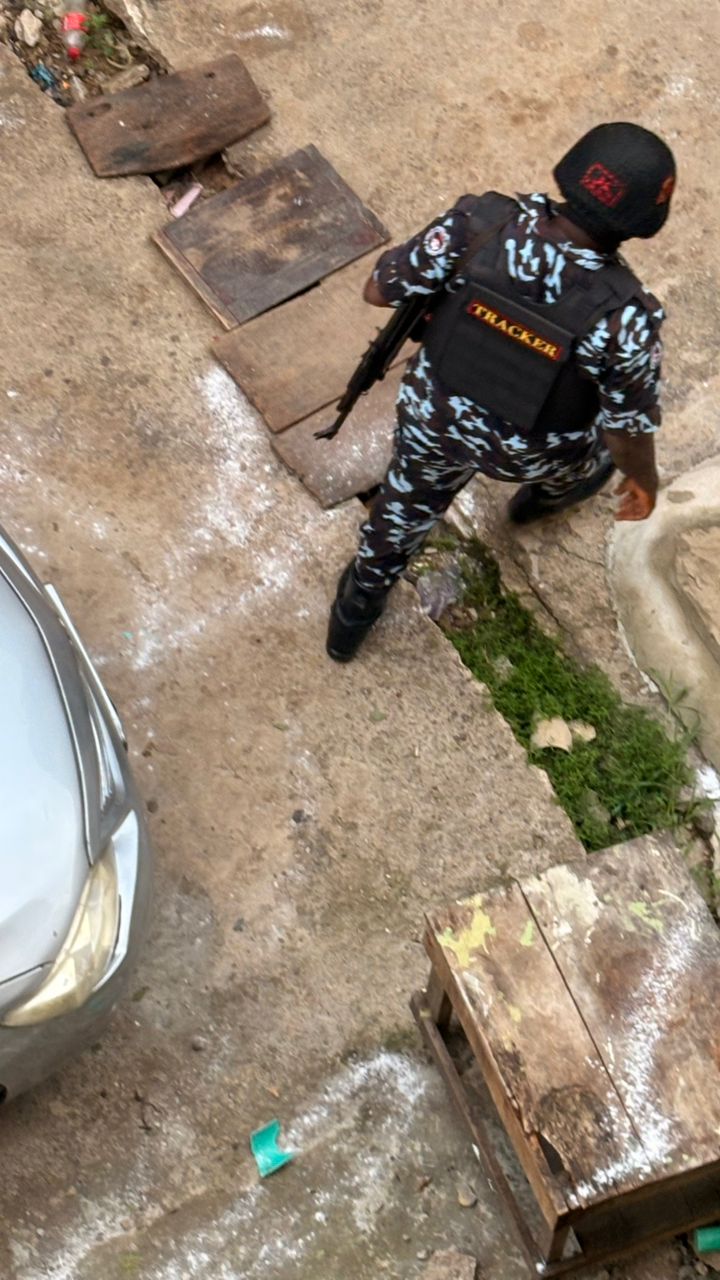
Police Officers Detained as Family Property Dispute Sparks Demolition Controversy in Lagos
By Ifeoma Ikem
A property dispute within the Omotayo-Ojo family has taken a dramatic turn following a controversial demolition exercise at a residential building in Ikosi-Ketu, Lagos State, which reportedly left tenants displaced and led to the detention of some police officers allegedly involved in the operation.

The property, located at 23B Loveall Street, Ikosi-Ketu, has been the subject of a prolonged ownership tussle since the death of its owner, Chief Oludola Omotayo Ojo, the Babaalaje of Imesi-Ile, Osun State, in 2019.
Residents said tension erupted when a group of individuals, accompanied by security operatives, stormed the premises and commenced demolition activities.
According to eyewitnesses, portions of the building were pulled down while tenants rushed to salvage their belongings from affected apartments.
The residents alleged that windows, doors and roofing sheets were damaged during the exercise, exposing parts of the building to the elements and causing significant losses to occupants.
At the centre of the dispute is Mrs Mojisola Omotayo Ojo Alolagbe, who claimed that the property was allocated to her by her late father during his lifetime as a source of financial support.
She alleged that some family members had persistently challenged her ownership claim despite ongoing legal proceedings relating to the administration of the deceased’s estate.
Alolagbe further claimed that the latest incident was part of a series of attempts to wrest control of the property, citing previous cases of alleged vandalism and partial demolition in November 2025, January 2026 and February 2026.
The situation escalated further when reports emerged that police officers allegedly involved in the demolition were later apprehended and conveyed in a Black Maria vehicle over questions surrounding the legality of their participation in the operation.
Sources familiar with the matter said those behind the demolition had initially claimed to be acting on approval from the Lagos State Ministry of Lands. However, the authenticity and extent of such approval could not be independently verified as of the time of filing this report.
The development has generated concern among residents and community members, who questioned the involvement of security personnel in what they described as a civil matter.
Some tenants, who said they had recently renewed their tenancy agreements, lamented the destruction of their property and appealed to the authorities for protection and possible compensation.

They also called for a thorough investigation into the circumstances surrounding the demolition, insisting that the rights of all parties involved should be protected.
Stakeholders have urged the Lagos State Government, security agencies and the judiciary to intervene and ensure that the dispute is resolved through lawful means to prevent further escalation.
The controversy has continued to draw public attention, raising concerns over property rights, estate administration and the role of law enforcement agencies in civil disputes.

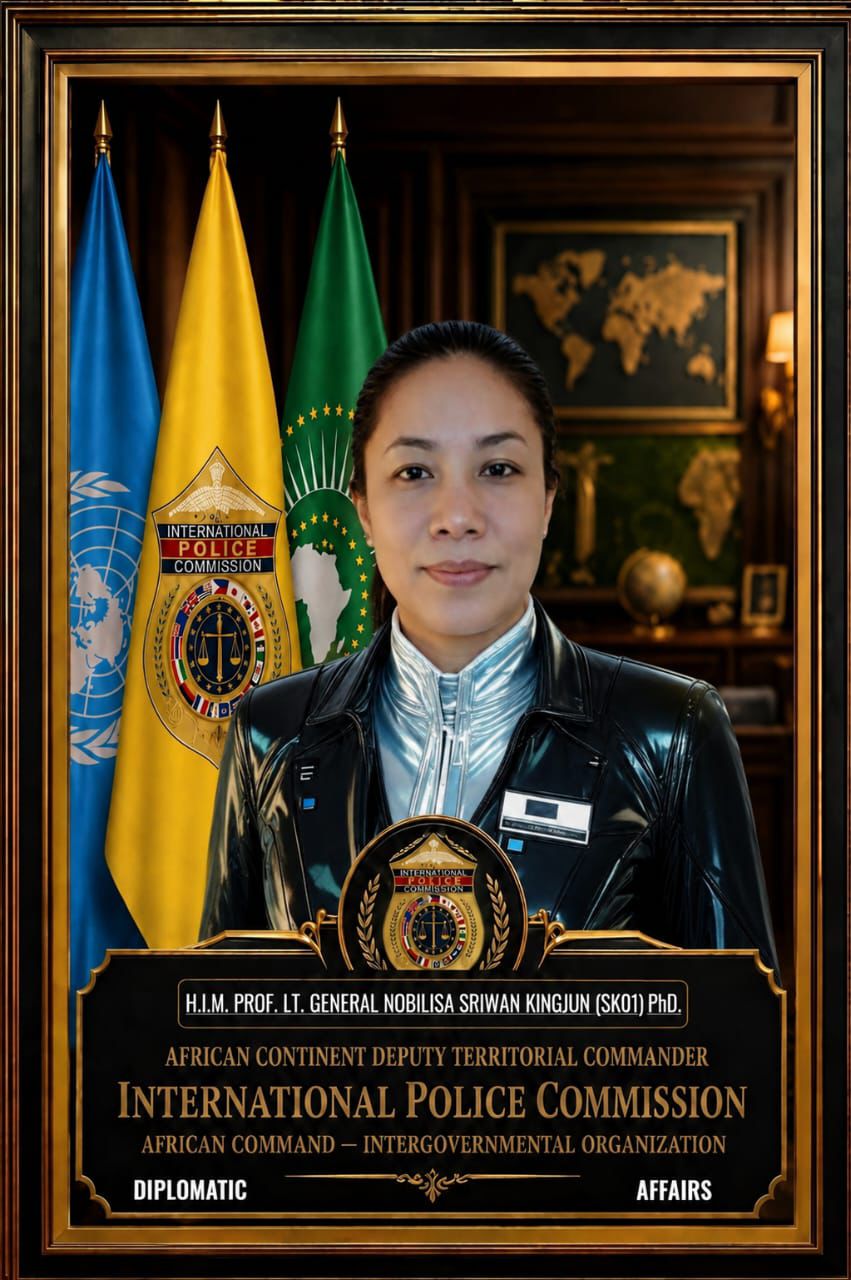
UKA Gears Up for Final ATC Exchangeability Test Run as June Preparations Begin.
May 30, 2026 – As the month of June gathers momentum, the *United Kingdom of Atlantis, UKA*, a sovereign nation has unveiled a series of vital guidelines and preparatory packages to ensure citizens and stakeholders run the *ATC Exchangeability* process effectively.
In an official update, the *President of Atlantic Crown Limited, Empress of Attica Empire UKA*, confirmed that the *Final Test Run of ATC Exchangeability* is scheduled for the month of June 2026. The exercise marks a key phase ahead of the *Official Exchangeability Window, set to run from July 2026 to February 2027*.
### Key Highlights from the Presidential Briefing
1. *Final Test Run – June 2026*
The test run is designed to validate systems, procedures, and user readiness before full activation. Citizens, partners, and designated participants are urged to follow all official advisories released by UKA authorities during this period.
2. *Official Exchangeability Period*
Following the successful completion of the June test run, the Official Exchangeability will commence in july 2026 and we are Expecting Full Exchange ability between July Ending, 2026 to February 2026.
UKA stated that detailed schedules, eligibility requirements, and step-by-step instructions will be communicated progressively through verified UKA channels.
3. *Benefiting Packages for June*
In line with UKA’s commitment to citizen empowerment, the month of June will feature “benefiting packages” aimed at education, preparation, and seamless onboarding. These packages are intended to equip the people of UKA with the knowledge and tools needed for effective participation.
4. *Commitment to Transparency*
Addressing the nation, the Empress of Attica Empire UKA emphasized:
_“Final Test Run of ATC Comes up in The Month of June, As We Prepare For The Official Exchangeability, Between July 2026 To Feb 2027. All Information Will Be Communicated.”_
UKA reaffirmed that only information released through official UKA platforms should be regarded as authoritative.
The United Kingdom of Atlantis is encouraging all citizens, representatives, and interested parties to remain alert to official communications, attend designated orientation sessions, and avoid unofficial sources. UKA’s dedication to order, clarity, and the collective benefit of its people as the nation moves into this significant phase.
For updates, advisories, and participation guidelines, citizens are advised to monitor official UKA communication channels.
United Kingdom of Atlantis, UKA, is a sovereign nation, committed to national development, citizen welfare, and structured economic participation through initiatives such as ATC Exchangeability.
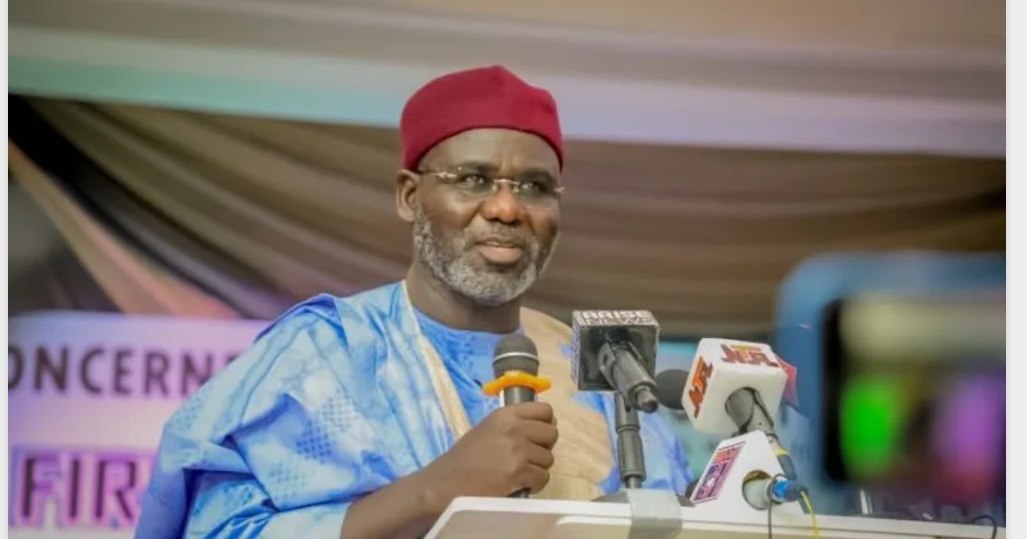
Three Years On, General Buratai Hails Tinubu’s Economic, Security Achievements
Former Chief of Army Staff, Lt. Gen. Tukur Buratai (retd.), has commended President Bola Ahmed Tinubu for what he described as bold economic reforms and improved security efforts as the President marks three years in office.
In a goodwill message on Thursday to commemorate Tinubu’s third anniversary as President and Commander-in-Chief of the Armed Forces, Buratai said the administration had taken courageous decisions that would leave a lasting impact on Nigeria’s development.

According to him, President Tinubu broke a long-standing cycle that had hindered national growth by removing fuel subsidy and implementing foreign exchange reforms aimed at stabilising the naira and strengthening the economy.
He noted that the reforms were beginning to yield positive results, citing the global acceptance of Nigerian debit cards, the gradual revival of local refineries, access to student loans, and ongoing road and infrastructure projects across the country.
“The FCT Administration has also recorded remarkable progress, completing major road projects that remained unfinished for over 16 years,” Buratai stated.
The former army chief also praised the administration’s security efforts, saying renewed military offensives against insurgents, terrorists and bandits had led to notable successes across various parts of the country.
He specifically lauded recent joint operations involving Nigerian and United States forces against Boko Haram and ISWAP in the North-East, as well as intensified counter-banditry operations in the North-West.
“We have seen notorious ISWAP commanders being neutralised. I congratulate the Commander-in-Chief, the Minister of Defence, the Chief of Defence Staff, the Service Chiefs, the Inspector-General of Police and heads of intelligence agencies for their efforts,” he said.
Buratai, however, acknowledged that challenges remained, stressing the need for more aggressive military operations and intelligence-driven strategies in the coming year.
While urging Nigerians to remain hopeful, he said celebrating the President’s achievements did not amount to ignoring the difficulties facing the nation.
“Because you truly care, you have shown the courage to trade short-term comfort for long-term hope. Nigerians need your reassurances, and that is why we remain optimistic and full of confidence,” he added.
The retired military officer reaffirmed his support for the Tinubu administration and expressed confidence that the foundation being laid by the government would deliver a brighter future for the country.
He also prayed for God’s guidance, wisdom, strength and good health for the President as he continues to lead Nigeria.


- Junior Achievement (JA) Africa Delivers 1.6 Million Learning Experiences in a Single Year, Marking Twelve-Fold Growth in Five Years June 5, 2026
- United Nations Mission in South Sudan (UNMISS) helps plant hope among youth on World Environment Day June 5, 2026
- Afreximbank Deepens Engagement with Jamaica to Drive Trade, Investment and Industrialisation June 5, 2026
- World Health Organization (WHO) supports reactive yellow fever vaccination campaign and Bundibugyo virus disease (BVD) preparedness in Liberia June 5, 2026
- Uganda: Museveni pushes for wealth creation through development programmes June 5, 2026
- Africa: UNAIDS calls for renewed global solidarity as UN Secretary-General’s report warns that AIDS is not over and fragile gains are at risk June 4, 2026
- Eritrea: Vocational training provided to college students June 4, 2026
- World Bank Group Launches Ten-Year Strategy to Drive Jobs and Prosperity in Uganda June 4, 2026
- Prof Oramah’s appointments to the Royal African Society Patronage and Kenya’s National Infrastructure Fund herald continued recognition of his global leadership and pan-African impact June 4, 2026
- Africa Finance Corporation Raises Record US$2 Billion Syndicated Loan in Landmark Show of Confidence in Transformational Infrastructure Strategy June 4, 2026
- Junior Achievement (JA) Africa Delivers 1.6 Million Learning Experiences in a Single Year, Marking Twelve-Fold Growth in Five Years June 5, 2026
- United Nations Mission in South Sudan (UNMISS) helps plant hope among youth on World Environment Day June 5, 2026
- Afreximbank Deepens Engagement with Jamaica to Drive Trade, Investment and Industrialisation June 5, 2026
- World Health Organization (WHO) supports reactive yellow fever vaccination campaign and Bundibugyo virus disease (BVD) preparedness in Liberia June 5, 2026
- Uganda: Museveni pushes for wealth creation through development programmes June 5, 2026
- Africa: UNAIDS calls for renewed global solidarity as UN Secretary-General’s report warns that AIDS is not over and fragile gains are at risk June 4, 2026
- Eritrea: Vocational training provided to college students June 4, 2026
-

 news6 months ago
WHO REALLY OWNS MONIEPOINT? The $290 Million Deal That Sold Nigeria’s Top Fintech to Foreign Interests
-

 society1 month ago
SOCIAL MEDIA IS NOT A BATTLEFIELD COMMAND – WHY THE NIGERIAN ARMY’S ACTION AGAINST JUSTICE CRACK IS A NATIONAL SECURITY IMPERATIVE
-

 celebrity radar - gossips4 months ago
Dr. Chris Okafor Returns with Power and Fire of the Spirit -Mounts Grace Nation Altar with Fresh Anointing and Restoration Grace on February 1, 2026
-

 celebrity radar - gossips6 months ago
Prophet Kingsley Aitafo Releases 2026 Prophecy: ‘Nigeria Will Rise, but the World Must Prepare for Turbulence’