
celebrity radar - gossips
Beyond The Ayeni Name…Will Adaobi Alagwu Save Her Child From Future Disgrace?


Beyond The Ayeni Name…Will Adaobi Alagwu Save Her Child From Future Disgrace?
– How A Mother’s Greed May Ruin Her Daughter’s Life (Video)
By Ifeanyi Okonkwo
There is a virtue, Adaobi Alagwu probably presumes, in being brazen, thus her inclination to place on parade her infant child, Omarosa’s murky roots. Only a mother afflicted by insolence and lack of shame would soullessly jeopardise her daughter’s self-esteem by forcing the paternity of an unwilling father on her.
In the wake of billionaire magnate, Tunde Ayeni’s decisive rebuttal of Alagwu’s claim that he is the father of her child, more posers have been raised concerning paternity fraud.
A recent post by a social media commentator condemned Ayeni’s bid to stop Alagwu from using his name for her daughter, arguing that he would fail in his bid. He said, “Anybody can bear any name he or she likes, provided you’re not impersonating anyone. A female child cannot be said to be impersonating Mr Ayeni simply by having the same surname with him.” Whilst this position might be convenient for people who might have a jaundiced perspective to the enormity of the implications of such a rejection as AdaObi and her daughter have faced, the question to ask is who in their right senses would keep a name that will be a constant reminder of their mistakes and humiliation. If AdaObi had as much any sense of self-worth would she have insisted on acceptance as she has for her daughter from a man so unwilling and so detesting of her that he’s willing to go to any lengths in proving his disapproval and rejection of them both?
Why is it okay to force an unwilling man to take responsibility for a child that was forced on him when all accountability should be with the 31-year-old single lady who out of greed jeopardized her future to keep an unwanted pregnancy for a married man?
It would be recalled that Tunde Ayeni wrote the Nigerian Immigration Service (NIS), recently, asking it to void any international passport presented by his estranged girlfriend and Abuja lawyer, Adaobi Alagwu and her child, bearing his name.
Declaring any such document illegitimate, Ayeni, speaking through his lawyer, Dele Adesina (SAN) established that Alagwu’s daughter isn’t entitled to the use of his name on her travel document as he has no familial relationship with her.
Ayeni disclosed this by copying the NIS a “Cease and Desist” legal notice he sent to Alagwu entitled, “Withdrawal of Consent for Use of the Family Name ‘Ayeni’ With Respect To Your Daughter Omarosa.”
Ayeni’s recent step was informed by Alagwu’s adoption of his name on her daughter’s international passport even after a DNA test had established that she wasn’t Ayeni’s child. His letter to the NIS follows the recent arrest and detention of Alagwu for trespassing on and breaking into his private property in Abuja.
The duo has been entangled in a battle of wits that has seen Ayeni issue multiple press statements to refute claims of paternity of Alagwu’s child.
In her desperation to get hooked on the billionaire magnate and former bank chief, Alagwu fabricated a plot to get pregnant by him and, so doing, implant herself and her child as beneficiaries of his estate.
Alagwu, a trained attorney, was misled by the belief that she had the upper hand on Ayeni. She thought she had him by the balls.
Like all frantic liars, she thought she had gained a victory over Ayeni simply by claiming that she was pregnant for him and her baby girl belonged to him (but she was mistaken).
Her adoption of his name for her daughter, Omarosa has been dismissed as a last-ditch resort as she struggles to hold on to her ex-billionaire boyfriend who was until recently her benefactor and family’s meal ticket.
To underscore how bad the menace of such desperate girls is, a cursory look at her company website reveals the same address as the one from which she was humiliatingly ejected by Ayeni.
Pundits aver that if she had truly been gainfully employed as she claimed – since she fell out with Ayeni – her company address ought to have changed both online and offline.
Her so-called company website has no meaningful indicator of how business clients could reach her. There are no markers on the website detailing or establishing her presence as the administrator or CEO of a thriving enterprise, contrary to her claims.
What this translates to is that she (Alagwu) has no viable source of livelihood and has always been completely dependent on Ayeni.
Only a woman bereft of self-respect and shame would carry on so, without a care in the world about how badly her lack of a decent livelihood rubs off on her.
As Alagwu deploys every wile and weapon in her arsenal to fight her way into Ayeni’s household, not a few people have advised her to desist from what is a wild goose chase. But she is undeterred.
If she won’t care what becomes of her name, at least she ought to be concerned about the implications of her actions for her innocent daughter, Omarosa.
If anything, Alagwu must be wary of mortgaging her daughter’s interest in her frantic bid to settle scores with her estranged lover, Ayeni. Even if she enjoys the inalienable right to adopt any name of her choice, including Tunde Ayeni’s, for her daughter, the onus rests on her to listen to the voice of reason and embrace moral rectitude by protecting her daughter from certain ignominy and shame of answering to the name of a man who publicly rejected her.
And to those goading her into believing in her lies that he paid her bride price and his wife is the architect of this rejection, it is unimaginable how twisted they are in their thinking. Hanging on to the last straws of desperation, they look away from the obvious display of rejection from Mr Ayeni, a man married for 30 years and experienced in the ways of life enough to convince his wife and friends he will go to any length to erase Adaobis existence.
If it wasn’t his making why didn’t he publish a disclaimer? The man wants Alagwu to feel the full weight of his rejection by placing his wife in front of him and arming her with the authority to denigrate Alagwu and make her face the folly of bringing nothing to the table except a fair complexion in comparison to his established wife.
How does she think her daughter would feel when she grows up and finds out that her mother had forced upon her, the name of a man who went to great measures to denounce her?
It’s about time Alagwu embraced caution and silenced her ego, lest she becomes a sad, cautionary tale. For most of history, one essential, immutable difference between men and women was that men could hide the fact that they had created a child and women could not. Pregnancy and childbirth showed the world who the mother was; paternity could only be assumed.
New parents are often told how much their babies look like the father. The research on whether most do or do not is ambiguous, but the fancy persists, in part because, consciously or unconsciously, people think that emphasising the resemblance will set a man’s mind at ease, thus fortifying the paternal bond.
Fortunately for Ayeni, he refused to be misled by such a wanton appeal to sentimentality. As Nara Milanich, a professor of history at Barnard College, writes in her solidly researched and enlightening new book, “Paternity: The Elusive Quest for the Father” (Harvard), a “common metaphor invoked by nineteenth-century jurists was that Nature had concealed fatherhood by an impenetrable veil.”
Thanks to science, the DNA test to be precise, Tunde Ayeni was able to penetrate that mythical veil to establish the convoluted plots of his estranged girlfriend, Alagwu’s paternity fraud.
Until recently, that veil was often a source of frustration, leading to domestic doubts and irresolvable courtroom conflicts. Literature gives us many a husband driven half-mad by the suspicion that his child is not the fruit of his loins, as is King Leontes, in “The Winter’s Tale,” and women who deceive their husbands on this score, like the wife in Maupassant’s story “Useless Beauty,” who tells her husband that one of their seven children isn’t his, but won’t say which.
Paternal unknowability, however, was also enormously useful. Many legal traditions around the world, including the Anglo-American one, adhered to the marital presumption of legitimacy at least until the twentieth century: a child born to a married woman was considered to be the biological progeny of her husband. (A child born to an unmarried woman was, Milanich writes, “historically deemed a filius nullius, a child of nobody.”) Milanich tells the story of a man named Remo Cipolli, who, in 1945, sued his wife, Quinta Orsini, for adultery, and sought to deny paternity, after she gave birth to an infant who appeared to be black. Cipolli and his wife, who were both white Italians, lived in a small town near Pisa, where several African-American soldiers had been stationed at the end of the Second World War.
The case became notorious—the baby was known as “the little Moor of Pisa.” In the end, although a civil court found Orsini guilty of adultery, it also concluded that her husband, Cipolli, was legally the baby’s father.
Thanks to science, Ayeni would experience no such embarrassment and heartache through paternity fraud.
In all of these, the fate of one human element hangs in the balance, that of Alagwu’s innocent young daughter. And her salvation, interestingly lies in Alagwu’s hands. Will Adaobi Alagwu quit barking up the wrong tree? Will she desist from her wild goose pursuit and so doing save her innocent daughter from immediate and future disgrace?





King of the Screen: Why Odunlade, Muyiwa, Femi Adebayo Remain Yoruba Movie Giants
The Yoruba movie industry has continued to produce legendary talents whose influence stretches beyond Nigeria to global audiences. Over the years, some actors have distinguished themselves through consistency, versatility, box office success, and cultural impact.
Among the numerous stars in Nollywood’s Yoruba sector, three actors have remained dominant figures whose names constantly resonate with fans and filmmakers alike — Odunlade Adekola, Muyiwa Ademola, and Femi Adebayo.

Odunlade Adekola: The Street King of Yoruba Cinema
Popularly regarded as one of the most entertaining actors in Nollywood, Odunlade Adekola has built a unique reputation through his energetic delivery, comic timing, emotional depth, and strong connection with grassroots audiences.
From comedy to action and emotional family dramas, the actor has consistently proven his versatility in blockbuster productions. His ability to interpret diverse roles effortlessly has made him a household name across Nigeria.
Industry observers believe his dominance on social media platforms, where his movie clips frequently go viral, has further strengthened his popularity among younger audiences.
Beyond acting, Odunlade has also contributed immensely to mentoring upcoming talents and expanding the commercial value of Yoruba films.
Muyiwa Ademola: The Master Storyteller

For many lovers of indigenous movies, Muyiwa Ademola remains one of the finest storytellers the Yoruba film industry has produced.
Widely respected for producing emotional and morally driven movies, the actor earned massive recognition through classic productions that focused on family values, culture, betrayal, perseverance, and societal lessons.
His calm delivery, deep scripts, and originality have kept him relevant despite changing trends in the entertainment industry.
Film critics often describe Muyiwa Ademola as one of the few actors whose productions combine entertainment with strong cultural education, making his movies timeless among older and younger viewers alike.
Femi Adebayo: The Modern-Day Box Office Force

Femi Adebayo has successfully combined traditional Yoruba storytelling with modern cinematic excellence, helping to project indigenous films to international audiences.
The actor, filmmaker, and producer has recorded major successes with high-budget productions that gained attention on streaming platforms and cinemas.
Known for his professionalism and attention to detail, Femi Adebayo has continued to push Yoruba movies beyond local boundaries while preserving cultural identity.
Entertainment analysts say his ability to blend culture, technology, and quality production has positioned him among the leading faces shaping the future of Yoruba cinema.
Growing Global Influence
The success of these actors reflects the increasing acceptance of indigenous Nigerian content globally. With streaming platforms creating wider access to local movies, Yoruba actors are now gaining international recognition and attracting new audiences.
Fans and stakeholders in the entertainment industry believe the contributions of Odunlade Adekola, Muyiwa Ademola, and Femi Adebayo have not only sustained Yoruba culture through film but have also elevated Nollywood’s global reputation.
celebrity radar - gossips
Eid-el-Kabir: Olowu of Kuta Urges Peace, Unity, Selflessness Among Nigerians

Eid-el-Kabir: Olowu of Kuta Urges Peace, Unity, Selflessness Among Nigerians
The Olowu of Kuta, HRM Oba Dr. Hammed Makama Oyelude, CON, Tegbosun III, has called on the Muslim Ummah and all Nigerians to make peace, unity, and selflessness their guiding principles as the world marks this year’s Eid-el-Kabir celebration.
In his Sallah message, the revered monarch described Eid-el-Kabir as a “highly spiritual occasion that demands dedication, commitment, and selflessness.”
Oba Makama said the period should be used to reflect on societal happenings and promote messages of hope and unity without inciting provocation.
He urged Nigerians to live together harmoniously, irrespective of religious, political, or tribal affiliations, stressing that politicians should exercise restraint and avoid inflammatory rhetoric ahead of the 2027 general elections.
“What should be uppermost in the mind of every patriotic Nigerian is **‘Country first,’” he said.
The monarch also appealed to citizens to remain vigilant in the face of insecurity, reassuring that the armed forces and paramilitary agencies are working round the clock to ensure a smooth and peaceful celebration.
“The price wise men pay for eternal liberty is vigilance. I urge everyone to celebrate moderately and extend a helping hand to the less privileged, widows, and orphans, embracing them as our brothers and sisters,” Olowu Makama added.
He concluded by wishing all Nigerians a peaceful and fulfilling Eid-el-Kabir celebration.
celebrity radar - gossips
Oba Babatunde Saliu Elebo II Felicitates Muslims on Eid-el-Kabir Celebration
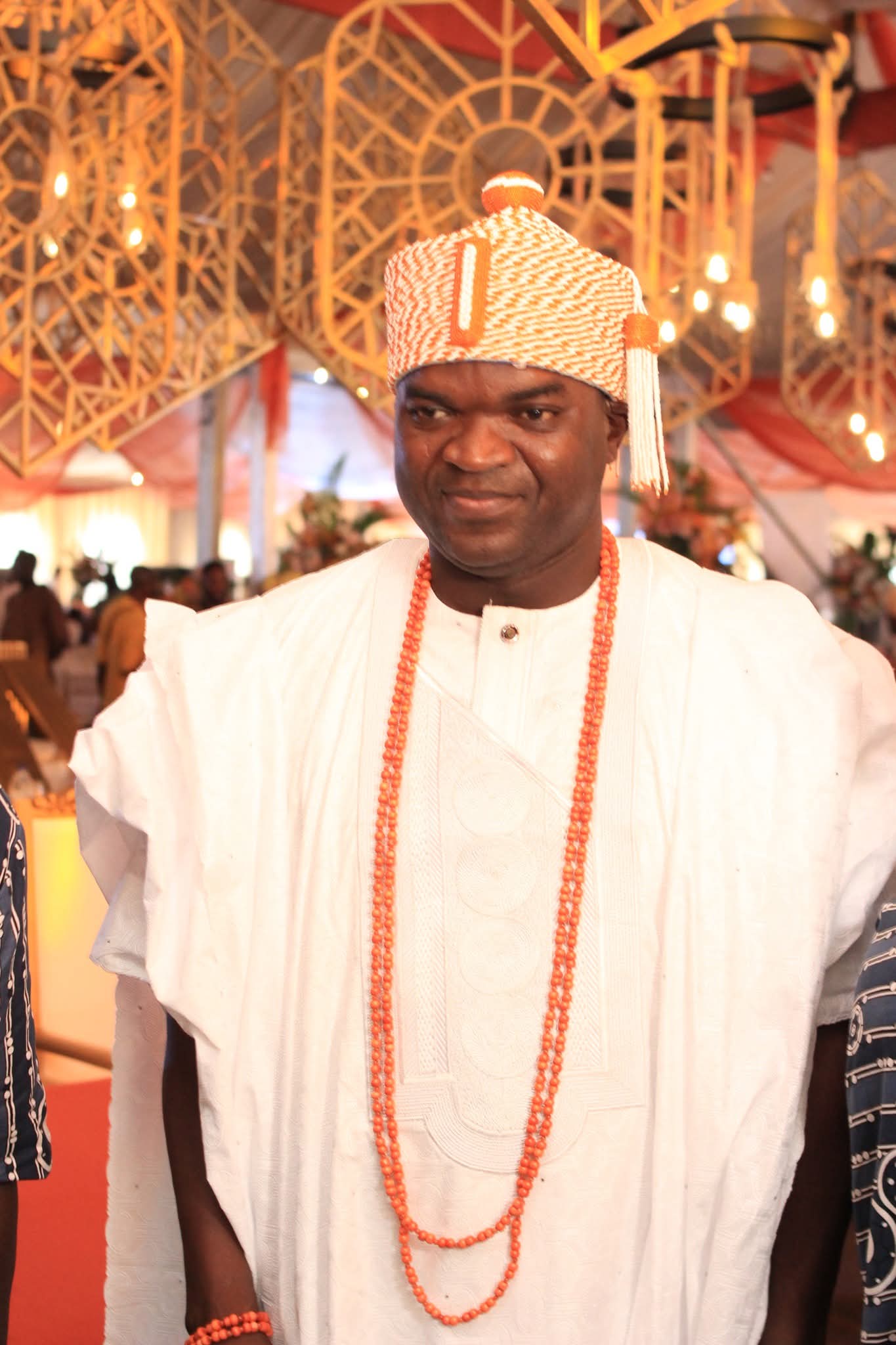
Oba Babatunde Saliu Elebo II Felicitates Muslims on Eid-el-Kabir Celebration
By Adeyemi Obadimu Veron
The Oloworo of Oworosoki Kingdom, Oba Babatunde Saliu Elebo II, has extended warm greetings and heartfelt felicitations to Muslims across Nigeria and the world at large on the joyous occasion of the 2026 Eid-el-Kabir celebration.
In a statement made available to Newsmen, the revered monarch urged Muslims to embrace the true teachings of Islam by promoting peace, love, unity, sacrifice, and compassion during and after the festive period.
Oba Babatunde Saliu Elebo II noted that Eid-el-Kabir, also known as Salah, remains one of the most significant celebrations in Islam as it symbolizes total obedience, faith, and devotion to Almighty Allah, drawing inspiration from the unwavering sacrifice of Prophet Ibrahim (Abraham), who demonstrated complete submission to the will of God.
According to the monarch, the Holy Qur’an teaches believers the importance of righteousness, kindness to humanity, tolerance, and support for the less privileged in society. He emphasized that the season should serve as a reminder for all Nigerians to live in harmony irrespective of religion, ethnicity, or political differences.
The royal father further called on Muslims to use the sacred period to pray fervently for peace, stability, economic growth, and sustainable development in Nigeria, stressing that national progress can only thrive in an atmosphere of unity and mutual understanding.
Oba Saliu also encouraged the faithful to extend hands of generosity to widows, orphans, and vulnerable members of society, noting that the essence of Eid-el-Kabir goes beyond celebration and feasting, but also reflects the spirit of sharing and caring for humanity as instructed in the Qur’an.
While wishing Muslims a peaceful and memorable Eid celebration, the Oloworo of Oworosoki prayed for divine blessings, prosperity, good health, and continued harmony in homes and communities.
“May this year’s Eid-el-Kabir strengthen our faith, deepen our love for one another, and bring renewed hope and abundant blessings to our nation,” the monarch stated.


- Pitcher Awards Announces 2026 Winners, Marking a Landmark Year for Pan‑African Creativity May 30, 2026
- Ghana Commemorates 78th International Day of United Nations Peacekeepers May 30, 2026
- South Africa: President Ramaphosa receives second interim report of Madlanga Commission May 30, 2026
- Asmara Marathon 2026 to be held May 30, 2026
- Powerful call for dialogue and compromise to secure peace in South Sudan issued on International Peacekeepers Day May 30, 2026
- Over 1,000 Participants Join Rwenzori Marathon Activation Run in Mombasa May 30, 2026
- World Health Organization (WHO) actively participated in the 2nd Summit on Healthcare Integration in Portuguese-speaking countries May 30, 2026
- Annual Meetings (AM) 2026: “Africa has what It takes” - Experts call for stronger financial systems to help Africa mobilise capital at scale May 30, 2026
- Eritrea Participates at Organization of African, Caribbean and Pacific States Meetings May 30, 2026
- Annual Meetings 2026 (AM2026): African Development Bank Group’s 2025 Annual Report Highlights Strong Results and a New Chapter for Africa’s Transformation May 29, 2026
- Pitcher Awards Announces 2026 Winners, Marking a Landmark Year for Pan‑African Creativity May 30, 2026
- Ghana Commemorates 78th International Day of United Nations Peacekeepers May 30, 2026
- South Africa: President Ramaphosa receives second interim report of Madlanga Commission May 30, 2026
- Asmara Marathon 2026 to be held May 30, 2026
- Powerful call for dialogue and compromise to secure peace in South Sudan issued on International Peacekeepers Day May 30, 2026
- Over 1,000 Participants Join Rwenzori Marathon Activation Run in Mombasa May 30, 2026
- World Health Organization (WHO) actively participated in the 2nd Summit on Healthcare Integration in Portuguese-speaking countries May 30, 2026
-

 news6 months ago
WHO REALLY OWNS MONIEPOINT? The $290 Million Deal That Sold Nigeria’s Top Fintech to Foreign Interests
-

 society4 weeks ago
SOCIAL MEDIA IS NOT A BATTLEFIELD COMMAND – WHY THE NIGERIAN ARMY’S ACTION AGAINST JUSTICE CRACK IS A NATIONAL SECURITY IMPERATIVE
-

 celebrity radar - gossips4 months ago
Dr. Chris Okafor Returns with Power and Fire of the Spirit -Mounts Grace Nation Altar with Fresh Anointing and Restoration Grace on February 1, 2026
-

 celebrity radar - gossips6 months ago
Prophet Kingsley Aitafo Releases 2026 Prophecy: ‘Nigeria Will Rise, but the World Must Prepare for Turbulence’