
celebrity radar - gossips
Dapchi 110: The tragedy of a nation – Reuben Abati

Karma is a bitch. Poetic justice is a bastard. Both have combined to wrong-foot the incumbent Buhari administration to make it look like a big mistake and an act of misjudgment by the Nigerian electorate. If Buhari had been disallowed from taking power in 2015, and those who advised President Goodluck Jonathan not to give a damn had their way, and Jonathan had remained in power and all the current problems had surfaced, it would have been said by Nigerians that Goodluck Jonathan truncated Nigeria’s destiny.
In 2015, the refrain, which was reaffirmed recently by those who authored it, was that Nigeria could only move forward with anybody but Jonathan. If Buhari was prevented from taking over power, Nigerians would have been very aggressive towards the Jonathan administration. It would have been said that the messiah was robbed of victory. It would have been argued that the man who would have saved Nigeria was prevented from doing so. It might have even been argued that under General Buhari, Nigeria could have become the greatest country on the surface of the earth.
Such was the impact of the propaganda. Such was the nature of the politics of the time. The Buharideens would never have allowed a post-2015 Jonathan government to work. Even if it did, the opposition would have imagined a greater possibility. But here we are, three years down the line: the messianic propaganda has failed. Their Saviour is not the Jesus Christ they imagined him to be. The country remains unsaved. Their promise of change has been no more than scaremongering. When the question is asked: are you better today than you were three years ago?, no ordinary Nigerian can answer that question positively: change has brought him or her nothing but agony and anguish.
Should they offer an answer, it would be a response marked by regret. The biggest tragedy that has occurred therefore is the demystification, the unmasking, the unveiling of a man who was thought to be a god but who has since danced naked and is dancing naked in the market-place. Strikingly, the Emperor is without clothes. Some of the most vociferous critics of old have also been exposed. Nasir el-Rufai deployed all the heights of his intelligence to demonise the Jonathan government on social media. No one else has been able to match the quality of his vitriol. Today, the same Nasir is busy demolishing the houses of anyone who dares to make a negative comment about him, or he takes them to court and threatens them with Armageddon. The same rights that he demanded for the Nigerian people, he now tramples upon.
There was also our beloved kinsman, Alhaji Lai Mohammed. He was the scourge of the Jonathan administration. He could issue five anti-establishment press statements in a day. There has been no one like him in Nigerian history doing the job of opposition spokesman. He was ruthlessly efficient. Nobody in the current opposition parties has demonstrated his capacity as an opposition figure, in part because all the opposition spokesmen have been harassed, blackmailed, dehumanized, and intimidated, but called to do the job, on the other side of the fence as Minister of Information, Alhaji Mohammed remains a study in self-contradiction. His five minutes of fame in the Nigerian political sphere has since ended.
He used to be creative and dynamic, but now faced with the challenges of the real thing, the only thing that comes out of his mouth is the dumb argument that Goodluck Jonathan is the source of all the problems of Nigeria or similar inanities. When the matter is not so phrased, we are told that the Jonathan administration stole the country blind. And yet whereas the government of the Peoples Democratic Party (PDP) borrowed the sum of N6 trillion over a period of 16 years, the APC government has borrowed more than N11 trillion in 3 years! Is it possible all the oil wells have dried up and Nigeria no longer makes money? What has happened to the country’s revenue stream? The absurdity of the situation is further explained by the fact that when a gas cylinder malfunctions in the house of an APC member or there is a crisis in their other room, the man that is blamed is Goodluck Jonathan or the previous administration. They defend the impossible and the unintelligible. But that trick is no longer working. The other tragedy of the Buhari administration is how it has allowed itself to get involved in a Nigerian version of the popular “one-corner-dance”, a downward, self-denigrating choreographic exertion. The result is that right now, people have now moved from the anything but Jonathan corner to the anything but Buhari corner in Nigerian politics. Karma is a bitch. Poetic justice is a bastard.
Nothing illustrates this better than the title of this essay, the entry into which has been deliberately delayed, to prepare a setting and a mood for the crisis that Nigeria faces. One of the reasons the Nigerian electorate voted out the previous administration was because of its perceived inability to rescue the abducted Chibok girls. There was an international outcry about this. Bring Back the Chibok girls even became the most popular hashtag on international social media, and Jonathan, who had also signed the anti-same-sex bill into law became a villain in the eyes of the international community. The various interested forces, local and global joined hands together to pull down his government.
During the 2015 political campaigns, General Muhammadu Buhari was packaged as a morally upright statesman who would put an end to the impunity of the insurgents and terrorists. Jonathan was considered weak. Buhari was regarded as strong. And so on and so forth- let me just put it like that in order not to be accused of comparison given my own antecedents. But here is where the rub lies: President Buhari has failed the people in their expectations. He has frittered away their goodwill.
He promised Nigerians that Boko Haram will be defeated, and somewhere down the line, we were told the Boko Haram had in fact been “technically defeated.” The President even received a captured flag of the insurgents, together with the personal Quoran of Ibrahim Shekau, the leader of the group. Today, the Boko Haram gang continues to show that they have not been defeated. The Federal Government negotiated with these same insurgents and gave them money to secure the release of over 100 girls, some Boko Haram leaders were released, but the other Monday, Boko Haram abducted over 100 girls in Dapchi in Yobe state. This is sad and tragic. Whatever the government may have gained has been lost. The girls that have been released have been replaced. The fight against Boko Haram is back to square one.
The clay feet of those who thought they knew better than everyone else has thus been exposed. For President Buhari, this must be a personal tragedy. His strongest promoters indeed believed that under his watch, the problem of insecurity will be solved. But under him, more money has been spent on national security, with poor results, and the security situation has only worsened. The previous government had the Boko Haram to deal with, this government has its cup full: the herdsmen-farmers conflict, the low level insurgency in the Niger Delta, the crisis of self-determination in the Eastern region, the nationwide proliferation of small arms and ammunition, the notorious Boko Haram and the angst of a disappointed public. On all fronts, the government is found wanting.
Yes, it has been found wanting and in a suspicious manner too. It is in fact curious that security forces were withdrawn in volatile areas of Benue state, just a week before the criminal herdsmen struck. Who ordered that withdrawal? The Inspector-General of Police has also reportedly withdrawn the Special Forces sent to secure the same areas. The Benue Governor, Samuel Ortom is so incensed he is now saying he is willing and ready to pay the supreme sacrifice for his people. In Yobe state, soldiers were also withdrawn from high-risk areas just before the Dapchi 110 were abducted. The military has since defended itself. It has no capacity its spokesman says, to protect all schools in the Northern part of the country. And we can’t blame the military, can we? It is a sign of the calamity that the country faces that soldiers are the ones now protecting virtually every inch of the Nigerian space, internally and externally. Our soldiers are tired and overstretched, over-used and over-abused. The police are also similarly overwhelmed. It has never been this bad. Fact: the government of the day has been humbled. I once argued that Nigeria is a very difficult country to govern but when you claim to know it all, you are bound to face the contradictions. Every problem solved generates other problems.
People choose their governments and leaders because they believe they can lead and protect them. When that trust is betrayed, the legitimacy of the government is in question. In more than 20 states, salaries have not been paid for months. And it is a stupid point to say that the previous government stole all the money. How about all the money that has been earned and borrowed since then? Missing? What is responsible really for this drift, this cluelessness, this self-abuse, from a know-it-all team that took over Nigeria in 2015? My other concern is that beyond all the propaganda and the hypocrisy and blackmail, President Buhari’s team may not really love him at all; they may in fact have truly, set him up for his downfall. Buhari’s biggest stake is the legacy he leaves behind. The little I see of that legacy is not good at all. I once published a piece in which I alleged that Nigerians had hopped into a one-chance bus; I want to modify that and add that it is actually President Buhari who boarded a one-chance bus, and for that he has my heartfelt sympathy. Whatever bus brought him to power is a one-chance bus.
What has happened so far merely vindicates the Olusegun Obasanjo and Oby Ezekwesili groups. The former is asking for a Third Force, a Coalition of powers and forces. The other is wielding a Red Card. Both are united in this regard: they consider the two political parties that have ruled Nigeria since 1999, useless and ineffectual. They want a new dawn for Nigeria. They want a discontinuity of hypocrisy and opportunism. They acknowledge one significant point: that Nigeria has remained at one spot. Nothing has changed, the change agenda has failed, everything remains the same. Whether these groups are able to achieve, or motivate the real change the people desire is another matter, but the honesty with which they have reversed themselves is telling, and good for our democracy. You need not raise the point that both Obasanjo and Ezekwesili belong to the same elite that they now repudiate.
I sympathise with the parents of the Dapchi 110. It is sad that their only hope is in God, and the possibility of a miracle. Students get killed in the United States, due to gun possession issues in a psychotic society, but to send a child to school and have him or her abducted by terrorists is the grievous pain ever possible in Nigeria. What is clear is that the Nigerian leadership elite has failed the people. This is not a political party matter; it is about capacity, political will, leadership and commitment. This is probably why a body of opinion has developed to the effect that the two major political parties in the country – the ruling All Progressives Congress (APC) and the Peoples Democratic Party (PDP) have both failed the country. But can extant or any political parties, in their present shape, save Nigeria? I doubt, and that is my thoroughly non-partisan opinion.
The political party system in Nigeria has to be rebuilt, reformed and reconstructed. Beyond that, we need a new crop of leaders. The solution may not lie with Obasanjo or Ezekwesili or the Nigeria Intervention Movement but they have thrown up ideas about the national dilemma that cannot be ignored. Such ideas cannot be ignored because the biggest victims are not the ten per-centers or the men and women in high places who succeed not through talent or excellence, but mere opportunistic “faith”; the victims are young Nigerians, the same people we call the leaders of tomorrow – that tomorrow is already postponed, because that generation of the future is led by analogue leaders whose glory is trapped in the past. Nigeria needs to rescue tomorrow from the past and the present. Nigeria needs fresh energy, new ideas and a leadership revolution. Wherever they may be, may God protect the Dapchi 110, who have been failed by the Nigerian state. If Buhari rescues them, he may well succeed in rescuing his government a little from the devastating and ruthless onslaught of poetic justice.




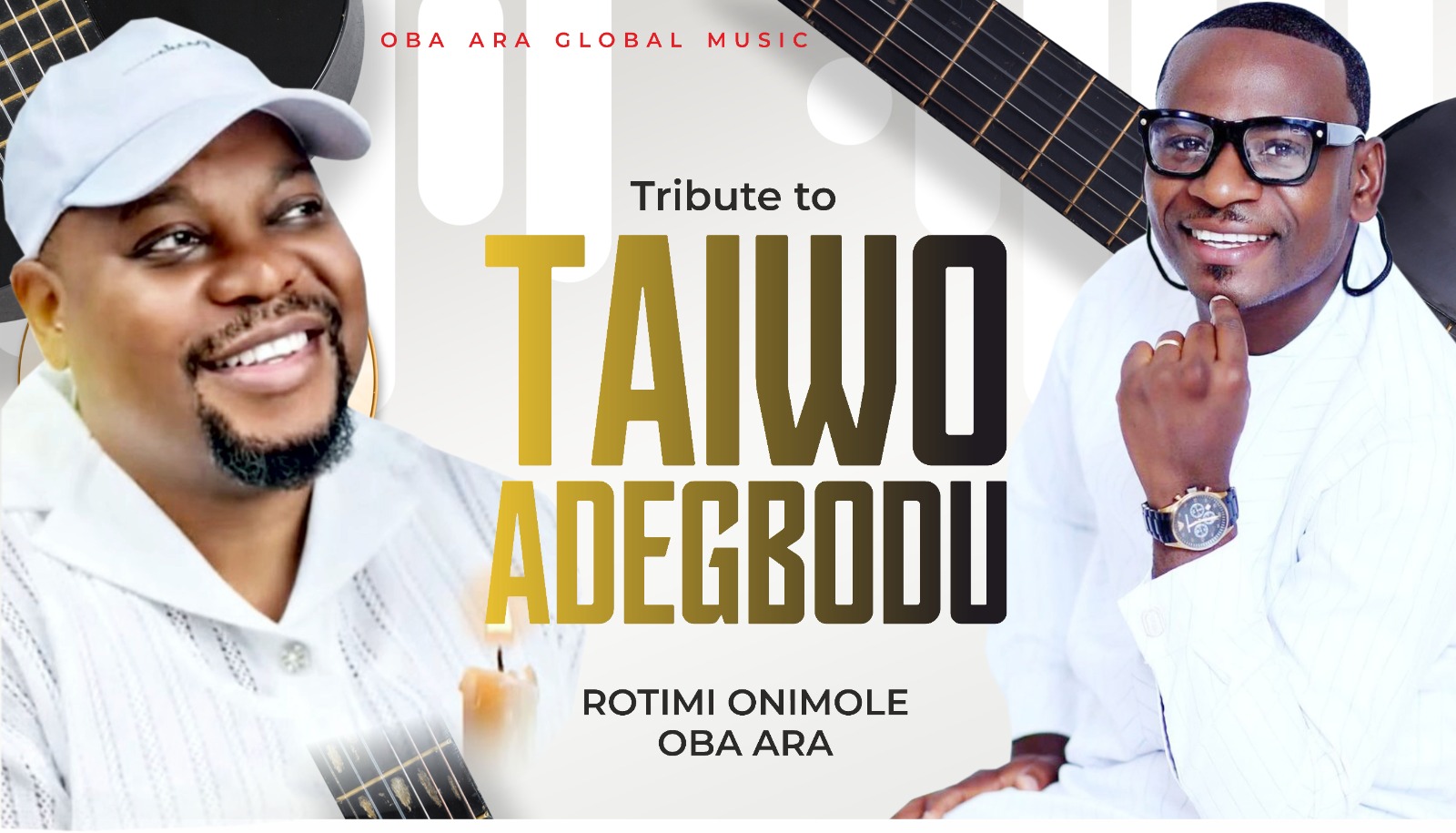
Oba Ara Releases Emotional Tribute to Late Taiwo Adegbodu
Taofik Afolabi
The gospel music community continues to grieve the painful loss of Taiwo Adegbodu, a beloved figure whose sudden departure left a deep void among fans, colleagues, and loved ones. In response to this loss, renowned gospel minister Rotimi Onimole, popularly known as Oba Ara, has released a moving tribute song that captures both the sorrow of the moment and the enduring legacy of the late singer.
Oba Ara, a proud son of Isale Eko, channels raw emotion throughout the song, using heartfelt lyrics and soul-stirring melodies to reflect on his personal connection with Taiwo Adegbodu. In the tribute, he openly expresses how deeply the news of Adegbodu’s passing shook him, describing it as a painful and unexpected loss that is difficult to come to terms with.
The song goes beyond mourning, it celebrates the life, ministry, and impact of Taiwo Adegbodu. Oba Ara highlights the late artist’s dedication to spreading the gospel through music, his inspiring voice, and the spiritual influence he had on many within and beyond Nigeria. Through powerful verses, he paints a picture of a man who lived for God and touched countless lives through his ministry.
Listeners have described the tribute as both comforting and deeply emotional, as it resonates with the collective grief of the gospel music community. It serves as a reminder that although Taiwo Adegbodu is no longer physically present, his music, message, and legacy will continue to live on.
In honoring his late colleague, Oba Ara not only pays his respects but also offers a source of healing for fans and fellow ministers, using music as a tool to process grief and celebrate a life well lived.
celebrity radar - gossips
Buratai, Fagbemi , Shagaya, Olofa, Others Eulogise Olowu Kuta’s Olori On 60th Birthday, Foundation Launch
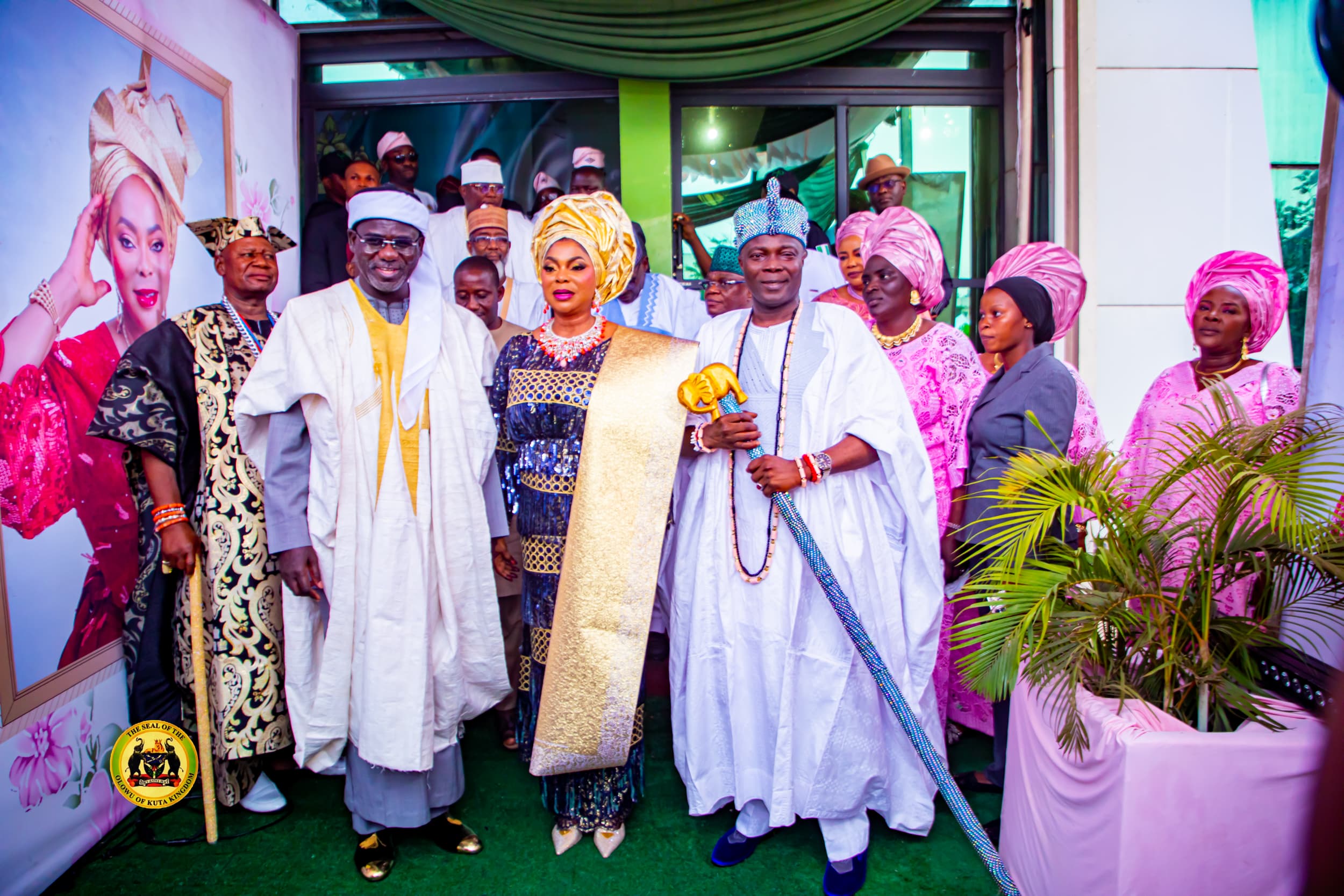
Buratai, Fagbemi , Shagaya, Olofa, Others Eulogise Olowu Kuta’s Olori On 60th Birthday, Foundation Launch
Eminent personalities across the Nigeria stormed the TFK Event Centre, Bala Mohammed Way, Guzape, Abuja, to celebrate the 60th birthday of Olowu Kuta’s Olori, Queen Jumai Amoke and her Foundation Launch on Saturday 28, March 2026.

From former Chief of Army Staff, Lt Gen TY Buratai rtd, to the Minister of Justice and Attorney-General of the Federation, Prince Lateef Fagbemi; Olofa of Offa, HRM Oba Mufutau Gbadamosi. Even top businesswoman and socialite, Chief (Mrs) Bola Shagaya, was in attendance.


Other dignitaries were newly promoted Deputy Inspector-General of Police and former AIG Zone 2 , Lagos , Adegoke Fayoade, Major General Abdumalik, Major General Samuel Adebayo rtd (Fmr CDI);
Major General Anthony Omozoje rtd (Fmr Copp);
Alhaji Tajudeen Owoyemi (Asiwaju of Offa and CEO Radisson Hotel Nigeria;
Dr Waheed Olagunju, former managing director of Bank of Industry, Oniba of Iba, Lagos State, HRM Oba Dr Suleiman Raji ;
Justice Falola, Olu of Ile-Ogbo , Oba Adetoyese amongst many traditional rulers and captains of industry too numerous to mention.
Speaking at the occasion, the Chief Host, Olowu of Kuta, HRM Oba Dr Adekunle Oyelude Makama, CON , Tegbosun iii, who is also the husband of the celebrant commended Queen Jumai for ‘ her slender arms full of kindness’ to establish such humanitarian Foundation, ‘Amoke Children and mother in Need Foundation’ at a time Nigerians are going through economic crisis occassioned by the global meltdown.
Olowu also commended her steadfastness and love for the less privileged and downtrodden.
The monarch refrenced the task before his wife’s humanitarian gesture said her best is yet to come.
” Olori Amoke Jumai, I celebrate you. You will celebrate 70, 80, 90 and continue to shine as you continue to put a smile on people’s faces. I love you, “Olowu Kuta added.
To Lt Gen Buratai, a former army chief and former Nigerian Ambassador to Benin Republic, the reward of hard work is more work.
Buratai, who also doubles as Balogun Agba of Owu Kuta, a chieftaincy title reserved for a generalismo congratulated Queen Jumai for attaining the age of 60 in good health.
The retired army General said he’s not surprised by the turn out of eminent personalities across the country to celebrate the Olowu Kuta’s Olori because she merited it through her hospitality to all, adding that Allah the most merciful, most beneficial would accept all her act of ibadah.
The minister of Justice, Prince Fagbemi, was full of praises for Queen Jumai for deeming it fit to have a place in her heart to accommodate the needy and less privileged in ‘our society.’
Prince Fagbemi urged the guests to contribute generously to support the Foundation in order to continue to alleviate poverty and put a smile on the faces of the people.
” I congratulate you on your 60th birthday and Foundation Launch. I wish you many happy returns of the day and many more fruitful services to the country and motherland”, Prince Fagbemi added.
The celebrant, Queen Jumai who was grining from ear to ear thankfully said she was excited by the turn out and the response of the people to her foundation.
Queen Jumai, however, promised to continue to use her resources and donations received for the good of the needy and less privileged in the society.
” I want to appreciate my own Kabiesi Olofa of Offa , for his presence and im I’m using him as a point of contact to all other Kabiesis present here, the minister of justice and Attorney-General, you’re welcome, sir; Mrs Bola Shagaya, I salute your enterprise, Lt Gen Buratai, I’m grateful, sir; DIG Fayoade, Justice Falola and other dignitaries too numerous to mention, I thank you, all. To my darling husband, Kabiesi Olowu , I thank you immensely for your support. And to my family and friends, I thank you , all. E se pupo!”, she said.
celebrity radar - gossips
Adron Homes Elevates Cultural Pride as Dignitaries Grace 39th Lisabi Festival in Abeokuta
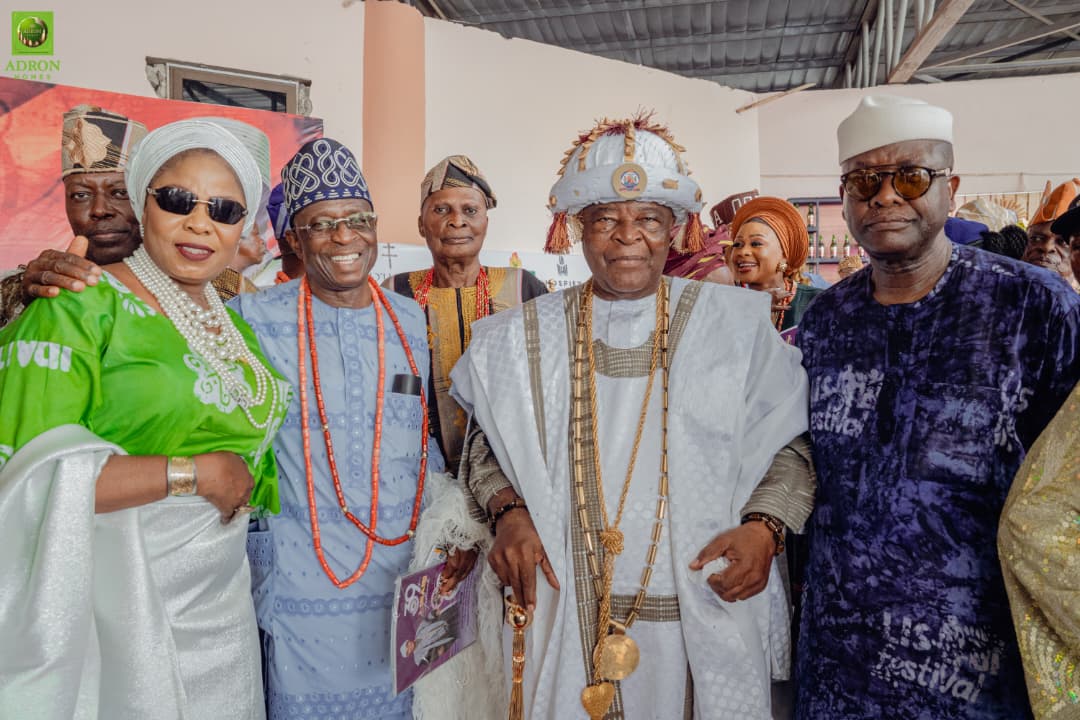
Adron Homes Elevates Cultural Pride as Dignitaries Grace 39th Lisabi Festival in Abeokuta
The ancient city of Abeokuta came alive in a grand display of culture, history, and unity as dignitaries from across Nigeria converged at the iconic Ake Palace Ground for the 39th edition of the Lisabi Festival, an annual celebration deeply rooted in the Egba people’s heritage.
The event, proudly supported by Adron Homes and Properties Limited, witnessed an impressive parade of distinguished personalities, traditional rulers, government officials, business leaders, and cultural enthusiasts, all captured in vibrant pictures that tell the story of a people united by history and pride.
From richly adorned monarchs in regal attire to elegantly dressed guests reflecting the depth of Yoruba tradition, the images from the festival encapsulate moments of honour, reverence, and celebration. Each photograph portrays not just faces, but influence, leaders, and stakeholders who continue to shape cultural preservation and community development.
At the heart of the celebration was the revered Oba Adedotun Aremu Gbadebo, whose presence underscored the festival’s significance as a symbol of Egba resilience and identity. Surrounding him were eminent dignitaries whose attendance further amplified the prestige of the event.
Adron Homes and Properties Limited stood out prominently, not only as a sponsor but as a key driver of cultural sustainability. Through its strategic support, the company reinforced its commitment to preserving indigenous heritage while fostering community engagement. The brand’s visibility across the venue and within the pictorial highlights reflects a deliberate alignment with culture, tradition, and people-centered development.
Beyond real estate, Adron Homes has continued to position itself as a cultural partner, investing in platforms that celebrate history and strengthen communal bonds. Its involvement in the Lisabi Festival is a testament to its broader vision of building not just homes, but legacies rooted in identity and pride.
The 39th Lisabi Festival, as captured through the lens of dignitaries in attendance, is more than an event, it is a narrative of continuity. And through its unwavering support, Adron Homes has once again set the pace, demonstrating that corporate institutions can play a vital role in sustaining the cultural heartbeat of a people.
As the echoes of drums fade and the colours of the festival linger in memory, one thing remains clear: the story told through these images is one of unity, heritage, and the enduring partnership between tradition and progress.


-

 society6 months ago
Religion: Africa’s Oldest Weapon of Enslavement and the Forgotten Truth
-

 news4 months ago
WHO REALLY OWNS MONIEPOINT? The $290 Million Deal That Sold Nigeria’s Top Fintech to Foreign Interests
-

 society6 months ago
“You Are Never Without Help” – Pastor Gebhardt Berndt Inspires Hope Through Empower Church (Video)
-

 celebrity radar - gossips2 months ago
Dr. Chris Okafor Returns with Power and Fire of the Spirit -Mounts Grace Nation Altar with Fresh Anointing and Restoration Grace on February 1, 2026
You must be logged in to post a comment Login
You must log in to post a comment.