
celebrity radar - gossips
Dapo Abiodun: Born on Nigeria’s Democracy Day


Lanre Alfred pays tribute to Governor Dapo Abiodun of Ogun State whose birthday is tied to Nigeria’s Democracy Day
Among friends and associates in the exclusive circle of Prince Dapo Abiodun, Governor of Ogun State, the word ‘Osele’ needs no explanation except you don’t fall into either category. Those who know – know that it is a favourite slogan of Prince Abiodun (before he became governor), which means ‘It happened.’ Every accomplishment or acquisition was heralded with a gleeful ‘O Sele’.

So, to God be the glory, May 29th, 2019, happened. For over five decades, however, the date held a different kind of significance for him. It is his birth date. This year’s May 29th is even more symbolic because Prince Dapo Abiodun turns 60 on the same day he would be celebrating his one year anniversary as the Governor of Ogun State.
Indeed, he could not have got a greater and more befitting 59th birthday gift in 2019 than his inauguration as the democratically elected governor of the Gateway State – a fitting denouement to an episodic political journey which began about three decades ago. Governor Abiodun’s life offers interminable lessons on the beauty and benefits of resolve, compassion, unpretentious generousity and family values. I know.

“A man is nothing without his virtues”, he argues. Thus, he endeavours to do good. But his deeds are done not as an apology or extenuation of his fortune and citizenship of the world. While many a rich man propagates virtues as penances for the inactions of the world’s privileged divide, he imbibes and perpetuates the culture of goodness not out of a frantic zeal to apologize or expiate the perceived frailties of his rich, privileged divide; he does his thing because it is an intrinsic part of his humanity.
Since I made his acquaintance about 12 years ago, our relationship has blossomed into a bond emblematic of the best form of filial devotion and affection. I met him first through a senior colleague and later, more intimately through a mutual friend. I would discover that beneath the glitz and glamour of being a successful businessman with all the accoutrements of fame and fortune at his beck and call, he is humane and humble. He is imbued with nonpareil intelligence, a clear-thinking, analytical mind, quick wit and sheer oratorical skills. Governor Abiodun is one of the very few people I know that can never be blindsided or fazed by any eventuality. His calmness and infinite optimism even in the face of life’s greatest odds are inspiring and worthy of the respect and aspiration of coming generations.
As a young businessman, DA, as he is fondly called, was elected a Senator of the Federal Republic of Nigeria on the platform of the defunct United Nigeria Congress Party (UNCP) in 1993. He was just 33years old. However, the military incursion of that year led by the despotic General Sani Abacha truncated that democratic process. The Iperu Remo Prince never gave up. While succeeding in business, he never abdicated politics. Circa 1998, he joined other like-minded Nigerians to start the Peoples Democratic Party (PDP) in Ogun State. In 2002, he lost the governorship primary of the PDP to his bosom friend, Otunba Gbenga Daniel who went on to govern for two terms. Prince Dapo bade his time.
When he contested to represent Ogun East Senatorial District in 2015, I worked closely with him and came to the conclusion that but for passion and genuine humaneness, he didn’t have any business in the dog-eat-dog game of politics. He lost the election but never lost the passion to make life better for humanity.

Some years after, when he told me that he would be contesting for the governorship, I did not hesitate to buy into his clear-cut vision to make Ogun State a primus inter pares and build a better future for its people and posterity. I formed a group called the Dapo Abiodun Alliance Group, DAAG, with some brilliant young minds who also share his vision. We combed the nook and cranny of Ogun State, propagating the ideals of Prince Dapo Abiodun. Even when it became too hot for us, we were motivated by a shared belief in his mission. It was quite an experience. Thankfully, he won the election!
That relentless spirit has, indeed, paid off. It is the same spirit that has guided him through the bittersweet, cut-throat world of global commerce until he emerged unscathed and undaunted in spirit and resolve like a champion. His story is indeed worth telling and retelling for posterity. And I am honoured for the rare privilege to pen this timeless tribute to a man of substance and immeasurable worth.
Unlike other billionaires that one met in the course of life’s peregrination, the very sociable and likeable Prince never treats anyone as a minion or stranger hence, his friendly disposition to everyone, which makes people feel very comfortable in his company. I have travelled with him within and outside Nigeria; enjoyed his hospitality and bonhomie, and benefitted immensely from his well of wisdom. I felt welcomed in his company at all times in those early days of our acquaintanceship. Apart from giving you a sense of true belonging whenever and wherever your path crosses with his, he never shies away from introducing you to his high profile contacts. And he always has good words to say about one.
Being the governor of a State like Ogun has further shown and convinced me that he is a very focused and driven leader and that those personal attributes are inherent, not superficial. He can be described as a ‘good headache’ because he will push and drive you while bringing out the best in you. I would come to understand that what Governor Abiodun envisions for Ogun State drives his pursuits while his yearning for progress pits him against the odds that he inherited. Therefore, he is focused on making the remaining years of his stewardship the best for the people of the state. To actualise his goals, the governor is exploring every avenue to attract growth and progress for Ogun State; and, he has been hands-on and virtually omnipresent in all areas of the state’s life with laudable schemes and visible projects dotting the landscape of the state.
Born in Sagamu, Ogun State, he started his early education in the rustic township. His parents were teachers who taught in the same community. As a kid, he learnt a lot from his parents. From his father, Elder Abiodun, he learnt humility, sacrifice, tact, wisdom and patience. Whatever he learnt from his father was reinforced by his mother. Both parents schooled and fed him on a diet of tough love and inexorable compassion. They taught him to value every human life and relationship.
Even now, he relives the sparks of magic and tufts of grace wrought in his psyche by his exceedingly principled and loving parents. His life as a child was brilliant with sunshine. As the sun emblazons the sky in beams of gold and brightens the earth with brilliant spokes, his parents’ love radiated all over him and imbued him with something of the fabled beauty of Eden and the charm of Neverland. But His parents had no trust fund to bequeath to him. The only fortune he inherited from them was character.
One star-spangled night many years ago, in his baronial Banana Island, Ikoyi, Lagos home, he recalled, “I must tell you that I come from a very humble background and my parents are still living. My parents were teachers and I did not inherit any money from anybody. My story is such that let me say, if I can be where I am today, anybody can be here, I mean, anybody. And it goes a long way to show that you don’t have to have been born by a rich father or mother to be successful in life. My grandfather never believed that he would have a grandson who would be where I am today. “Where I am today is just by the special grace of God. God just wanted to change the situation of my family and I think that is why he has raised me to be a blessing to my home.”
In the pursuit of glory, Prince Dapo learnt to thrive like a lily in unimaginable valleys. Like white rose growing on concrete slabs or the daring mushroom that pierces the motionless eternity of earth, pushing clearly but obstinately, through faint form, till the hour of fertility strikes, he sought to flourish where many had cowed to defeat. He knew quite early in life that his humble roots should inspire him to success rather than become a burden and impediment to his spirited strides to success. He understood that to learn even the quarter of a breeze, he must hold up a wet finger. Hence, he pursued knowledge to his advantage.
However, his ascent on the steep slope of entrepreneurial success and acclaim didn’t lie out in flat miles. It was replete with rigours and daunting challenges. But he towered above all odds to become a successful magnate with vested interests in the global oil and real estate sectors. His success is attributable to hard, valuable lessons from his parents. Among other things, he learnt that there was no wisdom in waiting to see asters bloom on barren land. He understood that foresight in moving out of his comfort zone in search of greener pasture. Guided by the priceless wisdom of the aged, he left home to seek his fortune elsewhere – he knew perfectly well that only an oyster remains forever at the old homestead. He proceeded to establish himself and started Heyden Petroleum Limited (HPL) with a vision to become a leading global energy and services company. He also sought to create an effective corporate structure to consolidate on growth and his core interest in energy, power and construction.
Revered at home and recognised abroad for his protean productivity and impeccable business foresight, spotting goldmine where many see landmines, he also understands that politics is far too precious and fundamental to be left to the wiles and exploits of villainous characters. Thus, his belief that the doctrine of altruism and love must be preached as a counteraction to the doctrine of hate and greed that has overtime become the norm in political circuits. Virtues, according to him, should be in the popular estimate, the rule guiding human conduct in business, social and political circuits rather than the exception.
At a time when it is generally believed that one has to be a lowbrow, an incorrigible liar and a bit of a murderer, to be a politician, he ventured into politics to improve lives yet unwilling to see people sacrificed and slaughtered for the sake of his ambition. In the estimation of many friends and associates, he is cut out for greater roles in the affairs of the country but rather than get high on the wings of the lofty hopes about him, he has chosen to begin his humble ascent in the corridors of power by connecting with his people from the grassroots.
Many people have benefitted in no small measure from the benevolence of his heart and sipped from the fountain of his experience, it is only expedient to extol the virtues of this great man without any recourse to sophistry or gratuitous ornamentation. In politics, Governor Abiodun has been a roaring success and the people of Ogun State can attest to this. In the business world, you cannot question his place in the clan of Nigeria’s successful business tycoons. And his domestic felicity will continue to make younger people run to him for tips.
Happy birthday, The Special One!
Culled from ThisDay





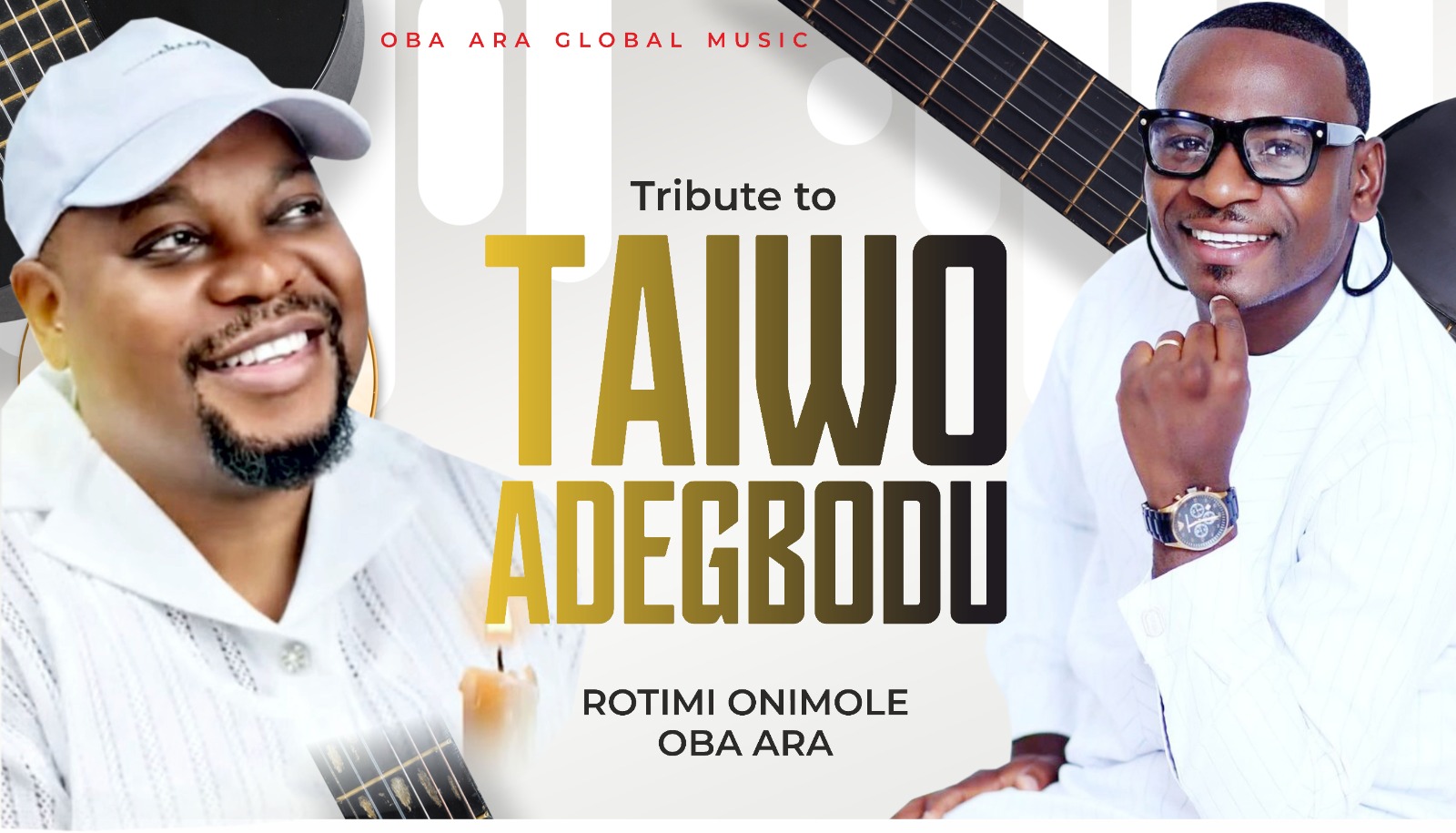
Oba Ara Releases Emotional Tribute to Late Taiwo Adegbodu
Taofik Afolabi
The gospel music community continues to grieve the painful loss of Taiwo Adegbodu, a beloved figure whose sudden departure left a deep void among fans, colleagues, and loved ones. In response to this loss, renowned gospel minister Rotimi Onimole, popularly known as Oba Ara, has released a moving tribute song that captures both the sorrow of the moment and the enduring legacy of the late singer.
Oba Ara, a proud son of Isale Eko, channels raw emotion throughout the song, using heartfelt lyrics and soul-stirring melodies to reflect on his personal connection with Taiwo Adegbodu. In the tribute, he openly expresses how deeply the news of Adegbodu’s passing shook him, describing it as a painful and unexpected loss that is difficult to come to terms with.
The song goes beyond mourning, it celebrates the life, ministry, and impact of Taiwo Adegbodu. Oba Ara highlights the late artist’s dedication to spreading the gospel through music, his inspiring voice, and the spiritual influence he had on many within and beyond Nigeria. Through powerful verses, he paints a picture of a man who lived for God and touched countless lives through his ministry.
Listeners have described the tribute as both comforting and deeply emotional, as it resonates with the collective grief of the gospel music community. It serves as a reminder that although Taiwo Adegbodu is no longer physically present, his music, message, and legacy will continue to live on.
In honoring his late colleague, Oba Ara not only pays his respects but also offers a source of healing for fans and fellow ministers, using music as a tool to process grief and celebrate a life well lived.
celebrity radar - gossips
Buratai, Fagbemi , Shagaya, Olofa, Others Eulogise Olowu Kuta’s Olori On 60th Birthday, Foundation Launch

Buratai, Fagbemi , Shagaya, Olofa, Others Eulogise Olowu Kuta’s Olori On 60th Birthday, Foundation Launch
Eminent personalities across the Nigeria stormed the TFK Event Centre, Bala Mohammed Way, Guzape, Abuja, to celebrate the 60th birthday of Olowu Kuta’s Olori, Queen Jumai Amoke and her Foundation Launch on Saturday 28, March 2026.

From former Chief of Army Staff, Lt Gen TY Buratai rtd, to the Minister of Justice and Attorney-General of the Federation, Prince Lateef Fagbemi; Olofa of Offa, HRM Oba Mufutau Gbadamosi. Even top businesswoman and socialite, Chief (Mrs) Bola Shagaya, was in attendance.


Other dignitaries were newly promoted Deputy Inspector-General of Police and former AIG Zone 2 , Lagos , Adegoke Fayoade, Major General Abdumalik, Major General Samuel Adebayo rtd (Fmr CDI);
Major General Anthony Omozoje rtd (Fmr Copp);
Alhaji Tajudeen Owoyemi (Asiwaju of Offa and CEO Radisson Hotel Nigeria;
Dr Waheed Olagunju, former managing director of Bank of Industry, Oniba of Iba, Lagos State, HRM Oba Dr Suleiman Raji ;
Justice Falola, Olu of Ile-Ogbo , Oba Adetoyese amongst many traditional rulers and captains of industry too numerous to mention.
Speaking at the occasion, the Chief Host, Olowu of Kuta, HRM Oba Dr Adekunle Oyelude Makama, CON , Tegbosun iii, who is also the husband of the celebrant commended Queen Jumai for ‘ her slender arms full of kindness’ to establish such humanitarian Foundation, ‘Amoke Children and mother in Need Foundation’ at a time Nigerians are going through economic crisis occassioned by the global meltdown.
Olowu also commended her steadfastness and love for the less privileged and downtrodden.
The monarch refrenced the task before his wife’s humanitarian gesture said her best is yet to come.
” Olori Amoke Jumai, I celebrate you. You will celebrate 70, 80, 90 and continue to shine as you continue to put a smile on people’s faces. I love you, “Olowu Kuta added.
To Lt Gen Buratai, a former army chief and former Nigerian Ambassador to Benin Republic, the reward of hard work is more work.
Buratai, who also doubles as Balogun Agba of Owu Kuta, a chieftaincy title reserved for a generalismo congratulated Queen Jumai for attaining the age of 60 in good health.
The retired army General said he’s not surprised by the turn out of eminent personalities across the country to celebrate the Olowu Kuta’s Olori because she merited it through her hospitality to all, adding that Allah the most merciful, most beneficial would accept all her act of ibadah.
The minister of Justice, Prince Fagbemi, was full of praises for Queen Jumai for deeming it fit to have a place in her heart to accommodate the needy and less privileged in ‘our society.’
Prince Fagbemi urged the guests to contribute generously to support the Foundation in order to continue to alleviate poverty and put a smile on the faces of the people.
” I congratulate you on your 60th birthday and Foundation Launch. I wish you many happy returns of the day and many more fruitful services to the country and motherland”, Prince Fagbemi added.
The celebrant, Queen Jumai who was grining from ear to ear thankfully said she was excited by the turn out and the response of the people to her foundation.
Queen Jumai, however, promised to continue to use her resources and donations received for the good of the needy and less privileged in the society.
” I want to appreciate my own Kabiesi Olofa of Offa , for his presence and im I’m using him as a point of contact to all other Kabiesis present here, the minister of justice and Attorney-General, you’re welcome, sir; Mrs Bola Shagaya, I salute your enterprise, Lt Gen Buratai, I’m grateful, sir; DIG Fayoade, Justice Falola and other dignitaries too numerous to mention, I thank you, all. To my darling husband, Kabiesi Olowu , I thank you immensely for your support. And to my family and friends, I thank you , all. E se pupo!”, she said.
celebrity radar - gossips
Adron Homes Elevates Cultural Pride as Dignitaries Grace 39th Lisabi Festival in Abeokuta
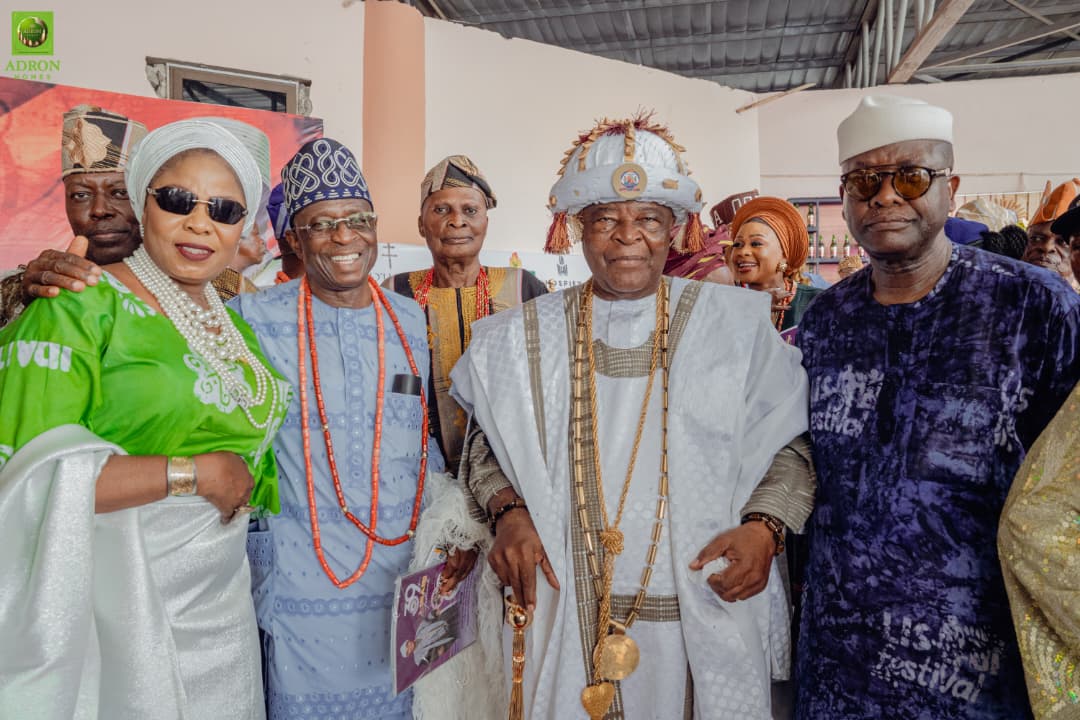
Adron Homes Elevates Cultural Pride as Dignitaries Grace 39th Lisabi Festival in Abeokuta
The ancient city of Abeokuta came alive in a grand display of culture, history, and unity as dignitaries from across Nigeria converged at the iconic Ake Palace Ground for the 39th edition of the Lisabi Festival, an annual celebration deeply rooted in the Egba people’s heritage.
The event, proudly supported by Adron Homes and Properties Limited, witnessed an impressive parade of distinguished personalities, traditional rulers, government officials, business leaders, and cultural enthusiasts, all captured in vibrant pictures that tell the story of a people united by history and pride.
From richly adorned monarchs in regal attire to elegantly dressed guests reflecting the depth of Yoruba tradition, the images from the festival encapsulate moments of honour, reverence, and celebration. Each photograph portrays not just faces, but influence, leaders, and stakeholders who continue to shape cultural preservation and community development.
At the heart of the celebration was the revered Oba Adedotun Aremu Gbadebo, whose presence underscored the festival’s significance as a symbol of Egba resilience and identity. Surrounding him were eminent dignitaries whose attendance further amplified the prestige of the event.
Adron Homes and Properties Limited stood out prominently, not only as a sponsor but as a key driver of cultural sustainability. Through its strategic support, the company reinforced its commitment to preserving indigenous heritage while fostering community engagement. The brand’s visibility across the venue and within the pictorial highlights reflects a deliberate alignment with culture, tradition, and people-centered development.
Beyond real estate, Adron Homes has continued to position itself as a cultural partner, investing in platforms that celebrate history and strengthen communal bonds. Its involvement in the Lisabi Festival is a testament to its broader vision of building not just homes, but legacies rooted in identity and pride.
The 39th Lisabi Festival, as captured through the lens of dignitaries in attendance, is more than an event, it is a narrative of continuity. And through its unwavering support, Adron Homes has once again set the pace, demonstrating that corporate institutions can play a vital role in sustaining the cultural heartbeat of a people.
As the echoes of drums fade and the colours of the festival linger in memory, one thing remains clear: the story told through these images is one of unity, heritage, and the enduring partnership between tradition and progress.


-

 society6 months ago
Religion: Africa’s Oldest Weapon of Enslavement and the Forgotten Truth
-

 news4 months ago
WHO REALLY OWNS MONIEPOINT? The $290 Million Deal That Sold Nigeria’s Top Fintech to Foreign Interests
-

 society6 months ago
“You Are Never Without Help” – Pastor Gebhardt Berndt Inspires Hope Through Empower Church (Video)
-

 celebrity radar - gossips2 months ago
Dr. Chris Okafor Returns with Power and Fire of the Spirit -Mounts Grace Nation Altar with Fresh Anointing and Restoration Grace on February 1, 2026