
celebrity radar - gossips
Ex-legislative aides recount tales of woes over Non- Payment of N9b severance package


Five months after,Aides to members of the National Assembly are yet to be paid their unpaid N9billion duty tour and severance allowances. Sahara Weekly’s check revealed that the over 3000 former aides of the 7th Assemb ly are currently living in excruciating pains, poverty and abject sorrow. A cross section of the aides who besieged our office recount their tale of woes and pains while their boss are gallivanting about with a care about the welfare of their aides.
Q- Can you introduce yourself to us?
R- Well! My name is Rotimi Kazeem Shitabe, a member of the seventh assembly legislative aides. We served from 2011 to 2015.
– My name is Alausa Ismaila, from Surulere constituency member of the seventh Assembly of NASTAF member at the National Assembly.
Q- We learnt that you’ve not been paid your severance, so can you share us what really happen, is it true?
R- yes! Ehn! We are being denied our civic-alliance entitlement. They have delayed it too much and it has attracted suspicion of embezzlement and fraud because as legislative aides from seventh assembly, we learnt that our principals have collected their severance pay as at June 2015. Sadly, up to date we have not receive our severance package. Also we’ve not received our duty tour allowance while we are in office and up to date.
Q- When are you supposed to get it and what are the measures you’ve taken to ensure that your packages or allowance were paid?
R- what we gathered from the sixth assembly was that Immediately we finished the tenure, it should be minimum of one month for the national assembly to pay the legislative aides their severance due to them. And we have a body called NASTAF in the national assembly. It is constituted of legislative aides, but we have coordinators over there and some have joined the eighth assembly which has helped us to have access in the National Assembly right now. And they’ve made several connections to meet the clerk of the house. We even staged a protest which was successful and it was recorded that it is the number one protest successfully done in Nigeria. Well! But up to now we’re hearing sort of rumours that the clerk has signed the money on ground but have not been given to us. We are about 3000 legislative aides for God sake. About 5 legislative aides are been attach to each honourable, so we are talking about billions.
Q- Are your bosses aware of this and what is their reaction?
R- well! They’re much aware of it because they know what is happening. They’ve collected their own, I mean their severance as at June 2015, and I think they should show sense of leadership. I don’t think they should have kept quiet without doing anything because they brought us to national assembly for God sake. So, I don’t know why they kept quiet on this issue.
Q- For Instance, what is the minimum severance package due to each aide?
R- We have levels. To start with, we have personal assistants, secretary, legislative aides 1, legislative aides 2 and SLA( Senior Legislative Assistance) and am not going to get it exaggerated, I think from the secretary above anybody should stand minimum of N 2 million above.
Q- Now, Can you tell us, what’s the pathetic state of all these aides, how have they been coping since they left office?
R- Whao! That is a serious question because as am talking to you its not easy at all. Imagine how it feels when you have not collected your salary for four months. A lot of us, the landlords are after us, our children are at home, even to feed is very hard and we’ve served this country diligently. We’ve severed our father’s land within our constituency and now this is the time for us to reap where we sow and some evil people in the national assembly are depriving us of our entitlement. I think it is very bad. I will not allow my children to serve this country because I’ll not let them pass through what I’ve gone through.
Q- I heard that it is difficult for some of you to even move out, so what do you intend to do. Is it true that so many of them are not able to feed their family.
R- Yes! Right now, even as I’ve said, I’ll make myself as an example. You know, we’re tired, we’re hungry, our children are at home, and our landlord is after us. Financially everything is down. Even to this minute, all is not going well, even some people cannot go for a particular destination to the other because of transportation, that is why we are begging Mr president that we know that he’s the father of change and we know that he will do it for us. He is a messiah of change that is the reason why we are begging him to please intervene in this matter as soon as possible for us to receive our severance and also our duty tour allowance.
What has happen to our duty tour allowance?, we are entitled to it while we are in office and what has happened to it?. Now we are also begging the senate president to please intervene as soon as possible on this matter. It is very critical at the moment because people cannot feed, we have served our father’s land diligently and it will not be nice for us to be crying on this matter every day. We’ve tired enough since we left office, nothing is going on, we’re jobless, and things are down really.
Q- So can you tell us what precisely do you work under as legislative aides?
R- I worked under honourable Monsuru Alao Owolabi, mainland federal constituency from 2011 to 2015.
Q- Okay lets hear from you, Mr Alausa, so can you tell us on your own side of the story.
R- hmmm…. What I have to say is just very simple. We just cry out to Mr. President to help prevail on minister of finance to release the money to the commission so that they can be able to settle us. But the information gathered is that ministry of finance is holding the money, that they didn’t release it to national assembly commission. if they have done that they would have pay us. So we just appealed with Mr president to look into this matter.
Q- Can you share with us what your mates are complaining about?
R- They are really complaining. You see this morning some of them could not make it to this place due to financial reasons.
It would be recalled that aides to members of the National Assembly protested their unpaid N9billion duty tour and severance allowances in September, 2015.
The Acting Clerk of the National Assembly, Mr. Ben Efeturi, assured the protesters that everything would be done to address their concerns.
Efeturi said the National Assembly’s management would not unduly cause them pains.
The protesting aides were led to the office of the Acting Clerk by the Chairman of the South-West chapter of National Assembly Legislative Aides Forum (NASSLAF), Hon. Al-Maroof Yinka Ajibolu.
According to Ajibolu, the aides were demanding to be paid Duty Tour Allowances (DTA) that have been due since April, last year.
“We had to meet them over our delayed severance benefits and our unpaid DTA”, Ajibolu told The Nation shortly before the peaceful protest march to the Acting Clerk’s office..
He also said the Severance Gratuity Allowance which ought to have been paid immediately after legislators received theirs about two months ago.
Mr. Efeturi, who made futile efforts to reach the National Assembly’s Director of Finance and Accounts, Alhaji Lasisi Bukoye on telephone, gave assurances that he would ensure a meeting between the aggrieved aides’ leaders and Bukoye today.
“They promised to pay the DTA, which ought to have been paid since April after legislators collected theirs but till date, the National Assembly management has kept quiet on the matter, knowing that we would be more focussed on the severance allowance.
“They promised to pay the DTA, which ought to have been paid since April after legislators collected theirs but till date, the National Assembly management has kept quiet on the matter, knowing that we would be more focussed on the severance allowance”
“Also, they ought to have paid us the severance allowance immediately after paying that of legislators but all that we are hearing is that some people are trying to figure out the best way to short-change us and ensure that we do not get our full entitlements.
“Such problems have occurred in the past but this time, we are more than ready for them as we know that President Mohammadu Buhari and Speaker Dogara would bring down the full weight of the law on any of the officials who may be implicated in National Assembly shenanigans,” an aide, who requested anonymity, stated.
On July 24, in response to The Nation’s enquiry, Bukoye blamed the delay in payment on paucity of funds.
The outstanding (DTA) being owed each of the approximately 3, 000 aides is about N75, 000.
Also, in conformity with the Revenue Mobilisation, Allocation and Fiscal Commission’s stipulations, each of the five aides serving 109 Senators and 360 members of the House of Representatives is entitled to amounts ranging from N1 million to N4 million after four years’ service




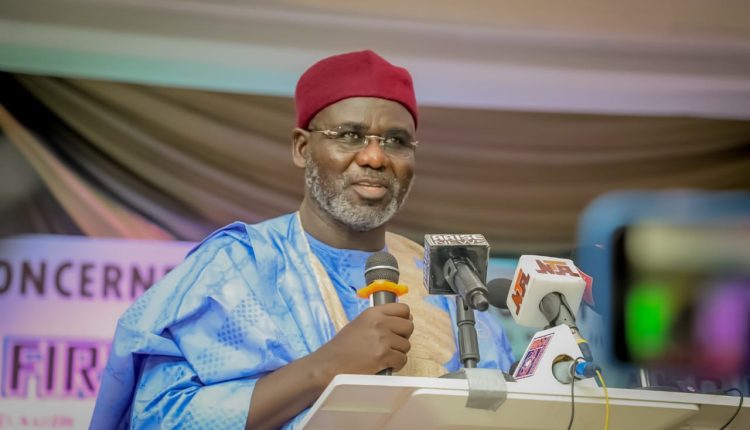
BURATAI URGES ECOWAS UNITY, CALLS FOR RETURN OF SAHEL STATES AT VON FORUM
ABUJA – In a powerful appeal for regional stability, former Chief of Army Staff, Lt. Gen. TY Buratai (rtd), has called on ECOWAS and the African Union (AU) to prioritize the return of the Association of Sahel States (AES) to ensure the survival of West African integration.
Speaking Thursday at the Voice of Nigeria (VON) Forum 2026 in Abuja, Buratai warned that the region’s progress could become a “mirage” without the inclusion of Mali, Burkina Faso, and Niger Republic.
A Legacy of Sacrifice

Buratai highlighted Nigeria’s historic role as the “unshakable anchor” of the sub-region. He pointed to Nigeria’s decades of leadership in ECOMOG missions across Liberia, Sierra Leone, The Gambia, and Guinea-Bissau as evidence of the nation’s commitment.
”Nigeria has sacrificed and invested in blood, treasure, and diplomacy to defend democracy,” Buratai stated. “Our stability is inseparable from the security of our neighbours.”
The Path to Unity
The General urged ECOWAS to deepen its engagement with the African Union to bridge the current diplomatic rift with the AES nations. He emphasized that the collective security of West Africa depends on a unified front, noting that democracy and regional safety are “two sides of the same coin.”
”The unity of ECOWAS cannot be complete without Mali, Burkina Faso, and Niger Republic. Without unity, progress in the region may be a mirage,” Buratai cautioned.
Celebrating 51 Years of VON
The forum also served as a celebration of Voice of Nigeria’s 51st anniversary. Buratai lauded the broadcaster as a “Nigerian voice with an African heart,” praising its professionalism and pan-African vision.
He paid tribute to veteran journalists, including the late Mohammed Okorejor and retired director Ben Shamang, while commending the current Director General for revitalizing the agency.
The retired General concluded his message with a call to strengthen regional institutions, urging leaders to honor the legacy of ECOWAS through renewed cooperation and institutional integrity.
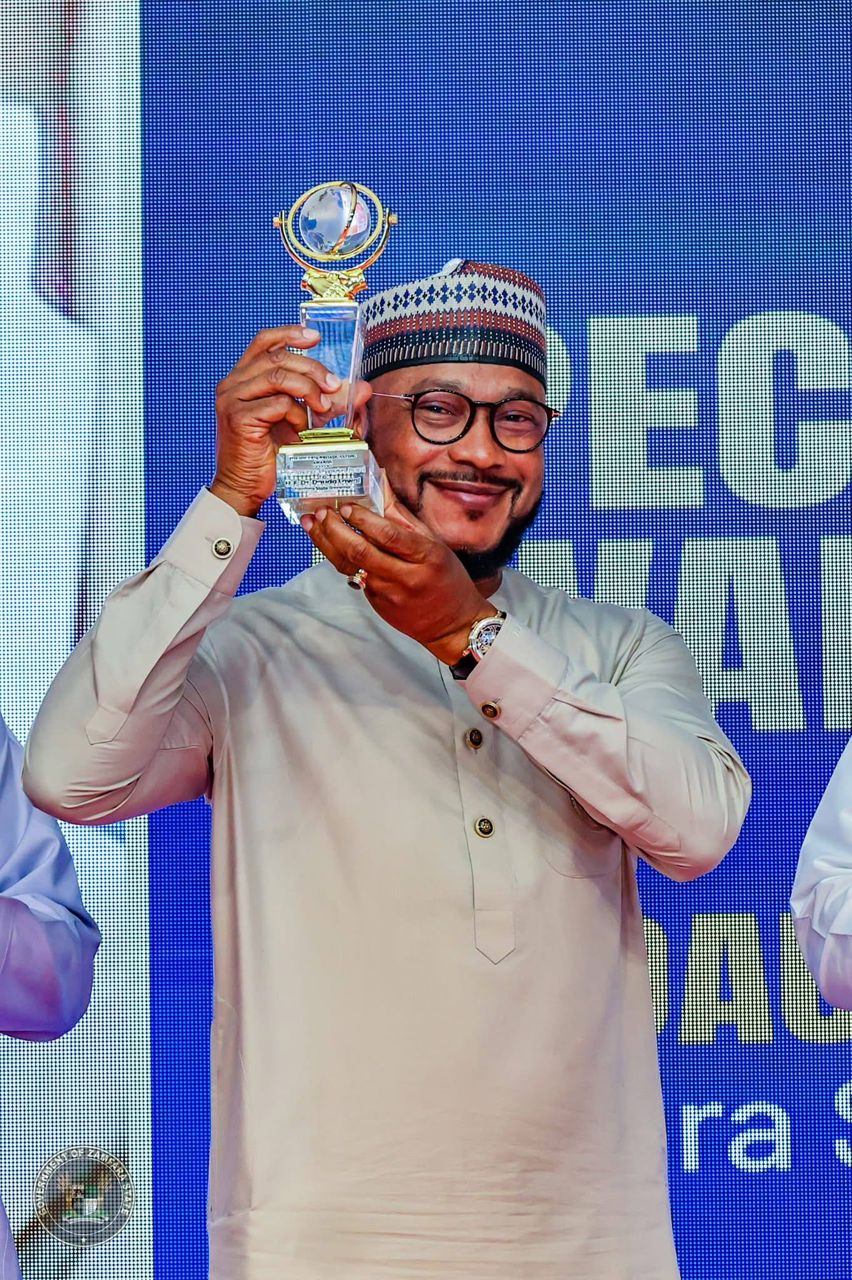
GOV. LAWAL WINS BON GOVERNOR OF THE YEAR FOR ZAMFARA’S INFRASTRUCTURE
The Broadcasting Organisations of Nigeria (BON) has awarded Governor Dauda Lawal the Infrastructure Governor of the Year honour for his administration’s giant strides in the Urban Renewal project across Zamfara.
The governor received the award at the second edition of the Broadcasting Organisations of Nigeria (BON) held at the NAF conference centre, Abuja.
A statement by the governor’s spokesperson, Sulaiman Bala Idris, revealed that the BON acknowledged Zamfara state’s unprecedented and transformative achievements in infrastructure, recognising excellence beyond the broadcasting industry.
He added that Governors Bassey Otu of Cross River and Uba Sani of Kaduna, the minister of information and national orientation, Mohammed Idris, along with John Momoh, Shyngle Wigwe, Abubakar Jijiwa, and Sa’a Ibrahim, were among the prominent Nigerians honoured at the 2026 Nigeria Broadcasting Awards.
The statement read in parts, “The Broadcasting Organisation of Nigeria, an umbrella body for public and private broadcasters in Nigeria, was established in 1973 to promote the interests of the broadcasting industry and ensure high standards in media practices.
“The organisation conducted a thorough months-long selection process aimed at recognising professional excellence and raising standards for media practice across Nigeria.
“The Awards Selection Committee was chaired by Dr Danladi Bako, former Director-General of the National Broadcasting Commission (NBC). The awards panel included veterans and representatives from the Advertising Regulatory Council of Nigeria (ARCON) and the NBC..

“The selection committee cited numerous reasons for awarding Governor Dauda Lawal, notably his significant progress across sectors, particularly for transforming Gusau into a modern State Capital.
“Zamfara has witnessed unprecedented achievements under Governor Dauda Lawal, including the historic construction of a modern International Airport in the State.
“Apart from urban renewal projects, as well as the construction and outfitting of General Hospitals, Governor Dauda Lawal’s administration has built, refurbished, and equipped over 800 schools across the 14 local government areas of the State.

“This recognition by the highest broadcasting authority in Nigeria will motivate the governor to dedicate more effort to his mission to serve and rebuild Zamfara state.”
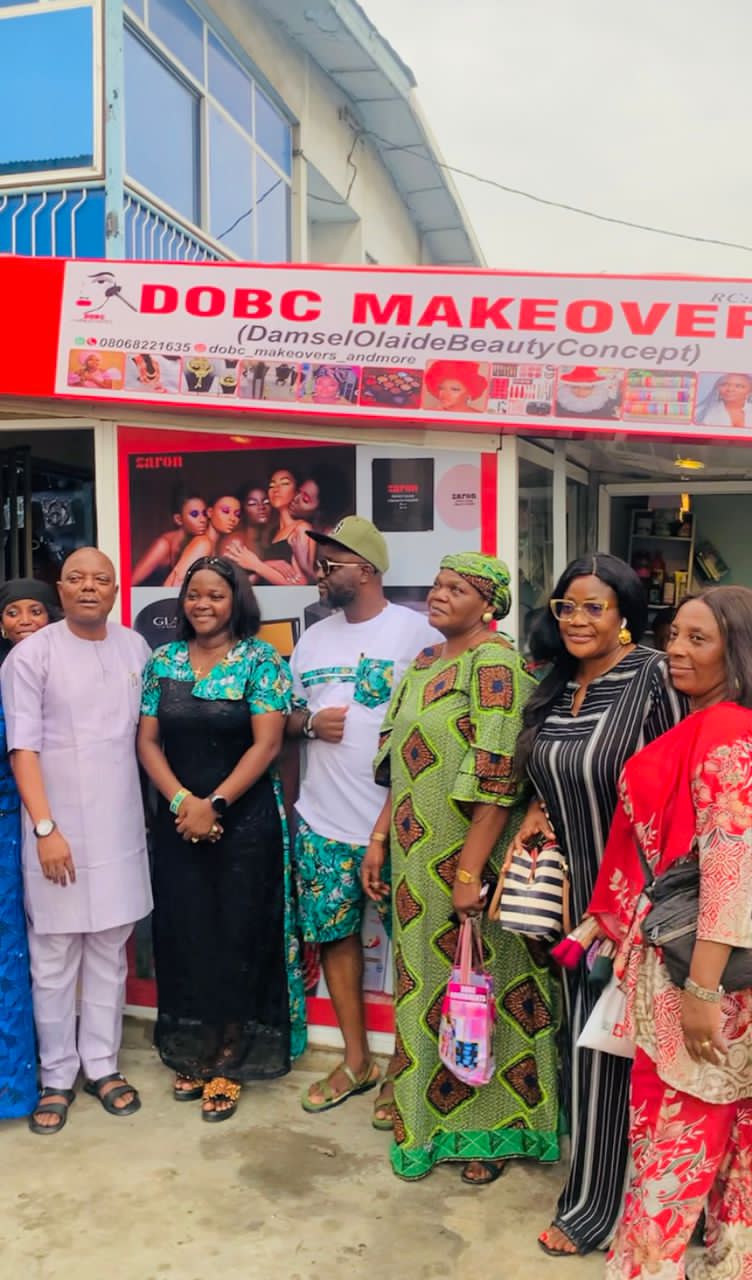
Beauty Meets Glamour as Olaide Ogunyemi Opens New Studio in Mushin
Popular Nollywood actress and professional makeup artiste, Olaide Ogunyemi Oluwayemisi aka Damilola, has expanded her footprint in the beauty industry with the grand opening of her new makeup studio in Lagos.
The talented thespian, who is also the Chief Executive Officer of @Dobc_makeovers_andmore, officially unveiled the ultra-modern beauty space last Thursday, April 2, 2026, in a colourful ceremony filled with glamour, fashion, and pageantry.
Strategically located at 101 Palm Avenue, right beside FitPlus and Sparklight Hospital in Mushin area of Lagos, the new studio is designed to offer top-notch beauty services, reflecting Ogunyemi’s commitment to excellence and professionalism in the ever-growing makeup industry.
The opening ceremony attracted friends, colleagues from the Nollywood industry, beauty enthusiasts, and well-wishers who came out in large numbers to celebrate the entrepreneur’s latest milestone. Guests were treated to a vibrant atmosphere that showcased creativity, style, and the evolving standards of the beauty business in Lagos.
Speaking at the event, Ogunyemi expressed her excitement and gratitude, noting that the new studio represents years of hard work, dedication, and passion for her craft. She reaffirmed her commitment to delivering premium beauty services while empowering aspiring makeup artistes.
The launch of the studio further cements her reputation as a dynamic force, successfully blending her career in Nollywood with a thriving beauty brand.
With this latest development, Olaide Damilola Ogunyemi continues to inspire many young entrepreneurs, proving that talent, consistency, and vision remain key drivers of success in Nigeria’s creative and business landscape.


- Century Group Joins African Energy Week (AEW) 2026 as Floating Production Storage and Offloading (FPSO) Partner, Showcasing Regional Offshore Expansion April 10, 2026
- Climate Litigation Surge Reshapes Energy Policy as Africa Seeks Stronger Legal Voice April 10, 2026
- ES-KO Secures Five-Year Catering & Facilities Management Contract Renewal with TotalEnergies EP Congo April 10, 2026
- Beyond the Court: The Kalahari Conference Solidifies its Status as Africa’s Premier Sports & Lifestyle Destination April 10, 2026
- Africa Sports Unified Launches Pan-African Sports Deals Tracker to Improve Market Visibility and Decision-Making April 10, 2026
- Nigeria and Senegal Must Follow Ghana and Mozambique Against Exclusionary Practices April 10, 2026
- Sheraton Nouakchott marks the entry of Marriott International in Mauritania April 10, 2026
- Eritrea: Seminar to Nationals in Nairobi and Its Environs April 10, 2026
- African financial institutions call for coordinated financing solutions to unlock Africa’s digital transformation April 9, 2026
- African Energy Chamber (AEC) Supports Perenco Partnership to Advance Industry 4.0 Skills in Central Africa April 9, 2026
- Century Group Joins African Energy Week (AEW) 2026 as Floating Production Storage and Offloading (FPSO) Partner, Showcasing Regional Offshore Expansion April 10, 2026
- Climate Litigation Surge Reshapes Energy Policy as Africa Seeks Stronger Legal Voice April 10, 2026
- ES-KO Secures Five-Year Catering & Facilities Management Contract Renewal with TotalEnergies EP Congo April 10, 2026
- Beyond the Court: The Kalahari Conference Solidifies its Status as Africa’s Premier Sports & Lifestyle Destination April 10, 2026
- Africa Sports Unified Launches Pan-African Sports Deals Tracker to Improve Market Visibility and Decision-Making April 10, 2026
- Nigeria and Senegal Must Follow Ghana and Mozambique Against Exclusionary Practices April 10, 2026
- Sheraton Nouakchott marks the entry of Marriott International in Mauritania April 10, 2026
-

 news4 months ago
WHO REALLY OWNS MONIEPOINT? The $290 Million Deal That Sold Nigeria’s Top Fintech to Foreign Interests
-

 society7 months ago
“You Are Never Without Help” – Pastor Gebhardt Berndt Inspires Hope Through Empower Church (Video)
-

 celebrity radar - gossips2 months ago
Dr. Chris Okafor Returns with Power and Fire of the Spirit -Mounts Grace Nation Altar with Fresh Anointing and Restoration Grace on February 1, 2026
-

 celebrity radar - gossips4 months ago
Prophet Kingsley Aitafo Releases 2026 Prophecy: ‘Nigeria Will Rise, but the World Must Prepare for Turbulence’
You must be logged in to post a comment Login
You must log in to post a comment.