
Politics
FAYEMI’S LEGACY IN EKITI AND THE POSSIBILITIES FOR THE NIGERIA AGENDA

FAYEMI’S LEGACY IN EKITI AND THE POSSIBILITIES FOR THE NIGERIA AGENDA By Akin Rotimi
Nigeria is at a critical crossroads as the ruling party, All Progressives Congress (APC), is now set for the special convention to determine the party’s candidate for the 2023 general election. The primary election is of interest to most Nigerians who look to the APC for the emergence of a credible flag-bearer who could possibly be Nigeria’s next president.
At a time our country faces increasingly worrisome challenges, there is a sense that we cannot afford to get it wrong in choosing President Buhari’s likely successor from amongst the shortlisted candidates, including Dr. Kayode Fayemi, the current governor of Ekiti State, and chairman of the Nigeria Governors Forum (NGF), who most informed stakeholders and analysts consider best fit for the presidency at such an important period in our history.
Amongst other aspects of his reputation and public records, Fayemi’s legacy as Governor of Ekiti State is an indicator of the possibilities that abound for Nigeria if he emerges, just like former President of the United States of America, Bill Clinton, became president after serving two-terms as Governor of the small landlocked state of Arkansas, and chairman of the National Governors Association. It is therefore expedient to revisit the basis of the critical acclaim Fayemi has earned on account of his stewardship of the small agrarian state.
He does not have a loud and boisterous nature and he is prudent to a fault, hence his lack of interest in self-aggrandisement and going overboard to blow his own trumpet, but at the heart of his efforts as governor lies Fayemi’s moral compass. He is first a man of deep convictions driven by concrete social democratic principles. His motivations and vision for the Nigeria Agenda are well documented in books he has authored before and during his sojourn in public service so far, and his big ideas have found expression in a comprehensive and integrated manner in the policies, programmes, and projects implemented in Ekiti State. For example, Governance which is the first pillar and the mainframe for governmental functionality has taken a positive direction under his watch.
Clear evidence of how serious the Fayemi administration treats good governance can be seen in a tremendous improvement in transparency and ease of doing business indices which have placed the state among the best in Nigeria. Recently, the state was adjudged the second most transparent state in public procurement and financing. The state has also soared high in the Disbursement Linked Indicators mileage of the World Bank/FGN backed State Fiscal Transparency Accountability Sustainability (SFTAS) scheme aimed at improving probity, accountability, and transparency in public expenditure. It is no wonder that in spite of very lean revenue accruable to the state, it has continued to be a frontline state in school enrolment, public health coverage, social security, gender equality, ease of doing business, and social amenities. Ekiti has the highest life expectancy in Nigeria, the lowest out-of-school children, and the best social investment strategy.
Similarly, the administration has done well in infrastructure development with the completion of a number of critical roads such as Oye-Iye-Otun road, Aromoko-Erinjiyan-Ikogosi, Agbado-Ode-Isinbode-Omuo, New Ado-Iyin, Ilawe-Igbaraoke, and Ilupeju-Ire-Igbemo-Ijan. The government has also commenced the rehabilitation of Ado-Ifaki road and Ikole township roads, in addition to massive restoration of Ado-Ekiti metropolitan roads.
The government has delivered the Oja Oba Market at Erekesan. It has completed the magnificent Obafemi Awolowo Civic and Convention Center which is a multipurpose structure designed to accommodate shopping malls, a cultural center, cinemas, amphitheater, library, museums, halls, e.t.c. It is one of the first of such purpose built buildings in Nigeria. The government has also delivered the biggest water corporation headquarters in Nigeria and undertaken a total overhaul of three major water dams in Ero, Egbe, and Ujere with the installation of power sources, main pipes, and reticulation of hundreds of kilometers of pipes to towns and villages in about ten local government of the state.
In education, in fulfillment of the overall vision to develop manpower needs for sustainable development in agriculture as well as science and technology, the administration established the Ekiti State Polytechnic, Isan-Ekiti, and the Bamidele Olumilua University of Education, Science and Technology, Ikere-Ekiti. In an effort to expand access to secondary education, the administration has constructed five new model colleges, with three others being built in the three senatorial zones. Over 900 blocks of classrooms have been rehabilitated with sanitary, water, and fencing facilities, just as all schools in Ekiti have been supplied with furniture and instructional materials. It is noteworthy that education is free and compulsory for all children up to senior secondary school level.
In addition to the state’s free health care programme, the health sector has received a tremendous boost with the rehabilitation of all the primary health facilities across the state. The General Hospitals are also undergoing massive rehabilitation and equipping. The state’s tertiary health facility, Ekiti State University Teaching Hospital has witnessed phenomenal growth in terms of expansion and building of structures to host the different departments of the hospital. More importantly, the administration saw to the full accreditation of the institution.
In terms of the big ideas to reposition the state as one of the most viable and economically self-sustaining states, the Fayemi administration began what is clearly an audacious journey to prosperity. The strategy is anchored on the areas of economic advantage as an agrarian state. In addition to a number of successful public-private partnerships such as the Ikun Dairy Farm now being run by Promasidor Limited, and the Ire Burnt Brick which has been revamped and given to a competent private sector operator, the administration created a thriving agric-processing zone in the northern senatorial district with massive agricultural processing industries springing up and smallholder farmers emerging.
The game changer Fayemi embarked on to help farmers have access to international markets is the construction of the agric-cargo airport that will be delivered by August, 2022. The vision is to make Ekiti the ultimate destination for the vegetable and allied produce market globally. Though landlocked, the airport will change the status of the state to an international destination without boundaries. The project is envisaged to create an agro-business hub and serve as both a national and international cargo gateway to Nigeria with the ability to attract both cultural and medical tourism. It will also be an international free trade zone. Technically, the runway can carry aircrafts as large as the Boeing 747 with a 3.6km usable runway (3.2km runway with overrun of 400m). The airport would also be useful for our national air defense system. When completed, the airport will have a night navigation system that can make 24 hours landing possible as well as bulk fuel installation for aircraft to stopover to refill while on transit. It will also serve as a major craft maintenance hub that will relieve local airlines of the humongous cost of maintaining their craft offshore. These are some of the unique offerings of the airport when completed.
Another big idea that Fayemi’s midas hands are touching is the Ekiti Knowledge Zone which is aimed at turning the people’s passion for learning into a viable economy. The Ekiti Knowledge Zone is a smart city, a piece of information, and communication technology (ICT) hub, and an innovation city where content creators, ICT experts, programmers, innovators, soft and hardware engineers can ply their trade. The vision is to make the EKZ a go-to place for all manner of innovative solutions destinations.
While Fayemi appreciates the importance of physical infrastructure as a catalyst for socioeconomic development, he is quite aware that the ultimate operating system for any society to work remains the values upon which the society is constructed. It is for this reason that he undertook a comprehensive values orientation project that saw to the development of Ekiti Values Education as a compulsory subject in Ekiti public schools. This is a major legacy to ensure that the future generations are brought up on sound ethical principles.
There are many more phenomenal achievements of the Fayemi administration in Ekiti State that are well documented, including his efforts in improving security in the state, extensive civil service and public sector reforms and facilitating the legal framework that would ensure no one is discriminated against on account of their religion, gender, tribe, age, or physical ability. In Ekiti State, there is a zero tolerance policy for Gender Based Violence, a law to protect and empower differently abled people, and a law to ensure women are given an equitable percentage of appointive political offices. Fayemi has fought to ensure no one is left behind, and his template of inclusive governance is needed at the federal level to heal and unite all Nigerians again.
In conclusion, it is necessary to touch on Fayemi’s tenure as Minister of Mines and Steel Development. Fayemi drove the formulation of a sector roadmap unprecedented in its scope, ambition and buy-in, which is what is now being used by his successors. The reforms in the sector required a dogged public official able to rally all the stakeholders, and Fayemi fit the bill. Using a decisive yet consensual leadership style, he secured the cooperation of a disparate range of industry actors in charting a new course for the sector. If his transition from state governor to federal minister and then back to governor was seamless, it was due to Fayemi’s consistency.
In bringing all the sector stakeholders together, Fayemi was applying the same philosophy of participatory governance that has defined his public service career, and which Nigeria desperately needs now – a detribalised nationalist and proven technocrat with the expertise, experience, and network of relationships across the country, to build consensus on the imperatives for rebuilding a new Nigeria.
History has placed on the APC stakeholders and delegates the responsibility of choosing a candidate that is best positioned to move Nigeria forward – and we hope they make the right choice in the person of Dr. John Kayode Fayemi, for a New Nigeria.
*Akin Rotimi writes from Ado-Ekiti*




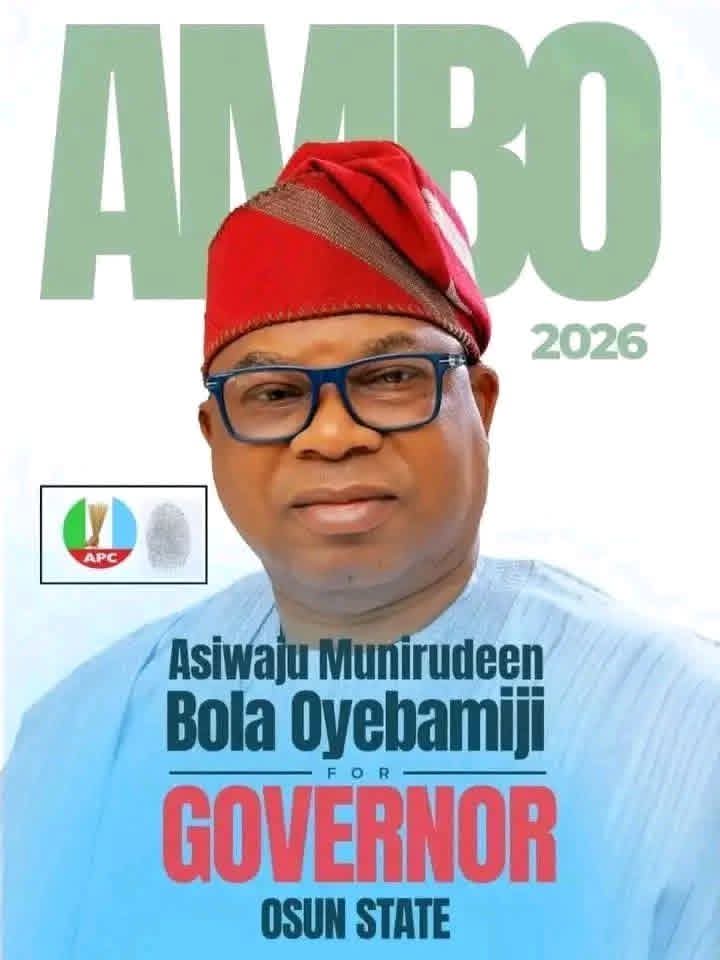
AMBO and the Osun Governorship Race: Assessing the Man, the Politics and the Vision
As political activities gather momentum ahead of the 2026 Osun State governorship election, a public affairs commentator, Oluseyi Olonade, has described the emergence of Asiwaju Munirudeen Bola Oyebamiji, popularly known as AMBO, as a significant development in the state’s political landscape.
In an article titled “Oyebamiji: The Man, The Politics and The Aspiration,” Olonade argued that the All Progressives Congress governorship hopeful possesses the character, experience and vision needed to reposition Osun State for sustainable growth.
According to the writer, Oyebamiji’s appeal stems from his extensive background in the banking sector, where he spent nearly three decades working with institutions including Wema Bank, Trans International Bank, Spring Bank and Enterprise Bank.
A native of Ikire in Irewole Local Government Area, Oyebamiji was described as a technocrat whose experience in corporate governance, finance and risk management has shaped his approach to public administration.
The article noted that his public service journey gained prominence in 2012 when he was appointed to oversee the then Osun State Investment Company Limited. Under his leadership, the organisation was reportedly restructured and transformed into Omoluabi Holdings Limited.
The writer further highlighted Oyebamiji’s tenure as Commissioner for Finance under successive APC administrations, where he was credited with managing the state’s finances during challenging economic periods.
Olonade also referenced Oyebamiji’s appointment as Managing Director of the National Inland Waterways Authority, describing it as further evidence of his administrative and leadership capabilities.
The article contrasted Oyebamiji’s governance philosophy with that of the current administration in Osun State, arguing that the APC aspirant favours institutional reforms, economic diversification and fiscal discipline.

According to the writer, Oyebamiji’s proposed agenda includes strengthening transparency in government spending, expanding internally generated revenue, attracting private-sector investments and promoting industrial and agricultural development.
The article also highlighted youth empowerment, entrepreneurship development and digital skills acquisition as key components of his vision for the state.
Olonade concluded that the forthcoming governorship election would present voters with a choice between different approaches to governance, expressing confidence that Oyebamiji’s experience and developmental agenda make him a strong contender in the race.
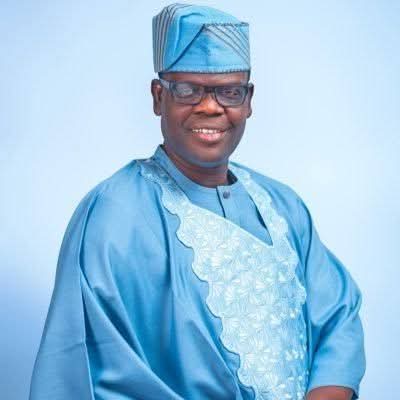
*Oselu Tiwa nTiwa Endorses Oriyomi Hamzat for Oyo Governorship*
A sociopolitical support group in Oyo State, Oselu Tiwa nTiwa, has declared its support for Alhaji Oriyomi Hamzat as the authentic governorship candidate of the Accord Party ahead of the forthcoming governorship election in the state.
The group made its position known in a statement jointly signed by its President, Mr. Adewale Oluwaseyi and Secretary, Alh. Adebayo Oyewole, on Thursday, describing Hamzat as a grassroots figure with strong connection to the people and a track record of humanitarian interventions across Oyo State.

According to the group, the endorsement followed what it described as careful observation of Hamzat’s leadership qualities, compassion and dedication to the welfare of ordinary citizens.
“Oriyomi Hamzat has consistently demonstrated empathy, courage and selfless commitment to humanity. Through his numerous interventions in the lives of ordinary citizens, he has become a symbol of hope to many families and communities,” the statement read.
Oselu Tiwa nTiwa also appealed to the national leadership of the Accord Party to prioritise the long-term future and electoral growth of the party in its decision-making process.
The group noted that Hamzat’s candidacy presents an opportunity for the party to strengthen its grassroots support base and expand its political relevance across Oyo State.
“We respectfully appeal to the National Leadership of the Accord Party to look beyond immediate political calculations and consider the bigger picture, the future growth, stability and electoral success of the party in Oyo State and beyond,” the statement added.
The group further expressed confidence in the leadership of the party, saying it believes the party’s national officers and stakeholders would take decisions that reflect fairness, inclusiveness and the collective interest of members.
While calling on party loyalists to remain calm and united, Oselu Tiwa nTiwa said continued consultations among stakeholders would help strengthen the Accord Party ahead of the election.
Signed:
Alh. Adebayo Oyewole,
Secretary.
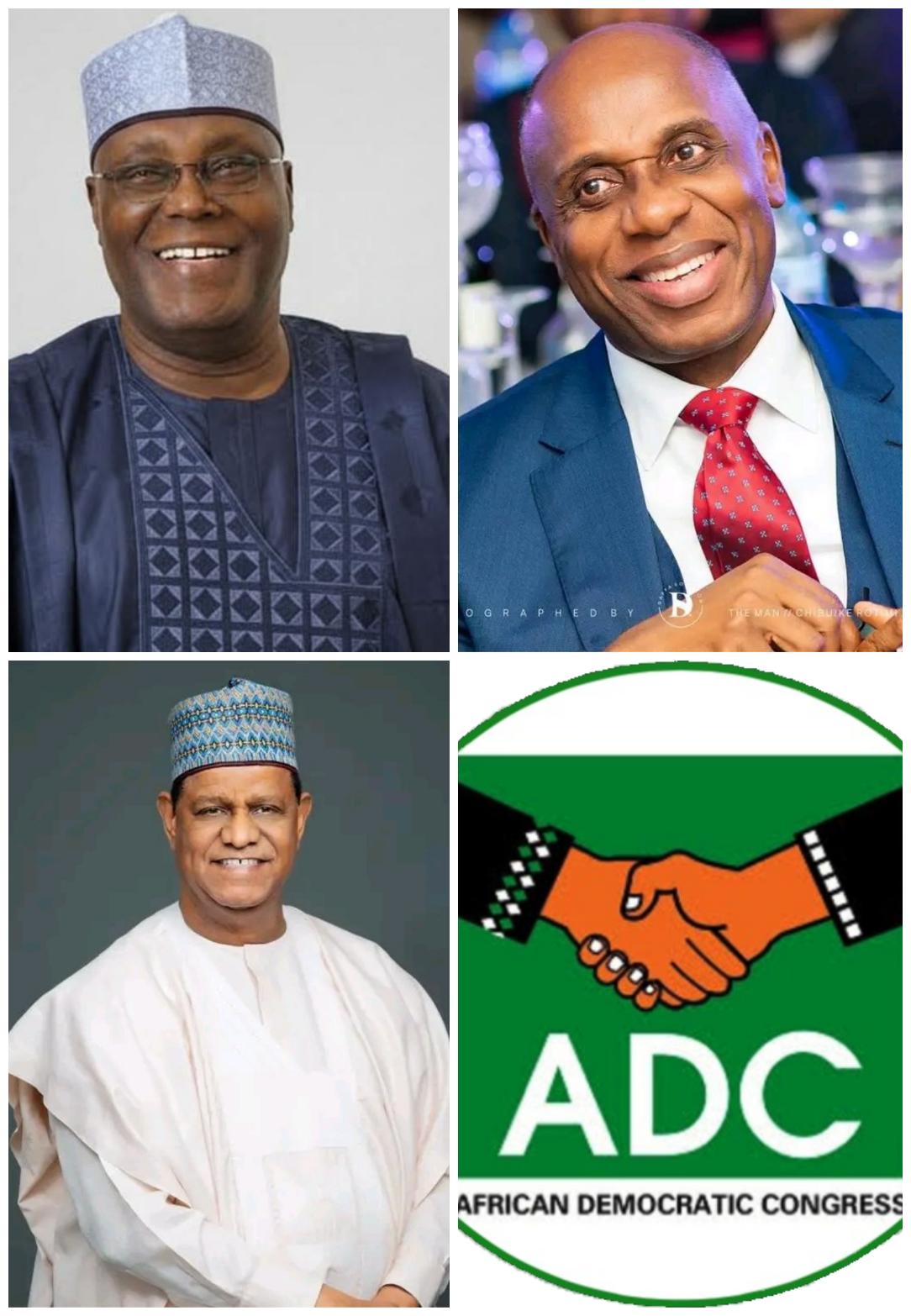
Atiku Set To Clinch ADC Presidential Ticket, Leads Amaechi, Hayatu-Deen In 34 States
Former Vice President of Nigeria and frontline presidential aspirant of the African Democratic Congress (ADC), Atiku Abubakar, is projected to emerge winner of the party’s presidential primaries, according to impeccable sources in Abuja.
The primaries, conducted across over 8,000 wards in the 36 states of the federation and the Federal Capital Territory, reportedly placed Atiku far ahead of his closest rivals — former Rivers State Governor, Rotimi Amaechi, and former Chairman of the Nigerian Economic Summit Group, Mohammed Hayatu-Deen.

Highly placed party insiders disclosed that Atiku is currently leading in 34 states, including the FCT, after securing dominance across the 19 Northern states, the five South-East states, and the six South-West states, while also maintaining a strong showing in at least three states in the South-South geopolitical zone.
The sources added that the outcome reflects what they described as “an overwhelming nationwide acceptance” of the former vice president within the opposition party ahead of the 2027 general election.
Meanwhile, the ADC leadership has invited members of the press to the official announcement of the final collated results scheduled for 11:00 a.m. on Tuesday, May 26, 2026, in Abuja.
The declaration of results is expected to be broadcast live on ARISE Television and two other major television stations, while also being livestreamed on the party’s official social media platforms on X and Facebook.
Speaking ahead of the announcement, the founding National Chairman of the ADC, Chief Ralph Nwosu, said the decision to televise the exercise live was aimed at promoting transparency and democratic accountability.
“We want millions of Nigerians at home and in the Diaspora to witness democracy in action,” Nwosu said.
He further revealed that the party leadership would encourage all three presidential aspirants to publicly embrace a peace accord and commit themselves to working together in unity for the party’s success.
According to him, the move is necessary to strengthen internal cohesion and position the ADC for victory in the presidential election scheduled for January 16, 2027.
Details later.


- When women farm better, Eswatini eats better June 3, 2026
- Togo Hosts the 8th Annual Forum of National Volunteer Agencies in the Economic Community of West African States (ECOWAS) Region June 3, 2026
- Indigenous Peoples gravely vulnerable to Ebola epidemic, warn United Nations (UN) independent experts June 3, 2026
- Meeting between Parliamentary Vice-Minister ONISHI and His Excellency (H.E.) Mr. Cosgrow, Principal Minister and Minister for Agriculture, Fisheries and Blue Economy of Seychelles June 3, 2026
- Eritrea: Construction of Elementary School in Gogni Sub-Zone June 3, 2026
- African Union Commission (AUC) Chairperson His Excellency (H.E.) Mahmoud Ali Youssouf highlighted thePermanent Representatives’ Committee (PRC) critical role in advancing the Union’s agenda and laying the groundwork for the forthcoming Mid-Year Coordination Meeting (MYCM) June 3, 2026
- Eritrea: Eighth Grade National Examination Commences June 3, 2026
- Many Africans see justice system as unequal, costly, and slow, Afrobarometer survey reveals June 3, 2026
- Prof. Benedict Oramah to Chair Finance Summit as African Energy Week (AEW) 2026 Prepares for Major Deal Flow June 3, 2026
- The Islamic Development Bank (IsDB) Group Affiliates to Host the 14th Private Sector Forum in Baku, Azerbaijan (16-19 June 2026) June 3, 2026
- When women farm better, Eswatini eats better June 3, 2026
- Togo Hosts the 8th Annual Forum of National Volunteer Agencies in the Economic Community of West African States (ECOWAS) Region June 3, 2026
- Indigenous Peoples gravely vulnerable to Ebola epidemic, warn United Nations (UN) independent experts June 3, 2026
- Meeting between Parliamentary Vice-Minister ONISHI and His Excellency (H.E.) Mr. Cosgrow, Principal Minister and Minister for Agriculture, Fisheries and Blue Economy of Seychelles June 3, 2026
- Eritrea: Construction of Elementary School in Gogni Sub-Zone June 3, 2026
- African Union Commission (AUC) Chairperson His Excellency (H.E.) Mahmoud Ali Youssouf highlighted thePermanent Representatives’ Committee (PRC) critical role in advancing the Union’s agenda and laying the groundwork for the forthcoming Mid-Year Coordination Meeting (MYCM) June 3, 2026
- Eritrea: Eighth Grade National Examination Commences June 3, 2026
-

 news6 months ago
WHO REALLY OWNS MONIEPOINT? The $290 Million Deal That Sold Nigeria’s Top Fintech to Foreign Interests
-

 society1 month ago
SOCIAL MEDIA IS NOT A BATTLEFIELD COMMAND – WHY THE NIGERIAN ARMY’S ACTION AGAINST JUSTICE CRACK IS A NATIONAL SECURITY IMPERATIVE
-

 celebrity radar - gossips4 months ago
Dr. Chris Okafor Returns with Power and Fire of the Spirit -Mounts Grace Nation Altar with Fresh Anointing and Restoration Grace on February 1, 2026
-

 celebrity radar - gossips6 months ago
Prophet Kingsley Aitafo Releases 2026 Prophecy: ‘Nigeria Will Rise, but the World Must Prepare for Turbulence’