
Bank
FirstBank: A triumphant Return to the Nigerian Banking Frontline

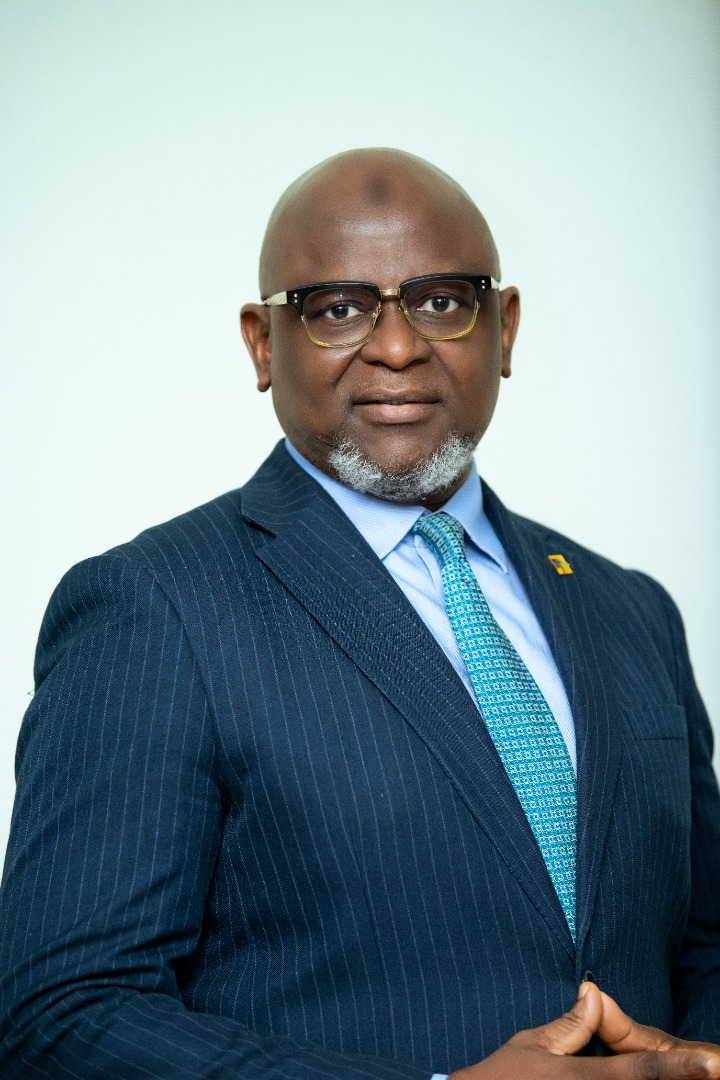
FirstBank: A triumphant Return to the Nigerian Banking Frontline

The story of Corporate Nigeria in 2022, cannot be complete without a chapter on the incredible performance of First Bank of Nigeria Limited, which saw the hitherto encumbered bank now returning to the top of the ladder of the Nigerian banking industry, amid a harvest of international laurels, writes Festus Akanbi
By December this year, Nigerian quoted companies will begin to upload their full year 2022 results in compliance with the dictates of the principle of disclosures to regulators, investors and customers as enshrined in the act of Corporate Governance.
While the waiting game for the release of the more detailed full-year results continues, analysts said that bookmakers can only assess the current level of profitability, efficiency and recovery of these companies based on their half-year reports which began to hit the various media platforms from July this year.
For FirstBank, a subsidiary of the behemoth FBN Holdings Plc, the 2022 operation year has been characterised by a superlative performance which analysts believed signposts the confirmation of the bank’s return to the frontline of the Nigerian banking industry following its 2021 equally stellar performance.
From its half-year 2022 reports, which show a remarkable turnaround, and the ability of the management of the bank not only to resolve old corporate governance issues but to also return the bank to the path of profitability, it has been proven beyond any reasonable doubt that FirstBank has freed itself from old encumbrances and it is back to its old trajectory of breaking boundaries and being a pacesetter in the Nigerian banking industry.
For instance, analysts who believed that FirstBank’s current excellent performance is a reaffirmation of the new era of a return to greater and better times ahead are quick to point to the bank’s half-year 2022 results which proved the solidity of the financial institution and confirmed that it is back in form as a formidable industry leader.
Reinforcing Quantum Profitability Leap Agenda
For instance, in its half-year 2022 scorecard, FirstBank recorded a 22.6 per cent year-on-year growth in gross earnings to N338.5 billion while net interest income was up 49.3 per cent year-on-year to N152.9 billion respectively.”
The bank’s Managing Director/Chief Executive, Adesola Adeduntan who gave this figure disclosed that “Amidst a challenging operating and dynamic regulatory environment in the half year 2022, the commercial banking group remained focused on executing key initiatives to position the group for improved profitability in the full year 2022. Our half-year results further reinforced our drive towards our ‘Quantum Profitability Leap’ agenda.”
Adeduntan said, “On the back of the impressive growth recorded in our top line, our profit before tax recorded a strong growth of 40.0 per cent year on year to N60.0 billion, whilst profit after tax also grew by 42.3 per cent year on year to N53.3 billion as the bank continues to reap the dividends of the successful restructuring of our balance sheet and revamping of our risk management architecture.”
“We continue to record progress in driving down our non-performing loan ratio which now stands at 5.4 per cent at the end of H1 and we are on target to bring it within the regulatory limit of 5 percent by end of full-year 2022.”
Awards and Recognitions: FirstBank’s Leading the Pack
In terms of recognition, there is no doubt that the ongoing transformation in FirstBank is globally recognised when one considers the harvests of awards and recognitions that are already pouring in for the bank.
Analysts said the awards and recognitions, which include those from the Fitch Ratings and The Banker awards and Euromoney rankings are testimonials of FirstBank’s consistent performance.
Fitch Rerating
Analysts maintained that the current Fitch rerating of FirstBank aligns with ratings of other global agencies (such as S&P: B- with a stable outlook; Moodys: B2 with stable outlook) – a confirmation of what industry peers already acknowledge – back to leading the pack.
On September 16, 2022, Fitch Ratings announced the upgrade of FBN Holdings Plc’s (FBNH) and First Bank of Nigeria Ltd’s (FBN) Long-Term Issuer Default Ratings (IDRs) to ‘B’ from ‘B-‘, and according to the rating agency, the Outlooks are Stable. Fitch has also upgraded their Viability Ratings (VR) to ‘b’ from ‘b-‘.
It explained that the upgrade of the Long-Term IDRs follows that of the VRs, reflecting that corporate governance irregularities publicly raised by the Central Bank of Nigeria (CBN) in April 2021, including two longstanding related-party exposures, have largely been addressed and therefore risks to capitalisation have receded, helped by strong internal capital generation since the irregularities were raised.
Governance Issues Laid to Rest
Following its monitoring of the Bank’s corporate Banking endeavours within the last year, the rating agency gave FirstBank a clean bill of health saying the bank’s governance irregularities have been addressed and according to the management of the bank, “the two related-party exposures highlighted by the CBN, which included equity and credit exposures to two companies of whom FBNH’s previous chairman was also chairman, have largely been disposed of and repaid. Fitch understands from management that FBNH and FBN have not been subject to penalties about irregularities raised by the CBN in April 2021 and no further irregularities have been raised.”
It also attests to the solidity of the bank, affirming that FBN is the third-largest bank in Nigeria, representing 11% of domestic banking-system assets at the end of 2021.
Another reason for the high rating is the fact that the bank’s improved asset quality since FirstBank’s impaired loans (Stage 3 loans under IFRS 9) ratio has declined significantly.
FirstBank also boasts of a Stable Funding Profile. For instance, FBN’s customer deposit base (76% of total funding at end-1H22) comprises a high share of retail deposits (64% at end-2021) and current and savings accounts (81% at end-1H22), supporting funding stability and a low-cost of funding. Depositor concentration is fairly low. Liquidity coverage is comfortable in local and foreign currencies.
Bankers Magazine: FirstBank Best Performing in Nigeria
It is also not a coincidence that FirstBank was rated first among its peers in Nigeria by Bankers Magazine, a publication of the Financial Times.
The Top 100 African Bank Rankings 2022 recently released by The Banker shows FirstBank leading the Nigerian table in four areas, the highest achieved by any Nigerian bank; only FirstBank leads in four areas. The rankings, based on the end of year 31 December 2021 audited financials of all banks in the Top 100, reveal FirstBank’s ranking as number one in Nigeria in terms of Overall Performance, Profitability, Efficiency and Return on Risk.
The magazine, which explained that its Top 100 African Banks ranking for 2022 demonstrates a broad return to stability by African banks after a torrid year for the continent’s largest lenders placed FirstBank among other banks in Nigeria because it happened to be the only bank that led in four areas.
First Bank of Nigeria Limited leads its peers in fifth place overall, displacing Guaranty Trust Bank, now in seventh place. Access Bank ranks in the eighth position, with Zenith Bank in 10th place.
Euromoney Rankings: FirstBank, Market Leader
In addition, in 2022, Euromoney Market Leaders, an independent global assessment of the leading financial service providers conducted by Euromoney Institutional Investor Plc crowned FirstBank as a market leader. The bank was rated as a tier one bank in the areas of corporate and social responsibility (CSR).
Not only that, but FirstBank also emerged as a market leader among the tier-one banks in the area of Environmental, Social and Governance (ESG).
In the area of corporate banking and digital solution, FirstBank was highly regarded while it was crowned as a notable player in SME Banking for the period under review.
FirstBank was named “Best Bank Brand in Nigeria” for six years in a row – 2011 to 2016 – by The Banker magazine of the Financial Times Group; it was awarded “Most Innovative Bank in Africa” in the EMEA Finance African Banking Awards 2014; it has clinched the “Best Bank in Nigeria” award by Global Finance Magazine 15 times and the “Best Private Bank in Nigeria” by World Finance Magazine seven times. Some other recent awards received by the Bank are “Best Banking Brand Nigeria, 2019” by Global Brands Magazine; “Best Mobile Banking App – Nigeria, 2019” by Global Business Outlook and “Best Financial Inclusion Program – Nigeria, 2019 by International Investor.
In the words of FirstBank’s CEO, Dr Adesola Adeduntan, ‘what all these current ratings and recognitions demonstrate is that FirstBank is strongly back on course! Knowing this is only the beginning of a new era of return to the trailblazing position and that better times lie ahead we encourage our customers and other stakeholders to keep believing and keep standing by us.’
Banking on Robust Customer Service Network
Through the last 128 years of its operations, FirstBank has played a leading role in utilising its robust customer service network and digital banking architecture to support its customers – cutting across diverse cultures, tribes and races beyond the shores of Nigeria – in meeting their individual and business needs.
First Bank of Nigeria Limited operates as a parent company, with the subsidiaries FBNBank in the Democratic Republic of Congo, Ghana, The Gambia, Guinea, Sierra Leone and Senegal; FBN Bank UK Limited in the United Kingdom with a branch in Paris; First Bank Representative Office in Beijing to capture trade-related business between geographies. FirstBank also operates First Pension Custodian Nigeria Limited, Nigeria’s foremost pension custodian. The teeming customers of the First Bank Group are serviced from a network of over 700 business locations across Africa.
Culled from ThisDay Newaspaper




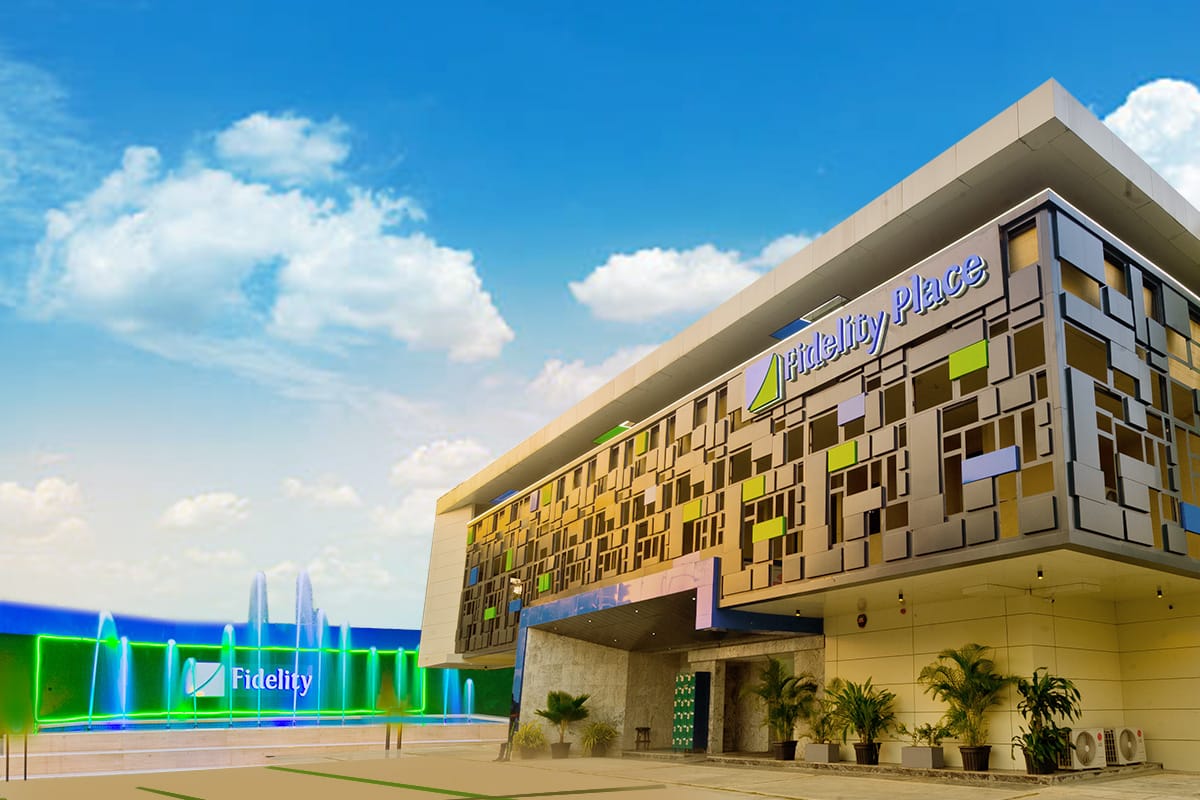
Fidelity Bank grows gross earnings by 38% to N434.95b in Q1
Fidelity Bank Plc recorded 37.9 per cent growth in gross earnings to N434.95 billion in first quarter 2026 as the international commercial bank continued to expand its core banking market share.
Interim report and accounts of Fidelity Bank for the three months ended March 31, 2026 released at the Nigerian Exchange (NGX) showed that gross earnings rose from N315.42 billion in first quarter 20025 to N434.95 billion in first quarter 2026, representing an increase of 37.9 per cent.
The top-line performance was driven by impressive growth in the bank’s core business operations with interest incomes rising by 22.8 per cent to N314.48 billion in first quarter 2026 as against N256.10 billion in first quarter 2025.
With net interest income at N180.97 billion, the bank closed the period with profit before tax of N92.48 billion. After taxes, net profit stood at N74.47 billion for the three-month period. Earnings per share remained high at N5.69, underlining the capacity of the bank to reward its shareholders.
The balance sheet of the bank also emerged stronger. Total assets crossed the N11 trillion mark to N11.35 trillion by March 2026 compared with N10.46 trillion recorded in December 2025. Customers’ deposits increased from N6.89 trillion to N7.38 trillion. Total equity rode on the back of earnings growth to a 27.5 per cent increase from N1.09 trillion in December 2025 to N1.39 trillion by March 2026.
The first quarter 2026 results further consolidated the strong earnings outlook of the bank, which had successfully completed its recapitalisation amidst impressive earnings performance in 2025.
Fidelity Bank had recorded double-digit growths in interest and non-interest incomes as well as key balance sheet items during the year ended December 31, 2025.
The audited report showed that gross earnings rose from N1.04 trillion in 2024 to N1.52 trillion in 2025, an increase of 45.6 per cent. Interest and similar incomes had grown by 38.7 per cent from N803.1 billion in 2024 to N1.11 trillion in 2025. Fees and commission incomes also rose by 44.7 per cent from N78.4 billion to N113.4 billion. The bank recorded net profit after tax of N242.4 billion in 2025.
The bank’s balance sheet emerged stronger with total assets rising by 18.6 per cent to N10.46 trillion in 2025 as against N8.82 trillion in 2024. Customer deposits increased by 16.1 per cent from N5.94 trillion to N6.89 trillion, reflecting continued franchise strength and an improved funding profile. Net loans and advances meanwhile declined by 2.4 per cent to N4.28 trillion in 2025 as against N4.39 trillion in 2024, attributable to customers paying down on their mature obligations.
The bank had in 2025 strengthened its capital position, with eligible capital rising to N561 billion, above the regulatory minimum of N500 billion for banks with international authorisation. In addition, capital adequacy had remained robust, with Capital Adequacy Ratio of 30.94 per cent by December 2025 as against 23.47 per cent by December 2024.
Managing Director, Fidelity Bank Plc, Dr. Nneka Onyeali-Ikpe, said the first quarter 2026 results reinforced the bank’s strong and resilient business model.
She noted that with the remarkable success of its recapitalisation programme and continuing expansion, Fidelity Bank has entered a new era of growth and impressive returns.
“We are on a stronger footing and confident that we will set new growth records that are reflective of our legacy and the future we are working on,” Onyeali-Ikpe said.
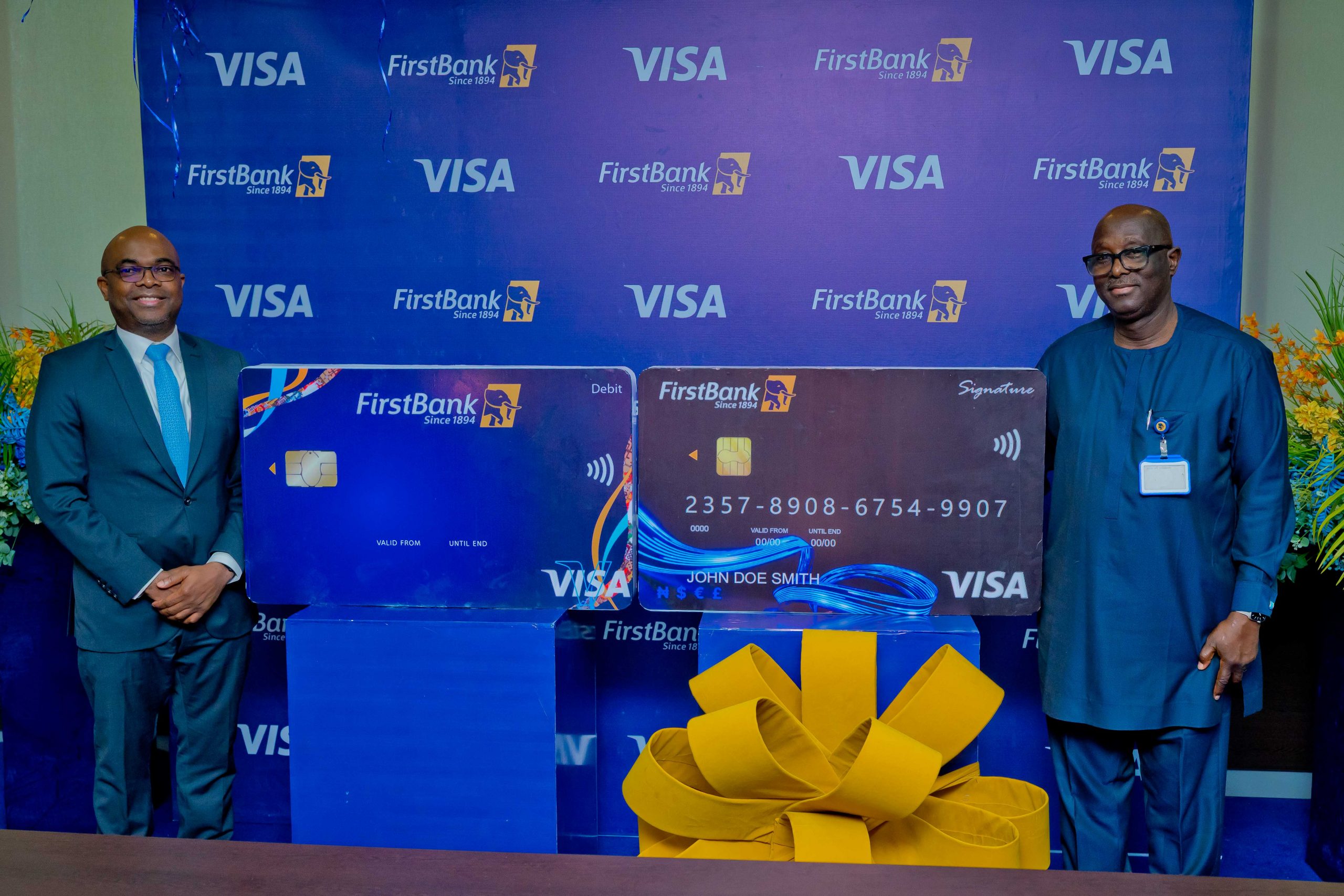
FirstBank, Visa Expand Premium Card Portfolio with Visa Signature Launch
Designed for Nigeria’s affluent segment, Visa Signature unlocks world-class benefits through Visa’s global network across travel, lifestyle, and premium merchant offers.
Lagos, Nigeria – May 15, 2026 – First Bank of Nigeria Limited, in partnership with Visa, has announced the launch of Visa Signature, a premium card offering designed for Nigeria’s affluent segment. The card unlocks an exclusive portfolio of lifestyle benefits, global travel privileges, and curated merchant offers through Visa’s worldwide acceptance network, giving high-spending Nigerians a product built around how they live.
Visa Signature targets Nigeria’s top executives, business owners, and frequent international travelers who expect more from their financial products. Through Visa Global benefits and Visa Destination offers, cardholders gain access to preferential rates, premium experiences, and priority services across hundreds of partner merchants, hotels, airlines, and destinations around the world. The card supports both domestic and cross-border transactions, ensuring seamless payment experiences whether cardholders are in Lagos, London, or Dubai.
Commenting on FirstBank’s ambition for its premium cardholders, Chuma Ezirim, Group Executive, eBusiness & Retail Products, FirstBank, said: “At FirstBank, we are dedicated to creating financial solutions that reflect the evolving lifestyles of our customers. We understand that our premium customers aspire to experiences that reflect their global outlook. Visa Signature is crafted to meet those expectations, offering access to exclusive experiences, global connectivity, and lifestyle privileges that empower our customers to live without boundaries. We remain focused on creating value and reinforcing our position as the partner of first choice for Nigerians at home and abroad.”
Highlighting the strategic importance of the FirstBank partnership, Andrew Uaboi, Vice President and Cluster Head, West Africa, Visa, noted: “Nigeria’s affluent consumers are among the most active and globally connected spenders on the continent. Visa Signature is designed to serve that profile with the depth of benefits and the breadth of acceptance they deserve. We are delighted to work with FirstBank in making this available to the Nigerian market.”
The launch marks a strategic step for FirstBank in deepening its premium product offering. FirstBank’s existing Visa portfolio already serves millions of Nigerians across everyday retail, cross-border commerce, and online transactions through Visa Infinite, Visa Gold, Naira Credit, and Visa Prepaid cards. Visa Signature adds a dedicated tier for the affluent segment, giving this customer group the recognition and privileges their spending profile demands.
Visa Signature is available to eligible FirstBank customers. Interested customers can visit any FirstBank branch nationwide or contact their dedicated relationship manager to apply.

Visa (NYSE: V) is a world leader in digital payments, facilitating transactions between consumers, merchants, financial institutions, and government enti
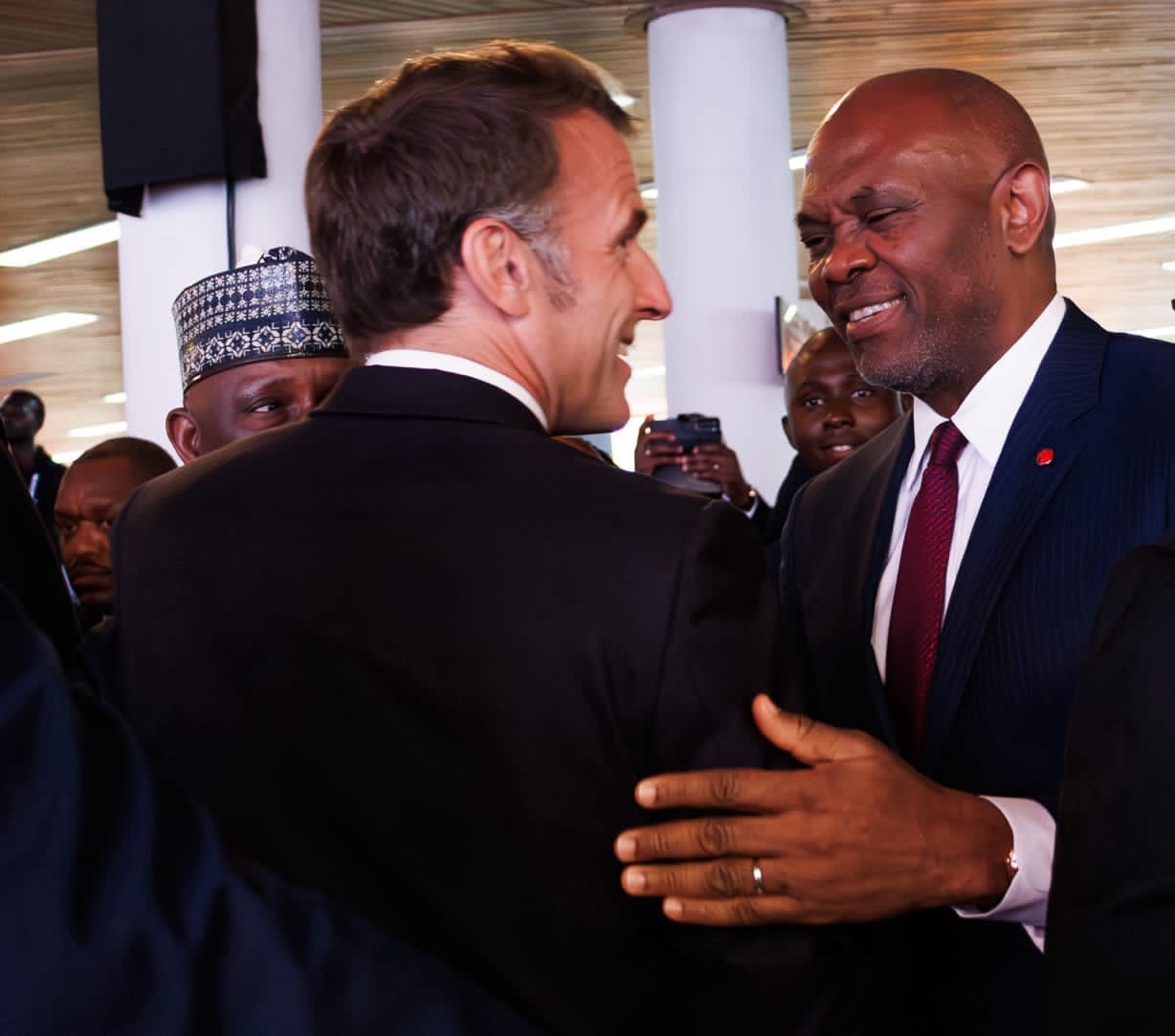
Tony Elumelu at Africa Forward Summit: “Our Youth Do Not Need Handouts”
Heirs Holdings Founder tells Presidents Ruto and Macron that Africa wants partners of substance, based on equality, and that power and infrastructure must come first.
At the 2026 Africa Forward Summit, convened by Kenyan President H.E. William Ruto and French President H.E. Emmanuel Macron, Heirs Holdings Founder and Group Chair, Tony O. Elumelu, CFR, delivered a direct message to a room of heads of state, investors, and global business leaders: Africa is open for partnership, not patronage.
“We welcome true partnership — partnerships of substance and based on equity — where Africans and African solutions catalyse Africa’s future”, he remarked.
Elumelu argued that Africa’s transformation hinges on two foundational investments — electricity and infrastructure — and that private capital must do the heavy lifting.
“The private sector is what will help us mobilise capital to drive investment in infrastructure, investment in electricity. These are two critical requirements for the economic prosperity and development of Africa,” he said. “If we create the right operating environment, we will create jobs for our people. We will alleviate poverty and deliver growth and prosperity.”
With more than 65 percent of Africans under 35, Elumelu pushed back hard against the traditional language of aid.
aid.
“In Africa, we have a young population. There is no room for victim mentality. Our youth do not need handouts; they need jobs, they need improved access to electricity, they need to join the internet. What is important is providing this enablement, this infrastructure requirement, so that our young ones can realise their potential.”
His Tony Elumelu Foundation (TEF) has now provided access to training for 2.5 million young Africans and funded over 27,000 entrepreneurs across all 54 African countries — the continent’s largest entrepreneurship platform.
Elumelu signalled openness to every credible partner, regardless of geography.
“It is a good place to be at, as Africans, now. We should embrace those who want to help us catalyse growth in Africa. And let us not forget Africa is the fastest growing region globally – and it is not just demographics” he said.
“In the 21st century, the mindset must change. It should be a mindset that embraces economic prosperity and development, a mindset that creates the environment that will help us alleviate poverty in Africa, create jobs for our young people.”
Tony Elumelu’s participation at the summit aligns with Heirs Holdings’ broader commitment to driving long-term African development through strategic investments across sectors critical to economic transformation, including power, financial services, healthcare, hospitality, and technology.
The 2026 Africa Forward Summit concluded with renewed calls for deeper collaboration between governments, development institutions, and the private sector, as leaders exploredaid.
“In Africa, we have a young population. There is no room for victim mentality. Our youth do not need handouts; they need jobs, they need improved access to electricity, they need to join the internet. What is important is providing this enablement, this infrastructure requirement, so that our young ones can realise their potential.”
His Tony Elumelu Foundation (TEF) has now provided access to training for 2.5 million young Africans and funded over 27,000 entrepreneurs across all 546 African countries — the continent’s largest entrepreneurship platform.
Elumelu signalled openness to every credible partner, regardless of geography.
“It is a good place to be at, as Africans, now. We should embrace those who want to help us catalyse growth in Africa. And let us not forget Africa is the fastest growing region globally – and it is not just demographics” he said.
“In the 21st century, the mindset must change. It should be a mindset that embraces economic prosperity and development, a mindset that creates the environment that will help us alleviate poverty in Africa, create jobs for our young people.”
Tony Elumelu’s participation at the summit aligns with Heirs Holdings’ broader commitment to driving long-term African development through strategic investments across sectors critical to economic transformation, including power, financial services, healthcare, hospitality, and technology.
The 2026 Africa Forward Summit concluded with renewed calls for deeper collaboration between governments, development institutions, and the private sector, as leaders explored pathways to accelerate inclusive growth and strengthen Africa’s position within the global economy.


- Economic Community of West African States (ECOWAS) has Deployed a Technical Mission to Observe the Legislative and Local Elections of May 31, 2026 in Guinea May 31, 2026
- President Herminie Attends Seychelles Football Federation (SFF) Cup Final and Presents Trophy to Bazar Brothers FC May 31, 2026
- ‘You are not alone’: World Health Organization (WHO) chief vows to stand with Democratic Republic of the Congo (DR Congo) through Ebola outbreak May 31, 2026
- United Arab Emirates (UAE) Expresses Solidarity with Kenya and Conveys Condolences over Victims of Girls’ School Dormitory Fire May 31, 2026
- Pitcher Awards Announces 2026 Winners, Marking a Landmark Year for Pan‑African Creativity May 30, 2026
- Ghana Commemorates 78th International Day of United Nations Peacekeepers May 30, 2026
- South Africa: President Ramaphosa receives second interim report of Madlanga Commission May 30, 2026
- Asmara Marathon 2026 to be held May 30, 2026
- Powerful call for dialogue and compromise to secure peace in South Sudan issued on International Peacekeepers Day May 30, 2026
- Over 1,000 Participants Join Rwenzori Marathon Activation Run in Mombasa May 30, 2026
- Economic Community of West African States (ECOWAS) has Deployed a Technical Mission to Observe the Legislative and Local Elections of May 31, 2026 in Guinea May 31, 2026
- President Herminie Attends Seychelles Football Federation (SFF) Cup Final and Presents Trophy to Bazar Brothers FC May 31, 2026
- ‘You are not alone’: World Health Organization (WHO) chief vows to stand with Democratic Republic of the Congo (DR Congo) through Ebola outbreak May 31, 2026
- United Arab Emirates (UAE) Expresses Solidarity with Kenya and Conveys Condolences over Victims of Girls’ School Dormitory Fire May 31, 2026
- Pitcher Awards Announces 2026 Winners, Marking a Landmark Year for Pan‑African Creativity May 30, 2026
- Ghana Commemorates 78th International Day of United Nations Peacekeepers May 30, 2026
- South Africa: President Ramaphosa receives second interim report of Madlanga Commission May 30, 2026
-

 news6 months ago
WHO REALLY OWNS MONIEPOINT? The $290 Million Deal That Sold Nigeria’s Top Fintech to Foreign Interests
-

 society4 weeks ago
SOCIAL MEDIA IS NOT A BATTLEFIELD COMMAND – WHY THE NIGERIAN ARMY’S ACTION AGAINST JUSTICE CRACK IS A NATIONAL SECURITY IMPERATIVE
-

 celebrity radar - gossips4 months ago
Dr. Chris Okafor Returns with Power and Fire of the Spirit -Mounts Grace Nation Altar with Fresh Anointing and Restoration Grace on February 1, 2026
-

 celebrity radar - gossips6 months ago
Prophet Kingsley Aitafo Releases 2026 Prophecy: ‘Nigeria Will Rise, but the World Must Prepare for Turbulence’