
Bank
FIRSTBANK: THE EMBODIMENT OF CORPORATE RESPONSIBILITY AND SUSTAINABILITY

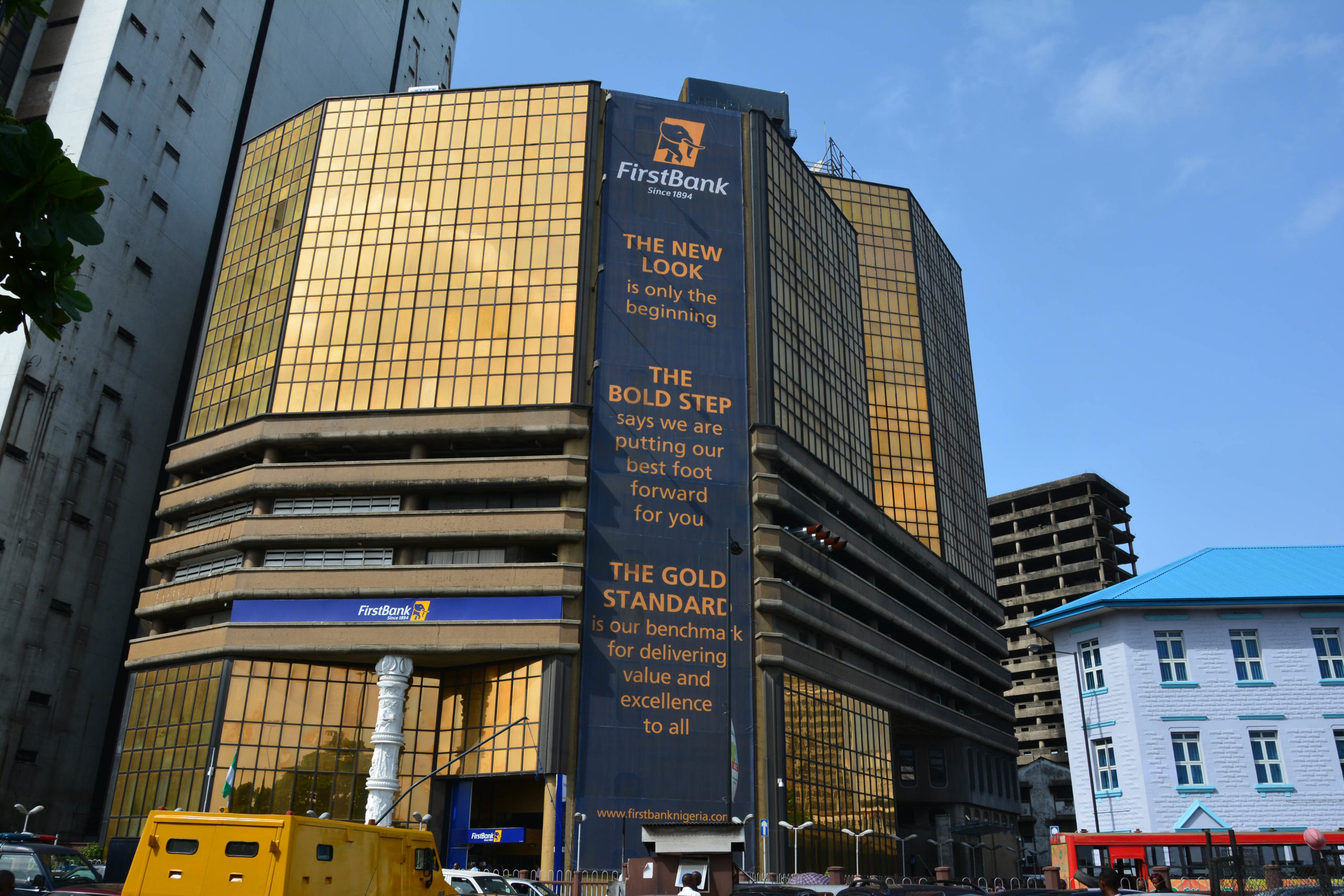
FIRSTBANK: THE EMBODIMENT OF CORPORATE RESPONSIBILITY AND SUSTAINABILITY

Who should corporate responsibility and sustainability lessons be taken from? Some companies are still unclear about the concept but latching onto the sustainability mantra anyway, because it has become a marketing buzzword for business? Or a company through whose creed and deeds, over the many decades it has been around, people can see corporate responsibility and sustainability lived (first) and preached (subsequently)?
If the above set of questions constituted a question in an examination hall, it would be one of the easiest of questions to answer. Not one person would fail it. Outside the examination hall, the answer to this question that seems as easy and simple like the question of 2 + 2 may not be as easy and simple. It may be complicated by all the cleverly arranged noise and claims projected at people to make it difficult for them to see and accept the obvious.
So, it is incumbent on people who know, and care enough (like this writer), to keep stating and restating the obvious. This is in the hope that doing so would help others to take full cognisance of the obvious and not allow themselves to be bamboozled by image without substance and rhetoric without pedigree.
The concept of corporate responsibility and sustainability is not about the clever or manipulative use of marketing buzzwords by corporate citizens. It is about impact, net positive impact, in the lives of real, not imagined, people through the deliberate and well-planned activities of socially-responsible corporate citizens.
Even if history is no longer taught in most schools in Nigeria, the records are there. The records show that Nigeria has been blessed to have standing by her, at all times, a corporate citizen which understands the concept of corporate responsibility and sustainability.
This corporate citizen has been standing by Nigeria before the country’s founding, through its amalgamation, Independence and all the conflicts and crises Nigeria has gone through and still faces. Today, the corporate citizen still stands by Nigeria.
First Bank of Nigeria Limited, a lender of unmatched pedigree, a bank with a history of unparalleled support to Nigeria and Nigerians (right from the colonial era to date, even serving as Nigeria’s central bank at some stage of our national development), has been a corporate citizen like no other.
A brand that has backed innumerable groundbreaking projects across Nigeria and beyond, FirstBank has demonstrated that real impact that can be seen and felt by all, and not mere marketing buzzwords, is the real measure of an institution’s understanding of corporate responsibility and sustainability.
It is incontrovertible that whichever way corporate responsibility and sustainability is understood or defined, FirstBank is sure to tick all the boxes. Just name every parameter for assessing a company’s efforts in corporate responsibility and sustainability and match each against what FirstBank has been doing. Is there any parameter that FirstBank has not surpassed?
FirstBank has been living corporate responsibility and sustainability for most, if not all, of its existence as a going concern. Knowing it cannot do it alone, the bank has also devoted resources to efforts that will enable it to preach or pass the message so other corporate citizens, groups and individuals will emulate it.
One platform the bank has used effectively for this purpose is its Corporate Responsibility and Sustainability (CR&S) Week. The CR&S Week is a full working week that the FirstBank Group, in-country and across the world where it operates, dedicates to the promotion, execution and celebration of social responsibility initiatives.
The Sustainability Week also includes a huge kindness campaign to reorient citizens towards the right values and reignite acts of kindness in society. It is only one of the many ways FirstBank is living true to its brand promise to always put customers first.
And the Sustainability Week seeks to invite others (individuals and corporate citizens) to follow the bank’s example and begin to intentionally create positive impact in their immediate communities.
From the inaugural edition in 2017, where the theme was “Promoting Kindness: Putting You First”, the Sustainability Week has helped to reinforce FirstBank’s role as a nation-builder that is driving sustainable development across communities where it operates. It was an opportunity for the bank to encourage others (individuals and corporate citizens) to follow in its steps, even if all they can afford to take are small steps.
Taking small steps may have informed the choice of theme for the second edition of the Sustainability Week in 2018: “Touching Lives: You First”. The bank sought to debunk the notion that touching lives in meaningful ways and making an impact on society require big-ticket projects, whilst emphasising the power in the little things people do and the small steps they take.
After all, is it not little drops of water that make a mighty ocean, like the saying goes? And does the journey of a thousand miles not begin with a (small) step, like another saying puts it?
Just take a look at SPARK (Start Performing Acts of Random Kindness), a values-based initiative that raises consciousness promoting kindness to one another in society, which the bank started during the inaugural Sustainability Week in 2017.
Aimed at reinforcing FirstBank’s corporate culture of encouraging giving and volunteering among its staff and the larger society, its magnitude today and the many kind initiatives it has sparked off across the country could not have been imagined when the seed was planted five years ago. Incalculable manhours and financial resources from FirstBank staff and partners have been contributed willingly.
Children in orphanages, internally displaced persons (IDPs) in various IDP camps, widows and other underprivileged or vulnerable groups have been visited and their challenges alleviated if not totally eliminated. Scores of career counselling sessions with secondary school pupils across Nigeria has also been organised as part of the Sustainability Week, which has been the first of its kind in Nigeria’s financial services industry.
In 2019, the third edition of the Sustainability Week with the theme: “Ripples of Kindness: Putting You First” enunciated the values (or pillars) of the SPARK initiative to include Compassion, Civility and Charity. FirstBank believes that these values and the acts of kindness that flow as a result of embracing the values are critical to promoting and building peaceful co-existence and prosperity in society.
Among the key highlights of the 2019 Sustainability Week was a “Nice Comments Day” that was a day set aside to foster words of encouragement, support and kindness to people around one, regardless of ones’ familiarity or close ties, in recognition of the instrumental role kind words play in lighting up people’s day and bringing out the best in them.
Another highlight was the SPARK School Engagement that promoted the SPARK initiative in schools, with the objective of embedding the values of SPARK amongst school children at a young age so the values become part of, and habitual to, them as they develop into adulthood.
Due to COVID-19 pandemic and government-imposed lockdown, the year 2020 witnessed no edition of the Sustainability Week. Any attempt to stage the kinds of activities and events that usually accompany the Sustainability Week would have been counterproductive, spreading infections and possibly deaths instead of kindness and joy that the Sustainability Week has become synonymous with.
However, FirstBank’s avowed commitment to corporate responsibility and sustainability would not allow it fold its hands and just watch while COVID-19 and its debilitating effects tried to make living and learning difficult for most Nigerians.
Working virtually or remotely and, where it could not do otherwise, physically but in strict adherence to COVID-19 safety protocols, FirstBank executed several initiatives meant to ameliorate the very difficult situation in Nigeria then.
The bank contributed to efforts to provide palliatives to vulnerable Nigerians, announced a moratorium on repayment of loans, set up a special loan fund for businesses run by women, established another for school proprietors in collaboration with a state government and drove an e-learning initiative that sought to move one million school children to a safe online learning platform so their educational progress would not be set back due to COVID-19 restrictions, government-ordered lockdown and the closure of educational institutions for the greater part of 2020
“Kindness: A Way of Life” was the theme for the fourth edition of the Sustainability Week held in 2021. Highlights of activities of the 2021 Sustainability Week, designed to entrench a culture of kindness, included a practical-oriented training webinar for staff to embed a culture of kindness in the bank by driving understanding of how kindness (or the lack of it) can impact the workplace, the marketplace and the communities in which staff live and work.
Another important feature of the Sustainability Week was the “Kind Comments Days” that ran all week to inspire a consciousness of kind choice of words and consideration for others. There was also a dedicated programme in secondary schools designed to institutionalise SPARK by using school SPARK champions (including students and teachers) alongside other partners such as Junior Achievement Nigeria (JAN) and Lagos State government to inculcate the SPARK values in school children.
One other feature was the ground-breaking ceremony for the Lagos State government’s OCAAT (One Community At A Time) initiative to provide the Primary Health Care Centre at Ijedodo community in Alimosho LGA. Set up as an initiative to improve the health and welfare of the members of various communities in Lagos State, FirstBank partnered the government on the project as part of its contribution to global efforts to meet some specific Sustainable Development Goals (SDGs).
There were also webinars: a general webinar with the sub-theme: “Education: Does Kindness have a Role?”; and a millennial webinar with the sub-theme: “Making the Cyber World a Kinder Place” which sought to proffer solution to the question of how people could become kinder on social media platforms.
All the past editions of FirstBank Sustainability Week highlight the longstanding and relentless commitment of FirstBank not only to continue to live but also to preach the message of corporate responsibility and sustainability.
Given its unmatched pedigree in corporate responsibility and sustainability, FirstBank has earned the right to address all other corporate organisations as well as individuals and groups on matters of sustainability. The bank has earned its right to the people’s audience.
It is against this backdrop that FirstBank’s forthcoming 2022 Corporate Responsibility and Sustainability Week should be welcomed by other banks and corporate citizens, irrespective of industry, as an opportunity to come together and take lessons from Nigeria’s foremost corporate citizen with regard to corporate responsibility and sustainability.
FirstBank does not consider itself too big to take lessons from other corporate citizens in areas where they have distinguished themselves. So other corporate citizens should not feel too big to take lessons from FirstBank in this area where the bank stands highly distinguished.
Or can anyone claim not to know that if the concept of corporate responsibility and sustainability were to be represented by one corporate citizen per country on a world map where countries are denoted by their foremost corporate entities, it is unarguable that FirstBank would be the company eminently representing Nigeria on that map?




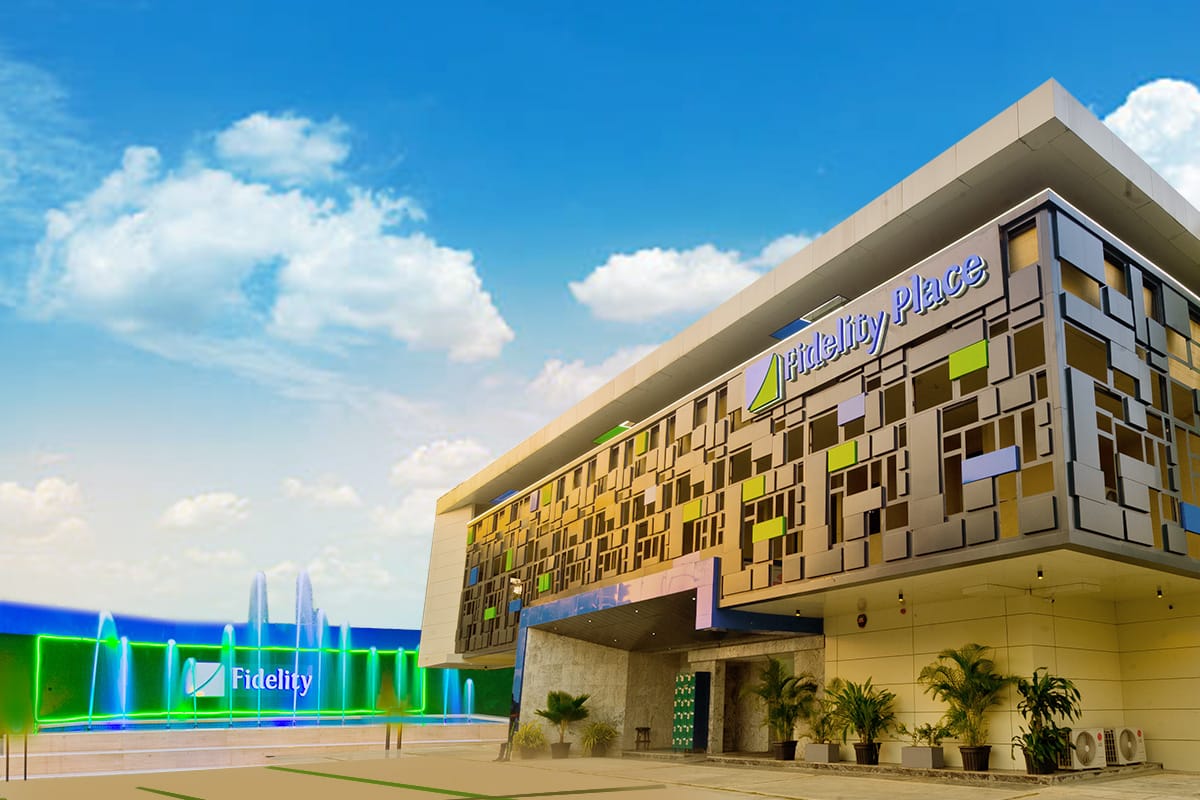
Fidelity Bank grows gross earnings by 38% to N434.95b in Q1
Fidelity Bank Plc recorded 37.9 per cent growth in gross earnings to N434.95 billion in first quarter 2026 as the international commercial bank continued to expand its core banking market share.
Interim report and accounts of Fidelity Bank for the three months ended March 31, 2026 released at the Nigerian Exchange (NGX) showed that gross earnings rose from N315.42 billion in first quarter 20025 to N434.95 billion in first quarter 2026, representing an increase of 37.9 per cent.
The top-line performance was driven by impressive growth in the bank’s core business operations with interest incomes rising by 22.8 per cent to N314.48 billion in first quarter 2026 as against N256.10 billion in first quarter 2025.
With net interest income at N180.97 billion, the bank closed the period with profit before tax of N92.48 billion. After taxes, net profit stood at N74.47 billion for the three-month period. Earnings per share remained high at N5.69, underlining the capacity of the bank to reward its shareholders.
The balance sheet of the bank also emerged stronger. Total assets crossed the N11 trillion mark to N11.35 trillion by March 2026 compared with N10.46 trillion recorded in December 2025. Customers’ deposits increased from N6.89 trillion to N7.38 trillion. Total equity rode on the back of earnings growth to a 27.5 per cent increase from N1.09 trillion in December 2025 to N1.39 trillion by March 2026.
The first quarter 2026 results further consolidated the strong earnings outlook of the bank, which had successfully completed its recapitalisation amidst impressive earnings performance in 2025.
Fidelity Bank had recorded double-digit growths in interest and non-interest incomes as well as key balance sheet items during the year ended December 31, 2025.
The audited report showed that gross earnings rose from N1.04 trillion in 2024 to N1.52 trillion in 2025, an increase of 45.6 per cent. Interest and similar incomes had grown by 38.7 per cent from N803.1 billion in 2024 to N1.11 trillion in 2025. Fees and commission incomes also rose by 44.7 per cent from N78.4 billion to N113.4 billion. The bank recorded net profit after tax of N242.4 billion in 2025.
The bank’s balance sheet emerged stronger with total assets rising by 18.6 per cent to N10.46 trillion in 2025 as against N8.82 trillion in 2024. Customer deposits increased by 16.1 per cent from N5.94 trillion to N6.89 trillion, reflecting continued franchise strength and an improved funding profile. Net loans and advances meanwhile declined by 2.4 per cent to N4.28 trillion in 2025 as against N4.39 trillion in 2024, attributable to customers paying down on their mature obligations.
The bank had in 2025 strengthened its capital position, with eligible capital rising to N561 billion, above the regulatory minimum of N500 billion for banks with international authorisation. In addition, capital adequacy had remained robust, with Capital Adequacy Ratio of 30.94 per cent by December 2025 as against 23.47 per cent by December 2024.
Managing Director, Fidelity Bank Plc, Dr. Nneka Onyeali-Ikpe, said the first quarter 2026 results reinforced the bank’s strong and resilient business model.
She noted that with the remarkable success of its recapitalisation programme and continuing expansion, Fidelity Bank has entered a new era of growth and impressive returns.
“We are on a stronger footing and confident that we will set new growth records that are reflective of our legacy and the future we are working on,” Onyeali-Ikpe said.
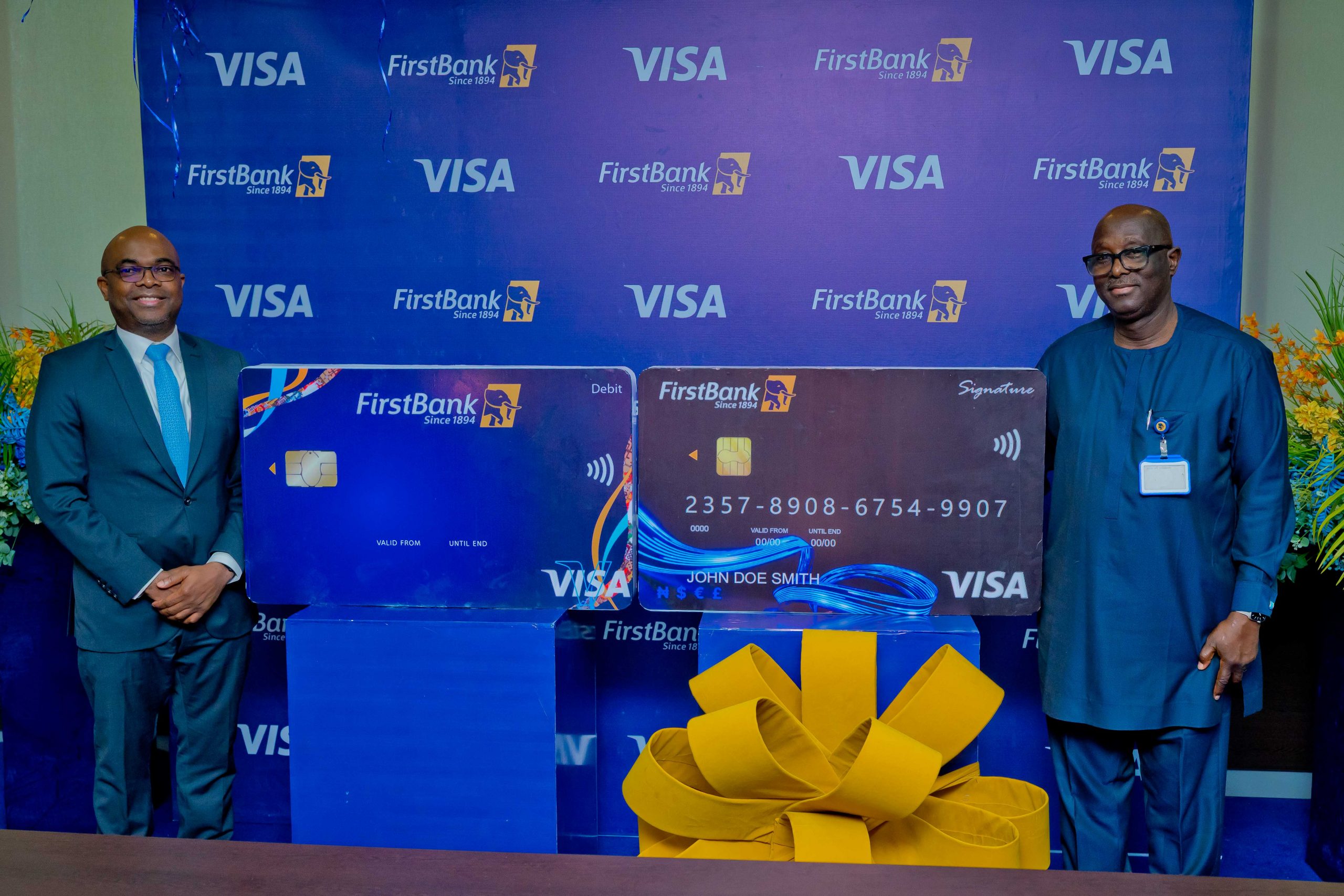
FirstBank, Visa Expand Premium Card Portfolio with Visa Signature Launch
Designed for Nigeria’s affluent segment, Visa Signature unlocks world-class benefits through Visa’s global network across travel, lifestyle, and premium merchant offers.
Lagos, Nigeria – May 15, 2026 – First Bank of Nigeria Limited, in partnership with Visa, has announced the launch of Visa Signature, a premium card offering designed for Nigeria’s affluent segment. The card unlocks an exclusive portfolio of lifestyle benefits, global travel privileges, and curated merchant offers through Visa’s worldwide acceptance network, giving high-spending Nigerians a product built around how they live.
Visa Signature targets Nigeria’s top executives, business owners, and frequent international travelers who expect more from their financial products. Through Visa Global benefits and Visa Destination offers, cardholders gain access to preferential rates, premium experiences, and priority services across hundreds of partner merchants, hotels, airlines, and destinations around the world. The card supports both domestic and cross-border transactions, ensuring seamless payment experiences whether cardholders are in Lagos, London, or Dubai.
Commenting on FirstBank’s ambition for its premium cardholders, Chuma Ezirim, Group Executive, eBusiness & Retail Products, FirstBank, said: “At FirstBank, we are dedicated to creating financial solutions that reflect the evolving lifestyles of our customers. We understand that our premium customers aspire to experiences that reflect their global outlook. Visa Signature is crafted to meet those expectations, offering access to exclusive experiences, global connectivity, and lifestyle privileges that empower our customers to live without boundaries. We remain focused on creating value and reinforcing our position as the partner of first choice for Nigerians at home and abroad.”
Highlighting the strategic importance of the FirstBank partnership, Andrew Uaboi, Vice President and Cluster Head, West Africa, Visa, noted: “Nigeria’s affluent consumers are among the most active and globally connected spenders on the continent. Visa Signature is designed to serve that profile with the depth of benefits and the breadth of acceptance they deserve. We are delighted to work with FirstBank in making this available to the Nigerian market.”
The launch marks a strategic step for FirstBank in deepening its premium product offering. FirstBank’s existing Visa portfolio already serves millions of Nigerians across everyday retail, cross-border commerce, and online transactions through Visa Infinite, Visa Gold, Naira Credit, and Visa Prepaid cards. Visa Signature adds a dedicated tier for the affluent segment, giving this customer group the recognition and privileges their spending profile demands.
Visa Signature is available to eligible FirstBank customers. Interested customers can visit any FirstBank branch nationwide or contact their dedicated relationship manager to apply.

Visa (NYSE: V) is a world leader in digital payments, facilitating transactions between consumers, merchants, financial institutions, and government enti
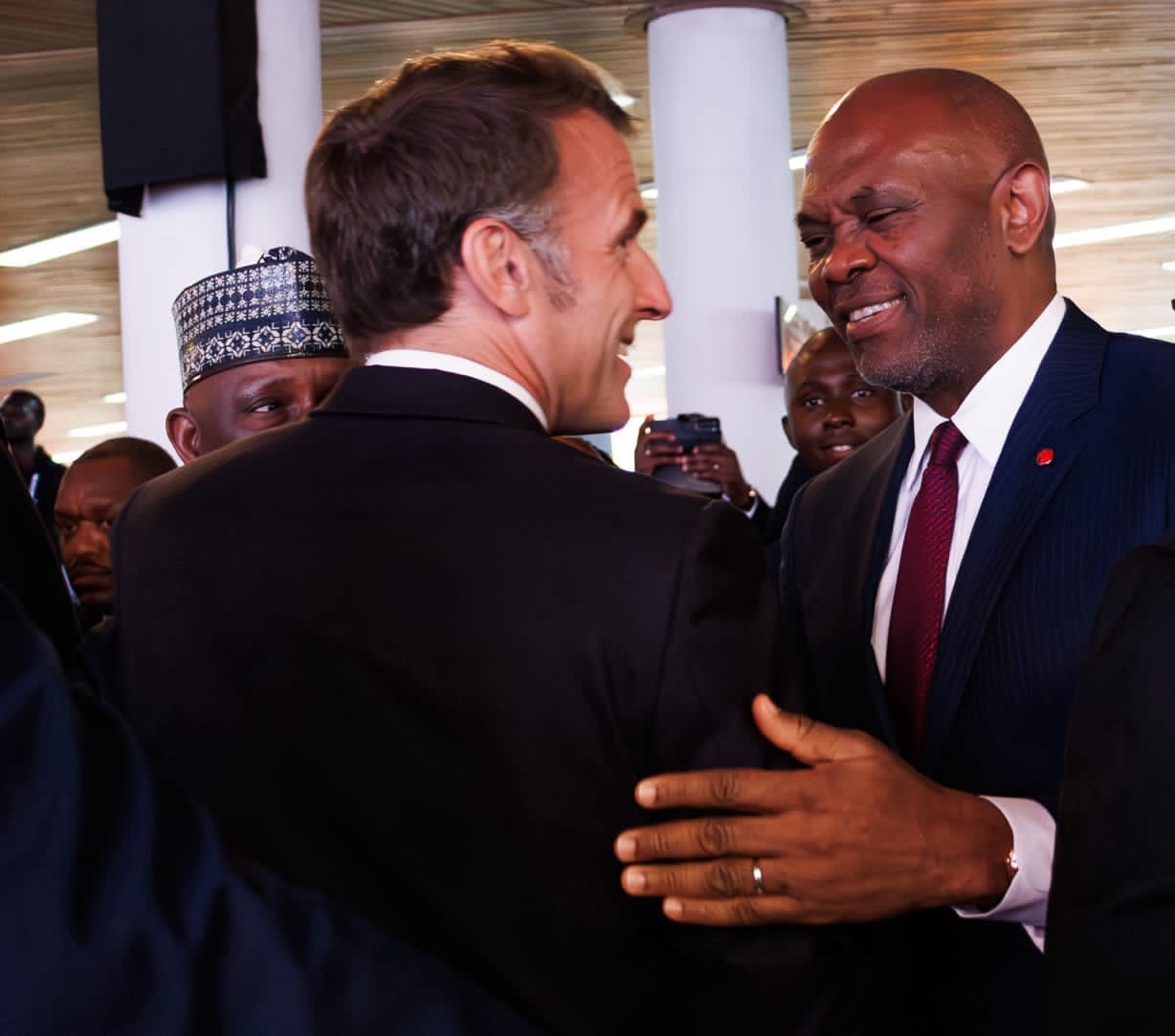
Tony Elumelu at Africa Forward Summit: “Our Youth Do Not Need Handouts”
Heirs Holdings Founder tells Presidents Ruto and Macron that Africa wants partners of substance, based on equality, and that power and infrastructure must come first.
At the 2026 Africa Forward Summit, convened by Kenyan President H.E. William Ruto and French President H.E. Emmanuel Macron, Heirs Holdings Founder and Group Chair, Tony O. Elumelu, CFR, delivered a direct message to a room of heads of state, investors, and global business leaders: Africa is open for partnership, not patronage.
“We welcome true partnership — partnerships of substance and based on equity — where Africans and African solutions catalyse Africa’s future”, he remarked.
Elumelu argued that Africa’s transformation hinges on two foundational investments — electricity and infrastructure — and that private capital must do the heavy lifting.
“The private sector is what will help us mobilise capital to drive investment in infrastructure, investment in electricity. These are two critical requirements for the economic prosperity and development of Africa,” he said. “If we create the right operating environment, we will create jobs for our people. We will alleviate poverty and deliver growth and prosperity.”
With more than 65 percent of Africans under 35, Elumelu pushed back hard against the traditional language of aid.
aid.
“In Africa, we have a young population. There is no room for victim mentality. Our youth do not need handouts; they need jobs, they need improved access to electricity, they need to join the internet. What is important is providing this enablement, this infrastructure requirement, so that our young ones can realise their potential.”
His Tony Elumelu Foundation (TEF) has now provided access to training for 2.5 million young Africans and funded over 27,000 entrepreneurs across all 54 African countries — the continent’s largest entrepreneurship platform.
Elumelu signalled openness to every credible partner, regardless of geography.
“It is a good place to be at, as Africans, now. We should embrace those who want to help us catalyse growth in Africa. And let us not forget Africa is the fastest growing region globally – and it is not just demographics” he said.
“In the 21st century, the mindset must change. It should be a mindset that embraces economic prosperity and development, a mindset that creates the environment that will help us alleviate poverty in Africa, create jobs for our young people.”
Tony Elumelu’s participation at the summit aligns with Heirs Holdings’ broader commitment to driving long-term African development through strategic investments across sectors critical to economic transformation, including power, financial services, healthcare, hospitality, and technology.
The 2026 Africa Forward Summit concluded with renewed calls for deeper collaboration between governments, development institutions, and the private sector, as leaders exploredaid.
“In Africa, we have a young population. There is no room for victim mentality. Our youth do not need handouts; they need jobs, they need improved access to electricity, they need to join the internet. What is important is providing this enablement, this infrastructure requirement, so that our young ones can realise their potential.”
His Tony Elumelu Foundation (TEF) has now provided access to training for 2.5 million young Africans and funded over 27,000 entrepreneurs across all 546 African countries — the continent’s largest entrepreneurship platform.
Elumelu signalled openness to every credible partner, regardless of geography.
“It is a good place to be at, as Africans, now. We should embrace those who want to help us catalyse growth in Africa. And let us not forget Africa is the fastest growing region globally – and it is not just demographics” he said.
“In the 21st century, the mindset must change. It should be a mindset that embraces economic prosperity and development, a mindset that creates the environment that will help us alleviate poverty in Africa, create jobs for our young people.”
Tony Elumelu’s participation at the summit aligns with Heirs Holdings’ broader commitment to driving long-term African development through strategic investments across sectors critical to economic transformation, including power, financial services, healthcare, hospitality, and technology.
The 2026 Africa Forward Summit concluded with renewed calls for deeper collaboration between governments, development institutions, and the private sector, as leaders explored pathways to accelerate inclusive growth and strengthen Africa’s position within the global economy.


- Annual Meetings 2026 (AM2026): African Development Bank Group’s 2025 Annual Report Highlights Strong Results and a New Chapter for Africa’s Transformation May 29, 2026
- Eritrea: Progress of National Animal and Plant Health Laboratory May 29, 2026
- Invest Africa, the Mayor of London and FirstBank United Kingdom (UK) to Host Joint Closing Reception as part of The Africa Debate 2026 May 29, 2026
- Merck Foundation Chief Executive Officer (CEO) Dr. Rasha Kelej met Gabon First Lady to discuss the strategy to continue their joint programs to build healthcare capacity and support girl education May 29, 2026
- ‘Crude Oil: Power, Turnaround and Transformation in Angola’ Debuts as Top 3 Amazon New Release May 29, 2026
- Société Nationale des Pétroles du Congo (SNPC) Chief Ominga to Speak at African Energy Week (AEW) 2026 as Congo Accelerates Gas Expansion May 29, 2026
- South Africa: Deputy President Mashatile arrives in India for a Working Visit May 29, 2026
- Seychelles: President Visits Key Development Sites on Coetivy Island May 29, 2026
- Accelerating regional action to advance mental health care in Africa May 29, 2026
- President of the Republic of Seychelles Meets Young La Digue Talent Ahead of London Showcase May 29, 2026
- Annual Meetings 2026 (AM2026): African Development Bank Group’s 2025 Annual Report Highlights Strong Results and a New Chapter for Africa’s Transformation May 29, 2026
- Eritrea: Progress of National Animal and Plant Health Laboratory May 29, 2026
- Invest Africa, the Mayor of London and FirstBank United Kingdom (UK) to Host Joint Closing Reception as part of The Africa Debate 2026 May 29, 2026
- Merck Foundation Chief Executive Officer (CEO) Dr. Rasha Kelej met Gabon First Lady to discuss the strategy to continue their joint programs to build healthcare capacity and support girl education May 29, 2026
- ‘Crude Oil: Power, Turnaround and Transformation in Angola’ Debuts as Top 3 Amazon New Release May 29, 2026
- Société Nationale des Pétroles du Congo (SNPC) Chief Ominga to Speak at African Energy Week (AEW) 2026 as Congo Accelerates Gas Expansion May 29, 2026
- South Africa: Deputy President Mashatile arrives in India for a Working Visit May 29, 2026
-

 news6 months ago
WHO REALLY OWNS MONIEPOINT? The $290 Million Deal That Sold Nigeria’s Top Fintech to Foreign Interests
-

 society4 weeks ago
SOCIAL MEDIA IS NOT A BATTLEFIELD COMMAND – WHY THE NIGERIAN ARMY’S ACTION AGAINST JUSTICE CRACK IS A NATIONAL SECURITY IMPERATIVE
-

 celebrity radar - gossips4 months ago
Dr. Chris Okafor Returns with Power and Fire of the Spirit -Mounts Grace Nation Altar with Fresh Anointing and Restoration Grace on February 1, 2026
-

 celebrity radar - gossips6 months ago
Prophet Kingsley Aitafo Releases 2026 Prophecy: ‘Nigeria Will Rise, but the World Must Prepare for Turbulence’