
Politics
Full Text Of New Year Broadcast Of Gov. Abiodun

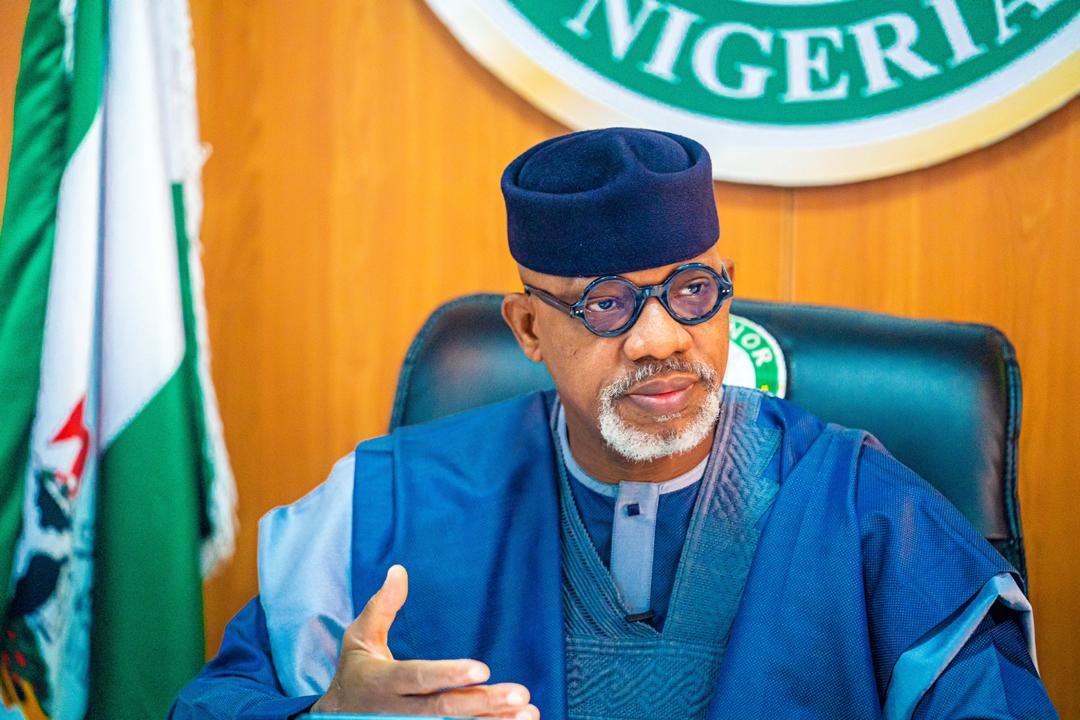
NEW YEAR BROADCAST BY THE GOVERNOR OF OGUN STATE, HIS EXCELLENCY, PRINCE DAPO ABIODUN MFR, ON FRIDAY, 1ST JANUARY, 2021

Fellow citizens of Ogun State,
It is with a heart full of gratitude to the Almighty God and great hope that I address and felicitate with you all as we usher in a new year. 2021 is not just a new year. It is indeed a new dawn that we pray offers a fresh beginning for us as individuals, and as a State.

1. It is only God’s benevolence that saw us through the challenges of a most turbulent year, 2020; it was a year like no other one in recent history. The year started like any other, for most of us. And as an Administration, it was our first full year in office with our own first developed Budget that we christened the Budget to Rebuild Our Future Together. Thus, we were determined to enhance the momentum achieved in the first few months in office in the implementation of our Building Our Future Together Agenda.
2. With a solid foundation laid in 2019, our Administration at the beginning of year 2020 was positioned to commence the building of the future of our state and deliver on our promises to the people, having appointed the full cabinet and inaugurated the Transition Committees for our twenty Local Government Areas to further deepen development at the grassroots level.
3. However, in February 2020, the COVID-19 struck in the country with the index case in our State. This led to a chain of events that became a clear and unprecedented threat to public health and safety, and caused disruption to social and economic lives on a scale that have no match in the last century.
4. No individual or nation was insulated from the effect of the pandemic. We were all compelled to adapt to a ‘New Normal’. A ‘Normal’ that meant either life or death. Governments all over the world, Corporate Organisations and ordinary Citizens, for once, were pre-occupied with one and only one goal – survival.
5. Many otherwise strong Nations bowed to the lethal and pervasive impact of the global but invisible enemy. Regrettably, some of our compatriots fell casualties of the pandemic. At this juncture, I pray for the repose of the souls of the victims of COVID-19 and indeed all the departed souls. May God comfort the families they left behind. It is my strong hope and prayer that the new year 2021 will bring solace to us all, and replenish all that we may have lost or unable to achieve in year 2020 as a result of this pandemic. And, by the special grace of God, we will have many more years to celebrate with full realisation of our potentials.
6. As a Government, the pandemic and other challenges tested our capacity, resilience and readiness to provide leadership, during normal times and turbulent periods. In our usual approach and particularly through the turbulent periods, we remained focused; we were deliberate; methodical; inclusive; and, were structured in our responses. This approach helped us significantly to confront the pandemic and the #EndSARS protest, and still deliver on our commitment to the welfare and wellbeing of our people. I am therefore delighted that despite these tremendous challenges, we can look back and appreciate the divine grace to deliver on a number of promises made to our people and our dear State in the last year. Though, our agenda may not have progressed as rapidly as envisioned, we have been able to record some achievements through the glory of God, cooperation and support of you, the good people of Ogun State and all stakeholders. Once again, I thank you all.
7. Fellow Citizens, as an Administration irrevocably committed to good governance, particularly transparency and accountability, I hereby highlight some of the achievements of your government under my watch in the last one year. Each of our five developmental pillars represented by the ISEYA acronym manifested in programmes and projects that are clearly visible in all the parts of the state and are delivering benefits to our people. It is worth emphasising that these projects were selected by the host communities, through the Community Development Associations, traditional rulers and other stakeholders, in line with our participatory and inclusive approach to governance.
8. ISEYA is an acronym, as you all know where I stands for Infrastructure; S for Social Welfare and Social Wellbeing; E for Education; Y for Youth Empowerment; and A for Agriculture.
9. We recognise the importance of infrastructure to the economic development and wellbeing of our people. We therefore embarked on an aggressive infrastructural development programme covering roads, energy and ICT, amongst others. In this regard, this Administration awarded contracts to reconstruct a number of critical roads across the state, totalling 165.30 km. Some of these have been completed and in use, such as Raypower , Osi-Ikola-Navy Road in Ota; Ashafa- Oke Fusigboye – Molipa Road in Ijebu-Ode; Ago-Iwoye Road Oru , Fajol American Junction – Gbonagun Road in Abeokuta, Vespa-Orita meje in Ifo and the Hospital road Sagamu amongst others. Other ongoing reconstruction works include Ijebu-Ode – Epe Road, Elite Oke-Lantoro – Isale Ake Road abeokuta , Sagamu Interchange – Abeokuta Road, Oba Einwole Road in Sagamu, and the road around Odo Afa Bridge, Idiroko -Ipokia Road, in Ipokia. We have rehabilitated a total of 72.75km of roads and carried out palliative measures on other roads totalling 88.60km.
10. I am proud that we have kept our promise that all the inherited projects that have a direct bearing on the continued development of our dear State will not be abandoned. In fact, those that could no longer be used for their initial purposes will be converted to other uses for the benefit of the good people of our dear State. Indeed, works are ongoing at various sites of the inherited legacy road projects in the three Senatorial Districts. Examples are Kuto-NNPC Road and Bridge in Abeokuta, Adatan-Gbonagun-Obantoko-Osiele Road, Ilaro-Owode Road, Oluwalogbon-Imowo-Ejinrin Road, Ijebu-Ode, and others. The Ogun State Public Works Agency (OGPWA) has been mandated to carry out palliative works on 25 – 30 km township and rural roads monthly. Other road constructions that will commence this year include the Agbara- Atan Lusada road, ilishan- Ago Iwoye Road, Denro Ishasi Akute road Shiun Owode Ofada Mowe road amongst others. While we shall be completing Sagamu-Abeokuta Road, Ijebu-Ode-Epe and Ilaro-Owode roads just to mention a few.
11. There is a consensus that energy is very central to both the economic prosperity and general wellbeing of the society. Our Administration thus embarked on a number of key initiatives to boost energy supply, both for the industries and domestic use. We established the Ogun State Energy and Electricity Board, the first of its kind in the history of the State. The Board coordinates all the interventions in the sector. And I am delighted to note that the Board has facilitated the signing of Memoranda of Understanding with two reputable energy firms that will add not less than 100MW to the energy supply to our state. This figure will almost double the existing public power supply. In addition, the Board will also provide technical training to our youth to serve as technicians, metering officers amongst others, thus creating employment opportunities.
12. Health is wealth is not just a cliché. it is indeed a truism that has been brought further home with the COVID-19 pandemic. A healthy nation is a happy nation. Whilst confronting the pandemic was a major health challenge, we scaled up our health care facilities not only to confront the pandemic but to generally improve on healthcare service delivery in the state. Towards this end, our hub-and-spoke approach that puts Primary Health Centres (PHC’s) at the base delivered the rehabilitation of about 100 primary healthcare centres across our twenty local government areas. Furthermore, we have also commenced the renovation and equipping of our secondary and tertiary health facilities with and special attention to rejuvenate the Olabisi Onabanjo University Teaching Hospital (OOUTH) the apex healthcare facility in the state. The newly inaugurated Board of the teaching hospital has since swung into action. And OOUTH is on the path to recover its lost glory.
13. Our efforts to ensure health and wellbeing of our people have elicited recognition and support of partners including the World Health Organisation (WHO). In fact, Ogun State is one of the only two states in the country that WHO has chosen for collaboration to combat non-communicable diseases such as hypertension. Under our watch, we have increased the number of regular operational ambulances in the state from 6 to 17 and also extended the operating period to 24 hours a day across the three senatorial districts. Furthermore, we now have tricycle ambulances to be distributed to all the twenty local government areas for deployment in our rural communities. We will continue to increase the stock of our tricycle ambulances to ensure all of our Rural wards have a tricycle ambulance each.
14. This Administration employed over 300 health workers of all categories, including consultants, doctors, nurses, pharmacists, physiotherapists, laboratory technologists, amongst others, for OOUTH and other government hospitals. This is the first time of such exercise in over a decade. We also reviewed their salaries and allowances upwards to serve as appreciation of their very demanding roles, especially during the COVID-19 pandemic, and to also motivate them. In addition, we have also provided medical insurance for all our frontline health workers.
15. To ease access to affordable health services to all, Ogun State Health Insurance Scheme will take off fully in the first quarter of this year. A seed fund of N100 Million Naira has since been committed.
16. Other progarmmes to ensure social wellbeing that will be intensified in 2021 are the implementation of the Residents Idenitication Cards to provide a reliable database of people living in Ogun State. Our Amotekun Security Network will also take off this month to complement the efforts of other security agencies including the community policing of the Nigeria Police. An experienced and reputable retired Commissioner of Police has been appointed as the Commandant, and the recruitment of personnel is ongoing.
17. To address the housing deficit, our Housing programme aims to provide 2,500 housing units over the next two years. We have completed 130 units of the first phase of the Prince Court Estate at Kemta Idi-Aba in Abeokuta, with the second phase of 150 units nearing completion. Other estates in various stages of completion and commencement across the states are in Kobape (Abeokuta), Sagamu, Ijebu-Ode, Ilaro, Otta, and Iperu. We have also completed the first phase 51 units of The King’s Court, a unique middle to upper income housing estate at Oke-Mosan in Abeokuta.
Ogun State has also been chosen by the Federal Government, through the Economic Sustainablity Programmes, as one of the five pilot states in the country to benefit from the Social Housing Programmes. This will provide 10,000 social housing units to our people. Thus, in total, 12,500 housing units will become available in Ogun State. This housing programmes will not only provide affordable homes, but will also particularly create direct employment opportunities for no fewer than 75,000 of our artisans, housing professionals, and other service providers.
18. The Building Our Future Together Agenda necessarily has the youth as the focus, because indeed Ogun youth, with their majority population and promising outlook, represent the future of our State. Youth empowerment was one of the first areas of our intervention at inception. We developed and deployed the Ogun Job portal to dimension the unemployment problems and have commenced the implementation of the Ogun Youth Empowerment Scheme (OG-YES). Through this scheme, 5,000 youth across the twenty local government areas are being enrolled. To date, we have over 20,000 beneficiaries of our various employment schemes, particularly our Agric programmes such as the Anchor Borrowers Programme. We will continue and even broaden the scope of our various youth empowerment and job creation initiatives in the new year. In the meantime, I thank Ogun Youths again for their maturity and largely peaceful conduct, particularly during and after the #EndSARS protest. I enjoin them to continue to remain worthy Ambassadors of our State.
19. The proud heritage of Ogun State as the Education Capital of the nation has been enhanced by our Administration through a number of deliberate policies and projects. We have built or rehabilitated over 954 classrooms in our public schools. This will be further intensified in year 2021. We were the first State to introduce virtual learning, Ogun digiclass during COVID-19 to ensure continuity of education of our children during the lockdown. This investment has paid off. Our children won eleven (11) awards at Junior Engineers, Technicians and Scientists (JETS) competition, amongst others. The tertiary education also received increased attention. We ensured accreditation of the programmes of our tertiary institutions by the relevant authorities. We also resolved the seemingly intractable crisis in Moshood Abiola Abiola Polytechnic, Abeokuta (MAPOLY) and Tai Solarin College of Education, Omu Ijebu (TASCE). For the first time in so many years, we have restored payment of bursaries to Ogun State students in tertiary institutions across the country. Their Verification exercise has commenced after which the disbursement will be effected. I have also approved the award of scholarships to deserving students who have excelled in their academic pursuit. It is also gratifying that one of our tertiary institutions, Gateway Institute of Technology, Igbesa, won the Award of The Most Compliant Institution by the Joint Admissions and Matriculation Board (JAMB). No doubt, learning outcome has a direct link to the level of welfare and motivation of the teachers. It is in recognition of this that we have placed a high premium on the welfare of our teachers. Our Administration restored the appointment and has since sworn in Principals-General and Headteachers-General to enhance the career growth of teachers.
20. Our Agriculture programme has been a resounding success and has received wide acclaim. It has deepened the proud legacies of our State as the number one in cassava production nationwide and number one in poultry. In the South West, we hold the ace as the number one in rice production. Thus, we are fast becoming the food basket of the nation. In addition to significant contribution to food security, our Agric programme has created Agricpreneurs, especially amongst our youths. Our youths have successfully enrolled in a number of programmes such as the Anchor Borrowers Programme, The Fadama Guys, The Broiler projects, amongst others. The value chain approach has also linked 8,500 Ogun indigenes to inputs and credit under the FGN-IFAD-Ogun Value Chain Development Programme (VCDP) in Rice and Cassava value chain . Over 70,000 farmers have been registered for different commodities. In this year, we will be intensifying focus on nutrition as part of our Agricultural Agenda by assisting and encouraging value chain actors to grow bio-fortified crops, such as Vitamin A cassava and maize. To further develop capacity, Ogun State has signed a Memorandum of Understanding with the International Institute of Tropical Agriculture (IITA), Ibadan, to upgrade the Odeda Farm Institute into a Diploma Awarding Research and Training Institution.
21. Our focus on the I.S.E.Y.A development pillars has not diminished our commitment to the welfare of the Ogun State public servants, who are the fulcrum for the implementation of the “Building Our Future Together” Agenda and development plans. Our Administration has implemented a number of initiatives to demonstrate our commitment to staff welfare in consonance with the central role they play in the effective implementation of government programmes and policies. Notable amongst these is the timely payment of salaries and the commencement of the payment of the minimum wage of N30,500.00 to public servants in the State from October, 2020. Though this has put a further strain on our finances, we firmly believe that only a well motivated workforce can be expected to perform the roles of the backbone for implementation of government programmes and policies. We appreciate the Ogun State Public Servants and we are committed to their welfare.
22. It is gratifying that our various efforts and accomplishments have not gone unnoticed. We have won quite a number of awards, which I highlight as follows:
• Best State in ICT Penetration and Adoption by the National Council on Communication and Digital Economy
• Best State in ICT Infrastructure Development also by the National Council on Communication and Digital Economy
• Best State Governor with the Most Improved Security by Business Day Newspaper
• Best Governor in Education by the National Parent-Teacher Association of Nigeria
• Best Governor in Agriculture by the Nigerian Agriculture Awards
• Best Governor in Affordable Housing Delivery by the Nigerian Housing Awards
23. My dear good people of Ogun State, these awards are neither for me, nor my team or government alone. The true honourees are you, the good people of Ogun State. Without your mandate in the first instance that provided us the platform to serve, these awards could not have come. As we all savour the awards, with all sense of modesty, they come with an expectation and burden to improve on our performance in the new year. Now our State is under focus, and we must remain the torchbearers of the legacy of excellence bequeathed to us.
24. On our part as your Government, let me reassure you that we will continue to formulate people friendly policies and programmes that will ensure increased prosperity for all our people and continued development of our dear State. As a matter of fact, we are going to focus more on deepening the ISEYA Agenda in the new year. And we have started. Just two days ago, I signed the year 2021 Budget aptly named “Budget of Recovery and Sustainability” with a size of N338.6 Billion. That fiscal document will aid us in ensuring strategic allocation of resources to the different sectors of our economy.
25. As we enter into the New Year, we do so with great hope and in high spirit. We should set our eyes and mind at the lofty goals of achieving the Ogun State of our collective dreams. This cannot be attained without deliberate efforts from of all of us. We also expect our people to continue to support, cooperate, collaborate and partner with us towards the successful implementation of our “Building our Future Together” Agenda.
26. Therefore, we must remain together as a people. We must work together to ensure that the future of our dear State, that this Administration is committed to building comes to fruition. We have demonstrated our commitment in the last 18 months. And, the next one year promises to be even better. By the grace of God, your support and our commitment, we will recover some of the lost grounds of the year 2020. The environment may seem inclement and the outlook may look dim. Nonetheless, we have no doubt that as a people we have a history and legacies of triumph over travails We will continue to sustain the Building our Future Together Agenda. We will break new grounds and together, we will prevail.
27. By this time next year, I have no doubt that when we are ushering another year, we will all look up to say it has been an awesome year. In this journey, be assured that as your Governor I will work shoulder-to-shoulder with you in taking full advantage of our human and material potentials for the continued development of our dear State.
28. My Dear good people of Ogun State, you will recall that our nation, including our dear state, was painfully but unavoidably locked down for months as part of the effort to combat the deadly COVID-19. The second wave of COVID-19 is here. And medical scientists have warned that this wave is more contagious and may be deadlier. Events in other countries, including those with better health care facilities, are frightening. Even here in Nigeria, infection rate has gone up. In fact, the Presidential Task Force on COVID-19 has warned that January may be a worse period for Nigeria since the pandemic. But there is a silver lining if we all take individual responsibility for our health and encourage our loved ones to also do so. We must abide with all the non-pharmaceutical guidelines, such as proper wearing of face masks, social distancing and regular washing of our hands. We can ill-afford another lockdown or a repeat of the unpleasant experiences of year 2020. I hereby call on all stakeholders, including our traditional rulers, religious leaders, Community Leaders, the media, and indeed all of us to spread this message that is vital to our survival. Certainly, COVID-19 is real; no doubt, the second wave is here, and the consequences are grave, if we fail to observe the prescribed protocols. Though vaccines have been found, but there is no telling when they will be available in Nigeria. It is my prayer that 2021 will see the end of this deadly disease and usher in more prosperity for us all.
29. I cannot end this address without thanking the good people of Ogun State. You have demonstrated and kept faith with us just as we have also kept faith with you. But the journey ahead requires even more collaboration between your Government and you the people. I have no doubt that with your support no odd is insurmountable and there’s no mountain we cannot climb or flatten.
30. I thank all our health workers and the security agencies. I thank our traditional rulers and our religious leaders. I thank all Ogun workers, business owners, both in the formal and informal sectors. I appreciate the political class. I thank all the Community Development Councils (CDCs) and the Community Development Associations (CDAs). I thank all all our youths i thank all those who have advised us, those who have commended us and indeed those who have reasons to differ with us. All of these have continued to challenge us to be better than what we were at the beginning and to surpass what we met on ground. I know that when people put on your shoulders a trust of this magnitude, it is more than a honour, you have a moral burden to repay. And, the only currency of that repayment is selfless service.
Even though, I am very proud, honoured and privileged to have been elected under the platform of our great party the All Progressive Congress (APC). I however remain the Governor of all Ogun State citizens and those that have made our dear State their home. This remains my pledge to Ogun State and our People.
31. Let me as your Governor, specially wish you all a HAPPY peaceful, prosperous, fruitful and promising 2021. And as we begin the New Year, let us abide with all safety precautions.
32. As always, I will like to remind us all that Igbega Ipinle Ogun, Ajose gbogbo wa ni!
33. I thank you for listening and God bless.
Prince Dapo Abiodun, MFR
Governor of Ogun State, Nigeria.
Friday, 1st January, 2021




Politics
APC Group Endorses Fubara for 2027, Calls on Tinubu and APC to Prioritise Performance Over Politics in Backing Governor’s Second Term Ambition
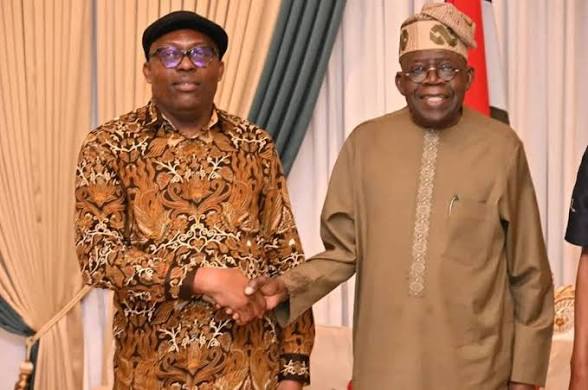
*APC Group Endorses Fubara for 2027, Calls on Tinubu and APC to Prioritise Performance Over Politics in Backing Governor’s Second Term Ambition*
The APC National Vanguard has appealed to President Bola Ahmed Tinubu and the leadership of the All Progressives Congress (APC) to support a second term in office for Siminalayi Fubara, citing what it described as “impressive and verifiable developmental strides” across Rivers State.
In a statement issued on Thursday by its National President, Dr Gbenga Salam (JP), the group said its position followed an extensive assessment tour of key infrastructure and public service projects executed under the Fubara administration.
The APC National Vanguard said the appeal was based strictly on performance, arguing that governance outcomes should outweigh partisan considerations, particularly in a state as economically significant as Rivers.
“We respectfully urge President Bola Ahmed Tinubu and the leadership of the All Progressives Congress to support the continuity of Governor Siminalayi Fubara beyond his current tenure, in recognition of his commitment to development, prudent resource management, and people-focused governance,” the statement read.
According to the group, its delegation visited multiple project sites across the state, observing ongoing and completed works spanning road construction, urban renewal, and public infrastructure upgrades.
It noted that the scale and distribution of these projects reflect a deliberate effort by the state government to extend development beyond traditional urban centres and into underserved communities.
“Our findings from the tour reveal a government that is not only active but intentional in its development agenda. The execution of capital projects across various parts of Rivers State demonstrates a clear understanding of the needs of the people and a commitment to addressing them,” Dr Salam said.
The group particularly commended what it described as prudent financial management by the administration, noting that the projects reviewed showed evidence of careful planning and efficient allocation of resources.
“At a time when economic pressures are evident across the country, it is commendable that the Rivers State government has managed its resources in a way that delivers visible and impactful development without signs of fiscal recklessness,” the statement added.
The APC National Vanguard further observed that despite political tensions in the state, the Fubara administration has maintained focus on governance, ensuring continuity in project execution and service delivery.
The group argued that such stability is critical for sustained development and should be encouraged rather than disrupted.
“Leadership must ultimately be judged by results. In Rivers State, there is clear evidence of progress—projects that are not only announced but executed, and policies that translate into real benefits for citizens,” Dr Salam noted.
The group warned that discontinuity in leadership could stall ongoing projects and reverse gains already recorded, stressing the importance of allowing a performing administration to consolidate its achievements.
“Rivers State is at a pivotal stage where continuity will allow for the completion of ongoing initiatives and the deepening of development gains. Supporting Governor Fubara for a second term is, therefore, a decision in the best interest of the people,” the statement said.
In addition to its call on the APC leadership, the group reaffirmed its support for President Tinubu, expressing confidence in his administration’s broader economic and governance reforms.
The APC group urged Nigerians to remain supportive of efforts aimed at stabilising the economy and strengthening public institutions.
“We reiterate our endorsement of President Bola Ahmed Tinubu for a second term in office, in recognition of his leadership and commitment to national development. With sustained support, the administration can consolidate its reform agenda for the benefit of all Nigerians,” Dr Salam added.
The APC National Vanguard concluded by calling on political actors to prioritise development and public interest over partisan divides, insisting that governance should always be guided by performance and accountability.
“Where leadership demonstrates prudence, delivers development, and remains focused on the welfare of the people, it deserves continuity. This is the position we have reached after a careful and independent assessment of Rivers State,” the statement added.
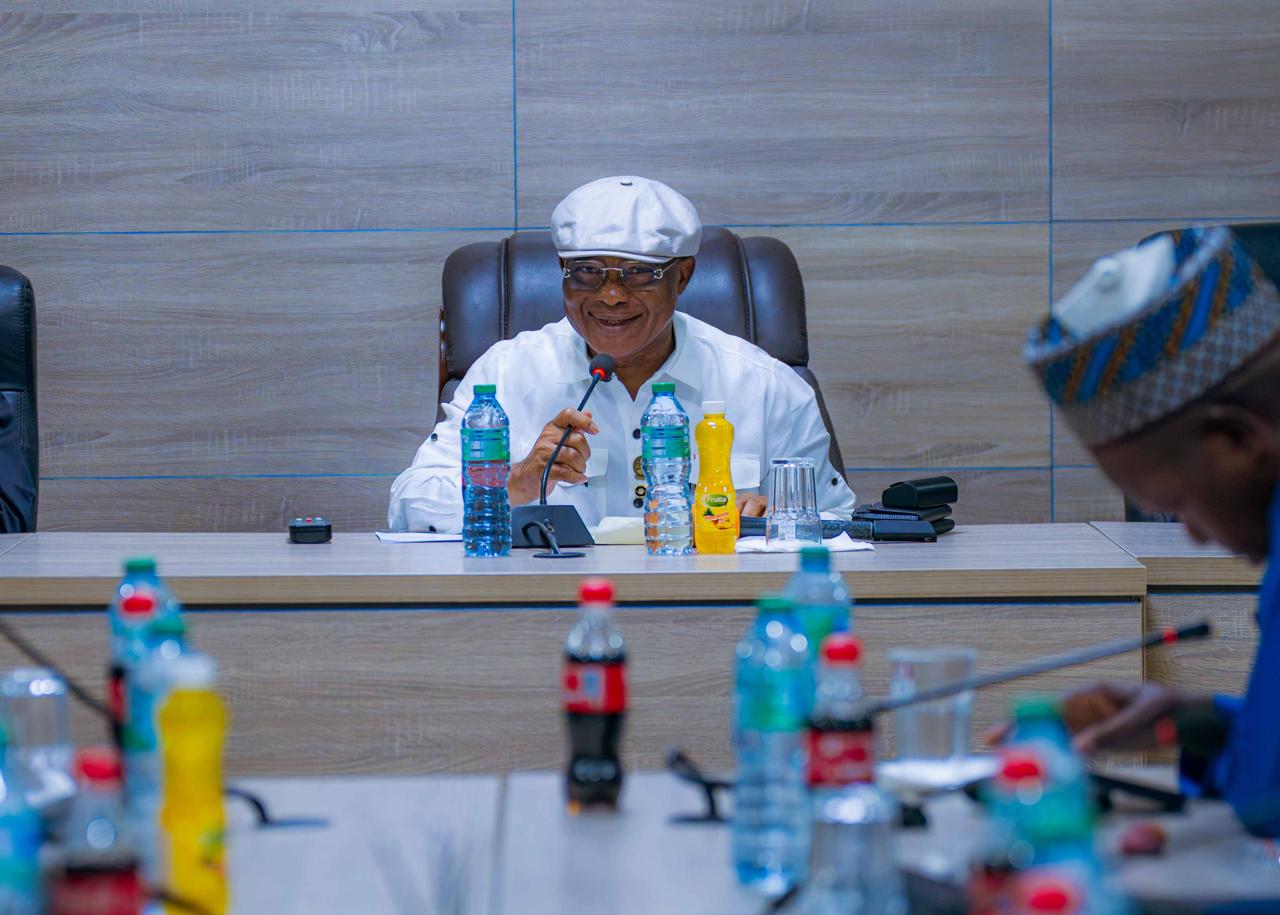
*Renewed Hope Ambassadors Step Into the Next Phase
Fresh from the successful APC 2026 National Convention, the Renewed Hope Ambassadors National, Zonal, and State leadership gathered in Abuja over the weekend, for its fourth strategic meeting, setting the tone for nationwide grassroots activation ahead of 2027.
Chaired by Governor Hope Uzodinma (Imo State) the Director General and National Coordinator of the Renewed Hope Ambassadors, alongside Deputy Director-General, Governor Uba Sani of Kaduna State, and Governor Inuwa Yahaya of Gombe State as Secretary, the session reinforced one clear direction: One Party. One Message. One Mobilization whilst also laying out a strategic roadmap for the activation of the network across all communities in Nigeria.
Backed by the strength of 31 APC-led states, the Renewed Hope Agenda is taking Bola Ahmed Tinubu’s message of progress and reform to every corner of Nigeria.
From bold economic restructuring to initiatives like NELFUND, the increase in the national minimum wage from ₦30,000 to ₦70,000, and strategic investments in critical sectors, including PNiCGI, the mission remains clear: helping Nigerians understand both the purpose and the progress of the Renewed Hope vision.
This is coordination at scale. This is grassroots engagement with purpose. This is the next phase of Renewed Hope with One Party, One Message, and One Mobilisation framework
#RenewedHopeAmbassadors #APC #WeAreAPC


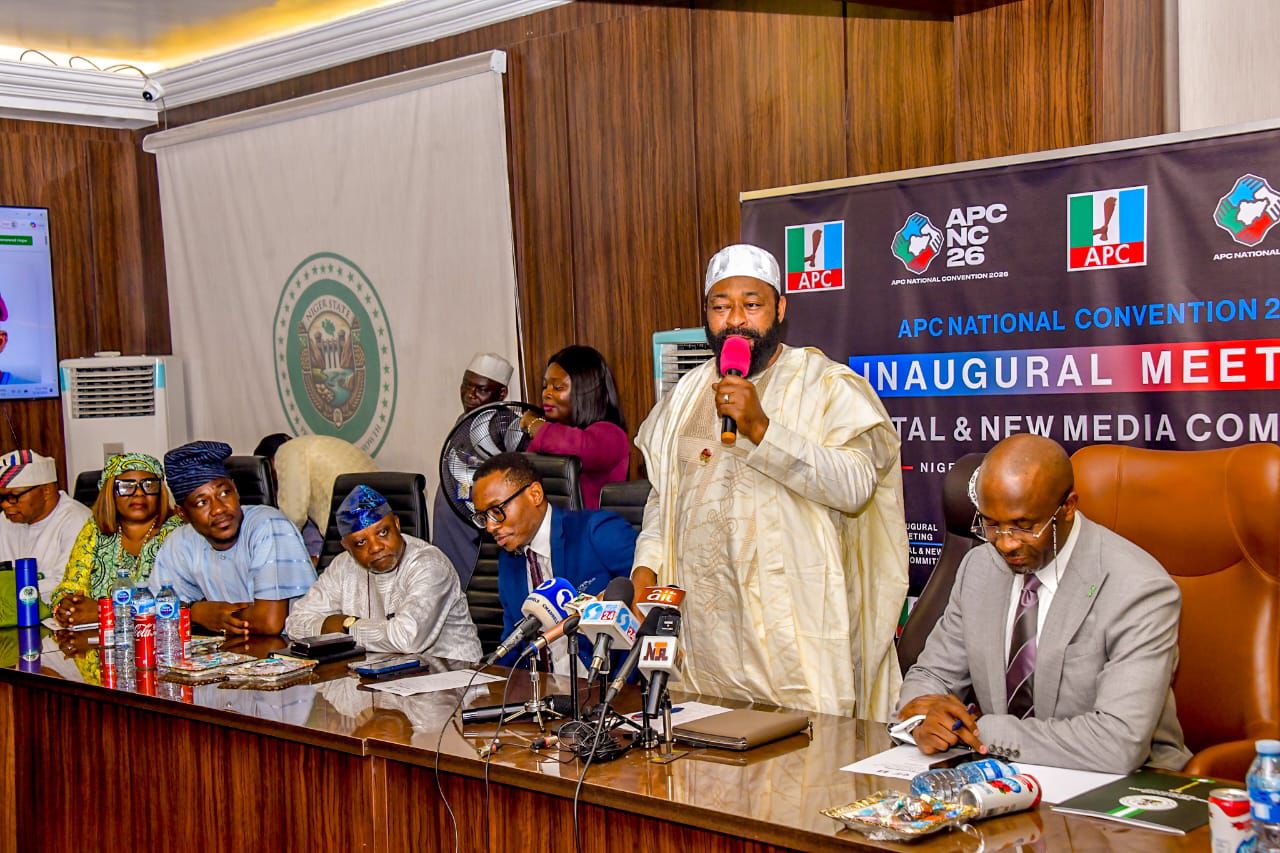
Governor Bago Inaugurates APC Digital Media Sub-Committee Ahead of National Convention.
Governor Umaru Bago has inaugurated the Digital Media Sub-Committee for the forthcoming National Convention of the All Progressives Congress (APC), scheduled to hold on March 27 and 28, 2026 in Abuja.
Chairing the sub-committee, Governor Bago tasked members with the responsibility of effectively communicating the party’s manifesto to the public.
He emphasized the need to leverage social media platforms to highlight the achievements and ongoing efforts of President Bola Ahmed Tinubu, noting that communication gaps have posed challenges that must now be decisively addressed.
The Co-Chair of the sub-committee, Hon. Benjamin Kalu, Deputy Speaker of the House of Representatives, echoed the Governor’s position, urging members to project the activities of both the party and the government to a broader audience.
He called for a deliberate and coordinated effort to showcase the party’s achievements and policy direction, stressing the importance of shaping a compelling and consistent narrative across all digital platforms.
Delivering a presentation to the committee, Otega Ogra, SSA to the President on New Media, who serves as Secretary of the sub-committee, outlined strategic focus areas to guide the team’s operations.
His presentation highlighted communication priorities and actionable steps to achieve the committee’s mandate and strengthen the party’s digital engagement.


-

 society6 months ago
Religion: Africa’s Oldest Weapon of Enslavement and the Forgotten Truth
-

 news4 months ago
WHO REALLY OWNS MONIEPOINT? The $290 Million Deal That Sold Nigeria’s Top Fintech to Foreign Interests
-

 society6 months ago
“You Are Never Without Help” – Pastor Gebhardt Berndt Inspires Hope Through Empower Church (Video)
-

 celebrity radar - gossips2 months ago
Dr. Chris Okafor Returns with Power and Fire of the Spirit -Mounts Grace Nation Altar with Fresh Anointing and Restoration Grace on February 1, 2026