
society
Governor Bulldozes Parliament And No One Bothers? By Felix Oboagwina


Governor Bulldozes Parliament And No One Bothers?
By
Felix Oboagwina
I care little for former Rivers State’s Governor Nyesom Wike and the 25 pro-Wike lawmakers in the State House of Assembly. However, in their current quarrel with the incumbent Governor Simi Fubara (the godson who succeeded Wike), only one factor works against Wike in the court of public opinion: In the 2023 elections, the Rivers strongman worked for the emergence of Bola Ahmed Tinubu as President; and Tinubu has today raised Nigerians’ pain and poverty to record proportions! President Tinubu’s failures solely win for Fubara massive support in this lingering faceoff with Wike, his erstwhile godfather, predecessor and current Minister of the Federal Capital Territory.

This colourless former Rivers State Accountant-General emerged as the Dark Horse and clinched the Rivers governorship completely by the grace of Wike. How? In the penchant of political godfathers to prepare for themselves a soft post-office landing, by planting spineless acolytes as successors, Wike manipulated Fubara over far popular and formidable aspirants, and handed him PDP’s Rivers State governorship ticket. Wike financed all the campaigns, swayed the rostrum with his oratory and persona, brought in the votes and handed Fubara the election on a platter of gold. But talk of Karma. Not only has Fubara turned around to bite the fingers that moulded him, he has injured Democracy in the most unimaginable fashion.

As the Yoruba say, the new king devours the kingmaker first. Fubara turned against Wike and rubbished him. Not done, Fubara, late 2023, stormed the Rivers State House of Assembly (having majority 25-7 as Wike PDP loyalists), with police firing gunshots and water cannons to keep the rampaging Governor at bay!
His supporters thereafter set ablaze the Parliament building.
Fubara then sent the demolition squad to bulldoze the entire complex to smithereens.
Every single one of these anti-legislative steps amounted to a desecration of Democracy and an assault on a sacred institution of popular government. It amounts to treason!
This much President Tinubu told Fubara to his face when the First Citizen brokered peace between these gladiators. The Parliament, everywhere, exists as the truest representation of the people and the incontrovertible custodian of Democracy. Whereas the Executive and the Judiciary exist in other forms of government (autocracy, military, monarchical), the Legislature’s participation distinguishes Democracy from all of them. Thus, demolishing its habitation connotes the highest threat to Democracy. The Congress is an institution; and we have always mouthed the need to build strong institutions as opposed to strong politicians.
Fubara went further. Most recently, he AGAIN stormed the makeshift accommodation that the Rivers Parliament resorted to at the Assembly Quarters. Then, on May 10, “Emperor” Fubara enacted an Executive Order to force the House of Assembly to hold its sittings inside the Government House! Sacrilege! Whatever happened to the Doctrine of the Separation of Powers?
Imagine the contradiction. An Executive Order passed on the Legislature! The Executive ORDERS the Legislature! How can? Nowhere does the Constitution place the control of the Legislature (and the Judiciary) under the Executive.
These assaults the Rivers State Legislature has endured.
Pray, who advises this guy?
The Legislature is made so potently powerful that the Constitution allows it to overrule the Governor and railroad a Bill into law without his consent.
Section 96(5) says:
Where the Governor withholds assent and the bill is again passed by the House of Assembly by two-thirds majority, the bill shall become law and the assent of the Governor shall not be required.
Even the budget of the Legislature, like that of the Judiciary, goes by first-line charge, all in order to ensure its independence and the Separation of Powers.
How can a Governor with the vast resources at his disposal prove incapable of lobbying, courting and winning over the State House of Assembly, and instead His Excellency resorts to thuggish, strong-arm tactics? You wonder what terror this character wouldn’t unleash if backed by a Rivers State Police Force completely at his beck and call!
Fubara-Wike’s wahala factionalised the House of Assembly 25 to seven and the Accountant-General-turned Governor chose to work with the minority, in clear violation of Section 96 that says:
(1) The quorum of a House of Assembly shall be one-third of all the members of the House.
(2) If objection is taken by any member of a House of Assembly present that there are present in that House (besides the person presiding) fewer than one-third of all the members of that House and that it is not competent for the House to transact business, and after such interval as may be prescribed in the rules of procedure of the House, the person presiding ascertains that the number of members present is still less than one-third of all the members of the House, he shall adjourn the House.
The majority of Rivers legislators, for political expediency and most likely to take cover under the Federal might, crossed carpet to the ruling APC.
Commissioners are resigning from Fubara’s cabinet, citing the toxic atmosphere working with him.
The 23 local government chairmen have drawn a battle line with him.
All these could be predictable because most of those officials owe their emergence in office and pledge loyalty to Wike. They all jumped ship after Fubara, egged on by whomever, flung reconciliation with Wike against the rocks.
Contrary to President Tinubu’s peace agreement that Fubara and Wike’s group signed December 2023 at Aso Rock, the Governor refused to re-present the 2024 budget to the State House of Assembly, continuing to work with an illegal Appropriation Act passed by a mere seven out of 32 lawmakers. This he did even when, in the spirit of that agreement, the majority Wike group of legislators withdrew their lawsuits against him and aborted impeachment proceedings on the understanding that the budget would be properly presented for passage.
Bottom line? The crisis in Rivers goes beyond a Fubara-Wike brouhaha. It queries the very essence of Nigeria’s Democracy and the sanctity of the Nigerian Constitution. Everyone taking sides does so with the mentality of “the enemy of my enemy is my friend.” But power corrupts and absolute power corrupts absolutely. Those beating the drum for Fubara’s dance of madness are pushing Nigerian Democracy to ride the back of a tiger. How do you end the ride without Democracy ending up as a meal down the tiger’s throat? If Fubara’s style of burning, demolishing and choking the Legislature becomes a culture, then what fate befalls this Democracy? If the President takes a cue and chooses to tackle the National Assembly in a similar style? What species of Legislature will the Upper and Lower Chambers turn to, being Executive-ordered to perform legislative duties right inside the Aso Rock Villa, under the nose of the President?
The problem that lovers of Democracy must tackle is stopping Fubara becoming a role model for how the Executive can emasculate and stifle the Legislature’s independence at the state and Federal levels. Or are we going to let Fubara get away with this abuse of the Parliament because of the disdain we nurse for his adversaries, Wike and Tinubu?
OBOAGWINA IS AN AUTHOR, JOURNALIST AND PUBLISHER, REACHABLE VIA: [email protected]




Police Officers Detained as Family Property Dispute Sparks Demolition Controversy in Lagos
By Ifeoma Ikem
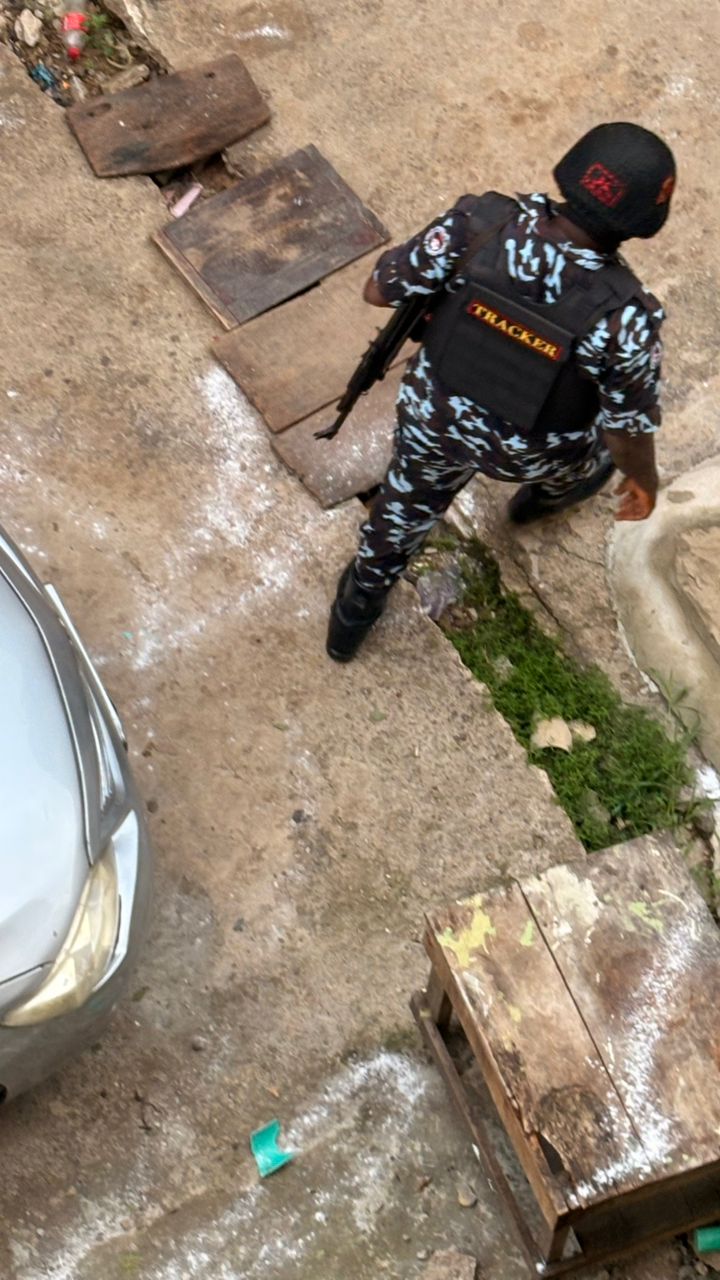
A property dispute within the Omotayo-Ojo family has taken a dramatic turn following a controversial demolition exercise at a residential building in Ikosi-Ketu, Lagos State, which reportedly left tenants displaced and led to the detention of some police officers allegedly involved in the operation.

The property, located at 23B Loveall Street, Ikosi-Ketu, has been the subject of a prolonged ownership tussle since the death of its owner, Chief Oludola Omotayo Ojo, the Babaalaje of Imesi-Ile, Osun State, in 2019.
Residents said tension erupted when a group of individuals, accompanied by security operatives, stormed the premises and commenced demolition activities.
According to eyewitnesses, portions of the building were pulled down while tenants rushed to salvage their belongings from affected apartments.
The residents alleged that windows, doors and roofing sheets were damaged during the exercise, exposing parts of the building to the elements and causing significant losses to occupants.
At the centre of the dispute is Mrs Mojisola Omotayo Ojo Alolagbe, who claimed that the property was allocated to her by her late father during his lifetime as a source of financial support.
She alleged that some family members had persistently challenged her ownership claim despite ongoing legal proceedings relating to the administration of the deceased’s estate.
Alolagbe further claimed that the latest incident was part of a series of attempts to wrest control of the property, citing previous cases of alleged vandalism and partial demolition in November 2025, January 2026 and February 2026.
The situation escalated further when reports emerged that police officers allegedly involved in the demolition were later apprehended and conveyed in a Black Maria vehicle over questions surrounding the legality of their participation in the operation.
Sources familiar with the matter said those behind the demolition had initially claimed to be acting on approval from the Lagos State Ministry of Lands. However, the authenticity and extent of such approval could not be independently verified as of the time of filing this report.
The development has generated concern among residents and community members, who questioned the involvement of security personnel in what they described as a civil matter.
Some tenants, who said they had recently renewed their tenancy agreements, lamented the destruction of their property and appealed to the authorities for protection and possible compensation.

They also called for a thorough investigation into the circumstances surrounding the demolition, insisting that the rights of all parties involved should be protected.
Stakeholders have urged the Lagos State Government, security agencies and the judiciary to intervene and ensure that the dispute is resolved through lawful means to prevent further escalation.
The controversy has continued to draw public attention, raising concerns over property rights, estate administration and the role of law enforcement agencies in civil disputes.

UKA Gears Up for Final ATC Exchangeability Test Run as June Preparations Begin.
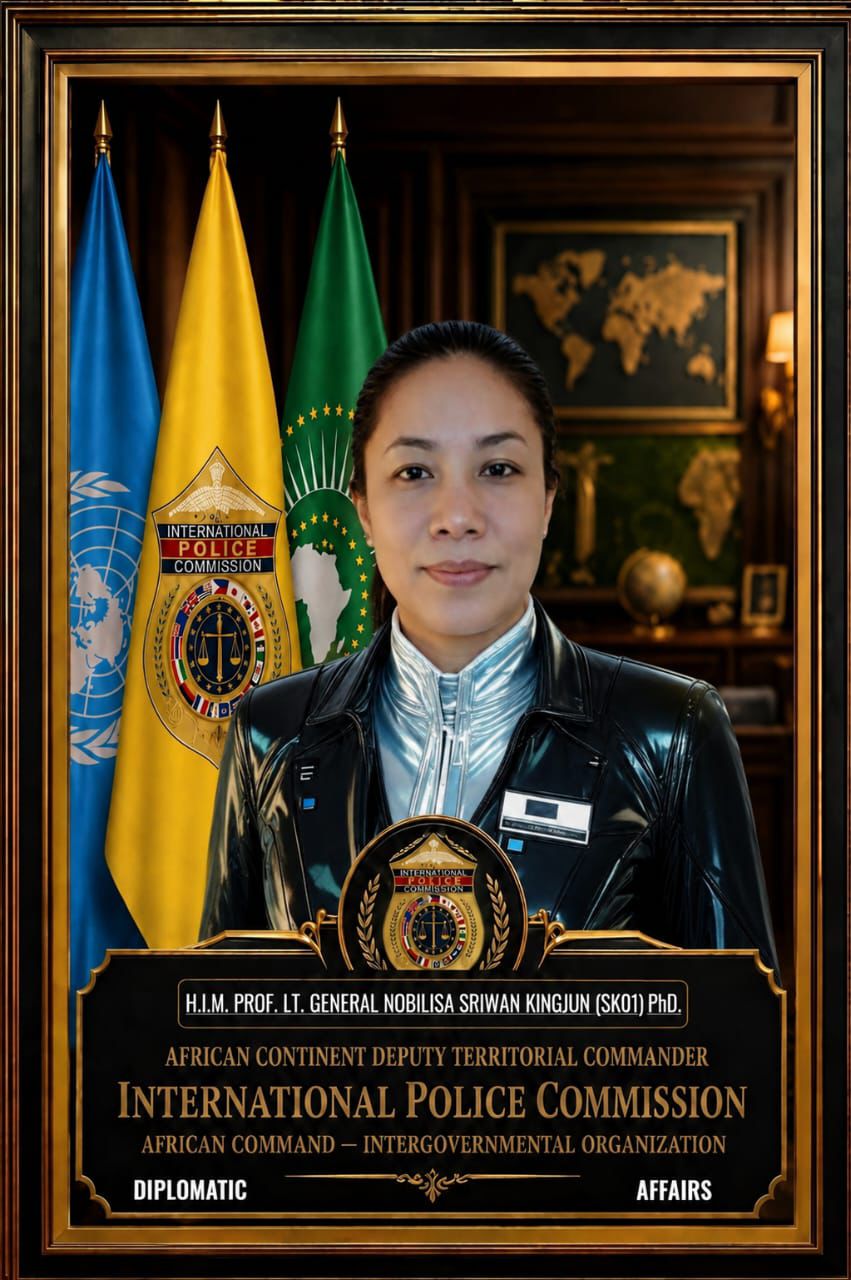
May 30, 2026 – As the month of June gathers momentum, the *United Kingdom of Atlantis, UKA*, a sovereign nation has unveiled a series of vital guidelines and preparatory packages to ensure citizens and stakeholders run the *ATC Exchangeability* process effectively.
In an official update, the *President of Atlantic Crown Limited, Empress of Attica Empire UKA*, confirmed that the *Final Test Run of ATC Exchangeability* is scheduled for the month of June 2026. The exercise marks a key phase ahead of the *Official Exchangeability Window, set to run from July 2026 to February 2027*.
### Key Highlights from the Presidential Briefing
1. *Final Test Run – June 2026*
The test run is designed to validate systems, procedures, and user readiness before full activation. Citizens, partners, and designated participants are urged to follow all official advisories released by UKA authorities during this period.
2. *Official Exchangeability Period*
Following the successful completion of the June test run, the Official Exchangeability will commence in july 2026 and we are Expecting Full Exchange ability between July Ending, 2026 to February 2026.
UKA stated that detailed schedules, eligibility requirements, and step-by-step instructions will be communicated progressively through verified UKA channels.
3. *Benefiting Packages for June*
In line with UKA’s commitment to citizen empowerment, the month of June will feature “benefiting packages” aimed at education, preparation, and seamless onboarding. These packages are intended to equip the people of UKA with the knowledge and tools needed for effective participation.
4. *Commitment to Transparency*
Addressing the nation, the Empress of Attica Empire UKA emphasized:
_“Final Test Run of ATC Comes up in The Month of June, As We Prepare For The Official Exchangeability, Between July 2026 To Feb 2027. All Information Will Be Communicated.”_
UKA reaffirmed that only information released through official UKA platforms should be regarded as authoritative.
The United Kingdom of Atlantis is encouraging all citizens, representatives, and interested parties to remain alert to official communications, attend designated orientation sessions, and avoid unofficial sources. UKA’s dedication to order, clarity, and the collective benefit of its people as the nation moves into this significant phase.
For updates, advisories, and participation guidelines, citizens are advised to monitor official UKA communication channels.
United Kingdom of Atlantis, UKA, is a sovereign nation, committed to national development, citizen welfare, and structured economic participation through initiatives such as ATC Exchangeability.
Three Years On, General Buratai Hails Tinubu’s Economic, Security Achievements
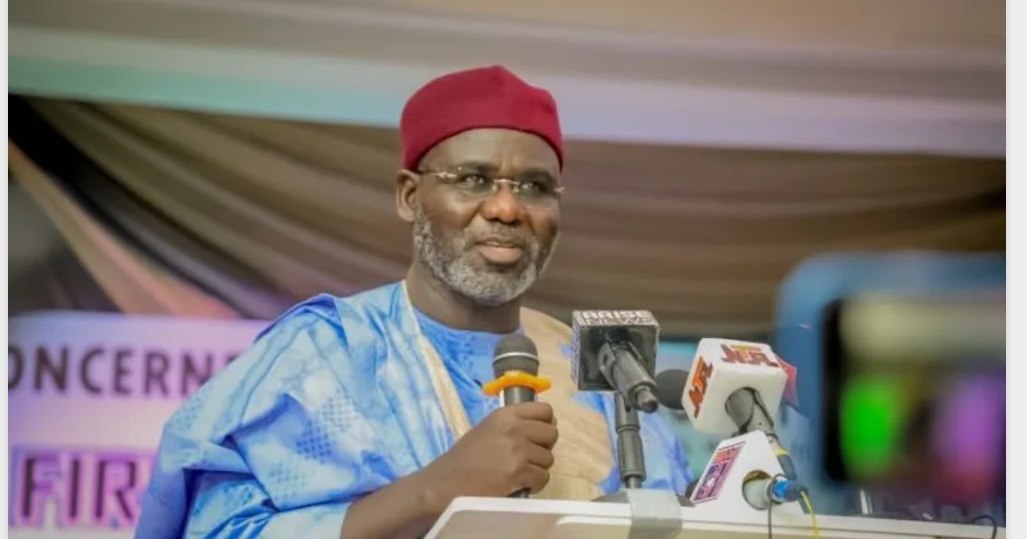
Former Chief of Army Staff, Lt. Gen. Tukur Buratai (retd.), has commended President Bola Ahmed Tinubu for what he described as bold economic reforms and improved security efforts as the President marks three years in office.
In a goodwill message on Thursday to commemorate Tinubu’s third anniversary as President and Commander-in-Chief of the Armed Forces, Buratai said the administration had taken courageous decisions that would leave a lasting impact on Nigeria’s development.

According to him, President Tinubu broke a long-standing cycle that had hindered national growth by removing fuel subsidy and implementing foreign exchange reforms aimed at stabilising the naira and strengthening the economy.
He noted that the reforms were beginning to yield positive results, citing the global acceptance of Nigerian debit cards, the gradual revival of local refineries, access to student loans, and ongoing road and infrastructure projects across the country.
“The FCT Administration has also recorded remarkable progress, completing major road projects that remained unfinished for over 16 years,” Buratai stated.
The former army chief also praised the administration’s security efforts, saying renewed military offensives against insurgents, terrorists and bandits had led to notable successes across various parts of the country.
He specifically lauded recent joint operations involving Nigerian and United States forces against Boko Haram and ISWAP in the North-East, as well as intensified counter-banditry operations in the North-West.
“We have seen notorious ISWAP commanders being neutralised. I congratulate the Commander-in-Chief, the Minister of Defence, the Chief of Defence Staff, the Service Chiefs, the Inspector-General of Police and heads of intelligence agencies for their efforts,” he said.
Buratai, however, acknowledged that challenges remained, stressing the need for more aggressive military operations and intelligence-driven strategies in the coming year.
While urging Nigerians to remain hopeful, he said celebrating the President’s achievements did not amount to ignoring the difficulties facing the nation.
“Because you truly care, you have shown the courage to trade short-term comfort for long-term hope. Nigerians need your reassurances, and that is why we remain optimistic and full of confidence,” he added.
The retired military officer reaffirmed his support for the Tinubu administration and expressed confidence that the foundation being laid by the government would deliver a brighter future for the country.
He also prayed for God’s guidance, wisdom, strength and good health for the President as he continues to lead Nigeria.


- Uganda: Parliament concludes vetting of ministers June 2, 2026
- Fund for Export Development in Africa (FEDA) Board Appoints Mr. Emmanuel Assiak as Chief Executive Officer June 2, 2026
- Ecobank Group Launches World First Nature Bond Mobilising Global Capital to Protect Africa’s Natural Ecosystems June 2, 2026
- Merck Foundation Chief Executive Officer (CEO) Dr. Rasha Kelej together with Kenya First Lady support the education of 47 Kenyan Schoolgirls by providing Annual Scholarships till they Graduate June 2, 2026
- Annual Meetings 2026: Governors Back the Bank’s Platform Solutions to Transform Aviation and Health Systems in Africa June 2, 2026
- ThinkMarkets launches ChelseaAI, bringing live CFD trading into Artificial Intelligence (AI) assistants June 2, 2026
- Afreximbank Invites Rugby Africa President Herbert Mensah to Address the 33rd Annual Meetings on a Panel Exploring Sport as a Driver of African Industrialisation June 2, 2026
- Afreximbank Deepens Commitment to Economic Progress in The Bahamas June 1, 2026
- African Electric Vehicle (EV) platform Spiro raises $215M in equity to scale electric mobility and energy infrastructure across Africa June 1, 2026
- Africa Centres for Disease Control and Prevention (Africa CDC) Statement on Attacks Against Health Facilities During the Bundibugyo Virus Disease Response in the Democratic Republic of the Congo June 1, 2026
- Uganda: Parliament concludes vetting of ministers June 2, 2026
- Fund for Export Development in Africa (FEDA) Board Appoints Mr. Emmanuel Assiak as Chief Executive Officer June 2, 2026
- Ecobank Group Launches World First Nature Bond Mobilising Global Capital to Protect Africa’s Natural Ecosystems June 2, 2026
- Merck Foundation Chief Executive Officer (CEO) Dr. Rasha Kelej together with Kenya First Lady support the education of 47 Kenyan Schoolgirls by providing Annual Scholarships till they Graduate June 2, 2026
- Annual Meetings 2026: Governors Back the Bank’s Platform Solutions to Transform Aviation and Health Systems in Africa June 2, 2026
- ThinkMarkets launches ChelseaAI, bringing live CFD trading into Artificial Intelligence (AI) assistants June 2, 2026
- Afreximbank Invites Rugby Africa President Herbert Mensah to Address the 33rd Annual Meetings on a Panel Exploring Sport as a Driver of African Industrialisation June 2, 2026
-

 news6 months ago
WHO REALLY OWNS MONIEPOINT? The $290 Million Deal That Sold Nigeria’s Top Fintech to Foreign Interests
-

 society1 month ago
SOCIAL MEDIA IS NOT A BATTLEFIELD COMMAND – WHY THE NIGERIAN ARMY’S ACTION AGAINST JUSTICE CRACK IS A NATIONAL SECURITY IMPERATIVE
-

 celebrity radar - gossips4 months ago
Dr. Chris Okafor Returns with Power and Fire of the Spirit -Mounts Grace Nation Altar with Fresh Anointing and Restoration Grace on February 1, 2026
-

 celebrity radar - gossips6 months ago
Prophet Kingsley Aitafo Releases 2026 Prophecy: ‘Nigeria Will Rise, but the World Must Prepare for Turbulence’