
Business
Inside Business Africa Nigeria: Wilo Group: a technology-driven company


Inside Business Africa
Nigeria: Wilo Group: a technology-driven company.
Interview with Mr. Oscartin Idemudia, Director, Pump Nigeria Limited.
He speaks on the company’s growth and Innovativeness in water management technology over the years.
Can you provide a brief overview of your company’s history and its core values?
The Wilo Group is a multinational technology group and one of the world’s leading premium suppliers of pumps and pump systems for building services, water management and the industrial sector. The last decade has seen us move from a hidden to a visible and connected champion. Wilo currently employs more than people around the globe. With innovative solutions, smart products, and individual services, we make water move using intelligent, efficient, and eco-friendly techniques. We are already digital pioneers in the industry with our products and solutions, processes, and business models.
Wilo Pumps Nigeria Limited was founded as a subsidiary in 2016 to better address the dynamically growing market in pre-sales, sales, and after-sales support. Wilo in Nigeria now has a skilled local technical team of professionals with years of experience in all steps along the water cycle.
What sets your company apart from competitors in the pump manufacturing industry?
As the digital pioneer in the industry, our innovative solutions, smart products, and individual services move water in an intelligent, efficient, and climate-friendly manner. We are also making an important contribution to climate protection with our sustainability strategy and in conjunction with our partners. This has earned us various Sustainability awards. For example, we were awarded the platinum rating by EcoVadis in 2022. This independent rating agency has assessed 90,000 companies – but has awarded the platinum rating to just one percent of them. After receiving a silver medal in 2019 and 2020 and a gold medal in 2021, we have now been awarded the highest EcoVadis rating for the first time. This development is testament to our ambition to constantly become more sustainable.
Our pioneering spirit also led to the quite recent implementation of a hydrogen Powerplant at our headquarters in Dortmund, the H2POWEPLANT, which enables us to store surplus energy from our PV- system and reconvert it into energy again when needed. Apart from the reduction of our own energy consumption and our dependence on external supply, this also gives us the opportunity to establish ourselves as a player along the value chain of hydrogen, the energy source of the future. First customer orders are already being negotiated.
What types of pumps does your company specialize in manufacturing?
Wilo manufactures pumps and pump systems for building services, water management and industry market segments. Some of our pump applications include Water Supply, Raw Water extraction, Wastewater transportation, HVAC, Fire Fighting, Pressure Boosting, Irrigation/Agriculture, sanitation, and special applications to mention a few.
Wilo is known as a pioneer in high-efficiency pump technology in many different fields of application. Thanks to state-of-the-art motor technology and a variety of control possibilities, our products enable energy savings of up to 80%* (*depending on the application) compared to outdated, uncontrolled pumps. Proactive change has advantages for all sides. You save energy and costs, improve the sustainability balance of your buildings and installations by up to 90%, and bring your technology up to date at the same time.
With Wilo-Energy Solutions therefore we point out possible energy savings and take responsibility for future generations and the fight against climate change.
How do you ensure the quality and reliability of your products?
Wilo has a Quality Control Department whose role is key in the day-to-day production activities of the Group as a whole. This team ensures that all the necessary guidelines are adhered to according to the ISO standards. To this end, Wilo is ISO 9001, 14001 and 18001 certified and our pump solutions are environment friendly.
Wilo intends to continue establishing itself as the digital pioneer of the pump industry and set new standards as an innovation leader. Research and development are therefore traditionally a top priority at Wilo. Research and development expenses amounted to € 71.0 million or 4.3 percent of net sales in 2021.
Furthermore, we invested in our capacities to increase the Circulatory capability of our products.
Are there any new products or innovations in development?
Yes, Wilo is always on the move to develop innovative solutions, smart products, and individual services. Thanks to these, Wilo therefore continues to set standards.
Who are your primary customers and which industries do they belong to? How do you stay competitive in terms of pricing and product offerings?
Wilo has a wide customer base in all the respective market segments we operate in: Building Services Residential, Building Services Commercial, OEM (Original Equipment Manufacturers), Water Management and Industry. Our products, system solutions and services are therefore systematically tailored to the specific needs of customers in the respective market segments.
In our three-stage sales model, we collaborate with consultants, private and public contractors, wholesalers and at times, end users.
Wilo provides both series solution (which gives maximum production) and customized solutions (products with special technical requirements) to cater to individual pump needs thereby making our prices competitive. However, we ensure that we are a part of projects from the design stage to the project commissioning stage. We also offer after-sales support through our Wilo Care Packages which further gives our customers all-round support.
What strategies are in place to expand your customer base and enter new markets?
Wilo has a Go-to-Market Approach for various market segments which ensures that at every point we continue to cover white spots while our global and local marketing team is tasked with continuously promoting brand visibility, enhancing stakeholder engagement, promoting collaboration with partners, and organizing customer loyalty programs.
Can you provide insights into your manufacturing process and facilities?
Within our region-for-region approach, we try to source, produce, and assemble as close to the end customer as possible. Wilo has 17 main production sites across the world in Germany, France, India, South Korea, USA, Turkey and Russia, Italy, UAE and China. We are also present in over 80 countries with assembly, service and sales sites.
In Sub-Saharan-Africa specifically, Wilo has established assembly plants in South Africa and Kenya, as well as a subsidiary in Nigeria. We have a sales office in Ethiopia and Country Sales Managers for 15 other countries in Africa.
Our worldwide presence ensures that we can respond to reach new markets and meet the rising demand for high-performance technologies at all times.
How do you ensure efficiency and sustainability in your manufacturing operations?
We consider ourselves to be a climate protection company above and beyond our product and solutions portfolio. We express this identity through our commitment to the Sustainable Development Goals (SDGs).
The production at our headquarters in Dortmund (Germany) as well as our plants in Aubigny (France) and Bari (Italy) proceeds climate-neutral. The carbon footprint of all Wilo plants in Europe is thus neutral. Moreover, we have reduced our Scope 1 and Scope 2 emissions by another 17 percent. Set against the benchmark year of 2018, the reduction amounts to a grand total of 36 percent. We have made further investments in generating electricity ourselves. We successfully installed new solar photovoltaic plants at our sites in Hof (Germany), Kesurdi (India) and Cedarburg (USA). Adding the existing plants in Dortmund (Germany) and Kolhapur (India), five of Wilo’s primary production sites now have sustainable technology.
The above mentioned H2POWERPLANT at the Wilopark not only operates as an energy storage but further allows us to lower our energy consumption by using the waste heat to regulate the temperature in our factory.
We have made further important steps along the path to an integrated circular economy approach. We are now deriving additional potential for improvements from the ecological footprints that have been calculated for our products during their entire life cycle. These are aimed at the use of more sustainable materials as well as enhancements relating to repairability and recyclability.
Are there any challenges or bottlenecks in your production process that you’re actively addressing?
Wilo has developed an explicit sustainability strategy based on its Ambition 2025 corporate strategy and the identification of key issues. The central tenet of this strategy is to provide more people with clean water while simultaneously reducing the ecological footprint. A total of 18 goals have been formulated within four action areas.
For example, on Material and Waste, our strategic goal is to consume 250 tonnes less material resources by 2025. We will achieve this by increasing the number of reused components in our products to at least 30,000 per year, keeping materials in circulation, increasing the materials efficiency of our products by at least 12 tonnes per year. Now, we are primarily looking at copper, cast and aluminum casting, which make up most of the weight of our products. New technologies will drastically reduce material requirements.
We are reducing packaging materials. As a first step, we are focusing on increasing the use of reusable packaging in the inbound segment, where we are aiming for a share of 100 percent by 2025.
We will increase the recycling rate at Wilo’s sites. By separating materials, increasing the sourcing of recyclable materials, and adopting reuse systems, we are planning to achieve a rate of at least 90 percent by 2025.
8. What role does research and development play in your company’s growth strategy?
R & D has played and still plays a major role within our entrepreneurial identity. Thanks to our continual research and development, we can now offer a broad portfolio of smart products and systems. Smartification is not a trend but is now a standard that customers are asking for ever more frequently.
One of the reasons why we outperformed the targeted sales growth compared with the previous year is because the Wilo-Stratos MAXO established itself on the market as a smart pump. Another is that the launch of sales of the three smart pumps Wilo-Stratos GIGA2.0, Wilo-Yonos GIGA2.0 and Wilo- Stratos PICO/-Z had an impact. The new generation of the Wilo-Stratos PICO/-Z offers maximum energy efficiency through the combination of EC motor technology, Dynamic Adapt plus and precision setting options. A universal interface additionally offers an optional Bluetooth retrofitting option for digital applications using the Wilo-Smart Connect module BT.
How do you foster innovation within your organization?
Wilo Group has an annual innovation award for employees, the award recognizes the best ideas out of a pool of ideas shared on an innovation platform. In 2022, a concept by an employee won because it offered an excellent strategic fit in the areas of water hygiene and sustainability and allows Wilo to open new market opportunities: Wilo-SiFresh, a system solution for circulating cold water guarantees compliance with the strict drinking water standards. If a circulation line is added to a potable water installation, the circulator integrated in Wilo-SiFresh can keep the water in permanent circulation, monitor the temperature and thus prevent stagnation. If one of the monitored parameters gets close to a critical limit value, Wilo-SiFresh automatically reacts by flushing, reducing the water temperature and guaranteeing the prescribed water exchange. The hygiene regulations for cold drinking water are monitored and complied with in a smarter way, while water consumption is additionally reduced to a minimum.
Wilo also promotes local capacity development to empower people to sustainably shape their own development and invests in the development and advancement of employees.
9. Are there any recent technological advancements or R&D projects worth high lighting?
Wilo has recognized how important digital technologies and automation are for intelligent, efficient, and sustainable management of pumps in operation. This is why Wilo is investing an annual growth rate of at least 15% into the development of smart products. Thanks to our continual research and development, we can now offer a broad portfolio of smart products and systems.
One of the technological advancements is the Wilo-Smart Connect module BT that serves to add a Bluetooth interface to Wilo products. This applies to all products equipped with a Wilo connectivity interface. The Wilo-Smart Connect module BT enables mobile devices such as smartphones and tablets to be connected. Using the Wilo Smart Connect function in the Wilo-Assistant app, the pump can be operated and adjusted, while data such as energy consumption can be displayed in real time.
The Smart Balance tool, another technological advancement in the Wilo-Assistant app makes it easier than ever to carry out hydronic balancing. After the installed heating surfaces have been entered, the app calculates how to optimize the volume flows and the feed temperature. The results provide the basis for calculating the preset values of the most common thermostatic valves. Using the display of the volume flow, the optimal setpoint of the pump can be identified. Hydronic balancing can reduce energy costs by up to 20%.
What measures does your company take to minimize its environmental footprint?
Wilo is a climate protection company. As the winner of the German Sustainability Award in the “Climate” category and as one of 50 Sustainability and Climate Leaders worldwide, we see it as our obligation to make an active contribution to achieving the global climate goals. Our aim is to achieve carbon-neutral operations at our 15 production sites around the world by 2025 and to cut emissions group-wide by at least 60 percent from the benchmark year of 2018.
All locations purchase electricity from renewable energy sources; we offset the emissions from heating energy by using projects that are certified to the gold standard. Wilo has thus earned the “climate-neutral company” mark of conformity for the relevant locations and made an important step forward in the implementation of its climate strategy.
Energy consumption at the Wilo production sites throughout the Group totaled 64,446 MWh, a reduction of 11% from the previous year. Key influencing factors included lower heating requirements as a result of weather conditions and the measures taken to save gas.
Increasing energy efficiency is an important determining factor when it comes to climate neutrality. Wilo has set itself the goal of implementing energy efficiency projects every year that produce energy savings of at least 1% on the previous year’s consumption. The projects initiated in the past year are showing results that go far beyond the targets that have been set energy savings amount to 2,911 MWh, which is equivalent to around 4% of consumption in 2021.
At our location in Dortmund, for example, we have further optimized the building management system, producing savings of over 2,500 megawatt-hours in gas and electricity consumption. We have installed a new air compressor (savings of 70 megawatt-hours) in Laval (France), modernized the lighting systems and heating (15 megawatt- hours) in Busan (Korea) and converted the office building in Beijing (China) to LED technology (30 megawatt-hours).
10. Are there any sustainability initiatives or goals your company is currently pursuing?
At Wilo, sustainability management is seen as a function that cuts across all areas. Supplying more people with clean water while also reducing our environmental footprint is at the heart of our sustainability strategy. Within the four areas in which we take an active role – Water, Energy & emissions, Materials and waste, and Employees and society – we have drawn up a total of 18 ambitious goals.
The Executive Board of the Wilo Group already signed the UN Global Compact in 2018, thereby strengthening our own commitments. In line with our business activities, Wilo exerts a particular influence on achieving SDG goals 6, 8, 9, 11, 12, 13 and 17.
How do you incorporate sustainability into product design and manufacturing processes?
Our goal is to reuse at least 30,000 products and components from unused returned products per year. By extending it to the whole of the Wilo Group and by optimizing the processes. Thanks to our recycling-friendly product design, the potential recycling rate for a Wilo pump is almost 100%. The environment benefits from the lower consumption of raw materials.
Another key sustainability approach is also to reduce the use of raw materials in the manufacturing process and, in particular, not to use materials that are harmful to the environment. An indicator that we focus on especially here is copper savings. Thanks to advances in the technology, the use of copper per pump has been steadily reduced over the years. Our goal is annual savings of 12 tons compared to the respective previous models. In parallel with this, we are also looking at reducing the use of other materials such as iron and aluminum.
The increasing volume of packaging waste is also a growing problem for the environment. Optimizing packaging solutions with the aim of minimizing material deployment as far as possible is a key component of a circular economy. Our long-term goal is to steadily increase the share of reusable packaging and to further reduce the use of raw materials and environmentally critical materials.
11. What are your short-term and long-term goals for the company? How do you plan to achieve growth and maintain profitability in the coming years?
In these geopolitically challenging times, it is more important than ever to build economic, political, and personal bridges. We want to remain a reliable partner to our stakeholders, invest in our markets, strengthen our supply chains and keep on diversifying.
Our focus is on ways to increase our market share in the emerging markets such as Africa, South-East Asia (ASEAN), Central Asia etc. whilst we also consider ways to foster business development in the fields on sustainable water supply, water treatment/recycling and Hydrogen which is an essential storage medium of the future when it comes to achieving climate neutrality.
12. Are there any potential challenges or opportunities on the horizon that you’re preparing for?
As a leading supplier for critical infrastructure, Wilo is able to contribute to the solution of some of our world’s most pressing challenges and thus turn challenges into opportunities.
Water scarcity
Water is the basis for all life and an indispensable part of every society. Globally, however, there are big differences in terms of the available resources and the proportion of people with access to clean fresh water. Wilo moves water – reliably, efficiently and sustainably. Our innovative products and holistic solutions improve the quality of the water supply while protecting valuable resources.
Energy scarcity
Wilo helps to secure energy supply. 246 terawatt hours of energy could be saved every year by installing high-efficiency pumps for heating, cooling and air conditioning. For example, the Biogas Plant in Darsin Poland which is safe and has a climate-friendly heat generation.
Food Scarcity
The war in Ukraine and the and the increasingly noticeable consequences of climate change brought the risks to the security of the food supply into sharp focus in 2022. By improving the water supply in agriculture with its expertise, tailored products, and reliable technology, Wilo is making a substantial contribution to safeguarding the supply of food.
In the prestigious Toshka project, a quite recent reference of ours, more than 300 high-efficiency Wilo split case pumps have been installed to irrigate semiarid regions in the Egyptian dessert so they can be reclaimed for agricultural use.
How would you describe the leadership style and culture within your company?
Navigating a multinational company through turbulent times requires functional yet adaptable structures and processes. Wilo therefore operates a multifunctional matrix organization. When it comes to the individual employees, Wilo empowers them to take over responsibility so that they can help shape the future with initiative, passion, and courage.
It is our culture therefore to act responsibly towards employees and society and promote effective development programmes to ensure that 70% of managers are developed internally. Wilo also continuously strengthens the culture of diversity so that 20% of management positions are filled by women.
Thanks to good talent management and a wide range of training and professional development measures, we were able to fill 80% of Wilo vacancies in middle and upper management with talented employees from within the company last year.
13. What are the key trends shaping the pump manufacturing industry today?
Five megatrends relevant for the company have been defined in the context of long-term strategic planning. Globalisation, urbanisation, energy shortage, climate change and water shortage will significantly influence the Wilo Group’s business in the future and are already having a visible impact on the company’s current development. An important megatrend in its own right, digital transformation will play a central role when it comes to managing the various challenges the aforementioned megatrends will entail for the company and for society, business and politics, as well as helping to support the targeted and efficient implementation of solutions.
How is your company adapting to changes in technology, regulations, and market demands?
As a premium provider, Wilo therefore continuously aims to develop leading technology and intelligent solutions that make people’s everyday lives noticeably easier. Hence, we can adapt to change because we are a solution provider. We thereby adapt to changes in:
Technology
Use of a technology radar – a systematic supervision of technology trends in the relevant technical fields of the company.
Establishment of a worldwide patent monitoring system with focus on relevant technology fields and competitors.
Regular technology studies in upcoming technology trends.
Regulations
Installation of a Technical Advocacy Team with the target to monitor, report and influence all kind of upcoming regulations and standards worldwide. This team organizes many internal colleagues who actively participate in all relevant associations and standardization bodies.
Strong cooperation with a second team for Government & Public Affairs.
Implementation of new regulatory requirements and standards by a team for Product Compliance.
Market Demands
Installation of a trend monitor system.
Establishment of a team for market intelligence.
Setting up a Corporate Product and Sustainability Strategy to ensure systematic approaches to new market demands and requirements.
General
Setting up an Innovation Management approach since 2013 with the target to strengthen the innovation ability and culture of the company.
The Innovation Management enables a systematic approach to innovate and involves all important internal and external stakeholders, like all employees, customers, suppliers, strategic partners, etc.
14. How do you gather and utilize customer feedback to improve products and services?
As a responsible organization, not only our global Sales, Marketing and Service Team, but each employee ensures that customer feedback is taken and treated with fairness. Our passion for best quality and highly efficient pump solutions allows us to integrate such feedback for improved products and service delivery.
What measures are in place to ensure customer satisfaction and retention?
As a client-centric organization, our customer tailored product offerings and after-sales support to enhances customer satisfaction and retention.
With Wilo as your partner, a customer is sure of choosing high-quality product solutions, but also of benefiting from a comprehensive, worry-free package of well-thought-out services.
Our tailor-made service solutions cover the entire life cycle of your Wilo products – including what comes after the customer’s purchase. We are represented locally in over 60 countries and worldwide with more than 3,300 professional Wilo service technicians. We collaborate to develop a service concept to meet our customer’s individual needs; with our expertise and personal consultancy, we make sure that the operation of your systems is as energy-efficient, reliable, and economical as possible. All the while our competent Wilo service technicians are ready to assist you with fast, reliable, and on-time support.
We also keep our customers informed about the very latest technologies and trends and support them through all project phases from design and configuration to commissioning and maintenance. Even with complex pump and system technology we offer our customers well thought-out service solutions and make sure that our services are continuously adapted to their needs.
Read the original article on Inside Business Africa Nigeria


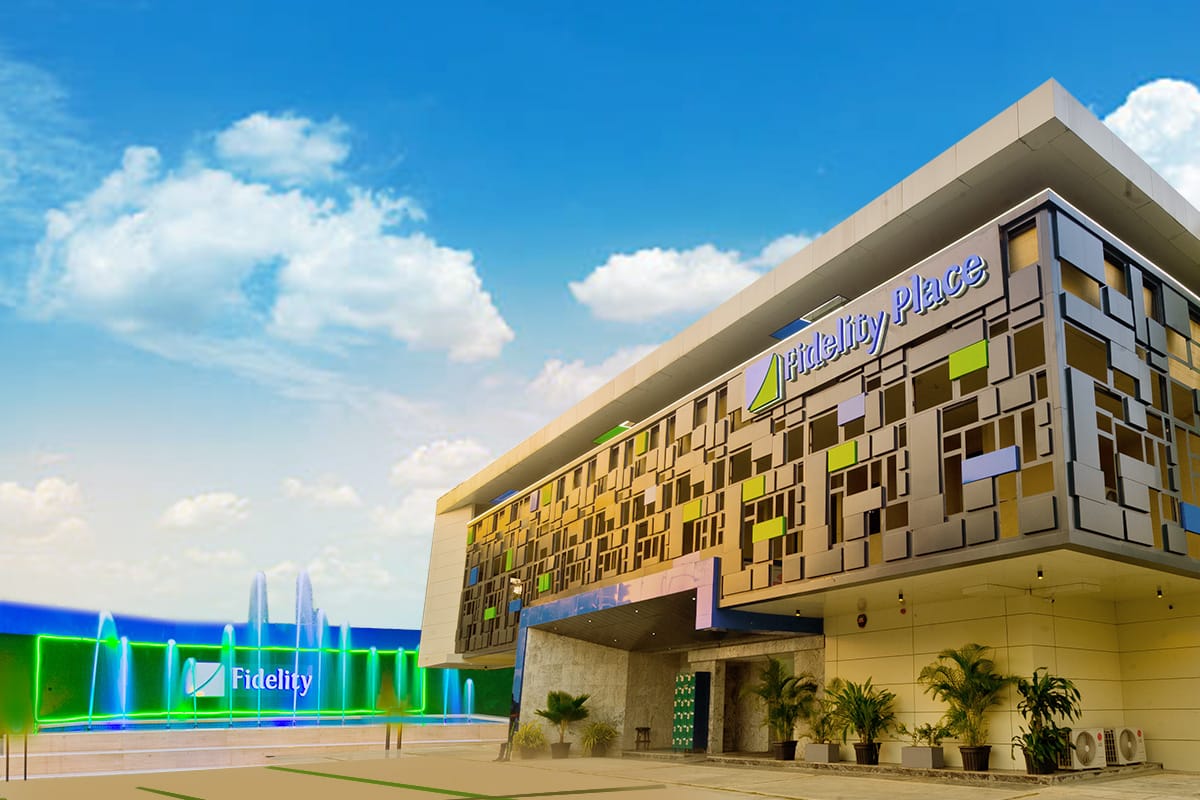
Fidelity Bank grows gross earnings by 38% to N434.95b in Q1
Fidelity Bank Plc recorded 37.9 per cent growth in gross earnings to N434.95 billion in first quarter 2026 as the international commercial bank continued to expand its core banking market share.
Interim report and accounts of Fidelity Bank for the three months ended March 31, 2026 released at the Nigerian Exchange (NGX) showed that gross earnings rose from N315.42 billion in first quarter 20025 to N434.95 billion in first quarter 2026, representing an increase of 37.9 per cent.
The top-line performance was driven by impressive growth in the bank’s core business operations with interest incomes rising by 22.8 per cent to N314.48 billion in first quarter 2026 as against N256.10 billion in first quarter 2025.
With net interest income at N180.97 billion, the bank closed the period with profit before tax of N92.48 billion. After taxes, net profit stood at N74.47 billion for the three-month period. Earnings per share remained high at N5.69, underlining the capacity of the bank to reward its shareholders.
The balance sheet of the bank also emerged stronger. Total assets crossed the N11 trillion mark to N11.35 trillion by March 2026 compared with N10.46 trillion recorded in December 2025. Customers’ deposits increased from N6.89 trillion to N7.38 trillion. Total equity rode on the back of earnings growth to a 27.5 per cent increase from N1.09 trillion in December 2025 to N1.39 trillion by March 2026.
The first quarter 2026 results further consolidated the strong earnings outlook of the bank, which had successfully completed its recapitalisation amidst impressive earnings performance in 2025.
Fidelity Bank had recorded double-digit growths in interest and non-interest incomes as well as key balance sheet items during the year ended December 31, 2025.
The audited report showed that gross earnings rose from N1.04 trillion in 2024 to N1.52 trillion in 2025, an increase of 45.6 per cent. Interest and similar incomes had grown by 38.7 per cent from N803.1 billion in 2024 to N1.11 trillion in 2025. Fees and commission incomes also rose by 44.7 per cent from N78.4 billion to N113.4 billion. The bank recorded net profit after tax of N242.4 billion in 2025.
The bank’s balance sheet emerged stronger with total assets rising by 18.6 per cent to N10.46 trillion in 2025 as against N8.82 trillion in 2024. Customer deposits increased by 16.1 per cent from N5.94 trillion to N6.89 trillion, reflecting continued franchise strength and an improved funding profile. Net loans and advances meanwhile declined by 2.4 per cent to N4.28 trillion in 2025 as against N4.39 trillion in 2024, attributable to customers paying down on their mature obligations.
The bank had in 2025 strengthened its capital position, with eligible capital rising to N561 billion, above the regulatory minimum of N500 billion for banks with international authorisation. In addition, capital adequacy had remained robust, with Capital Adequacy Ratio of 30.94 per cent by December 2025 as against 23.47 per cent by December 2024.
Managing Director, Fidelity Bank Plc, Dr. Nneka Onyeali-Ikpe, said the first quarter 2026 results reinforced the bank’s strong and resilient business model.
She noted that with the remarkable success of its recapitalisation programme and continuing expansion, Fidelity Bank has entered a new era of growth and impressive returns.
“We are on a stronger footing and confident that we will set new growth records that are reflective of our legacy and the future we are working on,” Onyeali-Ikpe said.
Business
Dangote Refinery Ends Nigeria’s Era of Fuel Import Dependence, Boosts GDP, FX Earnings — EIU
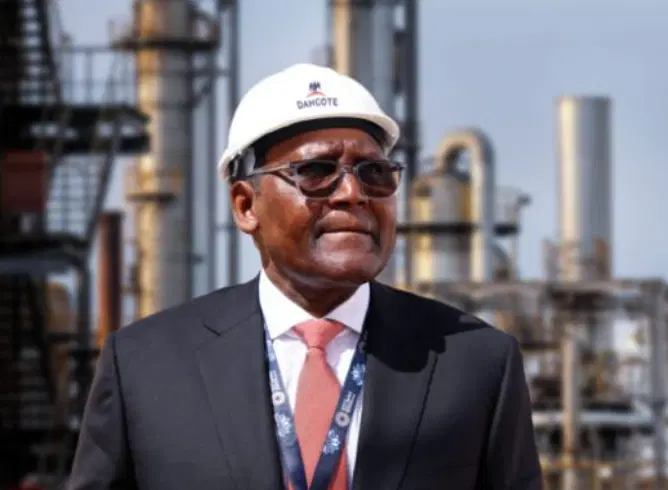
Dangote Refinery Ends Nigeria’s Era of Fuel Import Dependence, Boosts GDP, FX Earnings — EIU
The operational ramp up of the 650,000 barrels per day Dangote Petroleum Refinery & Petrochemicals is fundamentally reshaping Nigeria’s downstream oil sector, significantly reducing the country’s dependence on imported refined petroleum products and strengthening its external position, according to the Economist Intelligence Unit (EIU).
In its latest assessment on Nigeria’s fuel market and regulatory environment, the EIU said the refinery has already transformed a sector that was previously characterised by heavy reliance on imported fuel despite Nigeria being Africa’s largest crude oil producer. The report noted that the refinery met nearly 80 per cent of domestic petrol demand in April and produced enough volumes to satisfy local consumption requirements as operations approached full capacity.
The EIU described Nigeria’s downstream petroleum sector before the refinery as “long dysfunctional”, noting that the country had remained almost entirely dependent on costly imported fuel while producing nearly 1.5 million barrels of crude oil daily.
According to the report, the emergence of the refinery has reduced import dependence, improved domestic fuel availability and strengthened Nigeria’s balance of payments position through lower import demand and rising exports of refined petroleum products.
“The gradual ramp up of the 650,000 barrel/day Dangote refinery since May 2023 has transformed Nigeria’s long dysfunctional downstream sector,” the report stated. “The country’s main refineries, all state owned, had been inoperative for years and Nigeria was almost entirely reliant on costly imported fuel.”
The research and analysis division of The Economist Group, London added that the refinery’s attainment of full operational capacity and its planned expansion would further support Nigeria’s economic growth and foreign exchange earnings over the medium term.
“Meanwhile, the attainment of full capacity at, and an increase in exports from, the Dangote refinery will support real GDP growth and foreign exchange earnings in 2026 and 2027 and beyond, as a planned doubling of the plant’s output comes on stream around the end of the decade,” it added.
Industry analysts said the refinery is increasingly positioning Nigeria as an emerging refining and export hub, altering energy trade flows across Africa and reducing the vulnerability associated with fuel import dependence.
The EIU noted that the refinery’s expansion has coincided with major reforms in Nigeria’s downstream sector, including the removal of fuel subsidies and the introduction of market driven pricing mechanisms.
The report, however, said the transition from a state dominated fuel import structure to large scale domestic refining has triggered resistance from interests linked to the old import regime.
The latest tensions emerged following the decision by the Nigerian Midstream and Downstream Petroleum Regulatory Authority to relax restrictions on petrol imports despite the refinery’s growing capacity to meet domestic demand.
Dangote Industries subsequently initiated legal action, arguing that continued import approvals undermine domestic refining investments and conflict with the objectives of the Petroleum Industry Act, which seeks to encourage local refining capacity and reduce import dependence.
Analysts noted that the availability of large-scale domestic refining capacity has improved Nigeria’s energy security and reduced exposure to external supply shocks and foreign exchange volatility.
The Centre for the Promotion of Private Enterprise also cautioned against unrestrained importation of petroleum products, warning that such a policy could weaken Nigeria’s industrialisation drive and discourage investments in domestic refining.
Chief Executive Officer of CPPE, Muda Yusuf, said continued dependence on imported fuel had historically contributed to pressure on foreign reserves, exchange rate instability and fiscal leakages.
The refinery’s growing impact is also being reflected in Nigeria’s broader macroeconomic indicators. Earlier this month, S&P Global Ratings cited increased domestic refining capacity and rising hydrocarbon exports among the major factors supporting Nigeria’s sovereign credit rating upgrade – the first in 14 years.
Beyond Nigeria, analysts said the refinery is increasingly being viewed as a strategic industrial asset for Africa, where many countries remain heavily dependent on imported fuel despite rising demand for transportation, manufacturing, and power generation.
Business
BREAKING: Court Dismisses $19.6 Million Claim Against NNPCL — Rules Contract Scope Cannot Be Changed Orally
BREAKING: Court Dismisses $19.6 Million Claim Against NNPCL — Rules Contract Scope Cannot Be Changed Orally
In a landmark ruling on Friday, May 22, 2026, the Federal Capital Territory High Court in Abuja threw out a $19.6 million lawsuit filed by Alternate Dimensions Ventures Ltd against the Nigerian National Petroleum Company Limited (NNPCL), affirming a key legal principle: a written contract cannot be expanded through oral agreements or conduct.
Alternate Dimensions had sought $19,600,000 in professional fees, claiming the scope of its Direct Sale, Direct Purchase (DSDP e-pro) contract with NNPCL was orally expanded. Represented by counsel Patrick Peter, the firm argued it was entitled to the revised sum for services rendered under the alleged new terms.
But NNPCL, through its lawyer Ituah Imhanze of KENNA LP, pushed back sharply, arguing that parties are bound exclusively by the clear terms of their written agreement. Imhanze contended that without any written amendment, the claim was legally unsound, and the court agreed.
Delivering judgment, Justice Hamza Mu’azu upheld NNPCL’s defense, stating that the contract was unambiguous and that no evidence was adduced during the trial, which supported the alleged scope expansion. The court further found that NNPCL fully complied with all contractual terms and committed no breach.
Dismissing the suit as meritless, Justice Mu’azu reinforced the doctrine of sanctity of contract: any amendment to a written agreement must be express, unequivocal, and documented, not implied or verbal.
The ruling spares NNPCL from the S19.6 million claim and also a floodgate of similar potential liabilities.


- Qrent says delaying Information Technology (IT) refresh cycles may be increasing operational risk for businesses in Africa May 27, 2026
- Dentons’ Iyunola Adekanye Appointed to African Mining Week (AMW) Advisory Board May 27, 2026
- United Nations (UN) Women Liberia and Partners Convene for Spotlight Initiative 2.0 Women’s Economic Empowerment Inception Meeting May 27, 2026
- African Mining Week (AMW) to Host Central Bank Governors Roundtable as Monetary Authorities Deepen Role in Mining Sector Growth May 27, 2026
- Eritrea: Diaspora Nationals Celebrate Independence Day Anniversary May 27, 2026
- Africa Unveils Landmark Humanitarian Coordination Platform to Strengthen aligned Response to Humanitarian Crises May 27, 2026
- Seychelles: President Herminie Engages with Police and Fire Services on Praslin May 27, 2026
- Issue 3 of Mining Review Africa now available for free download May 27, 2026
- NOV Joins African Energy Week (AEW) 2026 as Gold Sponsor Amid Africa’s Offshore Expansion Push May 26, 2026
- African Union of Broadcasting (AUB) and United Nations University Institute for Water, Environment and Health (UNU-INWEH) Launch Landmark Webinar Series on Africa’s Water Crisis, Starting June 2, 2026 May 26, 2026
- Qrent says delaying Information Technology (IT) refresh cycles may be increasing operational risk for businesses in Africa May 27, 2026
- Dentons’ Iyunola Adekanye Appointed to African Mining Week (AMW) Advisory Board May 27, 2026
- United Nations (UN) Women Liberia and Partners Convene for Spotlight Initiative 2.0 Women’s Economic Empowerment Inception Meeting May 27, 2026
- African Mining Week (AMW) to Host Central Bank Governors Roundtable as Monetary Authorities Deepen Role in Mining Sector Growth May 27, 2026
- Eritrea: Diaspora Nationals Celebrate Independence Day Anniversary May 27, 2026
- Africa Unveils Landmark Humanitarian Coordination Platform to Strengthen aligned Response to Humanitarian Crises May 27, 2026
- Seychelles: President Herminie Engages with Police and Fire Services on Praslin May 27, 2026
-

 news5 months ago
WHO REALLY OWNS MONIEPOINT? The $290 Million Deal That Sold Nigeria’s Top Fintech to Foreign Interests
-

 society3 weeks ago
SOCIAL MEDIA IS NOT A BATTLEFIELD COMMAND – WHY THE NIGERIAN ARMY’S ACTION AGAINST JUSTICE CRACK IS A NATIONAL SECURITY IMPERATIVE
-

 celebrity radar - gossips4 months ago
Dr. Chris Okafor Returns with Power and Fire of the Spirit -Mounts Grace Nation Altar with Fresh Anointing and Restoration Grace on February 1, 2026
-

 celebrity radar - gossips6 months ago
Prophet Kingsley Aitafo Releases 2026 Prophecy: ‘Nigeria Will Rise, but the World Must Prepare for Turbulence’