
Business
INVESTIGATION: China floods northern Nigerian markets with unregulated monosodium glutamate products (MSG)

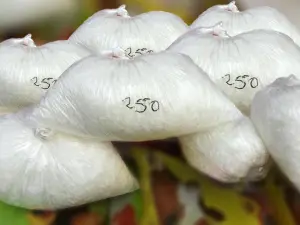
INVESTIGATION: China floods northern Nigerian markets with unregulated monosodium glutamate products (MSG)
As early as 8 a.m. on Saturday and despite the blaring of vehicles’ hoots and noises from all over the place, Alhaji Aminu – a wholesale dealer at Kano’s Singer market – is busy and perhaps overwhelmed attending to a horde of customers seeking to buy one item or the other.

Singer is Kano’s largest commodities market situated along Ibrahim Taiwo Road.
As Aminu and a number of his workers are taking orders from the customers many of whom are women, others are arriving and forming a queue.
A large number of those coming to his shop are demanding a particular product – unbranded monosodium glutamate.
A made-in-China product – Fufeng monosodium glutamate is what many are looking for.
Already, a corner of Aminu’s store is filled with one of the products in 25kg bags, yet, there is a two-wheeled cart waiting outside to offload more. Despite what looks like an overwhelming situation, Aminu is having a good day and he says it has always been like that because “people want the product”.
To some of the customers, including retailers, unbranded monosodium glutamate products like Fufeng are cheap and affordable.
At the Singer market, Fufeng and another unbranded MSG, Wuyi, are popular. But Fufeng appears to be the most sought-after. Consumers say the items have been in the market alongside branded products for some years now.
What is MSG
MSG, or monosodium glutamate, is a flavor-enhancing food additive used in Asian cooking, fast foods, and commercially packaged food products. It is a white crystal-like substance in use for over 100 years.
Among locals in northern Nigeria, white additives in crystal form are known as “Farin Maggi”, regardless of the brand. Consumers in the south call it “white Maggi”.
“Fufeng MSG” is ahead of the known and branded bagged ones in the market. On the side of the bag of the MSG is written “Produced by Fufeng”, with “Country of Origin: China,” as an addendum to the information. Wuyi, the rival product is also made in China.
No mark of authorization
Funfeng and other unbranded MSG products being sold in the Nigerian market have no mark of authorization from the government’s regulatory agencies.
The packaging also does not bear the insignia of the National Agency for Foods Drugs Administration and Control (NAFDAC) that certifies such products as fit for human consumption and there is no mark of the Standard Organization of Nigeria (SON) on it.
According to Mojisola Adeyeye, director general (DG) of NAFDAC, any unregistered food is not guaranteed by the agency. “It is fake food. It was most likely smuggled into the country,” Adeyeye warned.
The agency is mandated to give permits and authorization for the importation of foods and chemicals into the country.
‘’For safety and security concerns, NAFDAC does end-to-end monitoring for all chemicals. We request distribution and utilization patterns before we give importers permits to import chemicals,” Adeyeye was quoted as saying in a report.
“We must know who you have sold the chemicals to in your report. These are the things you must clarify to us before we give approval for a permit to clear chemical consignments.’’
The rush for unbranded MSGs
The boom in the sale of the product is happening two years after unauthorised chemicals killed three persons in Kano after consuming adulterated flavored milk.
Three persons were arrested by NAFDAC after the agency discovered the chemicals were used as additives in the flavored milk that the victims consumed.
Each day, as many as 20 customers demand the unbranded MSG product from Aminu’s store — though the 25kg is not certified by NAFDAC for home use, those who order it at the Singer market use it for retail and domestic purposes. Operators of big restaurants in the city are said to be among big buyers.
It comes cheaper at N43,000 per 25kg and allows wholesalers and retailers to sell in small units, including measuring in what locals call “modu” – local parlance for a unit of measurement.
In a bag, there are as many as 10 to 15 mudu, according to a dealer who asked not to be named.
What determines the preference of customers for these unbranded products, he added, are the number of mudus and the flexibility to adulterate the product by mixing with salt so as to increase bulk and make more profit, this paves the way for adulteration with any other cheap white powdery substance
“So your customers know what you’re bringing… but the most acceptable in the market is one with the highest number of mudu. The higher the number of mudu and purity of the MSG, the higher the price,” he said.
Aminu testifies that the product is easily affordable for customers.
“The price of 25kg Fufeng monosodium glutamate in my shop is 43,000, but for you as a new customer, I can do a discount for you and sell it to you at the price of 42,000. I want to establish a good relationship with you, so that you may come back to me and buy more,” he told this reporter as he showed the product.
“Before you sell one carton of the branded one, you sell five sacks of the unbranded product.”
From Lagos to Kano, Fufeng and others like it have found their way to nearly all the northern markets.
The infiltration started a few years ago, according to people at Singer market. But the products have gained popularity and acceptance among households now. They are also sold in the Abubakar Rimi market (Sabon Gari market).
It is not clear how they scaled the scrutiny of the Nigeria Customs Service (NCS). But dealers say it comes in trucks as supplies by some businessmen that they declined to name.
The merchant confirmed that many brought these products into the country through illegal routes. “And if you have to follow the legal field then you have to have a link with the company (that produces sachets) for approval,” he said.
Aminu corroborates this claim – he admits the products are imported through Lagos but does not reveal the identities of the importers.
“We are getting the supply of it from Lagos because this is not a Nigeria-made product,” Aminu said.
“This unbranded product is very popular. In the past, only people from rural areas were using it, but now everyone buys it.”
Like Aminu, Alhaji Bashir who is also a popular dealer of the MSG in the market confirmed that Lagos is the origin of the product. “The product is made in China, not Nigeria,” he retorted.
“I order it from Lagos whenever I sell out the ones that are in my shop. Lagos is the source of this product. People buy this product more. That is why we are selling it.”
At the market, there are retailers like Alhaji Dini who sell it in small packets for average people who cannot buy 25kg.
At his shop, he measures in “mudu” which is N4,650. “I’m not a dealer; I am selling it to average people who cannot afford 25kg,” he said as he showed off the small units packaged in a white cellophane bag.
“One bowl of this product is N4,650. It depends on the needs of the customers. Even if they come with N300, there is something for them. The price starts from N300 and above.
“I buy 25kg and sell it in small packets to people who cannot afford 25kg. My price starts from N300 and above. You know this one is cheaper compared to the branded one.”
When he was asked if he knew that the product was not meant for domestic use and could be harmful to human health, he replied “No”.
“How can you tell me this is not safe for use? Dini quipped. “This cannot happen. People have been using it for cooking. This is not the only thing I sell here. There are branded ones and different types of products.”
But Amina Kamal, a food vendor in the Sabon Gari area of Kano has no worries using the MSG. Amina said she uses it in her cooking because it gives a good taste to the food.
“I use it for my cooking and sometimes I buy the branded one. But honestly, this one is cheaper than the branded ones. That is why we use it,” she said.
“This product is for people to use and cook. People like us enjoy using it because of the taste.”
Sadiya Kamilu, a housewife who was at the market to pick daily needs for her family said the product is very good for cooking, which is why she prefers it.
“I use it for my cooking because it gives a good taste to the food, and it is cheaper,” Sadiya said.
“I don’t think it is harmful but I heard people say that. But that does not stop me, because I don’t believe it.”
FCPC vows to track unbranded products
The Federal Competition and Consumer Protection Commission (FCCPC) has indicated an interest in tracking all the unbranded and unauthorised MSG products across the commodities markets in Kano.
The FCPC is charged with the responsibility of promoting fair business practices and safeguarding the interests of consumers.
According to Boladale Adeyinka, the FCCPC director of surveillance and investigation, the commission would send its teams and secure samples.
“It has come to the attention of the FCCPC and we are sending our surveillance team to confirm and secure samples,” she said in a reply to inquiries by this reporter.
“Where there is a need for emergency intervention, we would provide urgent and interim interventions. We will also provide updates.”
Adeyinka said her office is responsible for market surveillance and investigation, which are “vital tools for protecting consumers when violations occur”.




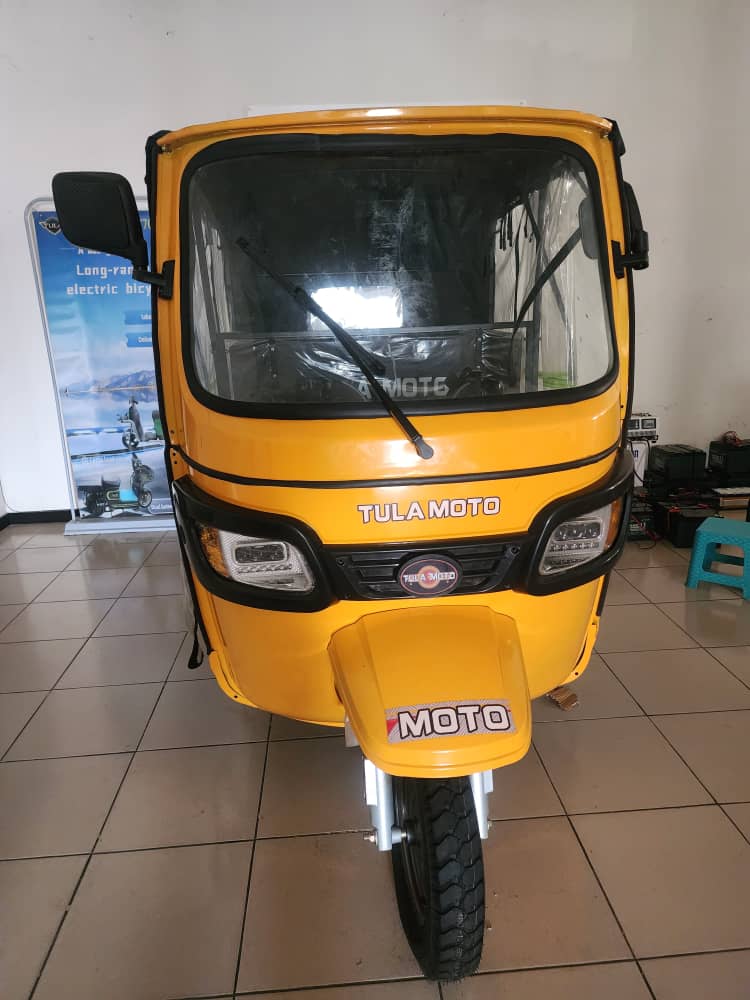
Electric 8-Seater Tula Moto Keke Enters Nigerian Market, Targets Higher Operator Earnings
LAGOS — A new electric-powered tricycle with an expanded passenger capacity has been introduced into Nigeria’s urban transport sector, offering operators a potentially more profitable and eco-friendly alternative to conventional petrol-driven “keke.”
The newly launched 8-seater electric tricycle, now available in Lagos with plans for nationwide distribution, features a dual-row seating arrangement capable of accommodating up to eight passengers per trip—significantly higher than the standard three-passenger configuration common across the country.
Promoters of the innovation say the increased capacity is designed to boost daily earnings for operators, particularly amid persistent fluctuations in fuel prices. By running entirely on electric power, the vehicle eliminates dependence on petrol, reducing operating costs and shielding drivers from fuel price volatility.
According to the distributors, the tricycle is equipped with a durable battery system capable of covering extended distances on a single charge, making it suitable for commercial operations across high-traffic routes, residential estates, campuses, and marketplaces.
“The concept is straightforward—enable drivers to earn more while spending less,” a company representative stated. “With higher passenger capacity and zero fuel requirements, operators can maximise each trip without the burden of daily fuel expenses.”
Beyond its cost-saving potential, the electric keke is also said to require less maintenance than traditional models, offering additional long-term savings. Its quieter and smoother operation is expected to enhance passenger comfort and overall commuting experience.
Industry analysts note that the introduction of electric mobility solutions reflects a growing shift toward cleaner and more sustainable transportation alternatives in Nigeria, particularly in densely populated urban centres such as Lagos.
The distributors added that the product is currently available under a limited promotional offer, with delivery options across the country.
For inquiries and purchase: 📞 08153432071
📞 08035889103
Office Address:
📍 Plot 9, Block 113, Beulah Plaza,
Lekki–Epe Expressway,
Lekki Phase 1, Lagos
As transportation costs continue to rise and environmental concerns gain prominence, innovations like the electric 8-seater keke may signal an emerging transition toward more efficient and sustainable mobility solutions nationwide.


Business
A Pipeline, a Licence, and a Storm Brewing: Corruption allegations Draw global oil giant, Shell, Into Nigeria’s Reform Test
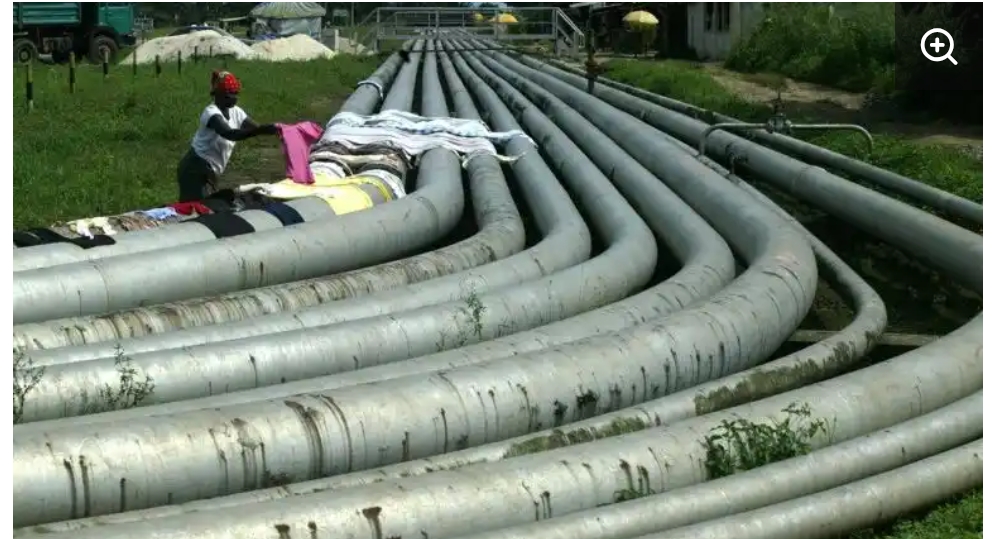
*A Pipeline, a Licence, and a Storm Brewing: Corruption allegations Draw global oil giant, Shell, Into Nigeria’s Reform Test*
By Deji Johnson and Mustapha Bello
t begins with a pipeline that should have been completed by June 2026. It widens into a regulatory dispute. And it now risks becoming a defining test of Nigeria’s gas reforms under President Bola Ahmed Tinubu.
At the center is a stalled 80 kilometre gas pipeline from Sagamu to Ibadan, a project backed by over 100 million dollars in investment and built on a protected Gas Distribution Licence issued under the Petroleum Industry Act 2021. The licence granted NGML–NIPCO exclusive rights to distribute gas within Ibadan for 25years based on Nigeria’s Petroleum Industry Act.
On paper, the law is clear. On the ground, the situation is anything but.
For more than three months, construction has been halted following a stop work order issued by the Oyo State Government led by former Shell Contractor and engineer, Governor Seyi Makinde. No detailed public justification has been provided that aligns with existing federal approvals already secured for the project.
What might have remained a quiet regulatory disagreement has now escalated into something far more politically charged. How?
In recent remarks, Nigeria’s Minister of the Federal Capital Territory, Nyesom Wike, who is of the same political party as Governor Seyi Makinde, made a pointed allegation that has since rippled across political and industry circles. He suggested that the Governor of Oyo State and Shell were in what could be described as an “unholy alliance.”
It is a serious claim. One that, if substantiated, would raise profound questions about the intersection of corporate influence, state level action, and federal law.
Neither Shell nor the Oyo State Government has publicly responded in detail to the allegation.
But the silence is now part of the story.
*THE SHELL QUESTION*
For Shell, this moment carries particular weight.
The company has operated in Nigeria for decades, building one of its most significant global portfolios in the Niger Delta. But that history is not without controversy. From corruption claims to environmental damage claims and community disputes amongst others, Shell has faced years of litigation and, in several high profile cases, adverse rulings tied to its operations in the region.
Those cases, many adjudicated in foreign courts, have shaped a negative reputation that continues to follow the company.
Now, a new question emerges.
Is Shell once again operating at the edge of Nigeria’s regulatory framework seeking to exert undue influence in circumventing Nigeria’s petroleum laws, or firmly within it?
Industry sources including a widely reported meeting between their representatives, Oyo State Government representatives and the newly appointed midstream and downstream chief executive, indicate that engagements involving Shell and the Nigerian Midstream and Downstream Petroleum Regulatory Authority could enable the company to enter a gas distribution zone already licensed to another operator in breach of the PIA.
If true, the implications are immediate and far reaching.
A licence meant to protect investors and investments in Nigeria’s gas space ceases to be exclusive against the dictates of the guiding laws. A framework begins to look flexible, and a reform risks appearing reversible.
To many, it seems more than just a commercial dispute and is not just about one company versus another.
Nigeria is in the middle of an energy transition where gas is expected to play a central role in powering industries, stabilising electricity supply, and reducing reliance on expensive diesel. President Bola Tinubu has emerged as a global champion of using gas as a transition fuel in Nigeria and Africa whilst rolling out elaborate but clearly defined plans to achieve it. Yet gas availability remains inconsistent, constraining power generation and limiting industrial output.
Projects like the Sagamu to Ibadan pipeline are designed to close that gap. To halt such a project is to delay not just infrastructure, but impact. To undermine its legal basis is to question the system that enabled it and to introduce competing claims within the same licensed zone is to risk regulatory confusion at a time when clarity is most needed.
This is where the issue moves from commercial to national because at stake is not only an investment, but the credibility of the reform architecture itself.
*OYO STATE AND THE FEDERAL QUESTION*
The role of the Oyo State Government adds another layer of complexity.
Energy regulation in Nigeria, particularly in the gas sector, is governed by federal law. Yet implementation often intersects with state authority, creating spaces where jurisdiction can blur.
The stop work order issued on the pipeline has become the clearest manifestation of that tension. Was it a regulatory necessity?
A precautionary measure? Or, as alleged by Minister Wike, part of a broader alignment with external interests? Without transparency, speculation fills the vacuum and the regulator must avoid finding itself mired in such allegations.
*QUESTIONS THAT WILL NOT GO AWAY*
For Shell, the questions are now direct and unavoidable:
Is Shell, a global energy giant, seeking to operate within the Ibadan gas distribution zone already licensed to NGML–NIPCO?
What assurances, if any, has it received from regulators or state actors?
How does it reconcile such actions with the exclusivity provisions of the PIA?
For the regulator, NMDPRA:
Can a Gas Distribution Licence be effectively shared, diluted, or overridden after issuance? According to Nigerian laws, the answer is No.
What precedent does this set for Nigeria’s gas infrastructure market?
For the Oyo State Government:
On what legal grounds does the stop work order stand, given federal approvals already in place?
And how does this action align with national energy priorities or the state’s gas needs?
Nigeria has spent the last two years telling a new story to the world. A story of reform, of discipline, of a country ready to compete for global capital. And it has worked so far with stability returning to Nigeria’s economy and over $20bn of energy investments looking to enter the country in the short to midterm.
But reforms are not tested in policy papers. They are tested in moments like this.
Moments where law meets influence, investment meets interference and promise meets pressure.
For Shell, long mired in issues surrounding ethical operations in Nigeria, this is more than a business decision. It is a reputational crossroads.
For Nigeria, it is something even larger. Whether the country’s laws will hold when they are most challenged or Whether its reforms will stand when they are most inconvenient or even whether Nigeria’s energy investments future will be shaped by the rules of law, adherence to regulatory protections and provisions or by unethical and corrupt relationships.
Until those questions are answered clearly, publicly, and decisively, the pipeline in Ibadan will remain more than steel in the ground.
It will remain a symbol of a country still deciding which path it truly intends to follow. Nigeria must act quickly and decisively because the world is watching.
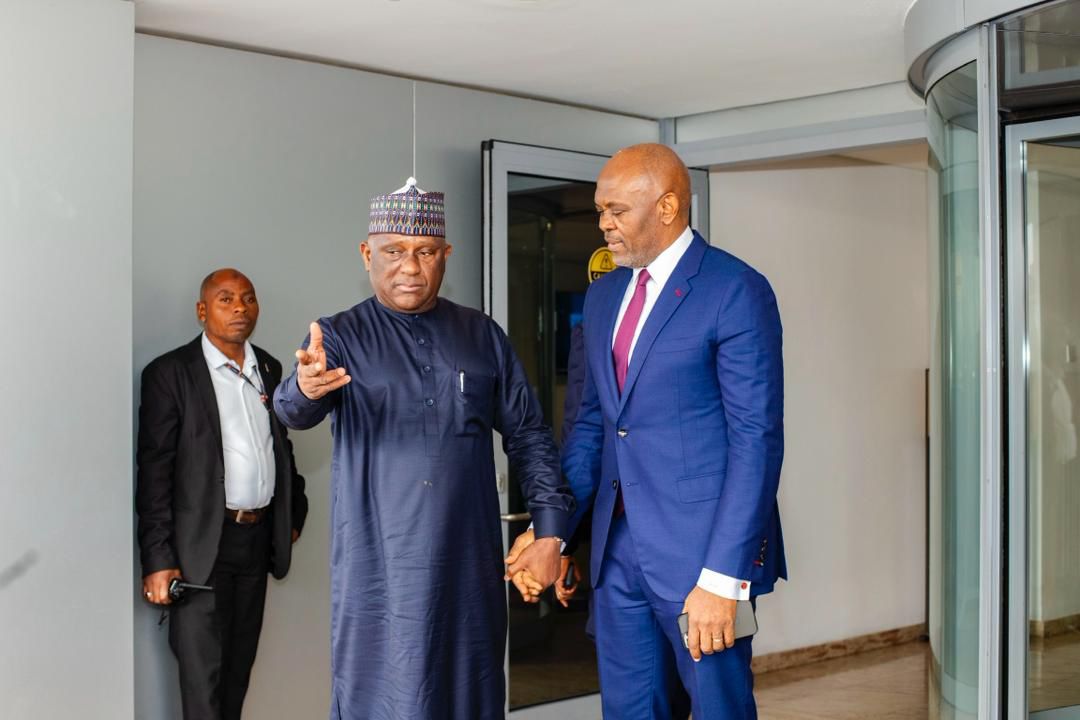
RABIU, ELUMELU ALIGN ON CAPITAL, SCALE, AND INDUSTRIAL EXPANSION AS BUA FOODS POSTS N1.77 TRILLION REVENUE, N28 DIVIDEND
Lagos, Nigeria | March 31, 2026
Nigeria’s industrial and financial heavyweights moved to deepen a partnership that has quietly underpinned decades of enterprise growth, as the Founder and Chairman of BUA Group, Abdul Samad Rabiu, hosted the Chairman of United Bank for Africa, Tony Elumelu and his executive management team at BUA Group’s corporate headquarters in Lagos.

More than a visit, the engagement brought together two institutions whose alignment of capital and industrial capacity has consistently translated into scale, execution, and long-term value creation across Nigeria and Africa’s economy.
At the centre of discussions was a renewed push to expand financing frameworks for large-scale manufacturing, deepen support for domestic production, and unlock the next phase of growth across food, infrastructure, and export-oriented value chains.
Rabiu, reflecting on a relationship that spans nearly three decades, traced its evolution from the early days of Standard Trust Bank to its present form as a mature, trusted partnership with UBA.
“Enduring partnerships are not built on transactions, but on conviction,” Rabiu said. “What we have built with UBA and the Nigerian financial industry over the years is a shared understanding of where Nigeria is going and what it will take to get there. That alignment remains as strong today as it was at the beginning.”
Elumelu underscored the strategic importance of the relationship, positioning it within a broader vision of African-led growth.
“Institutions like BUA Group demonstrate what is possible when long-term capital meets disciplined execution,” Elumelu said. “Our role is to continue enabling that scale, supporting enterprises that are not only growing, but reshaping the Nigerian economy.”
The meeting signals a continued convergence between capital and industry at a time when Nigeria’s growth story is increasingly being driven by indigenous scale, operational depth, positive government action, and sustained investment in real sectors.
In a parallel demonstration of that scale, BUA Foods, a BUA company, has released its audited results for the financial year ended December 31, 2025, delivering revenue of N1.77 trillion, a 16 per cent increase from N1.53 trillion in 2024.
The performance reflects sustained demand across its core segments including sugar, flour, pasta, and rice, alongside continued execution of its expansion strategy.
Gross profit rose to N737.26 billion, up from N540.82 billion, while profit after tax surged by 95 per cent to N518.4 billion, compared to N265.99 billion in the prior year.
Earnings per share increased to N28.80, reinforcing the strength of the Company’s earnings profile.
In line with its commitment to shareholder value, the Board has proposed a dividend of N28 per share, representing a 115 per cent increase from N13 in 2024, with a total proposed payout of N504 billion, subject to shareholder approval.
Cost of sales stood at N1.037 trillion, while total assets grew by 27 per cent to N1.39 trillion, reflecting sustained investment across operations and the broader value chain.
Speaking on the results, the Chairman of BUA Foods, Abdul Samad Rabiu said, “Our 2025 performance reflects a business that is not only growing, but scaling with discipline. We are building capacity, deepening local production, and delivering consistent value to shareholders, all while positioning for the future.”


The Managing Director, Engr. Ayodele Abioye, added; “Our strategy remains to expand capacity, strengthen market presence, and optimise the full supply chain. The demand signals are strong, and we are well positioned to sustain this momentum.”
Taken together, the meeting between BUA Group and UBA, alongside BUA Foods’ record performance, points to a broader shift for Nigeria. Nigeria’s growth is increasingly being shaped by institutions that combine scale, capital discipline, and long-term vision and should be seen as not just an expansion but a consolidation of industrial leadership.


-

 society6 months ago
Religion: Africa’s Oldest Weapon of Enslavement and the Forgotten Truth
-

 news4 months ago
WHO REALLY OWNS MONIEPOINT? The $290 Million Deal That Sold Nigeria’s Top Fintech to Foreign Interests
-

 society6 months ago
“You Are Never Without Help” – Pastor Gebhardt Berndt Inspires Hope Through Empower Church (Video)
-

 celebrity radar - gossips2 months ago
Dr. Chris Okafor Returns with Power and Fire of the Spirit -Mounts Grace Nation Altar with Fresh Anointing and Restoration Grace on February 1, 2026