
society
“It Gives Me Joy When I Put Smiles On Peoples Faces”, .. Say Ezendigbo Foundation Philanthropist, Ozonkpu Onyeka Onyenachie Ifekandu By Ifeoma Ikem

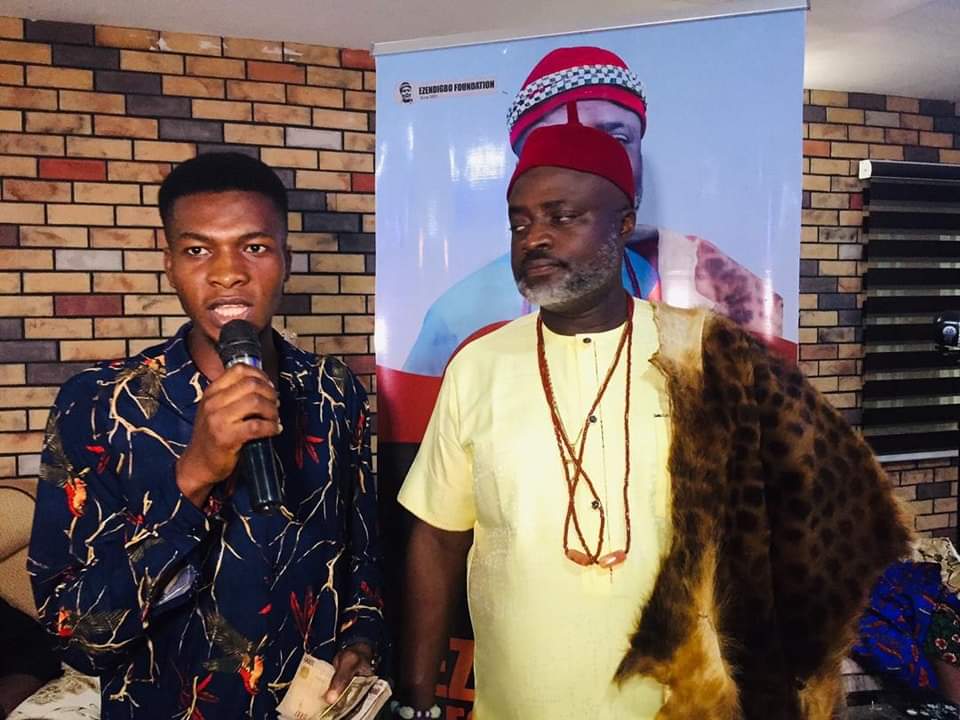
“It Gives Me Joy When I Put Smiles On Peoples Faces”,
.. Say Ezendigbo Foundation Philanthropist, Ozonkpu Onyeka Onyenachie Ifekandu
By Ifeoma Ikem
Was it not Lucky Dube, the late popular South African Music maestro who once wrote and sang a song, “that blessed is the hand that giveth, than the hand that taketh”

Indeed,this song which built its lyrics root from the Holy Bible , in book of Act of the Apostles ,chapter 20, Verse 35, is widely known as an axiomatic fact.
Talking about giving, it presupposes that the giver must have before giving, possibly rich.
But the Bible conspicuously in the book of Matthew Chapter 19 verse 24, did fore-warn that ” it is easier for the camel’s head to enter the eye of the Needle than the rich man to enter the kingdom of God.”
However, the story of this rich young Igbo international Business Mogul and Eze Ndigbo Lagos Island , appears to make an exception to the Biblical assertion.
Meet Eze Dr. Onyeka Onyenachie Ifekandu, Chairman, Chief Executive Officer, CEO Of Mac-Akudiufu Nigeria Ltd , Capin Parin Bureau De Change Ltd , Park Bureau De Change Ltd, Who has been campaigning and advocating that wealthy business Men and women should devote zero point one percent of their yearly incomes to the cause of the indigent and less privileged in the society.
Little wonder he founded the Corporate Work of Mercy Initiative, which he called “Ezendigbo Welfare Foundation ”
Accomplished and Acknowledged Giver, lover of the poor and wretched of the society , who despite commiting hundreds of millions in uplifting the less privileged and down trodden in the society, projects that in five years time, he would triple his poverty alleviation and empowerment budget, as well as increase the number of indigent federal university students on his scholarship program, from 30 federal university students to over 100 students.
Infact this amiable, humble and unassuming rich young ruler’s generosity, has garnered to him,seven exclusive prominent Igbo titles bestowed on him at a tender age of 37 years, which many of his contemporaries,who are older and richer than him could not attain such rare titles and height respected so much in Nri, his home land.
Some of the titles he has been decorated with are: His Royal Highness,HRH Ezeanakiliekili 1 of Lagos Island; Ozo Wire-Wire ; Omechaluili Ofumbosi; Akuoma Di Ufu; Mkpata Enugwu-Ukwu Na Umunri and Ozonkpu,
This rare achievements, Ozonkpu title holder ,as he is fondly called by his peers, said, was Propelled by his love for the poor and Indigent People in the society.
It is on record that his “Eze Ndigbo Welfare Foundation”, has spent some significant multi millions of naira on scholarships awarded to over 30 brilliant indigent students,who had gained admission into their choice federal university, polytechnic or tertiary institutions of higher learning before they accessed the scholarship portal.
Surprisingly, the scholarship program of his Foundation is far from being the reason his beneficiaries have nicknamed him ” Mayor Of Empowerment”.
This is simply because Ozonkpu, the calm headed Philanthropist has many other empowerment programs for the poorest of the poor, such as the ‘Apprenticeship Support Aide ‘ for freed apprentice, who their bosses refused to settle or were given insignificant settlement Fund.
As a major business mogul in the importation and sales of tailoring materials, in partnership with the Chinese manufacturers, Eze Ifekandu, had initiated a special “goods on credit initiative” to assist poor, average and upcoming traders in his line of business.
Besides renting and paying shops rents for poor traders, who are dynamic and business conscious, focused individuals in Lagos Island, Ozonkpu equally supplies them with goods on credit or what he usually calls, “return after sales basis” empowerment.
It is also on record that Ozonkpu’s unlimited philanthropic gestures and empowerment foundation, have donated three brand new Camry luxury cars and built houses and apartments for many young beneficiaries within his Enugwu -Ukwu, Umunri community in Anambra State and beyond.
As an acknowledged bridge builder and a philanthropist without borders,which many said , have endeared him to the popular and respected Traditional Ruler, Oba Rilwan Akinolu, the Oba of Lagos, who considering Ozonkpu’s large heart, kindness, spirit of giving,generosity,milk of human kindness and selfless empowerment programs, conferred on him the title of Eze Ndigbo in Lagos Island, ever before he was crowned by his Igbo community.
That is why many non Igbo people, especially Yoruba, Hausa and other ethnic groups, bestowed on him the title of the ” De-tribalized Man of the people ” .
For four years running since the inception of his Foundation, Ozonkpu ,has been empowering Jobless Indigenes in Lagos Island and Anambra States, through his poverty alleviation projects, as well as provision of job opportunities for the less privileged, especially the potentially crime prone street urchins, Miscreants and Hoodlums, who his philanthropy have helped in no small measures in taking them away from Crimes and criminality.
It will shock Purveyors of tribalism and ethnicity to know that majority of his internal staff are Yorubas, including personal assistants and private security, who are seen freely executing their duties even in his wife, Lolo Nkechi’s kitchen.
Enquires by our Correspondent at his business district around Docemo street area of Lagos Island and beyond, revealed the enormous love traders, non- traders and “Area Boys” have on the kind hearted Eze Ndigbo Lagos Island, who they testified the fact, that he weekly and periodically sponsor market feeding program in an atmosphere of funfair in the market area, where even lucky customers are not hindered from partaking.
Speaking in an exclusive interview with our Correspondent in his Palace at the Green Field Estate, Eze Ndigbo Lagos Island ,explained that his humble beginning was very difficult, not Rosy, full of early stage hardship , hence his early poor background now motivates him to help the poor .
Indeed,Ozonkpu was not born with a silver lining spoon in his mouth, rather he was a Child of circumstance ,born into a poor,humble but God fearing home of late Pa Alex Chionye and Madam Charity Ifekandu, Who now but daily glorify God for the blessings , pride and honor He has used her son, Onyeka ,to bring to her family, kindred and Community at large.
While growing up 47 years ago, circumstances of life made Ozonkpu to drop from school, immediately after the death of his benefactor, his late father.
That sudden twist in life,pushed him to abandon school for one year,to seek financial refuge in a hotel Job, at the age between 16 and 17 years of age, where he worked for one year to raise funds for his school certificate examination, as his family could not even afford the N1000 fee for the West African Examination Council ,WAEC entrance then.
Determined to survive and succeed in life, the then teenage boy, Onyeka Ifekandu, was forced by circumstances to move to Aba, in Abia state, to start up the popular Igbo trade apprenticeship Scheme called “Nwa boyi”,with his late father’s old friend for five years,shortly after his School certificate acquisition .
After freedom, he re-located to Lagos in 1993, during the Igbo mass exodus after M.K.O. Abiola’s presidential election crisis, where he admitted that he witnessed the tribal hate, disparity and disunity between Yorubas and Igbos.
Undeterred by the crisis, he decided to remain with some of his colleagues at the Lagos Island,When other Igbo traders relocated to trade fair Complex due to maltreatment by the Yorubas.
He confirmed that he remained behind in Lagos Island, to propagate peace and harmonious co- existence between the Yoruba host and the Igbo entrepreneurs.
It was that M.K.O. Abiola’s presidential election crisis situation that made his sub conscious mind to determine to work hard within the 30 years he has been engaged in the tailoring materials business , to become a good Igbo Ambassador and bridge builder between the Yoruba and Igbo ethnic groups.
Despite the hard terrain of doing businesses in Nigeria, Ozonkpu did not abandon his age long dream of acquiring a University education and certificate , as he combined business with studies through the then distance Learning centers .
And today, he is a happy and qualified Banking and Finance graduate, a law student in view and an honorary Doctorate Degree holder,PhD, who is happily married to Lolo Nkechi Ifekandu and blessed with four children, three boys and a girl, all at various stages in their University education.
According to him, What he witnessed on his journey in life, shaped and sharpened his philosophy of life, which propelled him to vow that he will always give back to the society ,and will always help the indigent and less privileged until he goes to the great beyond.
Hear him: “Because I belong to a school of thought which believes that we are Sojourn here on earth , naked we came, naked we will go. Inspite of earthly acquisitions, when death comes, all would be abandoned behind,which is my motivating factor”.
Continued he : “Again My Good will and Corporate work Of Mercy have been paving ways for me.Iam happy and contented with what I have and enjoy sharing the little I have acquired with the indigent people , the youth and those victim of circumstances, because I went through hell to train myself through secondary school.I urge the rich in the society to learn to give back to the society ”
“I love harmonious co-existence with other people from other tribes, like the Yorubas.I love to see people being happy, though Iam not a billionaire but God has been keeping me and not allow me to go hungry”.
“It gives me Joy when I put smiles on people’s faces and lives and Iam contented with what ever I have because good will is futuristic and we must learn to love our neighbors as our selves, because it is God that created the Igbos and Yorubas”.
“What legacy are we living for posterity ? he asked?.
For him, “giving is not about what you have but good will and will power to give.When you give, God guarantees your blessings, when you give back to the society.Giving does not make one poor”.
On his recent coronation as Eze Ndigbo Lagos Island, he said : “My recent installation as Eze Ndigbo Lagos Island by Ohanaeze Ndigbo Lagos State and Igbo King Maker,in recognition of my love for humanity, it is a testament of the impact of my Corporate work Of Mercy Initiative.”




society
Grace Nation: Harvest of Babies 2026 Records Miracle Birth and Dedication of Twins as Conference Concludes
“Guard your fruitfulness—identify and avoid distractions.”
The 2026 edition of Harvest of Babies, the flagship family liberation conference of Grace Nation Global, concluded with remarkable testimonies, including the reported safe delivery of a baby boy during the programme and the dedication of multiple “miracle babies.”
Miracle Delivery and Baby Dedications
One of the standout testimonies involved a woman whose pregnancy had gone beyond term and was reportedly scheduled for surgery. According to accounts shared during the conference, she was prayed for after being identified during one of the sessions. She later delivered a healthy baby boy without complications during the course of the event.
The conference also witnessed the dedication of several children described as long-awaited blessings, including twins after 15 years, a baby boy after 9 years, and a baby girl after 7 years. The dedications formed a major highlight of the closing moments of the programme, reinforcing the conference’s focus on fruitfulness and restoration.
Teaching on Fruitfulness
Continuing his teaching series on “Fruitfulness,” the Generational Prophet of God and Senior Pastor of Grace Nation Worldwide, Dr Chris Okafor, emphasized the importance of addressing the root causes of life’s challenges.
“If the cause of a battle is not confronted, the cycle may continue,” he said, adding that spiritual discipline—particularly prayer—remains a key tool in overcoming limitations such as barrenness, whether physical, financial, or generational.
He described prayer as a necessary channel for divine intervention, stressing that understanding one’s spiritual foundation is essential to overcoming recurring challenges.
Guarding Your Fruitfulness
Dr. Okafor also warned about distractions that may hinder progress, urging believers to remain focused on principles that sustain growth and fulfillment.
“Every kingdom operates by principles,” he noted. “If you allow distractions around you to take your focus away from those principles, you may delay your manifestation.”
He encouraged participants to be intentional about their environment, relationships, and spiritual discipline in order to maintain their breakthroughs.
What Hinders Fruitfulness?
The cleric identified curses and ignorance as major obstacles to fruitfulness. According to him, some challenges may stem from longstanding family patterns, but these can be broken through spiritual understanding and alignment.
He reiterated that blessings—particularly those pronounced through spiritual authority—have the capacity to reverse negative cycles and establish fruitfulness.
“Ignorance allows problems to persist,” he said. “But when you gain understanding and follow divine instruction, transformation begins.”
Looking Ahead
Although the 2026 Harvest of Babies conference has ended, organizers say the testimonies and experiences from the event will have a lasting impact. Many participants expressed faith that by this time next year, they will return with their own testimonies of fruitfulness.
The conference closed on a note of expectation, with attendees looking forward to future editions and continued manifestations of what they described as divine intervention. By Sunday Adeyemi [email protected]


society
GEN CHRISTOPHER GWABIN MUSA SUPPORT INITIATIVE EXTENDS WARM BIRTHDAY FELICITATIONS TO PRESIDENT TINUBU ON 74TH BIRTHDAY
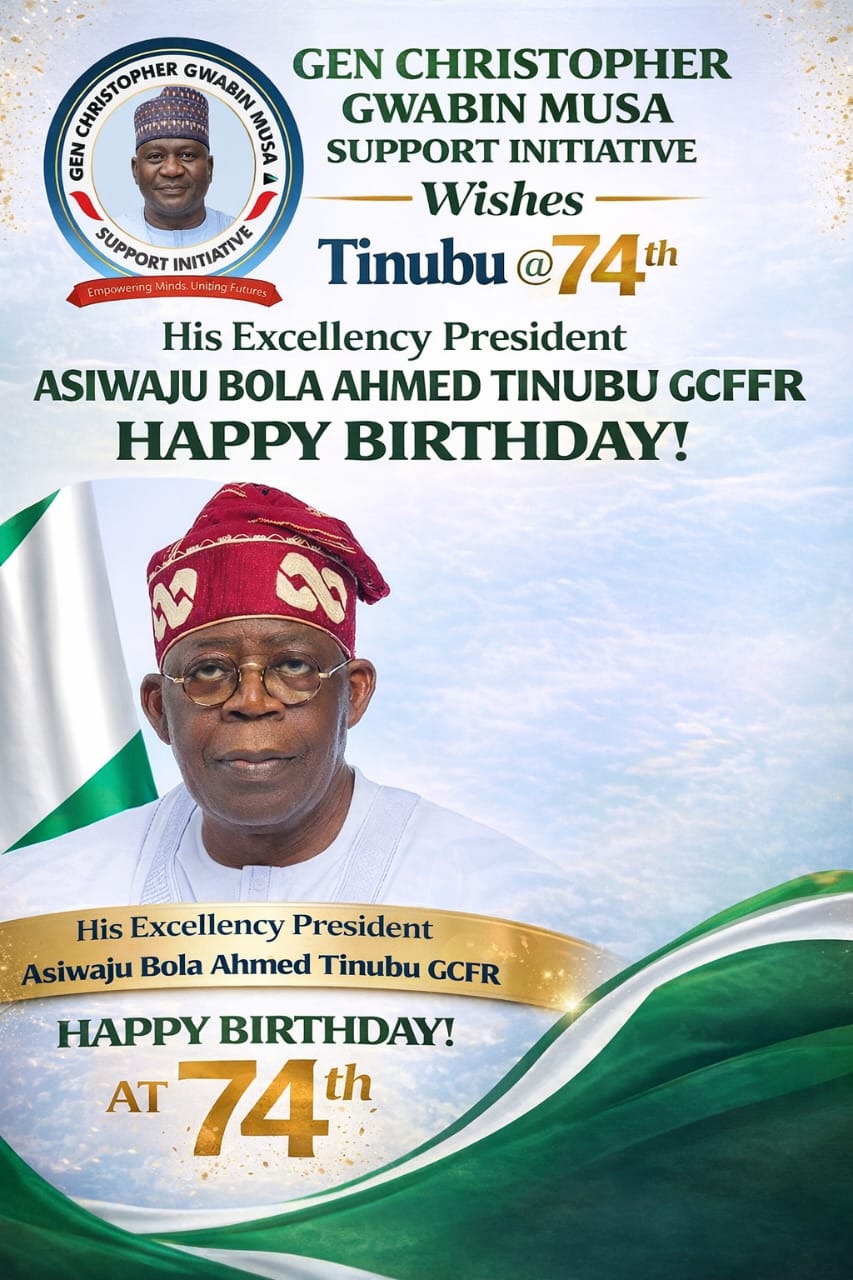
GEN CHRISTOPHER GWABIN MUSA SUPPORT INITIATIVE EXTENDS WARM BIRTHDAY FELICITATIONS TO PRESIDENT TINUBU ON 74TH BIRTHDAY
The Gen Christopher Gwabin Musa Support Initiative has extended heartfelt congratulations to His Excellency President Asiwaju Bola Ahmed Tinubu, GCFR, on the occasion of his 74th birthday.
In a statement released to the press, the Initiative conveyed warm wishes for the President’s personal well-being and for his continued leadership of the nation. The statement, signed by the Convener, Ibrahim Dahiru Danfulani, Sadaukin Garkuwan Keffi/Betara Biu, expressed hope that the coming year would bring the President “renewed strength and more wisdom in guiding the nation.”
The statement further noted that the Grand Patron of the Initiative, His Excellency Gen Christopher Gwabin Musa, OFR, Minister of Defence of the Federal Republic of Nigeria, joined in celebrating the milestone. It added, “Wishing Your Excellency continued good health, vitality, and determination as you lead the country towards greater unity and progress.”
The message underscores support for President Tinubu’s administration and its national objectives, marking the birthday as an occasion to reaffirm commitment to the nation’s unity and advancement under his stewardship.
society
Dominion City to Host Global Camp Meeting, “2 Nights of Glory” 2026 in Lagos, Enugu …Calls for Moral Renewal
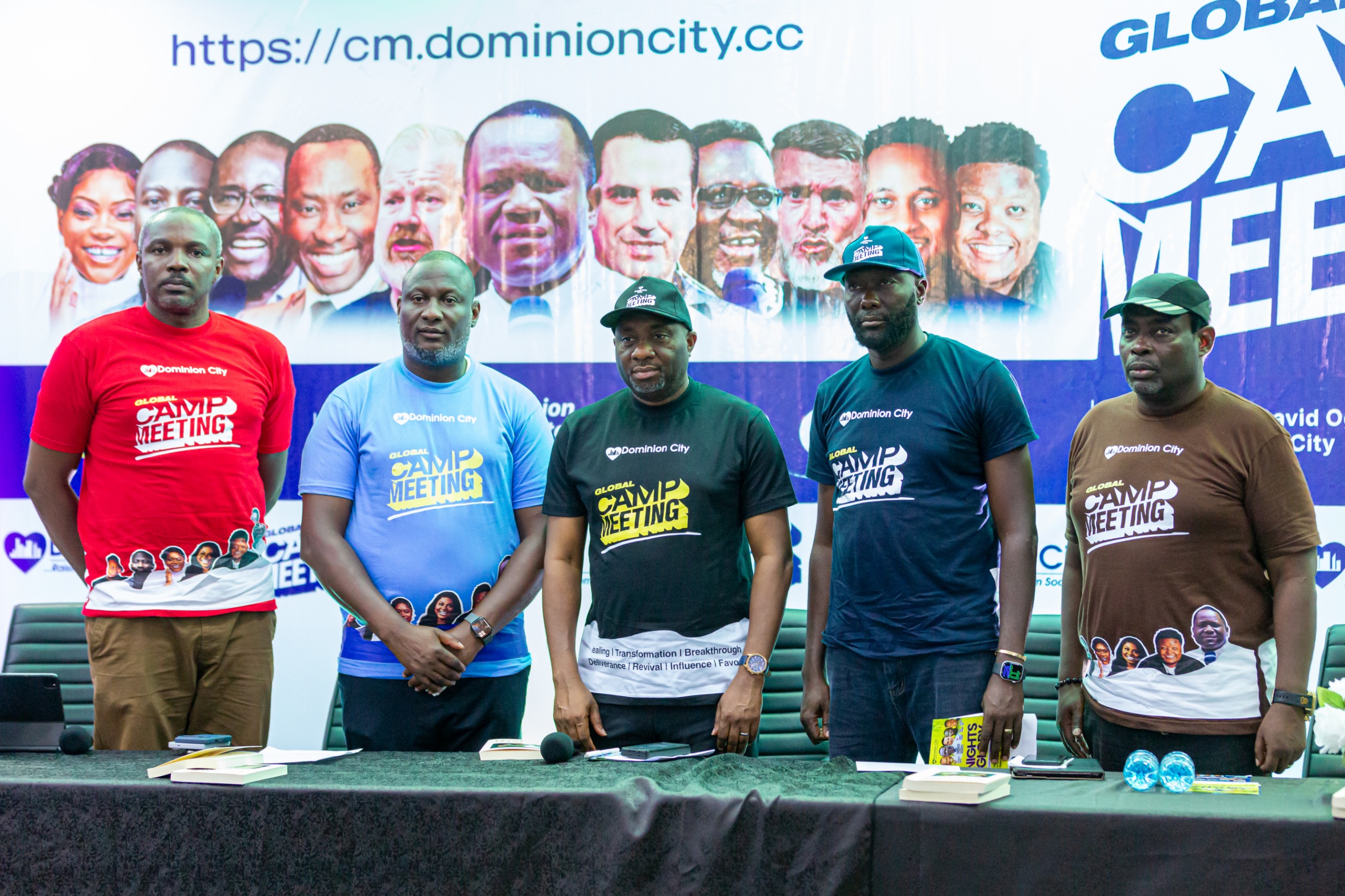
*Dominion City to Host Global Camp Meeting, “2 Nights of Glory” 2026 in Lagos, Enugu
…Calls for Moral Renewal
Lagos – Dominion City has announced plans to host its annual Global Camp Meeting alongside a special “2 Nights of Glory” gathering in April 2026, with events scheduled to be held simultaneously in Lagos and Enugu.
The week-long programme is expected to draw tens of thousands of participants onsite and millions of virtual attendees from across the globe.
The Global Camp Meeting will run from Wednesday, April 1 to Monday, April 6, featuring daily sessions at 8:00 a.m. and 5:00 p.m. The “2 Nights of Glory” is slated for Friday, April 3 and Saturday, April 4 at the Golden Heart Place, Km 22 Lekki-Epe Expressway, beside Lagos Business School, Ajah, Lagos.
Organised by Dominion City, a global church focused on raising transformational leaders, the conference will centre on revival, spiritual renewal, and practical teachings. This year’s theme, “Redigging the Wells of Our Fathers,” underscores a call to return to foundational values and principles.
Speaking ahead of the event, Nobbert Onaga, President, Golden Heart Foundation and Senior Pastor, DC Lagos & Europe, emphasised the need for moral reawakening as a pathway to national transformation. He described the Church as “the pillar and foundation of truth,” noting that the conference aims to confront moral decline and restore core values within society.
“We are going back to foundational truths that established the Church. These truths will help repair societal damage and reposition the Church as a source of hope and light,” Onaga said.
Also speaking, Shola Olapade, Senior Pastor of Dominion City Headquarters, highlighted the Church’s role in addressing ethical and cultural challenges, particularly among young people. He added that the programme would go beyond spiritual teachings to include sessions on artificial intelligence, innovation, business, media, arts, and career development.
“We are equipping people not just spiritually, but with relevant 21st-century skills to thrive in today’s world,” Olapade noted.
The conference will feature teachings and ministrations from a lineup of international ministers, including Dr. David Ogbueli, Dr. Charles Ndifon, Andres Bisonni, Pastor Randy Mitchell, Apostle Ikechukwu Peter Nnajiofor, Dr. Ferdinand Nweke, Apostle Ben Hanyani Ndobe, Evangelist Dan Scott, and Dr. Chiefo Ejiofobiri.
Music ministrations will also be led by notable gospel artists such as Grace Idowu, Rhema Onuoha, Once More Six, David Nkennor, Anthony Kani, and GUC.
Organisers disclosed that over 30,000 participants are expected to attend in person, with free transportation provided from designated locations across Lagos to ease access. In addition, free medical services will be offered daily, building on previous outreaches that benefited over 1,700 people.
To ensure safety and order, more than 200 traffic marshals will be deployed in collaboration with relevant authorities.
Beyond its spiritual impact, organisers project that the event will stimulate local economic activity across hospitality, transportation, and retail sectors.
The Global Camp Meeting remains a key platform for spiritual impartation, leadership development, and societal transformation, aligning with Dominion City’s mission to equip believers to influence their communities positively.
Participation is open to the public, with registration available online for both physical and virtual attendance. //END.//
*PHOTO CAPTIONS:*
L-R: Dr. Godwin Efobi, Head, Medical Team, Dominion City Headquarters (DCHQ); Pastor Shola Olapade, Senior Pastor, DCHQ; Pastor Nobbert Onaga, President, Golden Heart Foundation and Senior Pastor, DC Lagos & Europe; Pastor Chuks Anochie, Head of Security and Traffic Control, Dominion City Headquarters (DCHQ), Camp Meeting 2026; Pastor Josh Tim Vaduchi, Head of Event & Programmes, DCHQ, during the press briefing of the forthcoming Global Camp Meeting, held the weekend of 2026 at the Dominion City Headquarters (DCHQ), Lagos.
L-R: Pastor Chuks Anochie, Head of Security and Traffic Control, Dominion City Headquarters (DCHQ), Camp Meeting 2026; Pastor Shola Olapade, Senior Pastor, DCHQ; Pastor Nobbert Onaga, President, Golden Heart Foundation and Senior Pastor, DC Lagos & Europe; Dr. Godwin Efobi, Head, Medical Team, DCHQ; and Pastor Josh Tim Vaduchi, Head of Event & Programmes, during the press briefing of the forthcoming Global Camp Meeting, held over the weekend in 2026 at the Dominion City Headquarters (DCHQ), Lagos.


-

 society6 months ago
Religion: Africa’s Oldest Weapon of Enslavement and the Forgotten Truth
-

 news4 months ago
WHO REALLY OWNS MONIEPOINT? The $290 Million Deal That Sold Nigeria’s Top Fintech to Foreign Interests
-

 society6 months ago
“You Are Never Without Help” – Pastor Gebhardt Berndt Inspires Hope Through Empower Church (Video)
-

 celebrity radar - gossips2 months ago
Dr. Chris Okafor Returns with Power and Fire of the Spirit -Mounts Grace Nation Altar with Fresh Anointing and Restoration Grace on February 1, 2026