
news
MIKE ADENUGA: 70 TIMES A GENIUS -BY OLABODE OPESEITAN

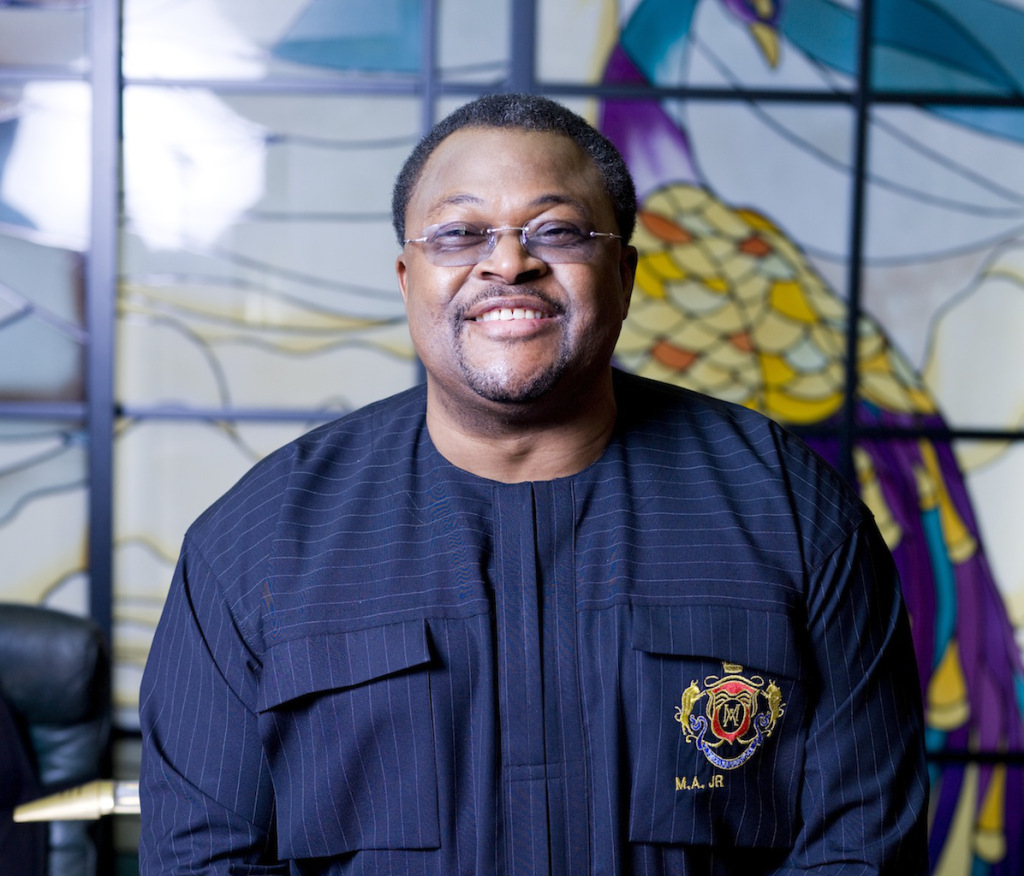
MIKE ADENUGA: 70 TIMES A GENIUS -BY OLABODE OPESEITAN

PROLOGUE
This is a celebration of an exceptional African business icon and enigma from an insider perspective.
THE ENIGMA
It was one of those activity-choked days when his meetings lasted till very late in the night. Dr. Mike Adenuga Jr. had, a few moments earlier, closed his last meeting for the day with senior managers in his signature style. “Well, everyone to himself, God for us all,” he said with reverence, yet commandingly and reassuringly. With everyone released, he treated the remaining files on his desk, passed them to his secretary and crossed over from his Oval Office at the golden building to his palatial residence, which he fittingly christened ‘Bellissima on the waterfront’. Bellissima is an Italian word coined from bella, which means gorgeous, and issima, an absolute superlative. Bellissima, the name, absolutely complements the gorgeousness of the immaculate white buildings at the Adenuga villas and their coral-coloured roofs. You would think, at that wee hour, he was heading straight to bed once he got home. No Sir!
Dr. Adenuga is genetically fortunate to require only about three to four hours of sleep a day. The influential Wall Street Journal calls his kind the sleep-less elite who need just a few hours of sleep to function normally. In that mold are the likes of Tim Cook of Apple and former American President Donald J. Trump. Sometimes, he would make a few calls to give some follow-up instructions or review some aspects of his last meetings. Then, he would pour himself a glass of one of the smoothest cognacs in the world, relax and journey back to the past couple of hours to dissect his previous day, reflectively.
That, for Dr. Adenuga is a spiritual voyage of sorts where he tries to set matters straight between himself and the people he had encountered. Meditatively, he would ask himself, ‘Was I fair to him? Was she fair to me? Is there any additional value to explore and get a better result beyond the ideas the various teams from Globacom to Conoil Producing, Conoil Plc, Cobblestone Properties & Estate and others presented? How can we optimize our assets?’ He could be at this for up to three or four hours before calling it a day. That is how the genius mindset of Chairman Adenuga works. Upon deep reflection, if in the previous day there was anyone the Chairman felt he was unfair to, he would make amends, often not in an apology but in voluntary compensatory actions. If there was anyone he felt was unfair to him, he would also take corrective measures. As generous as he frequently is, he doesn’t spare the rods when he needs to make people account for their misdeeds. Where he acts the fastest is on any matter that could stimulate business growth. He takes whatever action is required to get results, particularly where the opportunity is hot and fresh, even if it requires a trip to the most distant part of the world. There were people in the Mike Adenuga Group who had travelled to the US, Europe, China and other parts of Africa and had no clue they were travelling as close as four to 24 hours before they boarded their flights. No other business leader I have known can match his mettle when it comes to pulling all the strings to get a difficult result. That perhaps is the strongest staying power of an icon his admirers call the Great Guru.
HOW HE PRESIDES OVER MEETINGS
Dr. Adenuga is a strict disciplinarian who runs his organisations with traits of the command-and-control structure of a military hierarchy. A perfectionist, he expects his officials and consultants to be prompt, organised, adequately prepared and conform to the rules of his office. “You can’t do that here. This is the Office of the Chairman”, he would thunder and remind anyone stepping out of line. He is irritated by tardiness and unintelligent responses. A voracious reader and intellectual explorationist, he ceaselessly brings himself up to speed on the latest trends in the businesses he is involved in, from oil exploration to the downstream, banking to finance, real estate, hospitality, road construction and telecommunications. You cannot pull the wool over his eyes. One moment he is discussing the network configuration management system for Globacom with his technical team, the next moment, he is discussing the result of geological surveys and offshore/onshore drilling of oil with his Conoil Producing management team. The same day, he is getting feedback from his representatives at Julius Berger, where he has controlling shares, and Cobblestone, the multibillion real estate company which has luxurious properties spread across the land. This is just a snippet of his regular undertakings. He probably would have slowed it down by now.
He is also politically and economically savvy. He has unassailable strategies on how to fix the Nigerian economy. I can just imagine how much Nigerian and African leaders can tap from his profound solutions, most of which are a bigger bang for the buck, even without asking to be paid any buck. It’s there just for the asking!
How long or short he spends with every presenting team depends on how much value he gets from or adds to the presentation. He needs only a few slides to decide if a presentation is worth his precious time. Yet, he displays a disarming humility, especially when there are visiting consultants or advisers. He is quick to spot and convert opportunities. He sees the boardroom and an entire organisation like a football team where only the players in good form keep their shirts. “Everyone must fight for his shirt”, he would say. Yet, he shows the milk of human kindness to his people. He gets personal with employees he often interacts with, cares about their welfare over and beyond the benefits they get from the system. Dr. Adenuga is also a powerful storyteller who has shared several aspects of his life relevant to topics under discussion with officials during or after meetings.
HOW HE KEEPS VALUABLE STAFF
Despite his strict regimen and famous quote of, “We may laugh and play together, don’t let the hierarchy be lost on you,” Dr. Adenuga is among the most involved and most caring employers of labour you can ever see. When a valued staff departs voluntarily or is asked to quit over certain developments, the Chairman does not see it as a permanent separation. If there is an opening later and he remembers any of the former staff he rates as ‘livewires’ who can fill the void, he will go after such staff, entice, appeal, incentivize or take any step necessary to bring him/her back. Dr. Adenuga goes as far as speaking directly to the staff or sending emissaries to them to gain their confidence and rekindle their collaboration. Biblical? Perhaps, yes. Leaders can leave a herd and go after a lost or missing sheep. For a business leader who can afford to hire any staff from anywhere in the world, that is a rare act of humility, large-heartedness and pragmatism. About two years after I had left Globacom in 2020, I got a surprise call from the Chairman. “Bode, mo ti’n wa e. Nibo lo wa lat’ojo yi (Bode, I have been looking for you, where have you been all this while)? Then he added, “We shouldn’t be far from each other. I shouldn’t be looking for you when I need you or you, looking for me when you need me. There is no easy way to say goodbye but there can be a pleasant way”. I thanked him for his fatherly admonition, and we have kept in touch ever since. The truth is that the Chairman really does not need me to the point of seeking me out. It is just his nature to be kind to his employees and friends he considered valuable when they were with him.
ROLE IN TURNING WIZ KID, OTHERS INTO GLOBAL STARS
The world today celebrates Wizkid , Burna Boy and other Nigerian music superstars who have become global icons. Dr. Adenuga played a big part in accelerating their journeys into global reckoning. He instructed his management team to engage the fledgling music stars then as brand ambassadors and take them on musical and comedy tours across the country. Many of them had the opportunity to perform in different parts of Nigeria for the first time, courtesy of the Adenuga gesture. Empowerment is one of the core reasons he founded Globacom. He wanted the fish seller in Epe or the yam seller in Aboh Mbaise or the farmer in Dawakin, Kano to be able to reach their customers and boost their trade. When things were tough for comedians, Nollywood stars and musicians, the endorsement and performance fees they got from Globacom helped in no small way to see them through. Many of the beneficiaries are eternally grateful for that deed. His impact was also felt in football across Nigeria, Ghana and at CAF where he pumped millions of dollars to promote and develop African football for almost two decades.
ADENUGA’S EXTENSIVE CONNECTIONS
The Chairman has an extensive network of connections, and he has kept many of them in his closest circle over the years. In the innermost of the circle are the Awujale of Ijebuland, Oba Sikiru Kayode Adetona, who is his older cousin, the Esama of Benin, Sir Cabriel Igbinedion, and his son, Chief Lucky Igbinedion, boardroom guru Mr. Bode Emmanuel, General IBM Haruna, General Ibrahim Badamosi Babangida, Dr. Seyi Roberts and Chief Obi Adimora. This list is by no means exhaustive. Another of the elite senior friends is General Ipoola Alani Akinrinade, whom he met as the big brother of his close childhood friend. He has nurtured a sublime friendship with the Akinrinades over the years. He is particularly fond of General Akinrinade, who was kind to them in those days when the youngsters were trying to find their feet. The powerful list also includes past and present heads of state across the world, Governors, Senators, traditional rulers, professionals, friends and associates. Many thought he would be in a dilemma when two of his friends, Alhaji Atiku Abubakar and Asiwaju Bola Ahmed Tinubu, went head-to-head in the last presidential election. They forgot that he is a boardroom virtuoso who understands the dynamics of leadership contests in Nigeria and would never be caught in the crossfire. His strategy over time is to leave politicking to politicians and stay in his comfort zone, the boardroom and business management.
RELATIONSHIP WITH HIS CHILDREN
Like every caring and doting father, the Chairman loves his children to bits. He spoils them with gifts and finds time to attend to them despite his extremely busy schedule. He prioritises family dinner which could be at least once a week, often after watching movies together at the family’s luxuriant cinema hall. He also comes hard on them when they get on the wrong side of his strict rules. He once told one of his children whom he had to compel to attend a meeting after requesting to be excused, “Come rain or shine, I’m at this desk, working. If I can do that without giving excuses, then you shouldn’t give excuses. The only thing I owe you is to give you a good education. Afterwards, if you want to stay here, you are welcome, but you must adhere to my instructions”. Surely, he cherishes them and will do anything for them, but he wants to train them in his strict disciplinarian way, believing this will strengthen them in sustaining the huge legacy he is bestowing on them. Everyone close to the Adenugas knows that his scions have also fully embraced the ethos of hard work wholeheartedly and they are adept at what they do. He once told me after a meeting at his Oko-Awo home office, shortly before relocating to the Banana Island home, that his wish was to hand over his flourishing empire to his children.
ADENUGA’S LEGENDARY GENEROSITY
Dr. Adenuga’s generosity is legendary. He gives personal rewards like no other #billionaire, except for probably a few like Oprah Winfrey. “If God has given you this kind of resources, it is not for you and your family alone”, he would say. That is the guiding philosophy influencing the way he reaches out through his wealth.
All year round, he splashes generous gifts on extended family, friends, associates, staff and the less privileged. The gifts could range from exotic brand-new cars to expensive perfumes, designer bags, designer wristwatches and cash. And during every festive season, he has a long list of beneficiaries he touches with life-transforming gifts; some on rotation, others in perpetuity. He is detailed and exquisitely tasteful, not only in the quality of gifts but also in the manner the gifts are presented. His Christmas cards are not only the best designed but the first to arrive. Recipients have treated them as valuables to be proudly displayed. He is unorthodox in living out his precepts. He does things his own way and the Chairman acts and moves when he wants to. He doesn’t like to be over pressurised.
His company, Globacom, recently revamped and furnished the rundown home of a former national football hero, Peter Fregene, who had been in financial distress. That altruism has the imprimatur of Dr. Adenuga written all over it. He feels a deep sense of inexplicable joy when he sends his team to look for and rehabilitate Nigerians whose predicaments caught his attention. Sometimes, he would send his team to go and enquire about the well-being of a friend and associate he had not heard from in a while and ensure such was well taken care of. He also loves enabling empowerment promotions, using his companies to give out jaw-dropping prizes like houses, cars, hefty sums of money and tools of trade such as sewing machines and tricycles, among others.
HOW HE INDULGES SELF
The chairman enjoys the good things of life and pampers himself in remarkable ways. Yet, he believes that if it is not broken, don’t fix it. At his Oko-Awo, VI, Lagos office, he used the same TV sets for over a decade before finally giving the nod for them to be changed. His car preferences include Mercedes Benz G Wagon, Range Rover, sports cars, Toyota Landcruiser and Bentley. For some reason, he keeps his distance from Rolls Royce.
He also has a fleet of private jets, including the recently acquired Dassault Falcon, a quiet, productive, beautiful and luxurious executive jet built to withstand stormy weather. Named Sisi Paris after one of his grandchildren, the Dassault Falcon is a beauty in the air.
He has palatial homes in Lagos, Ibadan, Abuja, Accra, London and Johannesburg. The Lagos villa is the most extensive of them all with numerous mansions, a chapel, a purpose-built auditorium, an office tower, a general office for his private staff and an executive holding bay for visitors, a residence for domestic staff, a gym, an Olympic size swimming pool, a helipad and a boat dock. The Chairman is a connoisseur of excellent wine, champagne and a power dresser who sets his own dressing standards. Occasionally, he invites special friends over to spend the evening with him and can arrange for top-of-the-range entertainers to tickle their fancy, even if they are just a couple. Sometimes, he also arranges to have dinner or lunch with his best performing staff, often at some of the choicest restaurants in town. Always looking out for the comfort of his people, he would scan the room at regular intervals and nudge those who were not relaxed enough to drink or eat more.
A GENIUS LIKE NO OTHER
As a business icon, he reacts to issues in a manner totally different from many other business elites. No matter the storm, he is always calm. Dr. Adenuga has spent a substantial part of the last two and a half decades of his life nurturing Globacom to the giant brand it has become. He built it all from the ground up, spending thousands of painstaking days and nights with his team. In the process, he has been celebrated locally and globally, at times maligned and a few times persecuted. He has stepped on toes; others have stepped on his toes. Sometimes, he would get his team to defend his honour, at other times, he would let it slide. He knew he could not please everyone and he endeavours to fix his shortcomings. In later years, he developed a thick skin to extreme critics. When he sees a profound gesture or publication celebrating his exploits, he reaches out to express his gratitude, sometimes personally. He likes to keep his head under the parapet, as he loves to frame it.
Dr. Adenuga has never confronted any government in power. He would always devise his own ingenious way to co-exist harmoniously with the government of the day. He believes he has too much at stake to take on any government. He uses diplomacy, tact and rapprochement to reconcile differences. He told renowned broadcaster Bisi Olatilo in a rare interview, “Big businesses don’t fight government. They work with government”.
The most vindictive government for Dr. Adenuga remains the Olusegun Obasanjo regime, which even forced him to go into self exile. From various reports, Obasanjo wanted him (Dr. Adenuga) to implicate General Babangida and lie to the Economic and Financial Crimes Commission (EFCC) that the General owns Globacom. ‘Once you confirm that to Nuhu, everything will be fine’, he was instructed. At that time, Nuhu Ribadu was the Chairman of EFCC. Adenuga couldn’t understand why anyone would want him to lie against himself over his own business. Adenuga refused. He was hounded out of town and the rest is now history. For General Babangida, that was a commendable act of courage by Adenuga for refusing to accede to a trumped-up charge to implicate him (Babangida), ruin his reputation and then possibly give his traducers the weapon they need to prosecute him.
HIS LOVE FOR SOYINKA, MAITAMA SULE, OJUKWU
Dr. Adenuga is a master strategist. When he launched Globacom, he chose Glo with Pride as the payoff line. It was a rallying call to the entire nation to be proud of our heritage and accomplishments. To ingrain the brand in the heart of fellow countrymen as a national hero to treasure, he sought out the support of Nobel laureate, Professor Wole Soyinka; one of Nigeria’s finest diplomats, Alhaji Yusuf Maitama Sule, and the Ikemba Nnewi, Dim Emeka Odumegwu Ojukwu. They all had one thing in common. They were elder statesmen who were respected vastly in their spheres of influence. After some convincing, they agreed to do it to support a young man who was making the nation proud. Professor Soyinka was a tough nut to crack. He made it categorically clear that he wouldn’t do brand endorsements. Dr. Adenuga counted on the poet’s closest allies such as Dr. Yemi Ogunbiyi to convince him to support the vision on the condition that his (Professor Soyinka’s) message would not be used for product endorsements. When the messages were launched on national television, they became an instant hit across the country. As the first fully owned Nigerian telecommunication brand to be launched after two foreign brands in the same category had enjoyed a two-year head start, Globacom needed such a tremendous intervention to stand a chance. It complemented the Per-Second Billing narrative and propelled Globacom to become the darling of the nation.
LET THE CELEBRATIONS BEGIN
To all fond admirers of Dr. Adenuga worldwide, it is an extraordinary moment of inestimable joy to see an icon of this magnitude clock the ripe age of 70 on April 29, 2023. This is not the moment to nitpick about his life or start documenting his shortcomings. This is a period to soak ourselves in unadulterated joy as we commemorate an exceptional national asset, father, husband, uncle, mentor, visionary, philosopher and juggernaut. Wherever you are on April 29, please fill your glass and let us toast to the good health and longer life of this incredible achiever who holds the highest national honour of three major countries, including the Grand Commander of the Order of the Niger (GCON) in Nigeria, Companion of the Star of Ghana and Commander of the Legion of Honour in France.
Forbes Billionaires.Africa Billionaires Newswire
Emmanuel Macron Goodluck Jonathan Nana Akuffo-Addo John Dramani Mahama Babajide Adenuga Paddy Adenuga
Mike Adenuga


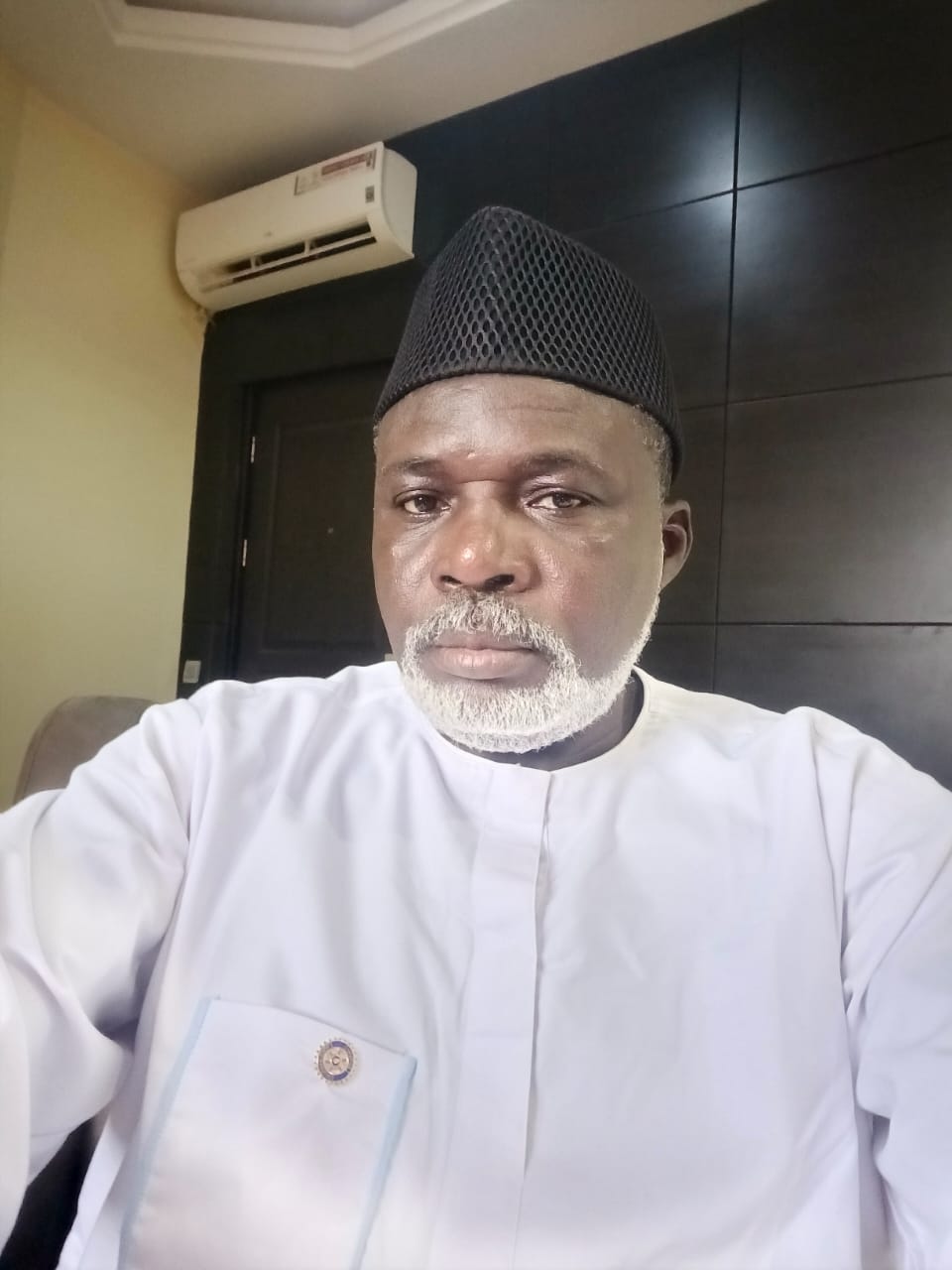
By Prince Adeyemi Shonibare
Public Affairs Analyst and Media Consultant.
Politics, like sports, produces winners and losers. Every competition cannot end with everyone carrying home a trophy, and every election cannot produce multiple winners for a single office.
At the conclusion of every democratic contest, there will be celebrations in some camps and disappointment in others.
What ultimately distinguishes a mature democracy is not the absence of defeat, controversy or disagreement, but the capacity of participants to display sportsmanship, accept outcomes with dignity, pursue legitimate grievances through lawful channels and place the collective interest of democracy above personal ambitions.
The recently concluded primaries of the All Progressives Congress (APC) have once again demonstrated both the beauty and complexity of democratic politics. Across Nigeria’s 8,809 wards, millions of party members participated in one of the most expensive and extensive internal democratic exercises ever undertaken by a political party on the African continent.
The party conducted primaries for 993 State House of Assembly constituencies, 360 House of Representatives constituencies, 109 Senate seats, governorship positions in states due for elections and the presidential ticket of the party. In practical terms, more than 1,462 legislative positions alone were subjected to democratic contests, in addition to governorship and presidential elections.
The magnitude of the exercise was extraordinary. Thousands of aspirants campaigned simultaneously across the federation. Millions of party members participated in selecting candidates. Thousands of election officials, observers, journalists, consultants, agents, volunteers and security personnel were mobilized. Ward structures came alive from the creeks of the Niger Delta to the savannah of the North, from the commercial centres of Lagos and Kano to remote communities scattered across the federation. Results were collated, disputes addressed and appeal mechanisms activated.
Yet, despite the sheer scale of the exercise, Nigeria remained peaceful.
Markets remained open. Businesses continued trading. Schools remained in session. Commercial flights took off and landed as scheduled. Public institutions functioned normally. Citizens carried on with their daily activities. The nation did not descend into widespread unrest despite the enormous political activity generated by the primaries.
That achievement deserves recognition and commendation.
Perhaps the most remarkable feature of the APC primaries was the adoption of the direct primary system, a process many observers have compared to the participatory spirit of the famous Option A4 model introduced during the political transition programme of former military President Ibrahim Babangida. Through this mechanism, political power moved beyond governors, ministers, senators and political elites and was placed directly in the hands of ordinary party members at the grassroots.
For perhaps the first time on such a nationwide scale, APC members in villages, towns, cities and communities across Nigeria were given the opportunity to directly determine who would represent the party in future elections.
The message was unmistakable.
The party belongs to its members.
Not to governors.
Not to ministers.
Not to senators.
Not to political godfathers.
Not even to the President.
But to the ordinary men and women who constitute the foundation of the party.
That is the essence of democratic participation.
Direct primaries are expensive. There is no denying that reality. Conducting elections across 8,809 wards simultaneously requires enormous financial resources, manpower, logistics and administrative coordination. Results recording materials must be distributed. Officials deployed. Security arrangements made. Results collected and verified.
Yet democracy is rarely cheap.
Participation has a cost.
Inclusion has a cost.
Legitimacy has a cost.
The reward, however, is that power becomes decentralized and decision-making is transferred from a handful of influential actors to ordinary party members.
The direct primary system compels aspirants to return to the grassroots. It forces politicians to reconnect with ordinary members. It rewards political relationships built over years rather than influence exercised from air-conditioned offices.
Indeed, one of the major lessons from the APC primaries is that money alone cannot guarantee victory in a direct primary election.
Financial resources may facilitate campaigns. They may improve logistics. They may enhance visibility. But they cannot easily substitute for popularity, grassroots structures, credibility and sustained engagement with party members.
Several prominent political figures discovered this reality too late.
Some highly placed office holders failed to secure nominations despite their visibility and influence. Some former ministers who left executive positions in pursuit of elective offices discovered that occupying public office does not automatically translate into grassroots popularity. Some lawmakers who had become accustomed to political comfort zones found themselves confronted by party members eager to exercise independent judgment.
In several constituencies and districts, party members selected candidates they considered more suitable, available and accessible to represent their interests.
That is democracy at work.
The result may be painful for some aspirants, but democracy was never designed to guarantee victory and painless.
It was designed to guarantee opportunity.
It was designed to guarantee participation.
It was designed to guarantee free choice.
The beauty of direct primaries lies in their capacity to reflect the authentic mood of the grassroots. Political history repeatedly demonstrates that it is difficult to suppress a genuinely popular candidate when ordinary voters are given direct access to the ballot.
Nigeria’s democratic experience provides perhaps the most famous example. During the historic 1993 Nigerian presidential election, widely regarded as one of the freest elections in the nation’s history, Moshood Kashimawo Olawale Abiola secured victories across regional, ethnic and religious boundaries, including areas many analysts considered politically improbable against Bashir Tofa. The election demonstrated a timeless democratic truth: when citizens are genuinely allowed to express their preferences freely, popular candidates can transcend conventional political calculations.
That lesson remains relevant today.
It is difficult to defeat a candidate who genuinely enjoys overwhelming grassroots support when party members are given direct participation. The larger the electorate, the more difficult it becomes for narrow interests to impose outcomes contrary to popular sentiment.
The presidential primary itself was historic. President Bola Ahmed Tinubu emerged as the APC presidential candidate after securing an overwhelming majority of 10.9 Million votes cast by party members nationwide.
While a party primary should never be confused with a general election, the turnout demonstrated significant organizational strength and grassroots mobilization within the party.
Many political observers have interpreted the participation figures as a vote of confidence in President Tinubu’s leadership of both the party and the government.
Equally significant was the fact that the President himself faced a challenger.
The APC did not prevent the challenger from contesting.
It did not treat the aspiration as an act of rebellion.
It did not deny him access to the democratic process.
Instead, it allowed him to exercise his democratic right to test his popularity before party members nationwide.
That is democracy.
That is inclusion.
That is confidence in democratic institutions.
Following his victory, President Tinubu emphasized unity, democratic participation and inclusiveness. In acknowledging his challenger, he reinforced the principle that democratic competition should not create permanent enemies but strengthen democratic culture.
Every political giant was once unknown.
Every governor was once an aspirant.
Every senator once sought support.
Every president once requested votes.
Democracy creates opportunities where privilege alone cannot guarantee success.
The APC National Chairman also consistently emphasized party unity, reconciliation and internal democracy throughout the process. His repeated message was that while contests may produce winners and losers, the larger family of the party must remain united after the competition.
That message remains important.
Political contests are temporary.
Political institutions endure.
One notable development that generated political discussion was the decision of Siminalayi Fubara not to seek a second-term APC ticket. According to public statements from APC leaders, he successfully passed the party’s screening process. However, for reasons known principally to himself and those within his political circle, he ultimately did not proceed with the contest. As an old African proverb reminds us, a man does not inquire too deeply into the circumstances surrounding his father’s death until he possesses the strength and wisdom to confront the answers. Politics often contains dimensions visible only to those directly involved.
Beyond politics, the APC primaries generated substantial economic activity throughout Nigeria.
Campaign offices were rented and furnished. Hotels recorded increased occupancy. Vehicles were hired. Airlines transported campaign teams. Restaurants and caterers supplied food for meetings, consultations and rallies. Event centres hosted stakeholder engagements and political gatherings.
The advertising and communications sector experienced one of its busiest periods in recent years.
Political public relations professionals, media strategists, consultants, advertising agencies, printers, graphic designers and branding companies secured contracts worth millions of naira.
Campaign posters, banners, billboards, flyers and promotional materials decorated communities nationwide. Television stations benefited from paid interviews and sponsored political programmes. Radio stations hosted campaign discussions and special broadcasts. Newspapers carried advertisements and feature articles. Online media platforms generated substantial revenue through campaign-related content and digital advertising.
Social media became a major arena of political engagement. Facebook, Instagram, X, TikTok, YouTube and WhatsApp were transformed into platforms for persuasion, mobilization and voter outreach. Content creators, digital consultants and social media managers found themselves in high demand.
Experiential campaigns flourished.
Town hall meetings.
Stakeholder consultations.
Youth engagements.
Women mobilization programmes.
Community interactions.
Ward meetings.
Political rallies.
All these activities created opportunities for event managers, decorators, photographers, videographers, sound engineers, logistics providers and countless service professionals.
Campaign merchandise flooded communities nationwide. Thousands of T-shirts, face caps, umbrellas, notebooks, calendars, shopping bags and promotional souvenirs were produced by local manufacturers. Textile suppliers benefited. Tailors secured contracts. Embroidery companies expanded production. Transportation providers moved supporters and campaign teams across communities.
From roadside printers in local government headquarters to major advertising agencies in Lagos and Abuja, countless businesses benefited from the circulation of campaign resources.
The APC primaries therefore became not merely a political exercise but also a significant contributor to economic activity and temporary employment generation.
Another issue that generated debate concerns aspirants facing investigations or court proceedings.
Here, constitutional principles must remain paramount.
An allegation is not a conviction.
An investigation is not a conviction.
A trial is not a conviction.
Under the rule of law, every citizen remains innocent until proven guilty by a court of competent jurisdiction.
Political parties are not courts of law.
They are not judicial tribunals.
They are not moral temples established to determine guilt or innocence.
Their constitutional responsibility is to facilitate political participation within the framework of the law.
Where the Constitution, electoral laws or final judicial pronouncements disqualify an individual, such provisions must naturally be respected. However, where no legal disqualification exists, the determination of guilt remains exclusively the responsibility of the courts.
To replace due process with suspicion would undermine the foundations of constitutional democracy.
As Nelson Mandela once observed, a critical, independent and investigative press is the lifeblood of democracy.
Criticism therefore has an important place in democratic society.
Complaints should be investigated.
Questions should be asked.
Transparency should be encouraged.
However, criticism must also be fair.
Achievements deserve recognition just as shortcomings deserve scrutiny.
At this point, one is reminded of the biblical admonition:
“Let him who is without sin cast the first stone.”
Before condemning an exercise involving millions of participants and thousands of contestants, critics should identify a democracy anywhere in the world that consistently conducts elections without disputes, petitions, appeals, disagreements or litigation.
Such perfection does not exist. Or it can be found in the graveyard only.
As Winston Churchill famously observed:
“Democracy is the worst form of government except for all those other forms that have been tried.”
Similarly, Barack Obama noted:
“The hallmark of a functioning democracy is not whether everybody agrees, but whether people can disagree peacefully.”
And Abraham Lincoln provided perhaps democracy’s most enduring definition:
“Government of the people, by the people, for the people.”
Even William Shakespeare understood the complexities of leadership and public judgment when he wrote:
“The fault, dear Brutus, is not in our stars, but in ourselves.”
Democratic societies succeed not because they are perfect but because they continually strive for improvement.
The APC primaries have also demonstrated a growing maturity within Nigeria’s democratic culture. Despite the enormous number of participants and contestants, democratic institutions continued to function. The republic endured. The political system absorbed disagreements without descending into widespread instability.
That is progress.
That is democratic consolidation.
At this stage, the wisdom of legendary Juju maestro Chief Ebenezer Obey becomes particularly relevant. In one of his memorable narratives, he tells the story of a father and son travelling with a donkey. When the father rode the donkey while the son walked, onlookers condemned him as heartless. When the father dismounted and allowed the son to ride while he walked, the same public condemned the son as disrespectful and the father as foolish. The lesson was profound: no matter what decision is taken, there will always be critics. Human beings are often difficult to satisfy completely.
Politics follows the same pattern.
No election will satisfy everyone.
No primary will please every aspirant.
No democratic process will escape criticism.
Leaders must therefore focus on fairness, participation, transparency and accountability, leaving posterity to render the final judgment.
However, every success story carries lessons and warnings.
The APC must not mistake success in internal primaries for guaranteed victory in the 2027 general elections.
A training session is not the same as a championship match against another formidable opponent.
Political strategists understand that internal party contests and national elections operate under entirely different dynamics. What succeeds within party structures may not automatically translate into victory against determined opposition parties in a general election.
The party must therefore avoid complacency.
It should pay close attention to voter sentiment in the South-West and other strategic regions. Political strongholds should never be taken for granted.
Loyalty grows when citizens feel respected, heard and rewarded through good governance.
The APC must also move swiftly to reconcile aggrieved aspirants and their supporters.
Politics is a game of addition, not subtraction.
Every disappointed aspirant represents supporters, associates, financiers and political structures.
Ignoring grievances can create opportunities for opponents.
That is why reconciliation is not merely desirable.
It is essential.
The leadership of the party at national, state and local levels should embark upon deliberate consultations, peace initiatives and confidence-building measures. Political bridges should be repaired before they become political fault lines.
A farmer who neglects his crops should not be surprised when another farmer harvests them.
Political parties must continually cultivate, encourage and retain their members.
Most importantly, governments at all levels must remain focused on governance.
Citizens want more security.
Citizens want more jobs.
Citizens want more stable prices.
Citizens want more quality healthcare.
Citizens want more better schools.
Citizens want more better roads and affordable mass transportation system.
Citizens want more electricity.
Citizens want more housing.
Citizens want more economic opportunities.
Citizens want more macroeconomic stability translated into better microeconomic prosperity for families, workers, traders, artisans, farmers and small businesses.
Politics is not an end in itself.
It is a means to improving the lives of the people.
In the final analysis, the APC primaries have demonstrated government of the people , by the people , for the people and that internal democracy is alive and evolving within Nigeria’s political system. They have empowered ordinary party members. They have strengthened grassroots participation. They have generated economic activity. They have reinforced democratic competition. They have highlighted the importance of sportsmanship .
Finally .
There were winners.
There were losers.
There were celebrations.
There were disappointments.
Yet above all else, one truth stands unmistakably clear.
Democracy was the ultimate winner.
Political victories are temporary.
Political defeats are temporary.
But democratic institutions endure when citizens and leaders alike respect the rules of the game.
The APC primaries have provided another opportunity for Nigeria to deepen democratic culture, strengthen internal party democracy and reinforce the timeless principle that political legitimacy ultimately flows from the people.
And in the final judgment of history—not emotion, bitterness or temporary political passions—the enduring verdict may well be that while individuals won and lost, democracy itself emerged victorious.
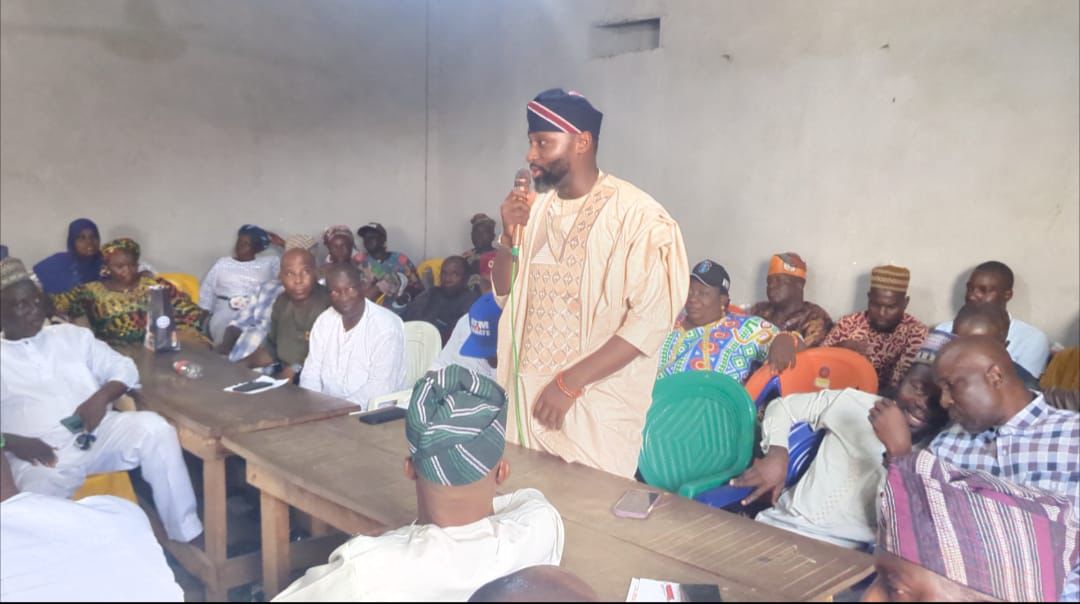
Reports from the field in Ondo North Senatorial District indicate that voters, officers, and agents at the voting centers across the wards have put Abdul Tunji Mohammed (ATM) in the lead.
According to the current figures collated from the centers, ATM is polling with wider margins of votes
Going by these figures, ATM is poised to win all the six Local Government in the Senatorial Districtt.
We urge all party members and supporters to remain peaceful as collation continues.
news
Senate Leader Opeyemi Bamidele Hosts Ondo North Aspirant Abdul Tunji Mohammed, Backs Grassroots Development Agenda
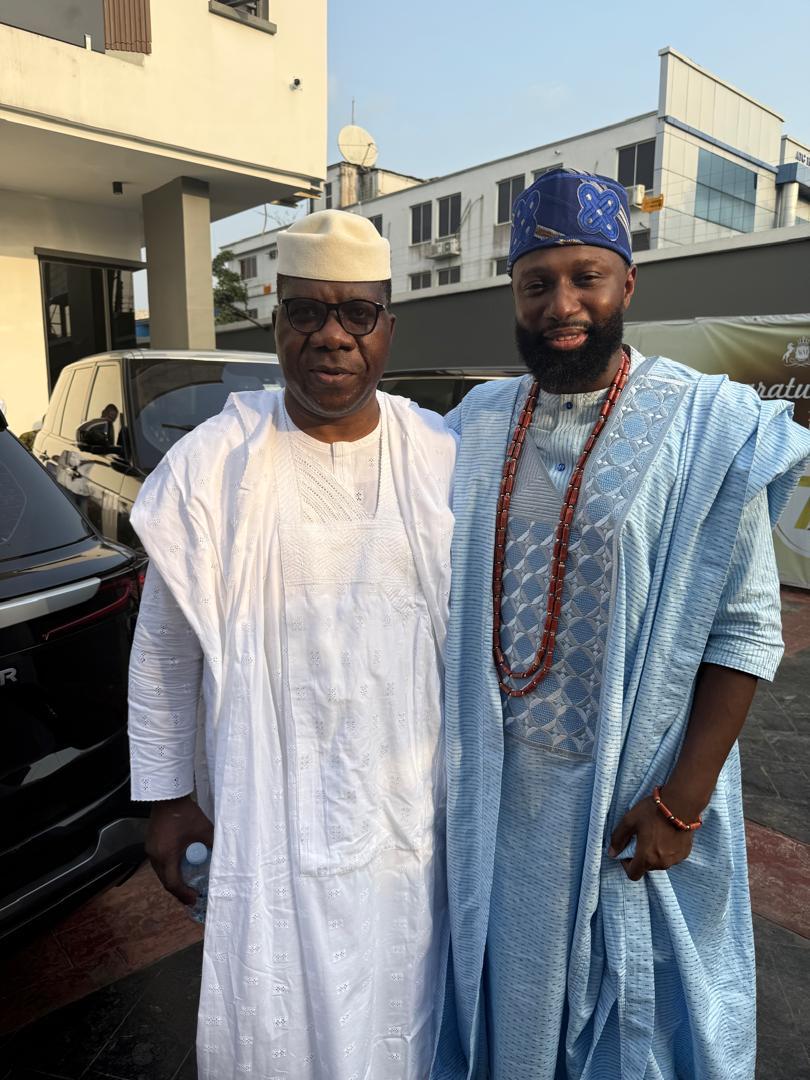
Senate Leader Opeyemi Bamidele recently hosted Chief Abdul Tunji Mohammed (ATM), a prominent aspirant for the Ondo North senatorial seat.
The meeting highlighted a strategic alignment between progressive forces, with both leaders emphasizing a shared vision for grassroots development and legislative excellence.
Senator Bamidele, a respected figure in Nigerian politics, is recognized for his contributions to national cohesion and impactful policymaking, drawing on his experience as a legal luminary and human rights activist.
Chief Mohammed, an astute businessman and dedicated grassroots mobilizer, has made a notable impact on Ondo North through his philanthropic work and commitment to constituents’ welfare. His approach blends corporate discipline, economic ingenuity, and a deep concern for people—qualities that have reshaped the region’s political narrative.
The two leaders discussed the district’s critical needs, exploring avenues for socioeconomic growth, legislative reform, and stronger community integration. Senator Bamidele stressed the importance of supporting President Bola Ahmed Tinubu’s Renewed Hope Agenda, a sentiment echoed by Chief Mohammed.
The convergence of Chief Mohammed’s vision with Senator Bamidele’s legislative experience offers hope for Ondo North. This synergy between grassroots ambition and seasoned mentorship points to a promising future for the district’s representation in the Senate. With ATM’s drive and the guidance of leaders like Senator Bamidele, Ondo North is positioned for progress and transformative governance.


- Afreximbank Deepens Commitment to Economic Progress in The Bahamas June 1, 2026
- African Electric Vehicle (EV) platform Spiro raises $215M in equity to scale electric mobility and energy infrastructure across Africa June 1, 2026
- Africa Centres for Disease Control and Prevention (Africa CDC) Statement on Attacks Against Health Facilities During the Bundibugyo Virus Disease Response in the Democratic Republic of the Congo June 1, 2026
- Putting consumers at the centre of Africa’s dairy transformation June 1, 2026
- International Rescue Committee (IRC) warns Democratic Republic of the Congo (DRC) Ebola outbreak likely far larger than official figures suggest June 1, 2026
- South Africa: Portfolio Committee on Health Marks National Cancer Survivor Day and Reaffirms Importance of Early Detection and Public Awareness June 1, 2026
- Rwanda’s RSSB Tigers Crowned 2026 Basketball Africa League Champions June 1, 2026
- Uganda: Appointments Committee Begins Vetting of Ministerial Nominees June 1, 2026
- Sudan braces for worsening child malnutrition as pre-harvest season starts June 1, 2026
- Etu Energias Strengthens Angolan Footprint, Returns to Angola Oil & Gas (AOG) 2026 as Champion Sponsor June 1, 2026
- Afreximbank Deepens Commitment to Economic Progress in The Bahamas June 1, 2026
- African Electric Vehicle (EV) platform Spiro raises $215M in equity to scale electric mobility and energy infrastructure across Africa June 1, 2026
- Africa Centres for Disease Control and Prevention (Africa CDC) Statement on Attacks Against Health Facilities During the Bundibugyo Virus Disease Response in the Democratic Republic of the Congo June 1, 2026
- Putting consumers at the centre of Africa’s dairy transformation June 1, 2026
- International Rescue Committee (IRC) warns Democratic Republic of the Congo (DRC) Ebola outbreak likely far larger than official figures suggest June 1, 2026
- South Africa: Portfolio Committee on Health Marks National Cancer Survivor Day and Reaffirms Importance of Early Detection and Public Awareness June 1, 2026
- Rwanda’s RSSB Tigers Crowned 2026 Basketball Africa League Champions June 1, 2026
-

 news6 months ago
WHO REALLY OWNS MONIEPOINT? The $290 Million Deal That Sold Nigeria’s Top Fintech to Foreign Interests
-

 society4 weeks ago
SOCIAL MEDIA IS NOT A BATTLEFIELD COMMAND – WHY THE NIGERIAN ARMY’S ACTION AGAINST JUSTICE CRACK IS A NATIONAL SECURITY IMPERATIVE
-

 celebrity radar - gossips4 months ago
Dr. Chris Okafor Returns with Power and Fire of the Spirit -Mounts Grace Nation Altar with Fresh Anointing and Restoration Grace on February 1, 2026
-

 celebrity radar - gossips6 months ago
Prophet Kingsley Aitafo Releases 2026 Prophecy: ‘Nigeria Will Rise, but the World Must Prepare for Turbulence’