
Politics
Nigeria Does Not Need Another Weak Vice President

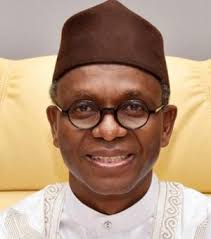
Nigeria Does Not Need Another Weak Vice President
By Omotoriogun Emmanuel

There are three fundamental principles in choosing a leader, especially when it comes to a country like Nigeria. Character, capacity, and energy are the most essential ingredients in picking a 21st century leader. This simply means that a leader in Africa’s most populous nation is expected to be a paragon of integrity, and a high flyer whose capacity in politics and public affairs must transcend both the state and federal government.
Nigeria also needs a leader that exudes energy and resourcefulness to drive the dividends of democracy to the people. And having elected Bola Ahmed Tinubu as its presidential flagbearer ahead of the 2023 election, the APC’s quest for choosing his running mate must revolve around the aforementioned qualities.
So far, three names have been shortlisted by the party for its Vice-Presidential slot. Babagana Zulum, the incumbent governor of Borno State, his Predecessor, Senator Kashim Shettima, and the current Governor of Kaduna State, Mallam Nasir Ahmad El Rufai are alleged to be the key contenders.
But which of these men has all of what it takes to become Nigeria’s next vice president? It is no longer a hidden secret that the Office of the Vice President has for a long time been something of a delightfully bland euphemism for ceremonial leadership in Nigerian politics. An office that has been occupied by a series of men lacking in capacity and ability to inspire economic and political change. Except for Atiku Abubakar whose effect was in a way felt during his time, all other vice presidents that had emerged since Nigeria’s return to democracy have been merely political spare tyres. Goodluck Jonathan for instance was rather ineffective when he occupied the second-highest office in the land, and the unfortunate demise of his principal, the late Umaru Musa Yar’Adua, which led to his enthronement as President was a vindication that occupying political offices was entirely not one of his strengths.
GEJ’s deputy, the meek and unmotivated Muhammed Sambo also had nothing of value to offer as Vice President. Then came in the amiable Professor of Law, Yemi Osinbajo—one we all expected had the X factor to switch things up. But yet again, we were offered another ceremonial figurehead—this time, a smooth great talker who, in almost eight years has been a little doer. It must be pointed out that Nigeria does not need a manager, it needs a leader, and It perforce follows that for over a decade, the tradition of non-performing attributes has pervaded largely the position of the vice presidency in Nigeria.
With that in sight, it is expected that the APC’s choice of a running mate for Tinubu must be someone viable enough to create the needed political effect. Note that Tinubu’s candidacy for the presidency has conjured up a lot of reservations among Nigerians, and if the party must clear several doubts regarding the nation’s topmost job, then it must present to Nigerians a good enough vice-presidential aspirant. Of all three, Mallam Ahmed El Rufai is by far the most qualified for the job. He is suave, he understands better Nigeria’s current reality, and he is yawningly the most detribalized northerner in the mix. The truth also remains that Babagana Zulum will not be a bad pick either, but unfortunately, he is not El Rufai.
Note that, Mallam El Rufai singlehandedly coordinated all the APC governors to support the bid for Tinubu’s Presidency. He is a man who commands more respect in the Nigerian political clime than most of his counterparts. If picked, Mallam El Rufai will be the perfect piece to the jigsaw of an APC government that is in dire need of a reformative swagger.
To many, El Rufai comes off as a man that is overly principle, but it is his kind that Nigeria needs as number two at this point of reckoning. One of the most cosmopolitan breeds from northern Nigeria, El Rufai’s public service records speaks volume. This is a man whose reformative mind transformed a large part of Obasanjo’s government, not that he was even Nigeria’s vice president at the time. As minister of the FCT, El Rufai established the Abuja Geographic Information System, creating the first computerized land register and information system in Nigeria. He led reforms in the Nigerian public service and oversaw a transformation in the Ministry of Commerce and Interior while playing a key role in the country’s national economic team.
El Rufai is a political outlier and a pragmatic statesman that can hardly go missing in the business of statecraft. It is these leadership qualities that made him share a close connection with President Obasanjo during that dispensation, one that bears semblance to the connection enjoyed by President Richard Nixon and his brilliant aide, Henry Kissinger (for those familiar with the history of 20th century US politics). It was the same connection that made Nuhu Ribadu describe Mallam El Rufai as the ‘de facto no. 2 official’, tagging him the vice president given his active contribution to Obasanjo’s government.
There is no gainsaying how Mallam El Rufai has transformed Kaduna State in the most progressive ways. Under his stewardship, the State attracted a Foreign Direct Investment (FDI) of $2.61 billion in 2021. His progressive method of cutting the cost of government to reforming the state civil service and education sector is arguably the best policy thrust embarked upon by any current governor in Nigeria. Last year, he appointed a 28-year-old into his cabinet, and he is the only governor in northern Nigeria with a deputy as a woman—Dr. Hadiza Balarabe. Note that 53% of commissioners under his aegis in Kaduna State are women—a milestone that reaffirms Mallam El Rufai’s position as an incomparable modern statesman.
If anything, the APC stands a better chance of retaining their seat in Aso Rock should they go for Mallam El Rufai as Tinubu’s running mate. This is a man who can give Nigeria 20 hours of his time daily and can create compelling connections with Nigerian youths. There is a sense that if Nigeria finds a vibrant and disciplined Vice president like El Rufai, the country may as well get it right from 2023.




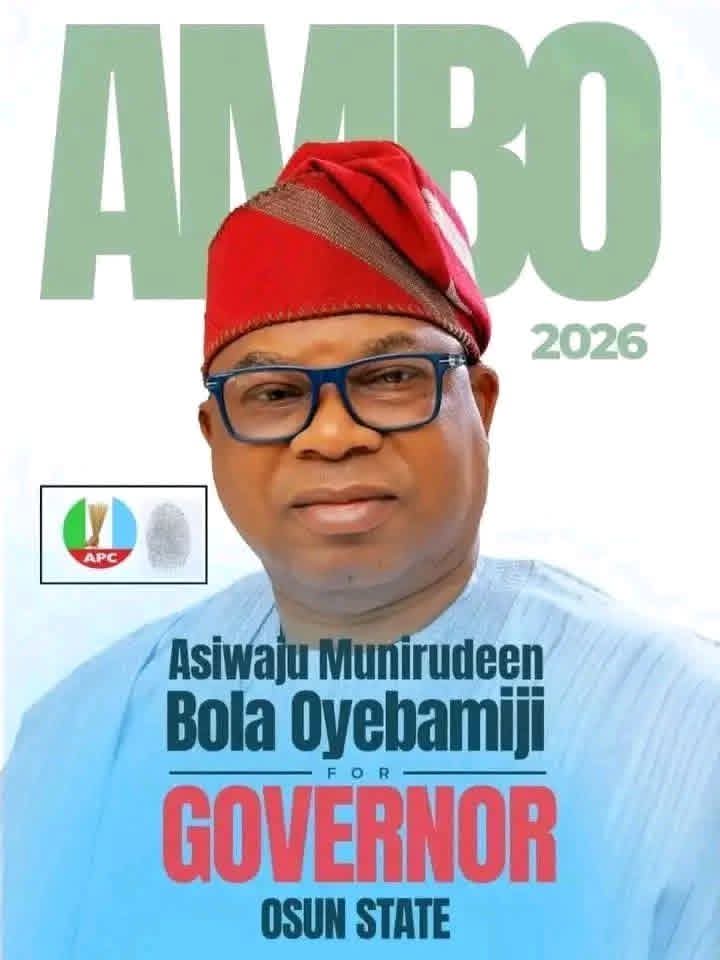
AMBO and the Osun Governorship Race: Assessing the Man, the Politics and the Vision
As political activities gather momentum ahead of the 2026 Osun State governorship election, a public affairs commentator, Oluseyi Olonade, has described the emergence of Asiwaju Munirudeen Bola Oyebamiji, popularly known as AMBO, as a significant development in the state’s political landscape.
In an article titled “Oyebamiji: The Man, The Politics and The Aspiration,” Olonade argued that the All Progressives Congress governorship hopeful possesses the character, experience and vision needed to reposition Osun State for sustainable growth.
According to the writer, Oyebamiji’s appeal stems from his extensive background in the banking sector, where he spent nearly three decades working with institutions including Wema Bank, Trans International Bank, Spring Bank and Enterprise Bank.
A native of Ikire in Irewole Local Government Area, Oyebamiji was described as a technocrat whose experience in corporate governance, finance and risk management has shaped his approach to public administration.
The article noted that his public service journey gained prominence in 2012 when he was appointed to oversee the then Osun State Investment Company Limited. Under his leadership, the organisation was reportedly restructured and transformed into Omoluabi Holdings Limited.
The writer further highlighted Oyebamiji’s tenure as Commissioner for Finance under successive APC administrations, where he was credited with managing the state’s finances during challenging economic periods.
Olonade also referenced Oyebamiji’s appointment as Managing Director of the National Inland Waterways Authority, describing it as further evidence of his administrative and leadership capabilities.
The article contrasted Oyebamiji’s governance philosophy with that of the current administration in Osun State, arguing that the APC aspirant favours institutional reforms, economic diversification and fiscal discipline.

According to the writer, Oyebamiji’s proposed agenda includes strengthening transparency in government spending, expanding internally generated revenue, attracting private-sector investments and promoting industrial and agricultural development.
The article also highlighted youth empowerment, entrepreneurship development and digital skills acquisition as key components of his vision for the state.
Olonade concluded that the forthcoming governorship election would present voters with a choice between different approaches to governance, expressing confidence that Oyebamiji’s experience and developmental agenda make him a strong contender in the race.
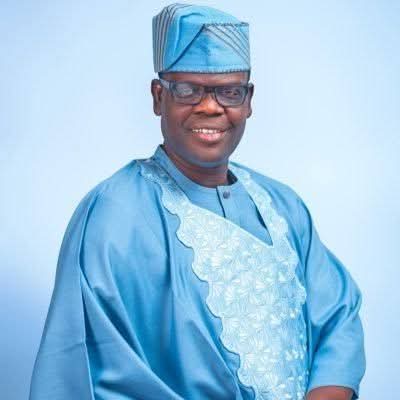
*Oselu Tiwa nTiwa Endorses Oriyomi Hamzat for Oyo Governorship*
A sociopolitical support group in Oyo State, Oselu Tiwa nTiwa, has declared its support for Alhaji Oriyomi Hamzat as the authentic governorship candidate of the Accord Party ahead of the forthcoming governorship election in the state.
The group made its position known in a statement jointly signed by its President, Mr. Adewale Oluwaseyi and Secretary, Alh. Adebayo Oyewole, on Thursday, describing Hamzat as a grassroots figure with strong connection to the people and a track record of humanitarian interventions across Oyo State.

According to the group, the endorsement followed what it described as careful observation of Hamzat’s leadership qualities, compassion and dedication to the welfare of ordinary citizens.
“Oriyomi Hamzat has consistently demonstrated empathy, courage and selfless commitment to humanity. Through his numerous interventions in the lives of ordinary citizens, he has become a symbol of hope to many families and communities,” the statement read.
Oselu Tiwa nTiwa also appealed to the national leadership of the Accord Party to prioritise the long-term future and electoral growth of the party in its decision-making process.
The group noted that Hamzat’s candidacy presents an opportunity for the party to strengthen its grassroots support base and expand its political relevance across Oyo State.
“We respectfully appeal to the National Leadership of the Accord Party to look beyond immediate political calculations and consider the bigger picture, the future growth, stability and electoral success of the party in Oyo State and beyond,” the statement added.
The group further expressed confidence in the leadership of the party, saying it believes the party’s national officers and stakeholders would take decisions that reflect fairness, inclusiveness and the collective interest of members.
While calling on party loyalists to remain calm and united, Oselu Tiwa nTiwa said continued consultations among stakeholders would help strengthen the Accord Party ahead of the election.
Signed:
Alh. Adebayo Oyewole,
Secretary.
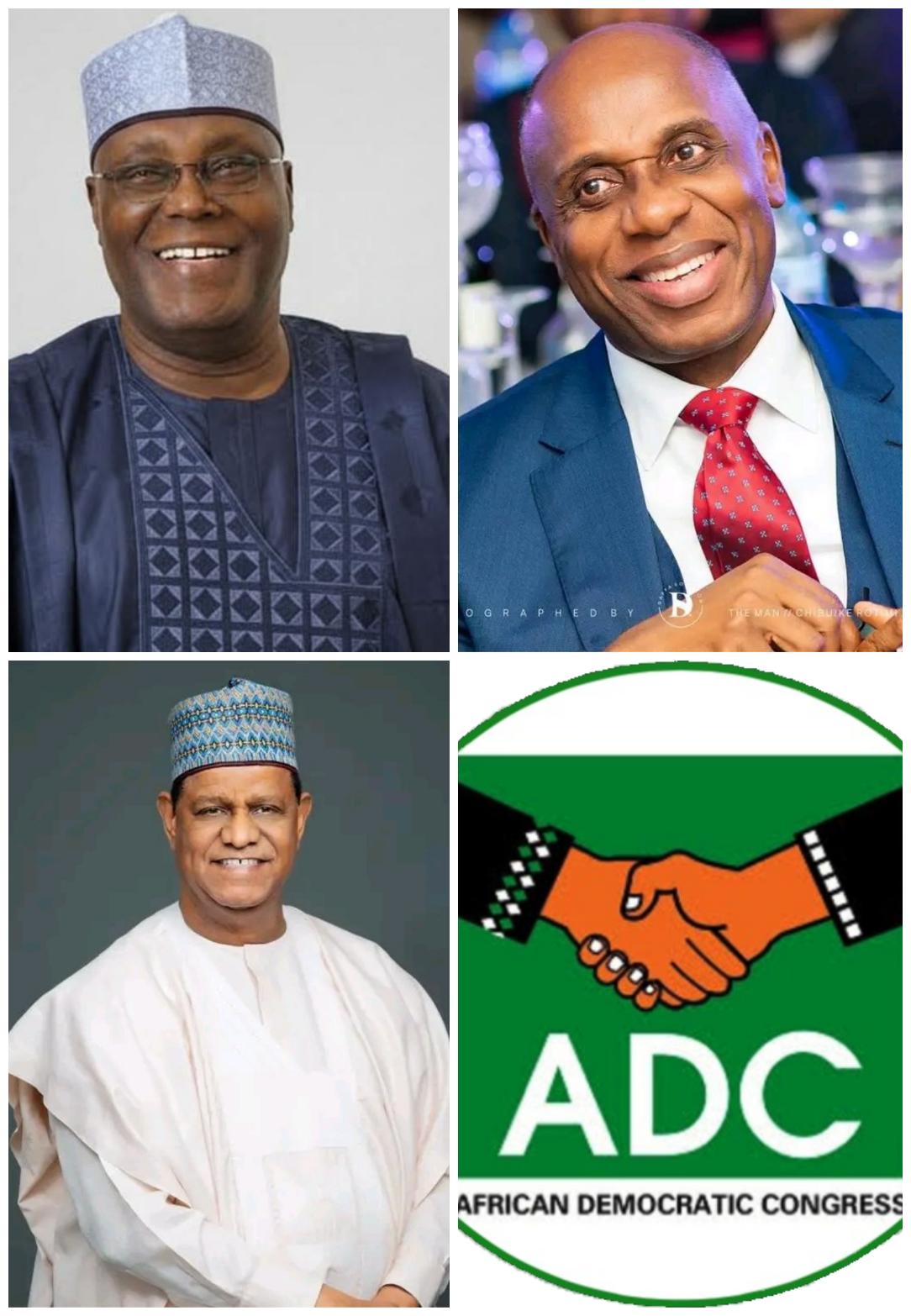
Atiku Set To Clinch ADC Presidential Ticket, Leads Amaechi, Hayatu-Deen In 34 States
Former Vice President of Nigeria and frontline presidential aspirant of the African Democratic Congress (ADC), Atiku Abubakar, is projected to emerge winner of the party’s presidential primaries, according to impeccable sources in Abuja.
The primaries, conducted across over 8,000 wards in the 36 states of the federation and the Federal Capital Territory, reportedly placed Atiku far ahead of his closest rivals — former Rivers State Governor, Rotimi Amaechi, and former Chairman of the Nigerian Economic Summit Group, Mohammed Hayatu-Deen.

Highly placed party insiders disclosed that Atiku is currently leading in 34 states, including the FCT, after securing dominance across the 19 Northern states, the five South-East states, and the six South-West states, while also maintaining a strong showing in at least three states in the South-South geopolitical zone.
The sources added that the outcome reflects what they described as “an overwhelming nationwide acceptance” of the former vice president within the opposition party ahead of the 2027 general election.
Meanwhile, the ADC leadership has invited members of the press to the official announcement of the final collated results scheduled for 11:00 a.m. on Tuesday, May 26, 2026, in Abuja.
The declaration of results is expected to be broadcast live on ARISE Television and two other major television stations, while also being livestreamed on the party’s official social media platforms on X and Facebook.
Speaking ahead of the announcement, the founding National Chairman of the ADC, Chief Ralph Nwosu, said the decision to televise the exercise live was aimed at promoting transparency and democratic accountability.
“We want millions of Nigerians at home and in the Diaspora to witness democracy in action,” Nwosu said.
He further revealed that the party leadership would encourage all three presidential aspirants to publicly embrace a peace accord and commit themselves to working together in unity for the party’s success.
According to him, the move is necessary to strengthen internal cohesion and position the ADC for victory in the presidential election scheduled for January 16, 2027.
Details later.


- Afreximbank Deepens Commitment to Economic Progress in The Bahamas June 1, 2026
- African Electric Vehicle (EV) platform Spiro raises $215M in equity to scale electric mobility and energy infrastructure across Africa June 1, 2026
- Africa Centres for Disease Control and Prevention (Africa CDC) Statement on Attacks Against Health Facilities During the Bundibugyo Virus Disease Response in the Democratic Republic of the Congo June 1, 2026
- Putting consumers at the centre of Africa’s dairy transformation June 1, 2026
- International Rescue Committee (IRC) warns Democratic Republic of the Congo (DRC) Ebola outbreak likely far larger than official figures suggest June 1, 2026
- South Africa: Portfolio Committee on Health Marks National Cancer Survivor Day and Reaffirms Importance of Early Detection and Public Awareness June 1, 2026
- Rwanda’s RSSB Tigers Crowned 2026 Basketball Africa League Champions June 1, 2026
- Uganda: Appointments Committee Begins Vetting of Ministerial Nominees June 1, 2026
- Sudan braces for worsening child malnutrition as pre-harvest season starts June 1, 2026
- Etu Energias Strengthens Angolan Footprint, Returns to Angola Oil & Gas (AOG) 2026 as Champion Sponsor June 1, 2026
- Afreximbank Deepens Commitment to Economic Progress in The Bahamas June 1, 2026
- African Electric Vehicle (EV) platform Spiro raises $215M in equity to scale electric mobility and energy infrastructure across Africa June 1, 2026
- Africa Centres for Disease Control and Prevention (Africa CDC) Statement on Attacks Against Health Facilities During the Bundibugyo Virus Disease Response in the Democratic Republic of the Congo June 1, 2026
- Putting consumers at the centre of Africa’s dairy transformation June 1, 2026
- International Rescue Committee (IRC) warns Democratic Republic of the Congo (DRC) Ebola outbreak likely far larger than official figures suggest June 1, 2026
- South Africa: Portfolio Committee on Health Marks National Cancer Survivor Day and Reaffirms Importance of Early Detection and Public Awareness June 1, 2026
- Rwanda’s RSSB Tigers Crowned 2026 Basketball Africa League Champions June 1, 2026
-

 news6 months ago
WHO REALLY OWNS MONIEPOINT? The $290 Million Deal That Sold Nigeria’s Top Fintech to Foreign Interests
-

 society4 weeks ago
SOCIAL MEDIA IS NOT A BATTLEFIELD COMMAND – WHY THE NIGERIAN ARMY’S ACTION AGAINST JUSTICE CRACK IS A NATIONAL SECURITY IMPERATIVE
-

 celebrity radar - gossips4 months ago
Dr. Chris Okafor Returns with Power and Fire of the Spirit -Mounts Grace Nation Altar with Fresh Anointing and Restoration Grace on February 1, 2026
-

 celebrity radar - gossips6 months ago
Prophet Kingsley Aitafo Releases 2026 Prophecy: ‘Nigeria Will Rise, but the World Must Prepare for Turbulence’