
celebrity radar - gossips
OBASANJO’S LETTER TO PRESIDENT BUHARI: MY TAKE HOME By Ikenna Asomba


Since Tuesday, January 23, 2018, when former President Olusegun Obasanjo released to the Press, his 20-page Open Letter to President Muhammadu Buhari, where he advised Mr. President to jettison the temptations of contesting the 2019 Presidential Elections, mixed feelings have continued to trail that letter.
In Obasanjo’s Special Press Statement, purportedly the 7th in series to Nigerian Presidents, he advised that President Buhari, in 2019, shouldn’t recontest but “join the stock of Nigerian leaders whose experience, influence, wisdom and outreach can be deployed on the side line for the good of the country.”
OBASANJO’S MAJOR REASONS
Obasanjo cited the following reasons for President Buhari not to recontest the Presidential Elections in 2019:
1. Buhari’s Failing Health
2. Insecurity/Herdsmen Menace
3. Poverty and Unbearable Socio-economic Situation
4. Poor Economic Management
5. Passing of Buck
6. Nepotism
7. Condoning Misdeeds and Corruption of close allies etc.
OBASANJO’S LETTER WRITING SKILLS SINCE 1983
Recall that Obasanjo in September 1983 wrote Civilian President Shehu Shagari and in December 1983, Shagari was ousted in a military coup.
Sometime in June 1985, he wrote Military Head of State, Gen. Muhammadu Buhari and in August 1985, Buhari was ousted in a military putsch.
Obasanjo also wrote Military President Ibrahim Badamasi Babaginda (IBB) and in 1993, IBB was forced to resign back to his Minna countryhome.
Obasanjo was critical of the General Sanni Abacha military regime and also wrote him, Abacha jailed him, and in 1998, Abacha was called to eternal glory.
Obasanjo was critical of President Umaru Musa Yar’Adua in 2009, and Yar’Adua was called to eternal glory.
Obasanjo wrote an 18-page Open Letter to President Goodluck Jonathan in December 2013 entitled, “BEFORE IT’S TOO LATE,” and in May 2015, Jonathan handed-over to an opposition party’s candidate, the first of its kind in Nigeria, and worthy of emulation.
Recently, on Tuesday, January 23, 2018, Obasanjo had written President Muhammadu Buhari in another 20-page letter entitled, “THE WAY OUT: A CLARION CALL FOR COALITION FOR NIGERIA MOVEMENT.”
LAI MOHAMMED’S DIPLOMATIC BUT DODGY RESPONSE
Following Obasanjo’s Letter, the Minister of Information, our own Alhaji Lai Mohammed, had responded on behalf of the Presidency, on Wednesday, January 24, 2018.
He listed the Achievements of the Buhari administration among which he said are:
1. Foreign Reserves peaked at $40b in about four years
2. Inflation fallen for 11 consecutive months, standing at 15.37% as at Dec. 2017.
3. Some N108 billion saved through Treasury Single Account, TSA, with N24.7 billion saved monthly.
4. N120billion saved through elimination of Ghost Workers.
5. Nigeria rose 24 places on the World Bank’s Ease of Doing Business ranking.
6. JAMB remitted N7.8 billion to the coffers of the federal government in 2016.
7. Rice farmers increased from 6 million to 12 million farmers through Anchor Borrowers’ programme making rice import from Thailand drop from 644 metric tonnes to 22,000 MT.
8. Nigeria accounts for 70% of the world’s yam production.
9. 5.2 million primary school children in 28,249 schools in 19 states are being fed daily.
10. 200,000 unemployed graduates have enlisted into the N-power Job Scheme.
11. Power Generation at 7,000mw.
MY TAKE-HOME
Without mincing words, it can’t be said that the Buhari’s administration is a TOTAL FAILURE. It’s an academic discourse to say any leadership of the country since 1960 till date, is a TOTAL FAILURE, not even the Jonathan administration which was the most criticised in this nation’s history.
As one who has covered press conferences addressed by Alhaji Lai Mohammed in the past, I must say that the press statement read by him on Wednesday, in Abuja, had a diplomatic tone, but was dodgy and nicodemusly a sneer at the messenger (Obasanjo).
Throughout the reading out of the press statement, unlike the Alhaji Lai Mohammed I know and have covered in the past, he was so Ashamed to look into the tv and still cameras or the faces of the Pressmen he was addressing. Rather, he stayed eyes glued at his paper. Perhaps he must have been soliloquizing that he was lying to himself.
The indices and statistics reeled out by Alhaji Lai Mohammed don’t show in the current Socio-economic realities across the country.
The statement was dodgy. The more it tried to tackle the seven major issues raised by Obasanjo, the dodgy it sounded.
Saying Obasanjo may be too busy to notice the economic achievements of the Buhari administration is nicodemusly sneering at the former President, as if he (Obasanjo) was a globetrotter who do not live in Nigeria or have poor relations who buy from the Nigerian markets.
1. Buhari’s Failing Health: Alhaji Lai Mohammed failed to tackle this issue in his press statement. He failed to tell Nigerians if Buhari’s old age and failing health can carry him or allow him tackle the enormous challenges of governance confronting Nigeria. 2015 till date tells us more. Needless over flogging the dead horse.
2. Insecurity/Herdsmen Menace: Alhaji Lai Mohammed also failed to convince us on what the Buhari administration is doing to tackle this issue of armed Fulani Herdsmen menace who have been running over, burning down and killing innocent men, women and children in sleepy villages, particularly in Southern Kaduna, Benue, Taraba, Plateau, Kogi, Nasarawa, Enugu etc.
3. Poverty and Unbearable Socio-economic Situation: All the indices reeled out by Alhaji Lai Mohammed you would all agree don’t show in the lives and standards of living of average Nigerians since 2015. The prices of essential goods and services have skyrocketed steeply. A bag of rice which sold for N7,500 in 2014 now sells for N14,500 as I write.
Petrol pump price which in 2015 officially sold for N87/litre and N100 at the Black Market, now officially sells for N145/litre and N200/litre at the Black Market as I write.
When former President Jonathan reduced petrol pump price from N97/litre to N87/litre in 2014, Alhaji Lai Mohammed told the world it was “MERE TOKENISM,” as oil price had globally crashed to $50/barrel.
Laughable as it was, reacting on behalf of the then opposition All Progressives Congress, APC, Alhaji Lai Mohammed had said in a statement that the new price of petrol was “mere tokenism at a time the price of crude oil has crashed by about 60 percent.”
The APC had urged the Jonathan government to immediately cut the price of petrol to N70/litre.
Recall that Buhari’s man-Friday and former Minister of Petroleum under Buhari 1983-1985, Prof. Tam David-West, had during the campaign era in 2015 vowed that under Buhari’s Presidency, petrol would sell for N40/litre.
What’s happening today? Nigerians are paying through their noses just to get Petrol. Even with their money, they still can’t get the essential product with ease. I weep for Nigerians.
What of the Exchange Rate? In 2015, the U.S. Dollar officially exchanged for N197/$1. Now it exchanges at N305/$1 and N364/$1 at the Black Market as I write. President Buhari during campaign had purportedly promised to make $1 to exchange at N1. Where are we today, despite claims of an increased Foreign Reserves. I weep for Nigeria.
According to the National Bureau of Statistics, NBS, over 16million Nigerians have lost their jobs since 2015. Banks and many companies have continued to downsize their staff strength. Many a companies and Media Organisations can no longer pay staff salaries, allowances, pensions and gratuities. As I write, most Media Organisations are owing their staff for over 7 months. A lot of businesses have closed shops.
What this means is that the claim by Alhaji Lai Mohammed that Nigeria under Buhari moved 24 places up the ladder in Ease of Doing Business is only on paper.
These are the Top 10 Indicators used in rating the Ease of Doing Business in Sub-Saharan Africa and Globally:
1. Starting a Business
2. Dealing with Construction Permits
3. Getting Electricity
4. Registering Property
5. Getting Credit
6. Protecting Minority Investors
7. Paying Taxes
8. Trading across Borders
9. Enforcing Contracts
10. Resolving Insolvency.
Quite unfortunately, Nigeria is no where among the top 10 in Sub-Saharan Africa, despite having the largest market. The so-called giant of Africa is no where found in the comity of over 46 Sub-Saharan African nations in the Ease of Doing Business (2015-2016).
Smaller nations like Mauritius, Rwanda, Kenya, Botswana, South Africa, Zambia, Seychelles, Lesotho, Namibia, Malawi, Swaziland, Ghana, Uganda, Cape Verde, Tanzania, Mozambique, Côte d’Ivoire, Senegal, Mali, Niger and 13 others outpace Nigeria in the Ease of Doing Business in Sub-Saharan Africa.
That smaller African nations as captured above have outpaced Nigeria in the Ease of Doing Business should really throw us all into sober reflections, particularly, ahead of 2019. I weep for this nation.
Even the rich have also been crying over the current socio-economic realities. Need I over-flog this issue?
4. Poor Economic Management: Look, not only did Nigeria get into Recession in 2016, we also got into Depression. Why did it take Buhari over six months to form a cabinet and economic team? President George Weah of Liberia just recently sworn-in, hit the ground running within 24 hours by forming his cabinet. This is purposeful leadership.
When concerned Nigerians asked Buhari in 2015 to form his cabinet as soon as possible as the future is bleak, they were called Wailing Wailers. At a point, Buhari said Ministers were Noise Makers that the actual jobs in Ministries are done by Permanent Secretaries. Even when he finally formed his cabinet six months after, he surrounded himself with self-serving politicians and poster boys for corruption. Needless mentioning names. But how far today? I weep for Nigeria.
5. Passing of Buck: President Buhari has never taken charge of his gaffes, flip-flops and misgovernance. He has always blamed past administrations, anybody but not him. No true leader does that. President Buhari, after two years recently appointed over 9 dead persons into boards of parastatals and agencies. As usual, he blamed it on others not him. This is Rudderlessness of the highest order. I weep for Nigeria.
6. Nepotism: In 2015, President Buhari formed his kitchen cabinet with Northernerns- his kinsmen occupying almost all positions. He appointed Service Chiefs, same lane of Nepotism was trailed. He made other appointments tilted towards a Northernisation Agenda. The entire security aparati of a secular country like Nigeria is all North, yet Buhari never budged despite the outcry by many a concerned Nigerians. I weep for Nigeria. Little wonder the Indigenous People of Biafra, IPOB can be tagged a Terrorist Group, but the Murderous Fulani Herdsmen under the umbrella of Miyetti Allah Cattle Breeders Association of Nigeria, MACBAN, are not Terrorists and are untouchable. NEPOTISM is the cause of this tragedy. I weep for Nigeria.
7. Condoning Misdeeds and Corruption of close allies: Obasanjo, like many of us had done in the past, even dating back 2015, raised the issue of Buhari condoning the misdeeds and corruption of his allies.
By and large, Alhaji Lai Mohammed unfortunately dodged all these pertinent issues raised by Obasanjo in his Open Letter. I now ask, who is deceiving who?
Well, for time constraint here is the link of my views about these issues as I shared on TVC News at 10.00am on Thursday, January 25, 2018.
Happy Viewing!
Ikenna Asomba is a Journalist/Social Commentator.




celebrity radar - gossips
Adron Homes Celebrates Visionary Chairman, Aare Adetola Emmanuel King, at 51
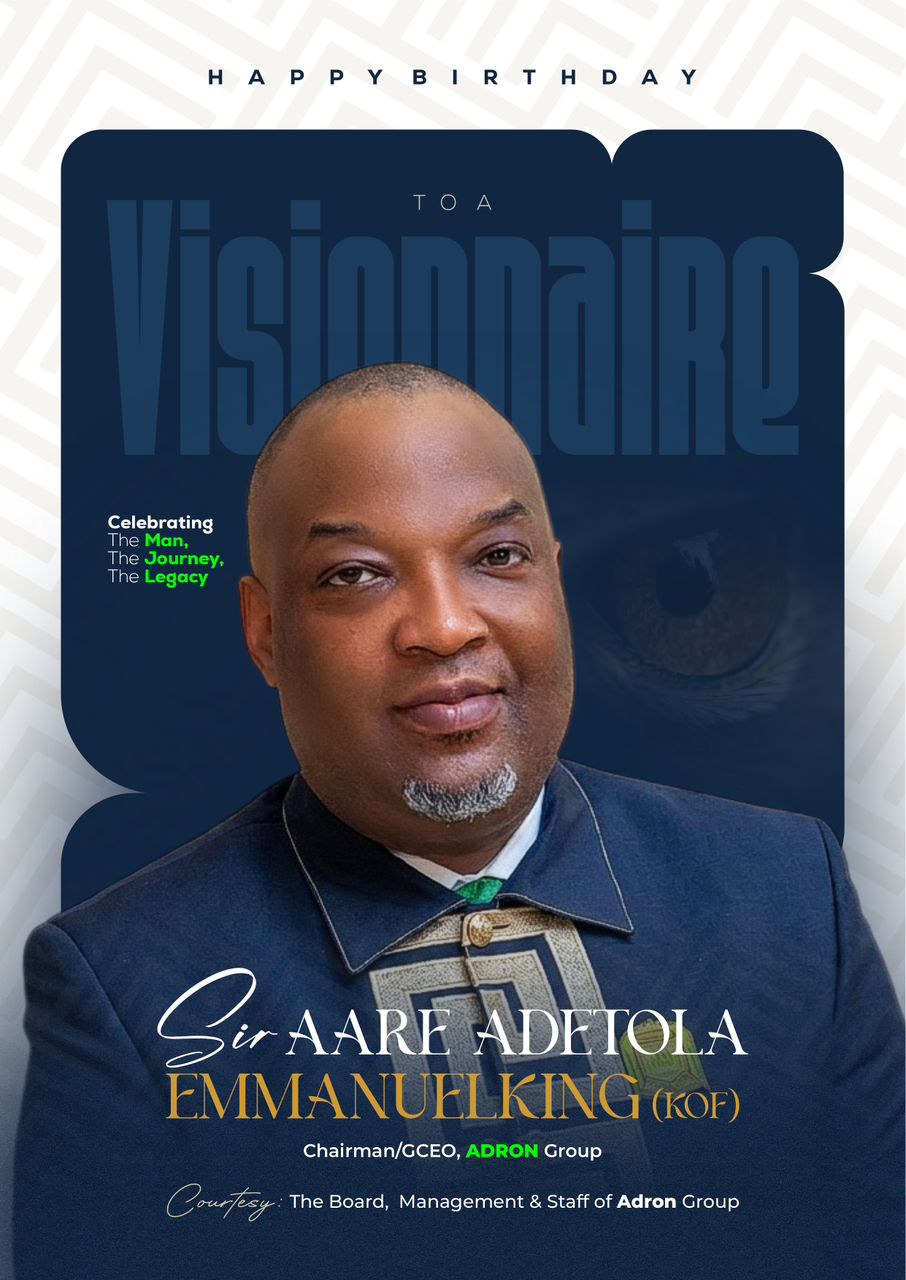
Adron Homes Celebrates Visionary Chairman, Aare Adetola Emmanuel King, at 51
The management and staff of Adron Homes and Properties Limited have joined family, friends, associates, and well-wishers across the globe to celebrate their Chairman and Chief Executive Officer, Aare Adetola EmmanuelKing, as he marks his 51st birthday.

In a statement released by the company, the milestone was described as a celebration of an exceptional leader whose vision, resilience, and entrepreneurial brilliance have not only transformed Adron Homes into a household name in Nigeria’s real estate sector but have also redefined affordable housing across the country.
Under his dynamic leadership, Adron Homes has continued to expand its footprint, delivering value-driven residential solutions while empowering thousands of Nigerians with opportunities for home ownership. His commitment to excellence, innovation, and customer satisfaction has remained the driving force behind the company’s sustained growth and industry leadership.
The statement further highlighted Aare EmmanuelKing’s passion for nation-building and community development, noting his significant contributions to job creation, youth empowerment, and the promotion of socio-economic development through real estate investments.
“As a leader, mentor, and visionary, Aare Adetola EmmanuelKing has consistently inspired a culture of excellence, integrity, and dedication within the organization. His ability to turn bold ideas into reality continues to position Adron Homes as a trailblazer in the industry,” the statement read.
The company expressed profound gratitude for his steadfast leadership and prayed for continued wisdom, strength, and sound health as he embarks on another year of impactful achievements.
As he celebrates his 51st birthday, the entire Adron Homes family proudly honours a man whose legacy continues to shape the future of real estate in Nigeria.
Happy 51st Birthday, Aare Adetola EmmanuelKing!
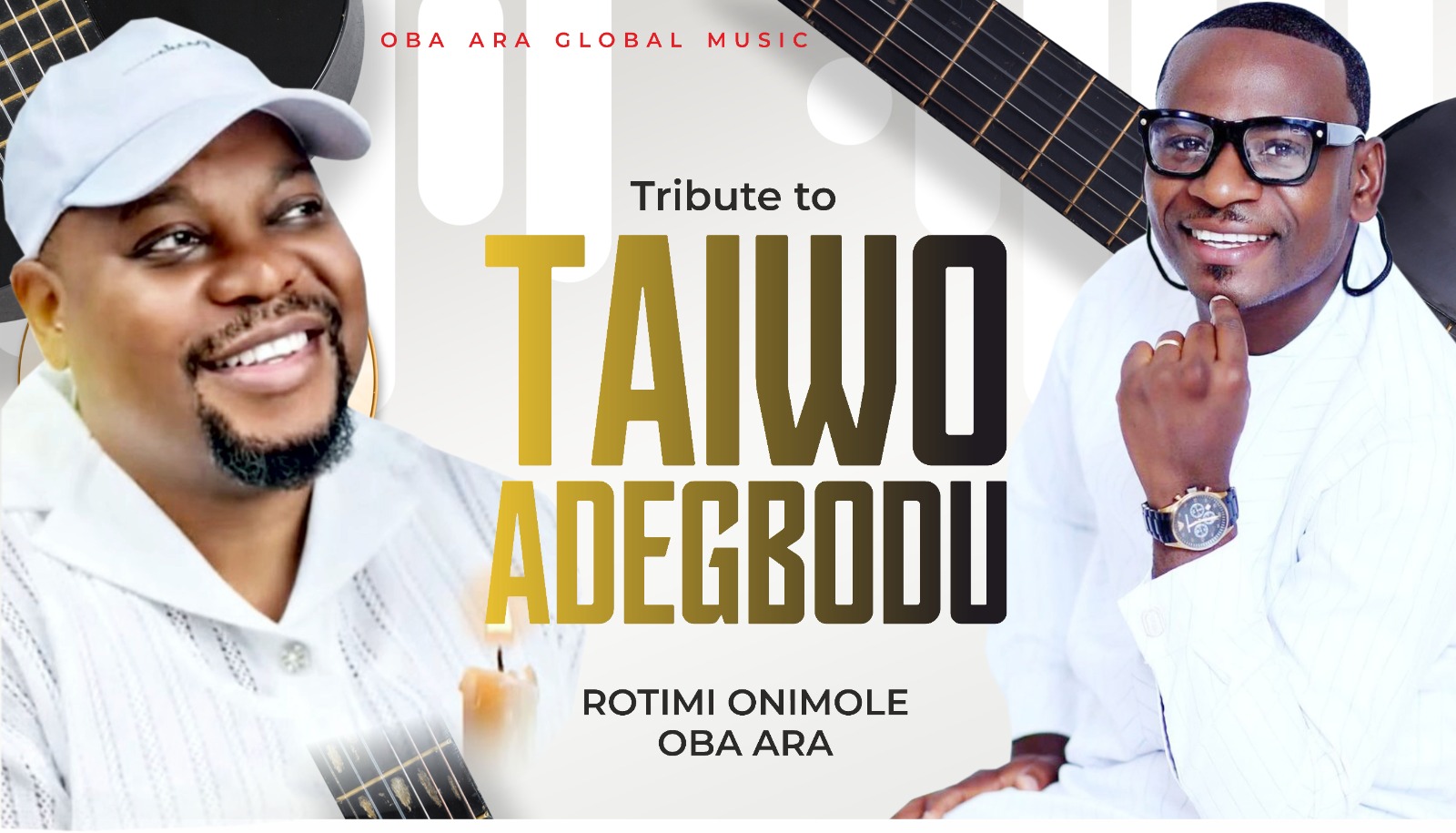
Oba Ara Releases Emotional Tribute to Late Taiwo Adegbodu
Taofik Afolabi
The gospel music community continues to grieve the painful loss of Taiwo Adegbodu, a beloved figure whose sudden departure left a deep void among fans, colleagues, and loved ones. In response to this loss, renowned gospel minister Rotimi Onimole, popularly known as Oba Ara, has released a moving tribute song that captures both the sorrow of the moment and the enduring legacy of the late singer.
Oba Ara, a proud son of Isale Eko, channels raw emotion throughout the song, using heartfelt lyrics and soul-stirring melodies to reflect on his personal connection with Taiwo Adegbodu. In the tribute, he openly expresses how deeply the news of Adegbodu’s passing shook him, describing it as a painful and unexpected loss that is difficult to come to terms with.
The song goes beyond mourning, it celebrates the life, ministry, and impact of Taiwo Adegbodu. Oba Ara highlights the late artist’s dedication to spreading the gospel through music, his inspiring voice, and the spiritual influence he had on many within and beyond Nigeria. Through powerful verses, he paints a picture of a man who lived for God and touched countless lives through his ministry.
Listeners have described the tribute as both comforting and deeply emotional, as it resonates with the collective grief of the gospel music community. It serves as a reminder that although Taiwo Adegbodu is no longer physically present, his music, message, and legacy will continue to live on.
In honoring his late colleague, Oba Ara not only pays his respects but also offers a source of healing for fans and fellow ministers, using music as a tool to process grief and celebrate a life well lived.
celebrity radar - gossips
Buratai, Fagbemi , Shagaya, Olofa, Others Eulogise Olowu Kuta’s Olori On 60th Birthday, Foundation Launch
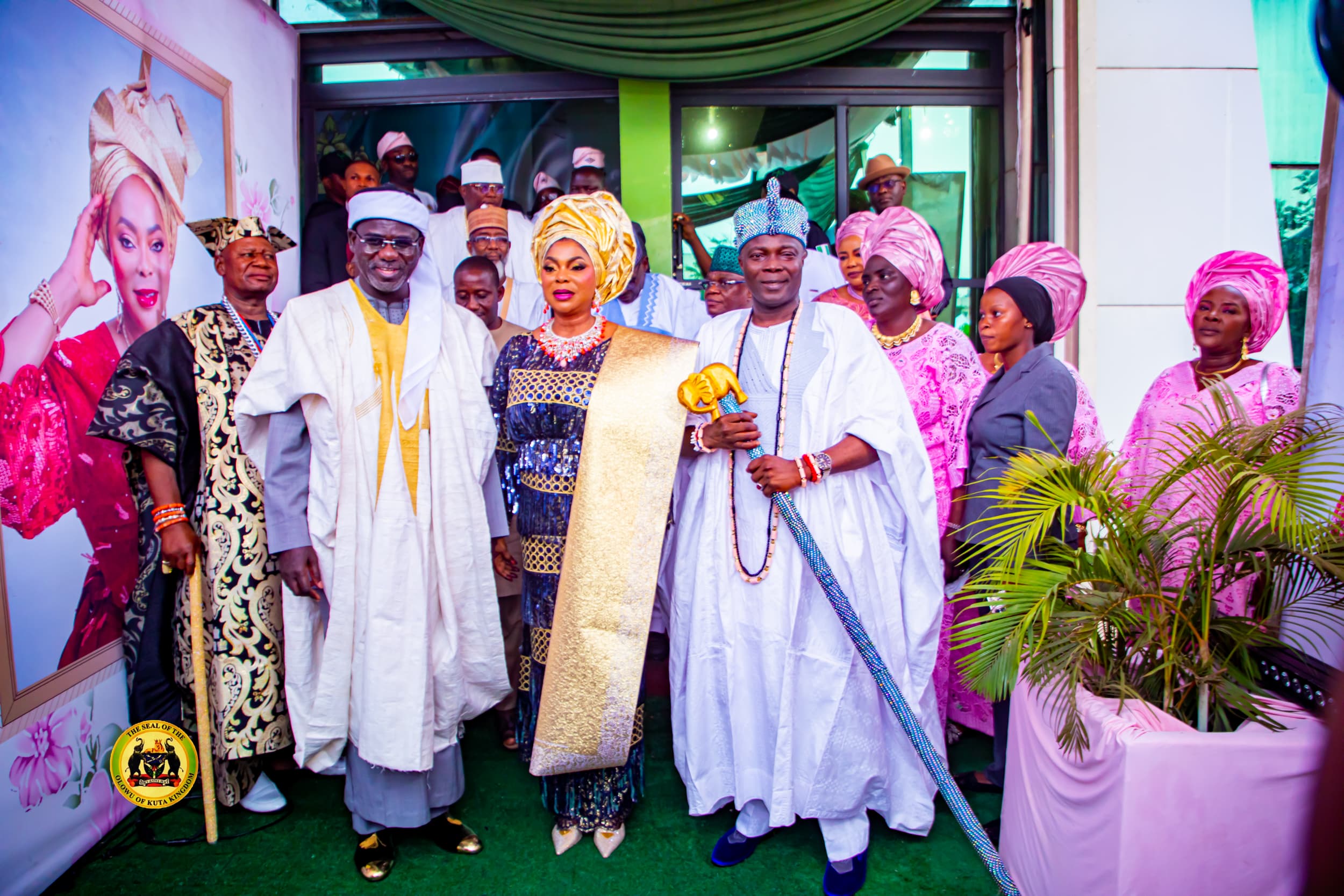
Buratai, Fagbemi , Shagaya, Olofa, Others Eulogise Olowu Kuta’s Olori On 60th Birthday, Foundation Launch
Eminent personalities across the Nigeria stormed the TFK Event Centre, Bala Mohammed Way, Guzape, Abuja, to celebrate the 60th birthday of Olowu Kuta’s Olori, Queen Jumai Amoke and her Foundation Launch on Saturday 28, March 2026.

From former Chief of Army Staff, Lt Gen TY Buratai rtd, to the Minister of Justice and Attorney-General of the Federation, Prince Lateef Fagbemi; Olofa of Offa, HRM Oba Mufutau Gbadamosi. Even top businesswoman and socialite, Chief (Mrs) Bola Shagaya, was in attendance.


Other dignitaries were newly promoted Deputy Inspector-General of Police and former AIG Zone 2 , Lagos , Adegoke Fayoade, Major General Abdumalik, Major General Samuel Adebayo rtd (Fmr CDI);
Major General Anthony Omozoje rtd (Fmr Copp);
Alhaji Tajudeen Owoyemi (Asiwaju of Offa and CEO Radisson Hotel Nigeria;
Dr Waheed Olagunju, former managing director of Bank of Industry, Oniba of Iba, Lagos State, HRM Oba Dr Suleiman Raji ;
Justice Falola, Olu of Ile-Ogbo , Oba Adetoyese amongst many traditional rulers and captains of industry too numerous to mention.
Speaking at the occasion, the Chief Host, Olowu of Kuta, HRM Oba Dr Adekunle Oyelude Makama, CON , Tegbosun iii, who is also the husband of the celebrant commended Queen Jumai for ‘ her slender arms full of kindness’ to establish such humanitarian Foundation, ‘Amoke Children and mother in Need Foundation’ at a time Nigerians are going through economic crisis occassioned by the global meltdown.
Olowu also commended her steadfastness and love for the less privileged and downtrodden.
The monarch refrenced the task before his wife’s humanitarian gesture said her best is yet to come.
” Olori Amoke Jumai, I celebrate you. You will celebrate 70, 80, 90 and continue to shine as you continue to put a smile on people’s faces. I love you, “Olowu Kuta added.
To Lt Gen Buratai, a former army chief and former Nigerian Ambassador to Benin Republic, the reward of hard work is more work.
Buratai, who also doubles as Balogun Agba of Owu Kuta, a chieftaincy title reserved for a generalismo congratulated Queen Jumai for attaining the age of 60 in good health.
The retired army General said he’s not surprised by the turn out of eminent personalities across the country to celebrate the Olowu Kuta’s Olori because she merited it through her hospitality to all, adding that Allah the most merciful, most beneficial would accept all her act of ibadah.
The minister of Justice, Prince Fagbemi, was full of praises for Queen Jumai for deeming it fit to have a place in her heart to accommodate the needy and less privileged in ‘our society.’
Prince Fagbemi urged the guests to contribute generously to support the Foundation in order to continue to alleviate poverty and put a smile on the faces of the people.
” I congratulate you on your 60th birthday and Foundation Launch. I wish you many happy returns of the day and many more fruitful services to the country and motherland”, Prince Fagbemi added.
The celebrant, Queen Jumai who was grining from ear to ear thankfully said she was excited by the turn out and the response of the people to her foundation.
Queen Jumai, however, promised to continue to use her resources and donations received for the good of the needy and less privileged in the society.
” I want to appreciate my own Kabiesi Olofa of Offa , for his presence and im I’m using him as a point of contact to all other Kabiesis present here, the minister of justice and Attorney-General, you’re welcome, sir; Mrs Bola Shagaya, I salute your enterprise, Lt Gen Buratai, I’m grateful, sir; DIG Fayoade, Justice Falola and other dignitaries too numerous to mention, I thank you, all. To my darling husband, Kabiesi Olowu , I thank you immensely for your support. And to my family and friends, I thank you , all. E se pupo!”, she said.


-

 society7 months ago
Religion: Africa’s Oldest Weapon of Enslavement and the Forgotten Truth
-

 news4 months ago
WHO REALLY OWNS MONIEPOINT? The $290 Million Deal That Sold Nigeria’s Top Fintech to Foreign Interests
-

 society6 months ago
“You Are Never Without Help” – Pastor Gebhardt Berndt Inspires Hope Through Empower Church (Video)
-

 celebrity radar - gossips2 months ago
Dr. Chris Okafor Returns with Power and Fire of the Spirit -Mounts Grace Nation Altar with Fresh Anointing and Restoration Grace on February 1, 2026
You must be logged in to post a comment Login
You must log in to post a comment.