
Politics
Ogun Clears Air On LG Funding, Says N1.8bn Invested In Executing Projects in Councils

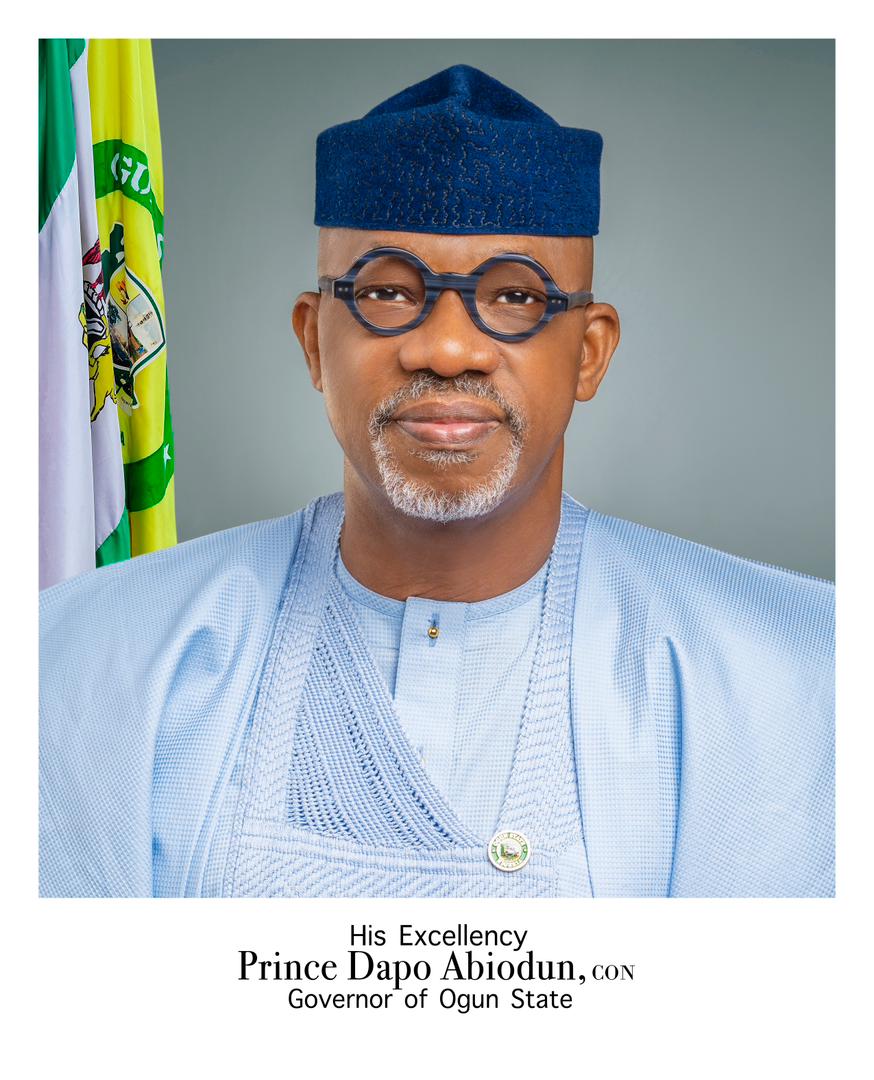
Ogun Clears Air On LG Funding, Says N1.8bn Invested In Executing Projects in Councils
Ogun State Government on Friday gave further insights into local government administration and funding, demonstrating its commitment to the development of the third tier of government.
At a press conference addressed by the Secretary to the State Government (SSG), Mr Tokunbo Talabi, and Economic Adviser and Commissioner-designate, Mr Dapo Okubadejo, held at the Olusegun Osoba Press Centre, Governor’s Office, Oke-Mosan, Abeokuta, the government said the process of funding local governments in the state is transparent, open and in line with constitutional provision through the Joint Account Allocation Committee (JAAC).
The government noted that it has been augmenting allocations meant for local governments in the state from the federation account due to shortfalls occasioned by COVID-19 and the economic downturn in the country.
According to Mr. Talabi, at no time was there any disagreement between the chairmen of the local governments and the state government.
He denied any diversion of statutory allocations and zero allocation, insisting that the present administration has been transparent, accountable, just and equitable in spreading developmental projects to all parts of the State with inputs from local government chairmen in the last few years.
The SSG said the government routinely sends money to the councils to execute some projects to better the lots of the people at the grassroots.
“Up to date, the state government has provided over N1.8 billion for all these local governments to do independent projects, in addition to whatever the state government has done, in addition to whatever the federal government has done and in addition to funding the deficit.
“The concept of zero allocation has not taken place. Otherwise, how have we been paying the teachers? How have we been paying the healthcare workers? How have we been paying the traditional council? How have we been paying the pensioners? How have we been paying the local government staff themselves? How is the chairman getting paid all these years? And then, we have what is called the security vote for the chairman.

“Because we are in an environment where people want to see what you have done, His Excellency, from time to time, makes money available to each of these local governments so that they do some community-based projects; projects that are closer to them.
“At the beginning of this administration, His Excellency asked the local government chairmen and other stakeholders to present three roads that are more important to them in the order of priority. That is why this administration can boast today that it has executed projects in all local governments. And these were not done without the consent and inputs of the local government operatives,” he said.
Giving more insight into the workings of the Joint Account Allocation Committee (JAAC), the Economic Adviser, and Commissioner-designate, Mr. Dapo Okubadejo noted that JAAC is a statutory and legal instrument that operates in other states.
Speaking on the process of fund allocation, Mr Okubadejo said: “The process of local government account, financing or funding started many years ago, with the introduction of what we refer to as the Joint Account Allocation Committee. That’s the body that is responsible for the administration and the management of the local government direct allocation from the federal government.
“When His Excellency took over the administration in 2019, and because of his pledge to be accountable and also be transparent, the Joint Account Allocation meeting started not long after that. That meeting is the one that is held every month. It is this administration that commenced, after a long time, the organization of the Joint Account Allocation meeting every month on the allocation of funds from the federal government to the local government and also the distribution of it.
“And that meeting comprises of representatives of local government chairmen and all the regular stakeholders in local government administration. So, you have local government chairmen, the association of pensioners, members of the traditional council and all other members that are seated every month at the Oba’s Complex to discuss every month, how much comes in for local governments and how that money is distributed.
“Now, the process is that the Joint Account Allocation Committee account is a completely separate account from the state government’s accounting process. It is managed and administered by different sets of staff that are involved in local government administration in the Ministry of Local Government and Chieftiancy Affairs.
“The account and signatories are separate from the State government. The Accountant General and the Director of Treasury are not signatories to the JAAC.
“On a monthly basis, the Local Government Service Commission prepares the vouchers of salaries and allowances of local government staff, SUBEB prepares that of all primary school teachers, Bureau of Local Government Pensioners prepares that of Pensioners, Ministry of Local Government and Chieftaincy Affairs prepares that of traditional council members.
“All the data prepared by all these bodies are sent to the Ministry of Local Government and Chieftaincy Affairs, where they are reviewed, collated, and validated. These figures are referred to as First Line Charges. The figures are taken to the JAAC meeting, and once the allocation comes from Abuja, with respect to the JAAC, they disclosed the amount at the meeting as money for Ogun State local government funding. They table all the distributions, which are the First Line Charges, and distribute on local government to local government basis.”
Okubadejo gave further clarification on the state government’s intervention to the local governments allocations to the 20 local governments.
In 2020, N43.121 billion was budgeted for First Line Charges, while N34.750 billion was received from the federation account for the 20 local government areas, leaving a deficit of N6.619 billion.
The commissioner-designate also noted that the total allocation released for local governments in 2021 was N38.723 billion, while payment for First Line Charges was N47.845 billion.
In 2022, N48.074 billion was the total allocation for the local governments from the federation account, while N54.182 billion was the actual amount needed to pay First Line Charges…
“As we were getting into 2023, just for this administration alone, we were coming with a deficit that the state government has paid for of almost N17.4 billion,” he said.
He acknowledged that in January 2023, N7.6 billion was received as against the N7.221 billion total First Line Charges, leaving a little surplus.
In February, it went back to the normal trend, which was lower JAAC allocation and higher First Line Charges of N3.79 billion and N4.3 billion. The same thing in March and April.
In May, he said there was an increase of N6.348 billion to that of First Line Charges of N4.531 billion.
“Now, when you look at the total carried forward as of July just from 2019 to July 2023, you will see that there is a deficit of N13.591 billion.
“The state government covers this deficit because it affects the salaries and pension of local government staff, primary school teachers, health workers, and traditional council members.
“Again, you recall that about two years ago, His Excellency promised that he was going to be paying N500 million every quarter to clear the backlog of gratuities from 2011, which has now been increased to N1 billion for both state and local government staff. And, paying the local government portion of the gratuities is an addition to the state government’s intervention.
“In addition to that, the governor also directed that certain quarterly allocations should be made directly to local governments for them to undertake certain developmental projects.
“When people talk about zero allocation being distributed, they should be enlightened to know that they cannot talk about allocation in isolation of the First Line Charges which is the first thing that must be paid in local government allocation,” he added.
Answering a question on Ecological Fund, the Commissioner-designate, said the fund is periodical as it is credited into the state and local account through JAAC. He stated that the fund has a high level of oversight as it is meant for flood control, afforestation, and clearing of drainages, among others.




*Rainbow Coalition Ambassadors Hails Rivers APC Over Peaceful Conduct of Guber Primaries*
Charges Chinda to Be Magnanimous in Victory as a Patriot
The Rainbow Coalition Ambassadors (RCA) has commended the All Progressives Congress (APC) in Rivers State for the peaceful and orderly conduct of its governorship primaries, describing the process as a shining example of political maturity and a departure from the state’s history of acrimonious contests.
In a statement signed by Comrade Jude Chuks and issued shortly after the declaration of Rt. Hon. Kingsley Ogundu Chinda as the party’s candidate for the 2027 governorship election, the group praised the APC leadership and stakeholders for ensuring a rancour-free exercise.
The Rainbow Coalition Ambassadors, a prominent support structure aligned with the broader Rainbow Coalition political movement in the state, noted that the smooth conduct of the primaries reflects growing commitment to unity, dialogue, and collective progress ahead of the 2027 polls.
“We congratulate the Rivers State APC for conducting a credible, transparent, and peaceful primary. This achievement underscores the maturing democratic culture in our state and sets a positive tone for the political season,” Chuks read.
The group specifically hailed the withdrawals of key aspirants, including Governor Siminalayi Fubara and Tonye Cole, which paved the way for Chinda’s emergence, describing the moves as “statesmanlike decisions taken in the supreme interest of peace and party cohesion.
While celebrating the outcome, the Rainbow Coalition Ambassadors charged the new flag bearer to remain magnanimous in victory and demonstrate the spirit of a true patriot.
“Victory at the primary is not an end in itself but a call to higher responsibility. We urge Hon. Kingsley Chinda to extend a hand of fellowship to all other aspirants, stakeholders, and even those outside the APC.
“True leadership demands inclusivity, humility, and the ability to heal divides rather than widen them,” the ambassadors emphasised.
They further appealed to Chinda to prioritise broad-based consultations, youth and women inclusion, and the welfare of Rivers people in his campaign and future governance plans, noting his legislative experience and cross-party relationships as key assets.
The group, however, expressed optimism that, knowing Chinda’s antecedents as a seasoned lawmaker, bridge-builder, and consistent advocate for good governance, he will unify the party, foster inclusive development, and deliver people-oriented leadership that prioritises the welfare of all Rivers people across party lines.
Obasa Warns Dissidents as Agege Affirms Hamzat as APC governorship candidate
Speaker of the Lagos State House of Assembly, Rt. Hon. Mudashiru Obasa, has issued a strong warning to dissidents within the All Progressives Congress, APC, that are spreading false reports about the House of Assembly primaries held Wednesday, May 20 across all the wards in the local government.
Supervising officers from the Independent National Electoral Commission (INEC) announced the immediate past Executive Chairman of Agege Local Government Area, High Chief Ganiyu Kola Egunjobi, and Barrister. Azeez Oladapo Ninalowo as winners of Agege Constituencies I and II respectively. Egunjobi polled 10, 126 votes while Ninalowo scored 12, 455 votes. Both candidates had earlier emerged as consensus aspirants during a caucus meeting of the party presided over by Speaker Obasa last Tuesday.
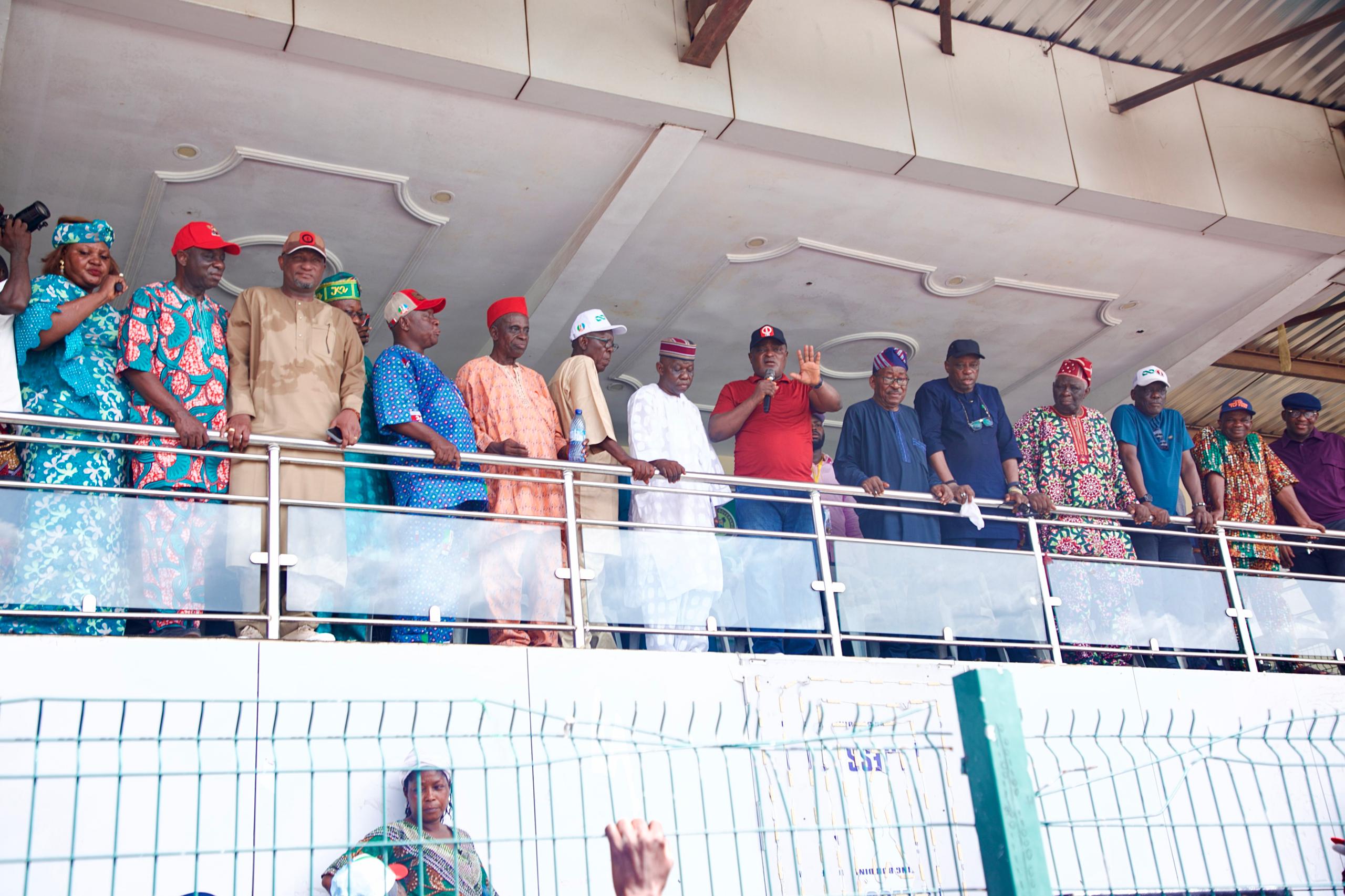
Obasa spoke at the Agege Stadium earlier today, Thursday, May 21, as the APC faithful and stakeholders converged in their thousands to affirm incumbent deputy governor, Dr Obafemi Hamzat, as the consensus candidate of the party in the 2027 governorship election.
Speaking on the outcome of the primaries, Obasa declared: “We’ve done everything according to the dictates of the party. Dr Obafemi Kadiri Hamzat is our governorship candidate. Senator Idiat Adebule is our candidate in the Lagos West Senatorial District, and Mudashiru Obasa is the candidate for Agege Federal Constituency in the House of Representatives. Collectively, we have decided and we are standing by the decision of our members.”
He commended INEC and security agencies “for helping us to have a free, fair, and transparent exercise devoid of violence and disorderliness.” The Speaker also praised party members for their loyalty and steadfastness, stating: “Agege is always here for the party. We are always present. When you are a member of a party, you should always participate in all its activities. Why will anyone who isn’t here claim to be part of us?
“You can’t be absent from all primaries and still claim that you are with us. We have conducted House of Representatives, Senate, House of Assembly, and Governorship primaries, yet some disgruntled party members have consistently stayed away. It is not possible. They are not part of us.”
Further, Obasa said: “We should be mindful of the people we send to represent us in any position. If they disregard us, we will wait until their tenure expires and remove them. The beauty of any political structure is continuity. Agege remains a shining example of a well-structured political organisation at the local government level.
“Nothing was done by subterfuge; everything was done in the open. INEC, DSS, Police, the media, and party leaders were all present. There’s nothing to fear. If anybody is initiating fake reports, let them continue. Anybody who has a problem should go and challenge the result in court. After the general election, maybe they will wake up,” he added.
With Hamzat’s candidacy sealed and Obasa drawing a hard line against internal dissent, Agege has sent a clear message: the APC’s fortress stands on loyalty and discipline, and those unwilling to march in step will be left behind as the party advances toward 2027.


Politics
The All Progressives Congress (APC) in Edo State deserves commendation for the peaceful, transparent, and highly successful conduct of its primary elections across the various elective positions

The All Progressives Congress (APC) in Edo State deserves commendation for the peaceful, transparent, and highly successful conduct of its primary elections across the various elective positions,
……ranging from the State House of Assembly to the House of Representatives and the Senate.
The victories recorded so far are not just individual triumphs, but collective victories for the party, democracy, and the good people of Edo State. The process has once again demonstrated the maturity, strength, and internal democratic values of our great party.
Special appreciation must also go to His Excellency, the Executive Governor of Edo State, Senator Monday Okpebholo whose wisdom, leadership, fairness, and large-heartedness ensured the conduct of rancour-free primaries that have left party members satisfied and proud of the APC family.
As we look forward with great optimism to the presidential primary tomorrow, we remain confident that the same spirit of unity, peace, and brotherhood will prevail.
Congratulations to all the winners. As leaders entrusted with the confidence of the party, we urge them to be magnanimous in victory, extend hands of fellowship to other contestants, and work together in the overall interest of the APC and the progress of Edo State.
Together, we shall continue to build a stronger, united, and victorious party.


- Strengthening Zambia’s Readiness for Health Emergencies: From Surveillance to Pandemic Preparedness May 21, 2026
- Economic Community of West African States (ECOWAS) Strengthens Regional Integration Through Cross-Border Cooperation Stakeholders’ Meeting in Abuja, Nigeria May 21, 2026
- Senegal Retains Title as Overall Champion at ECOWAS African Wrestling Tournament (TOLAC 14) May 21, 2026
- Eritrea: Diaspora Nationals Celebrate Independence Day Anniversary May 21, 2026
- Seychelles: President Herminie Visits District Administration Office and Library on La Digue May 21, 2026
- Egypt: President El-Sisi Meets Tunisian Minister Mohamed Ali Nafti May 21, 2026
- Joint statement welcoming the Republic of Togo’s announcement on Visa facilitation for African nationals May 21, 2026
- Advancing Regional Political Commitment and Cross Border Coordination for Ebola Preparedness and Response May 21, 2026
- Morocco: African Development Bank commits €200 Million to boost employability and develop future skills May 21, 2026
- Société Nationale des Pétroles du Congo (SNPC) Targets Global Operator Status as African Energy Chamber (AEC) Engagement Reinforces Congo’s Energy Ambitions May 21, 2026
- Strengthening Zambia’s Readiness for Health Emergencies: From Surveillance to Pandemic Preparedness May 21, 2026
- Economic Community of West African States (ECOWAS) Strengthens Regional Integration Through Cross-Border Cooperation Stakeholders’ Meeting in Abuja, Nigeria May 21, 2026
- Senegal Retains Title as Overall Champion at ECOWAS African Wrestling Tournament (TOLAC 14) May 21, 2026
- Eritrea: Diaspora Nationals Celebrate Independence Day Anniversary May 21, 2026
- Seychelles: President Herminie Visits District Administration Office and Library on La Digue May 21, 2026
- Egypt: President El-Sisi Meets Tunisian Minister Mohamed Ali Nafti May 21, 2026
- Joint statement welcoming the Republic of Togo’s announcement on Visa facilitation for African nationals May 21, 2026
-

 news5 months ago
WHO REALLY OWNS MONIEPOINT? The $290 Million Deal That Sold Nigeria’s Top Fintech to Foreign Interests
-

 society3 weeks ago
SOCIAL MEDIA IS NOT A BATTLEFIELD COMMAND – WHY THE NIGERIAN ARMY’S ACTION AGAINST JUSTICE CRACK IS A NATIONAL SECURITY IMPERATIVE
-

 celebrity radar - gossips4 months ago
Dr. Chris Okafor Returns with Power and Fire of the Spirit -Mounts Grace Nation Altar with Fresh Anointing and Restoration Grace on February 1, 2026
-

 celebrity radar - gossips5 months ago
Prophet Kingsley Aitafo Releases 2026 Prophecy: ‘Nigeria Will Rise, but the World Must Prepare for Turbulence’