
Uncategorized
Ooni’s Recent Pronouncement on Aje in Ile-Ife: Oyeyemi’s Remarks are Outrageous.

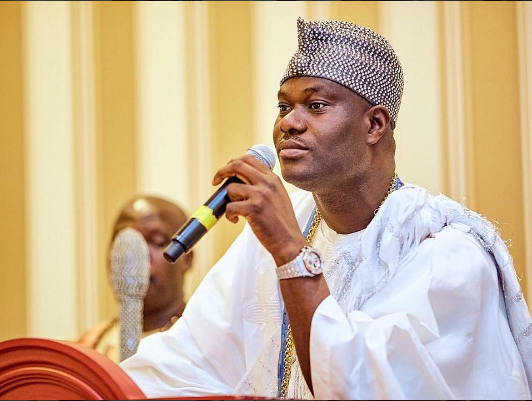
Remarks about Ooni Ogunwusi’s efforts at promoting Yoruba culture, Yoruba history, Yoruba nation and the Yoruba diaspora against the odds of the complex realities of our nation-state, Nigeria, abound. They range from applause for the awesome zeal with which the Ooni has been pursuing this laudable agenda to pedestrian illogical idle chattering. Unfortunately, included in the range of such remarks are tantrums from individuals who are supposed to demonstrate that they are highly cultured. Chief Oyeyemi’s recent outrageous remarks about Ooni’s purported establishment of a linkage between Ile-Ife and the Igbo of Nigeria is a classic example. Some appear as contents of his letter to illustrious Yorubas and traditional rulers while others appear in his writeup titled “Ooni Eniitan and the Destruction of Yoruba nation”. Unfortunately still, such unguided remarks from those who are supposedly Yoruba tradition-bearers have recently assumed outrageous dimension to such an extent that dignified silence can no longer be maintained by those of us who understand the full measure of the unquantifiable damage they can cause the Yoruba and the country at large.
In this write-up, I wish to show that Chief Oyeyemi who, as we are informed, is the Personal Secretary to the Olugbo of Igbo has made no valid claims against the Ooni; that rather he has only thrown tantrums for the purpose of propaganda. I wish to note that the Olugbo would not have authorized such boundary-crossing in the manner of a totally blind fellow. As the proverb goes, those who live in glass-houses don’t throw stones. What Oyeyemi’s remarks amount to is no more than stone throwing which leaves all to wonder whether he is resident in a glasshouse or not. And if he is not, shouldn’t he steer clear of the glassy edifice of the Olugbo?
Let me first extrapolate from Oyeyemi’s remarks what, according to him, is the Ooni’s unpardonable crime and why he has been constrained to assume without due authorization the generalissimo-like position of the defender of Yoruba interest. His claim is that the Ooni has been making “several unfounded claims” since his ascension to the throne and that the Ooni’s latest pronouncement that the Igbo are historically traceable to Ile-Ife via Aje, a part of the sacred history of Ife with a living ritual and temple attesting to its historicity, is the latest of such claims. Just this is what Oyeyemi would like all to see as the justifiable basis for his throwing caution to the wind. Just this! But we might ask: suppose the Ooni had said more than this, would he have personally bulldozed his way into the palace of Olufe to oust the monster-ruler of his funny imagination, the monster which he considers as most dangerous to the safety of Yoruba’s interest? Funny indeed!
It is clear from his write-up that his real intention is to push “his Ugbomokun” into prominence at the expense ofIfe and possibly write the Ooni off Yoruba history to pave the way for a ruler of his choice. But since that can never be achieved, since nothing can be willed into existence just like that no matter the zeal deployed, he needed an alibi – Just any alibi for his propagandist mission! But we just might ask again: What is this rabid biting at his roots all about? Is it to relocate the spiritual headquarters of the Yoruba to Ugboland? Is it to pave the way for an Olugbo of his dream to assume the position of the Ooni of Ife? Or is he making the claim that Ile-Ife should become a vassal to Ugboland? Just exactly what?If the issue is actually the way the Ooni has linked Aje and the Igbo, then he has simply turned the argument on its head. And I suspect he knows this. Since propagandists like him go the boolekaja way (apology to Emeritus Prof. Wole Soyinka) in argument, turning his argument on its head does not constitute an assault on the sensibility of others. His propagandist goal is his focus and any approach would suit even if it is obvious that the whole world would collapse on account of such a wrong step. Unfortunately, not everyone can be fooled this way. This is why we must help him reposition his argument so that he knows that fooling is not arguing. Therefore, his claim that can be clearly extrapolated is what must be tabled before the court of the critical public and it is upon it verdict must be pronounced.Now to his claim, and we shall restate it for clarity: the Ooni has made “several unfounded claims” since his ascension to the throne and the latest is the pronouncement that a linkage between Aje in Ile-Ife and the Igbo exists. First, the claim itself is lacking in necessary details since the phrase used by Oyeyemi and here quoted verbatim “several unfounded claims” does not spell out what he means by it. These ought to have been enumerated in black and white. May be when Oyeyemi chooses to enumerate appropriate answer will be provided. We are therefore left with just the adjunct of the claim, which is that it is erroneous for the Ooni to link Aje and the Igbo as a way of establishing the Igbo’s place in Ife’s sacred history.
Going by the rule of logic, we must ask how he is convinced and wishes to convince others that the Ooni’s claim is an error of historical validation. Oyeyemi’s argument would take a standpoint based on what he refers to as “fundamental dialectology” to have us believe that the Igbo cannot be historically linked to the Yoruba. And in his argument, he is too quick to cite historians of his preference even to validate his fundamental dialectology-based claim. No single linguistic authority cited! Or may be for him none exists well enough for the advancement of his propagandist agenda.
Part of the premises of his argument is that Ibo names such as ebuka and ezeokoli are dissimilar to “Ife dialect or even Yoruba language”. This singular premise alone reveals his ignorance or shallow knowledge of the area in which he pontificates. If Oyeyemi is in need of linguistic material to widen his knowledge on the possibility of the claim made by the Ooni from linguistic perspective that his argument should exude, we shall make Professor Bolaji Aremo’s pioneer work, How Yoruba and Igbo became Different Languages, in this area of study readily available for him. In the book are several Yoruba and Igbo words listed to serve as instances of such dialectological correspondence. Incidentally, the keynote of Aremo’s study is exactly what the Ooni has simply pronounced on on the strength of the metaphysical inspiration of the office of the Ooni. Therefore, Oyeyemi has to learn how not to quickly dismiss a claim if he wishes his position be taken seriously next time. Researches on various areas abound and ongoing. Even scholars cited by Oyeyemi should not be so dismissive. They would be hesitant. To be this hesitant is to truly be readily for knowing the truth.
So, it can be seen that there is really no valid counter-claim from Oyeyemi against Ooni’s pronouncement on Aje as an indicator of the aboriginality of the Igbo to Ile-Ife. This is to say that dismissing Ooni’s claim with fiat is unhelpful to knowledge building. Throwing tantrums upon that as he Oyeyemi has just done is even altogether a buffoon’s manner of reacting.
What our attention must be turned to in spite of Oyeyemi’s disappointing display of culturelessness is his real intention for such ranting, not his business in buffoonery. That intention, I wish to emphasize here, is a propagandist mission to advance a narrow interest. We should also note that he is doing this by reconstructing Yoruba history in order to diminish the towering image of the Ooni and the historicity of Ile-Ife. Let it then be stated that this is not new to the Ife since some of the so-called historians of Yoruba history have done the same in one way or the other. Many have even wondered why the Ife have never been so bordered about the various attempts to diminish its spiritual/religious, cultural, and historical worth. The simple answer is that we Ife know that when a child desperately insists on the impossible mission of turning the world on its head, such a child is better left to his or her folly. It is the best way to teach the obstinate the lesson of his or her life. After exhausting herself/himself such a goat will realize what is within reach and what is not. Won dooyi kappa apa o kapa; won dooyi kose apa o kose. Enu enu lese fii pa ekuro oju ona.
One wonders still who denies the fact that the Ugbo-Ilaje people are historically linked to Ife? Does the Ooni or a historically knowledgeable Ife need to be tutored on this? Yes, the Ugbo-Ilaje people are historically traceable to Ife! How does that bring about any argument? As they are historically linked to Ife so are many other Yoruba ancient towns. No Yoruba that is historically conscious or informed enough would doubt that! So, what has Oyeyemi invited us to see or learn on behalf of whosoever’s errand he runs? Is it to tell the story of the Ugbo-Ilaje as he claims? If that is it, let him and his sponsor be told that he is free to tell the story of his people and tell it several times over! Freedom of expression, remember! Very simple! It shouldn’t call for raising unnecessary alarm over Ooni’s pronouncement on Aje and the Igbo of Nigeria. Afterall, towns of yesterday also engage in historical falsification to construct identity and infuse themselves with a sense of history. So, why the tantrums against the Ooni even while he Oyeyemi acknowledges that the Ooni sits on the most revered royal stool of the Yoruba. Can this be called tradition? Isn’t this contradiction from a supposed man of culture and tradition?I am afraid, people like Oyeyemi has to be put in check by the very classes of people he calls out to in his most irresponsible write-ups: “Imperial and Royal majesties, Illustrious sons and Daughters of Yorubaland” etc. If he is blind to the Ooni’s efforts at building internal cohesion, peaceful co-existence among peoples of Nigeria and beyond even at a great cost to himself, shouldn’t Oyeyemi keep his worries to himself or share it with the little-minded who belong in his class and would be willing to raise much ado about nothing like him? Even if the Ooni has made a mistake, people like Oyeyemi need not cry more than the bereaved.
Perhaps unknown to Oyeyemi and others like him, as a historical town of note, Ife has long evolved internal mechanism for correction and restitution with regard to activities engaged in and pronouncement made by the Ooni who is the biggest holder of stake for the Yoruba. Ife need no reminder to do what is needful when a serious error or mistake is made not only in Ife but anywhere in Yorubaland. Error or no error, mistake or no mistake, rites of atonement, rituals of placation, corrective supplications, thanksgiving, and the likes go on daily in the spiritual capital of the Yoruba. And you know what too? The Ooni authorizes these. He sponsors them. And custodians of ritual institutions in Ile-Ife report to him on regular basis that the wheels of the Yoruba world are being constantly oiled. So, wild imaginings should be tamed forthwith. It shall always be well with the Yoruba. Efun kii mojo, edi kii di bara. Ikeke awa Yoruba lo maa leke igi. Ase!
Before I drive this piece to conclusion, let us still ask whether really Ooni’s claim is erroneous. Only those who don’t know the nature of Ife sacred history would see a mistake where none exists in the claim. For example, Ife’s sacred history claims for Ife the foundation of the whole of humanity. And this is well known, even in reputable books of history, published probably before Oyeyemi was born.
This is the reason the Ife would treat all as their brothers and sisters before their generosity was taken for stupidity. Today we all see the consequences of that changing orientation. One would want to wonder why Oyeyemi has not instigated the whole world against the Ife or the Ooni when humanity is said to have originated from Ile-Ife? If an aspect of our sacred history is being released by the Ooni for the purpose of bridging the gap which divisionists, ethnic jingoists like Oyeyemi have been widening without any consideration for humongous consequences of a full blown inter-ethnic crisis in Nigeria, why should the Ooni not insist? Agba kii wa loja kori omo tuntun wo (An elder would not be in the market place and allow the head of a child get skewed). Can there ever be too much price paid for peace? What you can’t sacrifice for peace will still be lost to chaos. We all know how intolerance starts. But we never realize it is a timed bomb. So what is the jebe wey Oyeyemi dey pon lakisa?
Oyeyemi wants us to accept as fact that a historical indication to the origin of the Igbo in Ile-Ife can never be found. It is on this I’m being forced again to remember that Ife is understudied in the sense of today’s manner of knowledge production, particularly from historical scholarship and other related disciplines. Therefore, not until all available research possibilities are exploited, attempts at invalidating historical claim such as Oyeyemi’s would remain hasty and unacceptable.
Imagine how Oyeyemi enjoys a deep sense of history because of the traceability of his town and people to Ife. Unfortunately, what he finds comforting is what he is expressly denying others. What autocracy of reasoning! And in such a simplistic manner, he reduces the history of a people within his own geo-political entity, Nigeria, to an appendage of the Jew’s. Isn’t that damaging to the postcolonial sensibility of the whole Africa? A n je ekuru ko tan, obileje n gbon owo e sinu awo.
Oyeyemi proposes a thesis as if his is permanently immuned against any antithesis. He queries the Ooni: “Kabiesi Alayeluwa Oonirisa, we have asked you to show us the orirun of Ibo in Ife, where in Ideta Ile or Ideta Oko did they migrate from, if you say they are from Obatala? Kabiesi, who led them out of Ife, where was the first place of Ibo settlement in the ancient Ibo forest?”
Could these questions from an Oyeyemi or a million plus of his likes combined be for the Ooni? What a manner of braking royally courtesy! He says “Kabiesi” now and again so frivolously! He seems not to know what this important word means in Yoruba culture – Querying the Ooni is null and void. Isn’t it contradictory to pronounce this repeatedly and still fail to apply the rule of royally courtesy that it reminds of?
If those questions must be answered, Oyeyemi himself and those who share his shaky position may have to sponsor historical researches into Ife history. In doing so, he and his cohorts must know ab initio that they will be dealing with a historical subject of immense density. They would have to be patient with dazzling revelations. They must not close the space of historical discoveries such as claiming that the Yoruba never had letter “I” as “starter for words”. For instance, in Ife, there is Igbolokun. It is a sacred corner behind the palace of the Ooni. In my decades of experience as an Ife, the word “Igbolokun” has always been spelt and pronounced with letter “I” as its starter. Perhaps before we agree that the possibility of the Igbo in Ife history be written off as Oyeyemi wishes we should just look into what this may offer in respect of the linkage Ooni has made bold to establish.
To assure those who may have gotten genuinely alarmed by Oyeyemi, the Yoruba nation and Yoruba diaspora under the watch of the Ooni can never collapse. It has been decreed that the Ooni shall never fail to secure the Yoruba spaces. Our world is safely under his control as the only living orisa out of the numerous orisas known to Yoruba world. People like Oyeyemi should get the message which the sacred story of Oluorogbo is meant to communicate to us all: rather than allow the world under Olufe (the Ooni) crumble, the intercessor from cosmic forces (Oluorogbo) will help him out. To ba ku dede ki aye olufe o baje,Oluorogbo a baa t’ayese. Haven’t you seen that played out over the course of Yoruba history? Yes, so it shall forever be.
A buni n je a buni, ewo ni t’oku ara Ibadan lojude Ogunmola (let abuse be marked as abuse, the innuendo that corpses of Ibadan people litter the façade of Ogunmola’s house is unnecessary). Oyeyemi claims to be working for the Olugbo, a highly cosmopolitan Oba of repute in multimillion dollar business and still does not know that an Ooni can no longer remain sedentary, ruling the vast world of the Yoruba and its constantly changing character from his palace at Enuwa. Oyeyemi needs an updated understanding of traditional leadership in modern contexts. I suppose he doesn’t. Yet this makes one wonder whether he is fit to speak on modern happenings or act on behalf of an Oba as cosmopolitan as the Olugbo.
Finally, I should say I see antics of a boat-rocker in Oyeyemi’s write-up. He wishes to set Ooni’s lieutenants against him. He lampoons the head while praising the subordinates. But who told him it works in Ile-Ife? Obalufe, Obaluru, Obalesun, and other key custodians of core Yoruba traditions of Ile-Ife must work in harmony with their master, the Ooni. Reverence is what Ooni means. If disruptive antics of people like Oyeyemi works elsewhere, Ife is different. We all know in Ife that no antics against the Ooni work. Ours is a space with marked difference. That difference you shall always see in Ooni’s presence, actions, and pronouncements. Learn!
Opa Loogunosin, 29 Edena Street, Ile-Ife





FOPCHEN Calls for Dialogue as Court Fixes May 28 for Continuation
OTA, OGUN STATE — Proceedings in a widely followed legal case resumed on March 24, 2026, at the High Court of Ogun State, Ota Division, ending with a fresh adjournment as the court fixed May 28, 2026, for continuation.
During the session, legal representatives for all parties restated their positions and addressed preliminary matters, laying the groundwork for more substantive arguments at the next hearing. Observers noted that the case continues to attract significant public attention due to its perceived implications for law, culture, and societal values.
The Foundation for the Protection of Cultural Heritage in Nigeria (FOPCHEN) used the occasion to reiterate its call for constructive national dialogue. The group emphasized that while the judicial process must be respected, broader societal engagement remains essential.
According to the organization, issues relating to values, responsibility, and cultural identity should not be confined solely to courtroom deliberations but should involve active participation from various sectors of society.
Legal analysts present at the proceedings described the matter as one with far-reaching implications, noting that arguments advanced in court could shape future interpretations surrounding sensitive cultural and moral questions.
The presiding judge subsequently adjourned the case to May 28, granting all parties time to refine their submissions and respond to issues raised during the hearing.
As anticipation builds ahead of the next court date, Nigerians across different sectors continue to monitor developments closely, keen to see how the judiciary navigates the delicate balance between constitutional rights and cultural expectations.
Uncategorized
CRG: Politicians Must Stop Witch-Hunting, Focus on Nation Building — Says NYSC Cleared Deputy Speaker Since 2023
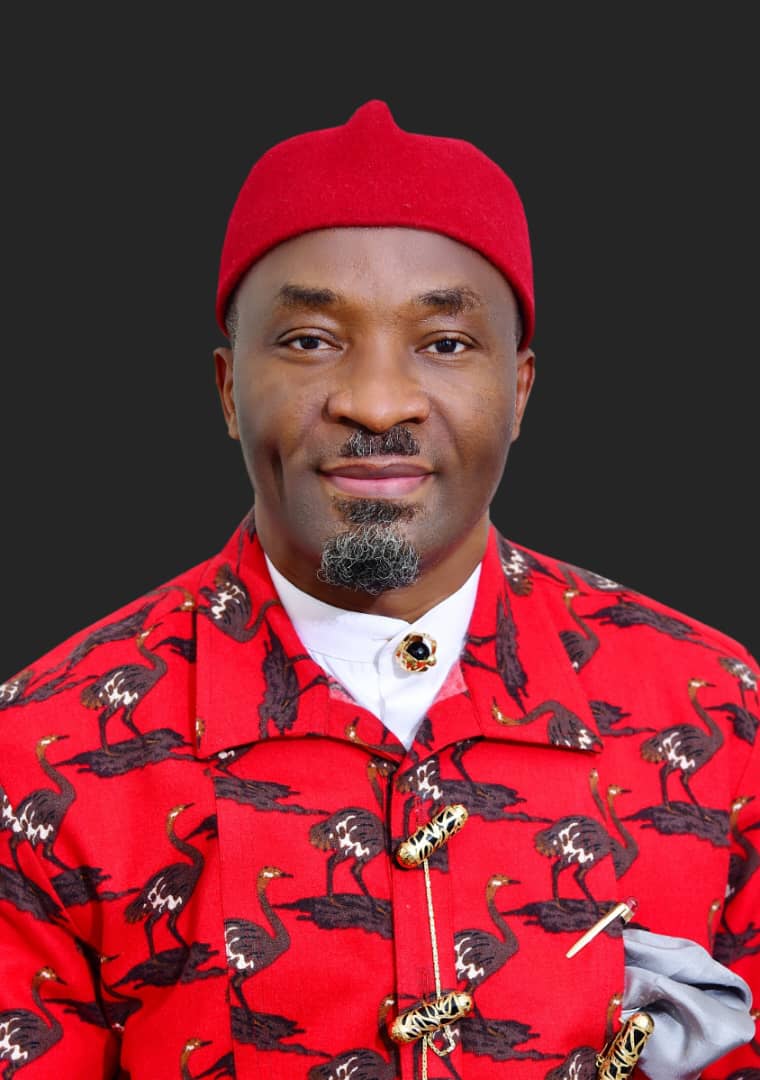
CRG: Politicians Must Stop Witch-Hunting, Focus on Nation Building — Says NYSC Cleared Deputy Speaker Since 2023
By: Boye Ola
The Centre for Responsible Governance (CRG) has called on political actors and interest groups to desist from what it described as needless witch-hunting of the Deputy Speaker of the House of Representatives, Benjamin Okezie Kalu, following renewed controversies surrounding his National Youth Service Corps records.
The organisation noted that the clarification by the National Youth Service Corps (NYSC) regarding the matter is not a recent development, as a formal verification letter had already been issued as far back as May 23, 2023.
The letter, referenced NYSC/CCD/VER/10/5.1/VOL1/02, had already addressed and cleared the questions surrounding the Deputy Speaker’s NYSC records.
Reacting to the renewed debate, the spokesman of the Centre,
Obande George, said it was troubling that issues which had already been clarified by a competent national institution were being resurrected for political purposes.
According to him, the time has come for political actors to move away from destructive engagements and concentrate on building the nation.
“It is important to note that the NYSC had already issued a verification letter dated May 23, 2023 addressing the matter.
Reopening issues that have already been clarified by a competent authority suggests that some individuals are more interested in political witch-hunting than in national progress,” George said.
The CRG stressed that democracy thrives when institutions are respected and their determinations are accepted in good faith rather than constantly questioned for political advantage.

George also commended the Deputy Speaker for demonstrating maturity and composure throughout the controversy, despite what he described as sustained provocations.
“Honourable Benjamin Kalu has shown remarkable calm and maturity in the face of intense public scrutiny and political provocation.
Instead of engaging in unnecessary public confrontation, he allowed institutions to speak through their records.”
The Centre warned that Nigeria’s political culture must evolve beyond constant character attacks and sensational allegations, which often distract public officials from their responsibilities.
According to the organisation, the country’s development requires constructive engagement among political actors rather than continuous attempts to discredit opponents.
“Nigeria cannot move forward if political energy is constantly spent on digging up allegations and amplifying rumours. Our leaders and political actors must redirect their focus to governance, policy and nation building.”
CRG therefore urged Nigerians to rely on verified information from credible institutions and avoid spreading speculative claims that could damage reputations or destabilise public discourse.
The organisation reiterated that respect for due process and institutional integrity remains essential for strengthening Nigeria’s democracy.

@The Centre for Responsible Governance, Email: [email protected], Instagram: crgngo6, Twitter: crgng06, Threads: crgngo6
Uncategorized
IWD 2026: Ajadi Celebrates Women, Urges Them To Seek More Elective Positions In Future Elections

IWD 2026: Ajadi Celebrates Women, Urges Them To Seek More Elective Positions In Future Elections
A Leading People’s Democratic Party, (PDP) Governorship Aspirant in Oyo State, Ambassador Olufemi Ajadi Oguntoyinbo has felicitates with women in the country on the occasion of this year’s International Women’s Day.
The international Women’s Day is celebrated on 8 March, commemorating women’s fight for equality and liberation along with the women right’s movement. It gives focus to issues such as gender equality and reproductive rights. International Women’s Day originated from labour movements in Europe and North America during the early 20th century.
In a statement issued on Sunday to commemorate this year’s edition of the International Women’s Day, Ajadi said the role of the women in nation building cannot be over emphasised.
He recalled the role played by prominent Nigerian women like Mrs Funmilayo Ransome- Kuti, Margaret Ekpo and Wuraola Esan towards the liberalization and the growth of the country and urges women to follow their footsteps by not only participate in the political process but seek more elective positions.
He urges the political leaders to encourage and give more chances to women for them to contest and occupy elective positions in the country.
Ajadi also called for more respect for women, saying they are definitely behind whatever success recorded by the menfolk.
He said domestic violence against women should be stopped, saying they deserves respect for their role in moulding the future leaders.
According to the statement, “I celebrate and congratulate our women on this year’s occasion of International Women’s Day. We cannot underestimate the role played by our women both at home, in the social circle and in politics. They deserve more respect.
“I equally called on them not only to be a passive participants in politics but to determine to seek more elected positions in future elections. They should aspire more from the position of dancing and singing at campaigns to seek more elective positions. The ratio of men to women in elective positions in the country is embarrassing. Women should stand up and fight for more elective positions.
“I also use the occasion of this year’s Women’s Day to appeal to Nigerians to stop domestic violence against the women. If we treat our women well, our country will witness unprecedented developments”.


-

 society7 months ago
Religion: Africa’s Oldest Weapon of Enslavement and the Forgotten Truth
-

 news4 months ago
WHO REALLY OWNS MONIEPOINT? The $290 Million Deal That Sold Nigeria’s Top Fintech to Foreign Interests
-

 society6 months ago
“You Are Never Without Help” – Pastor Gebhardt Berndt Inspires Hope Through Empower Church (Video)
-

 celebrity radar - gossips2 months ago
Dr. Chris Okafor Returns with Power and Fire of the Spirit -Mounts Grace Nation Altar with Fresh Anointing and Restoration Grace on February 1, 2026
You must be logged in to post a comment Login
You must log in to post a comment.