
Uncategorized
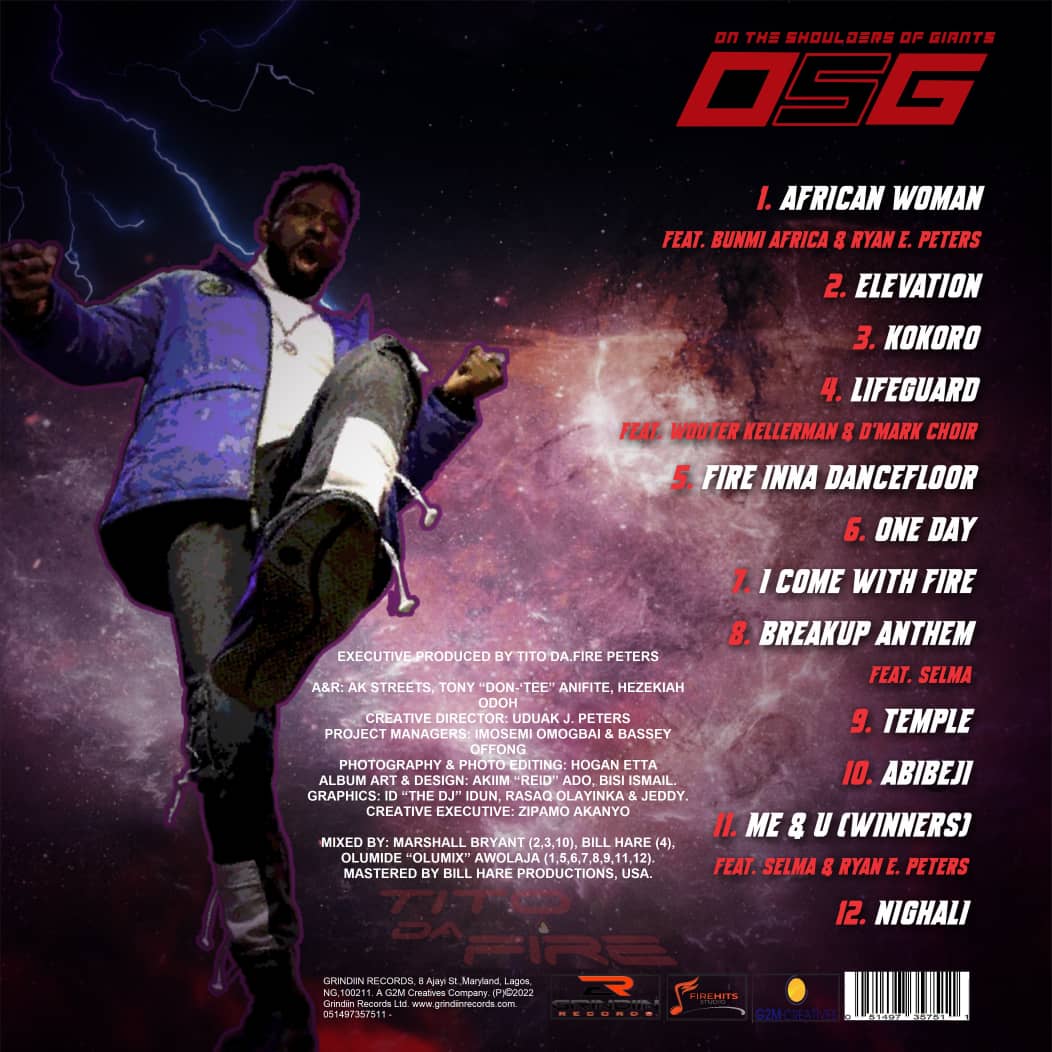
‘OSG’- On The Shoulders Of Giants Album: Tito Da.Fire Shares The Stories Behind Each Track To His Fans

‘OSG’- On The Shoulders Of Giants Album: Tito Da.Fire Shares The Stories Behind Each Track To His Fans

In a couple of days, precisely Friday 23rd of September, 2022, the singer, composer, and lyricist, Tito Da.Fire will be introducing a new generation to his world of Global music with a touch of Afrobeats, and alternative, reggae and juju fusions through his intimate songwriting ability in his third album titled, “OSG” On The Shoulders Of Giants.
The talented artist shares the stories behind each song to the global audience.
Tito Da.Fire, who is known for his dexterity drew from his classically trained background to create a captivating symphony for all ages in the beautifully recorded 12-track album which is expected to drop on Friday.
In a track-by-track explanation, the music enthusiast takes his fans and listeners deep into his latest record with a concentrated breakdown of every song.
According to him, “This Album tells my compelling story of NIGHALI (Nigeria, Ghana, and Liberia) through Music. I coined that name as a metaphor for non-violent Pan-African liberation through Music, Cultural, and Economic Empowerment. It is themed around rising on “On the Shoulders Of Giants”, which is my rising through the Liberian Civil war, to Nigeria (my father’s birth Country) some went to Ghana, some went on to become wealthy, some like me, became one of the most Consistent Voices out of Nigeria, impacting over the past 25years, reaching million weekly. Importantly, the album reminds the culture that, while we all call out the oppressors, and their oppression, are we ourselves guilty of oppressing those around us?”
He continues, “That’s where “Elevation” comes in, that’s where the strength of the “African Woman”, comes to play. That’s where “Temple” speaks to our vanities, that’s how “I Come With Fire”, in the message, to put “Fire Inna Dancefloor, knowing that “One Day”, whether our birth was singly or under the drum rolls of “Abibeji” twins, nothing shall make us sing a “Breakup Anthem”, away from our dreams of victory and freedom, because we rest assured that our “Lifeguard” stands solidly, that no “Kokoro” can come close to “Me & U (winners)” in our generation, incited in spirit to move, positively, incited to the soles of our feet, to dance with the zest gathered from major thinkers who have left their marks, for us to rise – “On The Shoulders Of Giants – OSG!”
1. “African Woman”
‘“African Woman”, the first song off the album, with Bunmi Africa poetry, feels like Caramel toppings, and my son Ryan singing, is my kinda twilight, serenaded storytelling scene like I’m in “NTA Tales By Moonlight”. A honey-tongued tribute to where I came from, my mother, motherland, sisters, Africa, and beautiful and strong women globally, like Lupita Nyong’o, Queen mother Nana Yaa Asantewaa, Mother Victoria, Kamala Haris, Ngozi Chimamanda Adichie”, #AfricanWoman”.
2. “Elevation”
“The story of “Elevation” is about triumphs of the culture, of Afrobeats, about freedom from Neo-colonialism, it is also my call for peaceful revolution in “NIGHALI” (that’s Nigeria, Ghana, and Liberia, which are metaphors for non-violent Pan-African liberation) through Music and empowerment. We were wealthy, got broken by Civil wars, in Liberia, to Nigeria, Ghana, as Refugees, some of us became wealthy again…but while we all call out the oppressors, are we guilty of oppressing those around us? That’s where Elevation comes in, it incites the spirit to move, positively, incites your feet, to dance!”
3. “Kokoro”
“This song is the first single off OSG Album, it was my comeback from a break-up, from a hot breakfast, betrayal, and I’m saying “the ant or insect that eats the leaf, is on the leaf”. Kokoro is a warning, like a popular Nigerian slang called “Frenemies”, with me saying “your best friend could be your worst enemy, so shine your eyes” be street smart.”
4. “Lifeguard”
“You’re the angel God sent to me…when I was down you pull out of the waters, you’re my lifeguard”, those “Lifeguard” lyrics are very personal and spiritual to me, it’s me finding myself on a lone career and life ship at one time, and then connecting with Grammy winner Wouter Kellerman, just brought a timeless friendship, my love for South Africa grew with leaps, as we began to create timeless magic. After I produced “Lifeguard”, my producer Aizbag came to Lagos and we wrote the song. It is a symbol of our spiritual heritage with Jah, our Creator.
5. “Fire Inna Dancefloor”
“On this song, I drag you back onto the dance floor culture. I simply cannot drop a body of work where there aren’t tracks that demand you to shake your body, like fire on the dancefloor”, right in the middle range of the album.
6. “One Day”
‘“One day the sun will rise for your end, one day you go make am”. That’s a street anthem, it’s me saying, take it from me, you can make it, regardless of what society throws at your feet, cos I’ve walked that road. I remind you of giants like Fela, 2baba, Don Jazzy, and others who paved the way for Afrobeats to rise on the international stage and with it, the rise of the culture.”
7. “I Come With Fire”
“I’m roaring on this song, literally if you like. Over the 2-year period I recorded this album, I’ve got burnt in many ways, with waves of lofty highs and deep lows like “tears and blood” Fela” sang about, so what else is left to be afraid of? I had Producer Sharnor coming from Ajah, Marshall Bryant Mixing in LA, Aizbag coming from Owerri to Lagos, Olumix Mixing in Germany, Wouter sending in the flutes from Johannesburg, and Bill Hare in California Mastering, those were the highs of the album “let my burns turn to Gold, who Baba God don bless, nobody fit stop am”, is Tito Da.Fire speaking the truths of many, from a place of sincerity”.
8. “Breakup Anthem”
‘“Breakup Anthem starts with the soulful “It’s like me against the world, in this thing called love”. The song tells how hard it is, to not go through a dish of Breakup, or “breakfast” as it’s the common slang in West Africa. Plenty of times we feel we’re in the right, but the pain doesn’t care. Selma sings her heart out with me.”
9. “Abibeji”
‘“Abibeji” is a song about love, a song for walking down the aisle, it’s a lover singing to the love of his life. “my baby will give birth to twins¸ if God wills”. On the conceptualization of the song, I remember my grandfather who had a set of twins and how much of an impact it had on him, and so it struck with his family that twins are double blessings from God, which I tap into”.
10. “Temple”
“Temple hits you differently, like Bob Marley singing “Redemption Song”, or Buju Banton belting his heart on “Destiny” and Wyclef on Diallo”. This time I sang about Solomon, his vanities, and his way with women, and metaphorically to myself, cos I was named “Jedidiah” at birth, and that translates to “Solomon according to Biblical canon. I find myself levitating to the rhythm in this only reggae/soul ballad on the album. You should never forget that your body is a temple of the Highest God”.
11. “Me & U (Winners) feat. Selma & Ryan E. Peters”
“This song unearths a wealth of emotions from me, with Selma and my son. Some traditional households hoard love and praise, like hoarding fuel during scarcity. But I believe somebody needs to let you know that you’re a star, a winner, Somebody like me”.
12. “Nighali”
“This song re-echos how the album tells the compelling story of NIGHALI (Nigeria, Ghana, and Liberia) through Music. I coined that name as a metaphor for places my bloodline runs, having cultural significance to younger generations, to Nations. The music in the album calls for Global Empowering and Elevation through shared cultural knowledge and experiences gathered from major thinkers who have left their marks, for us to ride OSG (On The Shoulders Of Giants)”. This twelfth song on the album summarizes the message of Social Change, of freedom and of shared cultural knowledge that Tito Da.Fire stands for”.



FOPCHEN Calls for Dialogue as Court Fixes May 28 for Continuation
OTA, OGUN STATE — Proceedings in a widely followed legal case resumed on March 24, 2026, at the High Court of Ogun State, Ota Division, ending with a fresh adjournment as the court fixed May 28, 2026, for continuation.
During the session, legal representatives for all parties restated their positions and addressed preliminary matters, laying the groundwork for more substantive arguments at the next hearing. Observers noted that the case continues to attract significant public attention due to its perceived implications for law, culture, and societal values.
The Foundation for the Protection of Cultural Heritage in Nigeria (FOPCHEN) used the occasion to reiterate its call for constructive national dialogue. The group emphasized that while the judicial process must be respected, broader societal engagement remains essential.
According to the organization, issues relating to values, responsibility, and cultural identity should not be confined solely to courtroom deliberations but should involve active participation from various sectors of society.
Legal analysts present at the proceedings described the matter as one with far-reaching implications, noting that arguments advanced in court could shape future interpretations surrounding sensitive cultural and moral questions.
The presiding judge subsequently adjourned the case to May 28, granting all parties time to refine their submissions and respond to issues raised during the hearing.
As anticipation builds ahead of the next court date, Nigerians across different sectors continue to monitor developments closely, keen to see how the judiciary navigates the delicate balance between constitutional rights and cultural expectations.
Uncategorized
CRG: Politicians Must Stop Witch-Hunting, Focus on Nation Building — Says NYSC Cleared Deputy Speaker Since 2023
CRG: Politicians Must Stop Witch-Hunting, Focus on Nation Building — Says NYSC Cleared Deputy Speaker Since 2023
By: Boye Ola
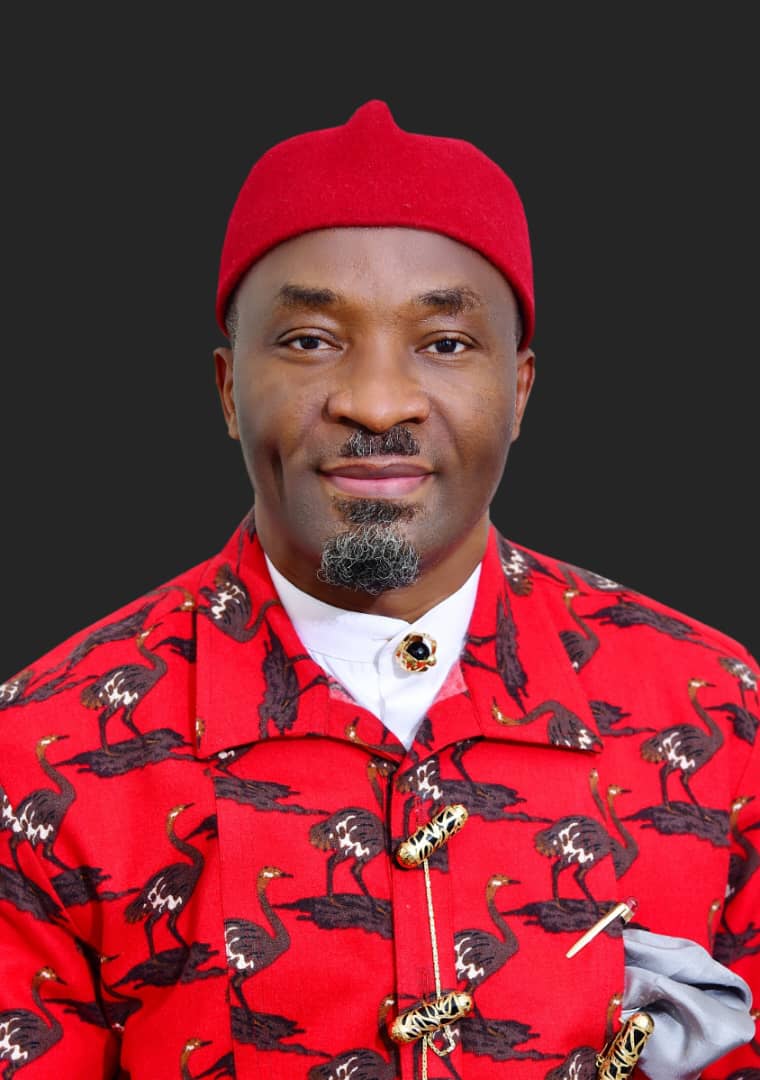
The Centre for Responsible Governance (CRG) has called on political actors and interest groups to desist from what it described as needless witch-hunting of the Deputy Speaker of the House of Representatives, Benjamin Okezie Kalu, following renewed controversies surrounding his National Youth Service Corps records.
The organisation noted that the clarification by the National Youth Service Corps (NYSC) regarding the matter is not a recent development, as a formal verification letter had already been issued as far back as May 23, 2023.
The letter, referenced NYSC/CCD/VER/10/5.1/VOL1/02, had already addressed and cleared the questions surrounding the Deputy Speaker’s NYSC records.
Reacting to the renewed debate, the spokesman of the Centre,
Obande George, said it was troubling that issues which had already been clarified by a competent national institution were being resurrected for political purposes.
According to him, the time has come for political actors to move away from destructive engagements and concentrate on building the nation.
“It is important to note that the NYSC had already issued a verification letter dated May 23, 2023 addressing the matter.
Reopening issues that have already been clarified by a competent authority suggests that some individuals are more interested in political witch-hunting than in national progress,” George said.
The CRG stressed that democracy thrives when institutions are respected and their determinations are accepted in good faith rather than constantly questioned for political advantage.

George also commended the Deputy Speaker for demonstrating maturity and composure throughout the controversy, despite what he described as sustained provocations.
“Honourable Benjamin Kalu has shown remarkable calm and maturity in the face of intense public scrutiny and political provocation.
Instead of engaging in unnecessary public confrontation, he allowed institutions to speak through their records.”
The Centre warned that Nigeria’s political culture must evolve beyond constant character attacks and sensational allegations, which often distract public officials from their responsibilities.
According to the organisation, the country’s development requires constructive engagement among political actors rather than continuous attempts to discredit opponents.
“Nigeria cannot move forward if political energy is constantly spent on digging up allegations and amplifying rumours. Our leaders and political actors must redirect their focus to governance, policy and nation building.”
CRG therefore urged Nigerians to rely on verified information from credible institutions and avoid spreading speculative claims that could damage reputations or destabilise public discourse.
The organisation reiterated that respect for due process and institutional integrity remains essential for strengthening Nigeria’s democracy.

@The Centre for Responsible Governance, Email: [email protected], Instagram: crgngo6, Twitter: crgng06, Threads: crgngo6
Uncategorized
IWD 2026: Ajadi Celebrates Women, Urges Them To Seek More Elective Positions In Future Elections

IWD 2026: Ajadi Celebrates Women, Urges Them To Seek More Elective Positions In Future Elections
A Leading People’s Democratic Party, (PDP) Governorship Aspirant in Oyo State, Ambassador Olufemi Ajadi Oguntoyinbo has felicitates with women in the country on the occasion of this year’s International Women’s Day.
The international Women’s Day is celebrated on 8 March, commemorating women’s fight for equality and liberation along with the women right’s movement. It gives focus to issues such as gender equality and reproductive rights. International Women’s Day originated from labour movements in Europe and North America during the early 20th century.
In a statement issued on Sunday to commemorate this year’s edition of the International Women’s Day, Ajadi said the role of the women in nation building cannot be over emphasised.
He recalled the role played by prominent Nigerian women like Mrs Funmilayo Ransome- Kuti, Margaret Ekpo and Wuraola Esan towards the liberalization and the growth of the country and urges women to follow their footsteps by not only participate in the political process but seek more elective positions.
He urges the political leaders to encourage and give more chances to women for them to contest and occupy elective positions in the country.
Ajadi also called for more respect for women, saying they are definitely behind whatever success recorded by the menfolk.
He said domestic violence against women should be stopped, saying they deserves respect for their role in moulding the future leaders.
According to the statement, “I celebrate and congratulate our women on this year’s occasion of International Women’s Day. We cannot underestimate the role played by our women both at home, in the social circle and in politics. They deserve more respect.
“I equally called on them not only to be a passive participants in politics but to determine to seek more elected positions in future elections. They should aspire more from the position of dancing and singing at campaigns to seek more elective positions. The ratio of men to women in elective positions in the country is embarrassing. Women should stand up and fight for more elective positions.
“I also use the occasion of this year’s Women’s Day to appeal to Nigerians to stop domestic violence against the women. If we treat our women well, our country will witness unprecedented developments”.


-

 society6 months ago
Religion: Africa’s Oldest Weapon of Enslavement and the Forgotten Truth
-

 news4 months ago
WHO REALLY OWNS MONIEPOINT? The $290 Million Deal That Sold Nigeria’s Top Fintech to Foreign Interests
-

 society6 months ago
“You Are Never Without Help” – Pastor Gebhardt Berndt Inspires Hope Through Empower Church (Video)
-

 celebrity radar - gossips2 months ago
Dr. Chris Okafor Returns with Power and Fire of the Spirit -Mounts Grace Nation Altar with Fresh Anointing and Restoration Grace on February 1, 2026