
news
Pendulum: Not Too Young To Run, Not Too Young To Do Business

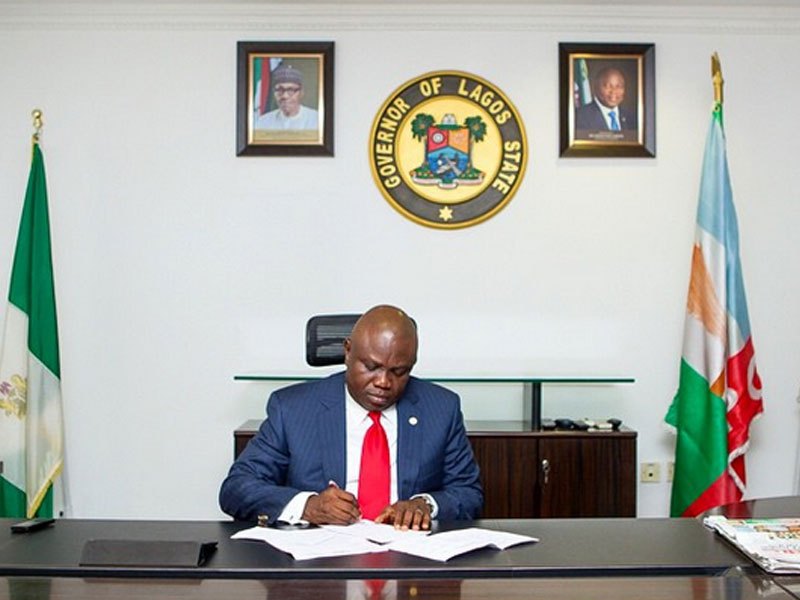

By Dele Momodu
Fellow Nigerians, one of the hottest slogans in our country today is “not too young to rule.” I agree absolutely. When I was approached recently by one of the exponents of this campaign, Mr Dayo Israel to be precise, I wasted no time in lending my voice, and my column to propagate what for me is the only way forward for the development of our dear nation. The reason for my excitement and willingness to contribute in my own little way towards proclaiming the message of the youths was simple. I was born in 1960, the year of our Independence. I grew up in an era when the destiny of Nigeria was controlled largely by people in their twenties and thirties. Those forty years and over, tended to take a back seat, in an avuncular or patriarchal mode and allowed the young Turks to have the field. This was because they believed that their time had passed and, that the younger generation that was to live the future, needed to be in control of that future. It was such a golden era that held out great promises to the future we all dreamt of and have been dreaming about ever since. But partly for the evil invasion of military coups, and the disastrous civil war that left our Eastern parts ravaged and devastated, I’m reasonably certain that Nigeria would have gone very far in the comity of nations by now. The same mindset that had led to those young “elders” to vacate the scene for vigorous, vibrant and vivacious young leaders would have continued to hold sway for the mutual benefit of our citizens and the country at large.
However, what has happened is that some of the young people who held sway at that time, are still very much around, ruling directly or by proxy. Their position is strengthened by the decimation of our erudite and visionary political elite by military miscreants who were only interested in feathering their nests and self-preservation. Therefore, we have a few inept and ineffectual leaders in power, who still want to govern Nigeria, when they are nearer 80 than 70. In a country of extremely gifted and undoubtedly brilliant young men and women, this should give us cause for grave concern. I’ve listened to arguments from rabid gerontocrats who tell us that the young of today have not justified their agitation for power to be handed over to them. They point fingers at some young Governors and Ministers who bungled their privileged assignments and looted the treasury dry. I agree that there are some notorious youthful leaders who have misbehaved badly! But there must be an opportunity for evolution and atonement and it is not all doom and gloom. This is particularly more so, because it is the mediocrity, buffoonery and lack of merit of these geriatric leaders that has brought those they now accuse to the fore.
We should therefore consider the pedigree of those youthful delinquents before we burden our youths with their shame. They emerged in the first instance due to our lackadaisical attitude to politics. I believe that the lackadaisical attitude was fostered by the debilitating years of military misrule and the penchant of the soldiers for undertaken failed democratic exercises just to assuage our hunger for civilian rule. Thereafter, once upon a time, and even at this moment, many of us came to believe that politics is the exclusive preserve of nonentities and never-do-wells. Since we cannot eat our cake and still have it, we should understand that the dregs of society we throw up would ultimately be the leaders we deserve, but the rulers we deride. I believe Nigeria deserves much better and we have many youthful and upwardly mobile people around today. This was the basis of my excitement when I first encountered Mr Akinwunmi Ambode over four years ago at a location on Glover Road Ikoyi.
Mr Ambode had shared his vision with me on that occasion in the presence of Mr Idowu Ajanaku, and the first thing that struck me about him was his humility and simple mien. He demonstrated beyond doubt that he knew his onions. He discussed ideas and a vision for a Lagos State that would be the pride of the nation in the development of infrastructure, social amenities and above all communal responsibility. He was of the view that if Government delivered on its pledges to the people by providing them with social amenities and welfarist programmes, the people would eventually rise up to the challenge, and perform their civic duties by paying taxes and treating amenities and infrastructure of the State as if it was their own to be cared for and nurtured. This was probably the accountant and financial adviser in him talking from an impressive background of practical experience. Ambode’s intimidating resume was, therefore, another attraction for me. I love cosmopolitan leaders who have had the dual opportunity to school at home and abroad; well-travelled and very exposed to new ways and means of doing things. While such people need political platforms to realise their dreams and vision, politics, for them, can never be the only priority. They just want to get the job done and move on to the next project. In about three years of attaining power, even his most vociferous and acerbic critics admit, privately and, oftentimes, publicly, that Mr Ambode has shown enough verve, vigour and promise of a greater tomorrow for our country. He has made his generation proud. Since no human being is perfect, the Governor of Lagos has made his own mistakes and I’m elated that he has found the uncommon courage to retrace his steps. That is the hallmark of a true leader – the one who errs and swiftly admits the error and makes amends. There is no use stubbornly and irascibly clinging to a mistake that can easily be cured simply because you do not want people to believe that you are fallible, when fallibility is merely a human trait.
All manner of ideas and suggestions are available to a leader. More often than not, not all government advisers share the vision of their principal. As a matter of fact, different people go into politics with different motives and mind-sets. A good leader would have to sift the wheat from the chaff, and swim or perish. Governor Ambode like a supersonic jet has entered his fair share of turbulence. The most raging, and mother of all, controversies, in Lagos right now, is the appointment of a company called Visionscape to take over a substantial chunk of waste management in Lagos State. Both Ambode and the waste managers have almost been wasted by those vehemently opposed to Visionscape and, possibly, Ambode himself. If anybody thought it was a joke that would soon blow over, they were wrong in underrating the determination, and total opposition, of those who felt short-changed by the new deal.
On a personal note, I experienced their fury after I posted an innocuous endorsement of Governor Ambode for a second term on my Instagram page. In this season of intolerance and cheap blackmail, the voltrons, as we call them, descended upon my page to throw darts , barbs and even missiles at Ambode and his supposed friend, Mr Adeniyi Makanjuola. I read that the whole of Lagos State has been taken over by garbage and filth. Some of the comments forced me to search other sites and I looked for any available information about this company they called unprintable names. What I unearthed was quite depressing. In fact, it scared me about what the future holds for our dear beloved country. It seems we have lost our ability to dialogue and understand each other forever. The unsubstantiated and unjustified ferocious attack on Adeniyi and his company made me to shudder with trepidation. I will tell you why.
I had read that Visionscape was a cheap company that lacks the capacity to handle the magnitude of the filth that a megacity like Lagos would generally generate. I doubt if anyone cared to probe further because my findings reveal otherwise. Unfortunately, social media thrives largely on self-help publications, imaginary and sometimes illusionary artificial and virtual reality. You need no education, exposure, job experience, known address or any advanced publishing technology to disseminate your drivel, jibes and even falsehoods. Your smartphone and sufficient data would achieve what all newspapers would never be able to distribute these days. And the more salacious the stories, the quicker they go viral.
Our youths who want to lead Nigeria should find pride, without prejudice, in Adeniyi Makanjuola of Visionscape. I have no doubt that whatever the challenges he may be facing today, he has a very bright future ahead. He comes from a background of serial investments, ranging from aviation to oil & gas, energy, finance and environmental utilities. Before returning to Nigeria at the age of 23, Adeniyi had completed his degree in Financial Economics from the University of Essex and obtained an M.Sc. in Urban Planning and Development from the University College London. On his return, he dabbled into aviation after discovering a lacuna in the onshore helicopter services business. What started like a hobby soon blossomed into a major player in the market place. Caverton Helicopters boasts of probably the single largest fleet of ultramodern helicopters in sub-Saharan Africa. Adeniyi has his fingers in many pies. His dream is to surpass the Dangotes, Adenugas and Elumelus of Africa. His foray into business has been passionate, rapid, remarkable and audacious.
Adeniyi and Harry Ackerman have worked closely in mining, oil & gas exploration in West Africa and the Middle East. The duo became partners as far back as 2009 after the latter suffered an excruciating injury in his fledgling rugby career. State-led strategies and privatisation of public utilities inspired Adeniyi to venture into familiar territories in Africa. Lagos being one of the 26 mega cities in the world is a natural place to be. The duo teamed up with local Emirati, Ali Ahli and led Visionscape Group, an environmental utility company, into the market to tackle the herculean task of cleaning up what was previously described as one of the dirtiest cities in the world. These ambitious entrepreneurs are poised to employ over 30,000 employees now, and much more later. It is not a joke. The anticipated turnover runs into billions, and naturally, there must be a lot of keen and vested interest as well as corporate disenchantment and envy. Indeed, it has been a battle of wits since they came into the high-wired deal that they agreed with the Lagos State Government.
Clearly those that have championed the campaign of calumny against Visionscape and Ambode know what they are doing and what they seek to achieve. They have been able to find support in people of like minds who can see no good in whatever others do to develop their environment and space. However, what they fail to realise is that for those for whom progress is the watchword, the sky can only be the limit. The venom of detractors only serves as an impetus to propel them to greater heights. I am not an apologist for Ambode and Visionscape but it seems to me that where great vision and courage has been shown, our duty is to give those involved a chance rather than condemn them form the outset.
Ambode and Visionscape should be content in the knowledge that those that have had eureka moments have never really been recognised and honoured in their own time. As the saying goes, time will tell!



More than ₦3 billion was targeted, but about ₦677 million reached the culprits, with recovery and prosecutions underway, reflecting how banks are responding to more sophisticated fraud risks.
Nigeria’s expanding digital banking sector is facing increasingly sophisticated fraud attempts, as financial institutions adapt to faster transactions and broader online services.
A recent case involving First City Monument Bank (FCMB), linked to fraudulent activity detected in December 2025, has drawn attention to how banks are responding to such incidents, with a focus on limiting exposure, recovering funds and working with law enforcement.
According to findings referenced in proceedings before the Lagos State Special Offences Court, the incident involved unauthorised transactions tied to a digital product. Early reports erroneously suggested more than ₦3 billion was lost. Subsequent clarification shows that over ₦3 billion was targeted, ₦2.4 billion was blocked and recovered, while ₦677 million got into the possession of the culprits. This outcome reflects the bank’s cyber security and monitoring capabilities, as well as improved collaboration among regulated financial institutions and with law enforcement agencies. Several suspects and beneficiaries have been apprehended, while recovery and prosecution efforts are ongoing, led by the Economic and Financial Crimes Commission (EFCC).
Proceedings at the Lagos State Special Offences Court have resulted in convictions, including that of a repeat offender, with restitution orders issued. Related matters are also being handled at the Federal High Court in Lagos, where additional suspects are being tried in connection with the scheme. This process is aimed at ensuring that bad actors are identified and permanently blacklisted from the financial system.
Authorities say recovery efforts are continuing as additional funds are traced.
Analysts note that the pace of legal action reflects closer coordination between financial institutions and enforcement agencies in addressing cyber-related financial crime.
The case comes as banks contend with more complex fraud methods, including social engineering and automated exploitation of system processes.
As digital products and platforms expand, so too does the risk associated with cyber-crime and related fraud.
“The scale of digital banking means risks are evolving alongside the systems,” said a Lagos-based financial analyst. “Institutions are now judged by how they manage these events.”
Observers say the sector is moving toward a stronger focus on response and recovery, rather than prevention alone.
This includes improving monitoring capabilities, strengthening transaction controls and enhancing collaboration with regulators and law enforcement. The FCMB case, with limited exposure relative to the amount targeted and ongoing recovery, reflects that shift.
For customers, the primary concern is the safety of their funds. In this case, there has been no indication of losses affecting customer deposits. Maintaining that level of protection remains central to sustaining trust in the financial system.
Nigeria’s financial sector continues to grow, supported by digital innovation and expanding access to banking services.
However, analysts say fraud attempts are likely to persist as systems become more complex and interconnected.
They say institutions will increasingly be judged not only on their ability to prevent incidents, but on how effectively they respond and recover when they occur.
news
Ex-APC Deputy Guber flag bearer, Joshua MacIver backs Tinubu, express fears over implosion in Bayelsa APC
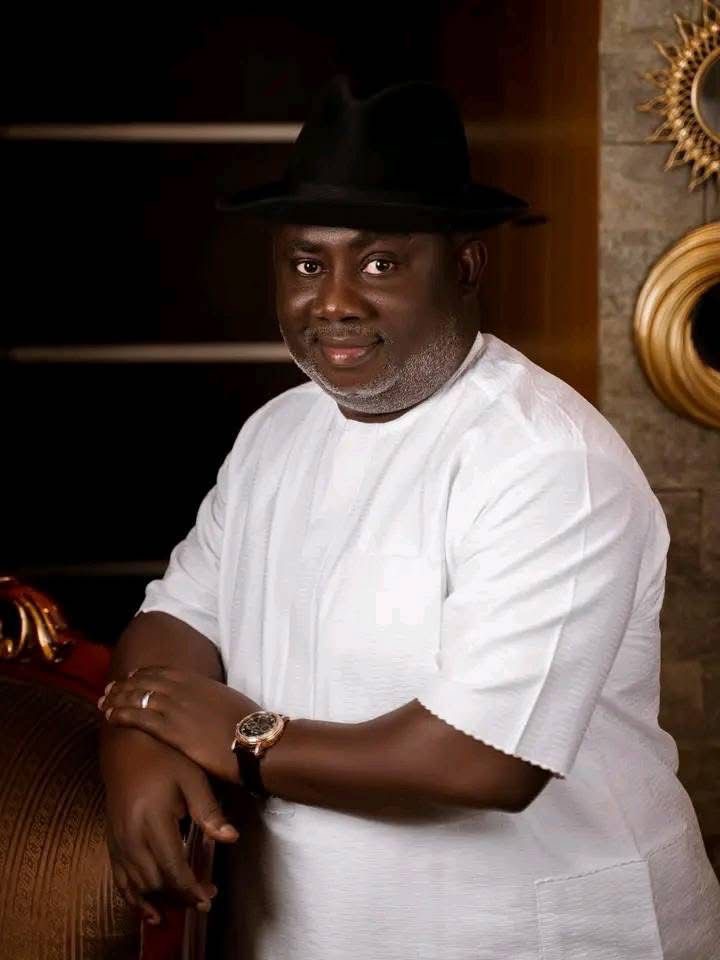
….congratulates new State Party Chairman, Warman Ogoriba
APC Deputy Governorship Candidate in the 2023 general elections in Bayelsa State, Great Joshua MacIver has declared his total commitment to the re-election of President Bola Tinubu come 2027, declaring that the Tinubu re-election project is non-negotiable.
Great Joshua MacIver, in his statement titled ” BAYELSA APC CONGRESSES: GOING FORWARD, A CALL TO LOOK INWARDS” and made available to newsmen in Yenagoa, warned APC leaders in the state to look Inward and take note of certain factors which may hinder or cut short our victory.
According to Great Joshua MacIver, such noticeable pitfalls include the imbalance in the united front being put up by the State Governor,Senator Douye Diri among various political blocs in the state.
In the statement issued at the weekend. Great Joshua MacIver stated that “First, before His Excellency, Senator Douye Diri, joined the APC in the state, there were clearly two political blocs that made up the party, with the approximate population ratios of the blocs standing at 95% to 5%.”
“After the entrance of His Excellency, Senator Douye Diri, ONLY THE SMALLER BLOC IS BEING CARRIED ALONG IN THE AFFAIRS OF THE PARTY, leaving the greater percentage to their fate, and this situation has the potential to build anger and dissatisfaction in our dear party.”
” The consequence of this has been the high level defection we have witnessed in the party recently and we believe more may likely follow, if we do not put our house in order.”
” If we do not pull together as a party, we may witness a situation where we will lose key stakeholders, especially after the State and National Assembly Primaries as well the Gubernatorial Primaries.”
“Finally, while it is very clear that we are the party to beat in the 2027 elections and that our loyalty to Mr. President IS NON-NEGOTIABLE, we must make haste to say that we cannot afford to create situations or loopholes in our unity which will be exploited by other political interests in the state. We cannot afford to under-rate anyone.”
“Our core interest remains the re-election of Mr. President, a project to which we have committed our all. We also pledge our total loyalty to the party as we have no alternative to the APC. However, our concern is that we must, as a party, look inwards and ensure that we do not create loopholes that can impede our common goal.”
Great Joshua MacIver, however congratulated the newly elected State Executives of the APC in Bayelsà State led by Hon. Warman Ogoriba, saying their emergence is welcomed at this critical time in our national history.
At least 23 people were killed in a series of suspected suicide bombings, police in Nigeria’s northeastern city of Maiduguri said on Tuesday.

https://www.stanbicibtcbank.com/nigeriabank/personal/products-and-services/all-loans/stanbic-ibtc-mreif-home-loans
More than 100 other people were injured in the blasts that took place on Monday evening in the capital of Nigeria’s restive Borno state.
No group has claimed responsibility for the suspected attacks.
The deadly blasts come after a military post was attacked overnight Sunday to Monday, which authorities blamed on suspected Islamist militants.
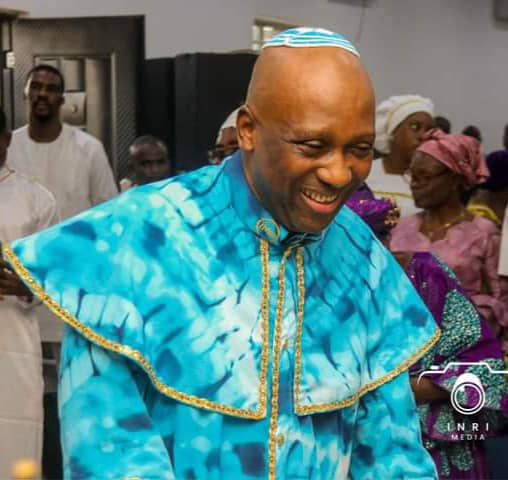
This sad incident is coming barely two weeks after Primate Elijah Ayodele, the Leader of INRI Evangelical Spiritual Church specifically warned against attacks in some states. He mentioned these states while calling on security operatives to pay close attention to them.
These were his words:
“Another attack is coming up in these following states where the military must watch carefully and intelligently; Kano, Kaduna, Zamfara, Kebbi, Niger, Borno, Kwara and Kogi state. They want to do a deadly attack, it’s preventable but it depends on how they will handle it. I have told you about the danger coming up.”
@primateayodele
Unfortunately, some of our military agencies don’t believe spiritual intelligence can save the country from so much danger hence, their neglect of this prophetic warning but now, it has been fulfilled with the miliary losing credibility by the day while Primate Ayodele continues to gain momentum.
Likewise, At least 26 passengers and crew sustained varying degrees of injuries on Monday following an accident involving the Kaduna–Abuja train, according to the Nigerian Railway Corporation (NRC).
Opeifa explained that the train departed Rigasa in Kaduna at 7:15 a.m. and was approaching Asham station around 9:16 a.m. when a loud bang was heard after the power car and trailing locomotive collided with one of the passenger coaches.
In July 2025, Primate Ayodele asked nigerians to pray not to see train mishap on the Kaduna-Abuja route.
@primateayodele #nigeriantiktok🇳🇬 #fulfillment #train #abuja #primateayodele
“Let’s pray not to see train mishap in Abuja-Kaduna, Kaduna-Abuja route.”
This has also been fulfilled.


-

 society7 months ago
Religion: Africa’s Oldest Weapon of Enslavement and the Forgotten Truth
-

 news4 months ago
WHO REALLY OWNS MONIEPOINT? The $290 Million Deal That Sold Nigeria’s Top Fintech to Foreign Interests
-

 society6 months ago
“You Are Never Without Help” – Pastor Gebhardt Berndt Inspires Hope Through Empower Church (Video)
-

 celebrity radar - gossips2 months ago
Dr. Chris Okafor Returns with Power and Fire of the Spirit -Mounts Grace Nation Altar with Fresh Anointing and Restoration Grace on February 1, 2026
You must be logged in to post a comment Login
You must log in to post a comment.