
celebrity radar - gossips
President Bola Ahmed Tinubu: The action man Nigeria needed all along? Toby Jacob

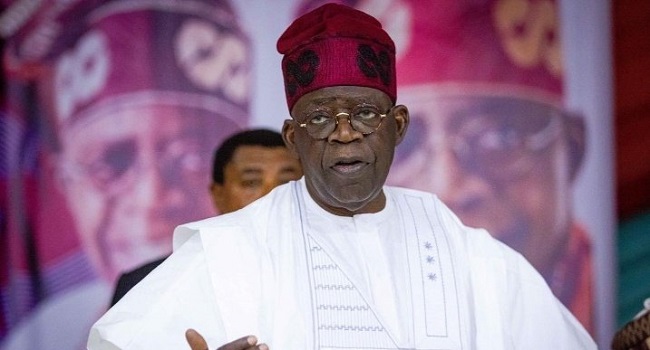
President Bola Ahmed Tinubu: The action man Nigeria needed all along?
-
Toby Jacob
President Bola Ahmed Tinubu, GCFR, has so far demonstrated unwavering determination to drive tangible progress and establish fruitful alliances across party lines in just nine days since assuming office. A self-proclaimed talent hunter who is generally regarded as a results-oriented action man, a master negotiator, and a strategist, he already displays an uncanny ability to pursue results in the general interest of all Nigerians regardless of party affiliations. From his deft handling of the fallout of the fuel subsidy removal to dousing the labour union situation and, more recently, his impassioned charge to state governors across party lines, could these early days signpost the direction of the Tinubu Administration – one that will be marked by pragmatic, hands-on leadership, as well as direct consultations with varied interest and political groups? More importantly, do the quality of his first set of state house appointments point toward the future of his government? Some believe this is the kind of leadership Nigeria has needed all along.
With these first state house appointments of Prince Adedamilotun Aderemi as his Personal Assistant, Rt. Hon. Femi Gbajabiamila as his Chief of Staff, and Victor Adeleke as his State Chief of Protocol, the Tinubu administration seems to have set the stage for a transformative era through the appointment of exceptional individuals who embody brilliance, experience, and a deep sense of patriotism into his statehouse team with his first appointees displaying a blend of youth, political dexterity, and diplomatic experience respectively.
Here are the profiles of President Tinubu’s first political State House appointees:
Personal Assistant – Prince Adedamilotun Aderemi, Young Commercial Lawyer, Crown Prince of Ile-Ife
President Bola Ahmed Tinubu, GCFR recently appointed 37-year-old Prince Adedamilotun Aderemi as the Personal Assistant to the President. Prior to his appointment, Damilotun was Personal Assistant to Asiwaju Bola Tinubu for 5 years.
Prince Aderemi is a lawyer par excellence, an active distinction student who achieved first-class academic results in Sciences and in the Arts; Bsc Chemistry, Imperial College London and LL.B Hons Upper Second Class, University of Buckingham. He earned an LLM in International and Commercial Law, specializing in International Law with distinction) from the University of Buckingham and was called to the Nigerian Bar in August 2014.
In practice, Prince Aderemi co-authored a number of practice guides, including “A practical guide on the Impact of New Anti-Money Laundering Regulations.” He advised on a number of unprecedented matters including; a Federal Government $300 million (USD ) diaspora bond, the first US SEC registered bond issued by Nigeria, and the most subscribed ( $ 500 million (USD)) Eurobond Issuance in sub-Saharan Africa.
A crown prince of Ife, Damilotun is the grandson of Ooni Adesoji Aderemi, King of the ancient city of Ile-Ife Kingdom from 1930- 1980. He is also the great-grandson of Chief Obafemi Awolowo, the great sage.
He is described by many as a level-headed strategist, with a passionate and patriotic heart for all things Nigerian, for which he constantly seeks new ways to make Nigeria better.
Chief of Staff – Rt. Hon Femi Gbajabiamila, Distinguished Lawyer, Former Speaker of the House of Representatives
Femi Gbajabiamila’s appointment as Chief of Staff further reiterates President’s Tinubu’s seriousness about selecting accomplished, long serving technocrats with track
records to key positions.
Elected Speaker of the House of Representatives in June 2019, Gbajabiamila is recognised as one of Nigeria’s most accomplished law makers. A distinguished lawyer, he graduated at the top of his class at the University of Lagos and was called to the Nigerian Bar in 1984. He proceeded to the USA, where he graduated Magna Cum Laude from John Marshall and earned for himself a Juris Doctor degree. He then went on to write and pass the Georgia Bar exams, after which he set up another thriving law office where he practised until his return to Nigeria.
With encouragement and support from President Tinubu, then governor of Lagos, Gbajabiamila delved into partisan politics in 2003 on the platform of the then Alliance for Democracy and thereafter was elected for six consecutive terms to represent the people of Surulere 1 Federal Constituency of Lagos in the National Assembly. He served as the Minority Whip of the house, and by the end of his second term in office, Gbajabiamila had sponsored the highest number of Bills in the National Assembly.
State Chief of Protocol – Victor Adeleke, Career Diplomat, Former Permanent Representative to the African Union and UNECA
President Bola Tinubu State Chief of Protocol (SCOP) appointee, Victor Adeleke is a long serving ( 30 years) diplomat par excellence. Prior to his appointment Adeleke was Ambassador Extraordinary, Plenipotentiary of the Federal Republic of Nigeria to Ethiopia, with concurrent accreditation to Djibouti and Nigeria’s Permanent Representative to the African Union and the United Nations Economic Commission for Africa in Ethiopia.
Legally trained, Adeleke graduated from the Obafemi Awolowo University, lle-Ife, was called to the Nigerian Bar in 1991, before he proceeded to join the Foreign Service in 1993 where he trained in International Law and Diplomacy at the Foreign Service Academy. He was later deployed as Personal Assistant to the Minister of Foreign Affairs in 1997 before being posted to the Embassy of Nigeria in Beijing, China(1998-2000), where he acted as key representative of NIgeria on political and economic matters. He moved on to the Head Chancery administration in Brasilia, Brazil in 2001 acting as a key political liaison between both countries. Adeleke’s talent was noted in service, Notably, in 2010 President Goodluck Ebele Jonathan (2010) requested that he be deployed as Assistant Director of Protocol at State house, Aso Rock Presidential Villa, Abuja.
Adeleke served exceptionally well, noted for his cool-headedness, excellent management style and well-roundedness he was deployed to Warsaw, Poland in 2010 to assist with developing Nigeria’s relationship with the country. Thereafter in 2017, he proceeded to head the Economic, Trade, and Industry section of the Nigeria High Commision in London, whilst concurrently Deputising the Head of Mission at the Nigerian embassy in Ireland.




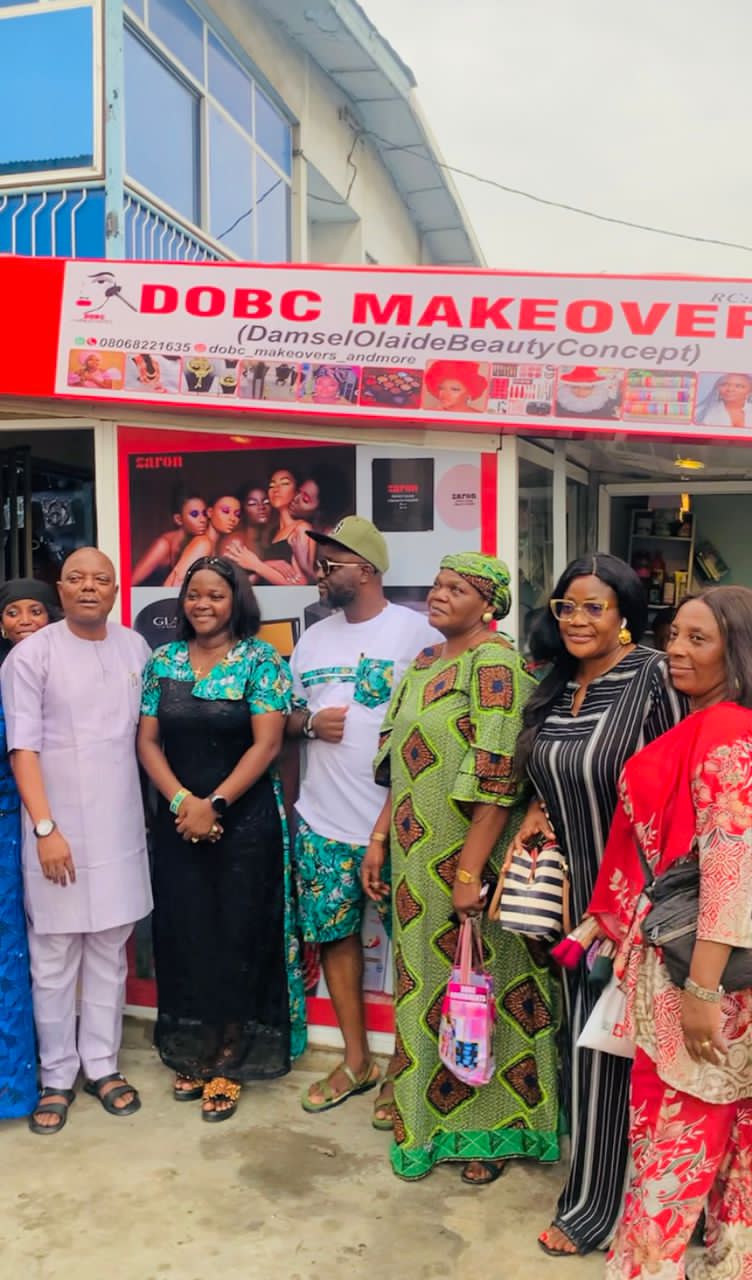
Beauty Meets Glamour as Olaide Ogunyemi Opens New Studio in Mushin
Popular Nollywood actress and professional makeup artiste, Olaide Ogunyemi Oluwayemisi aka Damilola, has expanded her footprint in the beauty industry with the grand opening of her new makeup studio in Lagos.
The talented thespian, who is also the Chief Executive Officer of @Dobc_makeovers_andmore, officially unveiled the ultra-modern beauty space last Thursday, April 2, 2026, in a colourful ceremony filled with glamour, fashion, and pageantry.
Strategically located at 101 Palm Avenue, right beside FitPlus and Sparklight Hospital in Mushin area of Lagos, the new studio is designed to offer top-notch beauty services, reflecting Ogunyemi’s commitment to excellence and professionalism in the ever-growing makeup industry.
The opening ceremony attracted friends, colleagues from the Nollywood industry, beauty enthusiasts, and well-wishers who came out in large numbers to celebrate the entrepreneur’s latest milestone. Guests were treated to a vibrant atmosphere that showcased creativity, style, and the evolving standards of the beauty business in Lagos.
Speaking at the event, Ogunyemi expressed her excitement and gratitude, noting that the new studio represents years of hard work, dedication, and passion for her craft. She reaffirmed her commitment to delivering premium beauty services while empowering aspiring makeup artistes.
The launch of the studio further cements her reputation as a dynamic force, successfully blending her career in Nollywood with a thriving beauty brand.
With this latest development, Olaide Damilola Ogunyemi continues to inspire many young entrepreneurs, proving that talent, consistency, and vision remain key drivers of success in Nigeria’s creative and business landscape.


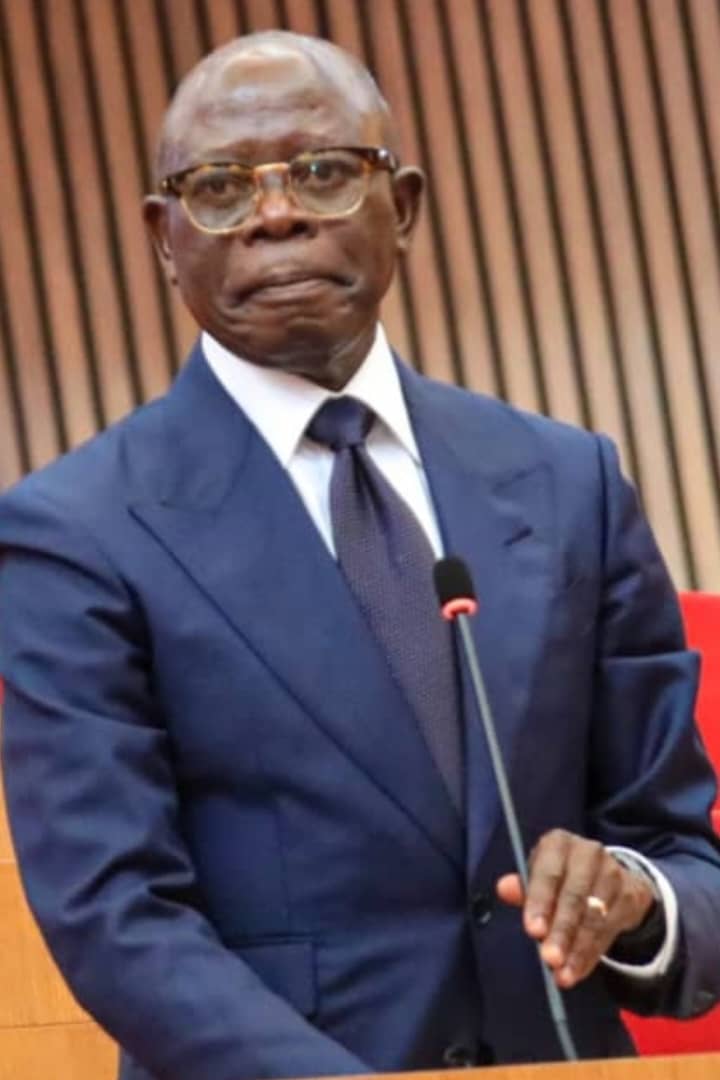
Daniel Eromosele Eulogize Adams Oshiomole as he turns 74 years
Today, I celebrate an exceptional leader, a fearless voice for the people, and a man whose life has remained a symbol of courage, sacrifice, and unwavering commitment to justice—Distinguished Comrade Senator Adams Aliu Oshiomhole.

Your journey has been nothing short of inspiring. From your days as a vibrant labour leader to your impactful tenure as the Executive Governor of Edo State, and now as a respected Senator of the Federal Republic, you have consistently demonstrated what it means to serve with integrity, strength, and purpose. Your contributions to the growth of our nation and the development of Edo State remain indelible and deeply appreciated.
You have not only built structures and institutions but have also built people. I am personally a beneficiary of your leadership, your guidance, and your belief in empowering others. Your influence in my life has been profound, and I remain grateful for the opportunities and inspiration you have given me.
On this special day, I celebrate not just your achievements, but the man you are—resilient, principled, and ever committed to the progress of Nigeria and her people.

May this new year bring you renewed strength, greater wisdom, good health, and more remarkable accomplishments. May your legacy continue to shine brighter with each passing year.
Happy Birthday, sir. Wishing you many more fruitful and impactful years ahead.
celebrity radar - gossips
Accolades to Empress Genevieve Wining as she Celebrate birthday in Grand style

Accolades to Empress Genevieve Wining as she Celebrate birthday in Grand style
Emmanuel Clement
Vilnius, Lithuania – The Grand Hotel Vilnius will host a grand birthday celebration in honor of Her Majesty The Empress Genevieve Wining of the United Kingdom of Atlantis (UKA) on April 4th, 2026.
The four-day event promises to be an extravagant affair, marking the special birthday of Empress Genevieve Wining. The celebration will take place at the prestigious Grand Hotel Vilnius, Lithuania, renowned for its luxurious ambiance and exceptional service.

According to the event flyer, the birthday celebration will be a spectacular occasion, fitting for an empress. Guests can expect an elegant setting adorned with golden accents, sparkling champagne, and festive decorations, creating a regal atmosphere befitting the occasion.
The Empress Genevieve Wining of UKA is expected to grace the event, which will include various festivities and celebrations in her honor. The occasion aims to bring together dignitaries, followers, and guests to commemorate the empress’s birthday with grandeur and joy.
For media inquiries, accreditation, or further information about the birthday celebration of The Empress Genevieve Wining of UKA, please contact the event organizers.
Courtesy of His Excellency Emperor Prof. Solomon Wining. UKA


- Seychelles Strengthens Human Rights Reporting through National Workshop April 8, 2026
- ABB’s Application Configurator brings speed and precision to grid-feeding protection system design April 7, 2026
- Can Equatorial Guinea Reposition as West Africa’s Gas Hub? April 7, 2026
- Afreximbank Partners with African Energy Week 2026 to Drive Africa-Led Energy Deals April 7, 2026
- Merck Foundation Marks ‘World Health Day’ 2026 – Transforming Patient Care in Africa and Beyond through 2600+ Scholarships for Healthcare Providers From 52 Countries April 7, 2026
- Morocco Gas Plan Reset Could Open Door to New Investment Models April 7, 2026
- African Petroleum Producers Organization (APPO) Secretary General Joins Angola Oil & Gas (AOG) 2026 as African Energy Bank Eyes June 2026 Debut April 7, 2026
- Ghanaian Biomedical Specialist Receives International Award April 7, 2026
- Grey Connects the Africa-Canada Money Corridor With Instant Transfers via Interac April 7, 2026
- Nigeria’s Oil Revival in Focus as Petroleum Minister Lokpobiri Joins Paris Energy Forum April 7, 2026
- Seychelles Strengthens Human Rights Reporting through National Workshop April 8, 2026
- ABB’s Application Configurator brings speed and precision to grid-feeding protection system design April 7, 2026
- Can Equatorial Guinea Reposition as West Africa’s Gas Hub? April 7, 2026
- Afreximbank Partners with African Energy Week 2026 to Drive Africa-Led Energy Deals April 7, 2026
- Merck Foundation Marks ‘World Health Day’ 2026 – Transforming Patient Care in Africa and Beyond through 2600+ Scholarships for Healthcare Providers From 52 Countries April 7, 2026
- Morocco Gas Plan Reset Could Open Door to New Investment Models April 7, 2026
- African Petroleum Producers Organization (APPO) Secretary General Joins Angola Oil & Gas (AOG) 2026 as African Energy Bank Eyes June 2026 Debut April 7, 2026
-

 news4 months ago
WHO REALLY OWNS MONIEPOINT? The $290 Million Deal That Sold Nigeria’s Top Fintech to Foreign Interests
-

 society7 months ago
“You Are Never Without Help” – Pastor Gebhardt Berndt Inspires Hope Through Empower Church (Video)
-

 celebrity radar - gossips2 months ago
Dr. Chris Okafor Returns with Power and Fire of the Spirit -Mounts Grace Nation Altar with Fresh Anointing and Restoration Grace on February 1, 2026
-

 celebrity radar - gossips4 months ago
Prophet Kingsley Aitafo Releases 2026 Prophecy: ‘Nigeria Will Rise, but the World Must Prepare for Turbulence’