
Business
‘President Muhammadu Buhari; A year in office a global decadence to Nigeria’ – Hon. Ifemosu

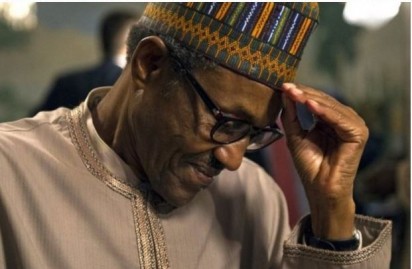


2015, President Muhammadu Buhari, PMB, won the Presidential election after a keen contest with the then incumbent President, Dr. Goodluck Jonathan, most Nigerians were happy thinking that the “messiah” that will take Nigerians from the woods to the “Promised Land” had come.
Many, also jubilated with the firm belief that the ‘’change’’ which he and his Party, the All Progressives Congress, APC, promised Nigerians was certainly going to transform Nigeria.
But with just about a year of his administration in office, PMB is still apportioning blames rather than proffering solutions.
Rather than shop for those that will help him fix the nation’s bleeding economy, President Buhari is busy globetrotting; spending the little resources that Nigeria is left with abroad and returning back home with little or no results for his missions abroad.
Below are some of the highlighted reason why PMB has actually failed Nigeria:
*During the 2015 presidential electioneering campaigns, PMB, promised to make the Naira equivalent to the United States of America Dollar.
With this pronouncement, most of us where happy since our economy is an import dependent one.
As at May 29, 2015, when he assumed office, the value of the Naira to the Dollar, in the black market was N195.00 against its current rate of N400.00.
As a result of this, cost of almost every commodity in the market has skyrocketed.
About Few months ago, his government announced that 500,000 unemployed graduates were to be employed as teachers.
Again, this was welcomed with much applause.
But just recently, the PMB led government announced that these teachers would be trained under its social welfare scheme to serve as voluntary teachers; what a deceit.
I termed this as Unpreparedness for leadership.
To prove PMB’s unpreparedness for leadership, in April 2015, after the Presidential election, he mentioned to Nigerians that he was not sure that former President Goodluck Jonathan will concede defeat.
To further buttress this position, it took President Buhari about seven months to appoint his ‘’saints’’ Ministers.
Ministers without any allegation of fraud.
To make matters worse, it took Buhari nine months to discover that the recently sacked 26 Agency heads were working for the PDP, as announced by the APC Chairman, Chief John Odijie-Oyegun.
*Budget Padding
Again, to show how unserious he runs the business of Nigeria, it took the President too long to get the 2016 budget passed.
His “Zero-based” budget of 6 trillion for the “change” agenda, presented with so much fanfare, expected to perform wonders for Nigerians, has been rejected by the National Assembly because of massive blunders discovered in the document after it was initially declared missing.
What does PMB and his APC Led government take Nigerians for? According to the late reggae icon, Bob Marley, you can fool some people sometimes but you can’t fool all the people all the time.
With reference to the controversial budget, full of concocted huge sums of Naira, with so many so-called errors attributed to the Presidency, how can a government that means well for its citizens plan a higher budget for its Ministry of Information against a lesser one for the Ministry of Agriculture in a country plagued by poverty, hunger and starvation? Or is this deliberate in other to equip the Minister for Information and Culture, Alhaji Lai Muhammed, for what he knows how to do best; propaganda.
How did N5 million proposed for buying computers for the News Agency of Nigeria (NAN) and the Film and Video Censors Board mysteriously became N398 million? What error accounts for the N3.8 billion allocated for capital projects at the State House Clinic meant for the president, vice-president and their families alone; compared to the N2.6 billion allocated for all the 17 government teaching hospitals nationwide.
Based on the foregoing, is the budget truly a reflection of how PMB loves Nigerians and the Nigeria he once cried for? Is it also a true reflection of the “change” he promised? What brands of tyres, batteries, fuses, c-caution signs, fire extinguishers and towing ropes will amount to more than quarter of a billion Naira of tax payers’ money, considering the fact that this budget is just for one year and that some of the listed items come with brand new cars.
How can a President who claims to be fighting corruption present such a budget?
Exposing Nigeria to external aggression
President Buhari goofed seriously when he made the Dasukigate investigation public.
Even in the advanced world, matters of national security are handled secretly on-the-need-to-know bases.
But in PMB’s case, he preferred to make a big show with it thereby exposing the nation’s vulnerability and susceptibility to external military aggression and possible invasion by any country; no matter how small that may want to display its military might and superiority.
PMB, in doing this, forgot he took an oath to protect Nigerians.
*Lack of tolerance for the opposition.
PMB’s intolerance for the opposition remains unparalleled.
He has not congratulated any governor in the opposition political parties who emerged victorious in any election, since he assumed office as President.
This may also be the reason his anti corruption fight is perceived to be a vendetta mission, an attempt to reduce the opposition to nothing.
This writer is not against the anti corruption stance of Mr. President but his approach is seriously assuming a dangerous dimension; Nigerians are watching.
PMB’s corruption war seems to be targeted and limited to the Jonathan’s administration.
Is PMB telling Nigerians that previous administrations were corruption free? Or is it because Dr. Jonathan did not in the military? What are the reasons for limiting this fight to Jonathan’s administration and the PDP alone? What about the men in his cabinet, whose names are associated with so many alleged corruption issues? Is PMB surrounded by saints, is he saying that all present and former governors of the APC are corruption free or they never corruptly enriched themselves? In about three months , his administration will be one year.
Nigeria needs a president that can move her forward not one that has taken her 30 years backwards.
What about his party leaders who have been alleged to have converted state government properties into their personal properties? Why has PMB refused to tell Nigerians the source of funding for his electioneering campaigns and how those who funded it with billions of Naira acquired such stupendous wealth? What about the numerous under aged Nigerians that voted for him in the northern part of the country which may have contributed to his emergence as president; has he made any categorical statement to condemn this act? How can a President, who was corruptly voted into power fight corruption? How can a President whose election campaigns were corruptly funded by corrupt persons who allegedly corruptly enriched themselves fight corruption?
Nigeria’s business is a serious one; not meant for people who lack vision to move the nation forward.
Nigerians are tired of his anti corruption mission which is not even yielding fruits.
His anti corruption fight is seriously hemorrhaging the nation’s economy.
*Fuel hike/Scarcity.
It took PMB to aggravate the suffering of Nigerians by increasing the price in PMS, it will be recalled that the minister of petroleum (state) kachikwu stated it categorically that fuel Scarcity will end by may, not knowing there is a plan B to subsidized and increase fuel Scarcity, it is a known fact that earlier in 2015, PMB stated that there is nothing like Fuel subsidy, only to come in 2016 to subsidized it at a higher price.
Nigerians are hungry.
And rather than spend the past eleven and half months since he assumed office to fight hunger, starvation, poor health care delivery systems, and shelter for the homeless, PMB has been busy junketing the entire globe and painting Nigerians black as corrupt people.
Is it his war against corruption that has refused to yield results as buttressed by a recent statement by the Economic and Financial Crimes Commission (EFCC) boss, Ibrahim Magu, that “senior lawyers are frustrating the war against corruption? Is it his victory over Boko Haram which he claimed can no longer carry out any conventional attack yet they bombed Maiduguri, Borno State capital, killing and injuring scores? The same Boko haram bombed an IDP camp too killing and injuring scores of harmless women and children he swore to protect.
And just recently, the same group of terrorists razed Mala Keri in Konduga Local Gorvernment Area of Borno State.
Is it the “padded zero-based” budget of “change” corruptly designed to enrich some pockets which they also claimed some rats smuggled some items into it, as reported by the BBC or the Treasury Single Account (TSA) which he recently pronounced was a creation of Dr. Goodluck Ebele Jonathan’s administration? Would it be only the Dasukigate? Of what immediate benefit is Dasukigate to Nigerians compared with the sorry state of the Naira or faulty policies like the one which has caused even students inability to pay their school fees abroad?
President Muhammadu lacks clues on how to move Nigeria forward. He also lacks the capacity to be Nigeria’s president.
This is because he equally lacks ideas on how to diversify the economy of this great nation blessed with abundant natural and human resources.
His team also lacks cutting edge ideas that will take Nigeria out of the woods.
They have nothing new to offer as his “miracle making” and “saints” ministers are of the old school or old brigade with little or no achievements to show in their past leadership roles except for Babatunde Raji Fashola the minister of darkness who could only increase the electricity tariff and stop importation of Generators.
Nigeria, a country with about 220 million people does not need a president that lacks a 22nd century vision.
We need one with solutions to her challenges.
The kind of president that can set the propellers and the turbines of Nigeria’s economy running rather than bringing it to a total halt; a president that can place the most populous black nation in the world, in its rightful place, in the committee of nations.
Ifemosu Michael Adewale.
An activist, Founder Youth in Good Governance initiative (YIGGI).


Tinubu Aide Rebuts Rufai Oseni Over ₦3.3tn Power Debt Deal
Business
Aare Adetola Emmanuelking Welcomes President Tinubu to Gateway International Airport Commissioning in Iperu-Remo

Aare Adetola Emmanuelking Welcomes President Tinubu to Gateway International Airport Commissioning in Iperu-Remo
In a momentous occasion that underscores the rapid infrastructural advancement of Ogun State, renowned real estate mogul and philanthropist, Aare Adetola Emmanuelking, warmly received the President of the Federal Republic of Nigeria, Bola Ahmed Tinubu, at the official commissioning of the Gateway International Airport, located in Iperu-Remo.
The landmark event, held under the visionary leadership of the Ogun State Governor, Dapo Abiodun, marks a significant stride in the state’s economic transformation agenda, positioning Ogun as a key hub for aviation, commerce, and investment in Nigeria.
Aare Emmanuelking, who is also the Chairman/CEO of Adron Homes and Properties, commended the Ogun State Government for its foresight and commitment to infrastructural excellence. He described the airport project as a “game-changer” that will not only boost connectivity but also stimulate real estate growth, tourism, and industrial expansion across the region.
Speaking during the commissioning, President Tinubu lauded Governor Abiodun’s administration for delivering a world-class facility that aligns with the Federal Government’s Renewed Hope Agenda, emphasizing the importance of strategic infrastructure in driving national development.
The Gateway International Airport is expected to serve as a critical gateway for investors and travelers, further enhancing Ogun State’s reputation as one of Nigeria’s most business-friendly environments.
The presence of top dignitaries, industry leaders, and stakeholders at the event underscores the project’s significance and its anticipated impact on the state’s socio-economic landscape and beyond.

N4.65 Trillion in the Vault, but is the Real Economy Locked Out?
BY BLAISE UDUNZE
Following the successful conclusion of the banking sector recapitalisation programme initiated in March 2024 by the Central Bank of Nigeria, the industry has raised N4.65 trillion. No doubt, this marks a significant milestone for the nation’s financial system as the exercise attracted both domestic and foreign investors, strengthened capital buffers, and reinforced regulatory confidence in the banking sector. By all prudential measures, once again, it will be said without doubt that it is a success story.
Looking at this feat closely and when weighed more critically, a more consequential question emerges, one that will ultimately determine whether this achievement becomes a genuine turning point or merely another financial milestone. Will a stronger banking sector finally translate into a more productive Nigerian economy, or will it be locked out?
This question sits at the heart of Nigeria’s long-standing economic contradiction, seeing a relatively sophisticated financial system coexisting with weak industrial output, low productivity, and persistent dependence on imports truly reflects an ironic situation. The fact remains that recapitalisation, by design, is meant to strengthen banks, enhancing their ability to absorb shocks, manage risks and support economic growth. According to the apex bank, the programme has improved capital adequacy ratios, enhanced asset quality, and reinforced financial stability. Under the leadership of Olayemi Cardoso, there has also been a shift toward stricter risk-based supervision and a phased exit from regulatory forbearance.
These are necessary reforms. A stable banking system is a prerequisite for economic development. However, the truth be told, stability alone is not sufficient because the real test of recapitalisation lies not in stronger balance sheets, but in how effectively banks channel capital into productive economic activity, sectors that create jobs, expand output and drive exports. Without this transition, recapitalisation risks becoming an exercise in financial strengthening without economic transformation.
Encouragingly, early signals from industry experts suggest that the next phase of banking reform may begin to address this long-standing gap. Analysts and practitioners are increasingly pointing to small and medium-sized enterprises (SMEs) as a key destination for recapitalisation inflows, which is a fact beyond doubt. Given that SMEs account for over 70 percent of registered businesses in Nigeria, the logic is compelling. With great expectation, as has been practicalised and established in other economies, a shift in credit allocation toward this segment could unlock job creation, stimulate domestic production, and deepen economic resilience. Yet, this expectation must be balanced with reality. Historically, and of huge concern, SMEs have received only a marginal share of total bank credit, often due to perceived risk, lack of collateral, and weak credit infrastructure.
Indeed, Nigeria’s broader financial intermediation challenge remains stark. Even as the giant of Africa, private sector credit stands at roughly 17 percent of GDP, and this is far below the sub-Saharan African average, while SMEs receive barely 1 percent of total bank lending despite contributing about half of GDP and the vast majority of employment. These figures underscore the structural disconnect between the banking system and the real economy. Recapitalisation, therefore, must be judged not only by the strength of banks but by whether it meaningfully improves this imbalance.
Nigeria’s economic challenge is not merely one of capital scarcity; it is fundamentally a problem of low productivity. Manufacturing continues to operate far below capacity, agriculture remains largely subsistence-driven, and industrial output contributes only modestly to GDP. Despite decades of banking sector expansion, credit to the real sector has remained limited relative to the size of the economy. Instead, banks have often gravitated toward safer and more profitable avenues such as government securities, treasury instruments, and short-term trading opportunities.
This is not irrational. It reflects a rational response to risk, policy signals, and market realities. However, it has created a structural imbalance in which capital circulates within the financial system without sufficiently reaching the productive economy. The result is a pattern where financial sector growth outpaces real sector development, a phenomenon widely described as financialisation without productivity gains.
At the center of this challenge is the issue of credit allocation. A recapitalised banking sector, strengthened by new capital and improved buffers, should theoretically expand lending. But this is, contrarily, because the more important question is where that lending will go. Will Nigerian banks extend long-term credit to manufacturers, finance agro-processing and value chains, and support scalable SMEs or will they continue to concentrate on low-risk government debt, prioritise foreign exchange-related gains, and maintain conservative lending practices in the face of macroeconomic uncertainty? Some of these structural questions call for immediate answers from policymakers.
Some industry voices are optimistic that the expanded capital base will translate into a broader loan book, increased investment in higher-risk sectors, and improved product offerings for depositors; this is not in doubt. There are also expectations that banks will scale operations across the continent, leveraging stronger balance sheets to expand their regional footprint. Yes, they are expected, but one thing that must be made known is that optimism alone does not guarantee transformation. The fact is that without deliberate incentives and structural reforms, capital may continue to flow toward low-risk assets rather than high-impact sectors.
Beyond lending, experts are also calling for a shift in how banking success is measured. The next phase of reform, according to the experts in their arguments, must move from capital thresholds to customer outcomes. This includes stronger consumer protection frameworks, real-time complaint management systems and more transparent regulatory oversight. A more technologically driven supervisory model, one that allows regulators to monitor customer experiences and detect systemic risks early, could play a critical role in strengthening trust and accountability within the system.
This dimension is often overlooked but deeply significant. A banking system that is well-capitalised but unresponsive to customer needs risks undermining public confidence. True financial development is not only about capital strength but also about accessibility, fairness, and service quality. Nigerians must feel the impact of recapitalisation not just in improved financial ratios, but in better banking experiences, more inclusive services, and greater economic opportunity.
The recapitalisation exercise has also attracted notable foreign participation, signaling confidence in Nigeria’s banking sector. However, confidence in banks does not necessarily translate into confidence in the broader economy. The truth is that foreign investors are typically drawn to strong regulatory frameworks, attractive returns, and market liquidity, though the facts are that these factors make Nigerian banks appealing financial assets; it must be made explicitly clear that they do not automatically reflect confidence in the country’s industrial base or productivity potential.
This distinction is critical. An economy can attract capital into its financial sector while still struggling to attract investment into productive sectors. When this happens, growth becomes financially driven rather than fundamentally anchored. The risk therefore, is that recapitalisation could deepen Nigeria’s financial markets but what benefits or gains when banks become stronger or liquid without addressing the structural weaknesses of the real economy.
It is clear and explicit that the current policy direction of the CBN reflects a strong emphasis on stability, with tightened supervision, improved transparency, and stricter prudential standards. These measures are necessary, particularly in a volatile global environment. However, there is an emerging concern that stability may be taking precedence over growth stimulation, which should also be a focal point for every economy, of which Nigeria should not be left out of the equation. Central banks in emerging markets often face a delicate balancing act and this is putting too much focus on stability, which can constrain credit expansion, while too much emphasis on growth can undermine financial discipline, as this calls for a balance.
In Nigeria’s case, the question is whether sufficient mechanisms exist to align banking sector incentives with national productivity goals. Are there enough incentives to encourage long-term lending, sector-specific financing, and innovation in credit delivery? Or does the current framework inadvertently reward risk aversion and short-term profitability?
Over the past two decades, it has been a herculean experience as Nigeria’s economic trajectory suggests a growing disconnect between the financial sector and the real economy. Banks have become larger, more sophisticated and more profitable, yet the irony is that the broader economy continues to struggle with high unemployment, low industrial output, and limited export diversification. This divergence reflects the structural risk of financialization, a condition in which financial activities expand without a corresponding increase in real economic productivity.
If not carefully managed, recapitalisation could reinforce this trend. With more capital at their disposal, banks may simply scale existing business models, expanding financial activities that generate returns without contributing meaningfully to production. The point is that this is not solely a failure of the banking sector; it is a systemic issue shaped by policy design, regulatory priorities, and market incentives, which needs the urgent attention of policymakers.
Meanwhile, for recapitalisation to achieve its intended purpose and truly work, it must be accompanied by a deliberate shift or intentional policy change from capital accumulation to productivity enhancement and the economy to produce more goods and services efficiently. This begins with creating stronger incentives for real sector lending with differentiated capital requirements based on sector exposure, credit guarantees for high-impact industries, and interest rate support for priority sectors can encourage banks to channel funds into productive areas and this must be driven and implemented by the apex bank to harness the gains of recapitalisation.
This transformative process is not only saddled with the CBN, but the Development finance institutions also have a critical role to play in de-risking long-term investments, making it easier for commercial banks to participate in financing projects that drive economic growth. At the same time, one of the missing pieces that must be taken into cognizance is that regulatory frameworks should discourage excessive concentration in risk-free assets. No doubt, banks thrive in profitability, as government securities remain important; overreliance on them can crowd out private sector credit and limit economic expansion.
Innovation in financial products is equally essential. Traditional lending models often fail to meet the needs of SMEs and emerging industries as this has continued to hinder growth. Banks must explore new approaches, including digital lending platforms, supply chain financing, and blended finance solutions that can unlock new growth opportunities, while they extend their tentacles by saturating the retail space just like fintech.
Accountability must also be embedded in the system. One fact is that if recapitalisation is justified as a tool for economic growth, then its outcomes and gains must be measurable and not obscure. Increased credit to productive sectors, higher industrial output and job creation should serve as key indicators of success. Without such metrics, the exercise risks being judged solely by financial indicators rather than its real economic impact.
The completion of the recapitalisation programme represents more than a regulatory achievement; it is a defining moment for Nigeria’s economic future. The country now has a banking sector that is better capitalised, more resilient, and more attractive to investors. These are important gains, but they are not ends in themselves.
The ultimate objective is to build an economy that is productive, diversified, and inclusive. Achieving this requires more than strong banks; it requires banks that actively power economic transformation.
The N4.65 trillion recapitalisation is a significant step forward. It strengthens the foundation of Nigeria’s financial system and enhances its capacity to support growth. However, capacity alone is not enough and truly not enough if the gains of recapitalisation are to be harnessed to the latter. What matters now is how that capacity is deployed.
Some of the critical questions for urgent attention are as follows: Will banks rise to the challenge of financing Nigeria’s productive sectors, particularly SMEs that form the backbone of the economy? Will policymakers create the right incentives to ensure credit flows where it is most needed? Will the financial system evolve from a focus on profitability to a broader commitment to the economic purpose of fostering a more productive Nigerian economy and the $1 trillion target?
The above questions are relevant because they will determine whether recapitalisation becomes a catalyst for change or a missed opportunity if not taken into cognizance. A well-capitalised banking sector is not the destination; it is the starting point. The real journey lies in building an economy where capital works, productivity rises, and growth becomes both sustainable and inclusive.
Blaise, a journalist and PR professional, writes from Lagos and can be reached via: [email protected]


-

 society7 months ago
Religion: Africa’s Oldest Weapon of Enslavement and the Forgotten Truth
-

 news4 months ago
WHO REALLY OWNS MONIEPOINT? The $290 Million Deal That Sold Nigeria’s Top Fintech to Foreign Interests
-

 society7 months ago
“You Are Never Without Help” – Pastor Gebhardt Berndt Inspires Hope Through Empower Church (Video)
-

 celebrity radar - gossips2 months ago
Dr. Chris Okafor Returns with Power and Fire of the Spirit -Mounts Grace Nation Altar with Fresh Anointing and Restoration Grace on February 1, 2026
You must be logged in to post a comment Login
You must log in to post a comment.