
celebrity radar - gossips
Remi Tinubu’s heart of stone


Remi Tinubu’s heart of stone
Tunde Odesola
The name, Eve, is not a derivative of the word, evil, though both sound alliteratively similar. It’s a name native to Hebrew, adopted by Latin as Eva, and accommodated by English as Eve.
In Hebrew, Eve means living. But religious male chauvinists are wont to disagree with this meaning and insist that Eve means the opposite of living. Death.
Religious male chauvinists would readily associate Eve with the evil that the Serpent concocted in the beginning of time, at the Garden of Eden, where the bite of an apple contaminated innocence and opened the gate for death to sneak into humanity.
But many feminists would frown on the saying, “Behind every successful man, there’s a woman.” For the feminist, a woman shouldn’t stand behind a man; that’s undignifying. Rather, a woman should stand shoulder to shoulder with any man, and enthuse, “Beside every successful man, there’s a woman.”
Shakespeare needs no introduction or a first name. A recurrent leitmotif in the Shakespearean tragedy of Macbeth is that the brave Thane of Cawdor was blinded by vaulting ambition, which pushes him to murder Duncan, the King of Scotland, and many others, on the bloody road to the throne.
But, I contend that Macbeth’s ambition would have remained an unfulfilled dream if not for the heartlessness of his wife, Lady Macbeth, who has an incurable desire to become the First Lady of Scotland, tearing out Macbeth’s heart from his rib cage and tossing it into a furnace fuelled by blood.
After Macbeth developed cold feet while toying with the idea of killing the king, he quickly banishes from his mind the image of himself on the Scottish throne, preferring to remain a thane than taint his hands with blood.
But his wife, like Adam’s Eve, would hear none of that. The deed must be done! The three predictions of the three witches must come to pass! Macbeth must be king, and she must be First Lady at all cost!
So, when the death rattle of the innocent masses rises up to Nigeria’s Awaiting-First-Lady in the chamber, she steps unto the street and sees a river of blood, but a smile breaks on her lips as she looks beyond the flood of blood and sees a crown, picks it up and saunters back home on the blood, barefooted, as though she was walking on a red Persian rug.
I aver: if Lady Macbeth could attain power without her husband, the wanna-be-first-lady would gladly toss the Thane of Cawdor down the pit of hell, (where they both truly belong), but because she knows that her ambition can only be fulfilled through the vile valour of Macbeth, she decides to stay with him and manipulate him for her use.
Lady Macbeth surely has a lot in common with Nigeria’s scheming First-Lady-In-Waiting. Lady Macbeth sees herself as the sword. She sees her husband, a foremost leader, which means Asiwaju in Yoruba language, as a mere sheath. The slim, tall and fair-skinned wife of the ruthless leader sees herself as the power behind the impending crown.
It’s common knowledge that Nigeria’s political class is crammed with chauvinists. The head of the class, Major General Muhammadu Buhari (retd.), is a first-class chauvinist, who went all the way to Germany and proudly professed before the then most powerful woman in the world and German Chancellor, Angela Merkel, that women are playthings, fit only for satisfying man’s hunger and libido.
One of the many sons of Buhari in the male chauvinism clan is former Senator Dino Melaye, a member of the Peoples Democratic Party from Kogi. Another is serving Senator Elisha Abbo from Adamawa.
Melaye, it was, who desecrated the so-called hallowed precincts of the Red Chamber in 2016 when he reportedly threatened to beat up the matriarch of Bourdillon, Mrs Oluremilekun Tinubu, who has made the Senate her permanent address since 2011.
Melaye, also, allegedly threatened to whip out his manhood and impregnate Remi, a claim the ex-lawmaker has denied, saying Remi has ‘arrived’ menopause and so cannot be impregnated. Melaye revealed that he became angry when Remi called him ‘a thug’, and topped it up with another expletive, ‘a dog’, during a closed-door senate plenary.
Abbo, now a member of the All Progressives Congress, rose to national notoriety barely three months after his election into the Senate in 2019 when he beat up a lady in a sex toy shop which he patronises in Abuja.
But, under Buhari, civil and criminal cases involving his anointed are neither never prosecuted nor concluded. Here, I’ll mention just three for I want to quickly go back to Lady Tinubu.
Nothing is heard about the one thousand and one criminal charges levelled against the Speaker, Lagos House of Assembly, Mudashiru Obasa; disgraced former Chairman, Economic and Financial Crimes Commission, Ibrahim Magu, just disappeared into thin air despite the humongous money and property that allegedly developed wings during his tenure, while the police shockingly arrested the trader assaulted by the Chairman, Code of Conduct Tribunal, Danladi Umar, in March, when a judge turned a street fighter in Abuja.
Back to the beautiful wife of the King of Bourdillon. I was part of an outraged nation when the news of Melaye’s infamous face-off with Remilekun broke five years ago.
I met Senator Remi up-close during a Senate oversight function at the Obafemi Awolowo University, Ile-Ife, about a decade ago. To me, she always cuts the picture of a lovely, motherly, humble and kind soul – even at a distance.
All that changed a few days ago when she hid behind a finger, drew a dagger, and back-stabbed the Nigerian electorate, whom she swore by the Bible to protect, trashing the Constitution and the country and showing herself as the real wolf in sheep’s clothing.
Genuinely worried about the free rein of bloodletting in the 36 states of the federation and Abuja, Kogi senator, Smart Adeyemi, took to the legislative floor to appeal to President Buhari to wake up and act.
Adeyemi wept as he recalled that killings in Nigeria currently are worse than what obtained during the Civil War. He said there was nothing to show for the billions of naira voted for security yearly, calling on the Federal Government to seek foreign military help.
Sitting close to Adeyemi and completely unaware her voice could be picked up by the microphone affixed to each seat, Remi asked Adeyemi, “Are you in PDP? Are you a wolf in sheep’s clothing?” Because they’re in the same party and because she’s the wife of the Jagaban, Adeyemi ignored her and continued to speak to his conscience.
Like Lady Macbeth used blackmail and guile against her husbad, Lady Tinubu also attempted to do the same against Adeyemi, who slayed her with wisdom. What she meant to pass to Adeyemi when she murmured undertone like a lost bee was, “I’m here listening to you; I’ll report you to my husband.”
For Lady Tinubu, it doesn’t matter if 10,000 Nigerians fall to the bullets of insecurity daily inasmuch as the presidential ambition of her husband remains on course. For her, it’s inconsequential if the blood of the Nigerian masses is used to signpost polling units across the country – provided her innermost desire is actualised.
For a woman whom the illustrious Reagan Memorial School, Lagos, was wrongly named after, one would think Lady Tinubu would show love like Miss Lucille Reagan, a Texan missionary, who abandoned her home country, USA, to live and die in Nigeria, giving education and hope to millions of children. Reagan was a mother.
Remi means ‘console me’. But the side remarks of Lady Tinubu against Adeyemi wasn’t consoling. It reminded me of the wife of King Herod and the wife of Potiphar.
It’s raining, it’s pouring, the old man in Abuja is snoring. Nigeria is in danger, we need to break the glass.
Email: [email protected]
Facebook: @tunde odesola
Twitter: @tunde_odesola
ENDS———————-ENDS




celebrity radar - gossips
Adron Homes Celebrates Visionary Chairman, Aare Adetola Emmanuel King, at 51
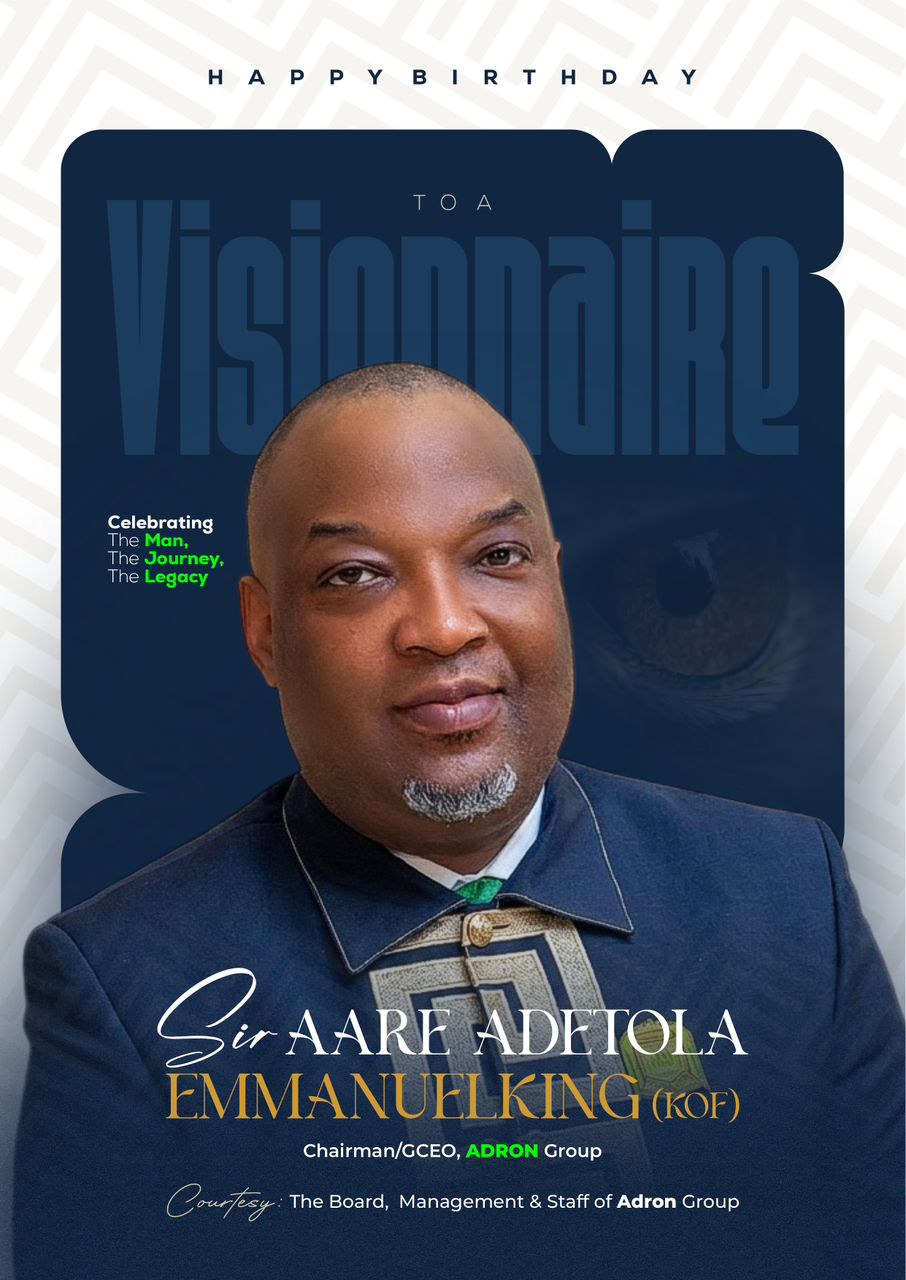
Adron Homes Celebrates Visionary Chairman, Aare Adetola Emmanuel King, at 51
The management and staff of Adron Homes and Properties Limited have joined family, friends, associates, and well-wishers across the globe to celebrate their Chairman and Chief Executive Officer, Aare Adetola EmmanuelKing, as he marks his 51st birthday.

In a statement released by the company, the milestone was described as a celebration of an exceptional leader whose vision, resilience, and entrepreneurial brilliance have not only transformed Adron Homes into a household name in Nigeria’s real estate sector but have also redefined affordable housing across the country.
Under his dynamic leadership, Adron Homes has continued to expand its footprint, delivering value-driven residential solutions while empowering thousands of Nigerians with opportunities for home ownership. His commitment to excellence, innovation, and customer satisfaction has remained the driving force behind the company’s sustained growth and industry leadership.
The statement further highlighted Aare EmmanuelKing’s passion for nation-building and community development, noting his significant contributions to job creation, youth empowerment, and the promotion of socio-economic development through real estate investments.
“As a leader, mentor, and visionary, Aare Adetola EmmanuelKing has consistently inspired a culture of excellence, integrity, and dedication within the organization. His ability to turn bold ideas into reality continues to position Adron Homes as a trailblazer in the industry,” the statement read.
The company expressed profound gratitude for his steadfast leadership and prayed for continued wisdom, strength, and sound health as he embarks on another year of impactful achievements.
As he celebrates his 51st birthday, the entire Adron Homes family proudly honours a man whose legacy continues to shape the future of real estate in Nigeria.
Happy 51st Birthday, Aare Adetola EmmanuelKing!
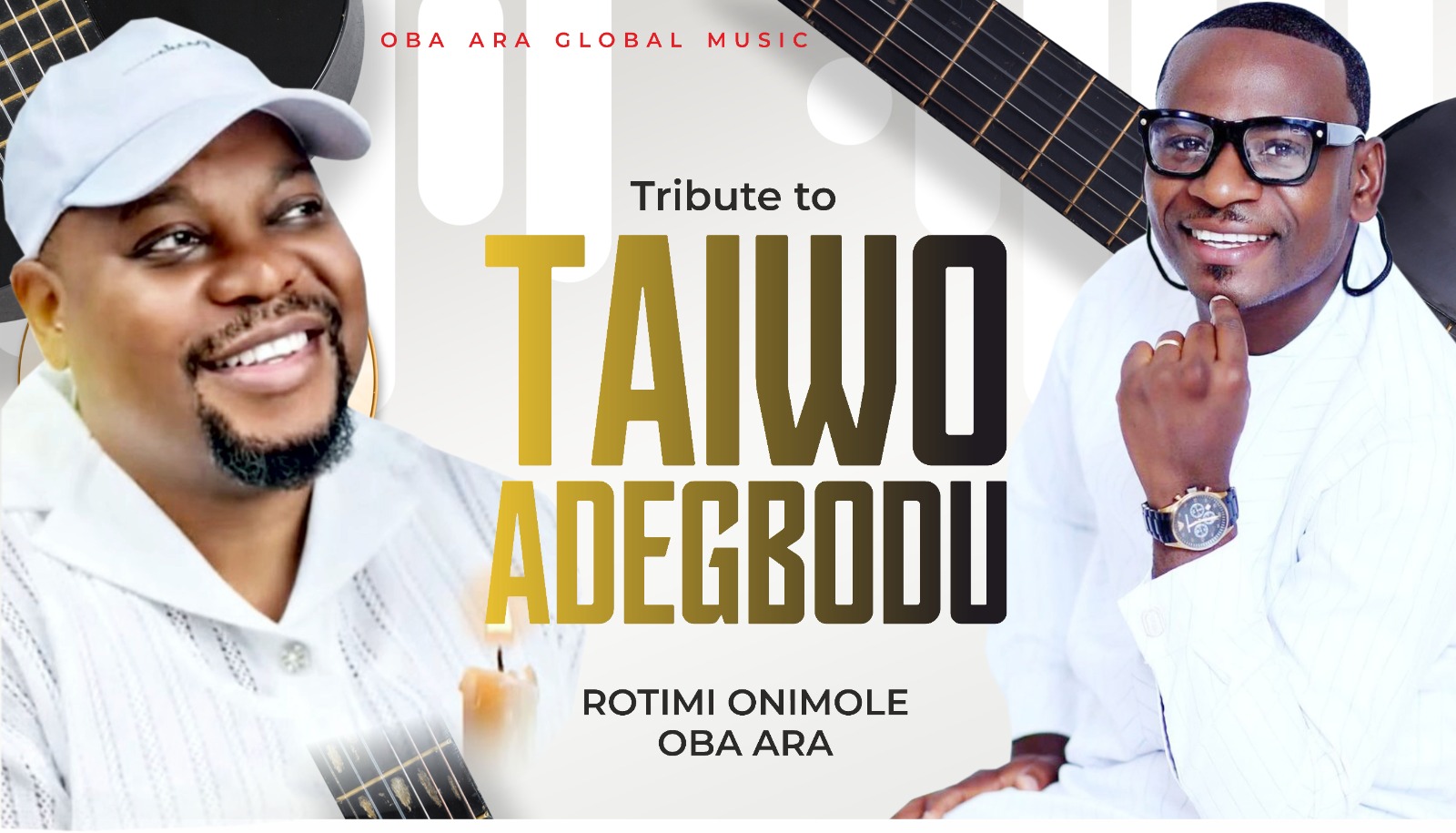
Oba Ara Releases Emotional Tribute to Late Taiwo Adegbodu
Taofik Afolabi
The gospel music community continues to grieve the painful loss of Taiwo Adegbodu, a beloved figure whose sudden departure left a deep void among fans, colleagues, and loved ones. In response to this loss, renowned gospel minister Rotimi Onimole, popularly known as Oba Ara, has released a moving tribute song that captures both the sorrow of the moment and the enduring legacy of the late singer.
Oba Ara, a proud son of Isale Eko, channels raw emotion throughout the song, using heartfelt lyrics and soul-stirring melodies to reflect on his personal connection with Taiwo Adegbodu. In the tribute, he openly expresses how deeply the news of Adegbodu’s passing shook him, describing it as a painful and unexpected loss that is difficult to come to terms with.
The song goes beyond mourning, it celebrates the life, ministry, and impact of Taiwo Adegbodu. Oba Ara highlights the late artist’s dedication to spreading the gospel through music, his inspiring voice, and the spiritual influence he had on many within and beyond Nigeria. Through powerful verses, he paints a picture of a man who lived for God and touched countless lives through his ministry.
Listeners have described the tribute as both comforting and deeply emotional, as it resonates with the collective grief of the gospel music community. It serves as a reminder that although Taiwo Adegbodu is no longer physically present, his music, message, and legacy will continue to live on.
In honoring his late colleague, Oba Ara not only pays his respects but also offers a source of healing for fans and fellow ministers, using music as a tool to process grief and celebrate a life well lived.
celebrity radar - gossips
Buratai, Fagbemi , Shagaya, Olofa, Others Eulogise Olowu Kuta’s Olori On 60th Birthday, Foundation Launch

Buratai, Fagbemi , Shagaya, Olofa, Others Eulogise Olowu Kuta’s Olori On 60th Birthday, Foundation Launch
Eminent personalities across the Nigeria stormed the TFK Event Centre, Bala Mohammed Way, Guzape, Abuja, to celebrate the 60th birthday of Olowu Kuta’s Olori, Queen Jumai Amoke and her Foundation Launch on Saturday 28, March 2026.

From former Chief of Army Staff, Lt Gen TY Buratai rtd, to the Minister of Justice and Attorney-General of the Federation, Prince Lateef Fagbemi; Olofa of Offa, HRM Oba Mufutau Gbadamosi. Even top businesswoman and socialite, Chief (Mrs) Bola Shagaya, was in attendance.


Other dignitaries were newly promoted Deputy Inspector-General of Police and former AIG Zone 2 , Lagos , Adegoke Fayoade, Major General Abdumalik, Major General Samuel Adebayo rtd (Fmr CDI);
Major General Anthony Omozoje rtd (Fmr Copp);
Alhaji Tajudeen Owoyemi (Asiwaju of Offa and CEO Radisson Hotel Nigeria;
Dr Waheed Olagunju, former managing director of Bank of Industry, Oniba of Iba, Lagos State, HRM Oba Dr Suleiman Raji ;
Justice Falola, Olu of Ile-Ogbo , Oba Adetoyese amongst many traditional rulers and captains of industry too numerous to mention.
Speaking at the occasion, the Chief Host, Olowu of Kuta, HRM Oba Dr Adekunle Oyelude Makama, CON , Tegbosun iii, who is also the husband of the celebrant commended Queen Jumai for ‘ her slender arms full of kindness’ to establish such humanitarian Foundation, ‘Amoke Children and mother in Need Foundation’ at a time Nigerians are going through economic crisis occassioned by the global meltdown.
Olowu also commended her steadfastness and love for the less privileged and downtrodden.
The monarch refrenced the task before his wife’s humanitarian gesture said her best is yet to come.
” Olori Amoke Jumai, I celebrate you. You will celebrate 70, 80, 90 and continue to shine as you continue to put a smile on people’s faces. I love you, “Olowu Kuta added.
To Lt Gen Buratai, a former army chief and former Nigerian Ambassador to Benin Republic, the reward of hard work is more work.
Buratai, who also doubles as Balogun Agba of Owu Kuta, a chieftaincy title reserved for a generalismo congratulated Queen Jumai for attaining the age of 60 in good health.
The retired army General said he’s not surprised by the turn out of eminent personalities across the country to celebrate the Olowu Kuta’s Olori because she merited it through her hospitality to all, adding that Allah the most merciful, most beneficial would accept all her act of ibadah.
The minister of Justice, Prince Fagbemi, was full of praises for Queen Jumai for deeming it fit to have a place in her heart to accommodate the needy and less privileged in ‘our society.’
Prince Fagbemi urged the guests to contribute generously to support the Foundation in order to continue to alleviate poverty and put a smile on the faces of the people.
” I congratulate you on your 60th birthday and Foundation Launch. I wish you many happy returns of the day and many more fruitful services to the country and motherland”, Prince Fagbemi added.
The celebrant, Queen Jumai who was grining from ear to ear thankfully said she was excited by the turn out and the response of the people to her foundation.
Queen Jumai, however, promised to continue to use her resources and donations received for the good of the needy and less privileged in the society.
” I want to appreciate my own Kabiesi Olofa of Offa , for his presence and im I’m using him as a point of contact to all other Kabiesis present here, the minister of justice and Attorney-General, you’re welcome, sir; Mrs Bola Shagaya, I salute your enterprise, Lt Gen Buratai, I’m grateful, sir; DIG Fayoade, Justice Falola and other dignitaries too numerous to mention, I thank you, all. To my darling husband, Kabiesi Olowu , I thank you immensely for your support. And to my family and friends, I thank you , all. E se pupo!”, she said.


-

 society7 months ago
Religion: Africa’s Oldest Weapon of Enslavement and the Forgotten Truth
-

 news4 months ago
WHO REALLY OWNS MONIEPOINT? The $290 Million Deal That Sold Nigeria’s Top Fintech to Foreign Interests
-

 society6 months ago
“You Are Never Without Help” – Pastor Gebhardt Berndt Inspires Hope Through Empower Church (Video)
-

 celebrity radar - gossips2 months ago
Dr. Chris Okafor Returns with Power and Fire of the Spirit -Mounts Grace Nation Altar with Fresh Anointing and Restoration Grace on February 1, 2026