
society
REUTERS’ MERCENARY JOURNALISM………Efforts by Reuters to Blackmail the Nigerian Military Through Mercenary Journalism Fails

REUTERS’ MERCENARY JOURNALISM………Efforts by Reuters to Blackmail the Nigerian Military Through Mercenary Journalism Fails
Sadly, Reuters, an international news agency, now part of Thomson Reuters, wrote that it was working on a series of stories about purported actions of the Nigerian military during the government’s 13-year war against Islamist insurgents in the country’s North East. To them, they were committed to producing an accurate, fair and complete report hence, their request to arrange a time to discuss before their reporting. The supposed stories were purported to focus on 2 specific areas: First, supposed military-run programme of forced abortions performed on women and girls who were held captive and impregnated by Islamist militants and second, a supposed killing of children by the military as part of counterinsurgency operations.

The Reuters report was to also allege that, since 2013, Nigeria’s military had run a secret, systematic and illegal abortion programme in the country’s North East terminating at least 12,000 pregnancies among women and girls. That, many children were shot, poisoned, suffocated or run down by vehicles in army-led actions. Furthermore, the report was to allege that soldiers selected babies and toddlers for killing after rescuing them and their mothers from Islamist militants, amongst other weighty concocted allegations. The key motive for supposedly carrying out the abortions was allegedly the notion that the children of Islamist militants, because of the blood in their veins, would one day follow in their father’s footsteps and take up arm against the Nigerian Government and society.
Hmmm! Wickedness really runs in the veins of some people and it surely runs deep in the veins of the Reuters team that concocted such evil for interrogation. The fictitious series of stories actually constitute a body of insults on the Nigerian peoples and culture for, no people or culture in Nigeria practices such evil as dreamt up by the Reuters team. Irrespective of the security challenges we face as a nation, Nigerian peoples and cultures still cherish life. Hence, Nigerian military personnel have been raised, bred and further trained to protect lives, even at their own risk especially, when it concerns the lives of children, women and the elderly. This much is reflected in Standing Operating Procedures (SOPs), Concepts of Operations, Rules of Engagements (ROEs) and other documents that guide military operations. Hence, nowhere has the Nigerian military operated (Congo, Liberia, Sierra Leone, Somalia, Rwanda, Yugoslavia, [Darfur] Sudan, Gambia and Guinea Bissau, amongst others) that, there has been any trace or allegation of infanticide. The Nigerian military will not therefore, contemplate such evil of running a systematic and illegal abortion programme anywhere and anytime, and surely not on our own soil. The Nigerian military will not also deliberately plan to target children during its counterinsurgency operations or other operations, both within and outside Nigeria.
The Reuters team must have been schooled in, and have now become proponents of scorched-earth and inhuman policies employed by colonialists during the colonial era and during the battles for independence in Indo-China, Malaysia, Algeria and other places. Villages and crops were burnt. Children, women, elderly, the innocent were killed in systematic and inhuman programmes. Nigerians, and by extension Nigerian military, are not made in such wicked mould, and the Reuters team cannot appropriate the evil of infanticide to the Armed Forces of Nigeria and the Nigerian peoples.
But, let’s interrogate the issues. It took Reuters 13 solid years to craft an allegation of infanticide against the Nigerian military and the Nigerian nation. This shows that a news agency as ‘renown’ as Reuters is itself complicit for failing in its mandate to draw attention, to inform the publics about supposed occurrences that offend not only the laws of armed conflict but also international humanitarian law.
Let us analyze the period from July 2021 till November 2022. A total of 82,064 Boko Haram fighters with members of their families have surrendered to troops of Op HADIN KAI. Out of this number, 16,553 were active male fighters, 24,446 were women while 41,065 were children. The Borno State Government is camping and accommodating them family-by-family, as per households, without having to separate the children from their parents. In the same camp are thousands of pregnant women and nursing mothers. A total of 262 babies were born within a period of 4 months (94 in July, 98 in August, 60 in September and 11 in October 2022). This figure comprises 150 female and 112 male children. The children were neither aborted nor yanked from their mothers and killed, as may have been the joy of Reuters.
Let us now spotlight the rescued Chibok girls who were kidnapped from their school by Boko Haram Terrorists in 2014. A total of 11 of the Chibok girls were rescued this year 2022. Hauwa Joseph with her child, Mary Dauda with her child, and Ruth Bitrus were rescued in June 2022. Troops also rescued Kauna Luka with her child and Hanatu Musa with her 2 children in July 2022. In the same vein, Aisha Grema with her 4 year-old child and Falmata Lawal were rescued in August 2022. Furthermore, Asabe Ali with her child, Jinkai Yama with her 3 children, Yana Pogu with her 4 children and Rejoice Senki with her 2 children were rescued in September and November this year. The names of the rescued girls are in Serials 18, 46, 41, 38, 7, 11, 3, 12, 20, 19 and 70 respectively (in the order of rescue) in the list of the abducted Chibok School girls. The rescued girls were handed over to the Borno State government after their rescue.
A visit to the Rehabilitation Centre accommodating the Chibok girls on 29 November 2022 revealed that, there were 2 other Chibok girls (with their children) recued earlier, making the number of the Chibok girls in the Centre to be 13. Other residents in the facility were children who were rescued by troops unaccompanied (by any adult) or who separated from their parents/relatives due to fog of war. The welfare of the Chibok girls with their children and the unaccompanied children, is a major priority of the Borno State Government. UNICEF is assisting the Centre in tracing the relatives of the Chibok girls as well as those of the unaccompanied/separated children to facilitate reintegration with their communities. If there was any evil, illegal programme to systematically kill the children of Boko Haram terrorists, then the children that the terrorists begat through the Chibok girls would have been prime targets.
The Joint Investigation Centre (JIC) is where captured terrorists (men and women) are being processed, to determine their level of complicity in the heinous crimes committed by the Boko Haram Terrorist group. There were 1,952 persons in the facility, which included 23 women with 11 children who remain attached to their mothers as at 30 November 2022. There is also a medical facility being run by the Centre in collaboration with medical staff of ICRC. The welfare of all the occupants at the JIC is thus highly prioritised, including basic education for the children, tailoring and hat-making skills acquisition for the adults as well as provision of recreational and sporting facilities for all the occupants.
Since July 2021 when the Boko Haram terrorists started surrendering with their families in droves, a community-based reintegration process is evolving, involving local traditional leaderships, town councils and family members. The process is made easier due to the fact that most of the surrendered terrorists were actually conscripted from their villages by the core terrorists, whose ranks have been degraded by more than 95 percent. Accordingly, a total of 4,933 recued civilians/surrendered persons (including 1,977 children, 1,423 women and 1,533 men) have been reintegrated with their communities from the camp housing the Chibok girls alone. The children were not taken from their parents and killed; unaccompanied ones were not also rounded up and killed.
A crucial point to note is the fact that, more than 245 United Nations agencies, International NGOs and local NGOs operate in the North East, who are active in the IDP camps and other concentrations of vulnerable peoples. They provide food, medical care and other services in collaboration with the Nigerian and Borno State Governments. But the wickedness of the Reuters team members must have blinded them, shutting them off from the humanitarian realities in the North East of Nigeria. UNICEF, Girl Child Concern, International Medical Corps, Save the Children International, Girl Effect, Concern For Women and Children Development Foundation, International Federation of Women Lawyers, Women and Children’s Right and Peace Building Awareness Initiative, Medicin Sans Frontiers (France, Switzerland, Belgium and Spain) as well as Centre for Protection of Women and Girls are some of the humanitarian organizations operating in the North East. These have direct responsibilities for the welfare of children and/or women in the crisis area. Could the humanitarian community operating in the North East of Nigeria be equally complicit in condoning or supporting infanticide as thought of by Reuters? Could the United Nations Secretary General have commended troops of OP HADIN KAI when he visited Maiduguri recently? Or, is he, himself also complicit for failure to address an organized infanticide in the North East, which exists only in the warped, wicked imagination of the Reuters team?
The history of the Nigerian military dates back to 1863, especially with respect to the Nigerian Army that conducts land operations either as a single Service or in joint operations with other Services or security agencies. So, what metamorphosed into the Nigerian military actually passed through several processes and experiences through the First and Second World Wars as well as a Nigerian Civil War. Contingents of the Nigerian military have also taken part in several UN or regional peace keeping or peace enforcement missions abroad, with honours as mentioned in previous paragraphs. To participate in such missions, Pre-Induction Training and In-Theatre Training are usually carried out vigorously. The protection of civilians especially women, children and the elderly, always formed a major plank of such training sessions.
Military training institutions in Nigeria also focus extensively on Laws of Armed Combat and International Humanitarian Law. Aside all these, Nigerians and the Nigerian military are lovers of children. Nigerian military personnel have thus constantly denied themselves ration, supplies, transport and medicine in order to cater for rescued civilians especially children, women and the elderly. The Nigerian military have grown in leaps and bounds in experience and stature in humanizing operations, even in the most confused and intense operational environment. Hence, it offends the pedigree of the Nigerian military, it offends the Nigerian culture, and it offends honour for Reuters to postulate that the Nigerian military had routinely carried out both small-scale and mass killings of children in its counter-insurgency/counter-terrorism efforts in the North-East of Nigeria.
The Reuters condemnable series of stories can only have arisen from a mentality of “media or Press-bullying”. Reuters is a media company with world-wide reach that sells news to print, electronic and online media outlets. The so-called News Editor for Sub-Saharan Africa, Alexandra Zavis, remains in South Africa and concoct evil lies to insult Nigerian peoples and cultures with allegations of infanticide purportedly being sponsored and carried out by the military and civilian leaderships in North East of Nigeria.
The Reuters’ series of stories are akin to telling the world that Nigerians still live on top of trees. It now seems that the new stock in trade for Reuters is, ‘mining’ and selling lies to demonize Nigerian military, Nigerian institutions and Nigerian leaderships. This new vocation of Reuters is worse than illegal arms trade, worse than hard-drug trafficking, and actually worse than terrorism. The so-called Reuters’ News Editor for Sub-Saharan Africa, Alexandra Zavis, should better retrace her steps, before the founder, Paul Julius Reuter, starts to regret the demonic journalism being practiced by the journalists that he left behind!
JIMMY AKPOR
Major General
Director Defence Information
2 December 2022




society
Liberian Leaders, Citizens Bear Witness as Apostle Suleman Hosts Two-Day Power-Packed Crusade
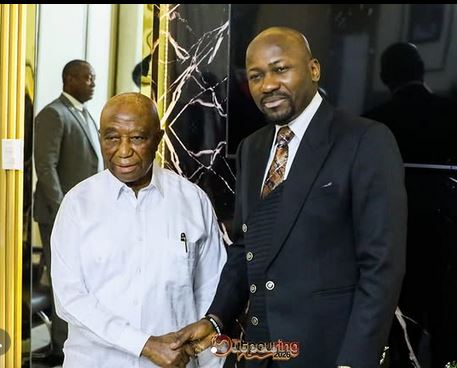
Liberian Leaders, Citizens Bear Witness as Apostle Suleman Hosts Two-Day Power-Packed Crusade
It was testimonies galore on Tuesday, March 31, the first day of the famous servant of God and founder of the Omega Fire Ministries (OFM) worldwide, Apostle Johnson Suleman’s power-packed two-day crusade. The event documented impactful moments with the Gospel and miracles, emphasizing the power of faith and the tangible confirmation of God’s Word through signs and wonders. It was equally an atmosphere of miraculous healing, restoration of lives, and the strengthening of faith.
At the crusade, which was held at the SKD Sports Stadium in Paynesville City, and themed, “Liberia Outpouring Crusade” witnessed testimonies of impact and miracles with participants experiencing instant healing of various kinds of challenges.
Apostle Suleman’s first port of call was Paynesville, the office of Liberian government’s president, Mr. Joseph Nyuma Boakai, who received him in an audience with his junior ministers. Apostle Suleman, who also met with the vice-president, Mr. Jeremiah Kpan Koung, was welcomed by the Liberian leader’s office as part of the president’s ongoing engagements with religious leaders aimed at fostering spiritual support for national development.
The president expressed profound appreciation to Apostle Suleman for the visit and continued prayers and intercessions by men and women of God on behalf of Liberia, emphasizing his firm belief that sustained spiritual guidance and prayer remain vital to the transformation and progress of the nation.
During the visit, Apostle Suleman offered prayers for President Boakai, his cabinet and the Liberian nation, invoking divine alignment, wisdom, and insight in Liberia’s path toward growth and stability. He prayed that the Almighty God would position Liberia for relevance and fulfillment of its national destiny.
Apostle Johnson Suleman, an evangelist who knows no bounds of where preaching the gospel comes to a stop, visited Liberia prepared with the message, compelling power of the Gospel and the work of the Holy Spirit, and bringing people to a point of decision where they surrendered their lives to Christ.
Aside from being prophetic and timely, OFM sources disclosed that the servant of God’s visit underscores the importance of faith-based partnerships in supporting governance and national renewal efforts.
society
Middle Belt Forum Hails Tinubu’s Jos Visit, Calls for United Civil-Military Effort to Restore Lasting Peace
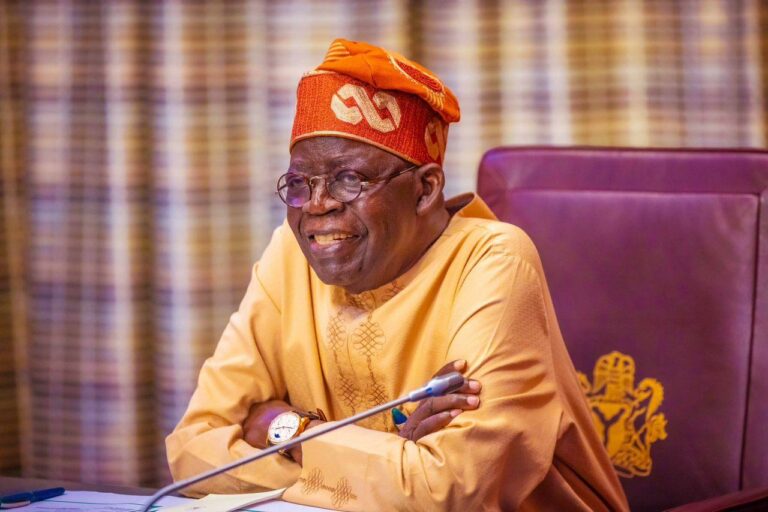
*Middle Belt Forum Hails Tinubu’s Jos Visit, Calls for United Civil-Military Effort to Restore Lasting Peace
The Middle Belt Peace Forum (MBPF) has commended President Bola Ahmed Tinubu for his profound demonstration of empathy and responsive leadership following his decision to postpone an official engagement in Iperu in order to visit victims of the recent attacks in Jos.
In a statement signed by its National Coordinator, Pastor Bulus Garba, in Jos on Friday, the Forum said the President’s decision to personally identify with grieving communities sends a powerful message of solidarity and reinforces public confidence in the commitment of the Federal Government to the protection of lives and property.
“The Middle Belt Peace Forum warmly commends President Bola Ahmed Tinubu for prioritising compassion over ceremony. At a time of deep sorrow for the people of Plateau State, his decision to visit Jos stands as a mark of true leadership—one that listens, responds, and stands with the people in their moment of pain,” the statement read.
The Forum described the perpetrators of the recent attacks as “cowards who prey on innocent and defenceless citizens,” stressing that such acts of violence are not only inhumane but also a direct assault on the unity and peace of the nation.
“We condemn in the strongest terms the actions of these cowardly attackers whose only aim is to instil fear and destabilise peaceful communities. Their actions must be met with firm and decisive resistance from all arms of the state,” Pastor Garba said.
The MBPF further used the opportunity to salute the courage, gallantry, and sacrifices of the Armed Forces of Nigeria under the leadership of the Chief of Defence Staff, General Olufemi Oluyede, noting that their continued efforts remain central to restoring stability across troubled parts of the country.
According to the Forum, the Armed Forces have demonstrated resilience and professionalism in the face of complex security challenges, often operating under difficult conditions to safeguard communities and defend Nigeria’s territorial integrity.
“We salute the Armed Forces of Nigeria for their unwavering commitment and sacrifices. Their gallantry in confronting criminal elements and reclaiming territories is a testament to their dedication to national service. We recognise that the path to peace is demanding, and we honour those who stand daily in defence of our nation,” the statement added.
The Forum pledged its full support to ongoing military operations and called for strengthened collaboration between security agencies and local communities as a critical factor in achieving lasting peace.
It also urged citizens across the Middle Belt to cooperate with security forces by providing timely information and fostering unity within their communities.
The MBPF, however, expressed concern over the need for greater synergy among security agencies, particularly the role of the Nigeria Police in consolidating gains made by the military.
“We call on the Nigeria Police Force to rise fully to its constitutional responsibility by effectively supporting the Armed Forces in stabilising and securing areas that have been cleared of criminal elements. Holding and policing such territories is essential to preventing a resurgence of violence,” Pastor Garba stated.
The Forum emphasised that sustainable peace requires a coordinated approach in which the military clears and secures areas, while the police maintain law and order to enable displaced communities to return and rebuild their lives.
The MBPF concluded by reiterating its commitment to peacebuilding efforts across the Middle Belt and expressed optimism that with sustained leadership, coordinated security efforts, and active citizen participation, lasting peace can be achieved.
“Together, through unity, vigilance, and collective resolve, we can overcome these challenges and build a safer and more peaceful Middle Belt,” the statement added.
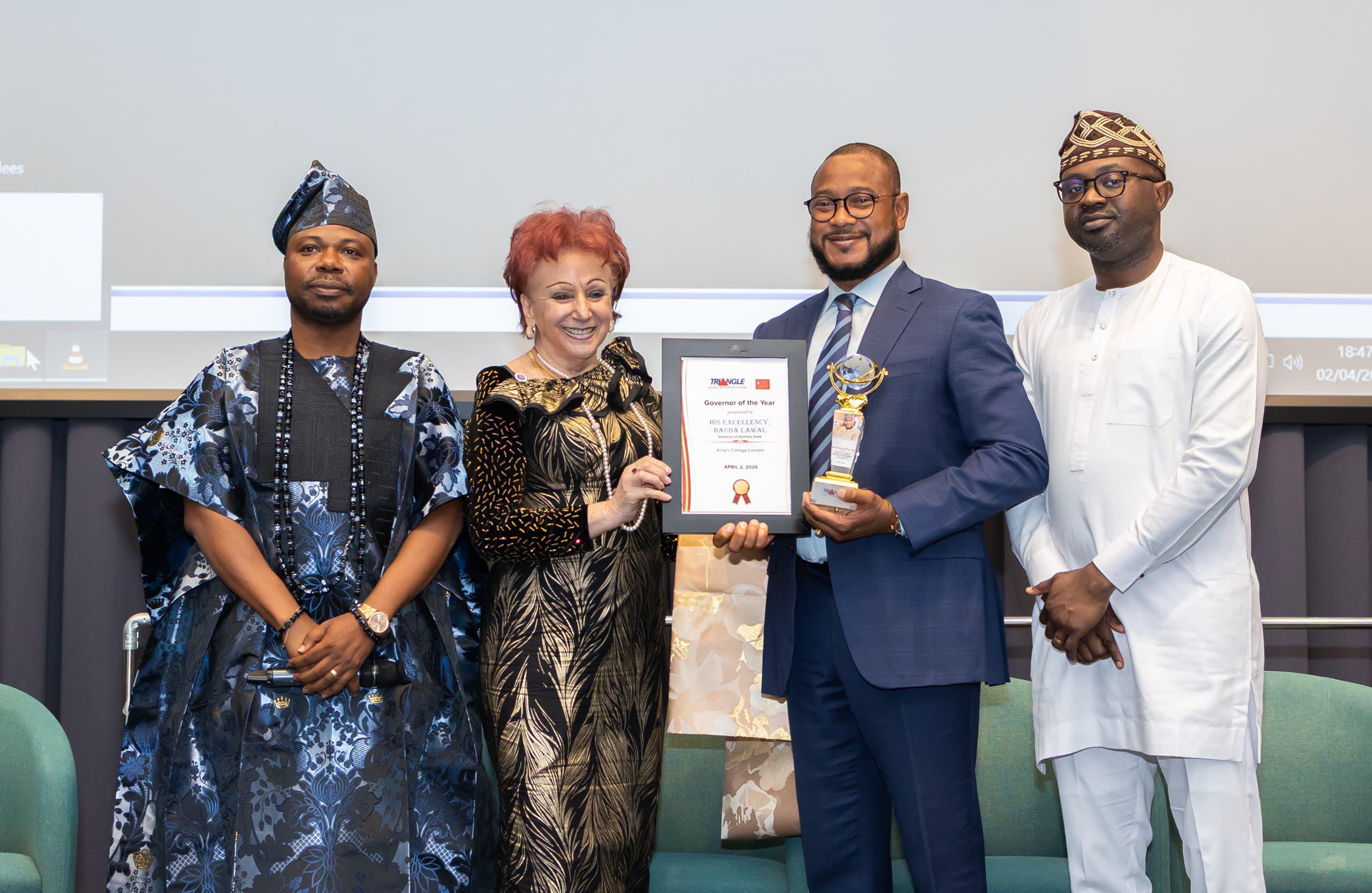
Governor Dauda Lawal Wins Face of Africa Governor of the Year Award in London
Governor Dauda Lawal has been honored with the Outstanding Governor of the Year award by Triangle Media International Magazine.
The award was presented during the magazine’s 10th annual lecture and award ceremony, held on Thursday at the Grand Hall of King’s College, London, United Kingdom.
According to a statement by the governor’s spokesperson, Sulaiman Bala Idris, the awards recognize public and private sector leaders whose leadership positively impacts governance and service delivery.
He added that the lecture, themed “Harnessing the Roles of Nigerians in Diaspora for National Development,” brought together stakeholders from both the public and private sectors.
The statement read in part: “Yesterday, in London, Governor Dauda Lawal received the 2026 Face of Africa Leadership Award for Outstanding Governor of the Year.
“The 2026 edition coincides with the 10th anniversary of Triangle International Magazine, which has over the years celebrated notable Africans across diverse fields.
“The award recognizes the Zamfara State Government under Governor Lawal’s leadership for achieving remarkable milestones in service delivery since his inauguration on 29 May 2023.
“The board of Triangle International noted that, despite inheriting an empty treasury, Governor Dauda Lawal has remained true to the Rescue Agenda’s campaign promise: to rescue and rebuild Zamfara.
“The award also reflects the state government’s innovative approach to indirectly curbing insecurity through educational advancement, demonstrated by the declaration of a state of emergency in the education sector.
“This includes the state government’s swift payment of the outstanding N3.4 billion for WAEC and NECO examinations, as well as the reconstruction and rehabilitation of schools across all 14 Local Government Areas of Zamfara State.
“The international magazine finds these initiatives to be strategic interventions toward long-term efforts to make Zamfara State better.”
The colourful event was attended by the Minister of Interior, Olubunmi Tunji-Ojo, and Sahara Group’s Group Managing Director, Kola Adesina, among others.


-

 society7 months ago
Religion: Africa’s Oldest Weapon of Enslavement and the Forgotten Truth
-

 news4 months ago
WHO REALLY OWNS MONIEPOINT? The $290 Million Deal That Sold Nigeria’s Top Fintech to Foreign Interests
-

 society6 months ago
“You Are Never Without Help” – Pastor Gebhardt Berndt Inspires Hope Through Empower Church (Video)
-

 celebrity radar - gossips2 months ago
Dr. Chris Okafor Returns with Power and Fire of the Spirit -Mounts Grace Nation Altar with Fresh Anointing and Restoration Grace on February 1, 2026