
Uncategorized
Strike: Aviation Workers Opt Out, Ports Grounded

Strike: Aviation Workers Opt Out, Ports Grounded
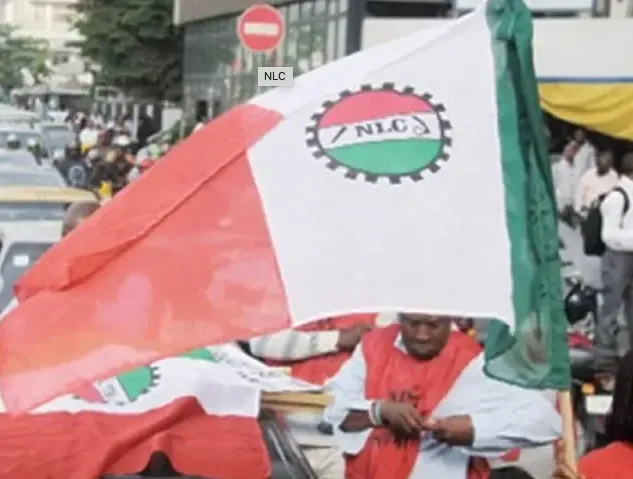
The nationwide strike initiated by the Nigeria Labour Congress commenced on Tuesday, revealing partial compliance within various sectors of the economy.
The NLC, in collaboration with its affiliate, the Trade Union Congress, declared an indefinite strike starting from November 14, 2023.
The decision to launch the strike was driven by alleged infractions and encroachments on workers’ rights, including the assault on NLC President Comrade Joe Ajaero and the government’s persistent refusal to implement agreed-upon measures.

Additional grievances encompassed the non-payment of backlog salaries, pensions, discriminatory salary practices, and non-compliance with the national minimum wage.
Despite an ex-parte application filed by the Federal Government and the Attorney General of the Federation and Minister of Justice seeking to restrain the unions from proceeding with the planned strike, approximately 19 unions defied the court order.
This defiance raises questions about potential implications across various sectors and the government’s response to the workers’ demands..
The extensive array of participating unions, spanning education, healthcare, telecommunications, local government, judiciary, banking, maritime, electricity, parliamentary staff, and railway workers, underscores the far-reaching impact and solidarity characterizing the ongoing nationwide strike.
In September, the Organised Private Sector of Nigeria issued a warning to the NLC and TUC, underscoring the substantial threat that strike actions pose to the country’s economy.
Expressing concerns about potential adverse effects on economic stability, the private sector urged a reconsideration of such actions to safeguard the nation’s economic interests.
Port activities grind to a halt
Licensed customs agents and other port users at the Apapa, Tincan Island, and other ports in Lagos were denied access due to compliance from the Maritime Workers Union of Nigeria.
Observations on Tuesday revealed a complete shutdown of all commercial activities at the ports.
The Union had announced its intention to participate in the nationwide strike, citing various grievances and infractions against workers’ rights.
In a statement on Monday, the Head of Media of MWUN, John Ikemefuna, conveyed that the strike directive came from the National Executive Council meeting of the NLC.
The decision was a response to perceived government infractions, including the abduction and assault on NLC President Comrade Joe Ajaero, non-payment of salaries and pensions, and the government’s failure to implement agreements.
Affirming their commitment to the nationwide strike as an affiliate of the NLC, Ikemefuna expressed readiness to join the broader labor action.
Reacting to the development, Sikiru Remilekun, the Youth Leader of the Association of Nigerian Licensed Customs Agents, Tincan Island Chapter, issued a notice instructing members to stay at home until further information is provided.
In a public notice, Remilekun stated, “All terminals are shut down pending the discussion and outcome of the meeting with the federal government. Please, all clearing agents should stay home and listen to news and genuine information if it will still be held or continue tomorrow.”
The Ports and Terminal Multipurpose Limited Chapter Chairman of the National Association of Government Approved, Thomas Alor also confirmed the situation, stating, “There is no activity here, no operations everywhere; they are not working. I have even left the place now heading home.”
Aviation
The aviation industry opted out of the ongoing nationwide strike, citing a lack of preparations as the decisive factor.
Operations at the Murtala Muhammed International Airport, Lagos and Nnamdi Azikiwe International Airport, Abuja continued without disruption, with no reported flight cancellations
The General Secretary of the Air Transport Services Senior Association of Nigeria, Francis Akinjole, in an interview with The PUNCH clarified the sector’s stance, stating, “We will join, but we have not actually sat down to decide on that.
“We have a way of doing our own things. We don’t just embark on a strike without adequate preparation.”
Akinjole highlighted a logistical challenge facing the aviation unions, pointing out that one of their member unions is holding a delegate conference in Benin City starting from Wednesday.
He emphasized the need for a coordinated approach, stating, “We cannot be in Benin and enforce a strike in Lagos. So, we have to meet and decide on how to go about it.”
Acknowledging their alignment with the issues at hand, Akinjole recalled a similar scenario five years ago during the NUATE (National Union of Air Transport Employees) National Delegate Conference in Asaba.
He noted that despite a national strike, aviation unions were engaged in activities in Asaba, highlighting the sector’s commitment to strategic and well-organized decision-making.
Akinjole concluded by assuring that all aviation unions would convene to address the current situation, emphasizing the sector’s seriousness in dealing with pertinent issues.
NUATE, one of the key unions, has already taken its place at the ongoing delegate conference, raising questions about the aviation industry’s unique approach during times of nationwide labor actions
Power sector records partial compliance
Power sector workers participated in the nationwide strike. While the power grid remained operational, reports indicated that only essential electricity workers were permitted to work at power stations.
The acting General Secretary of the National Union of Electricity Employees, Dominic Igwebuike, confirmed that power sector workers withdrew their services at various power stations, except for essential services. However, essential workers would join the strike if it persists.
Igwebuike’s statement was supported by the Ibadan Electricity Distribution Company, which announced the temporary closure of its offices due to the strike, noting that essential services would remain uninterrupted.
Addressing claims of a blackout and grid shutdown, the Transmission Company of Nigeria emphasized that reports suggesting a national blackout were false and misleading. The company clarified that the nation’s power grid was intact and actively supplying electricity to distribution load centers nationwide.
NUBIFIE in some states join, Lagos opts out
Speaking in an exclusive interview with The PUNCH, the Senior Deputy General Secretary of the National Union of Banks, Insurance and Financial Institution Employees, Mr Aboderin Olusola, said so far there has been compliance of banks, insurance companies and other financial institutions in so many states like Bayelsa, Kano, Osun, Edo, Abuja and others.
He said, “We have about 85 per cent compliance, however, the challenge we as a body is that most of these public sector unions especially Lagos, did not comply.”
According to him, for example in Lagos, banks opened their offices earlier in the day and goods were going about their normal business, local government and hospitals opened, most of the public sector unions did not join the strike, and nobody enforced compliance, though our union would move round to ensure that union members in Lagos would comply and just the strike as long as they are members of the unions.
Potential economic loss
The ongoing nationwide strike could result in a daily economic loss of N25.93bn for the Nigerian economy, as per data sourced from the National Bureau of Statistics.
The NBS had previously calculated the economic cost of a nationwide strike in 2012, providing insights into the potential financial impact.
In a document titled, ‘Economic Cost of the Nationwide Strike Action of 9th January – 16th January 2012: Initial Assessment,’ the NBS offered an initial estimate for an eight-day strike action.
Using projected figures for GDP in the first quarter of 2012 and the first quarters of the last three years (2009-2011) for each covered economic activity, the NBS stated, “The real cost of any socio-economic disturbance is the tragic but avoidable loss of human life, the value of which cannot be accurately computed.
“In this brief, the NBS relies on the Gross Domestic Product (or GDP) to estimate the monetary value of economic activity “lost” during the period of the strike. In this regard, it is estimated that the nation lost N207, 408.28m million during the eight-day strike.”
Extrapolating from this data, the potential daily economic loss in the current strike stands at N25.93 billion, underscoring the substantial economic implications of the ongoing labor action.





FOPCHEN Calls for Dialogue as Court Fixes May 28 for Continuation
OTA, OGUN STATE — Proceedings in a widely followed legal case resumed on March 24, 2026, at the High Court of Ogun State, Ota Division, ending with a fresh adjournment as the court fixed May 28, 2026, for continuation.
During the session, legal representatives for all parties restated their positions and addressed preliminary matters, laying the groundwork for more substantive arguments at the next hearing. Observers noted that the case continues to attract significant public attention due to its perceived implications for law, culture, and societal values.
The Foundation for the Protection of Cultural Heritage in Nigeria (FOPCHEN) used the occasion to reiterate its call for constructive national dialogue. The group emphasized that while the judicial process must be respected, broader societal engagement remains essential.
According to the organization, issues relating to values, responsibility, and cultural identity should not be confined solely to courtroom deliberations but should involve active participation from various sectors of society.
Legal analysts present at the proceedings described the matter as one with far-reaching implications, noting that arguments advanced in court could shape future interpretations surrounding sensitive cultural and moral questions.
The presiding judge subsequently adjourned the case to May 28, granting all parties time to refine their submissions and respond to issues raised during the hearing.
As anticipation builds ahead of the next court date, Nigerians across different sectors continue to monitor developments closely, keen to see how the judiciary navigates the delicate balance between constitutional rights and cultural expectations.
Uncategorized
CRG: Politicians Must Stop Witch-Hunting, Focus on Nation Building — Says NYSC Cleared Deputy Speaker Since 2023

CRG: Politicians Must Stop Witch-Hunting, Focus on Nation Building — Says NYSC Cleared Deputy Speaker Since 2023
By: Boye Ola
The Centre for Responsible Governance (CRG) has called on political actors and interest groups to desist from what it described as needless witch-hunting of the Deputy Speaker of the House of Representatives, Benjamin Okezie Kalu, following renewed controversies surrounding his National Youth Service Corps records.
The organisation noted that the clarification by the National Youth Service Corps (NYSC) regarding the matter is not a recent development, as a formal verification letter had already been issued as far back as May 23, 2023.
The letter, referenced NYSC/CCD/VER/10/5.1/VOL1/02, had already addressed and cleared the questions surrounding the Deputy Speaker’s NYSC records.
Reacting to the renewed debate, the spokesman of the Centre,
Obande George, said it was troubling that issues which had already been clarified by a competent national institution were being resurrected for political purposes.
According to him, the time has come for political actors to move away from destructive engagements and concentrate on building the nation.
“It is important to note that the NYSC had already issued a verification letter dated May 23, 2023 addressing the matter.
Reopening issues that have already been clarified by a competent authority suggests that some individuals are more interested in political witch-hunting than in national progress,” George said.
The CRG stressed that democracy thrives when institutions are respected and their determinations are accepted in good faith rather than constantly questioned for political advantage.

George also commended the Deputy Speaker for demonstrating maturity and composure throughout the controversy, despite what he described as sustained provocations.
“Honourable Benjamin Kalu has shown remarkable calm and maturity in the face of intense public scrutiny and political provocation.
Instead of engaging in unnecessary public confrontation, he allowed institutions to speak through their records.”
The Centre warned that Nigeria’s political culture must evolve beyond constant character attacks and sensational allegations, which often distract public officials from their responsibilities.
According to the organisation, the country’s development requires constructive engagement among political actors rather than continuous attempts to discredit opponents.
“Nigeria cannot move forward if political energy is constantly spent on digging up allegations and amplifying rumours. Our leaders and political actors must redirect their focus to governance, policy and nation building.”
CRG therefore urged Nigerians to rely on verified information from credible institutions and avoid spreading speculative claims that could damage reputations or destabilise public discourse.
The organisation reiterated that respect for due process and institutional integrity remains essential for strengthening Nigeria’s democracy.

@The Centre for Responsible Governance, Email: [email protected], Instagram: crgngo6, Twitter: crgng06, Threads: crgngo6
Uncategorized
IWD 2026: Ajadi Celebrates Women, Urges Them To Seek More Elective Positions In Future Elections

IWD 2026: Ajadi Celebrates Women, Urges Them To Seek More Elective Positions In Future Elections
A Leading People’s Democratic Party, (PDP) Governorship Aspirant in Oyo State, Ambassador Olufemi Ajadi Oguntoyinbo has felicitates with women in the country on the occasion of this year’s International Women’s Day.
The international Women’s Day is celebrated on 8 March, commemorating women’s fight for equality and liberation along with the women right’s movement. It gives focus to issues such as gender equality and reproductive rights. International Women’s Day originated from labour movements in Europe and North America during the early 20th century.
In a statement issued on Sunday to commemorate this year’s edition of the International Women’s Day, Ajadi said the role of the women in nation building cannot be over emphasised.
He recalled the role played by prominent Nigerian women like Mrs Funmilayo Ransome- Kuti, Margaret Ekpo and Wuraola Esan towards the liberalization and the growth of the country and urges women to follow their footsteps by not only participate in the political process but seek more elective positions.
He urges the political leaders to encourage and give more chances to women for them to contest and occupy elective positions in the country.
Ajadi also called for more respect for women, saying they are definitely behind whatever success recorded by the menfolk.
He said domestic violence against women should be stopped, saying they deserves respect for their role in moulding the future leaders.
According to the statement, “I celebrate and congratulate our women on this year’s occasion of International Women’s Day. We cannot underestimate the role played by our women both at home, in the social circle and in politics. They deserve more respect.
“I equally called on them not only to be a passive participants in politics but to determine to seek more elected positions in future elections. They should aspire more from the position of dancing and singing at campaigns to seek more elective positions. The ratio of men to women in elective positions in the country is embarrassing. Women should stand up and fight for more elective positions.
“I also use the occasion of this year’s Women’s Day to appeal to Nigerians to stop domestic violence against the women. If we treat our women well, our country will witness unprecedented developments”.


-

 society7 months ago
Religion: Africa’s Oldest Weapon of Enslavement and the Forgotten Truth
-

 news4 months ago
WHO REALLY OWNS MONIEPOINT? The $290 Million Deal That Sold Nigeria’s Top Fintech to Foreign Interests
-

 society6 months ago
“You Are Never Without Help” – Pastor Gebhardt Berndt Inspires Hope Through Empower Church (Video)
-

 celebrity radar - gossips2 months ago
Dr. Chris Okafor Returns with Power and Fire of the Spirit -Mounts Grace Nation Altar with Fresh Anointing and Restoration Grace on February 1, 2026