
celebrity radar - gossips
THE ILLUSTRIOUS JOURNEY OF HIS EXCELLENCY, PROF. PLACID NJOKU

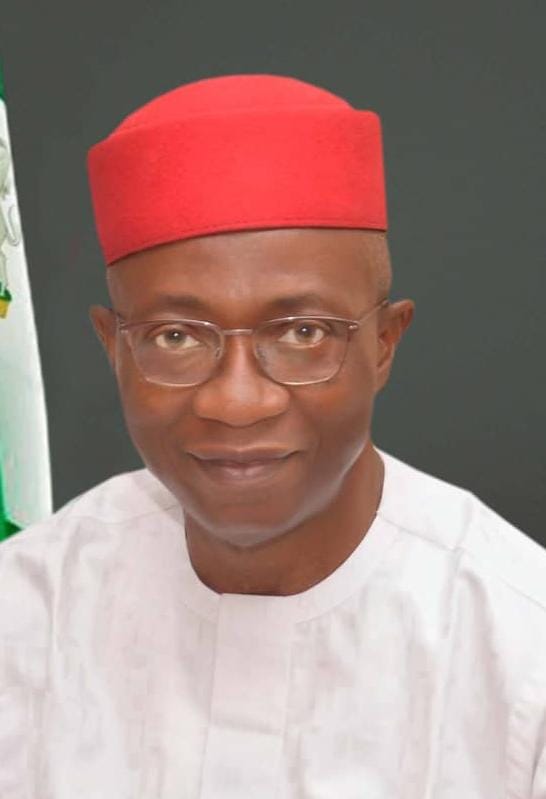
THE ILLUSTRIOUS JOURNEY OF HIS EXCELLENCY, PROF. PLACID NJOKU (FORMER DEPUTY GOVERNOR OF IMO STATE); AN ARCHITECT OF ACADEMIC BRILLIANCE – AS HE MARKS 77TH BIRTHDAY ON THE 10TH OF FEBRUARY, 2024.
BY
CHINEDU NSOFOR
In the hallowed halls of academia, there exists a luminary whose name has become synonymous with erudition and scholarly excellence – Professor Placid Njoku (Former Deputy Governor of Imo State). Prof. Njoku’s trajectory from academic grassroot to the pinnacles of academic achievement is a testament to his unwavering dedication to knowledge and education. Four years ago, same Prof. Placid Njoku made an unexpected entry into politics as a Deputy Governor in Imo State and as he left office mid-January, 2024, he demonstrated his class in excellence, a testament that good people can very actively participate in politics and leave the stable sane and undented.

Early Life and Academic Ascent:
Prof. Placid Chike Njoku was born on the 10th February, 1947 in Umuri Amaimo, Ikeduru LGA in, Imo State. From an early age, he displayed an insatiable curiosity and innate thirst for knowledge. His academic journey began at a local primary school, where his exceptional intellect quickly caught the attention of his teachers. Driven by passion, young Placid set his sights on higher education and obtained the West African School Certificate, Division 1, in December 1964. After completing his secondary education with flying colors, Placid Njoku was among a select group of brilliant children from Eastern Region of Nigeria sent to Emergency Federal School of Science, Lagos for Higher School. At the end of the intervening Nigerian Civil War, Placid earned a coveted entry into the prestigious University of Nigeria, Nsukka, where he pursued a degree in Animal Science and graduated with Second Class Upper Division, laying the foundation for a remarkable career in academia.
Academic Odyssey:
Prof. Placid Njoku’s academic odyssey took him to renowned universities across the world, where he honed his expertise and contributed significantly to the advancement of knowledge. After his National Youth Service Corps year in Lagos State, Placid was appointed Graduate Assistant at Ahmadu Bello University (ABU), Zaria. In 1976, he obtained a training leave from ABU to study for his Master’s and Doctoral degrees in Poultry Science and Monogastric Animal Nutrition from University of Nebraska-Lincoln, U.S.A, which he earned in 1978 and 1980, respectively. At the University of Nebraska-Lincoln, U.S.A, Placid. Njoku’s academic brilliancy did not go unnoticed, as he was awarded a Graduate Assistantship in the Department of Poultry Science from 1976 to 1978 for his Master’s programme. Subsequently, he was appointed a Research Associate during his Ph.D., which he obtained in 1980, solidifying his position as a rising star in his field of study.
Returning to Nigeria immediately after graduation, Prof. Njoku continued with his university career at ABU Zaria, where he lectured and rose to the rank of a Senior Lecturer in 1986 and a Reader/Associate Professor in 1989, leaving indelible marks on countless students who were fortunate enough to learn from him. His lectures were not mere lessons; they were intellectual journeys that inspired a new generation of thinkers and scholars. On October 01, 1989, then Dr. Placid Njoku was granted sabbatical leave by ABU Zaria to Scotland, UK, where he was a Visiting Scientist to the Poultry Department at the renowned Roslin Research Station, AFRC Institute for Grassland and Animal Production, Roslin Edinburgh, Scotland.
As a scholar with a stellar reputation in academia, his academic impact covered a range of Universities including Abubakar Tafawa Balewa University (ATBU), Bauchi, where he taught many Post Graduate courses as a Professor of Animal/Poultry Science, School of Agriculture. In 1991, Prof. Njoku accepted a position as the Director of Research and Postgraduate Development at the National Universities Commission (NUC). He was later appointed Director of Academic Planning Department where he featured prominently in developing policy and structure for private universities in Nigeria and the Education Trust Fund (ETF) (now Tertiary Education Trust Fund – TETFund). Prof. Placid Njoku’s unwavering dedication and commitment in the academia resulted to his appointment in 1993 as the pioneer Vice Chancellor and consequently the Chief Academic and Administrative Officer at Federal (now Michael Okpara) University of Agriculture, Umudike, from May 27th 1993 to December 31st, 1999. By the time he left the University of Agriculture Umudike, the institution was ranked by NUC as the overall second best University in academic quality index among the 36 existing Universities following the results of the 1999 accreditation exercise in all Nigeria Universities. During his tenure as Vice Chancellor, Prof. Njoku was elected and served as Chairman, Committee of Vice-Chancellors (CVC) of all Nigerian Universities.
National Assignments:
Beyond the confines of the lecture hall, Prof. Placid Njoku embraced his responsibility to contribute to the development of his nation. As a seasoned academic and a quintessential professional who rose to the climax of his career as Vice Chancellor at (now) Michael Okpara University of Agriculture, Umudike, Professor Njoku was unanimously elected in 2007 in far away Ile-Ife Osun State as the pioneer President of the Nigerian Institute of Animal Science, thus making him one of the few Nigerians who has pioneered the establishment of two chartered Federal Institutions. His performance in both institutions is laden with outstanding legacies. His expertise led him to be appointed to various national committees and task forces including:
• Chairman, Presidential Task Force on the Closure of Satellite Campuses (2002);
• Chairman, NUC Committee on Debt Swap for Education in Nigeria (2003);
• Member, Ministerial Committee on the Implementation of Government White Paper on the report of the panel on the inquiry on the activities of the Council of Kaduna Polytechnic (2003);
• Chairman, University System Management Award Scheme Committee, NUC, Abuja(2002-2007), where he played a pivotal role in shaping policies related to tertiary education governance;
• Member, Governing Board of National Agency for Science and Engineering Infrastructure (NASENI)
Prof Njoku was also involved in several consultancies with the World Bank, British Council, Swiss Embassy, Association of African Universities, Senate Committee on Education, National Planning Commission, TETFUND.
Professor Placid Njoku’s commitment to excellence and integrity in these roles earned him the admiration of colleagues and policymakers alike.
Professor Placid Njoku in Politics:
The greatest turn of events in Placid Njoku’s life was his venture into politics. Previously, Prof. Njoku had, to the astonishment of many, suddenly left a most flourishing career in research in the universities to go into University governance at NUC and University of Agriculture Umudike. Subsequently, he changed to professional governance as he accepted the position of pioneer President, Nigerian Institute of Animal Science (NIAS), where he established the structures and brought visibility and respectability to his Animal Science profession. His professional colleagues say with pride, that Prof. Njoku is their professional anchor.
But nothing shocked Professor Njoku’s colleagues, friends, and professional network as his decision to go into politics. His choice by Distinguished Senator Hope Uzodinma to be his Deputy Governorship candidate to fly the flag of All Progressives Congress (APC) in 2019 was like a silver bullet that many could not fathom. Prof. Njoku joined the campaign fray and traversed the length and breadth of Imo State with his Principal elucidating why APC is the Party for the State and the Party of the day. Subsequent to post-election Judicial processes, on 15 January 2020, Prof. Placid Njoku was sworn-in as Deputy Governor of Imo State and his principal, His Excellency Distinguished Senator Hope Uzodinmma, as the Executive Governor of Imo State. Many held their breath, Placid Njoku, a Deputy Governor? Prof. Njoku – how is he going to survive among the political sharks? What about his career heights, his integrity? Many just watched him with great anticipation. Shortly after taking office, then came the vicissitudes of the times: EndSARS, Breaking of the Owerri Correctional Centre (Prisons), COVID 19, Regional Separation, Sit-at-Home, unbridled Insecurity, Naira Redesign (and consequent scarcity), Oil Subsidy Removal, etc. Throughout the four years, the State was seriously challenged, yet Prof. Njoku survived. In fact, with the savvy leadership of his principal, Governor Uzodinmma, they carefully managed to steer the State to incredible good health – diminishing insecurity, developing roads and infrastructure, restoring utilities, building and equipping hospitals, stabilizing and enhancing the quality and governance of educational institutions, developing new tertiary institutions, aggressively tackling youth unemployment through entrepreneurial empowerment and the “Skill Up Imo” project, institutionalizing transparency and accountability, diminishing corruption, stabilizing the Civil service, optimizing the judiciary and the legislature, working to finally define Imo boundaries and innate resources, defining the content and architecture of the Orashi industrial and marine opportunities, and more.
Prof. Njoku’s tenure as the Deputy Governor was characterised by a significant rise in educational standards and increased access to quality learning. Institutions with programmes with denied accreditation for various academic programmes had their programmes accredited. Moribund institutions were resuscitated, with his involvement, to provide Imo children more opportunities to actualize themselves academically. As Deputy Governor of Imo State, Prof. Njoku was also the Chairman of the State Boundary Committee. Here, he applied his wealth of experience in resolving age-old boundary/land disputes between Local Governments. He also provided the fundamental base which enabled the National Boundary Commission complete the field work for the delineation of the boundaries of Imo and Rivers States.
In the period too, Prof. Njoku traversed all over Imo State making friends and enthusing people, representing his Boss in many important Community, State, Regional, and National meetings and fora. Placid Njoku is today well known in Imo and national political circles, and his leaving office on 15 January 2024 brought to him a torrent of goodwill messages and acknowledgements. Known for his unmistaken and implicit faith in God, the future trajectory of Prof. Njoku will certainly be defined by time and fate, with God superintending.
Legacy and Future Endeavors:
As Prof. Placid Njoku quietly marks his 77th birthday on 10th February 2024, his story continues to inspire and shape the minds of the next generation, with his legacy firmly cemented in the annals of academia, governance and politics.
Certainly, as Deputy Governor, Prof. Njoku used his education, rich experiences in governance, and wisdom to navigate a path where many non-discerning have met the ripe banana peel.
In fact, in an era where knowledge is the currency of progress, Prof. Placid Njoku is indeed an embodiment of a book that must be read by budding politicians, a guiding light, illuminating the path for those who dare to dream and aspire to achieve greatness through the pursuit of knowledge, and a lexicon for success in deputising and in good governance. His story is not just a biography; it is a testament to the transformative power of rich education with the resultant self-confidence, integrity, and contentment as well as the indomitable spirit of a man dedicated to shaping a brighter future for generations to come. Join me in saying Happy Birthday, Your Excellency Prof. Placid Njoku.
Chinedu Nsofor is the authorized biographer of His Excellency, Prof. Placid Chike Njoku and he writes from Owerri Imo State




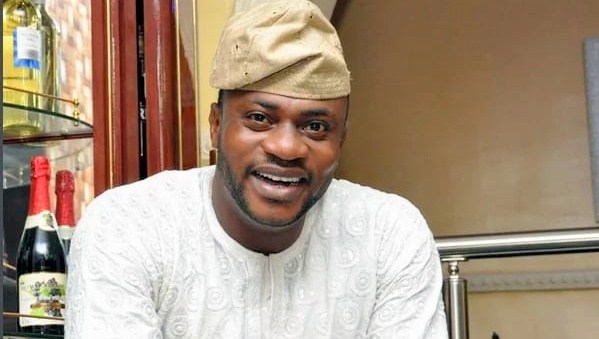
King of the Screen: Why Odunlade, Muyiwa, Femi Adebayo Remain Yoruba Movie Giants
The Yoruba movie industry has continued to produce legendary talents whose influence stretches beyond Nigeria to global audiences. Over the years, some actors have distinguished themselves through consistency, versatility, box office success, and cultural impact.
Among the numerous stars in Nollywood’s Yoruba sector, three actors have remained dominant figures whose names constantly resonate with fans and filmmakers alike — Odunlade Adekola, Muyiwa Ademola, and Femi Adebayo.

Odunlade Adekola: The Street King of Yoruba Cinema
Popularly regarded as one of the most entertaining actors in Nollywood, Odunlade Adekola has built a unique reputation through his energetic delivery, comic timing, emotional depth, and strong connection with grassroots audiences.
From comedy to action and emotional family dramas, the actor has consistently proven his versatility in blockbuster productions. His ability to interpret diverse roles effortlessly has made him a household name across Nigeria.
Industry observers believe his dominance on social media platforms, where his movie clips frequently go viral, has further strengthened his popularity among younger audiences.
Beyond acting, Odunlade has also contributed immensely to mentoring upcoming talents and expanding the commercial value of Yoruba films.
Muyiwa Ademola: The Master Storyteller

For many lovers of indigenous movies, Muyiwa Ademola remains one of the finest storytellers the Yoruba film industry has produced.
Widely respected for producing emotional and morally driven movies, the actor earned massive recognition through classic productions that focused on family values, culture, betrayal, perseverance, and societal lessons.
His calm delivery, deep scripts, and originality have kept him relevant despite changing trends in the entertainment industry.
Film critics often describe Muyiwa Ademola as one of the few actors whose productions combine entertainment with strong cultural education, making his movies timeless among older and younger viewers alike.
Femi Adebayo: The Modern-Day Box Office Force

Femi Adebayo has successfully combined traditional Yoruba storytelling with modern cinematic excellence, helping to project indigenous films to international audiences.
The actor, filmmaker, and producer has recorded major successes with high-budget productions that gained attention on streaming platforms and cinemas.
Known for his professionalism and attention to detail, Femi Adebayo has continued to push Yoruba movies beyond local boundaries while preserving cultural identity.
Entertainment analysts say his ability to blend culture, technology, and quality production has positioned him among the leading faces shaping the future of Yoruba cinema.
Growing Global Influence
The success of these actors reflects the increasing acceptance of indigenous Nigerian content globally. With streaming platforms creating wider access to local movies, Yoruba actors are now gaining international recognition and attracting new audiences.
Fans and stakeholders in the entertainment industry believe the contributions of Odunlade Adekola, Muyiwa Ademola, and Femi Adebayo have not only sustained Yoruba culture through film but have also elevated Nollywood’s global reputation.
celebrity radar - gossips
Eid-el-Kabir: Olowu of Kuta Urges Peace, Unity, Selflessness Among Nigerians
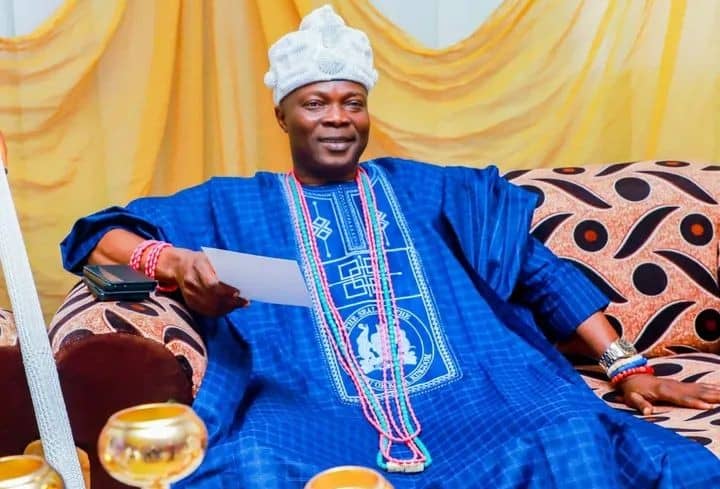
Eid-el-Kabir: Olowu of Kuta Urges Peace, Unity, Selflessness Among Nigerians
The Olowu of Kuta, HRM Oba Dr. Hammed Makama Oyelude, CON, Tegbosun III, has called on the Muslim Ummah and all Nigerians to make peace, unity, and selflessness their guiding principles as the world marks this year’s Eid-el-Kabir celebration.
In his Sallah message, the revered monarch described Eid-el-Kabir as a “highly spiritual occasion that demands dedication, commitment, and selflessness.”
Oba Makama said the period should be used to reflect on societal happenings and promote messages of hope and unity without inciting provocation.
He urged Nigerians to live together harmoniously, irrespective of religious, political, or tribal affiliations, stressing that politicians should exercise restraint and avoid inflammatory rhetoric ahead of the 2027 general elections.
“What should be uppermost in the mind of every patriotic Nigerian is **‘Country first,’” he said.
The monarch also appealed to citizens to remain vigilant in the face of insecurity, reassuring that the armed forces and paramilitary agencies are working round the clock to ensure a smooth and peaceful celebration.
“The price wise men pay for eternal liberty is vigilance. I urge everyone to celebrate moderately and extend a helping hand to the less privileged, widows, and orphans, embracing them as our brothers and sisters,” Olowu Makama added.
He concluded by wishing all Nigerians a peaceful and fulfilling Eid-el-Kabir celebration.
celebrity radar - gossips
Oba Babatunde Saliu Elebo II Felicitates Muslims on Eid-el-Kabir Celebration
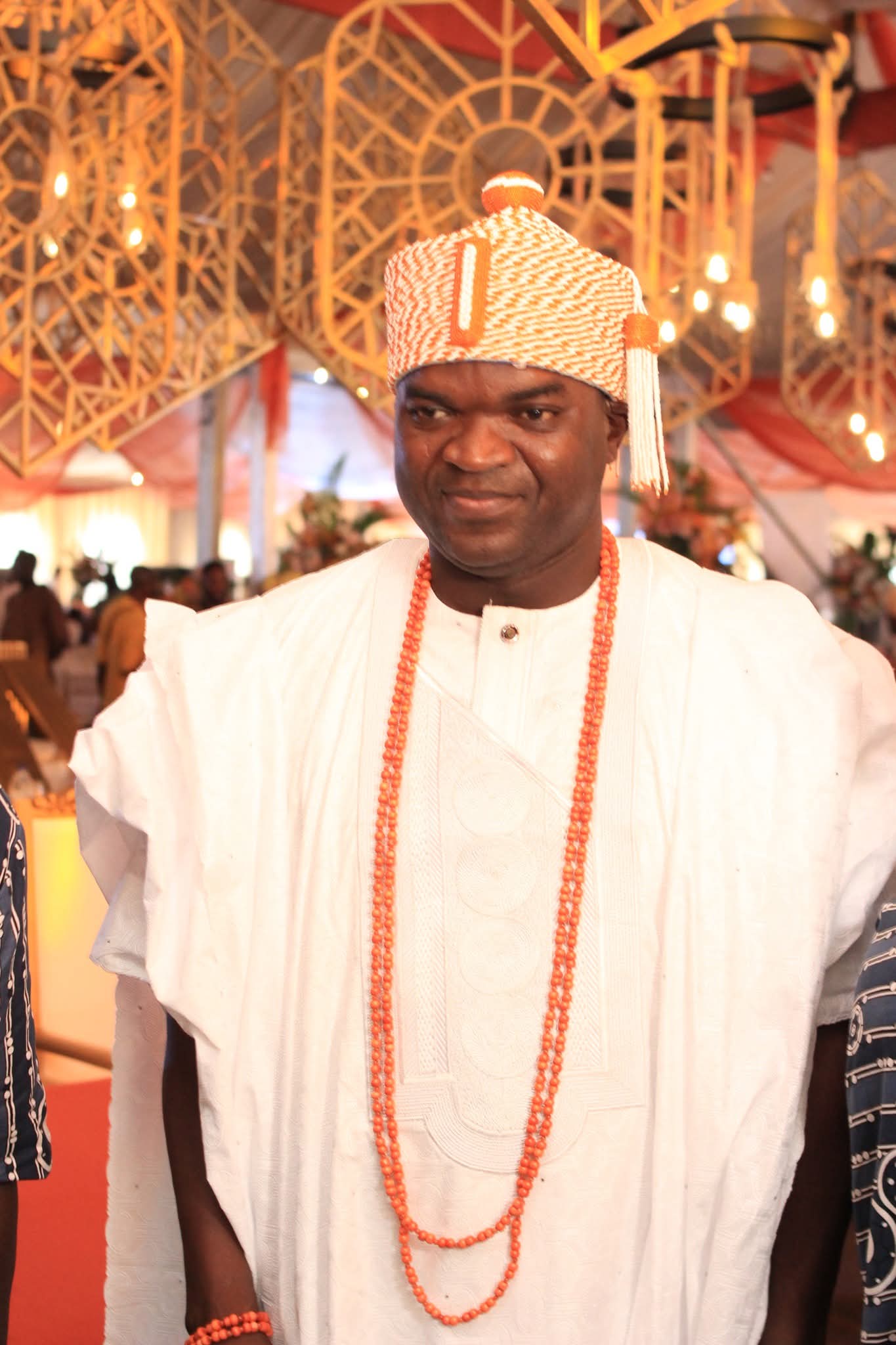
Oba Babatunde Saliu Elebo II Felicitates Muslims on Eid-el-Kabir Celebration
By Adeyemi Obadimu Veron
The Oloworo of Oworosoki Kingdom, Oba Babatunde Saliu Elebo II, has extended warm greetings and heartfelt felicitations to Muslims across Nigeria and the world at large on the joyous occasion of the 2026 Eid-el-Kabir celebration.
In a statement made available to Newsmen, the revered monarch urged Muslims to embrace the true teachings of Islam by promoting peace, love, unity, sacrifice, and compassion during and after the festive period.
Oba Babatunde Saliu Elebo II noted that Eid-el-Kabir, also known as Salah, remains one of the most significant celebrations in Islam as it symbolizes total obedience, faith, and devotion to Almighty Allah, drawing inspiration from the unwavering sacrifice of Prophet Ibrahim (Abraham), who demonstrated complete submission to the will of God.
According to the monarch, the Holy Qur’an teaches believers the importance of righteousness, kindness to humanity, tolerance, and support for the less privileged in society. He emphasized that the season should serve as a reminder for all Nigerians to live in harmony irrespective of religion, ethnicity, or political differences.
The royal father further called on Muslims to use the sacred period to pray fervently for peace, stability, economic growth, and sustainable development in Nigeria, stressing that national progress can only thrive in an atmosphere of unity and mutual understanding.
Oba Saliu also encouraged the faithful to extend hands of generosity to widows, orphans, and vulnerable members of society, noting that the essence of Eid-el-Kabir goes beyond celebration and feasting, but also reflects the spirit of sharing and caring for humanity as instructed in the Qur’an.
While wishing Muslims a peaceful and memorable Eid celebration, the Oloworo of Oworosoki prayed for divine blessings, prosperity, good health, and continued harmony in homes and communities.
“May this year’s Eid-el-Kabir strengthen our faith, deepen our love for one another, and bring renewed hope and abundant blessings to our nation,” the monarch stated.


- African Development Bank 2026 Annual Meetings: Governors Endorse the Four Cardinal Points and Call for Accelerated Reform of Africa’s Financial Architecture May 31, 2026
- Annual Meetings (AM) 2026: The African Development Bank Group’s Rome Process/Mattei Plan Financing Facility announces Clean Cooking Program at 2026 Annual Meetings May 31, 2026
- Economic Community of West African States (ECOWAS) has Deployed a Technical Mission to Observe the Legislative and Local Elections of May 31, 2026 in Guinea May 31, 2026
- President Herminie Attends Seychelles Football Federation (SFF) Cup Final and Presents Trophy to Bazar Brothers FC May 31, 2026
- ‘You are not alone’: World Health Organization (WHO) chief vows to stand with Democratic Republic of the Congo (DR Congo) through Ebola outbreak May 31, 2026
- United Arab Emirates (UAE) Expresses Solidarity with Kenya and Conveys Condolences over Victims of Girls’ School Dormitory Fire May 31, 2026
- Pitcher Awards Announces 2026 Winners, Marking a Landmark Year for Pan‑African Creativity May 30, 2026
- Ghana Commemorates 78th International Day of United Nations Peacekeepers May 30, 2026
- South Africa: President Ramaphosa receives second interim report of Madlanga Commission May 30, 2026
- Asmara Marathon 2026 to be held May 30, 2026
- African Development Bank 2026 Annual Meetings: Governors Endorse the Four Cardinal Points and Call for Accelerated Reform of Africa’s Financial Architecture May 31, 2026
- Annual Meetings (AM) 2026: The African Development Bank Group’s Rome Process/Mattei Plan Financing Facility announces Clean Cooking Program at 2026 Annual Meetings May 31, 2026
- Economic Community of West African States (ECOWAS) has Deployed a Technical Mission to Observe the Legislative and Local Elections of May 31, 2026 in Guinea May 31, 2026
- President Herminie Attends Seychelles Football Federation (SFF) Cup Final and Presents Trophy to Bazar Brothers FC May 31, 2026
- ‘You are not alone’: World Health Organization (WHO) chief vows to stand with Democratic Republic of the Congo (DR Congo) through Ebola outbreak May 31, 2026
- United Arab Emirates (UAE) Expresses Solidarity with Kenya and Conveys Condolences over Victims of Girls’ School Dormitory Fire May 31, 2026
- Pitcher Awards Announces 2026 Winners, Marking a Landmark Year for Pan‑African Creativity May 30, 2026
-

 news6 months ago
WHO REALLY OWNS MONIEPOINT? The $290 Million Deal That Sold Nigeria’s Top Fintech to Foreign Interests
-

 society4 weeks ago
SOCIAL MEDIA IS NOT A BATTLEFIELD COMMAND – WHY THE NIGERIAN ARMY’S ACTION AGAINST JUSTICE CRACK IS A NATIONAL SECURITY IMPERATIVE
-

 celebrity radar - gossips4 months ago
Dr. Chris Okafor Returns with Power and Fire of the Spirit -Mounts Grace Nation Altar with Fresh Anointing and Restoration Grace on February 1, 2026
-

 celebrity radar - gossips6 months ago
Prophet Kingsley Aitafo Releases 2026 Prophecy: ‘Nigeria Will Rise, but the World Must Prepare for Turbulence’