
Business
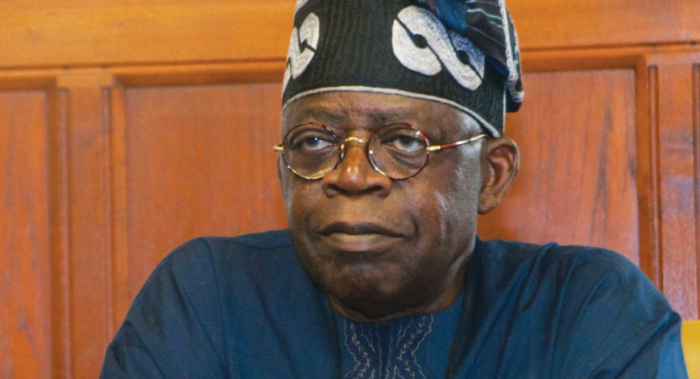
Tinubu and the generation of Astyanax bimaculatus by Idowu Ajanaku


“Stab the body and it heals, but injure the heart and the wound lasts a lifetime.”
― Mineko Iwasaki
The grand conspiracy and recent desperate attempts to de-construct and indeed, de-mystify one of Africa’s most decorated political colossuses, who, incidentally remains an enduring metaphor for what true democratic culture represents in Nigeria smirks of gross ingratitude. The pain runs deep, considering the incontestable fact that the masterminds are some of the greatest beneficiaries of his patriotic struggles, at one time or the other over the past five decades.
One is talking about none other than Asiwaju Bola Ahmed Tinubu, the famed Jagaban, the one man who stood firm, like Zuma rock in the whirlwind of Nigeria’s politics, against the brutal and bruising boots of late Abacha’s dictatorship. Our subject was the guiding light of the struggle for the realization of June 12,1993 mandate as won by late Chief MKO Abiola. He was the former executive governor of Lagos State(1999-2007) and has remained the constant star in the firmament of Nigeria’s progressive political spectrum.
But for the commitment of this national Leader of the All Progressives Congress (APC), perhaps Nigeria’s then rudderless ship of state would long have capsized into the vast ocean of corruption under the clueless, Jonathan-led administration. That was then. But this is now, as he is being paid back in coins he never traded for the survival of democratic culture in his dear country, Nigeria.
So, it rankles; it shocks one to the marrow, more so because acts of sheer deception and bitter betrayal as reflected in some of William Shakespeare’s plays of the 16th century now play out in the 21st Century Nigeria, with uncanny semblances! And for what? All because of transient fame and fortunes. For instance, in the play Macbeth the lead character betrays King Duncan (to whom he has sworn allegiance) by killing him when he is a guest at his home. But why, one may ask? It is in an overtly ambitious attempt to gain the crown that Duncan wears. He also betrays his friend, Banquo, just to retain the power and position of being King. Thereafter, he murdered sleep!
But that is man for you; vacillating like the tropic weather. Today, he pretends to be the most loving and loyal friend or ally, only because he is in dire need of the other’s help, most likely to get out of a sticky situation. But tomorrow he turns coat at the drop of a hat, that is when the price is right. There are scruples but he has none. No binding philosophy of commitment to a cause. Greed for instant gains and an unquenchable desire to be seen as the man- of -the -moment are his propelling passion; his odious guiding credo.
Worse still, Tinubu’s traducers are going about it as if he is one desperate politician, who wants power at all costs and by all crooked means. Yet, nothing could be further from the truth. If memory serves, Tinubu’s political trajectory took off when he pitched tent with the Musa Yar’Adua’s political dynasty. That was the Social Democratic Party(SDP).Before long, he was championing the struggle for the actualization of the June 12, 1993 mandate, as freely given by the good people of Nigeria to Chief MKO Abiola(of blessed memory). He made a lot of sacrifices; of precious time, energy, finance, strategies, wise counsel and other incalculable resources in this noble cause.
And still sticking to his political guns, to forever remain on the side of the people through a democratic structure he, it was who warned Dapo Sarumi, who was then the patriarch of the Primrose Group not to jump ship into the IBB contraption of an Interim National Government. Back then, the group was the most dominant in Lagos politics in 1992-93. Tinubu vowed to break rank with Sarumi should he not heed his piece of patriotic advice. But the other was far too gone in his quest for political relevance under the military government to heed it. That singular wrong choice led to Sarumi’ political oblivion, till this day.
If Tinubu was desperate he would have joined the bandwagon as one of the infamous carpet baggers. It would also be recalled that when he, Tinubu was the Chairman, House Committee on Finance at the Senate he was offered the juicy post as the Minister of Finance by the Abacha-led military government but he rejected it out rightly out of sheer national interest. Yet, that was not all.
Specifically in 2003, when as the Lagos state governor he became the last man standing at a time OBJ’s rigging machinery raged through the South West geo-political zone Tinubu’s commitment, dedication, determination and personal sacrifice re-engineered the progressive community to retrieve the zone from the conservative People’s Democratic Party, PDP. The eventual emergence of Kayode Fayemi and Rauf Aregbesola as the governors of Ekiti and Osun states respectively became the turning point for the progressives’ relevance.
Another remarkable and in fact, epochal moment in the South West politics came in 2007.When the market din swirled in Lagos over the emergence of Babatunde Raji Fashola -then a political neophyte-as the governorship candidate of the AC it was Tinubu who made another sacrifice of his Senatorial ambition, giving the ticket to Ganiyu Solomon.
It was Fashola’s victory at the polls in 2011 that empowered, emboldened and paved the way for the subsequent victories of the progressives in Oyo and Ogun states in 2011.And it was also in the spirit of Asiwaju’s sacrifice that made it possible for Ibikunle Amosun, well-known then as a diehard conservative politician to clinch the coveted governorship seat in Ogun State, in spite of the array of other progressive politicians on ground.
Ditto for Abiola Ajimobi in Oyo sate who had earlier abandoned Alliance for Democracy, AD for ANPP. Ordinarily, if Asiwaju was one desperate politician, as being insinuated such politicians would not have ridden to political prominence on the back of the Jagaban. Worthy of note too, is that it was the sacrifice made by Tinubu out of love for his country that led to the historic merger amongst the ACN,CPC,ANPP and a faction of APGA to form APC. And for the first time in the political evolution in Nigeria the party was able to dislodge the incumbent greed-driven PDP-led administration.
Were he one selfish politician he would have been contented being a king in his South West enclave. But no. Even when the then presidential flag-bearer, Muhammadu Buhari offered him the post of his running mate in the presence of Chief Bisi Akande, who was the Interim Chairman of the party Tinubu declined the offer. He nominated Professor Yemi Osibanjo instead. This is an incontrovertible fact. It was borne out of his patriotic zeal, taking cognizance that the PDP had then polarized Nigeria along ethnic and religious lines. Unfortunately, one John Baden, a total stranger to Nigeria’s political evolution has stood logic on its head by claiming otherwise in his recently launched biography of Mister President.
Having achieved such political feats, out of a rare sense of patriotism it is a crying shame that some lucky individuals who rode on his back to fame are now hands-in-glove with the Hausa/Fulani hegemony to attempt to rubbish his good image which he has built over the decades. What is their aim? To gain entrance into the hearts of the new generation of Yorubas.
But they must learn from the unfailing hands of history that the Akintolas, Omoboriowos and Babatopes who had travelled such ignoble paths have been consigned into the dustbins of political history. No Yoruba man who has jettisoned the collective interest of their people ever survived their ill-fated journeys. More instructively, they may have to read the accounts of Shakespeare characters in Julius Caesar. For instance, the wily one named Antony betrays his commitment to Cleopatra by marrying Octavia. Conversely, Mena betrays Antony, Lepidus, and Caesar by suggesting that Pompey should kill the trio. On the other hand, Ahenobarbus betrays Antony by deserting Antony when the latter is at his most vulnerable point in life. As if to literally turn tables, Cleopatra herself endures betrayal from both Caesar as well as her own treasurer. This deception, coming from among one’s closest servants, constitutes great betrayal. Instructively, they all ended on the sad side of history.
It would therefore, do the Yoruba political traitors in Abuja, who, like the Astyanax fish species betray their own , are now hell-bent on doing Tinubu in to have some moment of sober reflection. Even Ayodele Fayose, Ekiti State governor in his characteristic blunt manner has warned of the dire consequences for those so involved. They should remember that in the market square of life, it is always honourable and rewarding to be grateful to those who lift us up, instead of turning round to spit on their faces. God, who created us all is watching. As the only one to who vengeance belongs He will surely take recompense. For, anybody who abuses grace will soon have nothing to eat but grass.





Fidelity Bank grows gross earnings by 38% to N434.95b in Q1
Fidelity Bank Plc recorded 37.9 per cent growth in gross earnings to N434.95 billion in first quarter 2026 as the international commercial bank continued to expand its core banking market share.
Interim report and accounts of Fidelity Bank for the three months ended March 31, 2026 released at the Nigerian Exchange (NGX) showed that gross earnings rose from N315.42 billion in first quarter 20025 to N434.95 billion in first quarter 2026, representing an increase of 37.9 per cent.
The top-line performance was driven by impressive growth in the bank’s core business operations with interest incomes rising by 22.8 per cent to N314.48 billion in first quarter 2026 as against N256.10 billion in first quarter 2025.
With net interest income at N180.97 billion, the bank closed the period with profit before tax of N92.48 billion. After taxes, net profit stood at N74.47 billion for the three-month period. Earnings per share remained high at N5.69, underlining the capacity of the bank to reward its shareholders.
The balance sheet of the bank also emerged stronger. Total assets crossed the N11 trillion mark to N11.35 trillion by March 2026 compared with N10.46 trillion recorded in December 2025. Customers’ deposits increased from N6.89 trillion to N7.38 trillion. Total equity rode on the back of earnings growth to a 27.5 per cent increase from N1.09 trillion in December 2025 to N1.39 trillion by March 2026.
The first quarter 2026 results further consolidated the strong earnings outlook of the bank, which had successfully completed its recapitalisation amidst impressive earnings performance in 2025.
Fidelity Bank had recorded double-digit growths in interest and non-interest incomes as well as key balance sheet items during the year ended December 31, 2025.
The audited report showed that gross earnings rose from N1.04 trillion in 2024 to N1.52 trillion in 2025, an increase of 45.6 per cent. Interest and similar incomes had grown by 38.7 per cent from N803.1 billion in 2024 to N1.11 trillion in 2025. Fees and commission incomes also rose by 44.7 per cent from N78.4 billion to N113.4 billion. The bank recorded net profit after tax of N242.4 billion in 2025.
The bank’s balance sheet emerged stronger with total assets rising by 18.6 per cent to N10.46 trillion in 2025 as against N8.82 trillion in 2024. Customer deposits increased by 16.1 per cent from N5.94 trillion to N6.89 trillion, reflecting continued franchise strength and an improved funding profile. Net loans and advances meanwhile declined by 2.4 per cent to N4.28 trillion in 2025 as against N4.39 trillion in 2024, attributable to customers paying down on their mature obligations.
The bank had in 2025 strengthened its capital position, with eligible capital rising to N561 billion, above the regulatory minimum of N500 billion for banks with international authorisation. In addition, capital adequacy had remained robust, with Capital Adequacy Ratio of 30.94 per cent by December 2025 as against 23.47 per cent by December 2024.
Managing Director, Fidelity Bank Plc, Dr. Nneka Onyeali-Ikpe, said the first quarter 2026 results reinforced the bank’s strong and resilient business model.
She noted that with the remarkable success of its recapitalisation programme and continuing expansion, Fidelity Bank has entered a new era of growth and impressive returns.
“We are on a stronger footing and confident that we will set new growth records that are reflective of our legacy and the future we are working on,” Onyeali-Ikpe said.
Business
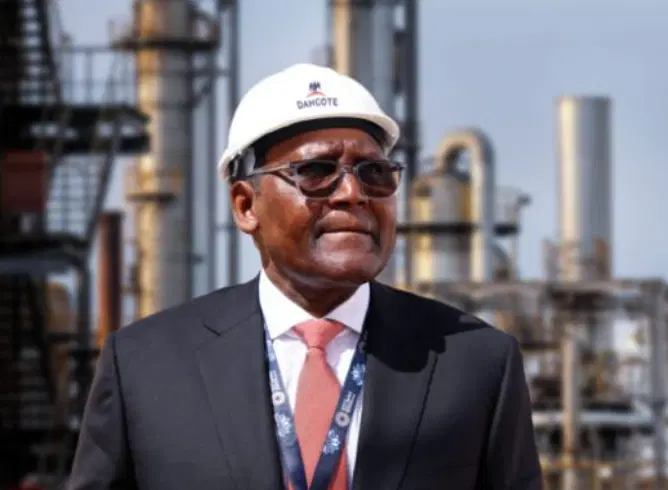
Dangote Refinery Ends Nigeria’s Era of Fuel Import Dependence, Boosts GDP, FX Earnings — EIU
Dangote Refinery Ends Nigeria’s Era of Fuel Import Dependence, Boosts GDP, FX Earnings — EIU
The operational ramp up of the 650,000 barrels per day Dangote Petroleum Refinery & Petrochemicals is fundamentally reshaping Nigeria’s downstream oil sector, significantly reducing the country’s dependence on imported refined petroleum products and strengthening its external position, according to the Economist Intelligence Unit (EIU).
In its latest assessment on Nigeria’s fuel market and regulatory environment, the EIU said the refinery has already transformed a sector that was previously characterised by heavy reliance on imported fuel despite Nigeria being Africa’s largest crude oil producer. The report noted that the refinery met nearly 80 per cent of domestic petrol demand in April and produced enough volumes to satisfy local consumption requirements as operations approached full capacity.
The EIU described Nigeria’s downstream petroleum sector before the refinery as “long dysfunctional”, noting that the country had remained almost entirely dependent on costly imported fuel while producing nearly 1.5 million barrels of crude oil daily.
According to the report, the emergence of the refinery has reduced import dependence, improved domestic fuel availability and strengthened Nigeria’s balance of payments position through lower import demand and rising exports of refined petroleum products.
“The gradual ramp up of the 650,000 barrel/day Dangote refinery since May 2023 has transformed Nigeria’s long dysfunctional downstream sector,” the report stated. “The country’s main refineries, all state owned, had been inoperative for years and Nigeria was almost entirely reliant on costly imported fuel.”
The research and analysis division of The Economist Group, London added that the refinery’s attainment of full operational capacity and its planned expansion would further support Nigeria’s economic growth and foreign exchange earnings over the medium term.
“Meanwhile, the attainment of full capacity at, and an increase in exports from, the Dangote refinery will support real GDP growth and foreign exchange earnings in 2026 and 2027 and beyond, as a planned doubling of the plant’s output comes on stream around the end of the decade,” it added.
Industry analysts said the refinery is increasingly positioning Nigeria as an emerging refining and export hub, altering energy trade flows across Africa and reducing the vulnerability associated with fuel import dependence.
The EIU noted that the refinery’s expansion has coincided with major reforms in Nigeria’s downstream sector, including the removal of fuel subsidies and the introduction of market driven pricing mechanisms.
The report, however, said the transition from a state dominated fuel import structure to large scale domestic refining has triggered resistance from interests linked to the old import regime.
The latest tensions emerged following the decision by the Nigerian Midstream and Downstream Petroleum Regulatory Authority to relax restrictions on petrol imports despite the refinery’s growing capacity to meet domestic demand.
Dangote Industries subsequently initiated legal action, arguing that continued import approvals undermine domestic refining investments and conflict with the objectives of the Petroleum Industry Act, which seeks to encourage local refining capacity and reduce import dependence.
Analysts noted that the availability of large-scale domestic refining capacity has improved Nigeria’s energy security and reduced exposure to external supply shocks and foreign exchange volatility.
The Centre for the Promotion of Private Enterprise also cautioned against unrestrained importation of petroleum products, warning that such a policy could weaken Nigeria’s industrialisation drive and discourage investments in domestic refining.
Chief Executive Officer of CPPE, Muda Yusuf, said continued dependence on imported fuel had historically contributed to pressure on foreign reserves, exchange rate instability and fiscal leakages.
The refinery’s growing impact is also being reflected in Nigeria’s broader macroeconomic indicators. Earlier this month, S&P Global Ratings cited increased domestic refining capacity and rising hydrocarbon exports among the major factors supporting Nigeria’s sovereign credit rating upgrade – the first in 14 years.
Beyond Nigeria, analysts said the refinery is increasingly being viewed as a strategic industrial asset for Africa, where many countries remain heavily dependent on imported fuel despite rising demand for transportation, manufacturing, and power generation.
Business
BREAKING: Court Dismisses $19.6 Million Claim Against NNPCL — Rules Contract Scope Cannot Be Changed Orally
BREAKING: Court Dismisses $19.6 Million Claim Against NNPCL — Rules Contract Scope Cannot Be Changed Orally
In a landmark ruling on Friday, May 22, 2026, the Federal Capital Territory High Court in Abuja threw out a $19.6 million lawsuit filed by Alternate Dimensions Ventures Ltd against the Nigerian National Petroleum Company Limited (NNPCL), affirming a key legal principle: a written contract cannot be expanded through oral agreements or conduct.
Alternate Dimensions had sought $19,600,000 in professional fees, claiming the scope of its Direct Sale, Direct Purchase (DSDP e-pro) contract with NNPCL was orally expanded. Represented by counsel Patrick Peter, the firm argued it was entitled to the revised sum for services rendered under the alleged new terms.
But NNPCL, through its lawyer Ituah Imhanze of KENNA LP, pushed back sharply, arguing that parties are bound exclusively by the clear terms of their written agreement. Imhanze contended that without any written amendment, the claim was legally unsound, and the court agreed.
Delivering judgment, Justice Hamza Mu’azu upheld NNPCL’s defense, stating that the contract was unambiguous and that no evidence was adduced during the trial, which supported the alleged scope expansion. The court further found that NNPCL fully complied with all contractual terms and committed no breach.
Dismissing the suit as meritless, Justice Mu’azu reinforced the doctrine of sanctity of contract: any amendment to a written agreement must be express, unequivocal, and documented, not implied or verbal.
The ruling spares NNPCL from the S19.6 million claim and also a floodgate of similar potential liabilities.


- CANAL+ lists on the Johannesburg Stock Exchange (JSE), strengthening the Group’s dual-continental approach and reinforcing South Africa’s (SA) role as a gateway to global capital and African growth June 3, 2026
- African Mining Week (AMW) Country Focus to Spotlight Liberia’s Iron Ore, Gold and Critical Minerals Prospects June 3, 2026
- Venezuela to Host Its Largest-Ever International Energy Investment Summit June 3, 2026
- Canada–Africa Business Conference Preparations Advance Following Canadian Secretary of State’s High-Level Visit to Nigeria June 3, 2026
- Uganda: Parliament concludes vetting of ministers June 2, 2026
- Fund for Export Development in Africa (FEDA) Board Appoints Mr. Emmanuel Assiak as Chief Executive Officer June 2, 2026
- Ecobank Group Launches World First Nature Bond Mobilising Global Capital to Protect Africa’s Natural Ecosystems June 2, 2026
- Merck Foundation Chief Executive Officer (CEO) Dr. Rasha Kelej together with Kenya First Lady support the education of 47 Kenyan Schoolgirls by providing Annual Scholarships till they Graduate June 2, 2026
- Annual Meetings 2026: Governors Back the Bank’s Platform Solutions to Transform Aviation and Health Systems in Africa June 2, 2026
- ThinkMarkets launches ChelseaAI, bringing live CFD trading into Artificial Intelligence (AI) assistants June 2, 2026
- CANAL+ lists on the Johannesburg Stock Exchange (JSE), strengthening the Group’s dual-continental approach and reinforcing South Africa’s (SA) role as a gateway to global capital and African growth June 3, 2026
- African Mining Week (AMW) Country Focus to Spotlight Liberia’s Iron Ore, Gold and Critical Minerals Prospects June 3, 2026
- Venezuela to Host Its Largest-Ever International Energy Investment Summit June 3, 2026
- Canada–Africa Business Conference Preparations Advance Following Canadian Secretary of State’s High-Level Visit to Nigeria June 3, 2026
- Uganda: Parliament concludes vetting of ministers June 2, 2026
- Fund for Export Development in Africa (FEDA) Board Appoints Mr. Emmanuel Assiak as Chief Executive Officer June 2, 2026
- Ecobank Group Launches World First Nature Bond Mobilising Global Capital to Protect Africa’s Natural Ecosystems June 2, 2026
-

 news6 months ago
WHO REALLY OWNS MONIEPOINT? The $290 Million Deal That Sold Nigeria’s Top Fintech to Foreign Interests
-

 society1 month ago
SOCIAL MEDIA IS NOT A BATTLEFIELD COMMAND – WHY THE NIGERIAN ARMY’S ACTION AGAINST JUSTICE CRACK IS A NATIONAL SECURITY IMPERATIVE
-

 celebrity radar - gossips4 months ago
Dr. Chris Okafor Returns with Power and Fire of the Spirit -Mounts Grace Nation Altar with Fresh Anointing and Restoration Grace on February 1, 2026
-

 celebrity radar - gossips6 months ago
Prophet Kingsley Aitafo Releases 2026 Prophecy: ‘Nigeria Will Rise, but the World Must Prepare for Turbulence’
You must be logged in to post a comment Login
You must log in to post a comment.