
Uncategorized
WHO ARE THESE OBIDIENTS?

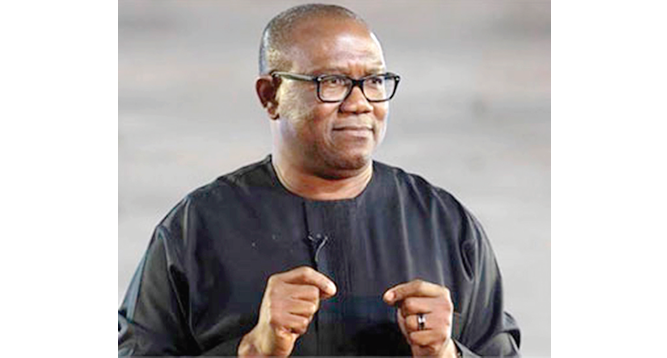
WHO ARE THESE OBIDIENTS?
By Femi Fani-Kayode

Let me make this clear from the outset. I am a member of the APC and a supporter of Asiwaju Bola Tinubu.
This contribution does not in any way derogate from that and my analysis is more of an academic and intellectual exercise than anything else.
I am NOT a supporter of Peter Obi and I have NO intention of becoming one. I am however interested on what his supporters represent and stand for and that is the subject of this essay.
They are worthy of my attention only because their rise and relevance in the political configuration of our nation, just in a matter of weeks, is meteoric and phenomenal.
In order to counter and defeat them or to keep them in their place we must at least attempt to understand them and figure out how their minds work.
The following are my findings.
Those that are the supporters of Peter Obi, the Labour Party presidential candidate, are known as ‘Obidients’ and they are EVERYWHERE.
Those of us in the larger political parties like the ruling APC and the opposition PDP, treat them with contempt and ignore them at our own peril.
The truth is that they are far more dangerous to our collective cause as a ruling class than many of us can possibly conceive or appreciate.
Only the discerning can appreciate this and know precisely where this whole thing may be heading.
They may not have structures or elected representatives in the legislative and executive arms of Government but they have IDEAS and VISION coupled with a clear ideological and philosophical bent which can and will endure for far longer than mere political platforms and structures.
Unknown to them as well as virtually everyone else, therein lies their power. As they say, an idea whose time has come cannot be stopped.
Long after we are all gone they will still be here because structures and political alliances rarely endure but IDEAS and VISION last forever.
Again they will outlive and outlast us all because they are not a political party in the true sense of the word but rather a growing national movement which scales and spreads across ethnic, religious, political and regional lines and traditional boundaries.
They also represent a generational and paradigm shift which is increasingly attractive to many and they are bound tightly together by a common purpose, common cause and common objective: namely to rid Nigeria of the old order and usher in the new.
That is really what they want to do and that is the primary and strongest source of their inspiration and motivation.
They are far more dangerous to what the French describe as the ‘Ancien Regime’, the old political class and the entire system itself than anything we have ever seen before because most of them, bar their leader and a small handful of political tried and tested veterans and old war horses around him, are NOT politicians and have never ventured anywhere near the political arena or the circles of power.
In the main they are an innovatively aggressive and frightful array and association of angry and determined young men and women who clearly have the courage of their convictions coupled with the audacity, fury, daring, rage and firm resolve of those that were involved in the Endsars protesters and the fiery footsoldiers that effected the 1917 Russian Bolshevik revolution led by Vladimir Iliyich Lenin.
There is also something Rawlingesque and intimidating about them.
That is to say they are like the late, great and mighty son of Africa and leader of Ghana, President Jerry Rawlings, who also led a successful revolution in his country in 1979 and who, on his second coming in 1981 when he toppled yet another Government said, “if there is no justice there can be no peace!”
That is the spirit that is in the Obidients and that is what moves them.
Yet though they do not like to hear it their chances of winning the presidential election next year, short of a miracle, are very slim and deep down they all know it even if they refuse to publicly acknowledge it.
Despite that they are determined to fight to the end, hope for the best, work hard and give it their best shot and, of course, therein lies their victory.
In this game courage is the key. As they say, ‘he who dares wins’. Again as they say, ‘fortune favours the bold’ and these young people are both daring and bold.
That they can challenge the status quo and vie for the sacred and awesome power that has been shared by the two major political parties or their ancestral variants over the last 62 years is commendable in itself. I am not part of them but I certainly commend and applaud their efforts.
They too have a right to fight for their rights and future and to be heard. They too have a dream and a story to tell and we must never begrudge them that.
Yet if the truth be told they are not only interested in winning an election but, perhaps even more importantly, they are interested in making a profound and defiant statement, registering their protest against the status qou and the powers that be and triggering and engendering a full scale, comprehensive and all-embracing social, cultural and political revolution.
They want a real and fundamental change and not a fake one. They want to pull the whole house and system down with everyone in it and rebuild a new one in their own image, with their own values and on their own terms.
Most important of all they want to see the back of those of us that are in any way associated with the old order or that have been in Government or the corridors of power at ANY point in time over the last 62 years.
That desire and sentiment is the force that is driving and propelling them and that is kindling their fire and swelling their ranks.
They are like the Robspiers and the Marats of the bloody French revolution between 1789 and 1799 whose battle cry was “liberty, equality and fraternity”, who brought an end to the French monarchy, Royal family and nobility, chopped off their heads and established a proud and strong new order and proud Republic.
Like Robspier’s tiny cabal of French revolutionaries they are led by a small cell of intellectual and idealistic hardliners and are bolstered, girded and supported by a volatile, massive and increasingly dangerous support group and power base who threaten violence and hurl insults at their perceived detractors at the drop of a hat and as a consequence of years of pent up anger and frustration.
If they ever get power many heads will role and many of today’s and yesterday’s leaders will run into exile or go into hiding.
This is especially so of those who have something to hide or who have skeletons in their cupboards.
That is what makes them so threatening and I repeat, those of us that are in the larger political parties or that are members of the existing and ancient ruling class underestimate them, ignore them and display disdain for their firm resolve and rising anger at our own peril.
Most of my political associates, friends and colleagues across party lines tend to dismiss them with contempt.
They regard them as being inconsequential and argue that they only exist on social media. I beg to differ. I see them in the streets and I see them in the Churches.
I see them amongst my staff and amongst those that regard themselves as being amongst the oppressed and downtrodden.i see them amongst the professionals and those thst are bankers, lawyers, doctors and artists.
I see them in the North, West, East and South. I see them everywhere and not only on social media.
I see them as being a very powerful and potent rising force which, if properly managed, will develop into a major political power over the next few years with a strong ideological and electoral foundation and massive structures.
That is the potential that they have and that is how dangerous they can be.
The sooner those of us that are in the larger political parties get off our high horses, display a little humility, try and understand their mindset, reach out to them, take them more seriously, appreciate their anger, restore their hope, make the necessary concessions and try and abate their rage and rising angst the better it will be for us all.
They may not have today but if we do not play our cards right they may end up having tomorrow.
May God help us all.





FOPCHEN Calls for Dialogue as Court Fixes May 28 for Continuation
OTA, OGUN STATE — Proceedings in a widely followed legal case resumed on March 24, 2026, at the High Court of Ogun State, Ota Division, ending with a fresh adjournment as the court fixed May 28, 2026, for continuation.
During the session, legal representatives for all parties restated their positions and addressed preliminary matters, laying the groundwork for more substantive arguments at the next hearing. Observers noted that the case continues to attract significant public attention due to its perceived implications for law, culture, and societal values.
The Foundation for the Protection of Cultural Heritage in Nigeria (FOPCHEN) used the occasion to reiterate its call for constructive national dialogue. The group emphasized that while the judicial process must be respected, broader societal engagement remains essential.
According to the organization, issues relating to values, responsibility, and cultural identity should not be confined solely to courtroom deliberations but should involve active participation from various sectors of society.
Legal analysts present at the proceedings described the matter as one with far-reaching implications, noting that arguments advanced in court could shape future interpretations surrounding sensitive cultural and moral questions.
The presiding judge subsequently adjourned the case to May 28, granting all parties time to refine their submissions and respond to issues raised during the hearing.
As anticipation builds ahead of the next court date, Nigerians across different sectors continue to monitor developments closely, keen to see how the judiciary navigates the delicate balance between constitutional rights and cultural expectations.
Uncategorized
CRG: Politicians Must Stop Witch-Hunting, Focus on Nation Building — Says NYSC Cleared Deputy Speaker Since 2023

CRG: Politicians Must Stop Witch-Hunting, Focus on Nation Building — Says NYSC Cleared Deputy Speaker Since 2023
By: Boye Ola
The Centre for Responsible Governance (CRG) has called on political actors and interest groups to desist from what it described as needless witch-hunting of the Deputy Speaker of the House of Representatives, Benjamin Okezie Kalu, following renewed controversies surrounding his National Youth Service Corps records.
The organisation noted that the clarification by the National Youth Service Corps (NYSC) regarding the matter is not a recent development, as a formal verification letter had already been issued as far back as May 23, 2023.
The letter, referenced NYSC/CCD/VER/10/5.1/VOL1/02, had already addressed and cleared the questions surrounding the Deputy Speaker’s NYSC records.
Reacting to the renewed debate, the spokesman of the Centre,
Obande George, said it was troubling that issues which had already been clarified by a competent national institution were being resurrected for political purposes.
According to him, the time has come for political actors to move away from destructive engagements and concentrate on building the nation.
“It is important to note that the NYSC had already issued a verification letter dated May 23, 2023 addressing the matter.
Reopening issues that have already been clarified by a competent authority suggests that some individuals are more interested in political witch-hunting than in national progress,” George said.
The CRG stressed that democracy thrives when institutions are respected and their determinations are accepted in good faith rather than constantly questioned for political advantage.

George also commended the Deputy Speaker for demonstrating maturity and composure throughout the controversy, despite what he described as sustained provocations.
“Honourable Benjamin Kalu has shown remarkable calm and maturity in the face of intense public scrutiny and political provocation.
Instead of engaging in unnecessary public confrontation, he allowed institutions to speak through their records.”
The Centre warned that Nigeria’s political culture must evolve beyond constant character attacks and sensational allegations, which often distract public officials from their responsibilities.
According to the organisation, the country’s development requires constructive engagement among political actors rather than continuous attempts to discredit opponents.
“Nigeria cannot move forward if political energy is constantly spent on digging up allegations and amplifying rumours. Our leaders and political actors must redirect their focus to governance, policy and nation building.”
CRG therefore urged Nigerians to rely on verified information from credible institutions and avoid spreading speculative claims that could damage reputations or destabilise public discourse.
The organisation reiterated that respect for due process and institutional integrity remains essential for strengthening Nigeria’s democracy.

@The Centre for Responsible Governance, Email: [email protected], Instagram: crgngo6, Twitter: crgng06, Threads: crgngo6
Uncategorized
IWD 2026: Ajadi Celebrates Women, Urges Them To Seek More Elective Positions In Future Elections

IWD 2026: Ajadi Celebrates Women, Urges Them To Seek More Elective Positions In Future Elections
A Leading People’s Democratic Party, (PDP) Governorship Aspirant in Oyo State, Ambassador Olufemi Ajadi Oguntoyinbo has felicitates with women in the country on the occasion of this year’s International Women’s Day.
The international Women’s Day is celebrated on 8 March, commemorating women’s fight for equality and liberation along with the women right’s movement. It gives focus to issues such as gender equality and reproductive rights. International Women’s Day originated from labour movements in Europe and North America during the early 20th century.
In a statement issued on Sunday to commemorate this year’s edition of the International Women’s Day, Ajadi said the role of the women in nation building cannot be over emphasised.
He recalled the role played by prominent Nigerian women like Mrs Funmilayo Ransome- Kuti, Margaret Ekpo and Wuraola Esan towards the liberalization and the growth of the country and urges women to follow their footsteps by not only participate in the political process but seek more elective positions.
He urges the political leaders to encourage and give more chances to women for them to contest and occupy elective positions in the country.
Ajadi also called for more respect for women, saying they are definitely behind whatever success recorded by the menfolk.
He said domestic violence against women should be stopped, saying they deserves respect for their role in moulding the future leaders.
According to the statement, “I celebrate and congratulate our women on this year’s occasion of International Women’s Day. We cannot underestimate the role played by our women both at home, in the social circle and in politics. They deserve more respect.
“I equally called on them not only to be a passive participants in politics but to determine to seek more elected positions in future elections. They should aspire more from the position of dancing and singing at campaigns to seek more elective positions. The ratio of men to women in elective positions in the country is embarrassing. Women should stand up and fight for more elective positions.
“I also use the occasion of this year’s Women’s Day to appeal to Nigerians to stop domestic violence against the women. If we treat our women well, our country will witness unprecedented developments”.


-

 society6 months ago
Religion: Africa’s Oldest Weapon of Enslavement and the Forgotten Truth
-

 news4 months ago
WHO REALLY OWNS MONIEPOINT? The $290 Million Deal That Sold Nigeria’s Top Fintech to Foreign Interests
-

 society6 months ago
“You Are Never Without Help” – Pastor Gebhardt Berndt Inspires Hope Through Empower Church (Video)
-

 celebrity radar - gossips2 months ago
Dr. Chris Okafor Returns with Power and Fire of the Spirit -Mounts Grace Nation Altar with Fresh Anointing and Restoration Grace on February 1, 2026