
Business
WHO IS AFRAID OF GODWIN EMEFIELE?

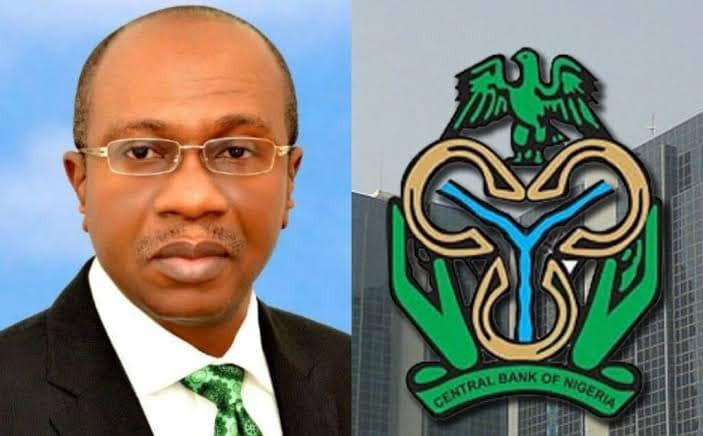
WHO IS AFRAID OF GODWIN EMEFIELE?
HE’S NOT EVEN SNEEZING AND J
kTHEY ARE CATCHING THE COLD! J
STATEMENT BY FRIENDS
OF GOVERNOR EMEFIELE
In the past few weeks, there have been media reports on the purported interest of the Governor, Central Bank of Nigeria (CBN), Mr. Godwin Emefiele, in the 2023 presidential race, leading to stampede by interested parties and vested interests who are resorting to all sorts of blackmail, sponsored articles and choreographed comments on socialmedia targeted at tainting Godwin Emefiele’s image, impugning his character and legacy.

Clearly, the negative attacks are being sponsored by those who see Emefiele as a major threat to their political ambition. Truth is Godwin Emefiele has not confirmed to anyone he is running for President even as he is constitutionally qualified to do so; he has been under pressure in the past few weeks as different groups have been putting up unsolicited campaign for his candidacy. Only yesterday, as the speculation became widespread, a group of his friends under the aegis of FRIENDS OF GODWIN EMEFIELE met with him to clarify his position.
Here is what he told us –
- That he remains focused on his job and will continue supporting the Muhammadu Buhari-led federal government’s economic recovery drive;
- That in his career trajectory, right from his days as a young banker, he never asked, nor lobbied for a job- he was invited by the Board of Directors to be the Chief Executive Officer/Group Managing Director of ZenithBank as he was an integral part of the team, Led by founder Jim Ovia, that transformed Zenith Bank from a start-up to one of Africa’s largest banks with subsidiaries in Ghana, Sierra Leone, Gambia, South Africa, Dubai, China and the United Kingdom;
- In 2014, President Goodluck Jonathan tapped him to be the CBN Governor, a job he didn’t lobby for and in which his name was not among those being considered at that time. He was not even from the geo-political zone that most people thought the job would go to as the president then was from same geopolitical zone with him;
- Today he remains humbled by President Muhammadu Buhari’s decision to grant him an unprecedented second term as CBN Governor- again without lobbying. Thus he will continue to remain loyal to him and the Federal Republic of Nigeria.
- Emefiele told us that he believes it’s the prerogative of President Muhammadu Buhari to plan his succession in line with global best practices for good governance for the continuing peace and progress of the federal republic of Nigeria, as such he will play his part to stabilise the economy for an orderly transition.
- And given that it’s God that anoints leaders, he will leave his faith firmly in the hands of God.
- With these fundamental questions settled, it is imperative to address some of the lies and utter falsehood being pedaled by blackmailers and political jobbers. Who Godwin Emefiele as a threat to their ambition.
FROM BEGINNING AS CBN GOVERNOR
Indeed, when Emefiele assumed the position of the CBN Governor in June 2014, his task was huge, the challenges seemingly insurmountable. Today despite huge headwinds he has calmed the waters and put Nigeria back on the path of growth.
SHARP FALL IN CRUDE OIL PRICE
As you will recall there was a sharp fall in crude oil prices from 2015, which led to significant revenue shortfalls in Nigeria where crude oil represents about 95 per cent of Nigeria’s export revenue. This created major shock for the Nigerian economy, leading to a 13-month recession in 2016. In comparison to the previous years before Emefiele became the CBN governor, the average price of crude oil from 2010 to 2014 was over $100/barrel and this fell to some $30 / barrel with high production costs of some $25/barrel. Despite these challenges Emefiele’s monetary policies supported the Buhari administration and all 36 State governments, ensuring salaries were paid and much more was done, with much less, in infrastructure, steering Nigeria away from much worse outcomes while many oil producers like Kuwait, Russia, Angola and Brunei had longer lasting recessions between of 20 – 60 months.
COVID-19 INDUCED GLOBAL RECESSION
Critics must also understand that the second recession the country entered into in 2020 was as a result of the COVID-19 pandemic. Then, the global economy (Nigeria inclusive) was plunged into recession because of the pandemic which was unprecedented. It led to declines in economic activities and lockdown across the world Countries like the USA had GBP falling in 2020 by MINUS 31% in Q2, UK by MINUS 19.4% in Q2, EU by MINUS 14.1% in Q2 and Nigeria , with deft response of the CBN had MINUS 6.1% in Q2. As we all know the CBN supported fiscal authorities in the following areas.
N100 billion health sector credit facility for operators in the sector. Today, Nigeria boasts of two world-class cancer centres in Lagos and medical tourism has reduced.
- A one-year extension of a moratorium on principal repayments for CBN intervention facilities;
- The reduction of the interest rate on intervention loans from 9 percent to 5 percent;
- Strengthening of the Loan to Deposit ratio policy (i.e. stepped up enforcement of directive to extend more credit to the private sector);
- Creation of N400 billion target credit facility for affected households and small and medium enterprises; •Granting regulatory forbearance to banks to restructure terms of facilities in affected sectors;
- Improving FX supply to the CBN by directing oil companies and oil servicing companies to sell FX to the CBN rather than the Nigerian National Petroleum Corporation;
- Additional NGN100 billion intervention fund in healthcare loans to pharmaceutical companies and healthcare practitioners intending to expand/build capacity;
- Identification of few key local pharmaceutical companies that will be granted funding facilities to support the procurement of raw materials and equipment required to boost local drug production.
- N1 trillion in loans to boost local manufacturing and production across critical sectors;
DEVELOPMENTAL-ORIENTEDCENTRAL BANKER
But despite the challenges, the CBN under Emefiele has in the last seven years maintained a developmental- oriented approach in supporting the federal government to address challenges across various sectors of the economy and has initiated far-reaching reforms.
RICE PYRAMID
One issue the critics have continued to raise is the issue of the rice pyramid which was recently unveiled in Abuja. But these arm chair critics have failed to understand that through the Anchor Borrowers7 Programme (ABP), an initiative that was introduced by the Emefiele-led CBN, the lives of a lot of rural farmers have been transformed. The rice pyramid which had taken place previously in Minna, Kebbi, Gombe, Ekiti and Abuja, showed how Emefiele has used agriculture to support the federal governments wars on insecurity. The rice pyramids were build bag by bag in all the states the programme had been launched since December 2020, when it was first launched in Minna, Niger State. The programme held last month to unveil the world’s largest rice pyramid in Abuja was also an initiative of the Rice Farmers Association of Nigeria (RIFAN).
ANCHOR BORROWERS7 PROGRAMME
The ABP has been described as a major agricultural breakthrough and a source of pride to the country, as farmers, especially rice farmers, have continued to count gains under the scheme. The programme has increased banks7 finance to the agricultural sector and enhanced capacity utilisation of agricultural firms. From an average yield of 1.8 metric tonnes per hectare in the pre-ABP era, the initiative has increased the country’s average yield per hectare for rice paddy and maize to about five metric tonnes per hectare.
REDUCTION IN IMPORT BILL
Additionally, there has been a significant reduction in the country’s rice import bill, from a monstrous $1.05 billion prior to November 2015, to the current figure of $18.50 million, annually.
TAMING COVID-19
The disruption caused by the COVID-19, which also contributed to the significant drop in the price of crude oil exposed the economy’s weak underbelly. In Nigeria, the Emefiele-led CBN acted swiftly, almost when the first case broke out in the country, by unveiling a raft of policy initiatives aimed at reducing the adverse impacts of the COVID-19 pandemic on the economy.
CACOVID
Emefiele also spearheaded the creation of the Coalition Against COVID-19 (CACOVID), an initiative that brought all the private sector business leaders under an umbrella in the fight against the spread of the pandemic. This was why in its latest Article IV Consultation released in February 2022, the International Monetary Fund praised Nigeria’s effort in fighting the spread of the virus.
OTHERS
There are many other measures announced by the CBN Governor which will be detailed in due course like the support to Technology, Digital innovation, the Creative Industries and the 15 Trillion Infrastructure corporation recently launched.
- CONCLUSION
Apparently, those behind the sponsored negative reports are afraid of Emefiele’s towering personality and service to Nigeria. But they must understand that he cannot be stampeded any way. He is focused on delivering the mandate of the Central Bank; he is rebuilding The economy of the country through import substitution policies and using agriculture to create a new rural middle class from ground up. . Those who continue to criticise the rice pyramid are too ashamed of giving glory to whom it is due. Emefiele is focused on his unfinished job and should not be distracted.
Signed
Friends of Godwin Emefiele





Fidelity Bank grows gross earnings by 38% to N434.95b in Q1
Fidelity Bank Plc recorded 37.9 per cent growth in gross earnings to N434.95 billion in first quarter 2026 as the international commercial bank continued to expand its core banking market share.
Interim report and accounts of Fidelity Bank for the three months ended March 31, 2026 released at the Nigerian Exchange (NGX) showed that gross earnings rose from N315.42 billion in first quarter 20025 to N434.95 billion in first quarter 2026, representing an increase of 37.9 per cent.
The top-line performance was driven by impressive growth in the bank’s core business operations with interest incomes rising by 22.8 per cent to N314.48 billion in first quarter 2026 as against N256.10 billion in first quarter 2025.
With net interest income at N180.97 billion, the bank closed the period with profit before tax of N92.48 billion. After taxes, net profit stood at N74.47 billion for the three-month period. Earnings per share remained high at N5.69, underlining the capacity of the bank to reward its shareholders.
The balance sheet of the bank also emerged stronger. Total assets crossed the N11 trillion mark to N11.35 trillion by March 2026 compared with N10.46 trillion recorded in December 2025. Customers’ deposits increased from N6.89 trillion to N7.38 trillion. Total equity rode on the back of earnings growth to a 27.5 per cent increase from N1.09 trillion in December 2025 to N1.39 trillion by March 2026.
The first quarter 2026 results further consolidated the strong earnings outlook of the bank, which had successfully completed its recapitalisation amidst impressive earnings performance in 2025.
Fidelity Bank had recorded double-digit growths in interest and non-interest incomes as well as key balance sheet items during the year ended December 31, 2025.
The audited report showed that gross earnings rose from N1.04 trillion in 2024 to N1.52 trillion in 2025, an increase of 45.6 per cent. Interest and similar incomes had grown by 38.7 per cent from N803.1 billion in 2024 to N1.11 trillion in 2025. Fees and commission incomes also rose by 44.7 per cent from N78.4 billion to N113.4 billion. The bank recorded net profit after tax of N242.4 billion in 2025.
The bank’s balance sheet emerged stronger with total assets rising by 18.6 per cent to N10.46 trillion in 2025 as against N8.82 trillion in 2024. Customer deposits increased by 16.1 per cent from N5.94 trillion to N6.89 trillion, reflecting continued franchise strength and an improved funding profile. Net loans and advances meanwhile declined by 2.4 per cent to N4.28 trillion in 2025 as against N4.39 trillion in 2024, attributable to customers paying down on their mature obligations.
The bank had in 2025 strengthened its capital position, with eligible capital rising to N561 billion, above the regulatory minimum of N500 billion for banks with international authorisation. In addition, capital adequacy had remained robust, with Capital Adequacy Ratio of 30.94 per cent by December 2025 as against 23.47 per cent by December 2024.
Managing Director, Fidelity Bank Plc, Dr. Nneka Onyeali-Ikpe, said the first quarter 2026 results reinforced the bank’s strong and resilient business model.
She noted that with the remarkable success of its recapitalisation programme and continuing expansion, Fidelity Bank has entered a new era of growth and impressive returns.
“We are on a stronger footing and confident that we will set new growth records that are reflective of our legacy and the future we are working on,” Onyeali-Ikpe said.
Business
Dangote Refinery Ends Nigeria’s Era of Fuel Import Dependence, Boosts GDP, FX Earnings — EIU
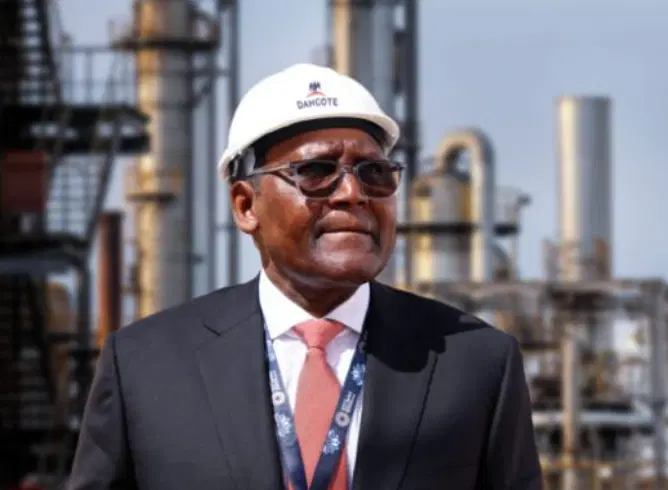
Dangote Refinery Ends Nigeria’s Era of Fuel Import Dependence, Boosts GDP, FX Earnings — EIU
The operational ramp up of the 650,000 barrels per day Dangote Petroleum Refinery & Petrochemicals is fundamentally reshaping Nigeria’s downstream oil sector, significantly reducing the country’s dependence on imported refined petroleum products and strengthening its external position, according to the Economist Intelligence Unit (EIU).
In its latest assessment on Nigeria’s fuel market and regulatory environment, the EIU said the refinery has already transformed a sector that was previously characterised by heavy reliance on imported fuel despite Nigeria being Africa’s largest crude oil producer. The report noted that the refinery met nearly 80 per cent of domestic petrol demand in April and produced enough volumes to satisfy local consumption requirements as operations approached full capacity.
The EIU described Nigeria’s downstream petroleum sector before the refinery as “long dysfunctional”, noting that the country had remained almost entirely dependent on costly imported fuel while producing nearly 1.5 million barrels of crude oil daily.
According to the report, the emergence of the refinery has reduced import dependence, improved domestic fuel availability and strengthened Nigeria’s balance of payments position through lower import demand and rising exports of refined petroleum products.
“The gradual ramp up of the 650,000 barrel/day Dangote refinery since May 2023 has transformed Nigeria’s long dysfunctional downstream sector,” the report stated. “The country’s main refineries, all state owned, had been inoperative for years and Nigeria was almost entirely reliant on costly imported fuel.”
The research and analysis division of The Economist Group, London added that the refinery’s attainment of full operational capacity and its planned expansion would further support Nigeria’s economic growth and foreign exchange earnings over the medium term.
“Meanwhile, the attainment of full capacity at, and an increase in exports from, the Dangote refinery will support real GDP growth and foreign exchange earnings in 2026 and 2027 and beyond, as a planned doubling of the plant’s output comes on stream around the end of the decade,” it added.
Industry analysts said the refinery is increasingly positioning Nigeria as an emerging refining and export hub, altering energy trade flows across Africa and reducing the vulnerability associated with fuel import dependence.
The EIU noted that the refinery’s expansion has coincided with major reforms in Nigeria’s downstream sector, including the removal of fuel subsidies and the introduction of market driven pricing mechanisms.
The report, however, said the transition from a state dominated fuel import structure to large scale domestic refining has triggered resistance from interests linked to the old import regime.
The latest tensions emerged following the decision by the Nigerian Midstream and Downstream Petroleum Regulatory Authority to relax restrictions on petrol imports despite the refinery’s growing capacity to meet domestic demand.
Dangote Industries subsequently initiated legal action, arguing that continued import approvals undermine domestic refining investments and conflict with the objectives of the Petroleum Industry Act, which seeks to encourage local refining capacity and reduce import dependence.
Analysts noted that the availability of large-scale domestic refining capacity has improved Nigeria’s energy security and reduced exposure to external supply shocks and foreign exchange volatility.
The Centre for the Promotion of Private Enterprise also cautioned against unrestrained importation of petroleum products, warning that such a policy could weaken Nigeria’s industrialisation drive and discourage investments in domestic refining.
Chief Executive Officer of CPPE, Muda Yusuf, said continued dependence on imported fuel had historically contributed to pressure on foreign reserves, exchange rate instability and fiscal leakages.
The refinery’s growing impact is also being reflected in Nigeria’s broader macroeconomic indicators. Earlier this month, S&P Global Ratings cited increased domestic refining capacity and rising hydrocarbon exports among the major factors supporting Nigeria’s sovereign credit rating upgrade – the first in 14 years.
Beyond Nigeria, analysts said the refinery is increasingly being viewed as a strategic industrial asset for Africa, where many countries remain heavily dependent on imported fuel despite rising demand for transportation, manufacturing, and power generation.
Business
BREAKING: Court Dismisses $19.6 Million Claim Against NNPCL — Rules Contract Scope Cannot Be Changed Orally
BREAKING: Court Dismisses $19.6 Million Claim Against NNPCL — Rules Contract Scope Cannot Be Changed Orally
In a landmark ruling on Friday, May 22, 2026, the Federal Capital Territory High Court in Abuja threw out a $19.6 million lawsuit filed by Alternate Dimensions Ventures Ltd against the Nigerian National Petroleum Company Limited (NNPCL), affirming a key legal principle: a written contract cannot be expanded through oral agreements or conduct.
Alternate Dimensions had sought $19,600,000 in professional fees, claiming the scope of its Direct Sale, Direct Purchase (DSDP e-pro) contract with NNPCL was orally expanded. Represented by counsel Patrick Peter, the firm argued it was entitled to the revised sum for services rendered under the alleged new terms.
But NNPCL, through its lawyer Ituah Imhanze of KENNA LP, pushed back sharply, arguing that parties are bound exclusively by the clear terms of their written agreement. Imhanze contended that without any written amendment, the claim was legally unsound, and the court agreed.
Delivering judgment, Justice Hamza Mu’azu upheld NNPCL’s defense, stating that the contract was unambiguous and that no evidence was adduced during the trial, which supported the alleged scope expansion. The court further found that NNPCL fully complied with all contractual terms and committed no breach.
Dismissing the suit as meritless, Justice Mu’azu reinforced the doctrine of sanctity of contract: any amendment to a written agreement must be express, unequivocal, and documented, not implied or verbal.
The ruling spares NNPCL from the S19.6 million claim and also a floodgate of similar potential liabilities.


- World Cup accredited journalists raise concerns over unfair United States (US) visa restrictions, International Sports Press Association (AIPS) calls on FIFA to intervene June 6, 2026
- Ghana: President Mahama arrives in Belarus, lays wreath at Victory Monument June 6, 2026
- Liberia: President Boakai Advances Clean Energy Agenda; Dedicates 20-Megawatt Solar Power Plant at Mount Coffee June 6, 2026
- African Union (AU) Commission Chairperson mourns Passing of the Former Angola Minister of Foreign Affairs June 6, 2026
- Economic Community of West African States (ECOWAS) Welcomes Students on an Educational Visit to Its Headquarters June 6, 2026
- Seychelles: President Patrick Herminie attended Official Opening of Rise and Shine Day Care Centre at Mont Fleuri June 6, 2026
- Faith, fear and trust: Inside Democratic Republic of the Congo's (DR Congo) fight against Ebola June 6, 2026
- Economic Community of West African States (ECOWAS) Commission and Women in Law and Development (WiLDAF) Train Women Cross-Border Traders in The Gambia June 5, 2026
- Eritrea: Seminar to Nationals in The Hague June 5, 2026
- Eritrea: Training on Photography and Video Production June 5, 2026
- World Cup accredited journalists raise concerns over unfair United States (US) visa restrictions, International Sports Press Association (AIPS) calls on FIFA to intervene June 6, 2026
- Ghana: President Mahama arrives in Belarus, lays wreath at Victory Monument June 6, 2026
- Liberia: President Boakai Advances Clean Energy Agenda; Dedicates 20-Megawatt Solar Power Plant at Mount Coffee June 6, 2026
- African Union (AU) Commission Chairperson mourns Passing of the Former Angola Minister of Foreign Affairs June 6, 2026
- Economic Community of West African States (ECOWAS) Welcomes Students on an Educational Visit to Its Headquarters June 6, 2026
- Seychelles: President Patrick Herminie attended Official Opening of Rise and Shine Day Care Centre at Mont Fleuri June 6, 2026
- Faith, fear and trust: Inside Democratic Republic of the Congo's (DR Congo) fight against Ebola June 6, 2026
-

 news6 months ago
WHO REALLY OWNS MONIEPOINT? The $290 Million Deal That Sold Nigeria’s Top Fintech to Foreign Interests
-

 society1 month ago
SOCIAL MEDIA IS NOT A BATTLEFIELD COMMAND – WHY THE NIGERIAN ARMY’S ACTION AGAINST JUSTICE CRACK IS A NATIONAL SECURITY IMPERATIVE
-

 celebrity radar - gossips4 months ago
Dr. Chris Okafor Returns with Power and Fire of the Spirit -Mounts Grace Nation Altar with Fresh Anointing and Restoration Grace on February 1, 2026
-

 celebrity radar - gossips6 months ago
Prophet Kingsley Aitafo Releases 2026 Prophecy: ‘Nigeria Will Rise, but the World Must Prepare for Turbulence’