
news
WHO REALLY OWNS MONIEPOINT? The $290 Million Deal That Sold Nigeria’s Top Fintech to Foreign Interests


In a recent announcement that sent ripples across Africa’s fintech landscape, Moniepoint Inc. confirmed it had secured an additional $90 million to close its Series C funding round at a staggering $200 million (Source: Techpoint Africa; Serrari Group; Ecofin Agency, Oct 2025).
While the company, formerly TeamApt – touts the deal as a major vote of confidence, the influx of capital, led by heavyweight institutional investors like Development Partners International (DPI) and LeapFrog Investments, and including global players like Visa, Google’s Africa Investment Fund, and the International Finance Corporation (IFC) (Source: Multiple, Oct 2025), raises fundamental questions about who truly controls Africa’s “leading profitable fintech.”
The Founder’s Dilution: CEO or Steward?
The unprecedented scale of external capital implies a massive, unspoken cost: a significant transfer of power from the original founders and local interests to foreign boardrooms.
The narrative is shifting from a local entrepreneur building a pan-African dream to a highly competent CEO appointed by a global consortium.
Industry speculation, fueled by the sheer volume of institutional money now dominating the cap table, alleges that Co-founder and Group CEO Tosin Eniolorunda’s personal equity stake may have been diluted to a non-controlling percentage, a common outcome where founders become figureheads for their international backers, holding minimal control despite remaining the public face (Controversy derived from: African Law & Business, Nov 2025; DPI Partner Adefolarin Ogunsanya, Oct 2025).
When institutional giants anchor a round of this size, the company’s ultimate financial destiny is often decided far from its Nigerian headquarters. The founder, in essence, becomes an incentivized steward for foreign capital, undermining the narrative of a fully Nigerian-owned tech success story.
The Irony of ‘Commitment’: A Campaign Built on Borrowed Loyalty
Moniepoint frequently uses its “Made for Your Progress” campaign to declare its commitment to financial inclusion and “powering the dreams” of millions of Nigerians. However, this rhetoric is being used as a shield against the truth of its ownership:
The audacity of Moniepoint’s “Made for Your Progress” campaign rings hollow: how can a company whose ultimate ownership and controlling decisions reside in the boardrooms of US and European private equity firms genuinely claim to be “powering the dreams” of Nigeria’s people? Their commitment is not to the progress of the Nigerian economy, but to the return on investment (ROI) demanded by foreign shareholders who now hold the majority stake in the parent entity, Moniepoint Inc.
By positioning Nigerian success stories as mere fuel for their foreign-controlled growth machine, Moniepoint risks betraying the very local entrepreneurs they claim to champion, transforming their powerful campaign slogan into a thinly veiled sales pitch designed to keep Nigerian users generating profits for their non-Nigerian masters.
The Veil of Profitability: Lawsuits and International Losses
The controversial funding news is further complicated by signs of internal instability and financial vulnerability outside its core market:
Struggling UK Expansion: Despite claims of “sustained profitability” in Nigeria, recent reports indicate Moniepoint posted a $1.2 million operating loss tied to its ambitious and rapid expansion into the United Kingdom (Source: Fintech Magazine Africa; Techpoint Africa, Oct 2025). This international stumble reveals a delicate balancing act where the core profitable business is being leveraged to subsidize risky global ventures demanded by demanding international investors.
Internal Equity Battle: The company’s internal equity practices have been drawn into sharp public controversy. A former top executive is currently locked in a high-profile lawsuit against Moniepoint, alleging the wrongful denial of nearly $1 million in vested stock options (Source: Startup Researcher, Jun 2025). This legal battle casts a long shadow over the company’s integrity and its commitment to those who helped build the business, the very individuals it credits with its success.
The question for Moniepoint, its customers, and the Nigerian tech ecosystem is unavoidable: If the local founder holds minimal control due to massive dilution, if the company struggles with international expansion, and if its own executives are fighting for their promised equity, what exactly is being celebrated? Is this a victory for African fintech, or a carefully orchestrated asset acquisition by global private equity and institutional funds who now own the overwhelming majority of Nigeria’s most critical payment infrastructure?


news
Senate Leader Opeyemi Bamidele Hosts Ondo North Aspirant Abdul Tunji Mohammed, Backs Grassroots Development Agenda

Senate Leader Opeyemi Bamidele recently hosted Chief Abdul Tunji Mohammed (ATM), a prominent aspirant for the Ondo North senatorial seat.
The meeting highlighted a strategic alignment between progressive forces, with both leaders emphasizing a shared vision for grassroots development and legislative excellence.
Senator Bamidele, a respected figure in Nigerian politics, is recognized for his contributions to national cohesion and impactful policymaking, drawing on his experience as a legal luminary and human rights activist.
Chief Mohammed, an astute businessman and dedicated grassroots mobilizer, has made a notable impact on Ondo North through his philanthropic work and commitment to constituents’ welfare. His approach blends corporate discipline, economic ingenuity, and a deep concern for people—qualities that have reshaped the region’s political narrative.
The two leaders discussed the district’s critical needs, exploring avenues for socioeconomic growth, legislative reform, and stronger community integration. Senator Bamidele stressed the importance of supporting President Bola Ahmed Tinubu’s Renewed Hope Agenda, a sentiment echoed by Chief Mohammed.
The convergence of Chief Mohammed’s vision with Senator Bamidele’s legislative experience offers hope for Ondo North. This synergy between grassroots ambition and seasoned mentorship points to a promising future for the district’s representation in the Senate. With ATM’s drive and the guidance of leaders like Senator Bamidele, Ondo North is positioned for progress and transformative governance.

APC Senatorial aspirant for Ondo North, Abdul Tunji Mohammed, popularly known as ATM, received a resounding endorsement on Thursday during a high-profile visit to Ikare-Akoko.
The endorsement came from the Olukare of Ikare, His Royal Majesty Oba Akadiri Momoh IV, the Owa Ale of Ikare, His Royal Majesty Oba Adeleke Adedoyin, and the Ikare Council of Chiefs, who described ATM as a credible son of the soil with the capacity to represent Ondo North effectively at the Senate.
Speaking at the palace, the Olukare commended ATM for his consistent engagement with the people and his track record in business and community development. “We have watched your contributions to Ondo North over the years. You are one of us, and we believe you have the experience and character to speak for our people in Abuja,” the monarch said.
The Owa Ale, in his remarks, stressed the need for unity and quality representation. He urge him to continue the help to the people at home that he’s doing. He urged other stakeholders to support aspirants with proven commitment to the district’s progress, noting that Ikare and Akoko land require strong voices at the National Assembly.
In his response, Abdul Tunji Mohammed thanked the monarchs and chiefs for their blessings and trust. He reaffirmed his commitment to prioritize infrastructure, education, healthcare, youth empowerment, and agricultural development if elected.
“Ikare is central to Ondo North, and your support strengthens my resolve to serve with integrity and results. I will not betray this trust. My campaign will remain issue-based, and my representation will reflect the hopes of our people,” ATM stated.
The visit was marked by prayers, cultural displays, and solidarity from party leaders, youth, and women groups across Ikare-Akoko.
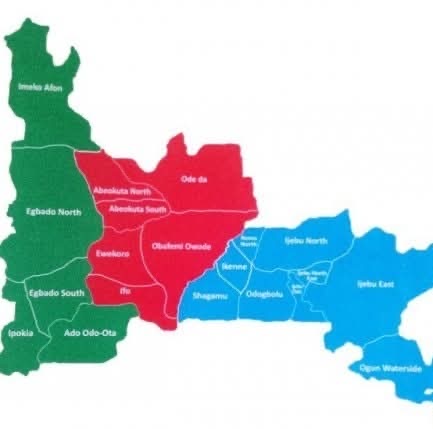
LAs the 2027 elections draw closer in Ogun State, discussions about who should represent Ogun Central in the Senate are gradually gaining momentum. Across Abeokuta South, Abeokuta North, Odeda, Obafemi-Owode, Ifo, and Ewekoro, the mood among the people appears largely the same. The people have made their preference clear. Not in anger or protest but in the quiet and wilful way that voters do when they still believe you can do better. The unifying thing in the people’s agitation is the call for credible, competent, and accessible representation.
This is not a new demand from the people of the district. The demand for a paradigm shift has been growing in recent times. Residents across the district are showing a preference for leaders who can demonstrate measurable capacity in healthcare, infrastructure, education, youth empowerment and constituency development. The calls for palpable development, responsive engagement, and effective legislative outcomes have become too obvious to dismiss.
We can all recall that in the last elections in 2023, the All Progressives Congress rallied behind Senator Shuaibu Salisu with considerable optimism. Party leaders and stakeholders presented his candidacy to the people as the strongest path to meaningful progress for the district. That mandate carried real expectations, and it is fair to say that, in several communities, those expectations have not been fully met.
Concerns have been raised across town hall meetings, community forums, and on social media about the speed of infrastructural projects, the reach of scholarship and empowerment programmes, and the overall visibility of senatorial intervention in major sectors. Whether one attributes these gaps to constraints of the Senate’s systems or individual legislative capacity, the perception of underdelivery is widespread enough to warrant serious attention from party leaders.
For now, this dissatisfaction has not translated into rejection of the APC. Instead, it has taken the form of an expectation to do better next time. Voters in Ogun Central are not asking for a fundamental change in the party structure or traditions. They are asking for the incorporation of wider grassroots inputs and candidates’ worthiness in the process.
This presents both a challenge and an opportunity. The challenge is that the culture of selecting candidates through elite consensus without genuine grassroots consultation is a risk that may worsen the growing disconnect between elected representatives and the communities they serve. Political observers across the nation have questioned this practice repeatedly, and Ogun Central may be feeling its effects most.
The opportunity lies in what the APC does with this feedback. The party’s senatorial selection is not a formality to be managed. It places a decisive moment for public trust at the feet of the party leaders. It is also an opportunity to reposition the district for future outcomes. That means looking beyond the financially powerful or politically connected aspirants and instead evaluating candidates on measurable criteria like competence, work experience, community engagement, and constituency presence.
There is also a broader shift worth noting. The era in which financial muscle alone could determine electoral outcomes is visibly passing. Many voters across southwestern Nigeria, especially our people, are increasingly attentive to antecedents, accountability, and impact. They want representatives who can speak with authority in the Red Chamber, secure federal projects, and translate legislative work into visible improvement in their daily lives.
None of these is to suggest that Senator Salisu’s tenure should be written off. A single term in the Senate, particularly within Nigeria’s complex federal system, does not allow for a complete verdict. But it is sufficient for the electorate to form impressions, and those impressions should shape how the APC approaches 2027.
The path forward does not require the party to bring down the house. It only requires discipline. The leaders of Ogun Central APC would do well to begin inclusive consultations with stakeholders, community leaders, youth groups, women’s organisations, and ordinary party members so that the candidate who eventually emerges carries not just the party’s endorsement but also the people’s confidence.
The 2027 senatorial election will be more than a contest. It will be a test of whether the APC in Ogun State can translate its dominance at the polls into dominance in governance. The people of Ogun Central are watching, and their expectations are high. The party’s consideration or dismissal of the concerns raised above will influence public confidence in Ogun State.


- Statement on United States (US) Travel Restrictions Related to the Bundibugyo Ebola Outbreak May 19, 2026
- Africa Centres for Disease Control and Prevention (Africa CDC) Declares the Ongoing Bundibugyo Ebola Outbreak a Public Health Emergency of Continental Security May 19, 2026
- Kaspersky maps Artificial intelligence (AI) and the evolving threat landscape at AI Everything Kenya x GITEX Kenya May 19, 2026
- Bouka Family Sets Out Again to Conquer Everest May 19, 2026
- Port Community Systems (PCS) as the crisis backbone: how trade disruption makes digital port infrastructure non-negotiable (By Alioune Ciss) May 19, 2026
- Rand Refinery Joins African Mining Week (AMW) as Silver Sponsor Amid Regional Market Expansion Strategy May 19, 2026
- Applications open for the 2027 Meltwater Entrepreneurial School of Technology (MEST) Africa AI Startup Program May 19, 2026
- Absa’s Shirley Webber Joins African Mining Week (AMW) Advisory Board to Drive African Mining Investment May 19, 2026
- Mining Services Companies Drive Africa’s Next Phase of Industrial Mining Growth May 19, 2026
- Oversight matters: Spotting payroll fraud in a digital world May 19, 2026
- Statement on United States (US) Travel Restrictions Related to the Bundibugyo Ebola Outbreak May 19, 2026
- Africa Centres for Disease Control and Prevention (Africa CDC) Declares the Ongoing Bundibugyo Ebola Outbreak a Public Health Emergency of Continental Security May 19, 2026
- Kaspersky maps Artificial intelligence (AI) and the evolving threat landscape at AI Everything Kenya x GITEX Kenya May 19, 2026
- Bouka Family Sets Out Again to Conquer Everest May 19, 2026
- Port Community Systems (PCS) as the crisis backbone: how trade disruption makes digital port infrastructure non-negotiable (By Alioune Ciss) May 19, 2026
- Rand Refinery Joins African Mining Week (AMW) as Silver Sponsor Amid Regional Market Expansion Strategy May 19, 2026
- Applications open for the 2027 Meltwater Entrepreneurial School of Technology (MEST) Africa AI Startup Program May 19, 2026
-

 society2 weeks ago
SOCIAL MEDIA IS NOT A BATTLEFIELD COMMAND – WHY THE NIGERIAN ARMY’S ACTION AGAINST JUSTICE CRACK IS A NATIONAL SECURITY IMPERATIVE
-

 celebrity radar - gossips4 months ago
Dr. Chris Okafor Returns with Power and Fire of the Spirit -Mounts Grace Nation Altar with Fresh Anointing and Restoration Grace on February 1, 2026
-

 celebrity radar - gossips5 months ago
Prophet Kingsley Aitafo Releases 2026 Prophecy: ‘Nigeria Will Rise, but the World Must Prepare for Turbulence’
-

 Business5 months ago
BUA Rewards 510 Employees with ₦30bn in Historic Night of Excellence