
society
139M Poor, Yet Counting “Progress”: Nigeria’s Poverty Crisis Demands More Than Policy

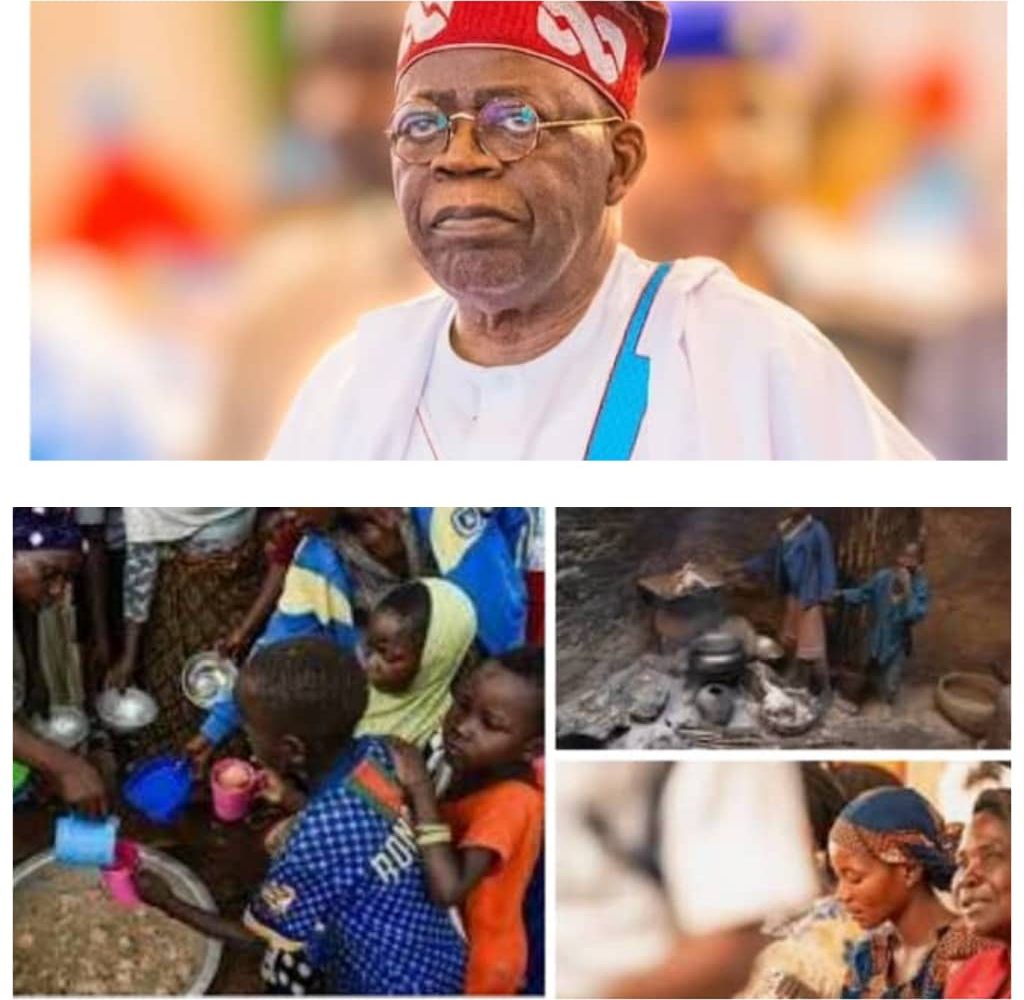
139M Poor, Yet Counting “Progress”: Nigeria’s Poverty Crisis Demands More Than Policy
BY BLAISE UDUNZE
The latest World Bank Nigeria Development Update delivers a chilling verdict, as 139 million Nigerians, over half of the nation’s population, are said to be living in poverty. The report, titled “From Policy to People: Bringing the Reform Gains Home,” praises Nigeria’s bold macroeconomic reforms but warns that the gains have yet to trickle down to the people.
Poverty in Nigeria is not just growing; it’s metastasizing. The World Bank’s 139 million estimate translates to roughly six in ten Nigerians living below the poverty line.
The numbers are stark. The implications are severe. And the solutions will require more than incremental policy tweaks. What the nation is witnessing is an emergency, one that demands bold leadership, systemic change, and national resolve.
Despite measurable progress on paper indicating improved revenue inflows, a more stable foreign exchange market, and the easing of inflationary pressures, the truth in the streets tells a very different story. Nigeria today sits at a troubling crossroads where official statistics clash with the bitter truth of daily survival. Each month, the National Bureau of Statistics (NBS) releases inflation figures suggesting a country “stabilising.” Yet in the kitchens of Lagos, in the weary sighs of market women, and in the hollowed eyes of hungry children, a harsher reality unfolds, which is that empty pots don’t lie. Hunger, not percentages, is Nigeria’s truest inflation index.
When the new administration came in 2023, it promised sweeping reforms to “reset” the economy. Subsidy removal, exchange rate unification, and fiscal discipline were its first acts, as these policies were hailed internationally for courage and long-term vision. But domestically, they unleashed an economic storm that continues to batter households. A bag of rice that sold for N35,000 two years ago now costs between N70,000 and N90,000. A crate of eggs has jumped from N1,200 to N6,200. Tomatoes, garri, and pepper, which are staples of everyday life, have drifted beyond the reach of ordinary Nigerians.
Yet, the NBS insists food inflation dropped to 21.87 percent in August 2025, down from 37.52 percent a year earlier, attributing the decline to a rebased Consumer Price Index. This statistical adjustment may appear elegant on paper, but for millions who now spend 70 to 80 percent of their income on food, such figures are not just implausible; they’re insulting. Nigeria may have changed its base year, but it hasn’t changed the harsh arithmetic of survival.
Even after the Central Bank of Nigeria (CBN) eased its Monetary Policy Rate (MPR) from 27.5 percent to 27 percent, which is the first modest cut in over a year, the relief has been invisible. For businesses and households, borrowing costs remain punishingly high. For small and medium enterprises (SMEs), which drive job creation, loans are still largely inaccessible. The 50-basis-point cut may have symbolic weight, signaling that inflation is moderating, but its real-world impact has been muted.
For millions of Nigerians, the inflation rate is not a percentage on a chart; it is the daily question of whether today’s wage will buy one meal or none. Even with the reported decline in inflation, the World Food Programme (WFP) has warned that over 30.6 million Nigerians will face acute hunger in 2025. The situation is compounded by the fact that more than 133 million people are already trapped in multidimensional poverty.
The government’s removal of the decades-old fuel subsidy in 2023 was meant to free up over $10 billion annually for education, healthcare, and infrastructure. International institutions like the IMF and World Bank praised it as a bold step toward fiscal discipline. Yet one year later, the results are disheartening. Fuel prices have surged by more than 514 percent, inflation hovers around 21.88 percent, and the cost of living continues to spiral. More troubling still, Nigeria’s external reserves remain stagnant at around $41.046 billion, which is roughly the same level as before the subsidy was removed.
For many Nigerians, the obvious question is, where did the money go?
What’s even more baffling is the federal government’s muted and defensive reaction to the World Bank’s sobering findings. Rather than acknowledging the scale of the crisis, official statements have downplayed the report, insisting that Nigeria is on the “right trajectory toward recovery and inclusive growth.” But inclusive growth for whom? While policymakers in Abuja celebrate macroeconomic stabilisation, hunger and despair continue to expand across the country.
If 139 million Nigerians are poor, as the World Bank and multiple local surveys affirm, how can the government claim recovery? A country cannot be said to be “on the right path” when its citizens cannot afford rice, fuel, or transport fare. The insistence on optimism in the face of deepening hardship has become not only tone-deaf but dangerous. It reflects a disconnect between governance and lived reality, between data manipulation and human experience.
The World Bank’s Country Director for Nigeria, Dr. Mathew Verghis, underscored this truth when he said, “Despite these stabilisation gains, many Nigerians are still struggling. The challenge is clear: how to translate reform gains into better living standards for all.” That translation from macroeconomic stability to microeconomic relief is the missing bridge in Nigeria’s policy landscape.
Across the country, churches, mosques, and NGOs now fill the gap left by weakened social safety nets. Community kitchens have sprung up in many cities across the country, serving meals to the poor, the homeless, and internally displaced persons. Welfare arms of faith-based organisations now feed widows, orphans, and jobless youth, providing the kind of direct social intervention that the government has yet to institutionalise.
This is the irony of Nigeria’s moment, as macroeconomic gains are celebrated abroad, but despair is deepening at home. Inflation is easing, yet hunger is rising. The MPR is lower, yet credit remains tight. Subsidies are gone, yet the fiscal space they were meant to create remains invisible. Poverty, instead of retreating, has expanded its frontiers.
If reforms continue to benefit numbers and not people, the danger is not merely economic; it is existential. A hungry population cannot sustain democracy, peace, or productivity. Protests, strikes, and growing insecurity are already evidence that social tension is simmering beneath the surface.
Nigeria must confront this crisis with urgency and empathy. Reforms must now turn toward people. The government must strengthen social protection programs, expand food security initiatives, and ensure fiscal transparency so that citizens can see how savings are spent. There must be deliberate investment in human capital like education, healthcare, and job creation to restore hope where despair is fast becoming the norm.
The World Bank’s report released in October 2025 is both a warning and a roadmap. It shows that Nigeria is not without progress, only that progress must now be measured not by GDP or reserves, but by the number of citizens lifted out of hunger and poverty. The real reform test is not in Aso Rock’s figures but in the food markets, the classrooms, and the homes of millions across the country who go to bed hungry.
Until policy gains translate into food on tables, jobs for the youth, and dignity for families, Nigeria’s poverty crisis will remain an emergency beyond policy adjustments.
Blaise, a journalist and PR professional writes from Lagos, can be reached via: [email protected]





US-Based Society Lady, Fehintola-Brat Extends Eid-El-Kabir Greetings To Muslims
United States based fahionista of class, Chief (Mrs) Ayoola Fehintola-Brat has extended a warm greetings to Muslim faithful all over the world on the occasion of the 2026 Eid-El-Kabir celebration.
Fehintola-Brat who is the Balogun Egbe Obaneye Obinrin Akile Ijebu, and the Yeye Asofin of Idenaland in her message to Journalists urged Muslim to continually uphold the enduring values of sacrifice, obedience, faith, and compassion, which are central to the significance of Eid-El-Kabir festival.
A quiet philantropist whose humanitarian services has won her several laurels urged Muslims to use the spiritual occasion to pray for the peace co-existence of Nigerians regardless of religious, social and political leanings stressing that the oneness of the country should not be underplay.
In a related development, she expressed her felicitations to all sons and daughters of Ijebuland on the forthcoming Ojude Oba 2026 celebration, tasking age-groups otherwise known as Regbregbe to be more proactive in giving back to their immediate communities.
According to her, the beauty of the age-groups in Ijebuland is the need to contribute immensely to the development of the land in no small means. “This we will continue to achieve with God on our side”, she concluded.
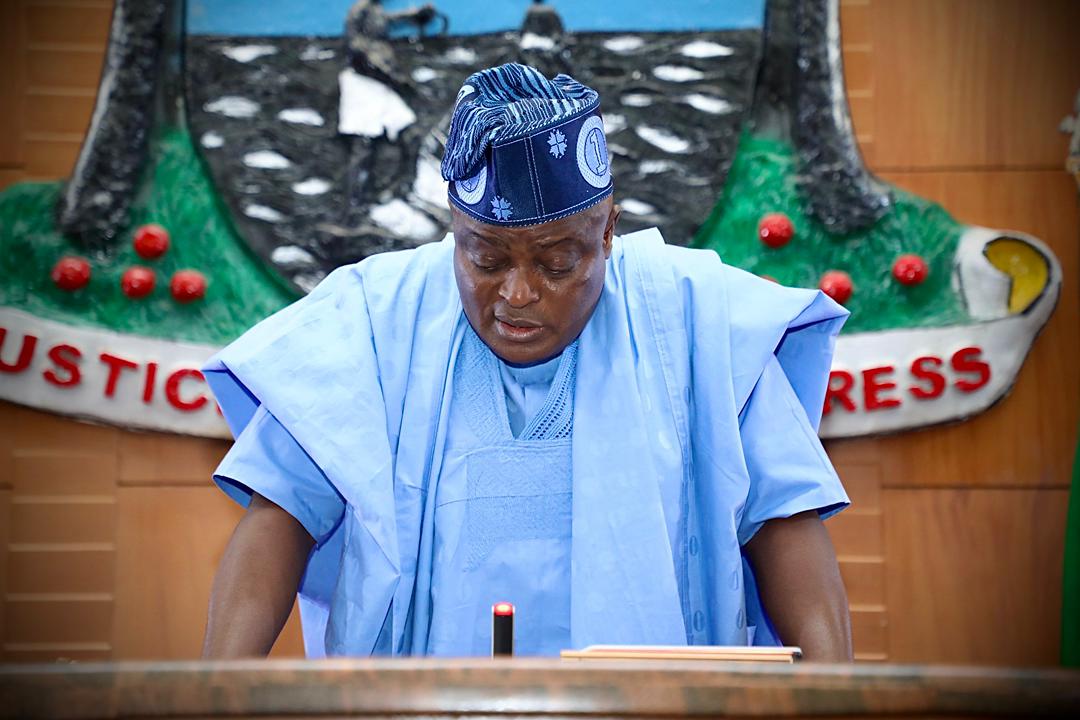
Sallah: Obasa Felicitates Muslim Ummah, Commends Nigerians for APC Primaries Turnout
The Speaker of the Lagos State House of Assembly, Rt. Hon. Mudashiru Obasa has extended warm felicitations to Muslims in Lagos State and across Nigeria on the occasion of Eid al-Adha.
In a statement released by his Chief Press Secretary, Mr. Dave Agboola, Obasa described the festival as a season of sacrifice, reflection, and gratitude, urging the faithful to continue to uphold the values of peace, unity, and love that strengthen the nation.
He noted that the celebration of Eid al-Adha is not only a spiritual milestone but also a reminder of the importance of togetherness and collective responsibility in building a stronger society.
He, likewise, emphasized that the festival provides an opportunity for Nigerians to renew their commitment to national progress and to support leadership that prioritizes development and prosperity.
Obasa, however, commended Nigerians, particularly members of the All Progressives Congress (APC), for their massive turnout during the recently concluded party primaries. He described the participation as a clear demonstration of the people’s confidence in the government of President Bola Ahmed Tinubu and their belief in the administration’s vision for a greater Nigeria.
“The APC primaries have shown the resilience of our democracy and the confidence Nigerians have in the leadership of President Bola Ahmed Tinubu and the Renewed Hope Agenda. This is a strong message that our people are ready to continue supporting policies that will drive growth and prosperity,” Obasa stated.
The Speaker further encouraged Muslims to celebrate responsibly, stressing that the joy of Eid should be accompanied by prayers for the continued peace and progress of Lagos State and Nigeria.
“As you celebrate with family and loved ones, may this season bring joy, peace, and prosperity to your homes. Let us remain united in our resolve to build a stronger nation,” he added.
On behalf of the Lagos State House of Assembly, Obasa wished all Muslims a happy and fulfilling Eid al-Adha celebration.

ABEOKUTA FILM FESTIVAL AT ILEYA
Kayshow Multimedia a filmmaking and Media organization this year 2026 holds its annual Abeokuta film festival at the Ake Palace in Abeokuta.
Alake of Egba land, Ọba Michael Adedotun Arẹmu Gbadebo has graciously endorsed the Free Training of Egba Youths on Film and Arts and the Entertainment of the the People with a FREE FILM SHOW at the AKE PAVILION. as part of the ABEOKUTA FILM FESTIVAL 2.0.
The Convener of the Film Festival Honorable Kehinde Soaga says this year’s event promises to be more exciting as distinguished personalities are sure to attend.
This includes the honorable Minister for Art Culture and Creative Economy in Nigeria, Barr. Hannatu Musa Musawa, Ààrẹ Lai Labode, Sen. Ibikunle Amosun and other special guests.
The event will feature Film, Cultural Dance Cultural foods and Award Ceremony.
The general public is hereby invited to the Free film show at the Abeokuta film festival at the Alake Palace Pavilion on Thursday 28th of May 2026 by 4:00 p.m.
Only well dressed is the Entry. The Abeokuta Film Festival is an annual event taking place in the capital city of Ogun State state.


- Qrent says delaying Information Technology (IT) refresh cycles may be increasing operational risk for businesses in Africa May 27, 2026
- Dentons’ Iyunola Adekanye Appointed to African Mining Week (AMW) Advisory Board May 27, 2026
- United Nations (UN) Women Liberia and Partners Convene for Spotlight Initiative 2.0 Women’s Economic Empowerment Inception Meeting May 27, 2026
- African Mining Week (AMW) to Host Central Bank Governors Roundtable as Monetary Authorities Deepen Role in Mining Sector Growth May 27, 2026
- Eritrea: Diaspora Nationals Celebrate Independence Day Anniversary May 27, 2026
- Africa Unveils Landmark Humanitarian Coordination Platform to Strengthen aligned Response to Humanitarian Crises May 27, 2026
- Seychelles: President Herminie Engages with Police and Fire Services on Praslin May 27, 2026
- Issue 3 of Mining Review Africa now available for free download May 27, 2026
- NOV Joins African Energy Week (AEW) 2026 as Gold Sponsor Amid Africa’s Offshore Expansion Push May 26, 2026
- African Union of Broadcasting (AUB) and United Nations University Institute for Water, Environment and Health (UNU-INWEH) Launch Landmark Webinar Series on Africa’s Water Crisis, Starting June 2, 2026 May 26, 2026
- Qrent says delaying Information Technology (IT) refresh cycles may be increasing operational risk for businesses in Africa May 27, 2026
- Dentons’ Iyunola Adekanye Appointed to African Mining Week (AMW) Advisory Board May 27, 2026
- United Nations (UN) Women Liberia and Partners Convene for Spotlight Initiative 2.0 Women’s Economic Empowerment Inception Meeting May 27, 2026
- African Mining Week (AMW) to Host Central Bank Governors Roundtable as Monetary Authorities Deepen Role in Mining Sector Growth May 27, 2026
- Eritrea: Diaspora Nationals Celebrate Independence Day Anniversary May 27, 2026
- Africa Unveils Landmark Humanitarian Coordination Platform to Strengthen aligned Response to Humanitarian Crises May 27, 2026
- Seychelles: President Herminie Engages with Police and Fire Services on Praslin May 27, 2026
-

 news5 months ago
WHO REALLY OWNS MONIEPOINT? The $290 Million Deal That Sold Nigeria’s Top Fintech to Foreign Interests
-

 society3 weeks ago
SOCIAL MEDIA IS NOT A BATTLEFIELD COMMAND – WHY THE NIGERIAN ARMY’S ACTION AGAINST JUSTICE CRACK IS A NATIONAL SECURITY IMPERATIVE
-

 celebrity radar - gossips4 months ago
Dr. Chris Okafor Returns with Power and Fire of the Spirit -Mounts Grace Nation Altar with Fresh Anointing and Restoration Grace on February 1, 2026
-

 celebrity radar - gossips6 months ago
Prophet Kingsley Aitafo Releases 2026 Prophecy: ‘Nigeria Will Rise, but the World Must Prepare for Turbulence’