
society
1914 Amalgamation: The Unseen Hand That Scripted Nigeria’s Identity Crisis

1914 Amalgamation: The Unseen Hand That Scripted Nigeria’s Identity Crisis
By George Omagbemi Sylvester
In the beginning, there was no “Nigeria.” There was no shared anthem, no common tongue, no unified sense of nationhood. Instead, there were sovereign ethnic nations; the Yoruba in the West, the Igbo in the East, the Hausa-Fulani in the North and over 250 other distinct ethnicities scattered across the landmass now known as Nigeria. Each group had its own system of governance, religion, language and worldview. What tied them together was not history or consent; but a single act of colonial convenience on January 1, 1914: the amalgamation of the Northern and Southern Protectorates by the British colonial administration.

This unification, executed under the imperial direction of Lord Frederick Lugard and endorsed by the British Crown, was not an act of benevolence or foresight. It was an economic and administrative maneuver to cut costs and consolidate power. And in doing so, it laid the groundwork for over a century of conflict, suspicion and structural imbalance. The consequences of this act continue to haunt Nigeria like a recurring nightmare.
Over 110 years later, the fundamental question remains: Who signed the amalgamation on behalf of the Nigerian people?
The answer, quite disturbingly, is no one.
Let us look at the historical timeline.
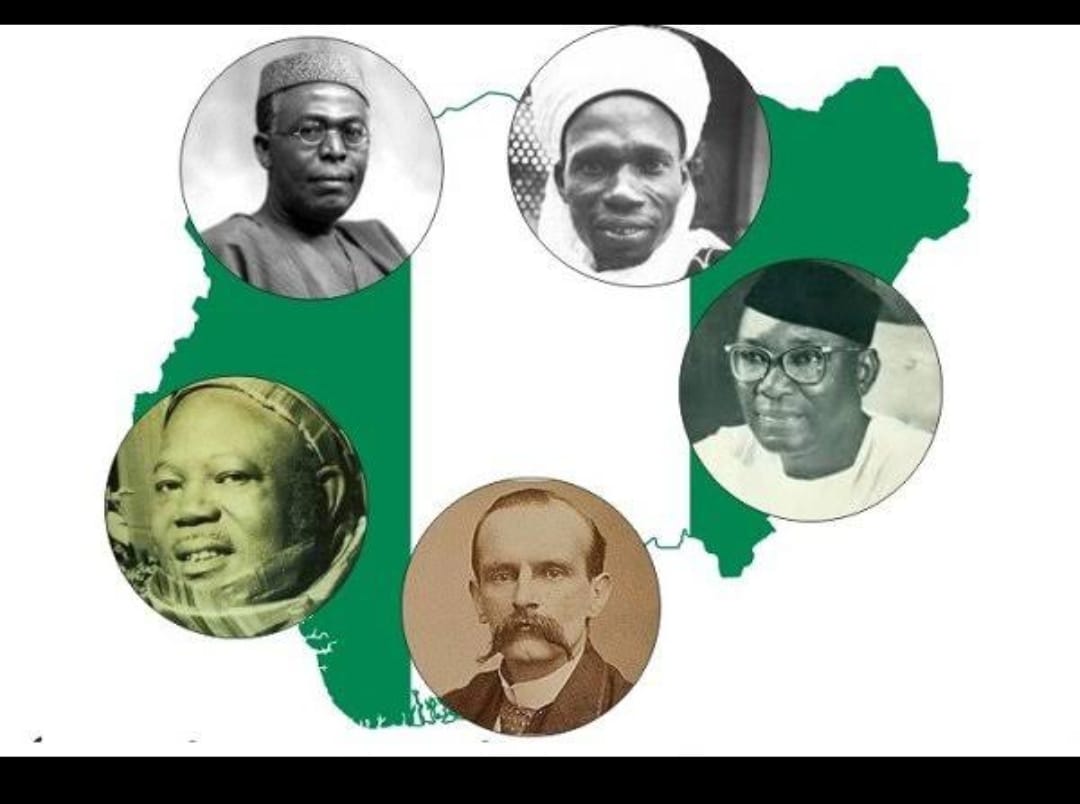
Dr. Nnamdi Azikiwe, later the first President of Nigeria, was born in 1904. He was only 10 years old in 1914.
Chief Obafemi Awolowo, premier of the Western Region, was born in 1909; just 5 years old.
Sir Ahmadu Bello, the Sardauna of Sokoto and Premier of the Northern Region, was born in 1910; only 4 years old.
Sir Abubakar Tafawa Balewa, Nigeria’s first Prime Minister, was born in 1912; a mere toddler of 2 years.
Michael Okpara, premier of the Eastern Region, hadn’t even been born yet; he came into the world in 1920.
These men, hailed as Nigeria’s founding fathers, had no hand in the creation of Nigeria. The 1914 amalgamation was not a pact between equal peoples or a dialogue of nations. It was a colonial decree; signed in London, drawn on British maps, and executed on African soil without consent, consultation or compassion.

Herbert Macaulay, born in 1864 and often revered as the father of Nigerian nationalism, was alive at the time but held no official power or authority to challenge the imperial decree. His protests, although prescient, were brushed aside. The amalgamation, thus, was no democratic creation. It was not a union forged by love, common purpose or mutual benefit; but by British imperial fiat.
As Nobel Laureate Prof. Wole Soyinka aptly put it, “There was no basis for Nigeria’s amalgamation other than administrative convenience. The failure to revisit the terms of that amalgamation is what has fueled most of the crises we face today.”
You cannot mix red oil and engine oil and expect a stable solution. Similarly, you cannot merge ethnic nations with separate histories, economies, cultures and religions and expect unity without negotiation. This is the tragedy of Nigeria: a forced marriage in which no vows were exchanged and no love was pledged.
From that fateful moment in 1914, Nigeria became an experiment in nation-building without the essential ingredients of trust and consensus. The British justified the amalgamation on grounds of administrative efficiency; the North was financially unviable, while the South was economically productive. By merging the regions, the British were able to use the surplus from the South to fund the North; a model of exploitation that persists to this day through lopsided federal allocations and centralized revenue control.
As historian Dr. Usman Bugaje observed, “There was never any document signed by Nigerian representatives to validate the amalgamation. It remains one of the most arbitrary acts in our history; and it set us up for division, not unity.”
Despite more than a century of cohabitation, Nigeria remains a house divided. The fault lines of 1914 have deepened into canyons; tribalism, nepotism, ethnic militancy and religious extremism dominate the political landscape. Unity, where it exists, is often cosmetic and brittle, breaking under the slightest pressure. Mutual distrust has become national currency.
Why?
Because Nigeria was not born in the delivery room of dialogue, but in the operating theatre of imperial surgery. There was no referendum, no negotiation, no cultural reconciliation. There was only the sound of British pens on paper and silence from the people whose lives would be altered forever.
Even our revered leaders admitted the shallowness of this unity.
Chief Awolowo once declared that “Nigeria is not a nation. It is a mere geographical expression.”
Dr. Azikiwe called Nigeria “a political experiment.”
Tafawa Balewa, in a rare moment of candor, confessed: “Since the amalgamation of 1914, Nigeria has existed as one country only on paper.”
Political economist Prof. Pat Utomi underscores this truth: “You cannot build a nation on injustice and expect peace. The failure to renegotiate the Nigerian federation is why we are constantly at war with ourselves.”
Today, Nigeria struggles with poverty in the midst of wealth, hunger amid arable land and darkness despite abundant natural gas. We import toothpicks, fuel and even the pencils used in our classrooms. Our hospitals are death traps, our schools are underfunded, our security forces are underpaid and our brightest minds are fleeing the country. The Nigerian space agency cannot locate missing schoolgirls in Sambisa Forest, yet it claims to monitor satellites orbiting thousands of kilometers above Earth.
What has this forced union achieved?
Rather than build a federal system that respects diversity and autonomy, we cling to a centralized structure that mimics colonial rule. Our so-called federalism is a fraud; a unitary government masquerading as federalism. States go cap in hand to Abuja every month, begging for a share of oil revenues they do not control. Resource control remains a taboo topic, even though it is the bedrock of true federalism.
Legal scholar Prof. Itse Sagay lays it bare: “Nigeria’s constitutional order is a farce. True federalism was abandoned. What we now have is a unitary system dressed up in federal garb and it is unsustainable.”
We must ask uncomfortable questions:
Where is the amalgamation document?
Who signed it?
Why should a forced union be treated as divine revelation?
In a true democracy, unity is not forced, it is negotiated. Identity is not imposed, it is chosen. Nigeria must now revisit its foundations. If the original union was imposed without consent, then today’s citizens must have the right to renegotiate that union.
Let it be clear: this is not a call for secession. It is a call for truth, for justice and for constitutional clarity. If the foundation is cracked, then the building must be reinforced or rebuilt. We must return to the table; not as tribes seeking supremacy, but as peoples seeking coexistence.
As Prof. Jibrin Ibrahim explains, “The Nigerian state was constructed as an extractive colonial machine. Post-independence leaders merely inherited the apparatus and they never deconstructed it.”
The solution lies in genuine restructuring; a return to regional autonomy, fiscal federalism and constitutional renegotiation. Let each region manage its resources, govern its people and contribute to the national purse fairly. Let unity be rooted in equity, not in exploitation.
The British may have scripted Nigeria’s beginning, but we must now take charge of its future. The time has come to reclaim the pen, rewrite the narrative and correct the errors of 1914. As the saying goes, “When the foundation is destroyed, what can the righteous do?” The righteous must rebuild.
Let us remember: empires fall, nations rise, but only truth endures. Nigeria must confront its past to shape its destiny. Until then, we remain a country in search of itself, a union in search of meaning, an identity still unsigned.

Sylvester is a political analyst, he writes from South Africa




UKA Gears Up for Final ATC Exchangeability Test Run as June Preparations Begin.
May 30, 2026 – As the month of June gathers momentum, the *United Kingdom of Atlantis, UKA*, a sovereign nation has unveiled a series of vital guidelines and preparatory packages to ensure citizens and stakeholders run the *ATC Exchangeability* process effectively.
In an official update, the *President of Atlantic Crown Limited, Empress of Attica Empire UKA*, confirmed that the *Final Test Run of ATC Exchangeability* is scheduled for the month of June 2026. The exercise marks a key phase ahead of the *Official Exchangeability Window, set to run from July 2026 to February 2027*.
### Key Highlights from the Presidential Briefing
1. *Final Test Run – June 2026*
The test run is designed to validate systems, procedures, and user readiness before full activation. Citizens, partners, and designated participants are urged to follow all official advisories released by UKA authorities during this period.
2. *Official Exchangeability Period*
Following the successful completion of the June test run, the Official Exchangeability will commence in july 2026 and we are Expecting Full Exchange ability between July Ending, 2026 to February 2026.
UKA stated that detailed schedules, eligibility requirements, and step-by-step instructions will be communicated progressively through verified UKA channels.
3. *Benefiting Packages for June*
In line with UKA’s commitment to citizen empowerment, the month of June will feature “benefiting packages” aimed at education, preparation, and seamless onboarding. These packages are intended to equip the people of UKA with the knowledge and tools needed for effective participation.
4. *Commitment to Transparency*
Addressing the nation, the Empress of Attica Empire UKA emphasized:
_“Final Test Run of ATC Comes up in The Month of June, As We Prepare For The Official Exchangeability, Between July 2026 To Feb 2027. All Information Will Be Communicated.”_
UKA reaffirmed that only information released through official UKA platforms should be regarded as authoritative.
The United Kingdom of Atlantis is encouraging all citizens, representatives, and interested parties to remain alert to official communications, attend designated orientation sessions, and avoid unofficial sources. UKA’s dedication to order, clarity, and the collective benefit of its people as the nation moves into this significant phase.
For updates, advisories, and participation guidelines, citizens are advised to monitor official UKA communication channels.
United Kingdom of Atlantis, UKA, is a sovereign nation, committed to national development, citizen welfare, and structured economic participation through initiatives such as ATC Exchangeability.
Three Years On, General Buratai Hails Tinubu’s Economic, Security Achievements
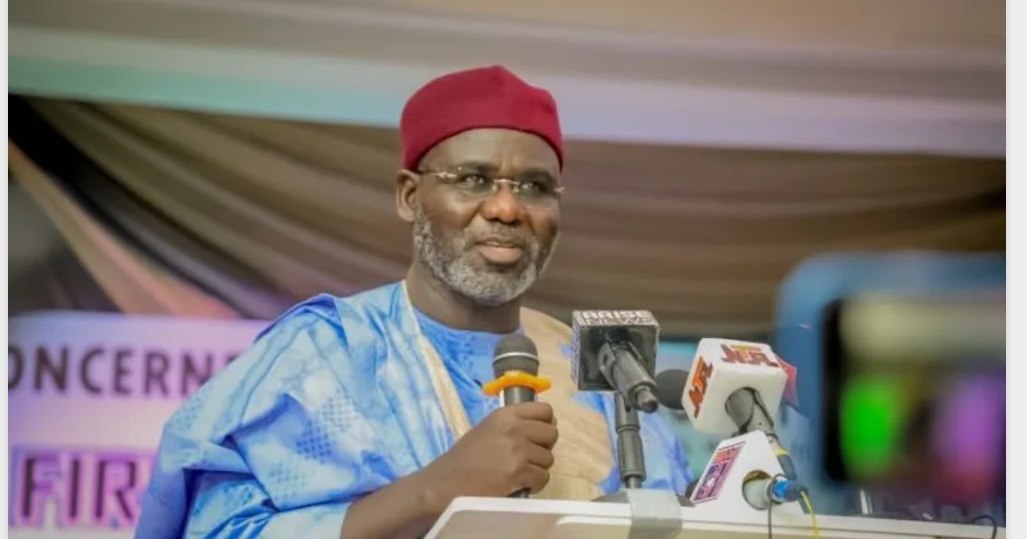
Former Chief of Army Staff, Lt. Gen. Tukur Buratai (retd.), has commended President Bola Ahmed Tinubu for what he described as bold economic reforms and improved security efforts as the President marks three years in office.
In a goodwill message on Thursday to commemorate Tinubu’s third anniversary as President and Commander-in-Chief of the Armed Forces, Buratai said the administration had taken courageous decisions that would leave a lasting impact on Nigeria’s development.

According to him, President Tinubu broke a long-standing cycle that had hindered national growth by removing fuel subsidy and implementing foreign exchange reforms aimed at stabilising the naira and strengthening the economy.
He noted that the reforms were beginning to yield positive results, citing the global acceptance of Nigerian debit cards, the gradual revival of local refineries, access to student loans, and ongoing road and infrastructure projects across the country.
“The FCT Administration has also recorded remarkable progress, completing major road projects that remained unfinished for over 16 years,” Buratai stated.
The former army chief also praised the administration’s security efforts, saying renewed military offensives against insurgents, terrorists and bandits had led to notable successes across various parts of the country.
He specifically lauded recent joint operations involving Nigerian and United States forces against Boko Haram and ISWAP in the North-East, as well as intensified counter-banditry operations in the North-West.
“We have seen notorious ISWAP commanders being neutralised. I congratulate the Commander-in-Chief, the Minister of Defence, the Chief of Defence Staff, the Service Chiefs, the Inspector-General of Police and heads of intelligence agencies for their efforts,” he said.
Buratai, however, acknowledged that challenges remained, stressing the need for more aggressive military operations and intelligence-driven strategies in the coming year.
While urging Nigerians to remain hopeful, he said celebrating the President’s achievements did not amount to ignoring the difficulties facing the nation.
“Because you truly care, you have shown the courage to trade short-term comfort for long-term hope. Nigerians need your reassurances, and that is why we remain optimistic and full of confidence,” he added.
The retired military officer reaffirmed his support for the Tinubu administration and expressed confidence that the foundation being laid by the government would deliver a brighter future for the country.
He also prayed for God’s guidance, wisdom, strength and good health for the President as he continues to lead Nigeria.
NUT Raises Alarm Over Continued Captivity of Abducted Oyo Pupils, Teachers
The Nigeria Union of Teachers has expressed deep concern over the continued captivity of pupils and teachers abducted during an attack on schools in the Ahoro-Esinle and Yawota communities in Oriire Local Government Area of Oyo State.
In a statement issued on Saturday, the Oyo State wing of the union described the situation as increasingly distressing, particularly following the emergence of a video allegedly released by the abductors showing the victims pleading for their freedom.
The union said the footage had heightened fears over the welfare of the abducted pupils and teachers, describing their ordeal as heartbreaking and unacceptable.

According to the NUT, no child or teacher deserves to be subjected to such traumatic experiences, adding that the prolonged captivity of the victims has continued to inflict psychological pain on their families, colleagues and the wider education community.
The union called on the Federal Government, Oyo State Government and relevant security agencies to intensify efforts towards securing the immediate and safe release of the victims.
“This is not a moment for hesitation. It is a moment for coordinated, intelligence-driven efforts to ensure the immediate and safe release of all abducted pupils and teachers,” the statement read.
While acknowledging ongoing interventions by security agencies and government authorities, the union stressed that time was of the essence, warning that every additional day in captivity deepens the trauma suffered by the victims.
The NUT urged security operatives to strengthen surveillance, improve community intelligence gathering and deploy all necessary operational and diplomatic measures to facilitate the rescue of the abductees.
It also appealed to traditional rulers, community leaders and residents to support rescue efforts by providing credible information that could assist security agencies.
“The safety of our children and teachers must remain a collective priority,” the union stated.
Reaffirming its support for the families of the victims, the NUT pledged continued solidarity and prayers while advocating safer learning environments across the country.
The statement was jointly signed by the Chairman of the Oyo State NUT, Comrade Hassan Ajibola Fatai, and the Secretary, Comrade Salami Olukayode.


- Afreximbank Deepens Commitment to Economic Progress in The Bahamas June 1, 2026
- African Electric Vehicle (EV) platform Spiro raises $215M in equity to scale electric mobility and energy infrastructure across Africa June 1, 2026
- Africa Centres for Disease Control and Prevention (Africa CDC) Statement on Attacks Against Health Facilities During the Bundibugyo Virus Disease Response in the Democratic Republic of the Congo June 1, 2026
- Putting consumers at the centre of Africa’s dairy transformation June 1, 2026
- International Rescue Committee (IRC) warns Democratic Republic of the Congo (DRC) Ebola outbreak likely far larger than official figures suggest June 1, 2026
- South Africa: Portfolio Committee on Health Marks National Cancer Survivor Day and Reaffirms Importance of Early Detection and Public Awareness June 1, 2026
- Rwanda’s RSSB Tigers Crowned 2026 Basketball Africa League Champions June 1, 2026
- Uganda: Appointments Committee Begins Vetting of Ministerial Nominees June 1, 2026
- Sudan braces for worsening child malnutrition as pre-harvest season starts June 1, 2026
- Etu Energias Strengthens Angolan Footprint, Returns to Angola Oil & Gas (AOG) 2026 as Champion Sponsor June 1, 2026
- Afreximbank Deepens Commitment to Economic Progress in The Bahamas June 1, 2026
- African Electric Vehicle (EV) platform Spiro raises $215M in equity to scale electric mobility and energy infrastructure across Africa June 1, 2026
- Africa Centres for Disease Control and Prevention (Africa CDC) Statement on Attacks Against Health Facilities During the Bundibugyo Virus Disease Response in the Democratic Republic of the Congo June 1, 2026
- Putting consumers at the centre of Africa’s dairy transformation June 1, 2026
- International Rescue Committee (IRC) warns Democratic Republic of the Congo (DRC) Ebola outbreak likely far larger than official figures suggest June 1, 2026
- South Africa: Portfolio Committee on Health Marks National Cancer Survivor Day and Reaffirms Importance of Early Detection and Public Awareness June 1, 2026
- Rwanda’s RSSB Tigers Crowned 2026 Basketball Africa League Champions June 1, 2026
-

 news6 months ago
WHO REALLY OWNS MONIEPOINT? The $290 Million Deal That Sold Nigeria’s Top Fintech to Foreign Interests
-

 society4 weeks ago
SOCIAL MEDIA IS NOT A BATTLEFIELD COMMAND – WHY THE NIGERIAN ARMY’S ACTION AGAINST JUSTICE CRACK IS A NATIONAL SECURITY IMPERATIVE
-

 celebrity radar - gossips4 months ago
Dr. Chris Okafor Returns with Power and Fire of the Spirit -Mounts Grace Nation Altar with Fresh Anointing and Restoration Grace on February 1, 2026
-

 celebrity radar - gossips6 months ago
Prophet Kingsley Aitafo Releases 2026 Prophecy: ‘Nigeria Will Rise, but the World Must Prepare for Turbulence’