
Uncategorized
2023: Don’t engage in activities that threaten Nigeria’s unity, Abiodun tells Nigerians

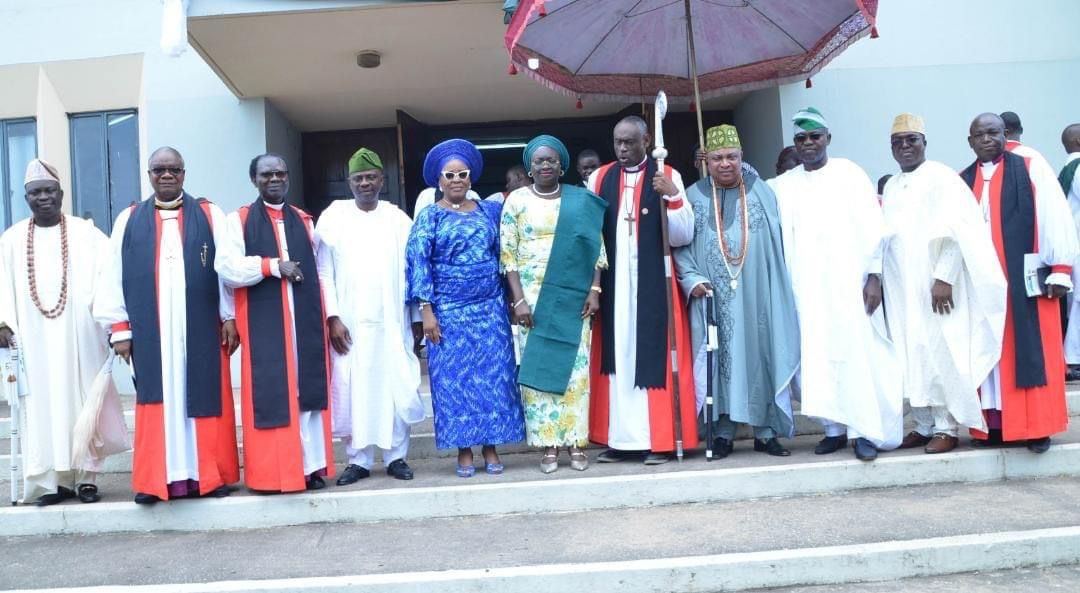
2023: Don’t engage in activities that threaten Nigeria’s unity, Abiodun tells Nigerians

As the country inches closer to another general election, the Ogun State governor, Dapo Abiodun, has , appealed to Nigerians not to engage in actions capable of threatening the peace and unity towards the conduct of the 2023 poll.
The governor who made this appeal at the 62nd Independence Anniversary Church Service held at the Cathedral of St. Peter, Ake, Abeokuta, stressed the need for continued peaceful co-existence among Nigerians for the socio-economic and political development of the country.

Abiodun represented by his deputy, Noimot Salako-Oyedele, acknowledged the anxiety generally expressed by Nigerians whenever general election is about to take place, noting that “this is because an average citizen fears that this is the time the unity of the nation is always threatened”.
He, therefore, solicited the cooperation of all Nigerians to preserve the oneness of the country.
The governor noted that the independence celebration is an opportunity to reflect on the nation’s hopes and aspirations, adding that the period would also enable citizens to acknowledge gains made and understand why others have not been achieved with a view to moving the country forward.
He said: “Celebration of our nationhood is the celebration of oneness of Nigeria, of the security of her people and the fulfilment of individuals aspirations.
“In Ogun State, we have built a harmonious society where different ethnic groups and religions live together in peace, run their businesses and bring up their families. In fact, in Ogun State, we have multi-generational families who have made our state their home and conduct their businesses without fear.
“In Ogun State, there are inter-marriages between our citizens and others across the country. We believe this is what Nigeria should be. We serve as an example to other parts of the country”.
Abiodun pointed out that his administration in the last three and a half years, has continued to develop the state by ensuring a peaceful environment for enduring economic development, which has attracted more people to the state.
While reiterating that his government would not promise what it would not fulfill, the governor assured that with the support of the people, all promises made during the 2019 campaigns would be kept.
He, however, called on Nigerians to be their brothers keepers and desist from hurting one another, saying “this act of love and care will engender enduring peace and help build a nation that all Nigerians will be proud of”.
In his sermon, the Diocesan Bishop of Awori, Rt. (Revd.) Johnson Akin Atere, expressed his dismay that Nigeria which was once the giant of Africa, is now begging for bread, saying disobedience, oppression, ungodliness, hatred on the part of individuals, families and governments are some of the sins that have brought the country to her knees.
Speaking on the topic ‘What is Troubling You’ and taking his text from 2 Kings 6: 24 -27, the cleric said Nigerians, over the years, have been tormented and traumatized for long as “operation no mercy” is now the order of the day, adding that this has caused havoc in the land.
While calling for an end in the shedding of innocent blood, hatred, and all forms of sins, he said God was about to do something new in Nigeria, but needed all citizens, including the leaders to renew their minds and faith in God and be their brothers and sisters keepers.
Atere urged Nigerians to be wise during the forthcoming general election by choosing the right people to lead the nation, positing that Nigerians do not have the moral right to blame the government if they refuse to do the needful in 2023, which he said is another opportunity to restore the nation’s hope.
He, however, solicited the inclusion of traditional rulers in running the security architecture particularly at the grassroots.
The cleric also called on the church to continue to pray for the peace and development of the nation, noting that the current challenges confronting the country would be a thing of the past if all Nigerians play their parts.
The service had in attendance top federal and state government officials, security chiefs, traditional rulers, captains of Industries, among others.





FOPCHEN Calls for Dialogue as Court Fixes May 28 for Continuation
OTA, OGUN STATE — Proceedings in a widely followed legal case resumed on March 24, 2026, at the High Court of Ogun State, Ota Division, ending with a fresh adjournment as the court fixed May 28, 2026, for continuation.
During the session, legal representatives for all parties restated their positions and addressed preliminary matters, laying the groundwork for more substantive arguments at the next hearing. Observers noted that the case continues to attract significant public attention due to its perceived implications for law, culture, and societal values.
The Foundation for the Protection of Cultural Heritage in Nigeria (FOPCHEN) used the occasion to reiterate its call for constructive national dialogue. The group emphasized that while the judicial process must be respected, broader societal engagement remains essential.
According to the organization, issues relating to values, responsibility, and cultural identity should not be confined solely to courtroom deliberations but should involve active participation from various sectors of society.
Legal analysts present at the proceedings described the matter as one with far-reaching implications, noting that arguments advanced in court could shape future interpretations surrounding sensitive cultural and moral questions.
The presiding judge subsequently adjourned the case to May 28, granting all parties time to refine their submissions and respond to issues raised during the hearing.
As anticipation builds ahead of the next court date, Nigerians across different sectors continue to monitor developments closely, keen to see how the judiciary navigates the delicate balance between constitutional rights and cultural expectations.
Uncategorized
CRG: Politicians Must Stop Witch-Hunting, Focus on Nation Building — Says NYSC Cleared Deputy Speaker Since 2023
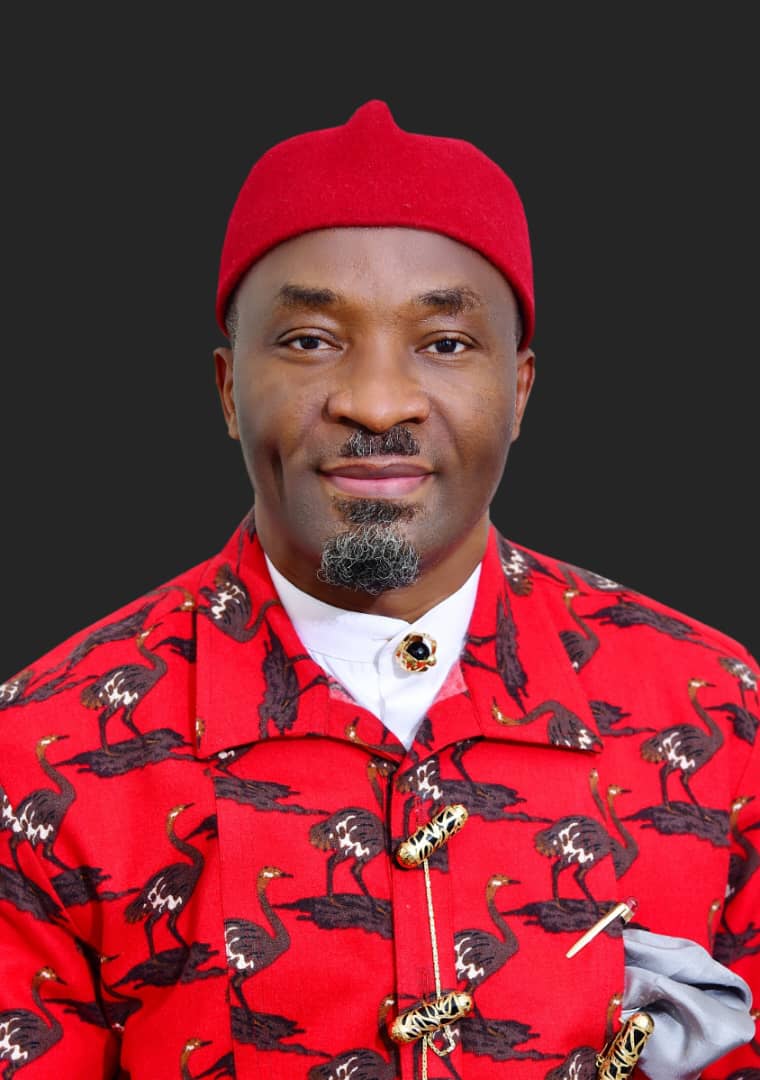
CRG: Politicians Must Stop Witch-Hunting, Focus on Nation Building — Says NYSC Cleared Deputy Speaker Since 2023
By: Boye Ola
The Centre for Responsible Governance (CRG) has called on political actors and interest groups to desist from what it described as needless witch-hunting of the Deputy Speaker of the House of Representatives, Benjamin Okezie Kalu, following renewed controversies surrounding his National Youth Service Corps records.
The organisation noted that the clarification by the National Youth Service Corps (NYSC) regarding the matter is not a recent development, as a formal verification letter had already been issued as far back as May 23, 2023.
The letter, referenced NYSC/CCD/VER/10/5.1/VOL1/02, had already addressed and cleared the questions surrounding the Deputy Speaker’s NYSC records.
Reacting to the renewed debate, the spokesman of the Centre,
Obande George, said it was troubling that issues which had already been clarified by a competent national institution were being resurrected for political purposes.
According to him, the time has come for political actors to move away from destructive engagements and concentrate on building the nation.
“It is important to note that the NYSC had already issued a verification letter dated May 23, 2023 addressing the matter.
Reopening issues that have already been clarified by a competent authority suggests that some individuals are more interested in political witch-hunting than in national progress,” George said.
The CRG stressed that democracy thrives when institutions are respected and their determinations are accepted in good faith rather than constantly questioned for political advantage.

George also commended the Deputy Speaker for demonstrating maturity and composure throughout the controversy, despite what he described as sustained provocations.
“Honourable Benjamin Kalu has shown remarkable calm and maturity in the face of intense public scrutiny and political provocation.
Instead of engaging in unnecessary public confrontation, he allowed institutions to speak through their records.”
The Centre warned that Nigeria’s political culture must evolve beyond constant character attacks and sensational allegations, which often distract public officials from their responsibilities.
According to the organisation, the country’s development requires constructive engagement among political actors rather than continuous attempts to discredit opponents.
“Nigeria cannot move forward if political energy is constantly spent on digging up allegations and amplifying rumours. Our leaders and political actors must redirect their focus to governance, policy and nation building.”
CRG therefore urged Nigerians to rely on verified information from credible institutions and avoid spreading speculative claims that could damage reputations or destabilise public discourse.
The organisation reiterated that respect for due process and institutional integrity remains essential for strengthening Nigeria’s democracy.

@The Centre for Responsible Governance, Email: [email protected], Instagram: crgngo6, Twitter: crgng06, Threads: crgngo6
Uncategorized
IWD 2026: Ajadi Celebrates Women, Urges Them To Seek More Elective Positions In Future Elections

IWD 2026: Ajadi Celebrates Women, Urges Them To Seek More Elective Positions In Future Elections
A Leading People’s Democratic Party, (PDP) Governorship Aspirant in Oyo State, Ambassador Olufemi Ajadi Oguntoyinbo has felicitates with women in the country on the occasion of this year’s International Women’s Day.
The international Women’s Day is celebrated on 8 March, commemorating women’s fight for equality and liberation along with the women right’s movement. It gives focus to issues such as gender equality and reproductive rights. International Women’s Day originated from labour movements in Europe and North America during the early 20th century.
In a statement issued on Sunday to commemorate this year’s edition of the International Women’s Day, Ajadi said the role of the women in nation building cannot be over emphasised.
He recalled the role played by prominent Nigerian women like Mrs Funmilayo Ransome- Kuti, Margaret Ekpo and Wuraola Esan towards the liberalization and the growth of the country and urges women to follow their footsteps by not only participate in the political process but seek more elective positions.
He urges the political leaders to encourage and give more chances to women for them to contest and occupy elective positions in the country.
Ajadi also called for more respect for women, saying they are definitely behind whatever success recorded by the menfolk.
He said domestic violence against women should be stopped, saying they deserves respect for their role in moulding the future leaders.
According to the statement, “I celebrate and congratulate our women on this year’s occasion of International Women’s Day. We cannot underestimate the role played by our women both at home, in the social circle and in politics. They deserve more respect.
“I equally called on them not only to be a passive participants in politics but to determine to seek more elected positions in future elections. They should aspire more from the position of dancing and singing at campaigns to seek more elective positions. The ratio of men to women in elective positions in the country is embarrassing. Women should stand up and fight for more elective positions.
“I also use the occasion of this year’s Women’s Day to appeal to Nigerians to stop domestic violence against the women. If we treat our women well, our country will witness unprecedented developments”.


- Seychelles: 9th Indian Ocean Conference – Minister Barry Faure conducts bilateral meetings on the margins of the Indian Ocean Conference April 13, 2026
- Complete Professional Fighters League (PFL) Africa: Pretoria Results and Photos - Nkosi Ndebele defeats Michele Clemente in a bantamweight classic shootout in the main event April 12, 2026
- Seychelles Backs United Arab Emirates (UAE) Statement, Calls for De-escalation and Respect for International Law April 11, 2026
- TotalEnergies’ Africa Senior Vice President (SVP) Mike Sangster to Spotlight Expanding Project Pipeline at Paris Forum April 11, 2026
- Ascott expands in Nairobi with new Citadines signing, reinforcing the city’s position as a regional hub April 11, 2026
- Century Group Joins African Energy Week (AEW) 2026 as Floating Production Storage and Offloading (FPSO) Partner, Showcasing Regional Offshore Expansion April 10, 2026
- Climate Litigation Surge Reshapes Energy Policy as Africa Seeks Stronger Legal Voice April 10, 2026
- ES-KO Secures Five-Year Catering & Facilities Management Contract Renewal with TotalEnergies EP Congo April 10, 2026
- Beyond the Court: The Kalahari Conference Solidifies its Status as Africa’s Premier Sports & Lifestyle Destination April 10, 2026
- Africa Sports Unified Launches Pan-African Sports Deals Tracker to Improve Market Visibility and Decision-Making April 10, 2026
- Seychelles: 9th Indian Ocean Conference – Minister Barry Faure conducts bilateral meetings on the margins of the Indian Ocean Conference April 13, 2026
- Complete Professional Fighters League (PFL) Africa: Pretoria Results and Photos - Nkosi Ndebele defeats Michele Clemente in a bantamweight classic shootout in the main event April 12, 2026
- Seychelles Backs United Arab Emirates (UAE) Statement, Calls for De-escalation and Respect for International Law April 11, 2026
- TotalEnergies’ Africa Senior Vice President (SVP) Mike Sangster to Spotlight Expanding Project Pipeline at Paris Forum April 11, 2026
- Ascott expands in Nairobi with new Citadines signing, reinforcing the city’s position as a regional hub April 11, 2026
- Century Group Joins African Energy Week (AEW) 2026 as Floating Production Storage and Offloading (FPSO) Partner, Showcasing Regional Offshore Expansion April 10, 2026
- Climate Litigation Surge Reshapes Energy Policy as Africa Seeks Stronger Legal Voice April 10, 2026
-

 news4 months ago
WHO REALLY OWNS MONIEPOINT? The $290 Million Deal That Sold Nigeria’s Top Fintech to Foreign Interests
-

 celebrity radar - gossips3 months ago
Dr. Chris Okafor Returns with Power and Fire of the Spirit -Mounts Grace Nation Altar with Fresh Anointing and Restoration Grace on February 1, 2026
-

 celebrity radar - gossips4 months ago
Prophet Kingsley Aitafo Releases 2026 Prophecy: ‘Nigeria Will Rise, but the World Must Prepare for Turbulence’
-

 celebrity radar - gossips6 months ago
End of an Era: Nigeria Mourns Evangelist Dr. Uma Ukpai, 80