
Politics
2023: How Delta PDP, Urhobos will decide who becomes next Governor

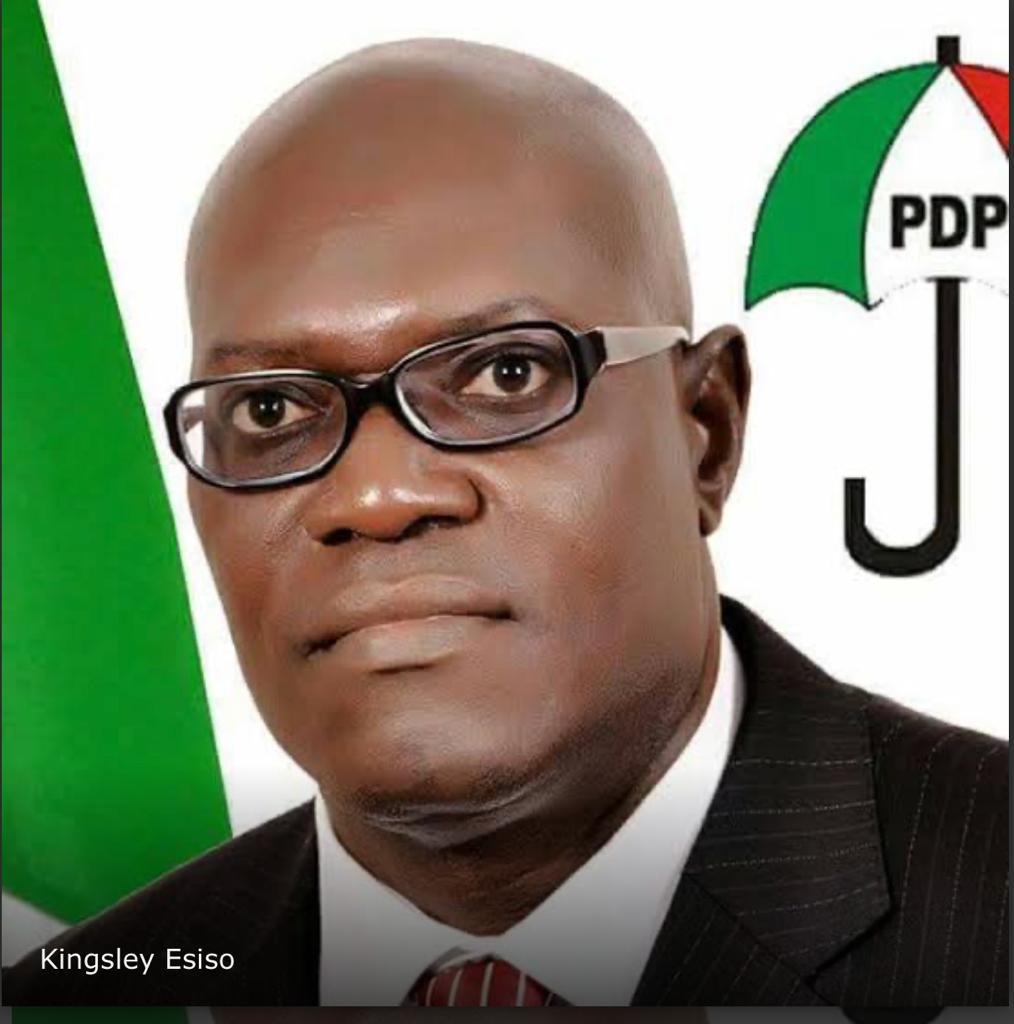
By Ogheneakpobo I. E.
The Urhobo Nation has a population of about five million persons, thereby making it the fifth largest ethnic group in Nigeria. They are also the most populated and largest in Delta State.
Reputed for their unity and common sense of purpose, the tribe is highly respected and feared by their ethnic neighbours. The Urhobos occupy eight local government areas in Delta state, with a few of them mixed up with other ethnic groups in Warri south, Patani, Burutu, Bomadi and Sagbama local government in Bayelsa State.
History has it that during the colonial era, the Urhobos driven by unity of purpose, spoke with one voice and recorded victory against territorial expansionary wars. Unity is typical of the tribe and for a long time was used it to win elections that involved Urhobo indigenes against those of other tribes.
The level of enlightment and quest for a united front among the Urhobos paved way for the early settlers to form a body known as Urhobo Peoples Society led by Chief John Okpodu, from Ovu in Agbon clan in 1931, which was later changed to Urhobo Progress Union.
The organization is binded by the customs and traditional laws of the people as well as the Constitution of the Federal Republic of Nigeria. The body became formidable and recognized as the first and largest ethnic union that existed in Africa.
The Urhobo kingdom is traditionally governed by Kings in each of the twenty three clans, excluding the ones outside the eight local government areas in Delta state. The traditional administration that is headed by the King exist side-by-side with the Urhobo Progress Union led by an elected President General and other Executives, thereby having two arms of government that act as check and balance in each of the clans. They never at any time engaged in conflict or showed disrespect in discharging specified roles of leadership.
The roles and functions of the union cut across the Urhobos that are at home and in diaspora. The leaders are expected to be non-partisan. But, can come into political matters that solely involve the Urhobos in order to avoid a loss or break down of age long unity among its people.
The then leadership of Urbobo Progress Union were upright and chosen without bias. Their choice of candidates at that time was focused on ability to discipline oneself, demonstrate efficiency, and provide visionary and purposeful leadership. At the end of each election, no one expressed dissent, neither does it matter to anyone where the elected leader hailed from, provided the person is an Urhobo indigene.
Chief Mukoro Mowoe, an Urhobo Son from Evwreni in Ughelli North Local Government area became the first President General of the body now known as the Urhobo Progress Union. His reign remains unrivaled to this day. Others such as Chief T.E Salubi, Dr. Esiri and Benjamin Okumagba who ruled subsequently also perfomed excellently, as their reign had zero tolerance for corruption and oppression.
The Urhobo Progress Union headed by Chief Moses Taiga is therefore advised to borrow a leaf from these distinguished Urhobo personalities who were detribalized and always fought the course of the Urhobo nation.
The trend in modern society in which self aggrandizement and corruption are on the increase may have paved way for the failure to maintain the dignity, love and co-operation within the Urhobos and the neighbouring ethnic groups. Nevertheless, it is wrong to discriminate, use hate speech or adopt a culture that fosters selfish interests.
Presently, Delta state is comprised of several ethnic groups that are found in the three Senatorial districts, namely Delta Central, South and North. This accordingly was done during the creation of the state to ensure there wasn’t the domineering influence of a major tribe.
Consequently, the structure necessitated the Peoples Democratic Party (PDP) to adopt a zoning formula in which the governorship position was rotated among the three Senatorial Zones. This was accepted and made to work perfectly without opposition, conflict or challenges of any kind.
The zoning strategy paved way for unity and peace which the earlier settlers of Urhobo nation were know for. It is sad that many Urhobo political leaders refuse to be their brothers keeper. Rather, they have become dogmatic and fail to listen or understand the place of the Urhobo nation in winning elections when it comes to the governorship position.
Some of them who refuse to agree that the baton of leadership should be rotational, have found their way to other political parties with the false hope that the Urhobos will win and continue to control the leadership of government in Delta state.
The Urhobo nation, therefore, must be cautious of the choice of candidate they put forward as power is returned back to Delta Central Senatorial District in 2023.
It will matter greatly to close ranks and mend fences by putting behind all acrimonies to enable the people, PDP caucus leaders, and the leadership of Urhobo Progress Union make a choice that will be massively accepted.
It will be painful and unforgivable if the masses are lured to support a candidate who will not be able to identify with the plight of the masses.
By experience, PDP caucus leaders have 50 percent input in making of choices, 30 percent from the masses and 20 percent from the leadership of Urhobo Progress Union.
The task before the Urhobo Progress Union to settle for a candidate to contest in the 2023 general election is made easier particularly given that the People’s Democratic Party has zoned the Governorship position to Delta Central Senatorial district where the Urhobo dominates. It, therefore, behoves on every son and daughter of Urhobo nation to respect and obey the verdict of the union.
In making an informed choice of a candidate to contest the Governorship election in 2023, the Urhobo nation must begin to consider and settle for a person who duly meets the following:
A. A business mogul and a successful industrialist who is well experienced in promoting economic growth and reducing unemployment.
B. A business man who has acquired wealth and will not focus on diverting government monies for his own enrichment.
C. One who has a track record of assisting the people in his community by helping them to raise funds or pay debts.
D. A person who provided palliatives with personal funds to people across the state during the lockdown.
E. Candidate must have viable business establishments in the state where people work to earn and whose source of wealth is beyond politics.
F. Candidate must have good manifesto that will make life better for the masses, and at a time must have contributed immensely by influencing infrastructural development to the community or state.
G. A person who will not discriminate between the rich and the poor in attending to issues that concern the masses; and should be a listening leader with the pedigree to win the governorship election.
The Delta State leadership caucus of the PDP on it’s part should consider the following in making an informed choice of who should succeed Governor Ifeanyi Okowa from Delta Central Senatorial District:
A. The candidate must be loyal to the party and also respect party hierarchy.
B. Must be one who has been a foundation member of the party and always contributed immensely to its growth and development.
C. Candidate should be a person who at no time defected to other parties to contest for any position against the PDP.
D. Must be a person with requisite qualification to meet the Party’s and INEC guidelines
E. Candidate should be financially ready to match the opposition so as to keep the support base of the PDP in the state.
F. Must be the one whose aspirations spread across the state, as reputed to be disciplined and submissive to constituted authority.
With all due considerations taken, the above requirements can only be narrowed down to the callibre of party men like Kenneth Gbagi, whose wealth cannot be traced to politics. By implication, having him as Governor would guarantee the right application of resources budgeted yearly for the state.
Besides, he is one person who understands the plight faced by the masses, and has ready solutions to address them. It is a fact that Gbagi remains the only individual among all the candidates who have shown interest to contest the governorship seat, with viable business establishments in Urhobo land where the people work to earn a living.
Gbagi has undertaken numerous philanthropic gestures that provided free medical and surgical services to Delta state indigenes, to mention but a few.
It, therefore, behoves the Urhobos to produce another successful Governor after the likes of Felix Ibru and James Ibori, with the choice of Kenneth Gbagi, as soon as politicking begins ahead of the 2023 governorship election.
Acting to the contrary would be interpreted to mean that the PDP caucus and the leadership of the Urhobo Progress Union have a hidden agenda not known to the masses, an impression that by all means should be avoided by making the right call in the interest of the state. In other words, PDP must avoid playing into the hands of the opposition if it intends to hold on to the reigns of power beyond 2023.
Ogheneakpobo I.E. is a Political Analyst and PDP stalwart based in Delta State




Politics
Ogun 2027: Senator Adeola Yayi Promises Inclusive Governance, Says, Ogun APC Primaries Peaceful, Transparent
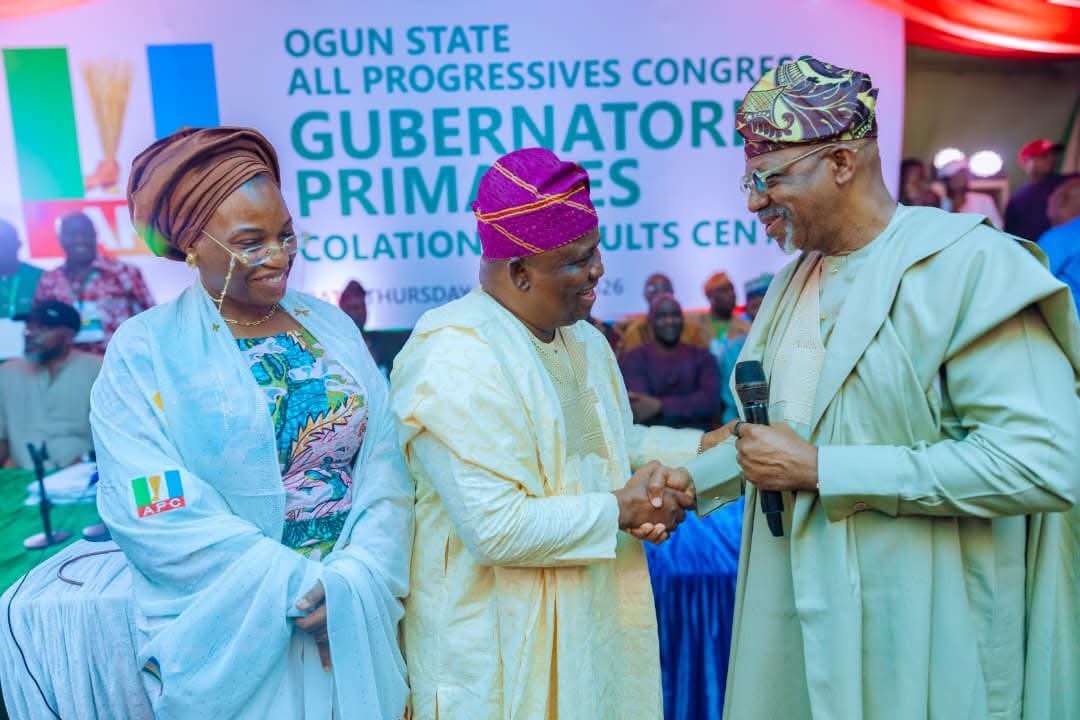
Ogun 2027: Senator Adeola Yayi Promises Inclusive Governance, Says, Ogun APC Primaries Peaceful, Transparent
…Dismisses Claims of Discontent Over Emergence as APC Consensus Candidate
ILARO-YEWA, OGUN STATE, NIGERIA – The Ogun State All Progressives Congress (APC) consensus candidate for the 2027 governorship election, distinguished Senator Solomon Olamilekan Adeola, has assured the people of the state that he would run an all-inclusive government if elected governor in 2027.
Fondly called Yayi, the senator currently representing Ogun West in the Red Chamber of the National Assembly made this known on Thursday, May 21, 2026, shortly after participating in the governorship primary at Pahayi, Ilaro Ward 1.
Speaking with journalists, Senator Adeola Yayi assured party members that he would not disappoint them if elected governor, pledging to deliver good governance while sustaining the developmental strides of the administration of Governor Dapo Abiodun.
According to him, “I want to assure the people that I will run an inclusive government and carry everyone along. It will be an administration that leaves no group or interest behind.”
The senator commended party faithful for the peaceful and orderly conduct of the governorship primaries, noting that the exercise reflected the unity and cohesion within the party.
Senator Adeola Yayi further expressed delight that the primary election was conducted peacefully across the state, describing the turnout of party members during the direct primary exercise as a strong indication that the APC remains formidable and well-positioned to record landslide victories in the 2027 general elections.
He also expressed gratitude to President Bola Ahmed Tinubu and Governor Dapo Abiodun for sustaining the internal democracy for which the ruling party is reputed, while reiterating his readiness to run an open and inclusive administration.
Fielding questions during the press interaction, the Ogun State APC consensus governorship candidate dismissed claims that some aspirants were aggrieved over his emergence as the party’s consensus candidate.
According to him, his emergence was not imposed on the party but was the outcome of extensive consultations and consensus among stakeholders and party leaders across the three senatorial districts of the state.
“I am not aware of any aggrieved aspirants over my emergence as the governorship consensus candidate of our dear party. The decision to present me as the consensus candidate was not foisted on the party.
“Rather, it was the result of far-reaching consultations and agreements among stakeholders and leaders of the party across the three senatorial districts of the state.
“To my knowledge, nobody was cheated and nobody was disenfranchised. I received overwhelming support at the Ogun State APC strategic meeting held at the party secretariat. Thereafter, I met with other aspirants, and we are all committed to working together for the betterment of the people of Ogun State”, he stated.
The senator, who was widely cheered across Ilaro metropolis, polled 3,023 votes at Pahayi Ilaro Ward 1, 2,601 votes in Ilaro Ward 2, and 2,419 votes in Ward 3. He later monitored the exercise in Ilaro Ward 2 and Ward 3, where party members and supporters hailed him enthusiastically at every stop.
The massive turnout of APC members across polling units in Ogun West, and indeed across Ogun State, was seen by observers of the scene as a demonstration of the widespread acceptance and popularity of the Chairman of the Senate Committee on Appropriations among the people, without any form of inducement.


*Rainbow Coalition Ambassadors Hails Rivers APC Over Peaceful Conduct of Guber Primaries*
Charges Chinda to Be Magnanimous in Victory as a Patriot
The Rainbow Coalition Ambassadors (RCA) has commended the All Progressives Congress (APC) in Rivers State for the peaceful and orderly conduct of its governorship primaries, describing the process as a shining example of political maturity and a departure from the state’s history of acrimonious contests.
In a statement signed by Comrade Jude Chuks and issued shortly after the declaration of Rt. Hon. Kingsley Ogundu Chinda as the party’s candidate for the 2027 governorship election, the group praised the APC leadership and stakeholders for ensuring a rancour-free exercise.
The Rainbow Coalition Ambassadors, a prominent support structure aligned with the broader Rainbow Coalition political movement in the state, noted that the smooth conduct of the primaries reflects growing commitment to unity, dialogue, and collective progress ahead of the 2027 polls.
“We congratulate the Rivers State APC for conducting a credible, transparent, and peaceful primary. This achievement underscores the maturing democratic culture in our state and sets a positive tone for the political season,” Chuks read.
The group specifically hailed the withdrawals of key aspirants, including Governor Siminalayi Fubara and Tonye Cole, which paved the way for Chinda’s emergence, describing the moves as “statesmanlike decisions taken in the supreme interest of peace and party cohesion.
While celebrating the outcome, the Rainbow Coalition Ambassadors charged the new flag bearer to remain magnanimous in victory and demonstrate the spirit of a true patriot.
“Victory at the primary is not an end in itself but a call to higher responsibility. We urge Hon. Kingsley Chinda to extend a hand of fellowship to all other aspirants, stakeholders, and even those outside the APC.
“True leadership demands inclusivity, humility, and the ability to heal divides rather than widen them,” the ambassadors emphasised.
They further appealed to Chinda to prioritise broad-based consultations, youth and women inclusion, and the welfare of Rivers people in his campaign and future governance plans, noting his legislative experience and cross-party relationships as key assets.
The group, however, expressed optimism that, knowing Chinda’s antecedents as a seasoned lawmaker, bridge-builder, and consistent advocate for good governance, he will unify the party, foster inclusive development, and deliver people-oriented leadership that prioritises the welfare of all Rivers people across party lines.
Obasa Warns Dissidents as Agege Affirms Hamzat as APC governorship candidate
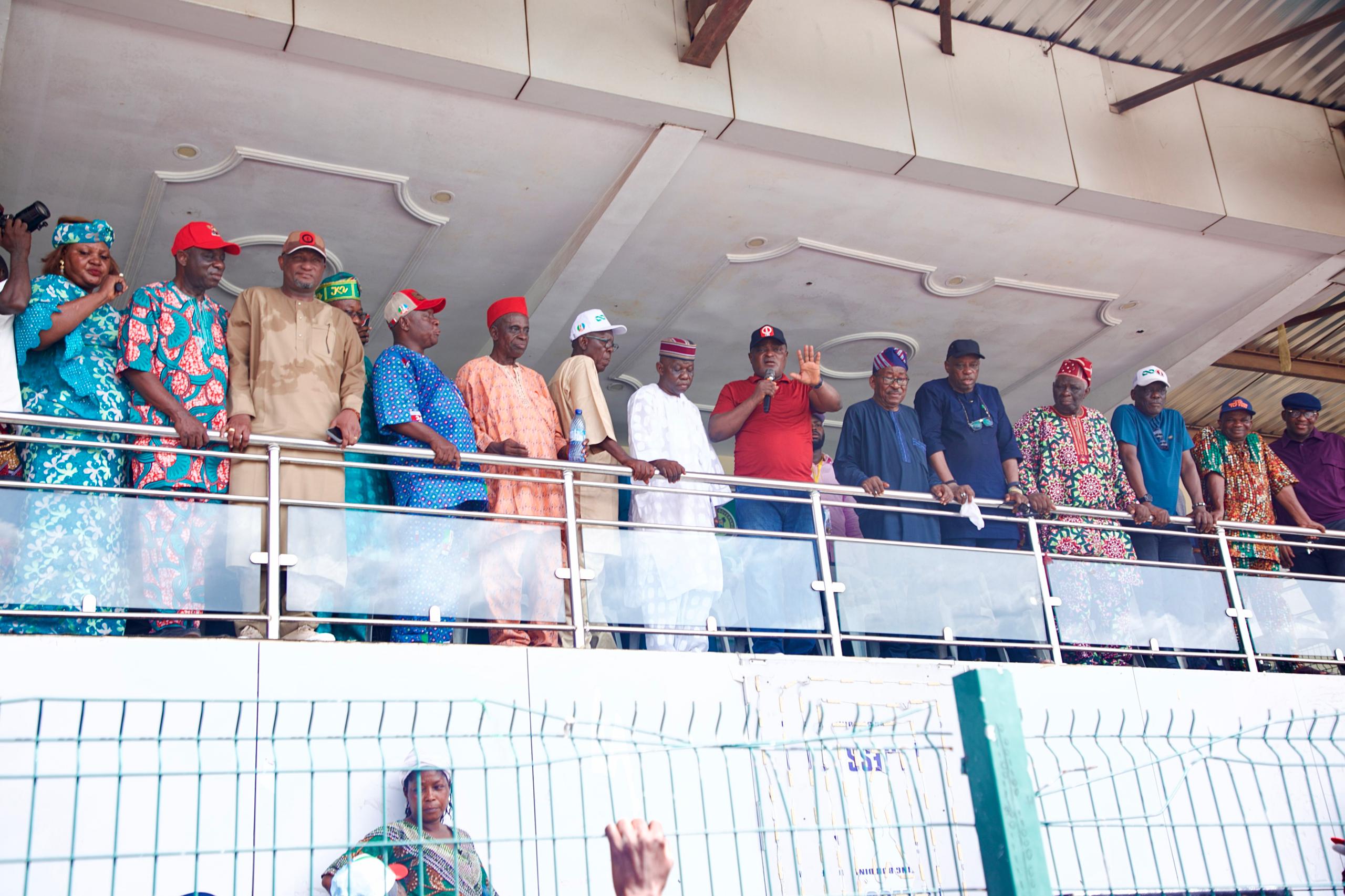
Speaker of the Lagos State House of Assembly, Rt. Hon. Mudashiru Obasa, has issued a strong warning to dissidents within the All Progressives Congress, APC, that are spreading false reports about the House of Assembly primaries held Wednesday, May 20 across all the wards in the local government.
Supervising officers from the Independent National Electoral Commission (INEC) announced the immediate past Executive Chairman of Agege Local Government Area, High Chief Ganiyu Kola Egunjobi, and Barrister. Azeez Oladapo Ninalowo as winners of Agege Constituencies I and II respectively. Egunjobi polled 10, 126 votes while Ninalowo scored 12, 455 votes. Both candidates had earlier emerged as consensus aspirants during a caucus meeting of the party presided over by Speaker Obasa last Tuesday.
Obasa spoke at the Agege Stadium earlier today, Thursday, May 21, as the APC faithful and stakeholders converged in their thousands to affirm incumbent deputy governor, Dr Obafemi Hamzat, as the consensus candidate of the party in the 2027 governorship election.
Speaking on the outcome of the primaries, Obasa declared: “We’ve done everything according to the dictates of the party. Dr Obafemi Kadiri Hamzat is our governorship candidate. Senator Idiat Adebule is our candidate in the Lagos West Senatorial District, and Mudashiru Obasa is the candidate for Agege Federal Constituency in the House of Representatives. Collectively, we have decided and we are standing by the decision of our members.”
He commended INEC and security agencies “for helping us to have a free, fair, and transparent exercise devoid of violence and disorderliness.” The Speaker also praised party members for their loyalty and steadfastness, stating: “Agege is always here for the party. We are always present. When you are a member of a party, you should always participate in all its activities. Why will anyone who isn’t here claim to be part of us?
“You can’t be absent from all primaries and still claim that you are with us. We have conducted House of Representatives, Senate, House of Assembly, and Governorship primaries, yet some disgruntled party members have consistently stayed away. It is not possible. They are not part of us.”
Further, Obasa said: “We should be mindful of the people we send to represent us in any position. If they disregard us, we will wait until their tenure expires and remove them. The beauty of any political structure is continuity. Agege remains a shining example of a well-structured political organisation at the local government level.
“Nothing was done by subterfuge; everything was done in the open. INEC, DSS, Police, the media, and party leaders were all present. There’s nothing to fear. If anybody is initiating fake reports, let them continue. Anybody who has a problem should go and challenge the result in court. After the general election, maybe they will wake up,” he added.
With Hamzat’s candidacy sealed and Obasa drawing a hard line against internal dissent, Agege has sent a clear message: the APC’s fortress stands on loyalty and discipline, and those unwilling to march in step will be left behind as the party advances toward 2027.


- Seychelles: Minister Faure and Ambassador Azais Tatistscheff discuss humanitarian and healthcare cooperation May 22, 2026
- African Energy Chamber (AEC) to Position Africa as South America’s Next Strategic Energy Frontier at Association of Oil, Gas and Renewable Energy Companies of Latin America and the Caribbean (ARPEL) Conference 2026 May 22, 2026
- Afreximbank Posts Robust Q1 2026 Results with 25% Growth in Net Income and Improved Profitability May 22, 2026
- Africa: Soil Mapping for Resilient Agrifood Systems (SoilFER) programme scales up soil fertility monitoring through Mid-Infrared Spectroscopy May 22, 2026
- Food and Agriculture Organization of the United Nations (FAO) receives USD 4 million from the Regional Humanitarian Fund to save lives and protect the livelihoods of the most vulnerable households in Chad May 22, 2026
- Algeria: Mr. Attaf received by the President of the Arab Republic of Egypt May 22, 2026
- Seychelles: President Herminie Engages Tourism Office on La Digue on Visitor Safety and Infrastructure May 22, 2026
- Meeting between State-Minister Kunimitsu and H.E. Mr. João Jorge Matlombe, Minister of Transport and Logistics of Mozambique May 22, 2026
- Ebola response support: United Nations Organization Stabilization Mission in the Democratic Republic of the Congo (MONUSCO) airlifts nearly 30 tons of equipment to Bunia May 22, 2026
- Liberia: President Boakai Congratulates Cameroon on National Day May 22, 2026
- Seychelles: Minister Faure and Ambassador Azais Tatistscheff discuss humanitarian and healthcare cooperation May 22, 2026
- African Energy Chamber (AEC) to Position Africa as South America’s Next Strategic Energy Frontier at Association of Oil, Gas and Renewable Energy Companies of Latin America and the Caribbean (ARPEL) Conference 2026 May 22, 2026
- Afreximbank Posts Robust Q1 2026 Results with 25% Growth in Net Income and Improved Profitability May 22, 2026
- Africa: Soil Mapping for Resilient Agrifood Systems (SoilFER) programme scales up soil fertility monitoring through Mid-Infrared Spectroscopy May 22, 2026
- Food and Agriculture Organization of the United Nations (FAO) receives USD 4 million from the Regional Humanitarian Fund to save lives and protect the livelihoods of the most vulnerable households in Chad May 22, 2026
- Algeria: Mr. Attaf received by the President of the Arab Republic of Egypt May 22, 2026
- Seychelles: President Herminie Engages Tourism Office on La Digue on Visitor Safety and Infrastructure May 22, 2026
-

 news5 months ago
WHO REALLY OWNS MONIEPOINT? The $290 Million Deal That Sold Nigeria’s Top Fintech to Foreign Interests
-

 society3 weeks ago
SOCIAL MEDIA IS NOT A BATTLEFIELD COMMAND – WHY THE NIGERIAN ARMY’S ACTION AGAINST JUSTICE CRACK IS A NATIONAL SECURITY IMPERATIVE
-

 celebrity radar - gossips4 months ago
Dr. Chris Okafor Returns with Power and Fire of the Spirit -Mounts Grace Nation Altar with Fresh Anointing and Restoration Grace on February 1, 2026
-

 celebrity radar - gossips5 months ago
Prophet Kingsley Aitafo Releases 2026 Prophecy: ‘Nigeria Will Rise, but the World Must Prepare for Turbulence’