
society
2027 Is Youths O’Clock: Ordinary Young Nigerians Will Build the Great Nation We Deserve.

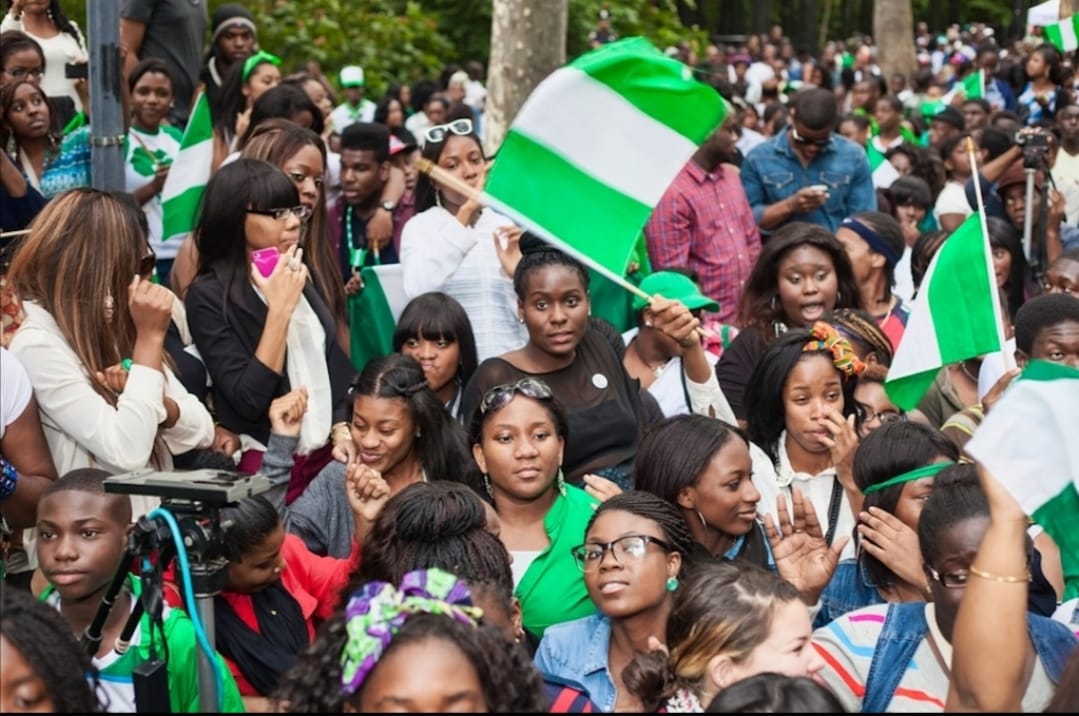
2027 Is Youths O’Clock: Ordinary Young Nigerians Will Build the Great Nation We Deserve.
By George Omagbemi Sylvester | Published by SaharaWeeklyNG.com
“Great nations are not built by the rich alone, but by the courage of ordinary youths who rise from humble beginnings.” That truth is not poetry; it is policy. It is the spine of every national rebirth. And it is Nigeria’s most urgent assignment as 2027 approaches. The class of 2027 must be the generation that trades CYNICISM for CIVIC MUSCLE, that takes our frustrations and forges them into reforms, that turns raw numbers into organized power. Simply put: 2027 is calling for Youths O’clock.

Across history, NATION-BUILDING is rarely a billionaire’s project; it is the hard, hopeful, everyday work of young citizens who show up (at the ballot, in town halls, in classrooms, on factory floors, in code labs, on farms, and in community boards. Nigeria has that workforce in abundance. Africa is the youngest continent on earth; in sub-Saharan Africa, 70% of people are under 30, and young Africans are projected to comprise about 42% of the world’s youth by 2030. This is not a statistic to admire; it is a mandate to act.
BUT POTENTIAL IS NOT DESTINY. If we don’t translate youthful energy into tangible power (votes, policies, enterprises, and institutions), our “DEMOGRAPHIC DIVIDEND” becomes a DEMOGRAPHIC DEBT. The window is open, but it will not stay open forever. In 2023, young Nigerians proved they are not spectators. Nearly 40% of registered voters were under 35, and youth drove unprecedented mobilization both online and on the streets. The SURGE was REAL; THE LESSON is CLEAR: when youths organize, the political class pays attention; willingly or otherwise.

Of course, COURAGE WITHOUT PATHWAYS is a CUL-DE-SAC. That is why the Not Too Young To Run Act (2018) matters. It didn’t just trend; it changed the rules, lowering age limits for key offices and opening the door for independent candidacy. Reform is never a miracle; it’s the residue of relentless youth organizing, and Nigerian youths achieved it. Now, that door must be kicked fully open by a 2027 wave of competent, ethical, ground-game-ready candidates.
Yet one can’t talk about 2027 without naming the economic headwinds young people face. Jobs remain too few, wages too high, and opportunities too gated. Globally, the youth unemployment rate hovered around 13% in 2023, masking deep regional inequalities; in Nigeria, official youth unemployment ticked up in 2023 under a revised methodology that many analysts debate, reminding us why UNDEREMPLOYMENT and INFORMALITY (not just joblessness) must be central to policy. If a reform does not turn schooling into skills and skills into dignified work, it is a slogan, not a solution.
So what must young Nigerians actually do between now and February 2027?
1) OWN THE REGISTER, OWN THE RESULT. Registration is power. A movement that does not obsess over PVCs is a mood, not a force. Learn from 2023: the line for your card is the first queue to your policy outcomes. Demand transparent voter data, track logistics, cs, and volunteer as party agents and observers. Youths do not just vote; we verify.
2) RECRUIT AND RUN. Stop waiting for “GOOD PEOPLE” to appear. Recruit them or be them. The legal barriers are lower now. Build slates of youth candidates for local councils, state assemblies, and the National Assembly. Pair them with seasoned technocrats and community elders in advisory roles. Competence is not anti-youth; it’s the oxygen of youth credibility.
3) BUILD POLICY FROM THE GROUND UP. The economy is not an abstract riddle. It is transport costs, stable power, affordable data, reliable security, and access to finance. Focus your manifestos on: (a) SKILLS-TO-JOBS PIPELINES (apprenticeship, coding academies, TVET married to real employer demand), (b) AGRO-INDUSTRIAL VALUE CHAINS that turn harvests into exports, (c) MSME capital that is patient, transparent and regionalized and (d) LOCAL INFRASTRUCTURE that cuts business friction—roads, markets, cold storage and mini-grids. Judges of seriousness will look for budget line, not buzzwords.
4) TURN PROTEST INTO POLICY. The world has watched youth uprisings reshape agendas from Nairobi to Lagos. But historic protests without INSTITUTIONAL FOLLOW-THROUGH risk becoming anniversaries instead of laws. Mobilize into the committees where procurement is designed, the town halls where tariffs aresett and the party primaries where tickets are traded. If policy is where the sausage is made, then 2027 must be where youths own the kitchen.
5) GUARD THE INFORMATION SPACE. Disinformation is voter suppression by other means. Youth-led fact-checking hubs, precinct-by-precinct results collation, and credible parallel vote tabulation will be decisive. Technology is not a savior, but in skillful hands it is a shield.
6) CLOSE THE REPRESENTATION GAP. Youths are not a monolith; inclusion is strength. Bring in women, rural youths, artisans, student leaders, creatives, techies, and persons with disabilities. Let your coalitions look like the country you seek to govern.
If this sounds like a moral crusade, it is. As Kofi Annan reminded the world, “No one is born a good citizen; no nation is born a democracy. Rather, both are processes that continue to evolve over a lifetime.” The generation that commits to that process (patiently, persistently, pragmatically) wins the future.
And if this sounds like a development strategy, it is that too. Amartya Sen defines development as the expansion of real freedoms to live, learn, work, and participate meaningfully. Youth empowerment is not window dressing; it is the engine of that expansion. Elections without expanded freedoms are ceremonies; with them, they become catalysts.
Skeptics will say, “We’ve heard this before.” Fair. Hope has been weaponized too many times in our politics. That is why 2027 must be different in METHOD, not just in MOOD. Replace personality cults with policy contracts (one-page, measurable commitments signed publicly by candidates, tracked quarterly by civic group, and published online. Replace patronage rallies with door-to-door listening, Ward Development Scorecards, and clear procurement dashboards. Replace “big man” endorsements with credible youth-elder compacts (inter-generational alliances that blend idealism and institutional memory.
Above all, replace the myth that change must be spectacular with the discipline that change must be systematic. Nations are built less by grand speeches than by thousands of small, sturdy decisions made daily by citizens who refuse to outsource their future. As Nelson Mandela said, “It always seems impossible until it’s done.” The work before us is not impossible; it is simply incomplete.
Let’s test this thesis with hard realities:
Demography is on the youth’s side. The youngest continent is ours; the youngest electorate in our history is alive now. If we don’t invest this advantage in 2027, it compounds against us in 2031.
The law is edging in our favor. The age barriers are lower; candidacy is more accessible. But legal keys unlock nothing without organized hands to turn them.
Economics is the battleground. Youth joblessness and underemployment corrode social trust and fuel brain drain. Sound, youth-centered economic policy (anchored in SMEs, skills, and infrastructure) is not a talking point; it’s survival.
So here is the challenge and the promise: if ordinary youths move from hashtags to handbooks, from outrage to outcomes, from “THEY” to WE, Nigeria can do in the 2027 (2031 cycle what others take decades to attempt) bend the arc of our politics toward competence, bend the arc of our economy toward inclusion and bend the arc of our society toward dignity.
The rich will fund projects; that is fine. But great nations are built by bus conductors who insist on receipts, by market women who demand bright-lit streets and fair taxes, by coders who ship local solutions, by nurses who refuse to normalize avoidable deaths, by teachers who measure learning rather than attendance, by artisans who formalize their craft, by farmers who join cooperatives, by creators who monetize culture, by athletes who anchor community pride and (above all) by voters who connect every promise to a performance review.
This is our moment. Youths O’clock is not a slogan; it is a schedule. It means registering now, organizing now, vetting candidates now, training polling agents now, drafting ward-level manifestos no, and building cross-party youth caucuses now. It means refusing to be rented crowds and choosing to be responsible stewards. It means pursuing power not as a trophy but, in the words of a wise admonition, as a loan to be repaid with service.
If we keep faith with that ethic, 2027 will not just change who sits in office; it will change what office is for. And then the old lie (that Nigeria is too complicated to fix) will finally meet its match in a new, stubborn truth: that ordinary young Nigerians, rising from humble beginnings, carried this republic on their shoulders and built something worth handing to their children.
The clock is ticking. The future is calling. 2027 is Youths O’Clock.


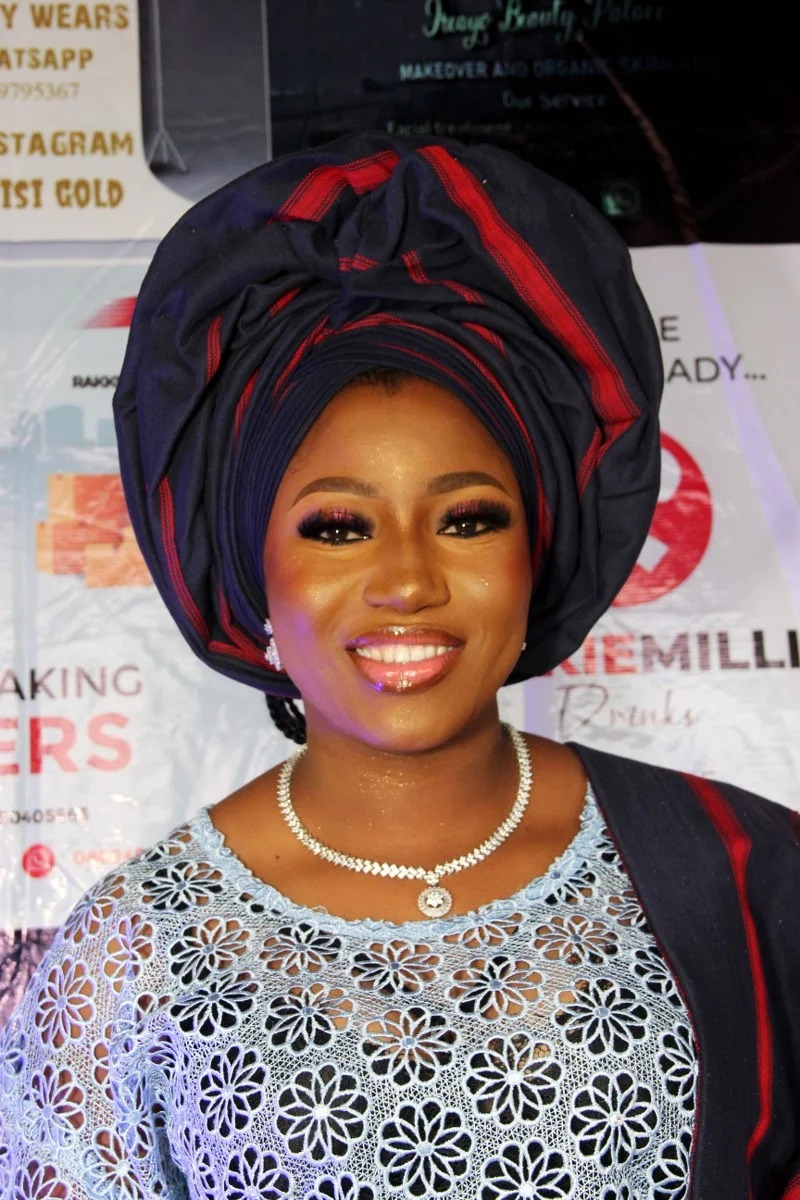
US-Based Society Lady, Fehintola-Brat Extends Eid-El-Kabir Greetings To Muslims
United States based fahionista of class, Chief (Mrs) Ayoola Fehintola-Brat has extended a warm greetings to Muslim faithful all over the world on the occasion of the 2026 Eid-El-Kabir celebration.
Fehintola-Brat who is the Balogun Egbe Obaneye Obinrin Akile Ijebu, and the Yeye Asofin of Idenaland in her message to Journalists urged Muslim to continually uphold the enduring values of sacrifice, obedience, faith, and compassion, which are central to the significance of Eid-El-Kabir festival.
A quiet philantropist whose humanitarian services has won her several laurels urged Muslims to use the spiritual occasion to pray for the peace co-existence of Nigerians regardless of religious, social and political leanings stressing that the oneness of the country should not be underplay.
In a related development, she expressed her felicitations to all sons and daughters of Ijebuland on the forthcoming Ojude Oba 2026 celebration, tasking age-groups otherwise known as Regbregbe to be more proactive in giving back to their immediate communities.
According to her, the beauty of the age-groups in Ijebuland is the need to contribute immensely to the development of the land in no small means. “This we will continue to achieve with God on our side”, she concluded.
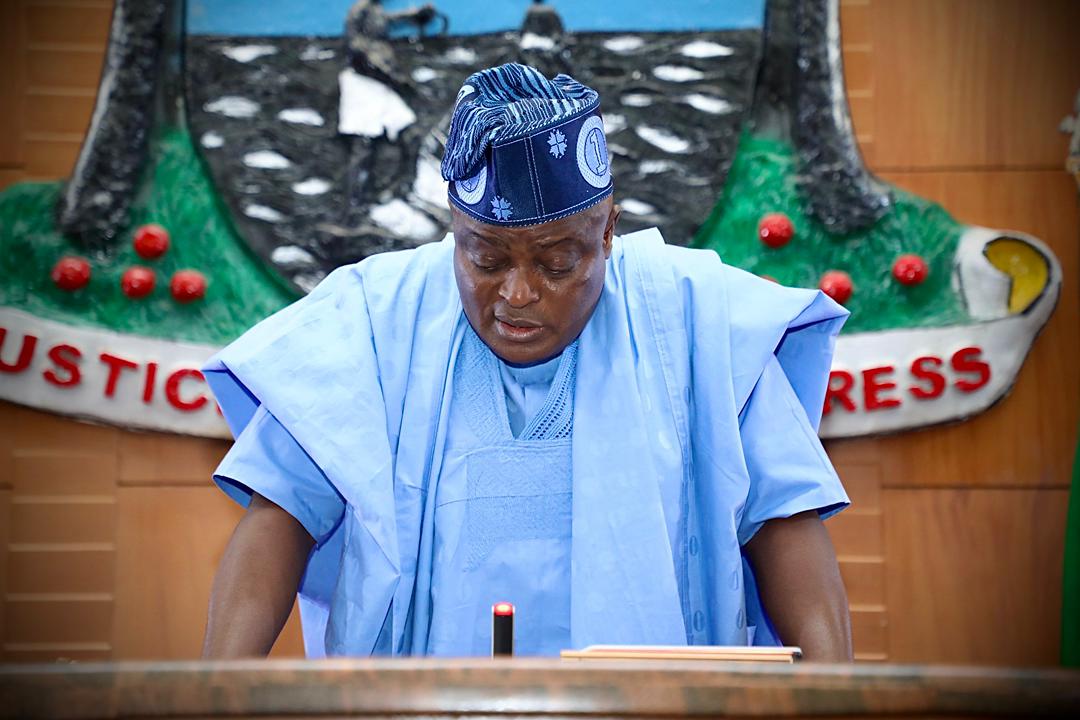
Sallah: Obasa Felicitates Muslim Ummah, Commends Nigerians for APC Primaries Turnout
The Speaker of the Lagos State House of Assembly, Rt. Hon. Mudashiru Obasa has extended warm felicitations to Muslims in Lagos State and across Nigeria on the occasion of Eid al-Adha.
In a statement released by his Chief Press Secretary, Mr. Dave Agboola, Obasa described the festival as a season of sacrifice, reflection, and gratitude, urging the faithful to continue to uphold the values of peace, unity, and love that strengthen the nation.
He noted that the celebration of Eid al-Adha is not only a spiritual milestone but also a reminder of the importance of togetherness and collective responsibility in building a stronger society.
He, likewise, emphasized that the festival provides an opportunity for Nigerians to renew their commitment to national progress and to support leadership that prioritizes development and prosperity.
Obasa, however, commended Nigerians, particularly members of the All Progressives Congress (APC), for their massive turnout during the recently concluded party primaries. He described the participation as a clear demonstration of the people’s confidence in the government of President Bola Ahmed Tinubu and their belief in the administration’s vision for a greater Nigeria.
“The APC primaries have shown the resilience of our democracy and the confidence Nigerians have in the leadership of President Bola Ahmed Tinubu and the Renewed Hope Agenda. This is a strong message that our people are ready to continue supporting policies that will drive growth and prosperity,” Obasa stated.
The Speaker further encouraged Muslims to celebrate responsibly, stressing that the joy of Eid should be accompanied by prayers for the continued peace and progress of Lagos State and Nigeria.
“As you celebrate with family and loved ones, may this season bring joy, peace, and prosperity to your homes. Let us remain united in our resolve to build a stronger nation,” he added.
On behalf of the Lagos State House of Assembly, Obasa wished all Muslims a happy and fulfilling Eid al-Adha celebration.

ABEOKUTA FILM FESTIVAL AT ILEYA
Kayshow Multimedia a filmmaking and Media organization this year 2026 holds its annual Abeokuta film festival at the Ake Palace in Abeokuta.
Alake of Egba land, Ọba Michael Adedotun Arẹmu Gbadebo has graciously endorsed the Free Training of Egba Youths on Film and Arts and the Entertainment of the the People with a FREE FILM SHOW at the AKE PAVILION. as part of the ABEOKUTA FILM FESTIVAL 2.0.
The Convener of the Film Festival Honorable Kehinde Soaga says this year’s event promises to be more exciting as distinguished personalities are sure to attend.
This includes the honorable Minister for Art Culture and Creative Economy in Nigeria, Barr. Hannatu Musa Musawa, Ààrẹ Lai Labode, Sen. Ibikunle Amosun and other special guests.
The event will feature Film, Cultural Dance Cultural foods and Award Ceremony.
The general public is hereby invited to the Free film show at the Abeokuta film festival at the Alake Palace Pavilion on Thursday 28th of May 2026 by 4:00 p.m.
Only well dressed is the Entry. The Abeokuta Film Festival is an annual event taking place in the capital city of Ogun State state.


- Qrent says delaying Information Technology (IT) refresh cycles may be increasing operational risk for businesses in Africa May 27, 2026
- Dentons’ Iyunola Adekanye Appointed to African Mining Week (AMW) Advisory Board May 27, 2026
- United Nations (UN) Women Liberia and Partners Convene for Spotlight Initiative 2.0 Women’s Economic Empowerment Inception Meeting May 27, 2026
- African Mining Week (AMW) to Host Central Bank Governors Roundtable as Monetary Authorities Deepen Role in Mining Sector Growth May 27, 2026
- Eritrea: Diaspora Nationals Celebrate Independence Day Anniversary May 27, 2026
- Africa Unveils Landmark Humanitarian Coordination Platform to Strengthen aligned Response to Humanitarian Crises May 27, 2026
- Seychelles: President Herminie Engages with Police and Fire Services on Praslin May 27, 2026
- Issue 3 of Mining Review Africa now available for free download May 27, 2026
- NOV Joins African Energy Week (AEW) 2026 as Gold Sponsor Amid Africa’s Offshore Expansion Push May 26, 2026
- African Union of Broadcasting (AUB) and United Nations University Institute for Water, Environment and Health (UNU-INWEH) Launch Landmark Webinar Series on Africa’s Water Crisis, Starting June 2, 2026 May 26, 2026
- Qrent says delaying Information Technology (IT) refresh cycles may be increasing operational risk for businesses in Africa May 27, 2026
- Dentons’ Iyunola Adekanye Appointed to African Mining Week (AMW) Advisory Board May 27, 2026
- United Nations (UN) Women Liberia and Partners Convene for Spotlight Initiative 2.0 Women’s Economic Empowerment Inception Meeting May 27, 2026
- African Mining Week (AMW) to Host Central Bank Governors Roundtable as Monetary Authorities Deepen Role in Mining Sector Growth May 27, 2026
- Eritrea: Diaspora Nationals Celebrate Independence Day Anniversary May 27, 2026
- Africa Unveils Landmark Humanitarian Coordination Platform to Strengthen aligned Response to Humanitarian Crises May 27, 2026
- Seychelles: President Herminie Engages with Police and Fire Services on Praslin May 27, 2026
-

 news5 months ago
WHO REALLY OWNS MONIEPOINT? The $290 Million Deal That Sold Nigeria’s Top Fintech to Foreign Interests
-

 society3 weeks ago
SOCIAL MEDIA IS NOT A BATTLEFIELD COMMAND – WHY THE NIGERIAN ARMY’S ACTION AGAINST JUSTICE CRACK IS A NATIONAL SECURITY IMPERATIVE
-

 celebrity radar - gossips4 months ago
Dr. Chris Okafor Returns with Power and Fire of the Spirit -Mounts Grace Nation Altar with Fresh Anointing and Restoration Grace on February 1, 2026
-

 celebrity radar - gossips6 months ago
Prophet Kingsley Aitafo Releases 2026 Prophecy: ‘Nigeria Will Rise, but the World Must Prepare for Turbulence’