
society
COAS COMMISSIONS HQ FINANCE CORPS OFFICE COMPLEX

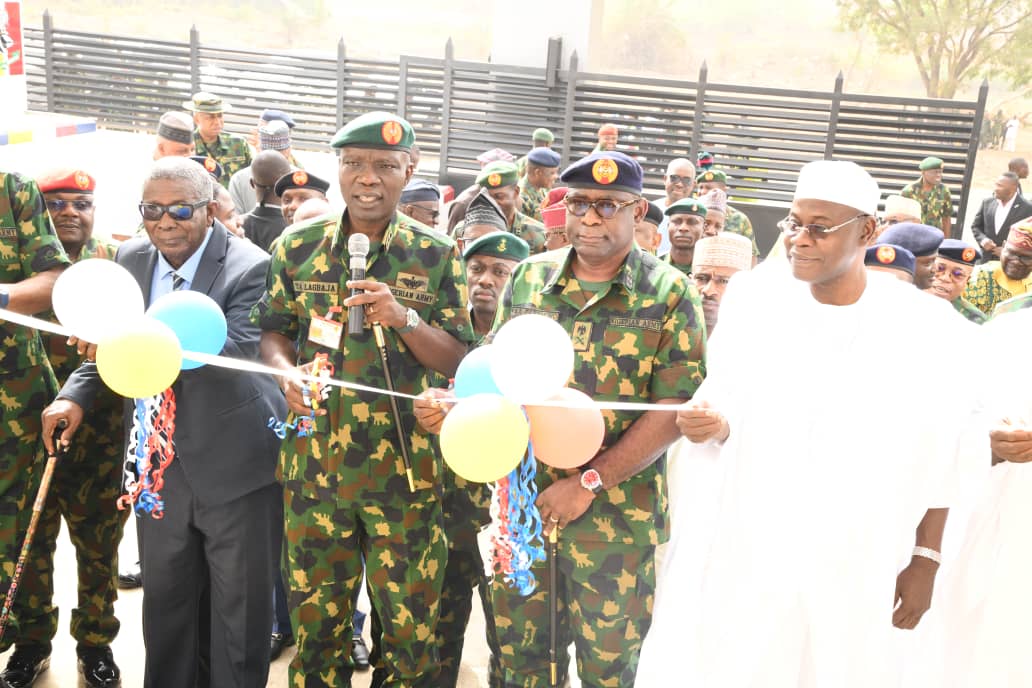
*COAS COMMISSIONS HQ FINANCE CORPS OFFICE COMPLEX
The Chief of Army (COAS), Lieutenant General Taoored Lagbaja, today, Friday 22 March 2024, commissioned the newly constructed Headquarters Nigerian Army Finance Corps (NAFC) office complex, marking a significant milestone in the infrastructural development of the Nigerian Army.
Speaking at the commissioning ceremony, the COAS who was also the Special Guest of Honour (SGOH) at the event, emphasized the importance of a conducive working environment for enhanced productivity and the overall well-being of employees.
The Army Chief stated that the Corps has witnessed various transformations since 1964, when it was first commanded by indigenous Nigerian Army (NA) officers; noting that since then, the Corps has made tremendous contributions to entrenching professionalism through policy formulations, re-structuring of manpower and specialized training of its personnel.
The SGOH said the NA has supported the corps in the areas of infrastructural development in housing and office accommodation among others, stressing that the new finance corps office complex is one of the projects undertaken to improve the working conditions of personnel of the corps and enhance their productivity and service delivery to the NA.
Elucidating further, the COAS pointed out, that with the occupation of the new facility, the corps will add more value to the NA while expressing his appreciation to the former COAS, Lieutenant General Faruk Yahaya, for approving the construction of the legacy project and witnessing the inauguration.
The COAS highlighted some of the modest achievements of the NA since his assumption of command, noting that there are ongoing efforts to improve leadership quality across the board, enhance the operational effectiveness of the NA, providing sound administration for troops and their families.
He said to compliment efforts of past leadership, the NA has procured additional combat enablers for operations, embarked on several infrastructural projects and troops’ welfare and that of their families. Lieutenant General Lagbaja commended the Finance Corps for their commitment to judiciously managing NA resources and project supervision team for the timely execution of the project.
The Army Chief expressed appreciation to President Bola Ahmed Tinubu for his steadfast support of the NA. He pledged the NA’s unalloyed commitment to democracy and rule of law.
In his remarks, the Chief of Accounts and Budget (Army), Major General Adetokunbo Fayemiwo stated that NA Finance Corps office complex has become necessary to effectively discharge its functions and provide staffing for optimal performance. He said today, the Corps has expanded its responsibility for budgeting, accounting, auditing and financial management of all NA funds.
Major General Fayemiwo extolled the pragmatic leadership and guidance of the COAS to the Corps, adding that painstaking efforts were put in place to ensure the edifice served its purpose. He affirmed that the personnel of the Finance Corps are motivated and pledged the unalloyed loyalty of the Corps to the NA.
The newly inaugurated building is equipped with state-of-the art facilities, including offices, conference room, car park, close circuit cameras, intercommunication, a sick bay among several other facilities.
The commissioning ceremony had in attendance the former COAS, Lieutenant General Faruk Yahaya, former Corps commanders cum founding fathers of NA Finance Corps, Principal Staff officers from Defence and Services Headquarters, Director Generals and Group Managing Directors, Commandant of NA Schools of Finance and Administration, serving and retired senior officers of NA Finance Corps, among others.


ONYEMA NWACHUKWU
Major General
Director
Army Pubic Relations
22 March 2024




society
Governor Dauda Lawal Approves 120-Day Rapid Intervention Plan to Revamp Zamfara’s Educational Sector
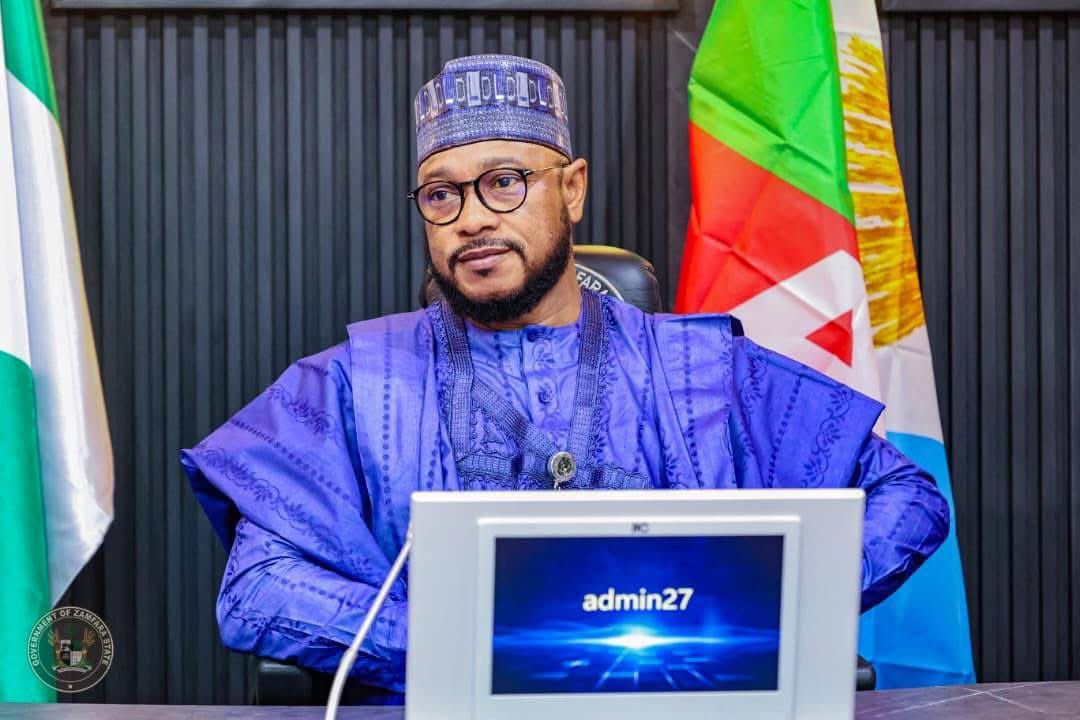
Governor Dauda Lawal Approves 120-Day Rapid Intervention Plan to Revamp Zamfara’s Educational Sector
Governor Dauda Lawal has approved a 120-day Rapid Intervention Action Plan aimed at addressing systemic failures in Zamfara State’s education sector.
The Governor presided over the State Executive Council meeting on Monday at the Government House in Gusau, where key decisions were taken.
During deliberations at the 65th Council meeting, issues related to education, health, works, and other sectors were discussed and approved.
The Council endorsed a 120-day rapid intervention plan built on prior diagnostic activities conducted by the Ministry of Education and the Education Quality Assurance Agency (EQAA). The plan, presented by the overseeing Commissioner for Education, Abdulmalik Abubakar Gajam, includes payroll audits, school mapping exercises, and infrastructure assessments. It proposes targeted, time-bound interventions across governance, infrastructure, digital transformation, teacher development, and student welfare.
The Council also approved the formation of a joint committee to immediately assess all illegal or unapproved structures built around schools in the state, with a view to relocating them and securing school environments. The committee will be led by the Ministry of Education, Science and Technology (MOEST).
Additionally, the Council approved a single, unified Education Sector Bill (covering Early Childhood Care Development Education to Tertiary level), to be developed in consultation with stakeholders including agencies, institutions, civil society, traditional rulers, and development partners. A draft bill will be presented to the State House of Assembly for enactment within the emergency timeframe.
The Governor further approved the transfer of non-teaching staff—such as messengers, labourers, gardeners, cooks, guards, drivers, health workers, and artisans—from the Ministry’s payroll to appropriate MDAs (CPG, MoH, Establishment) or private firms.
Among other important issues, the Council approved the composition of the Zamfara State Steering Committee on the State of Emergency on Education and authorised the Committee to constitute a Technical Working Group (TWG) and co-opt stakeholders including the NUT, UNICEF, UBEC, traditional and religious leaders, private school proprietors, and CSOs.
You Cannot Fight Terrorism with Naivety: A Response to Senator Lawan
By Comrade Oladimeji Odeyemi.
I have read with deep concern—and frankly, disappointment—the statement issued by Ahmad Ibrahim Lawan regarding the military airstrike in Jilli Futchimiram, Geidam Local Government Area of Yobe State.
At a time when Nigeria is fighting for its very survival against a ruthless insurgency, it is alarming that senior political figures would rush to amplify a one-sided narrative that risks undermining the morale, credibility, and operational effectiveness of our armed forces.
Let us be clear: this is not a conventional war. This is a brutal, asymmetric conflict against Boko Haram—an enemy that has no respect for human life, no regard for international law, and no hesitation in embedding itself within civilian populations and economic structures.
The Jilli axis, spanning parts of Yobe State and Borno State, is not some unknown, innocent marketplace operating in isolation. It has long been identified—by locals, security observers, and intelligence—as a corridor where stolen livestock and critical supplies are traded, feeding the very insurgency that has devastated our nation.
To ignore this reality is not compassion—it is willful blindness.
Statements that paint such environments purely as civilian spaces, without acknowledging their exploitation by terrorists, distort the truth and dangerously oversimplify a deeply complex security challenge. They create the false impression that our military is acting recklessly, when in fact they are navigating one of the most difficult combat environments in modern warfare.
How many soldiers must die before we begin to speak honestly?
Our troops have been ambushed, slaughtered, and buried in silence while defending communities from terror. These are human beings with families, with lives, with futures that are cut short in the line of duty. Yet, too often, their sacrifices are met not with unwavering support, but with premature accusations and politically convenient outrage.
This must stop.
No serious nation at war allows ambiguity about where it stands. Terrorism does not survive on ideology alone—it survives on networks: supply chains, informants, collaborators, and economic enablers. Any location that becomes part of that ecosystem—knowingly or otherwise—enters a dangerous space within the conflict.
This is the hard truth many are unwilling to say.
Nigeria cannot afford a narrative that shields the mechanisms of terrorism while scrutinizing only the actions of those fighting it. That imbalance is not neutrality—it is complicity by omission.
This is not a call for recklessness. It is a call for clarity, courage, and national resolve.
Yes, the military must remain professional. Yes, accountability matters. But accountability must not become a weapon used to weaken our defenses while terrorists adapt, regroup, and exploit our divisions.
The question before us is simple:
Are we truly committed to ending this insurgency, or are we going to continue sanitizing the uncomfortable realities that sustain it?
History will not judge us by the statements we release, but by whether we had the courage to confront the truth and stand firmly behind those risking their lives to defend this country.
Nigeria must choose strength over sentiment, clarity over convenience, and victory over denial.
Comrade Oladimeji Odeyemi.
Convener: Coalition of Civil Society Groups Against Terrorism in Nigeria.
Kogi Youths Rise in Protest, Allege Political Persecution Against Amupitan
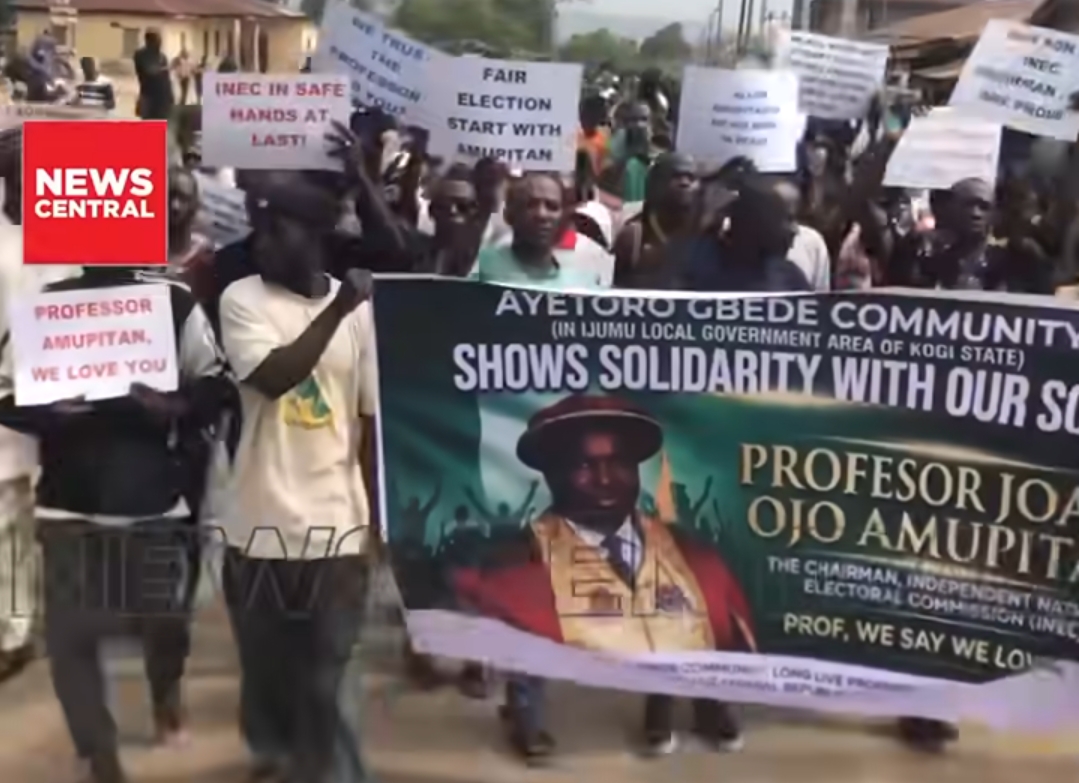
AIYETORO GBEDE, KOGI — Hundreds of youths in Aiyetoro Gbede, Ijumu Local Government Area of Kogi State, on Monday staged a protest over what they described as a politically motivated attempt to undermine the leadership of the Independent National Electoral Commission (INEC).
The demonstrators, drawn from various youth and civil society groups, marched through major streets of the community, voicing strong support for the independence of the electoral body and expressing confidence in Professor Joash Ojo Amupitan, a Senior Advocate of Nigeria and INEC National Commissioner-nominee.
Carrying placards with inscriptions such as “Enemies of Fairness, Beware!” and “Fair Elections Start with Amupitan,” the protesters insisted that recent claims and rumours circulating on social media were part of a broader agenda to discredit the electoral system.
The protest featured a large procession of youths on motorcycles and on foot, drawing attention from residents as participants chanted solidarity songs and called for the protection of democratic institutions.
Speaking during the demonstration, a youth leader identified as Segun said the group would resist any attempt to “blackmail” or weaken the electoral body.


“We are here to send a clear message: the sanctity of INEC must be preserved. Prof. Amupitan is a man of integrity and a proud son of this land. Any attempt to malign his character or remove him unjustly is an attack on democracy,” he said.
The protest comes amid ongoing national debates over the appointment of new INEC National Commissioners, with some civil society organisations and opposition voices raising concerns about alleged political affiliations of certain nominees.
However, the Kogi youths dismissed such allegations as “sponsored propaganda,” arguing that Amupitan’s professional record and legal expertise position him to strengthen the credibility of the commission and ensure transparent electoral processes.
Meanwhile, INEC has rejected calls for the removal of its chairman, describing such demands as unconstitutional and a threat to the independence of the electoral body.
In a statement issued in Abuja and signed by Chief Press Secretary to the Chairman, Adedayo Oketola, the Commission stressed that its leadership is governed strictly by constitutional provisions, particularly Section 157 of the 1999 Constitution (as amended), which outlines the process for appointment and removal.
The Commission explained that its recent actions, including compliance with court rulings and decisions relating to party activities, were guided by the rule of law and aimed at safeguarding Nigeria’s democratic framework.
INEC also dismissed claims of partisan bias, noting that its recognition of multiple political parties and commitment to electoral transparency contradict allegations of a one-party agenda.
On the planned nationwide voter revalidation exercise, the Commission clarified that the initiative is a routine administrative process designed to sanitise the voter register, eliminate irregularities, and enhance the integrity of electoral data.
Reaffirming its commitment, INEC stated that it remains focused on delivering free, fair, and credible elections, adding that it would not be distracted by what it described as unfounded allegations.
The developments come ahead of key off-cycle elections in Ekiti and Osun states later in the year, as stakeholders continue to scrutinise the electoral body’s actions and leadership.


- Senegal Rewrites the Rules of its Hydrocarbon Boom as Minister Birame Soulèye Diop Heads to African Energy Week 2026 in October April 13, 2026
- bp Bets Big on Namibia’s Deepwater Frontier with New Offshore Blocks April 13, 2026
- Merck Foundation declared Gabon First Lady as Ambassador of “More than a Mother” to build healthcare capacity, break infertility stigma, and support girl education April 13, 2026
- Changpeng Zhao (CZ) Releases Freedom of Money, a Memoir Reflecting on the Rise of Crypto and the Story Behind Binance April 13, 2026
- South Africa: Select Committee to Undertake Oversight to Municipalities in the Free State, North West and Gauteng April 13, 2026
- Africa Data Centres partners with Oni-Tel to enhance data centre connectivity in South Africa April 13, 2026
- Seychelles: 9th Indian Ocean Conference – Minister Barry Faure conducts bilateral meetings on the margins of the Indian Ocean Conference April 13, 2026
- Complete Professional Fighters League (PFL) Africa: Pretoria Results and Photos - Nkosi Ndebele defeats Michele Clemente in a bantamweight classic shootout in the main event April 12, 2026
- Seychelles Backs United Arab Emirates (UAE) Statement, Calls for De-escalation and Respect for International Law April 11, 2026
- TotalEnergies’ Africa Senior Vice President (SVP) Mike Sangster to Spotlight Expanding Project Pipeline at Paris Forum April 11, 2026
- Senegal Rewrites the Rules of its Hydrocarbon Boom as Minister Birame Soulèye Diop Heads to African Energy Week 2026 in October April 13, 2026
- bp Bets Big on Namibia’s Deepwater Frontier with New Offshore Blocks April 13, 2026
- Merck Foundation declared Gabon First Lady as Ambassador of “More than a Mother” to build healthcare capacity, break infertility stigma, and support girl education April 13, 2026
- Changpeng Zhao (CZ) Releases Freedom of Money, a Memoir Reflecting on the Rise of Crypto and the Story Behind Binance April 13, 2026
- South Africa: Select Committee to Undertake Oversight to Municipalities in the Free State, North West and Gauteng April 13, 2026
- Africa Data Centres partners with Oni-Tel to enhance data centre connectivity in South Africa April 13, 2026
- Seychelles: 9th Indian Ocean Conference – Minister Barry Faure conducts bilateral meetings on the margins of the Indian Ocean Conference April 13, 2026
-

 news4 months ago
WHO REALLY OWNS MONIEPOINT? The $290 Million Deal That Sold Nigeria’s Top Fintech to Foreign Interests
-

 celebrity radar - gossips3 months ago
Dr. Chris Okafor Returns with Power and Fire of the Spirit -Mounts Grace Nation Altar with Fresh Anointing and Restoration Grace on February 1, 2026
-

 celebrity radar - gossips4 months ago
Prophet Kingsley Aitafo Releases 2026 Prophecy: ‘Nigeria Will Rise, but the World Must Prepare for Turbulence’
-

 celebrity radar - gossips6 months ago
End of an Era: Nigeria Mourns Evangelist Dr. Uma Ukpai, 80