
society
The Importance of Ember Months in Nigeria’s Real Estate Sector by Dennis Isong.

The Importance of Ember Months in Nigeria’s Real Estate Sector by Dennis Isong.
Sahara Weekly Reports Ember months refer to the last four months of the year: September, October, November, and December. These months hold significant importance across various sectors of the Nigerian economy, and the real estate industry is no exception. The ember months bring about unique circumstances and opportunities that can greatly impact the property market. This article explores why these months are crucial for Nigeria’s real estate sector and how they influence market dynamics.

1. Increased Economic Activity
A surge in economic activity characterizes the ember months in Nigeria. As the year draws to a close, businesses strive to meet annual targets, and government agencies work to utilize their budgets before the fiscal year ends. This increased economic activity often translates to more money circulating in the economy, which can have a positive impact on the real estate market.
Higher disposable income: Many companies distribute year-end bonuses during this period, increasing the purchasing power of potential property buyers.
Business expansion: Some businesses may look to expand or relocate, leading to increased demand for commercial real estate.
2. Diaspora Influence
The ember months coincide with the holiday season, during which many Nigerians living abroad return home to visit family and friends. This influx of diaspora Nigerians has a significant impact on the real estate market:
Investment opportunities: Many in the diaspora see this time as an opportunity to invest in property back home, either for personal use or as an investment.
Increased demand: The temporary surge in population can drive up demand for short-term rentals and potentially influence long-term property values.
Foreign currency injection: Diaspora Nigerians often bring in foreign currency, which can boost the real estate market, especially in a country where the local currency may be experiencing fluctuations.
3. Cultural and Social Factors
Nigerian culture places a strong emphasis on homeownership, and the ember months often amplify this desire:
Status symbol: Owning a home by the end of the year is seen as a significant achievement, motivating many to make property purchases during this period.
Family gatherings: The holiday season prompts many to consider upgrading their living spaces to accommodate family gatherings and celebrations.
4. Weather Conditions
The ember months in Nigeria typically mark the end of the rainy season and the beginning of the dry season. This transition in weather patterns can impact real estate activities:
Construction boost: The dry weather allows for increased construction activity, potentially leading to more properties entering the market.
Property viewing: Improved weather conditions make it easier for potential buyers to view properties and for real estate agents to conduct site visits.
5. Year-End Goals and New Year Resolutions
As the year comes to a close, many individuals and businesses reflect on their achievements and set new goals:
Investment decisions: People may choose to invest in real estate as a way to meet financial goals or diversify their portfolios before the year ends.
New Year preparations: Some may aim to secure new living or working spaces in preparation for the coming year, driving up demand in the real estate market.
6. Government Policies and Budgets
The ember months often see increased government spending and policy implementation:
Infrastructure development: Governments may rush to complete infrastructure projects before the year’s end, potentially increasing the value of properties in certain areas.
Policy changes: Any new real estate policies or regulations slated for the new year may influence buying and selling decisions in the ember months.
7. Stock-taking and Portfolio Restructuring
The approach of the year’s end prompts many investors to reassess their portfolios:
Property disposal: Some investors may decide to sell properties to balance their portfolios or generate liquidity.
Acquisition opportunities: Others may look to acquire new properties to strengthen their real estate holdings.
8. Increased Rental Activity
The ember months can see a spike in rental activity:
Corporate rentals: Businesses may seek new office spaces or renew leases for the coming year.
Residential moves: Families or individuals may look to move to new rental properties before the new year begins.
9. Emerging Real Estate Hotspots
During the ember months, it’s crucial to pay attention to emerging real estate hotspots:
Satellite Towns: Areas like Ibeju-Lekki in Lagos or Kubwa in Abuja are experiencing rapid development.
Tech Hubs: Locations near growing tech clusters, such as Yaba in Lagos, are becoming increasingly attractive.
New Cities: Planned urban developments like Eko Atlantic City offer unique investment opportunities.
10. Types of Properties to Consider
Different property types may offer varying advantages during the ember months:
Residential Properties: High demand for housing during holiday visits makes this a prime option.
Commercial Real Estate: Office spaces and retail outlets can be good investments as businesses plan for the new year.
Land: Undeveloped land in growing areas can offer long-term appreciation potential.
11. Leveraging Technology for Remote Transactions
For diaspora investors unable to visit Nigeria:
Virtual Tours: Many real estate agencies now offer virtual property tours.
Digital Documentation: Explore options for digital contract signing and online payment systems.
Real-Time Communication: Utilize video calls for real-time property inspections with local agents.
12. Understanding Local Regulations
It’s crucial to be aware of recent changes in real estate regulations:
Land Use Act: Familiarize yourself with the implications of the Land Use Act on property ownership.
Foreign Ownership Laws: Understand any restrictions or requirements for diaspora Nigerians investing in property.
Tax Implications: Research recent changes in property taxes or capital gains taxes that might affect your investment.
13. Financing Options for Diaspora Investors
Explore various financing methods tailored for diaspora investors:
Diaspora Mortgages: Some Nigerian banks offer mortgage products specifically for Nigerians living abroad.
International Money Transfers: Research the most cost-effective ways to transfer large sums for property purchases.
Joint Ventures: Consider partnering with local investors or family members for shared investments.
14. Risk Mitigation Strategies
Investing during the ember months doesn’t come without risks. Consider these mitigation strategies:
Due Diligence: Thoroughly research property titles and ownership history.
Legal Representation: Engage a reputable local lawyer to oversee transactions.
15. Long-term Investment Strategies
Think beyond the immediate purchase:
Rental Income: Consider properties with strong rental potential for steady income.
Property Management: Research reputable property management companies if you plan to rent out your investment.
Exit Strategies: Have a clear plan for how you might eventually sell or pass on the property.
The ember months provide a distinct set of circumstances that make them an ideal time for diaspora Nigerians to invest in real estate back home. During this period, heightened market activity and the availability of potential deals create attractive investment opportunities. Additionally, the chance for personal property inspections and the ability to tap into cultural connections further enhance the appeal. However, successful investment requires thorough research, professional advice, and a well-defined long-term plan. By staying attuned to local market trends, utilizing technology, and being aware of relevant regulations, diaspora Nigerians can make informed and profitable real estate investments in Nigeria during this dynamic time of year.
For personalized assistance with property needs in Ojo or other parts of Lagos, interested individuals, particularly Nigerians in the diaspora looking to invest in property back home, can contact Dennis Isong, a top Lagos realtor specializing in helping Nigerians in the diaspora own property stress-free. I can be reached at +2348164741041.





koloman’s: Daddy @pastorumoeno we’re still waiting for your benevolence sir
@igosave @okonlagos @nedu_official @yawnaija @deehumorous @senatorcomedian @akwaibomstategovt

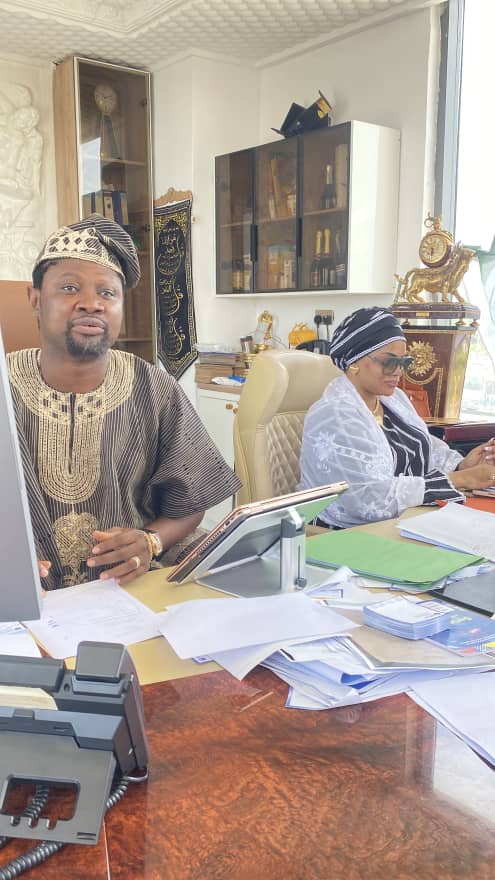
Harmony Garden CEO Empowers Widows with Enhanced Welfare Support
EPE, LAGOS — The Chief Executive Officer of Harmony Garden and Estate Development Limited, Hon. Dr. Saheed Audullahi Mosadoluwa, popularly known as Mr. Ibile, has reaffirmed his commitment to humanitarian service by extending increased welfare support to widows in Epe.
The gesture came during a visit by members of the Widows Association of Nigeria, Epe Branch, who gathered in large numbers on Tuesday to express appreciation for what they described as sustained generosity and life-changing support.
The engagement was marked by emotional testimonies, as several beneficiaries recounted how the initiative has improved their living conditions and restored hope. Many offered prayers for the philanthropist, describing his intervention as timely and impactful amid prevailing economic challenges.
One of the beneficiaries, Mrs. Folorunsho Quadri, commended Dr. Mosadoluwa’s consistent support, noting that the initiative has helped restore dignity among widows in the community. She revealed that members receive ₦100,000 quarterly, alongside a monthly stipend recently increased from ₦10,000 to ₦20,000 to cushion the effects of economic hardship.
According to her, the assistance goes beyond financial relief, providing emotional strength and encouragement for widows striving to rebuild their lives.
Responding, Dr. Mosadoluwa expressed gratitude for the visit and reiterated that his philanthropic activities are rooted in a genuine desire to give back to society. He emphasized that true wealth lies in the positive impact one makes in the lives of others, adding that supporting vulnerable groups remains a core priority.
The real estate developer also addressed concerns surrounding Harmony Garden, assuring the public of the company’s commitment to transparency and integrity, particularly in its land transactions.
He dismissed speculations linking his humanitarian gestures to political ambitions, maintaining that his actions are driven solely by compassion and a sense of social responsibility.
Dr. Mosadoluwa further urged the widows to make judicious use of the support while remaining resilient and hopeful despite life’s challenges.
Observers say the initiative highlights the increasing role of private sector players in complementing government efforts toward social welfare and community development.
Harmony Garden and Estate Development Limited continues to expand its presence in Nigeria’s real estate sector, while strengthening its reputation as a socially responsible organisation dedicated to improving lives.


society
We Die Here” – Court Defied as FGCKOSA Vows All-Out Fight to Save Federal Government College Kano Land
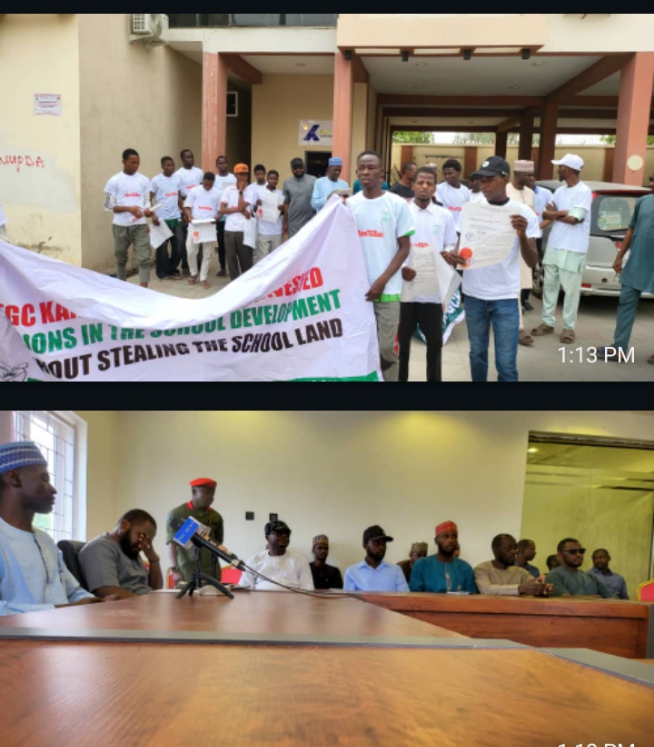
“We Die Here” – Court Defied as FGCKOSA Vows All-Out Fight to Save Federal Government College Kano Land
The Federal Government College Kano Old Students Association (FGCKOSA) has issued a fiery declaration of war against what it calls the illegal encroachment on its alma mater’s land, accusing unnamed parties of continuing construction work in brazen defiance of a court order.
In a passionate press statement released on Wednesday, the association declared that the land of the historic unity school is “not for sale, not for trade, not for negotiation,” and vowed to fight “legally, socially, and institutionally” without retreat or surrender.
According to FGCKOSA, the association acted swiftly after the encroachment came to light, engaging the Federal Ministry of Education, mobilising across media platforms, and securing an ex parte court order in Suit No. K/323/2026 before Honourable Justice Ubale Yusuf Muhammad of the Kano State High Court. The order, served on all parties by Saturday, April 11, 2026, commanded an immediate halt to all activity on the land.
However, the association reports that on Monday, an officer of the Kano State High Court, accompanied by alumni members, visited the site and found workers still present. The court order was served directly to school authorities, yet, FGCKOSA alleges, work has continued unabated.
Describing the act as “a brazen, shameless, and reckless act of impunity,” the association’s national president, Shoyinka Shodunke, said in the statement: “This is not development. This is racketeering. This is not enterprise. This is greed masquerading as progress.”
The statement reminded Nigerians that unity schools are “cradles of leadership, crucibles of character, and cathedrals of national unity,” warning that to violate them is to “vandalise Nigeria’s future.” It called on citizens, the federal government, and the press to declare where they stand, noting that “nations do not collapse from a lack of gold; they collapse when those entrusted with power lose their moral compass.”

FGCKOSA further announced that it has established a foundation to raise funds for upgrading the school’s infrastructure—but stressed that this would be done “without conceding a single inch of land.” The statement ended with a fierce vow drawn from the school’s anthem: “On that glorious day… I vow to revere and thee adore,” adding, “As we say in Nigeria, we die here.”
Shodunke signed off on behalf of the association, declaring: “We will not relent. We will not forget. We will not forgive any assault on our alma mater.”


- Uganda Development Corporation (UDC) to take 82% of Trade ministry budget April 16, 2026
- Merck Foundation marks ‘World Art Day’ through their Film, Song, Media and Fashion Awards 2026 in partnership with Africa’s First Ladies to raise awareness about social & health issues April 15, 2026
- Gabon’s Offshore Comeback: International Oil Companies (IOCs) Return as Exploration Heats Up Ahead of Paris Forum April 15, 2026
- Shell’s Eugene Okpere to Speak at Angola Oil & Gas (AOG) 2026 Amid $1B Angolan Deepwater Drive April 15, 2026
- Oando Joins African Energy Week (AEW) 2026 as Emerald Sponsor as Firm Reports 10% Profit Rise April 15, 2026
- Africa Finance Corporation (AFC) Invests in Dhamana Guarantee Company to Catalyse Local Currency Infrastructure Financing in East Africa April 15, 2026
- WESGRO and Enlit Africa 2026 unite to spotlight the Western Cape’s energy investment opportunity April 15, 2026
- Gianni Merlo re-elected as International Sports Press Association (AIPS) President for sixth and final term in landslide victory April 15, 2026
- African Development Fund approves 1.7 billion CFA francs to boost private sector competitiveness across West African Economic and Monetary Union (WAEMU) countries April 15, 2026
- Knowledge Katti: The Architect Behind Namibia’s Energy Breakthrough April 15, 2026
- Uganda Development Corporation (UDC) to take 82% of Trade ministry budget April 16, 2026
- Merck Foundation marks ‘World Art Day’ through their Film, Song, Media and Fashion Awards 2026 in partnership with Africa’s First Ladies to raise awareness about social & health issues April 15, 2026
- Gabon’s Offshore Comeback: International Oil Companies (IOCs) Return as Exploration Heats Up Ahead of Paris Forum April 15, 2026
- Shell’s Eugene Okpere to Speak at Angola Oil & Gas (AOG) 2026 Amid $1B Angolan Deepwater Drive April 15, 2026
- Oando Joins African Energy Week (AEW) 2026 as Emerald Sponsor as Firm Reports 10% Profit Rise April 15, 2026
- Africa Finance Corporation (AFC) Invests in Dhamana Guarantee Company to Catalyse Local Currency Infrastructure Financing in East Africa April 15, 2026
- WESGRO and Enlit Africa 2026 unite to spotlight the Western Cape’s energy investment opportunity April 15, 2026
-

 news4 months ago
WHO REALLY OWNS MONIEPOINT? The $290 Million Deal That Sold Nigeria’s Top Fintech to Foreign Interests
-

 celebrity radar - gossips3 months ago
Dr. Chris Okafor Returns with Power and Fire of the Spirit -Mounts Grace Nation Altar with Fresh Anointing and Restoration Grace on February 1, 2026
-

 celebrity radar - gossips6 months ago
End of an Era: Nigeria Mourns Evangelist Dr. Uma Ukpai, 80
-

 celebrity radar - gossips4 months ago
Prophet Kingsley Aitafo Releases 2026 Prophecy: ‘Nigeria Will Rise, but the World Must Prepare for Turbulence’