
society
Petrol price hike: Labour demands reversal

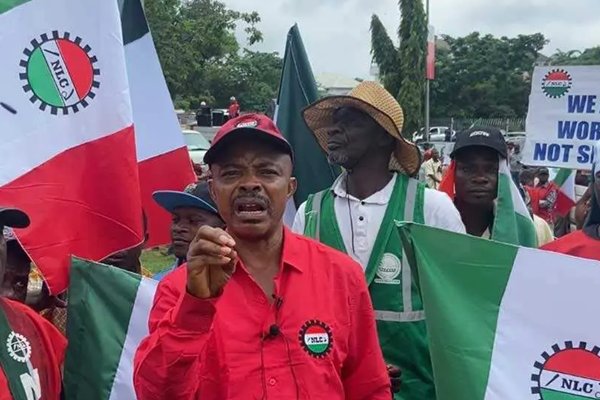
Petrol price hike: Labour demands reversal, set to meet
Oil marketers are awaiting the price of Premium Motor Spirit, popularly called petrol, produced by the Dangote Petroleum Refinery, following the announcement by the plant that only the Nigerian National Petroleum Company Limited will lift the product from the refinery at the moment.
PMS was officially launched on Tuesday by the $20bn plant located in Lekki Free Trade Zone in Lagos. The President of Dangote Group, Alhaji Aliko Dangote, announced that the 650,000-capacity oil refinery had commenced petrol production.
But dealers under the aegis of the Independent Petroleum Marketers Association of Nigeria stated that they had yet to receive any notice on the price of petrol from the refinery.
“We have not received any notice about its PMS price because he categorically stated that the NNPC is the sole off-taker of the product, which to us came as a surprise,” National Publicity Secretary of IPMAN, Ukadike Chinedu, stated.
He added, “We had expected Dangote to open up the market for proper competition. This shows that all these while the NNPC has been waiting for Dangote to release products, as it had reduced PMS importation.
“However, we are still waiting for them to tell us the price, but this, of course, will have its effect on the pricing of the product considering the fact that the cost of the commodity has increased at NNPC retail stations.”
There are strong indications that the price of petrol may hit N1,200/litre following the decision of NNPC to raise the pump price at its stations on Tuesday.
This is even as the Dangote oil refinery announced its determination to supply 25 million litres of PMS daily in September.
Nigerians woke up on Tuesday to see a change in the pump prices, from around N600 to N855/litre, M918/litre and above, depending on the area of purchase at NNPC stations nationwide.
Sources told our correspondents that there was a directive to the retail outlets to increase petrol prices.
It was gathered that the recommended petrol prices vary by location, as some now sell at N900.
It was confirmed on Tuesday that NNPC outlets in Lagos increased their price to N855/litre.
The directive to raise petrol prices stated that the NNPC Retail Management approved an upward review.
This is coming barely two days after the company admitted it was having challenges to import fuel due to a $6bn debt.
However, the spokesperson of the NNPC, Olufemi Soneye, declined comments when our correspondent contacted him.
When our correspondent explained to him on WhatsApp that the statement had been making the rounds and reports from NNPC filling stations showed a rise in fuel prices, he replied, “Thank you for reaching out. I have no comment on the matter at this time. If there are any updates, I will make sure to inform you.”
Our correspondent gathered from depot operators that N250 has been added to the pump price.
It was observed that some major marketers have also jerked up their pump prices close to 900/litre.
The North West filling station in Onigbongbo, Lagos sold at N920 while Amuf in Ibafo, Ogun State sold for N1,000 per litre.
It was observed that the sudden price rise caused tension among motorists, who rushed to filling stations to engage in panic buying.
In Lagos, the few stations selling petrol had long queues, leading to traffic gridlocks in different locations.
It was also observed that many filling stations did not open for business while many marketers refused to lift fuel.
An official of a petroleum company at Apapa confirmed to our correspondent that no marketer was in their depot to load petrol as of 2pm on Tuesday.
This he described as unusual, saying many marketers may not be able to afford the new price.
Before now, NNPC used to sell petrol to major marketers below N600/litre, while the independent marketers bought from private depots for about N900.
While there are fears that the private depots may face tougher challenges with this new price, black marketers sold the rpouct at N2,000/litre on Tuesday in Lagos.
Some black marketers, who spoke with one of our correspondents at Victoria Island, Lagos, offered to sell five litres of petrol at N15,000. During price negotiation, they rejected N8,000, insisting that the least the five litres could go was N10,000.






society
Forging a New Strategic Nexus: Nigeria and Türkiye Redefine Partnership for Shared Prosperity
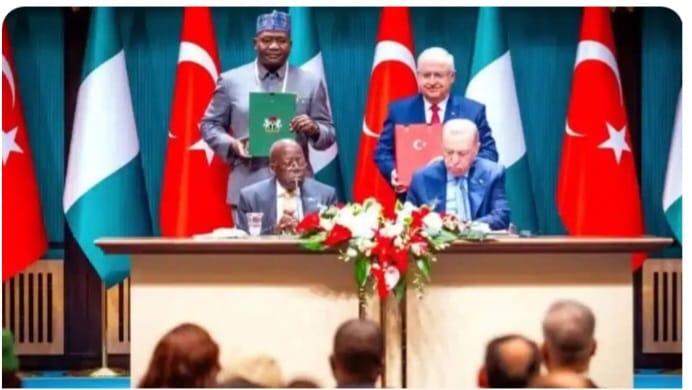
Forging a New Strategic Nexus: Nigeria and Türkiye Redefine Partnership for Shared Prosperity.
By George Omagbemi Sylvester | Published by saharaweeklyng.com
“A Landmark Suite of Strategic Agreements Signals Economic Growth, Security Collaboration, Educational Exchange and Institutional Cooperation Between Two Emerging Powerhouses.”
In a moment of far‑sighted diplomacy and strategic alignment, Nigeria and Türkiye have taken a decisive leap forward in bilateral cooperation, signing a comprehensive suite of nine agreements that collectively articulate a bold vision for their partnership in the twenty‑first century. The signing ceremony, held in Ankara with Nigerian Head of State Bola Ahmed Tinubu and Turkish President Recep Tayyip Erdoğan presiding, was more than a ceremonial exchange of documents and though it was a moment that signals shared ambition, mutual respect and a sincere commitment to cooperative development across multiple sectors.
These agreements are neither symbolic nor superficial. They represent tangible frameworks that will govern cooperation in areas vital to national growth: diaspora engagement, media development, higher education, quality standards and halal certification, economic and trade cooperation, military collaboration, diplomatic training, social development and women’s empowerment. Together, they define not only the broad contours of a reinvigorated relationship between Nigeria and Türkiye, but also a blueprint for cooperation that other nations may soon emulate.
For Nigeria (Africa’s most populous nation and one of its largest economies) this moment is especially consequential. For Türkiye, a pivotal Eurasian player with an expansive foreign policy footprint, deepening collaboration with Nigeria reinforces its influence across Africa and strengthens its ties with an important economic partner. Importantly, these agreements reflect a nuanced relationship grounded in mutual interests, not mere diplomacy for diplomacy’s sake.
From Diaspora to Diplomacy: Agreements That Matter.
The nine signed agreements provide a roadmap for collaboration that is practical, multidimensional and forward‑leaning. Their strategic value lies in both the sum of the parts and the breadth of sectors they encompass.
Diaspora Policy Cooperation:
A memorandum of understanding on diaspora policy was signed between the Turkish Presidency for Turks Abroad and Related Communities and Nigeria’s Commission for Nigerians in the Diaspora. This pact recognizes the centrality of diaspora communities as bridges for cultural exchange, investment flows, and transnational innovation. Scholars like Dr. Amina El‑Bushra, an expert in transnational studies, have long argued that diaspora engagement is “a strategic asset for national development when harnessed through institutional cooperation rather than ad hoc efforts.” This agreement, therefore, positions both nations to tap into human capital networks that stretch across continents.
Media and Communication Collaboration:
In an era where narrative shapes reality, cooperation on media and communication provides a mechanism for shared learning, exchange of expertise and professional development in journalism and broadcasting. The memorandum envisages joint seminars, training programs, exchange visits and information sharing. Media scholar Prof. Umer Farooq has observed, “In an interconnected world, media policies that encourage cross‑cultural engagement are vital to strengthening democratic discourse and countering misinformation.” The agreement lays a foundation for media ecosystems in both countries to evolve through shared standards and cross‑border perspectives.
Higher Education and Academic Exchange:
The memorandum on higher education cooperation speaks to the future of intellectual exchange and capacity building. Nigerian and Turkish universities will now have an institutional platform to expand collaborative research, student exchange and staff development programs. Education expert Dr. Kelechi A. Okonkwo emphasizes that “expanded academic cooperation enables the transfer of knowledge and skills necessary for national development, fostering innovation that transcends borders.” This pact is likely to enhance academic pathways, research collaborations and cultural understanding.
Halal Quality Infrastructure:
A memorandum between Türkiye’s Halal Accreditation Agency and Nigeria’s National Accreditation System will strengthen halal certification infrastructure. Halal markets are expansive and growing globally, reflecting significant economic and cultural values. Experts in global trade such as Dr. Sanjay Jain describe halal certification not merely as a market niche, but as “a strategic sector that links production, trade and cultural identity.” This agreement is poised to unlock export potential and facilitate Nigeria’s deeper integration into global halal value chains.
Joint Economic and Trade Committee (JETCO):
Perhaps the most consequential pact is the joint declaration establishing the Joint Economic and Trade Committee. This institutional mechanism creates a sustained platform for economic dialogue, private sector engagement, and policy coordination, intended to stimulate bilateral trade and investment. According to official statements, Nigeria has become Türkiye’s largest trading partner in Sub‑Saharan Africa which is a milestone that underscores the economic significance of this relationship. The bilateral trade volume in the first eleven months of the previous year was near historic highs, even before the full implementation of these agreements.
Military Cooperation and Security Architecture:
The protocol on military cooperation underscores a deepening security partnership between the two nations. Nigerian defense forces have previously engaged with Turkish defense technology, including the acquisition of military helicopters that enhance operational capacity. This cooperation reflects shared interests in ensuring stability, combating insecurity and building indigenous capabilities in defense sectors. Security analyst Dr. Amara Eze notes that “strategic defense cooperation grounded in shared values strengthens both national and regional security architectures.”
Education, Diplomatic Training, and Social Development:
Additional agreements on general education cooperation, diplomatic academy exchange and women’s empowerment initiatives capture the holistic nature of this bilateral framework. They extend cooperation to institutional strengthening, professional training in foreign service and social policies that promote inclusion and gender equity. Such agreements resonate with global development norms and respond to calls from civil society leaders who champion capacity building and inclusive governance.
A New Chapter in Bilateral Relations.
The sweeping scope of these nine agreements signals far more than transactional diplomacy. They reveal a shared commitment to institutional cooperation, economic integration, cultural exchange and security collaboration. What emerges is a holistic relationship built on mutual respect, shared interests and a long‑term vision.
President Tinubu’s words during the joint press conference in Ankara encapsulated this sentiment when he pledged deepened cooperation on security, trade and inclusive development, affirming that Nigeria stands with partners who share commitments to democracy, freedom and prosperity. Likewise, President Erdoğan emphasized Türkiye’s readiness to support Nigeria’s security and economic aspirations.
International affairs scholar Dr. Harriet Mensah succinctly contextualizes this moment: “Partnerships grounded in strategic alignment and mutual benefit are the bedrock of twenty‑first century diplomacy. When nations invest in holistic cooperation (from academia to defense to trade) they build relationships that endure beyond political cycles.”
Summative Insight: A Blueprint for Shared Success.
The nine agreements signed between Nigeria and Türkiye define a new chapter in their bilateral relationship with one that transcends rhetoric to establish pragmatic cooperation across multiple domains of national significance. They anchor economic aspirations, strengthen institutional ties, nurture educational and cultural exchange and fortify security collaboration.
As the global order becomes increasingly interconnected and competitive, the Nigeria‑Türkiye partnership stands out as a bold example of how nations with shared ambitions can craft a comprehensive framework for mutual growth. This suite of agreements is not merely a diplomatic milestone; it is a strategic foundation upon which both nations can build sustainable futures characterized by economic resilience, security cooperation and meaningful engagement on the world stage.
In the words of a renowned development expert, “Partnership is not merely signing agreements, but embedding collaboration into the very structures that shape national progress.” With these nine agreements, Nigeria and Türkiye have done just that.
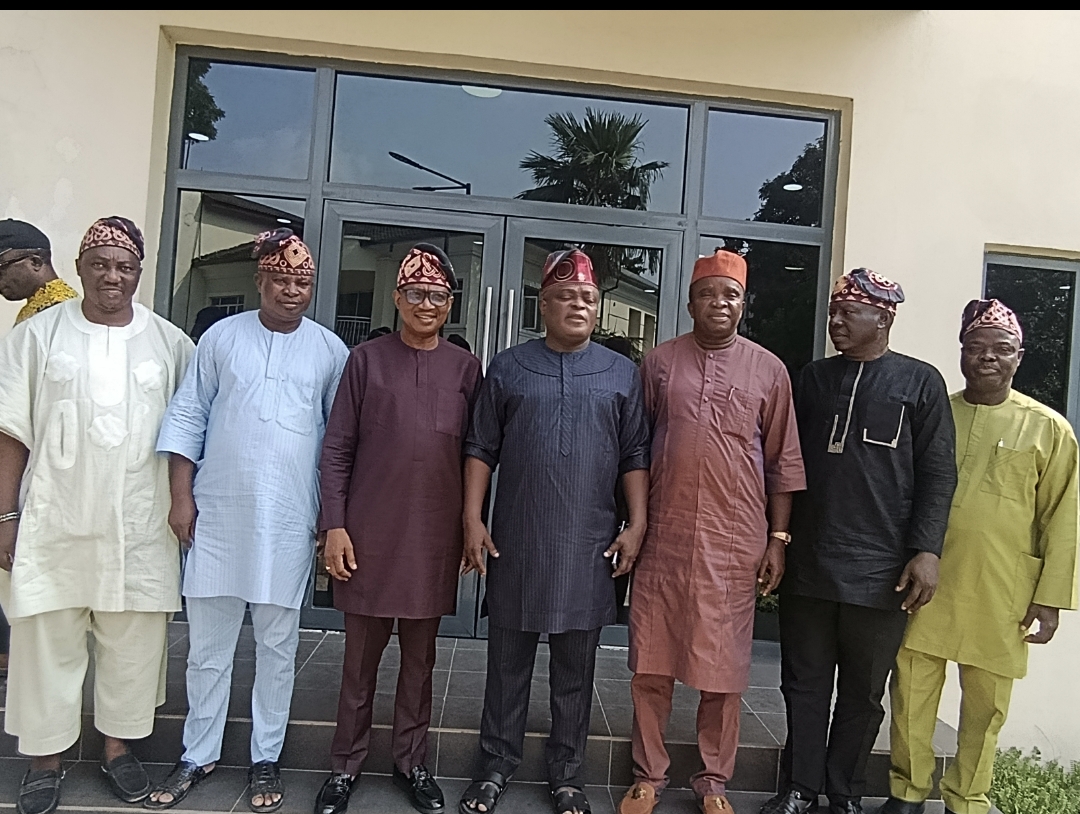
Epe Premier Club Meets Obasa Ahead of Baba Bamu’s Immortalisation
The leadership of the prestigious Epe Premier Club on Wednesday, January 28, paid a courtesy visit to the Speaker of the Lagos State House of Assembly, Rt. Hon. Mudashiru Ajayi Obasa, as part of preparations for the Club’s inaugural immortalisation ceremony in honour of their founding fathers.
Led by Hon. Abiodun Mustainu Tobun, the delegation briefed Speaker Obasa on the Club’s resolve to inaugurate a new era of recognising and immortalising iconic figures who contributed significantly to the socio-political and cultural development of Epe Division while they are still alive. He explained that the Club had unanimously selected Alhaji Akanni Seriki Bamu—a respected member of the Governance Advisory Council (GAC) and political leader of the All Progressives Congress (APC) in Epe Division—as the first honouree.
Hon. Tobun emphasised that Baba Bamu embodies leadership, sacrifice, and unwavering commitment to the growth of Epe, describing him as a mentor and pillar whose contributions have shaped the region’s political trajectory.
Responding, Speaker Obasa commended the Epe Premier Club for its foresight in institutionalising a programme to honour the legacies of distinguished individuals. He applauded the choice of Alhaji Seriki Bamu, noting that his impact, political maturity, and statesmanship continue to resonate across Lagos State.
Obasa expressed gratitude for the invitation and assured the delegation of his support and presence at the celebration, stressing the importance of recognising leaders who have given immensely to community and state development.
The courtesy visit also provided a platform for broader conversations on civic engagement, community empowerment, and collaborations aimed at further advancing Epe Division.
The immortalisation ceremony for Alhaji Akanni Seriki Bamu will take place in the coming weeks and is expected to draw dignitaries, community stakeholders, and residents in large numbers.
society
Africa Gospel Film Project Launched to Train a New Generation of Christian Filmmakers Across Africa
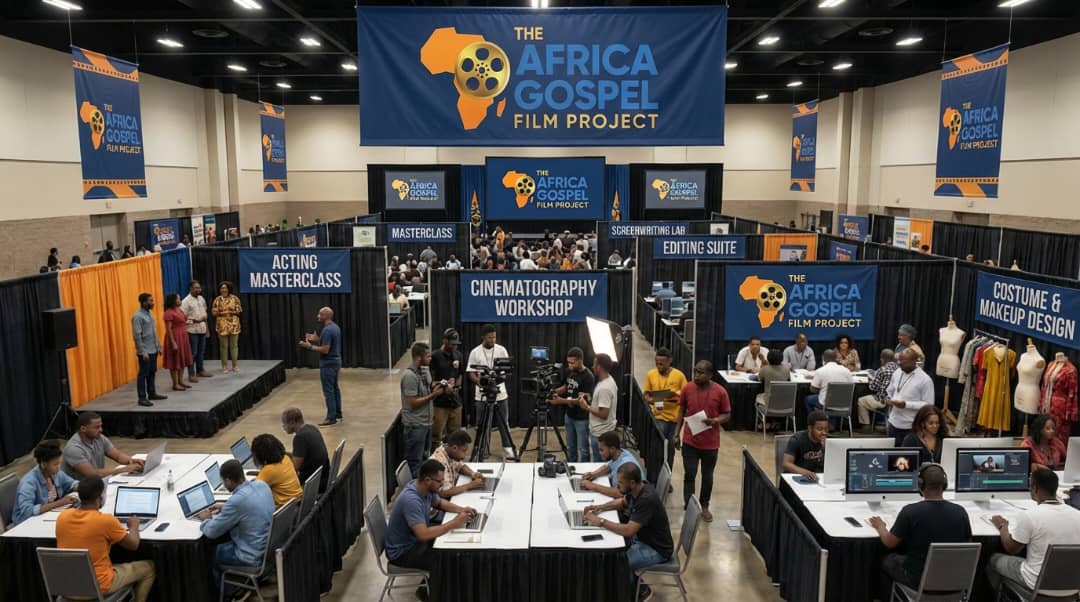
Africa Gospel Film Project Launched to Train a New Generation of Christian Filmmakers Across Africa
Abuja, Nigeria – January 2026 — Gospel Cinema International has officially announced the launch of the Africa Gospel Film Project (AGFP), a bold, multi-year capacity-building and film production initiative designed to equip African Christian filmmakers with professional skills, spiritual depth, and global distribution pathways.
Africa is home to over 600 million Christians, yet African faith-based films remain significantly underrepresented in global catalogues. AGFP was created to address this gap by training filmmakers, producing premium-quality faith-based content, and strategically connecting Africa’s Christian film ecosystem to the global market.
The project will launch its first phase with a 6-Day Immersive Filmmaking & Spiritual Formation Program, scheduled to hold April 13–18, 2026, in Nigeria, followed by the production of an 8-episode faith-based series later in the year.
“Film is one of the most powerful tools shaping culture and belief today,” said Bright Wonder Obasi, president of Gospel Cinema International. “Africa Gospel Film Project is not just about making films—it is about shaping storytellers who understand both excellence and spiritual responsibility.”
AGFP will focus on:
Professional training in screenwriting, directing, cinematography, editing, producing, and acting
Deep spiritual formation and mentorship
Collaborative production and international distribution pathways.
Gospel Cinema International is a faith-driven film development organization committed to training, producing, and distributing impactful Christian films that shape culture and inspire faith globally.
Applications and partnership discussions are now open.
For applications and information:
visit www.gospelcinemaint.com
Email [email protected]
Follow @gosplecinemtrybe across social media for updates.


-

 celebrity radar - gossips5 months ago
Why Babangida’s Hilltop Home Became Nigeria’s Political “Mecca”
-

 society5 months ago
Power is a Loan, Not a Possession: The Sacred Duty of Planting People
-

 Business6 months ago
Batsumi Travel CEO Lisa Sebogodi Wins Prestigious Africa Travel 100 Women Award
-

 news6 months ago
THE APPOINTMENT OF WASIU AYINDE BY THE FEDERAL GOVERNMENT AS AN AMBASSADOR SOUNDS EMBARRASSING