
society
THREAT BY THE DEFENCE HEADQUARTERS TO NEUTRALIZE ALHAJI MUJAHID DOKUBO ASARI UNDERMINES DEMOCRATIC SECURITY IN NIGERIA: By; Rt Hon. Gabriel Patterson Unyeowaji

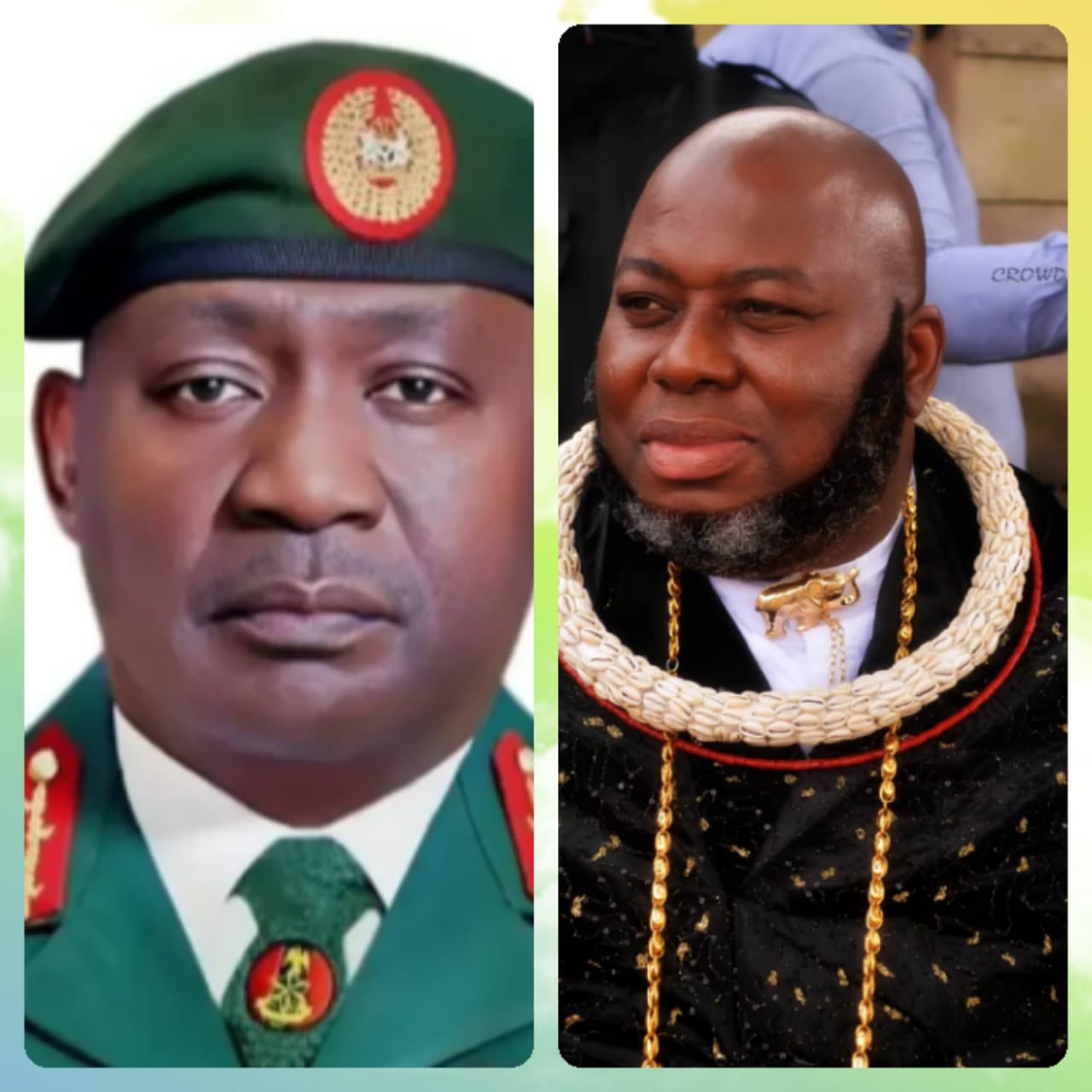
THREAT BY THE DEFENCE HEADQUARTERS TO NEUTRALIZE ALHAJI MUJAHID DOKUBO ASARI UNDERMINES DEMOCRATIC SECURITY IN NIGERIA:
By; Rt Hon. Gabriel Patterson Unyeowaji
The Nigerian Defence Headquarters in relation to a comment allegedly made by Alhaji Mujahid Abubakr Dokubo – Asari, the President/CEO of Royal Fouche Security Limited has threatened to neutralize him by viciously inviting him to a none existent battlefield.
In a press release by Major General Edward Buba, it stated that they will take out Alhaji Mujahid Abubakr Dokubo-Asari. This statement is a threat to democracy as it violates the Constitution of Nigeria. It is only a court of competent jurisdiction that can determine what will happen to any Citizen of the Nigerian State.
The position of the Defence Headquarters without any official investigation of whatever it is that Alhaji Mujahid Dokubo Asari may have said depicts complicity in the event that warranted the comment allegedly made by him. If this issue is approached correctly, the first step is to revisit the comment which is expressly a comment of self defence and homeowners right enshrined in the laws of Nigeria.
If I remember correctly, Alhaji Mujahid Abubakr Dokubo-Asari said that the Minister of FCT, Nyesom Wike has sent a helicopter that bears no insignia to be hovering specifically over his residence, In Obuama, Rivers State. There is no law in Nigeria that permits any AirCraft to specifically fly or however around a private residence without official permission as it violates the right of the home owner enshrined in the Constitution of Nigeria that protects right to private and family life hence, sailent questions needs to be asked the Defence Headquarters such as:
1. Did the Defence Headquarters order the unmarked Helicopter Gunship to fly or hover specifically over the residence of Alhaji Mujahid Abubakr Dokubo-Asari?
2. If yes then for what reasons especially him being a provider of security in assistance to the Federal Government and if no then why the haste to rise in defence of an aircraft that has violated the Constitutional Provisions of the Federal Republic of Nigeria?
3. Why did the Defence Headquarters leave out the complain by Alhaji Mujahid Abubakr Asari-Dokubo about the Minister of FCT, Nyesom Wike is it that they’re protecting him and is it not clear that they’re deliberately after Alhaji Mujahid Dokubo -Asari to murder him given that their statement bears no other humane intellectual argument other than to kill him?
4. Isn’t it possible that there are rogue elements in the ranks and file of the Defense Headquarters otherwise why the threat instead of approaching the issue through an official and diplomatic channel since the AirCraft is in clear violation of the law and if so, is the Defence Headquarters not protecting such rogue elements who could have launched an illegal mission?
The Nigerian Military should know that it does not have parallel governing Authority and Power in this democracy and exercising such unilaterally undermines Nigeria’s Democracy rather the authority and power it exercises comes from the laws of Nigeria as enshrined in the Constitution and the various Acts of the National Assembly and there is nowhere it is empowered to threaten Citizens of the Country especially one who has contributed immensely to the Country security wise.
Again, the Defence Headquarters should channel it’s professional skills of neutralization to tackle the Banditry and Terrorism that has been festering in the North for years. Also it should focus same professional skills of neutralization to recapture the Boko Haram Terrorists that it enrolled into it’s rank and file who has now absconded with sophisticated weapons from the armoury of the military and who are now at large and a source of severe danger to a large catchment of our civilian population.
Finally the Military should not involve themselves in politics of Rivers State or Nigeria in general but should remain neutral. The situation in Rivers State allows Alhaji Mujahid Abubakr Dokubo- Asari to be conscious of security of his life and that of his loved ones, therefore it is vexatious for any Aircraft whether Military or Civilian to be hovering over his residence specifically. Hence, it is out of place to threaten him over whatever he says (having a right to freedom of speech) in relation to the danger and insecurity to himself and his people triggered by that unmarked Aircraft.
On this note it will be in order if Alhaji Mujahid Abubakr Dokubo – Asari files for the enforcement of his fundamental human rights against the Defence Headquarters because it has no right to act anyhow or recklessly. Also the attention of the National Assembly especially the Senate Committee on Defence is to be called to invite representatives of the Defence Headquarters for questioning. We are in a Democracy not in a Military regime and as such no agency of Government can hold the country to ransom.
Rt Hon. Gabriel Patterson Unyeowaji
Igrigi 1 of Niger Delta.


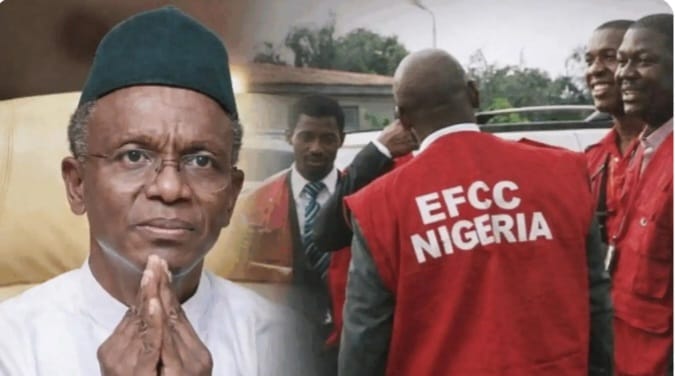
El-Rufai Turns 66 in EFCC Custody
By George Omagbemi Sylvester | Published by SaharaWeeklyNG
“Former Kaduna governor questioned over ₦432 billion corruption probe as cybercrime charges loom.”
Former Kaduna State governor Nasir El-Rufai spent his 66th birthday in the custody of Nigeria’s anti-graft agency, the Economic and Financial Crimes Commission (EFCC), after hours of interrogation over an alleged multibillion-naira corruption probe tied to his eight-year tenure in office.
The development, which unfolded in Abuja on Monday, February 17, 2026, marks one of the most dramatic political moments in recent Nigerian history, as a former federal minister and influential northern political figure now finds himself at the centre of parallel corruption and cybercrime investigations.
According to multiple reports, El-Rufai arrived at the EFCC headquarters in the Jabi district of Abuja around 10 a.m. in response to an official invitation issued by the commission. After hours of questioning, he was detained overnight as investigators sought more time to interrogate him over alleged financial misconduct amounting to about ₦432 billion.
The probe stems primarily from a 2024 report by the Kaduna State House of Assembly, which accused his administration of mismanaging public loans, violating due process in contract awards and leaving the state with a heavy debt burden.
Investigators are said to be focusing on alleged diversion of funds, money laundering, and the accumulation of debts considered unjustified by lawmakers.
An EFCC source indicated that the former governor was grilled for about eight hours before the agency obtained a court order to keep him in custody for further questioning.
His media aide, Muyiwa Adekeye, confirmed the detention, stating that El-Rufai honoured the invitation and remained with investigators after what he described as a “frank and fruitful interaction” with officials.
The central institutions in the unfolding case are the EFCC, which is investigating alleged financial crimes, and the Department of State Services (DSS), which has filed separate criminal charges.
The EFCC investigation was triggered by petitions and the Kaduna Assembly’s findings, which alleged that loans obtained during El-Rufai’s tenure between 2015 and 2023 were either misapplied or executed without due process.
The anti-graft agency subsequently invited the former governor in December 2025 as part of the ongoing probe.
Parallel to the corruption investigation, the DSS filed a three-count cybercrime charge at the Federal High Court in Abuja, alleging that El-Rufai unlawfully intercepted the private communications of National Security Adviser Nuhu Ribadu.
The charge reportedly arose from statements the former governor made during a television interview in which he claimed that the NSA’s phone had been bugged.
Authorities argue that such an act, if proven, would constitute a serious breach of Nigeria’s cybercrime and communications laws and a threat to national security.
The timing of the detention, coinciding with El-Rufai’s birthday, triggered strong political reactions across Nigeria. Former Vice President Atiku Abubakar publicly congratulated him, describing him as “a man of courage and intellect” amid what he called political persecution.
Supporters also gathered around the EFCC headquarters, with reports of protests and clashes with security personnel.
Meanwhile, his son, Bello El-Rufai, a member of the House of Representatives, praised his father’s record as a reformist administrator, framing the detention as a test of character rather than a stain on his legacy.
Available accounts suggest a sequence of events beginning with an EFCC invitation, followed by his appearance at the commission’s headquarters, prolonged interrogation and eventual detention pending further investigations or possible arraignment.
Sources indicate the probe has been ongoing for about a year before the former governor was summoned.
The case is being closely watched for its potential impact on Nigeria’s anti-corruption drive and political stability. El-Rufai is not only a former governor but also a former Minister of the Federal Capital Territory and a key figure in northern political circles.
Anti-corruption scholars have long argued that the credibility of any anti-graft campaign rests on its impartiality. As Nigerian political economist Pat Utomi once observed, “The true test of a nation’s integrity is whether the law applies equally to the powerful and the powerless.”

Similarly, former World Bank president James Wolfensohn famously warned that corruption “diverts resources from the poor to the rich, increases the cost of running businesses, and distorts public expenditures.”
Those principles now frame the public debate around the El-Rufai case: whether the investigation represents genuine accountability or a politically charged confrontation.
As of the time of reporting, El-Rufai remains in EFCC custody, with investigators expected to decide whether to file formal charges in court. The outcome could set a major precedent for how Nigeria handles corruption allegations against former state governors.
For now, the image of a once-powerful political figure marking his birthday inside an anti-graft detention facility underscores the unpredictable nature of power in Nigeria’s evolving political landscape and the enduring question of whether accountability will truly become a national norm.
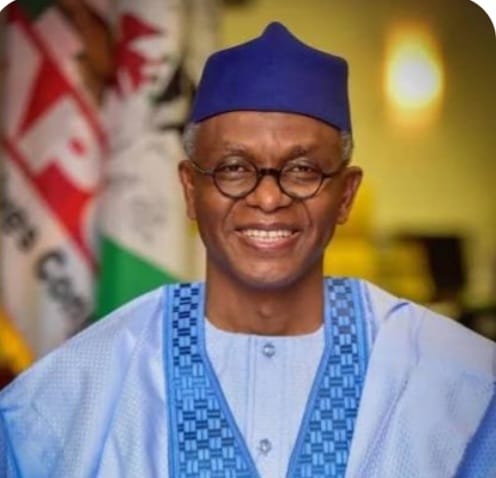

Carry‑On Chaos: Travelers Clash Over Tightened Size Rules in 2026
By George Omagbemi Sylvester | Published by SaharaWeeklyNG
“As airlines worldwide strictly enforce carry‑on dimensions, social media erupts, passengers incur surprise fees, and industry experts warn that confusion and inconsistent policies are straining the travel ecosystem.”
A growing storm of discontent has erupted across social media platforms, particularly on TikTok, as air travelers from the United States to Europe and beyond grapple with the tightening of carry‑on luggage size enforcement in 2026. What began as a viral video warning about changing baggage measurements has ballooned into a widespread debate over airline policies that many passengers say are opaque, inconsistent and financially punitive.
The spark was a clip shared by TikTok user karenschaler, a screenwriter and travel enthusiast, urging fellow flyers to reexamine their carry‑on bags before their next trip. She insisted that “so many carry‑on bags that used to get through fine are now getting pulled, gate checked and you are being charged,” especially if those suitcases have hard shells, bulky wheels, or extended handles that make them technically oversize.
What most passengers didn’t realize until recently is that this isn’t a new rule implemented by governments, there’s no global treaty or international regulator that set new carry‑on dimensions for 2026. Rather, what’s changed is the degree of enforcement by airlines and how they interpret their own size restrictions, which often include wheels and handles in the measurement.
At the centre of the controversy is the 22 x 14 x 9 inches limit (56 x 36 x 23 cm), a standard carried by many U.S. carriers, including American Airlines and others. Under these policies, the size limit now explicitly counts everything on the bag not just the main compartment, but also the wheels and pull handle. Bags exceeding this, even by fractions of an inch, are being flagged at gates and subjected to surprise “gate‑check” fees that can range from around $35 to $65 or more.
A particularly viral incident that fuelled the debate involved an NHS doctor denied boarding on an easyJet flight because her carry‑on (though marketed as compliant) was deemed too large when measured by airline staff at the gate. That moment, widely shared and criticized online, has given tangible form to passenger frustration.
Experts point to multiple forces behind this shift. Airlines are under growing pressure to reduce boarding times and streamline turnaround operations. Flight delays often are caused by bottlenecks at boarding gates when oversized bags are discovered last‑minute. Stricter enforcement, carriers say, helps ensure that baggage physically fits into overhead compartments and that flights depart on schedule.
Dr. Sarah Rodrigues, an aviation policy expert at the Global Transport Institute, explains: “Airlines are trying to balance operational efficiency with passenger convenience. When policies lack clarity and consistency, you inevitably get confusion and frustration and especially when their interpretation varies from one airport or carrier to another.”
Some carriers, like American Airlines, have even removed rigid bag sizers from gate areas, instead training agents to use discretion when assessing bags, with instructions to “err on the side of the customer” for borderline cases. But that discretion itself is part of the confusion, with travelers unsure what will be accepted at one airport and rejected at another.
On TikTok and Reddit threads, travelers have shared anecdotes of bags that flew without issue in 2025 now being denied in 2026. Common complaints include unclear advertising by luggage manufacturers and many still label products as “carry‑on approved” without noting that airline measurements must account for wheels and handles.
One frequent commenter lamented, “We bought a new bag last year to fit requirements now it’s suddenly not good. This is the biggest scam. Every year the airlines seem to change rules for carry‑ons.” Another quipped, “Did the overhead bins shrink?” encapsulating a sentiment that the rules are arbitrary rather than grounded in real capacity needs.
Travel consumer advocate Mark Jenkins, director of the Airline Passenger Rights Foundation, warns: “When airlines tighten enforcement without clear, unified communication, you disenfranchise passengers. Clarity, not ambiguity, should be the lodestar of airline policy.”
Part of the frustration stems from the sheer lack of global standardization. In the U.S., many carriers still adhere to the 22 x 14 x 9 standard, while some, like Southwest Airlines, maintain slightly larger allowances for now. Other parts of the world feature entirely different rules; some European proposals even aim to mandate free hand luggage for passengers, another layer of policy that can run counter to carriers’ current practices.
The result is confusion among passengers who might (without a global regulatory baseline) find their luggage acceptable on one flight and penalized on the next.
Consumer groups advise that travelers measure their luggage carefully (including wheels and handles) and check airline‑specific policies before booking. In an era where ancillary fees contribute significantly to airline revenue, passengers increasingly find themselves navigating a labyrinth of hidden charges.
Dr. Elizabeth Moreno, a transportation economist, notes: “Air travel is no longer just about the ticket price. It’s the sum of every fee (checked bags, carry‑ons, seat selection) and when airlines alter enforcement without uniform messaging, it erodes consumer trust.”
The carry‑on debate of 2026 reflects broader tensions in modern air travel: operational efficiency versus passenger rights, profitability versus transparency, efficiency versus customer experience. As travelers share their frustrations online and industry policies continue to evolve, one thing remains clear, the skies may be busy, but the policies on the ground need greater clarity, cohesion, and fairness if passengers and airlines are to move forward together peacefully.
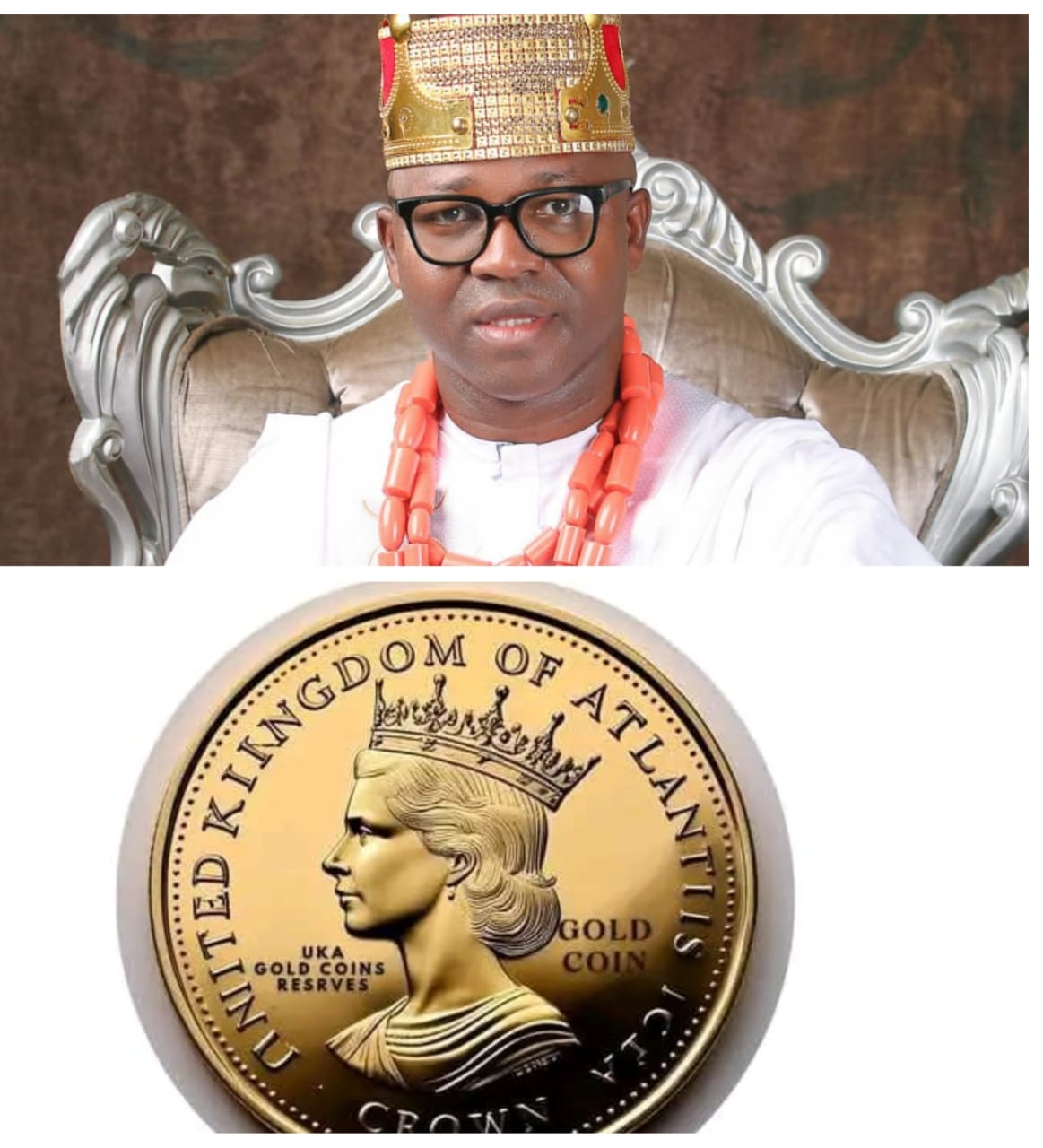
*BREAKING NEWS*
UKA Shakes Global Digital Finance Space with É-ATC Gold Coins Launch
In a groundbreaking move, the United Kingdom of Atlantis (UKA) has officially launched its É-ATC Gold Coin, backed by a staggering $10 billion gold reserve. This revolutionary cryptocurrency is set to disrupt the global digital finance landscape, boasting a starting market capitalization of $10 billion and a token price of $20.
The launch of the É-ATC Gold Coin marks a significant milestone for UKA, demonstrating its unwavering commitment to innovation, financial stability, and progress. The organization apologizes for recent digital inconsistencies and assures stakeholders that corrective measures are in place to ensure a seamless experience.
Emperor Dr Ugochukwu Christian Esemonu. Emperor incharge of Africa Region, Emperor incharge of Santorini Empire. Also Emperor incharge of Admin to the Global Throne. A man who is standing stronger and stronger inspite of distraction, expressed heartfelt gratitude to the Almighty God, Jehovah, and acknowledged the visionary leadership of Nobilis Solomon Winning, the Father of the Kingdom. The message also recognized the invaluable contributions of esteemed stakeholders, including the Global Emperor Admin of Atlantis, the Head of Government, and the Secretary General to Government.
The É-ATC Gold Coin is designed to rival leading global digital solutions, offering a secure, reliable, and transparent means of financial transaction. UKA citizens and global stakeholders are encouraged to complete their KYC processes and participate in acquiring the coins, becoming part of this historic moment in digital finance history.
“Today, we mark a new chapter in UKA’s journey, one of innovation, growth, and prosperity,” said Emperor Dr. Ugochukwu Christian Esemonu. “We are committed to delivering excellence and driving progress for our citizens and stakeholders.”
UKA’s leadership has called on citizens to unite, move forward in discipline, and peaceful coexistence, as they expand their platforms for business, trade, investment, and exchangeability. The organization is poised to surprise its critics and rise stronger, with a focus on delivering tangible results and driving growth.
The Reigning Monarch Emperor Solomon Winning’s unwavering faith, courage, and tenacity have brought UKA this powerful new beginning. His steadfast leadership has kept the vision alive, even in challenging moments, and has proven to be a beacon of hope for the people of UKA.
The É-ATC Gold Coin is now among the top 12 most powerful market capitalization in the world, a testament to UKA’s commitment to excellence and innovation.
*Key Highlights:*
– É-ATC Gold Coin launched with $10 billion gold backing
– Starting market capitalization: $10 billion
– Token price: $20
– Crypto version designed to compete with leading global digital solutions
– UKA citizens and stakeholders encouraged to participate in acquiring coins


-

 celebrity radar - gossips6 months ago
Why Babangida’s Hilltop Home Became Nigeria’s Political “Mecca”
-

 society6 months ago
Power is a Loan, Not a Possession: The Sacred Duty of Planting People
-

 news6 months ago
THE APPOINTMENT OF WASIU AYINDE BY THE FEDERAL GOVERNMENT AS AN AMBASSADOR SOUNDS EMBARRASSING
-

 Business6 months ago
Batsumi Travel CEO Lisa Sebogodi Wins Prestigious Africa Travel 100 Women Award