
society
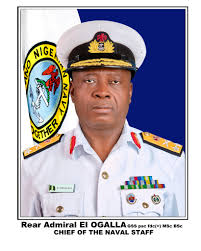
CNS Ogalla and His Exploits on War Against Oil Theft By Toby Prince

CNS Ogalla and His Exploits on War Against Oil Theft
By Toby Prince
Nigeria’s vast maritime frontier stretches an impressive 84,000 nautical miles, rivalling a third of its landmass. With over 3,000 lakes and rivers, this complex terrain demands bold leadership.
President Bola Ahmed Tinubu recognised this challenge, appointing Vice Admiral Emmanuel Ikechukwu Ogalla as Chief of Naval Staff in June 2023. A seasoned navigator, Ogalla embodies the determination, discipline, and vision needed to harness Nigeria’s maritime potential.
Ogalla took over office on June 23, 2023, with a bold vision to transform Nigeria’s maritime security and blue economy. His comprehensive strategy, the Total Spectrum Maritime Strategy (TSMS), tackles maritime crimes and promotes economic growth.
With his vast knowledge of the maritime domain and tactical operations, Ogalla outlined a detailed agenda to combat maritime crimes and foster the growth and development of the blue economy. This agenda includes the designation of Special Courts for Maritime Crimes, Advocacy Campaigns to enlist community support, and Socioeconomic Crime Prevention Strategies.
The TSMS also focuses on enhancing naval capabilities through fleet renewal, operational readiness, and infrastructural development. Additionally, it prioritizes human capital development through personnel welfare and motivation, manpower training, and youth and sports development.
To ensure effective implementation, Ogalla’s strategy emphasizes maritime stakeholders’ engagement and interagency cooperation. By implementing these measures, the CNS aims to safeguard Nigeria’s maritime interests, promote economic growth, and enhance regional stability.
A strong believer in a highly motivated professional naval force which is capable of shaping the security outcomes within Nigeria’s maritime domain and the littorals, including land-based engagements in fulfilment of national interest, CNS Emmanuel Ogalla also, set in various measures and alternatives aimed at maintaining and equipping a professionally competent and ethical naval force, which will leverage on all the elements of national powers to effectively defend Nigeria’s maritime area against all forms of threat so as to deliver the imperatives of national security.
Consequently, to prove that all these are not about mere sloganeering and banters without effective actions, the CNS carried out various reforms and projects aimed at recapitalizing the Naval ship.
This led to the equipping of the Naval Shipyard Limited, saddled with the responsibility of constructing and fabricating small boats, big vessels and other facilities of the Navy.
This move has in no small measure reduced capital flight and enhanced, as well as encouraged the training and development of skilled manpower.
As part of his commitment and dedication to the welfare of his personnel, Vice Admiral Ogalla on several occasions personally undertook the inspection of his troops for an on-the-spot assessment of their operational readiness.
Those visits also served as a morale booster and helped to motivate the personnel.
His efficiency and effectiveness in the deployment and utilization of the Naval personnel, platforms, helicopters, and UAVs for surveillance and interdiction operations throughout the Niger Delta including the employment of both kinetics and non-kinetic measures have also led to massive and unprecedented breakthroughs and successes being recorded by the Nigeria Navy on the protection of the nation’s territorial waters, such that massive quantities of stolen products were recovered, with the dismantling of illegal refining sites, arrest of suspects, seizure of stolen products, and the disruption of oil thieves and vandals.
Consequently, with three months of intense operation of Operation DELTA SANITY; which is his brainchild, the Nigeria Navy recorded the seizure of 95 wooden boats, deactivated 119 storage tank refining ovens, and the deactivation of 447 dugout pits. The Navy also deactivated 120 illegal refining sites and sized 13 fibre boats.
Other achievements and successes recorded include the seizure of 9 vehicles and the arrest of 14 vessels and 74 criminal suspects.
Some of the arrested vessels include MT KALI, MT HABOUR SPIRIT, MT SAISNIL, MV TOKITO, MT VINILLARIS, and MT SWEET MIRI.
It is instrumental to note that, these operations have consequentially impacted climate change in the mitigation of hazardous air pollution and the curbing of sooth.
Through a policy of effective and deliberate human capacity development, as an ingredient for a highly professional and motivated workforce, he has entrenched a highly motivated professional and ethical naval force with a formidable capacity and the required competencies to defend the Country’s maritime space against threats of any kind.
A strong believer in collaboration as a key to success and sustainability, the CNS partners with agencies such as NIMASA, NPA, NDLEA, NOSDRA, and NEMA, as well as many foreign partners, including holding Bilateral meetings and talks with the American chief of Naval Service, Operation (CNO).
This extensive work has brought about trust, confidence building, synergy and operational successes. The Total Spectrum Strategy has led to the Zero Piracy Rating Status of Nigeria by the International Maritime Bureau.
Through his commitment to the ideals of the Tinubu Presidency, the Nigerian Navy has supported land operations in all the geopolitical zones of the country, winning the war against evil and ensuring a crime-free Nigeria.
The Nigeria Navy under his watch, through the strategy of Maritime Domain Awareness Capacity, not only ensured the compliance of its personnel to civility, and activated deterrent measures to curb negligence and unprofessional conduct of personnel but also provided all year-round situation awareness of Nigeria’s maritime domain extending to the limits of the Exclusive Economic Zone.
Through the use of its Maritime Domain Awareness Facilities, the Navy has enhanced early detection and swift response to incidences within the maritime environment.
With the capitalization of 2 XSeaward Defense Boats (SDB); constructed locally, the various Platforms, thereby ensuring and supporting its anti-piracy, anti-CoT, anti-IUU and anti-illegal drugs, combined with the acquisition of 2nd Offshore Survey Vessels, 2 by 32m FPBs and helicopters (NNS CHALAWA, P196-Seaward Defense Boat, NNS ZUR P195 – Seaward Defense Boat and NNS OCHUZOR Survey Vessels and the delivery of 2 by 76m OPVs from Turkey, the Nigeria Navy remains the most dominant in the Gulf of Guinea (GoG) and the 4th largest in Africa.
Presently, under Vice Admiral Ogalla, the Nigerian Navy has over 50 capital ships and several hundreds of boats to cover the maritime space and internal waters. While the capital ships are used to patrol the sea, the small vessels carry out routine patrols also.
His non-kinetic approach has brokered several peace initiatives amongst communities and deepened community-military harmony within Nigeria’s Oil/Gas littoral area.
Not leaving out the welfare of the personnel, Vice Admiral Emmanuel Ogalla, has also demonstrated leadership and empathy by ensuring the construction of 50 units of 3 bedrooms, 128 units of 2 bedrooms and 120 units of 2 bedrooms apartments in Galadimawa, Asokoro Abuja, Lagos, Calabar and Port-Harcourt.
With an eye on sustainability, intellectual development and research, the Chief of Naval Staff on the 1st of June, 2024 launched the International Maritime Institute (IMION), an institution which will serve as a confluence for maritime discourse, the scintillation of ideas, and a vehicle for the articulation of maritime strategy on the African Continent.
With the launch of this crowning glory, the CNS intends to decimate, with a single shot, an institution which will also serve as a think-tank for maritime strategic thinkers, practitioners and allies with a far-reaching benefit of enhancing effective interaction, idea sharing and research into maritime strategic affairs affecting not only the Gulf of Guinea but the rest of the world, in such thematic areas as, maritime and ocean governance, maritime security, law enforcement, hydrography, blue economy, and climate change amongst others.
Under Ogalla’s visionary leadership, Nigeria’s war against oil theft has witnessed unprecedented success. His bold strategies, collaborative approach, and commitment to personnel welfare have transformed the Nigerian Navy into a formidable force. The Total Spectrum Maritime Strategy has yielded remarkable results, significantly boosting national security and contributing to global maritime stability. Ogalla’s efforts have solidified his legacy as a champion of maritime security and economic growth, earning the confidence of Nigerians and international partners alike.
Prince wrote this piece from Abuja.







UNITED KINGDOM OF ATLANTIS ANNOUNCES HISTORIC SUCCESS:
Premiere of ATC Digital Currency Exchange System Test, Highlighting “Gold Standard” for Humanitarian Purposes*
The Attica Empire, under the distinguished leadership of Empress Nobilisa Prof Sriwan kingjun, Empress of Attica Empire, successfully conducted a groundbreaking premiere test of its ATC (Attica Coin) digital currency exchange system. The event brought together high-ranking leaders and representatives from various nations to witness a spectacular celebration of financial innovation.
### Key Highlights of the ATC Digital Currency Exchange System Test
– The test demonstrated the efficiency and robustness of the ATC digital financial infrastructure, marking a significant milestone for Atlantis United Kingdom.
– Participants who completed the Know Your Customer (KYC) process in accordance with international standards were able to fully exchange ATC coins, thereby strengthening global confidence among currency holders.
– The ATC digital currency is positioned as the world’s first digital asset anchored to the *“Gold Standard”*, with its value guaranteed and validated through gold under certification by the International Court of Justice.
– The primary mission of the ATC currency is to fund humanitarian projects and drive macro-level social development, aligning with the empire’s vision of sustainable global impact.
### Event Atmosphere & Leadership Vision
The premiere was attended by thousands of guests who celebrated in an atmosphere of friendship, featuring:
– A concert performed by leading musical bands.
– A lavish reception of food and drink showcasing the empire’s prosperity and readiness.
– *Emperor Solomon Winning*, ruler of the United Kingdom of Atlantis and a thought leader in future-oriented projects, was celebrated as the transformative force reshaping traditional finance into a future-oriented model.
– Emperor Winning emphasized that the ATC system inaugurates a new, sustainable, and humanitarian economic framework.
*Quotes from Leadership*
_”The ATC digital currency is not just a financial innovation; it is a beacon of hope for global humanitarian efforts. We are committed to leveraging this technology to uplift communities and foster sustainable development.”_
— *Empress Nobilisa Sriwan Kingjun*
_”With the ATC Gold Standard, we are setting a new paradigm in digital finance—one that prioritizes transparency, accountability, and the greater good.”_
— *Emperor Solomon Winning*
Attica Empire is the pioneering force behind the digital economy of the United Kingdom of Atlantis. It focuses on developing secure, asset-backed FinTech solutions to support global usage and worldwide humanitarian efforts.
The ATC Digitalcurrency (Attica Coin) is a gold-backed digital asset designed to:
1. Provide a transparent and efficient medium of exchange.
2. Fund humanitarian initiatives and social development programs.
3. Set a new benchmark for asset-backed cryptocurrencies worldwide.
The Attica Empire remains committed to advancing innovative financial systems that empower global humanitarian projects and foster sustainable economic growth. The success of the ATC digital currency exchange system test paves the way for broader adoption and integration into global financial ecosystems.
### Upcoming Initiatives
– *Global Roadshow:* Attica Empire will embark on a worldwide tour to introduce the ATC digital currency to key financial hubs and international organizations.
– *Humanitarian Partnerships:* Collaborations with NGOs and global institutions to channel ATC funds into pressing social development projects.
– *Technological Advancements:* Continuous enhancement of the ATC platform to ensure scalability, security, and user-centric features.
The Attica Empire invites global stakeholders to join this transformative journey toward a more equitable and sustainable financial future.

Life Patron Gen. Buratai Congratulates Newly Elected Lady Captain of TYBGRCC
ABUJA – The Tukur Yusufu Buratai Golf Resort and Country Club (TYBGRCC) has ushered in a new era of leadership with the election of Ms. Jumai Hajara Adamu as its Lady Captain.
The club’s Life Patron, Lt Gen Tukur Yusufu Buratai (Rtd) CFR, former Chief of Army Staff, has extended his warm congratulations and full endorsement. “As the Life Patron, I am immensely proud to see a leader of your calibre step forward,” he stated. “Please be assured of my full and unwavering support throughout your tenure. I have every confidence that your leadership will be marked by significant achievements.”
The election, conducted by the club’s Board of Trustees and membership, highlights a unanimous confidence in Ms. Adamu’s vision and dedication to the sport and the club’s community.
In her acceptance address, the newly elected Lady Captain outlined a forward-looking agenda anchored on three key pillars: Unity, Development, and Inclusiveness. “I believe that golf is not just a sport but a powerful platform for friendship, discipline, mentorship, and community,” she stated, pledging to strengthen member bonds, encourage greater participation among ladies and youth, and enhance the club’s facilities.
Ms. Jumai Hajara Adamu, a respected member known for her active participation and organizational acumen, succeeds a line of distinguished past Lady Captains. She has pledged to build upon their legacy with transparency, teamwork, and accountability, ensuring every member feels heard and represented.
This appointment is seen as a significant step for the TYBGRCC, reinforcing its commitment to excellence, growth, and fostering a vibrant sporting community in the heart of the nation’s capital. The club anticipates a dynamic and prosperous term under her guidance.
About Tukur Yusufu Buratai Golf Resort and Country Club (TYBGRCC):
Located in Abuja, TYBGRCC is a premier golfing destination dedicated to promoting the sport of golf, fostering camaraderie, and encouraging a healthy lifestyle among its members and guests. It stands as a testament to world-class sporting and recreational facilities.
NAWOJ: SEKINAT, CHARITY GETS VOTE OF CONFIDENCE
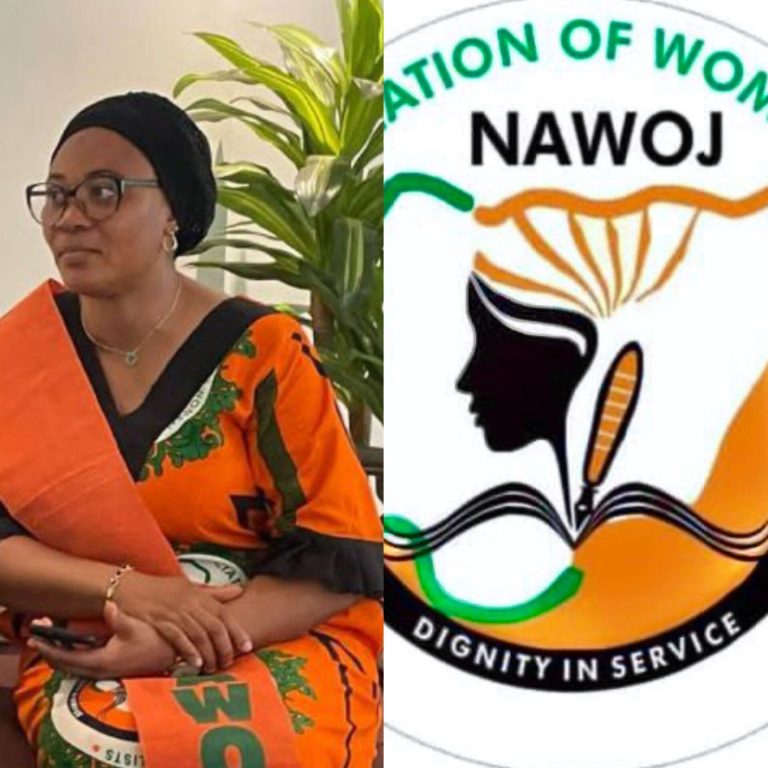
The Nigeria Association of Women Journalists,(NAWOJ), Ogun State Chapter Executives has unanimously passed a vote of confidence on Chairman NAWOJ SEKINAT Salam and the Financial Secretary, Charity James, saying that, their leadership reflect the ideal and objectives of NAWOJ.
This was revealed in a communique issued at an Emergency meeting of the Executive held at the NUJ State Council, Iwe-Iroyin in Abeokuta.
The vote of confidence on the Leadership of NAWOJ was unanimously signed by all the five executive members that attended the meeting with the vice chairperson taking apology for official engagement outside the state capital.
According to the communique ” Consequently, NAWOJ Ogun State Chapter, reaffirms it’s unwavering support and confidence in the Chairperson and the Financial Secretary, Sekinat Salam and Charity James respectively, Urge them to continue in their commitment to purposeful leadership in the best interest of the association and the society at large”.
Speaking briefly with Journalists after the emergency Executive meeting, the Chairperson, Nigeria Association of Woman Journalists (NAWOJ), Com. Sekinat Salam, said the meeting was necessary as the news of her suspension was laughable and insulting because it is like a pot calling a kettle black in this case, saying that the Leadership of the State Council, Com. Wale Olanrewaju has no local standing to suspend her or any executive member, even he cannot be a judge in his own case.
According to her” The Leadership of the Nigeria Union of Journalists, Ogun State led by Wale Olanrewaju has always been misusing power without recourse to the constitution of this noble Union, hence has no local standing to suspend me or any executive member “.
She said only the Central Working Committee (CWC) has the constitutional rights to sanction or suspend any members found wanting after due process has been followed.
While calling on members to stay calm, Com. Sekinat Salam assured members of positive representation of NAWOJ at both the State and National level, adding the success recorded under her administration cannot be overemphasized.
She therefore called on the National leadership of NUJ to critically look into the matter, either by setting up independent committee to investigate the issues and resolve the matter as quickly as possible.


-

 celebrity radar - gossips6 months ago
Why Babangida’s Hilltop Home Became Nigeria’s Political “Mecca”
-

 society6 months ago
Power is a Loan, Not a Possession: The Sacred Duty of Planting People
-

 Business6 months ago
Batsumi Travel CEO Lisa Sebogodi Wins Prestigious Africa Travel 100 Women Award
-

 news6 months ago
THE APPOINTMENT OF WASIU AYINDE BY THE FEDERAL GOVERNMENT AS AN AMBASSADOR SOUNDS EMBARRASSING