
society
Falana’s fraud case against Zinox, others, thrown out

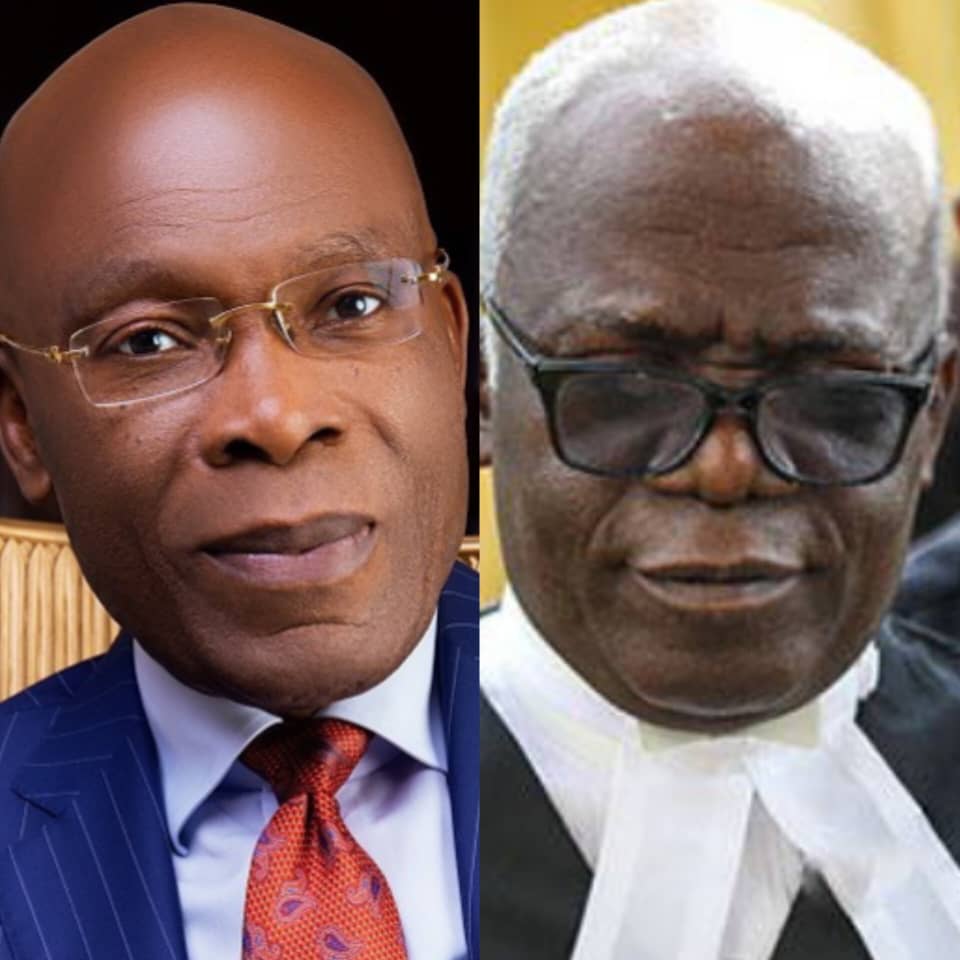
Falana’s fraud case against Zinox, others, thrown out
For the umpteenth time, the court has thrown out a case of fraud filed against the Chairman of Zinox Technologies, Mr. Leo Stan Ekeh, his wife, Chioma Ekeh and 11 others.
The latest is the dismissal of the suit by Justice Akpan Okon Ebong of the FCT High Court who struck out the case filed by Mr. Femi Falana SAN, purporting to act on a fiat donated to him by the Attorney General and Minister of Justice of the Federal Republic of Nigeria, Mr. Lateef Fagbemi SAN, against the Chairman of Zinox Technologies, Mr. Leo Stan Ekeh, and 12 others.
The other defendants are Mr. Chris Eze Ozims, Oyebode Folashade, Charles Adigwe, Obilo Onuoha, Agartha Ukoha, Anya O. Anya, Femi Dosumu, Nnenna Kalu, Admas Digital Technologies Limited, Technology Distributions Limited and Zinox Technologies Limited.
In the suit No. FCT/HC/CR/985/24 filed in November 2024, Falana on behalf of his client, Benjamin Joseph, the CEO of Citadel Oracle Concept Limited, an Ibadan-based computer firm, filed charges against Ekeh, 9 other individuals and 3 companies before the Federal High Court in Abuja for allegedly diverting N162,247,513.80 being payment for laptop supply contract at the Federal Inland Revenue Service (FIRS) Headquarters which Technology Distribution ltd (now TD Africa), the biggest tech equipment distributor in Sub Saharan Africa supplied on behalf of Citadel in 2012.
However, in the certified true copy of the judgment dated March 20, 2025, Justice Ebong ruled as follows: “It is my conclusion based on the foregoing that this charge (No. FCT/HC/CR/985/2024, Federal Republic of Nigeria v Leo Stan Ekeh and 12 ORS) constitutes a gross abuse of court process and is liable to dismissal. I accordingly hereby dismiss it.”
Before arriving at his judgment which has put a final nail on the coffin of a case that other courts had dismissed in the past as dead on arrival, Justice Ebong had considered the outcome of previous cases and petitions filed by Mr. Joseph none of which was in his favour.
Justice Ebong said: “One intriguing aspect of this matter is that none of the law enforcement agencies involved in the investigation of the nominal complainant’s (Mr. Joseph) numerous petitions has found merit in any of his allegations against the defendants. When called upon before Senchi J. (Justice Danlami Z. Senchi) to prove his said allegations to the court, he failed to turn up in court. One then wonders on what premise he wants to maintain this campaign of persecution against the defendants.”
Previous judgments on the matter had established that rather than being the culprit, Ekeh and the 12 others were actually the victims of a failed money diversion scheme plotted by Mr. Joseph and Citadel.
When contacted, one of the defendants, Mr. Chris Eze Ozims, a lawyer, said: “This ruling truly reflects our consistent position on the allegations, and it is good that we have been vindicated, once more, by a competent high court.
He asserted that the judgment of Justice Ebong was consistent with the position of the defendants and in tandem with the ruling of other judges who had earlier adjudicated on the same matter in the past.
Chief counsel to the defendants, Mr. Matthew Burkaa SAN, described the judgment as victory for integrity and the rule of law.
Court papers showed that Falana’s suit was based on the same claims which various courts had in the past dismissed as falsehood and baseless. The case arose from a contract between Citadel and Technology Distributions Limited over the supply of computers to the Federal Inland Revenue Service (FIRS), a project fully funded by Technology Distributions and has no bearing whatsoever with Zinox and its promoter, Mr Leo Stan Ekeh.
It will be recalled that Mr. Joseph had lost the case and its adjunct suits at different courts in the past. In his petition to the police in 2013, it was discovered by police authorities that Mr. Joseph provided false information to the police, prompting the Inspector General of Police to charge him for false information in charge no.CR/216/16.
In another case filed by the EFCC at his instance against his partner, Princess Kama, in charge no. FCT/HC/CR/244/2018, Honorable Justice Danlami Z. Senchi of the FCT High Court (as he then was), dismissed as false all the allegations made by Benjamin Joseph, and imposed the sum of N20 million as damages against him for false petitioning in relation to these same allegations.
Earlier court papers showed that Joseph had in his statement on oath in suit No:LD/4335/2014 in the High Court of Justice, Lagos State, dated 28 June, 2019 averred that his company, Citadel, did not execute any contract with FIRS and that he was not aware that a contract was awarded to Citadel.
In his deposition under oath, Joseph claimed that Citadel “did not at any time execute any contract for the FIRS and neither did the 2nd defendant (Princess O. Kama) who is its agent in respect of the contract it bidded for with the FIRS deliver/release any documents to the Claimant (Citadel) indicating that the contract it bidded for or any other contract was awarded to it by the FIRS or any other body.”
However, a letter from the FIRS addressed to the chamber of Afe Babalola & Co dated 11 February 2014 (FIRS/PD/GDS/2559) and signed by one Idrissa Kogo, Head Legal Department, stated: “Contrary to your client’s claim that they knew nothing about the execution of the contract awarded to them and that they did not receive any payment for the execution of the contract, our record reveals otherwise.
“Your client instructed FIRS through a letter dated 13th December 2012 to deal with Princess O. Kama (Your client’s agent) in relation to the contract. Through three separate letters dated 20th December 2012, your client instructed FIRS to pay to the client’s account with Access Bank plc. Please note that FIRS acted in compliance with your client’s instruction and with due diligence,” the FIRS letter stated.
The FIRS letter was a response to inquiry by Afe Babalola Chamber, lawyers to Citadel Oracle Concept Ltd and its MD, Mr. Benjamin Joseph, at that time.
The current charges filed by Falana on the basis of a fiat from the Attorney General is the third in a row as Mr Joseph had earlier filed charge no.CR/469/2022, which was struck out by Honorable Justice C. O. Oba of the FCT High Court, by an order dated 8th November 2022.
Determined to push through his case, Mr Joseph filed the same charges before Honorable Justice A. S. Adepoju of the FCT High Court, and the charges were, once again, struck out by the Honorable Court on 19th March 2024, with Honorable Justice Adepoju holding that: “This matter was brought in dead, extinct and should be confined into the dustbin of history…I hold that the instant suit is an abuse of the process of court and it is hereby struck out accordingly.”







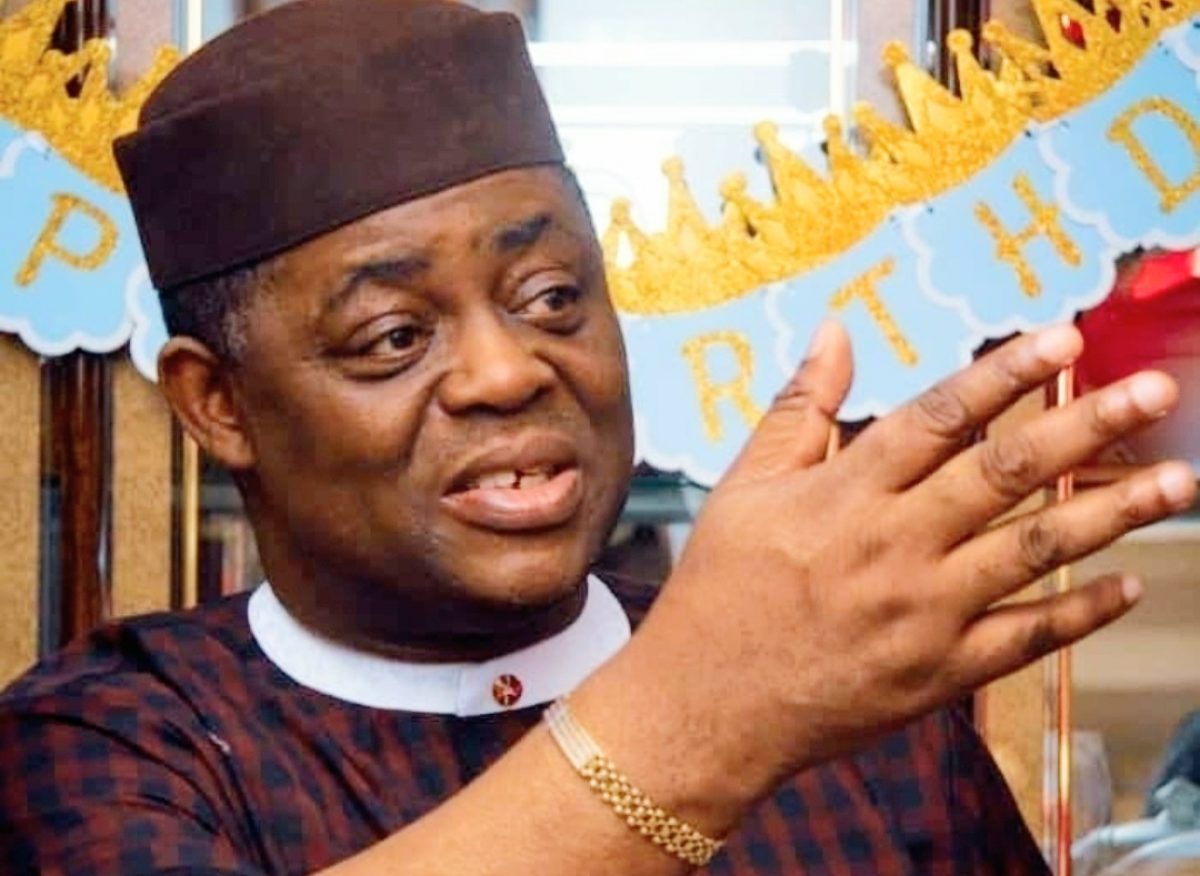
NASIR EL RUFAI AS A THREAT TO NATIONAL SECURITY
BY FEMI FANI-KAYODE
Three very serious allegations were made last week by the former Minister of the FCT and former Governor of Kaduna state Mallam Nasir El Rufai.
Firstly that he bugged Mallam Nuhu Ribadu, the President’s National Security Advisor’s phone and is privy to his most sensitive conversations, secondly that the National Security Advisor’s office has imported large sums of dangerous chemical weapons into the country for unspecified purposes and thirdly that there is a conspiracy between the NSA and Governor Uba Sani of Kaduna state, his successor in office, to “destroy him” and “jail him for life”.
I have tried to stay away from the raging debate that followed these comments due to my longstanding friendship and respect for all three parties and their respective families but in view of the latest developments and in the light of these grave allegations I can no longer sit on the sidelines and maintain my silence.
Let me begin by saying that Mallam Nuhu Ribadu, Mallam Nasir El Rufai, Governor Uba Sani and my goodself were closer than brothers during President Olusegun Obasanjo’s Government and we worked closely as a tag team.
Uba Sani took over my old job as Special Assistant to the President on Public Affairs when I was appointed as a Minister, Nasir was my colleague in cabinet and Nuhu headed the EFCC. WE all attended Federal Executive Council meetings and more often than not we were on the same page on most national issues and we presented our cases with candour and vigour without any fear or favour at such cabinet meetings which President Obasanjo graciously allowed us to do.
This was as far back as over 20 years ago!
We were also all very close to President Obasanjo, whom we reverred, and had many private and closed door meetings with him together with a handful of other close associates about how to move his Government and the country forward and how to confront and contain his political enemies and detractors.
We were loyal to a fault, tough, young, hard-working, fearless and filled with zeal and we gave our very best to Obasanjo and his Government in our respective roles.
After we left office we all suffered severe persecution at the hands of President Yar’adua’s administration simply for being “Obasanjo boys” and we literally had to fight for our liberty and lives.
Nuhu and Nasir were compelled to leave Nigeria for fear for their lives whilst Uba and I stayed behind and weathered the very difficult storm.
Those were the most difficult, trying and testing days of our respective lives but thankfully we all pulled through, overcame all the obstacles placed before us and eventually won the day. We came out of it all alive, healthy and well and for that we give thanks to God.
Since those early years much has transpired and there were many realignments sometimes finding us on opposing sides.
Regardless of that our friendship and strong sense of brotherhood endured and remained intact even if we may have publicly disagreed from time to time.
The latest development in the saga of our respective lives are the comments made by Nasir in his interview with Charles Aniagolu of Arise Television on Friday about both Nuhu and Uba which I believe goes beyond the pale and sadly represents a permanent burning of bridges in terms of our brotherhood and collective friendship.
One of the things he said in that interview is that he bugged the phone of the NSA and to this, and much else, I am constrained to offer the following comments as an old friend and a concerned observer.
Permit me to begin by saying that it is likely that it is the same people that tapped the late Brigadier General Uba’s phone and gave the co-ordinates of his location to the terrorists that led to his execution that bugged the NSA’s phone.
It is likely that it is the same people that have enabled the terrorists to kill, abduct, terrorise and abduct our people and brought misery, suffering, tears and carnage to our land that bugged the NSA’s phone.
It is likely that it is the same people whose footsoldiers are creating havoc and bringing chaos to Niger, Kaduna, Kwara, Borno, Kogi, Katsina and other parts of our nation that bugged the NSA’s phone.
It is likely that it is the same people who wish to destabilise our nation, divide our people along ethnic and religious lines and instigate a violent, unconstitutional and bloody regime change that bugged the NSA’s phone.
These non-state actors, agents of destabilisation and terror-enablers are listening to ALL our conversations including those on WhatsApp.
The truth is that until they are brought to justice for their unconciable crimes no-one is safe.
Sadly Nasir El Rufai’s public admission of having a relationship with them and even confessing publicly that he exchanges information with them even though he acknowledged the fact that such a course of action is illegal makes him complicit to their crimes and an accessory after the fact.
If you can boast of bugging the NSA’s phone on national television it makes you a security threat to our nation.
Again if you can preside over the killing of 800 Christians in Southern Kaduna IN ONE DAY during the Christmas season in 2016 and do nothing to bring the perpetrators to book when you were Governor, if you can punish the Christians of Southern Kaduna and deny them their allocations and rights for 8 years, if you can preside over the slaughter of 1000 Shia Muslims IN ONE DAY in Zaria without consequence, if you can insult our Lord and Saviour Jesus Christ and the Virgin Mary, if you can call Southern female Youth Corpers “whores”, if you can lock up critics of your Government and preside over the disappearance and murder of traditional rulers like the Agom Adara 111 who you denigrated and humiliated and other critics without consequence for 8 years, if you can seize people’s land, revoke their certificates of occupancy and knock down their homes out of spite and without due process, if you can publicly admit to offering and paying foreign terrorists money and “compensating” them for their losses, if you can accuse Senator Abdul Azeez Yari or Senator Ahmed Sani, both former Governors of Zamfara state, of deserving to be listed as terrorists by the American Congress, if you can turn on your former best friend who is now the NSA and your most loyal supporter who is now the Governor of your state and seek to malign and destroy them for no just cause, if you can turn around and blame the abduction and possible murder of Dadiyata on the former Governor of Kano state instead of accepting responsibility for his disappearance yourself, if you can claim not to have targetted and viciously persecuted Senator Shehu Sani, Audu Maikori, John Danfulani, Luka Biniyat, Steven Kefas, Nasiru Jagaban and countless others violating court orders and without due process simply for criticising your Government, if you can pick up over 100 Islamic clerics in Zaria whilst they were praying after you sacked them and denied them their entitlements and lock them up in prison, if you can pick up and send hundreds of Christians in Kajuru together with their Pastors to prison simply because they were protesting after their traditional ruler was murdered by terrorists, if you can accuse Nigerian Christians of being the ones behind Boko Haram, if you can say that President Goodluck Jonathan had an assasination squad and was planning to kill you, if you can accuse the NSA of importing what is essentially a lethal chemical and biological weapon and what you described as large quantities of “toxic, odourless and colourless poison from Poland” known as thalium sulphate into our country and imply that he has done so for an evil, sinister, nefarious and possibly homicidal purpose, if you can call the Senate President, Senator Godswill Akpabio, a “scumbag” on national television, if you can publicly call Senator Makarfi a former Governor of your state “a thief” with no evidence, if you can treat the former Governor of your state Governor Yero with disdain and contempt, if you can call President Buhari, President Obasanjo, President Jonathan, President Yar’dua, President Tinubu, Vice President Atiku Abubakar all manner of names in the past when it suited your purpose in an attempt to discredit and destroy them and their legacy, if you can say “anyone who fights me ends up dead” and that “even President Umaru Yar’adua who fought me is now in the grave”,
if you can say “when you engage me in a battle, it is either I am dead or you are dead and if you doubt that go and ask Yar’adua”, if you can demolish Justice Bashir Sambo and Alhaji Inuwa Abdulkadri’s homes together with that of countless others simply to satisfy your insatiable appetite for sadism and your pathological inclination for vindictiveness, if you can demolish markets and shops without court orders, if you can sack civil servants and teachers against court orders, if you can consistently treat our President with contempt and disdain and constantly disrespect and pour venom on the person of our Vice President Kashim Shettima whilst you were STILL in the ranks of the ruling party, if you can publicly threaten to send foreign election observers “back to their country in body bags”, if you can say the Northern elders are “paperweights” and that there are “no Northern elders” except for the likes of yourself, if you can publicly ask Governor Mai Mala Buni of Yobe state why yours truly should have been allowed to join the APC when he was the Interim National Chairman of the party in 2021 simply because I lambasted you for failing to protect Christians from the mass murder, genocide and ethnic cleansing that they were being subjected to under your watch in your state, if you can publicly say that every terrorist and insurgent that is killed by the Nigerian military is “a debt that shall be repaid” and if you can say and do so much more than all these atrocities I have listed then I say that you are not only a security risk and threat to the stability of our nation and welfare of our people but also that you have no right to complain about being investigated or being invited and detained for questioning by the security and intelligence agencies.
I went through it for 18 years and was locked up for a total of 9 months over that period of time.
Instead of going on television to say that I had bugged the NSA’s phone and allege a grand conspiracy that the Government of the day had imported chemical weapons to gas their opponents to death I presented my defence and stated my case calmly and cooly in court and in the end I won all four cases and was totally vindicated.
If you know you have done no wrong why can’t you calm down, pray to God, behave in a dignified manner, carry your cross, stop claiming that there is some kind of imaginary and nonsensical conspiracy against you emanating from Kaduna state and the NSA’s office and hope for the same?
If you know you are innocent why all the hot air, nauseating noise, goat-like bleating, delusionary assertions and wild accusations?
Why are you behaving like a snake or a chicken whose head has been cut off?
Do you consider yourself as being above the law?
You are not the first person that the security agencies attempted to arrest at the airport without a warrant or elsewhere and you will not be the first to be invited, arrested or detained and neither will you be the last.
These things have happened to most of us that chose the path of politics for our lives and it has been so since independence. All great leaders worth their salt have been detained, arrested, harassed, investigated, prosecuted and some even jailed at some point in their careers and those that have a clean spirit, whose innocence spoke for them and who are right before God have always prevailed and won back their freedom.
It happened to Sir Ahmadu Bello who was jailed for three months, Chief Obafemi Awolowo who was jailed for three years, President Olusegun Obasanjo who was jailed for three years, President Muhammadu Buhari who was under house arrest for three years, Vice President Alex Ekwueme who was in detention for three years, virtually all the major players in the First and Second Republic (many of whom even lost their lives) and so many others yet they took their plight with grace and an exemplary submission to the will of God like the great men they were and never accused the entire world of conspiring against them.
Neither did they give infantile, puerile and nonsensical interviews implying that the security organs of the state were importing chemical weapons to commit mass murder against opposition figures.
Only guilty men and hardened, unrepentant criminals talk like that and indulge in such rhetoric and it is usually driven by their dark hearts, their uninhibited lust for power, their refusal to accept that they no longer have it, their compulsive and pathological need to continue to display the wickedness and cruelty that they displayed whilst in power and the unintended consequences the innocent blood that they may have either shed themselves or that their agents and associates have shed.
It is a form of madness that trails wicked and cruel men and confirms the words of the Bible which says “there is no peace for the wicked”.
Simply put it is a graphic and unmistakable display of God’s judgement.
I understand your anger and I feel your pain but understand one thing: that divine retribution is real and at this point the best you can do is display a little humility, seek the forgiveness of those you have hurt and beg God for His grace and mercy.
Your case is like that of the Epstein files: the more you look the more horror you see.
Is it any wonder that Ambassador Reno Omokri calls you “the Epstein of Nigeria?”
Permit me to end by reiterating a few of the points I made earlier.
I repeat, you oversaw the massive and unprecedented killing of over 800 Christians in Southern Kaduna in one day in December 2016 and not only refused to go after the perpetrators but also punished the communities that the victims came from.
You treated the people of Southern Kaduna like animals and denied them their allocations and dues for 8 years simply because they were Christians.
You insulted our Lord and Saviour Jesus Christ and the Virgin Mary on several occassions, treated your Christian Deputy Governor with contempt and refferred to Christians in the most derogatory terms after you became Governor.
You oversaw the killing of over 1000 Shia Muslims in one day in Zaria and not only oversaw the blinding of their leader in one eye but also the killing of his son, the wounding and arrest of his wife and the dumping of him in a wheelbarrow after which he was detained for 4 years and denied his civil liberties and human rights.
You betrayed your successor in office and sought to destroy him simply because he refused to continue the persecution of Christians and insisted on building bridges between Christians and Muslims and because he gave all the land that you illegally confiscated from your political enemies as a way of punishing them.
Outside of that you indebted the state, borrowed against future revenues, paid massive consultancy fees and indulged in all manner of sordid things that resulted in the state being broke and penniless when your successor took over.
You were accused by the State House of Assembly in Kaduna of stealing billions yet you treated the allegation with disdain and refused to make yourself available for questioning and investigation.
Kindly ponder on all this and make your peace with God before He unleashes the full force of His wrath on your head.
I have been restrained and gentle in this contribution for old times sake.
I may not be so charitable next time round.
Kindly behave and respect yourself and stop behaving like an unrepentant and unrelenting ingrate and pest. The NSA does not have your time and neither does the Governor of your state.
There is one thing I ought to add which is relevant and which explains the contrasting disposition and styles of Ribadu and El Rufai. It may also go a long way to explain the deep-seated hate and envy that the latter has always secretly harboured for the former.
Like yours truly, Nuhu Ribadu comes from a long line of distinguished public servants and enlightened and educated people.
His father, Alhaji Ahmadu Ribadu OON MBE, a pure and full-blooded Fulani man was a Nigerian politician and a diplomat.
During the First Republic, he represented Adamawa East constituency in the Federal Parliament from 1959 to 1966 and held the position of Minister of State of Economic Development in the Government of Sir Abubakar Tafawa Balewa.
He replaced the erstwhile Minister of Defence Alhaji Mohammadu Ribadu as the representative of their constituency in the cabinet after the latter passed on earlier that year.
Consequently Nuhu was not only born into the corridors of power and is a ranking member of Nigeria’s ultra elite ruling class, though I suspect he is reluctant to admit it, but he also understands and fully appreciates limits of that power and it’s complex nuances.
As a consequence of the circumstances of his birth he was well educated from infancy, familiar with the rudiments and ways of the ruling classes, exposed, civilised, loyal to his friends, cosmopolitan, enlightened, careful with his words, reserved, disciplined, taciturn, tactical, wise, totally detribalised and prefers to operate more behind the scenes than in the open.
These are qualities and virtues that money cannot buy and they make him extreemly effective and very dangerous to his enemies who are mainly criminals many of whom he jailed when he was Chairman of the EFCC.
He is a formidable adversary because unlike Nasir you cannot see him coming and he is far more interested in facing his work and getting his job done than in involving himself in some kind of public press war, bitter vendetta or public controversy. Such things are an anathema to him.
He is a believer in the eventual victory of good over evil which is why he could remain out of Government for 16 years without complaining for one day or expressing any form of bitterness or angst believing that one day his time would once again come.
And in 2023 when he was appointed NSA by President Tinubu that time came.
Since he got there as far as I am aware he has not used that position to intimidate or threaten anyone but instead has focused his attention on solving our security problems and building bridges with our American allies which people like yours truly, at the initial stage, were very uncomfortable with yet he pulled it off!
That is Nuhu: he flees from controversy, he is focused, he is reliable, he is responsible, he is fiercly loyal to his principal the President (some would say to a fault) and he is clear-thinking.
By way of contrast Nasir’s lineage and heritage is not known to me and neither have any of his forefathers, as far as I am aware, been saddled with the responsibility of high public office.
I am told that he hails from a railway compound in Zaria and frankly there is nothing wrong with that because at least he is well educated and well read.
What is evident in his behaviour though is that this unkown lineage and questionable heritage which often comes with those of that ilk manifests in him fully and rather than accept the fact that power is a trust that ought to be wielded with restraint, compassion, decency and decorum he uses it as a tool of vindictiveness and vengeance regardless of consequence.
It is precisely for this reason that people are wary of granting power to such people and instead are more comfortable with those from the ruling class who, more often than not, exercise far more restraint and are mindful of the fact that such power is not only transient but also ephemeral.
They know, from experience, that it never lasts and that there is always a day of reckoning.
They know that It comes one day and it is gone the next and the lesson that one should learn from this, which Nasir has failed to do, is that whilst you enjoy it you had better wield it with equity, fairness, compassion and the fear of God seeking to better the lives of others rather than destroying them.
With this aside I close and conclude my contribution.
May God bless Nigeria.
(Chief Oluwafemi Adewunmi Abdulateef Fani-Kayode, the author of this essay, is a former Minister of Culture and Tourism, a former Minister of Aviation, a former Senior Special Assistant to President Olusegun Obasanjo on Public Affairs, An Ambassador-Designate of the Federal Republic of Nigeria, the Sadaukin Shinkafi, the Wakilin Doka Potiskum, the Otunba of Joga Orile, the Aare Ajagunla of Otun Ekiti and a Legal Practioner.)
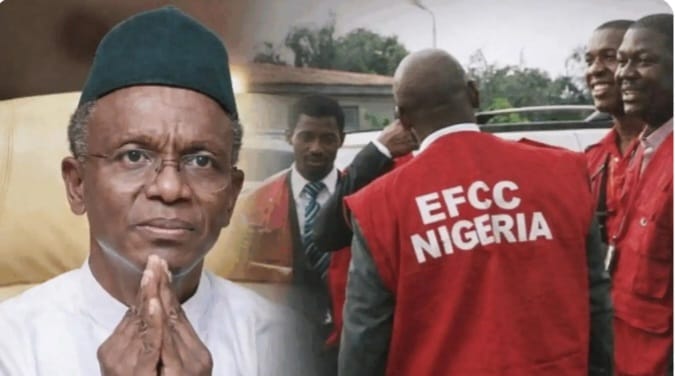
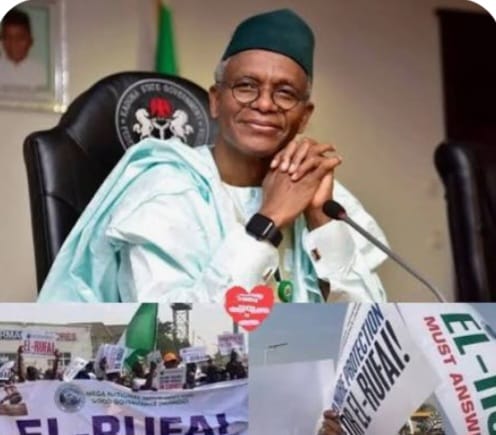
El-Rufai Turns 66 in EFCC Custody
By George Omagbemi Sylvester | Published by SaharaWeeklyNG
“Former Kaduna governor questioned over ₦432 billion corruption probe as cybercrime charges loom.”
Former Kaduna State governor Nasir El-Rufai spent his 66th birthday in the custody of Nigeria’s anti-graft agency, the Economic and Financial Crimes Commission (EFCC), after hours of interrogation over an alleged multibillion-naira corruption probe tied to his eight-year tenure in office.
The development, which unfolded in Abuja on Monday, February 17, 2026, marks one of the most dramatic political moments in recent Nigerian history, as a former federal minister and influential northern political figure now finds himself at the centre of parallel corruption and cybercrime investigations.
According to multiple reports, El-Rufai arrived at the EFCC headquarters in the Jabi district of Abuja around 10 a.m. in response to an official invitation issued by the commission. After hours of questioning, he was detained overnight as investigators sought more time to interrogate him over alleged financial misconduct amounting to about ₦432 billion.
The probe stems primarily from a 2024 report by the Kaduna State House of Assembly, which accused his administration of mismanaging public loans, violating due process in contract awards and leaving the state with a heavy debt burden.
Investigators are said to be focusing on alleged diversion of funds, money laundering, and the accumulation of debts considered unjustified by lawmakers.
An EFCC source indicated that the former governor was grilled for about eight hours before the agency obtained a court order to keep him in custody for further questioning.
His media aide, Muyiwa Adekeye, confirmed the detention, stating that El-Rufai honoured the invitation and remained with investigators after what he described as a “frank and fruitful interaction” with officials.
The central institutions in the unfolding case are the EFCC, which is investigating alleged financial crimes, and the Department of State Services (DSS), which has filed separate criminal charges.
The EFCC investigation was triggered by petitions and the Kaduna Assembly’s findings, which alleged that loans obtained during El-Rufai’s tenure between 2015 and 2023 were either misapplied or executed without due process.
The anti-graft agency subsequently invited the former governor in December 2025 as part of the ongoing probe.
Parallel to the corruption investigation, the DSS filed a three-count cybercrime charge at the Federal High Court in Abuja, alleging that El-Rufai unlawfully intercepted the private communications of National Security Adviser Nuhu Ribadu.
The charge reportedly arose from statements the former governor made during a television interview in which he claimed that the NSA’s phone had been bugged.
Authorities argue that such an act, if proven, would constitute a serious breach of Nigeria’s cybercrime and communications laws and a threat to national security.
The timing of the detention, coinciding with El-Rufai’s birthday, triggered strong political reactions across Nigeria. Former Vice President Atiku Abubakar publicly congratulated him, describing him as “a man of courage and intellect” amid what he called political persecution.
Supporters also gathered around the EFCC headquarters, with reports of protests and clashes with security personnel.
Meanwhile, his son, Bello El-Rufai, a member of the House of Representatives, praised his father’s record as a reformist administrator, framing the detention as a test of character rather than a stain on his legacy.
Available accounts suggest a sequence of events beginning with an EFCC invitation, followed by his appearance at the commission’s headquarters, prolonged interrogation and eventual detention pending further investigations or possible arraignment.
Sources indicate the probe has been ongoing for about a year before the former governor was summoned.
The case is being closely watched for its potential impact on Nigeria’s anti-corruption drive and political stability. El-Rufai is not only a former governor but also a former Minister of the Federal Capital Territory and a key figure in northern political circles.
Anti-corruption scholars have long argued that the credibility of any anti-graft campaign rests on its impartiality. As Nigerian political economist Pat Utomi once observed, “The true test of a nation’s integrity is whether the law applies equally to the powerful and the powerless.”
Similarly, former World Bank president James Wolfensohn famously warned that corruption “diverts resources from the poor to the rich, increases the cost of running businesses, and distorts public expenditures.”
Those principles now frame the public debate around the El-Rufai case: whether the investigation represents genuine accountability or a politically charged confrontation.
As of the time of reporting, El-Rufai remains in EFCC custody, with investigators expected to decide whether to file formal charges in court. The outcome could set a major precedent for how Nigeria handles corruption allegations against former state governors.
For now, the image of a once-powerful political figure marking his birthday inside an anti-graft detention facility underscores the unpredictable nature of power in Nigeria’s evolving political landscape and the enduring question of whether accountability will truly become a national norm.

Carry‑On Chaos: Travelers Clash Over Tightened Size Rules in 2026
By George Omagbemi Sylvester | Published by SaharaWeeklyNG
“As airlines worldwide strictly enforce carry‑on dimensions, social media erupts, passengers incur surprise fees, and industry experts warn that confusion and inconsistent policies are straining the travel ecosystem.”
A growing storm of discontent has erupted across social media platforms, particularly on TikTok, as air travelers from the United States to Europe and beyond grapple with the tightening of carry‑on luggage size enforcement in 2026. What began as a viral video warning about changing baggage measurements has ballooned into a widespread debate over airline policies that many passengers say are opaque, inconsistent and financially punitive.
The spark was a clip shared by TikTok user karenschaler, a screenwriter and travel enthusiast, urging fellow flyers to reexamine their carry‑on bags before their next trip. She insisted that “so many carry‑on bags that used to get through fine are now getting pulled, gate checked and you are being charged,” especially if those suitcases have hard shells, bulky wheels, or extended handles that make them technically oversize.
What most passengers didn’t realize until recently is that this isn’t a new rule implemented by governments, there’s no global treaty or international regulator that set new carry‑on dimensions for 2026. Rather, what’s changed is the degree of enforcement by airlines and how they interpret their own size restrictions, which often include wheels and handles in the measurement.
At the centre of the controversy is the 22 x 14 x 9 inches limit (56 x 36 x 23 cm), a standard carried by many U.S. carriers, including American Airlines and others. Under these policies, the size limit now explicitly counts everything on the bag not just the main compartment, but also the wheels and pull handle. Bags exceeding this, even by fractions of an inch, are being flagged at gates and subjected to surprise “gate‑check” fees that can range from around $35 to $65 or more.
A particularly viral incident that fuelled the debate involved an NHS doctor denied boarding on an easyJet flight because her carry‑on (though marketed as compliant) was deemed too large when measured by airline staff at the gate. That moment, widely shared and criticized online, has given tangible form to passenger frustration.
Experts point to multiple forces behind this shift. Airlines are under growing pressure to reduce boarding times and streamline turnaround operations. Flight delays often are caused by bottlenecks at boarding gates when oversized bags are discovered last‑minute. Stricter enforcement, carriers say, helps ensure that baggage physically fits into overhead compartments and that flights depart on schedule.
Dr. Sarah Rodrigues, an aviation policy expert at the Global Transport Institute, explains: “Airlines are trying to balance operational efficiency with passenger convenience. When policies lack clarity and consistency, you inevitably get confusion and frustration and especially when their interpretation varies from one airport or carrier to another.”
Some carriers, like American Airlines, have even removed rigid bag sizers from gate areas, instead training agents to use discretion when assessing bags, with instructions to “err on the side of the customer” for borderline cases. But that discretion itself is part of the confusion, with travelers unsure what will be accepted at one airport and rejected at another.
On TikTok and Reddit threads, travelers have shared anecdotes of bags that flew without issue in 2025 now being denied in 2026. Common complaints include unclear advertising by luggage manufacturers and many still label products as “carry‑on approved” without noting that airline measurements must account for wheels and handles.
One frequent commenter lamented, “We bought a new bag last year to fit requirements now it’s suddenly not good. This is the biggest scam. Every year the airlines seem to change rules for carry‑ons.” Another quipped, “Did the overhead bins shrink?” encapsulating a sentiment that the rules are arbitrary rather than grounded in real capacity needs.
Travel consumer advocate Mark Jenkins, director of the Airline Passenger Rights Foundation, warns: “When airlines tighten enforcement without clear, unified communication, you disenfranchise passengers. Clarity, not ambiguity, should be the lodestar of airline policy.”
Part of the frustration stems from the sheer lack of global standardization. In the U.S., many carriers still adhere to the 22 x 14 x 9 standard, while some, like Southwest Airlines, maintain slightly larger allowances for now. Other parts of the world feature entirely different rules; some European proposals even aim to mandate free hand luggage for passengers, another layer of policy that can run counter to carriers’ current practices.
The result is confusion among passengers who might (without a global regulatory baseline) find their luggage acceptable on one flight and penalized on the next.
Consumer groups advise that travelers measure their luggage carefully (including wheels and handles) and check airline‑specific policies before booking. In an era where ancillary fees contribute significantly to airline revenue, passengers increasingly find themselves navigating a labyrinth of hidden charges.
Dr. Elizabeth Moreno, a transportation economist, notes: “Air travel is no longer just about the ticket price. It’s the sum of every fee (checked bags, carry‑ons, seat selection) and when airlines alter enforcement without uniform messaging, it erodes consumer trust.”
The carry‑on debate of 2026 reflects broader tensions in modern air travel: operational efficiency versus passenger rights, profitability versus transparency, efficiency versus customer experience. As travelers share their frustrations online and industry policies continue to evolve, one thing remains clear, the skies may be busy, but the policies on the ground need greater clarity, cohesion, and fairness if passengers and airlines are to move forward together peacefully.


-

 celebrity radar - gossips6 months ago
Why Babangida’s Hilltop Home Became Nigeria’s Political “Mecca”
-

 society6 months ago
Power is a Loan, Not a Possession: The Sacred Duty of Planting People
-

 news6 months ago
THE APPOINTMENT OF WASIU AYINDE BY THE FEDERAL GOVERNMENT AS AN AMBASSADOR SOUNDS EMBARRASSING
-

 Business6 months ago
Batsumi Travel CEO Lisa Sebogodi Wins Prestigious Africa Travel 100 Women Award