
Uncategorized
A Call to Unity and Focus: Overcoming Challenges Facing Nigerians in South Africa By George Omagbemi Sylvester


A Call to Unity and Focus: Overcoming Challenges Facing Nigerians in South Africa
By George Omagbemi Sylvester
The Nigerian community in South Africa represents one of the most vibrant and dynamic African diasporas on the continent. Comprising students, entrepreneurs, professionals, and families, Nigerians have contributed significantly to the socio-economic and cultural landscape of their host country. From pioneering businesses to excelling in academic and healthcare institutions, their presence is both visible and impactful.

However, beneath the surface of progress and resilience lie persistent challenges that threaten the peace, safety, and dignity of this community. These challenges—ranging from police brutality and lack of documentation to harassment, xenophobic violence, and political neglect—continue to define the lived experiences of many Nigerians in South Africa.
This piece is both a call to unity and a plea for purposeful action. It is an appeal for Nigerians in South Africa to rise above internal divisions—whether tribal, religious, or political—and refocus on the shared vision of securing justice, dignity, and equal opportunity for all. It is only through a unified, strategic, and internationally informed response that we can collectively address the systemic and social issues confronting our people.
Understanding the Challenges
1. Police Brutality and Unlawful Arrests
One of the most pressing concerns is the recurring issue of police brutality. Numerous reports by human rights organizations, such as Amnesty International and local advocacy groups, have consistently highlighted cases where Nigerians are disproportionately targeted by law enforcement agencies. From unwarranted stop-and-search operations to physical abuse and extortion, many members of the Nigerian diaspora live in perpetual anxiety, fearing encounters with authorities meant to uphold their safety.
Historically, the mistrust between immigrant communities and law enforcement in South Africa is rooted in post-apartheid socio-political dynamics. The police force, often under-resourced and inadequately trained in diversity management, has sometimes defaulted to racial profiling. Nigerians, often stereotyped as drug traffickers or scammers, bear the brunt of this systemic bias. These actions not only contravene Section 9 of the South African Constitution, which guarantees equality before the law, but also violate international human rights instruments such as the African Charter on Human and Peoples’ Rights.

2. Lack of Proper Documentation
The issue of documentation is a complex interplay of bureaucratic inefficiencies, immigration policy shifts, and misinformation. Many Nigerians encounter protracted delays in securing residency, asylum, or work permits, often due to policy changes or restrictive visa frameworks aimed at curbing irregular migration. The South African Department of Home Affairs has been criticized for slow processing times, opaque requirements, and inconsistencies in documentation procedures.
For undocumented Nigerians, the consequences are severe. They face exploitation by unscrupulous landlords and employers, limited access to healthcare, and the inability to enroll their children in public schools. Without legal status, they are also left out of the protection net offered by South African labor laws, exposing them to unsafe working conditions and wage theft.
This situation reflects a broader economic reality: South Africa, like many nations, is grappling with high unemployment and poverty, making immigration a politically sensitive issue. Unfortunately, immigrants—particularly from other African countries—are often scapegoated in public discourse.
3. Harassment, Xenophobia, and Violence
Perhaps the most alarming of all is the recurrent wave of xenophobic violence that has periodically erupted across South African cities. From the violent uprisings in 2008 to more recent attacks in 2019, Nigerians have frequently been among the primary targets. These attacks have led to loss of life, destruction of property, and psychological trauma within the community.
Culturally, these acts of violence contradict the spirit of Ubuntu—an African philosophy that emphasizes communal values, human dignity, and hospitality. Politically, they reflect the failure of successive administrations to effectively address socio-economic disparities and to lead public opinion away from xenophobic sentiments.
Internationally, such violence has strained South Africa’s diplomatic relations with countries like Nigeria. The 2019 attacks, for instance, prompted diplomatic protests, economic retaliations, and calls for stronger protections for foreign nationals. It underscored the need for sustained bilateral dialogue and continental cooperation under frameworks like the African Union’s Agenda 2063, which envisions “an integrated, prosperous, and peaceful Africa.”
The Need for Unity
In the face of these adversities, unity among Nigerians in South Africa is not optional—it is imperative. Unfortunately, internal fragmentation based on ethnicity, religion, or personal ambition has often undermined collective advocacy efforts. The Igbo, Yoruba, Hausa, and other ethnic subgroups sometimes operate in silos, diminishing their collective bargaining power.
Yet, diversity should be a strength, not a stumbling block. Nigeria’s cultural richness, forged through centuries of inter-ethnic interaction, must be mirrored in the diaspora. Whether through pan-Nigerian associations like the Nigerian Union South Africa (NUSA), professional bodies, or interfaith coalitions, there is a pressing need to organize around shared interests rather than sectional loyalties.
A unified Nigerian voice is more likely to influence South African policy, engage international organizations like the UNHCR or the International Organization for Migration (IOM), and partner effectively with civil society actors in promoting justice and reform.
Strategic Responses and the Path Forward
1. Legal Advocacy and Community Empowerment
There must be an intentional investment in legal literacy and access to justice. Community-based organizations should regularly host legal clinics to inform Nigerians of their rights, including what to do during police encounters, how to contest unlawful detentions, and how to file complaints with oversight bodies like the Independent Police Investigative Directorate (IPID).
Establishing legal defense funds and partnering with South African law firms or university law clinics can provide pro bono support. Furthermore, by pursuing litigation and filing public interest cases, the Nigerian community can help shape jurisprudence that protects all immigrants in South Africa.
2. Engagement with Host Authorities
Engagement with local and national government structures is crucial. Nigerians must participate in town hall meetings, integrate into ward committees, and attend public consultations on urban safety and integration policies.
The Nigerian diplomatic mission, including the High Commission and consulates, must play a more assertive role. Consular outreach, passport renewal drives, and emergency hotlines must be streamlined to provide timely and effective assistance. Diplomatically, Nigeria must also leverage bilateral relations—using trade ties, continental influence, and multilateral platforms—to ensure the rights of its citizens are respected abroad.
3. Media and Narrative Control
The media is a powerful tool in shaping perceptions. Community leaders, content creators, and journalists must challenge toxic stereotypes and highlight the success stories of Nigerians in South Africa. This could be through social media campaigns, documentaries, community radio programs, or contributions to mainstream outlets.
Public relations efforts should emphasize the positive economic impact Nigerians make—as business owners who create jobs, as healthcare workers saving lives, and as innovators advancing technology. A shift in narrative is essential for social inclusion and long-term peace.
4. Youth Engagement and Leadership Development
Youth are not just the future; they are the present. We must invest in building leadership capacities among young Nigerians through mentorship programs, civic education, entrepreneurship incubators, and digital literacy initiatives.
Organizations should create youth councils that are actively involved in decision-making, event planning, and advocacy campaigns. Cultivating young leaders ensures sustainability and infuses community efforts with energy and innovation.
A Time for Reflection and Action
This is a defining moment for Nigerians in South Africa. It is a time to reflect deeply on our shared journey—how far we have come, the hurdles we continue to face, and the future we must build together. The challenges are real, but they are not insurmountable.
Let us recommit ourselves to the ideals of unity, resilience, and strategic action. As we prepare for community milestones such as the upcoming inauguration and the launch of our cultural magazine, let these events serve not only as celebrations but also as rallying points—a call to purpose, vision, and collective responsibility.
By embracing unity and focusing our energies on building alliances, advocating for justice, and strengthening our institutions, we can overcome adversity and leave behind a legacy of strength and dignity for the generations to come.





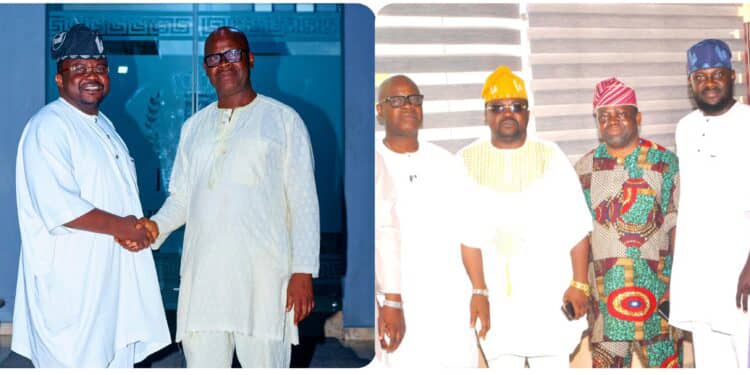
Ajadi Visits Ilaji Resort, Commends Sanusi’s Vision for Oyo’s Economic Growth
The leading gubernatorial aspirant in Oyo State under the Peoples Democratic Party (PDP), Olufemi Ajadi Oguntoyinbo, has lauded the transformative impact of private-sector investment on the state’s economy, following a courtesy visit to Ilaji Hotels and Sports Resort in Akanran, Ibadan.
Ajadi, who was warmly received on Sunday by the resort’s founder, Chief Dr Dotun Sanusi, described the facility as a symbol of what visionary leadership and indigenous enterprise can achieve in driving rural development, job creation, and tourism growth.
Speaking during the visit, Ajadi commended Sanusi’s commitment to Oyo State’s economic advancement, noting that Ilaji Resort stands as a model for sustainable development outside urban centres.
“What I have seen here today is not just a business venture, but a bold statement of belief in Oyo State’s potential,” Ajadi said. “Chief Sanusi has demonstrated that with vision, dedication, and strategic investment, we can transform our rural communities into thriving economic hubs. This aligns perfectly with my agenda to expand opportunities, empower our people, and sustain development across the state.”
[4/13, 6:34 PM] johnsonakinpelu: The PDP gubernatorial aspirant emphasised that his governorship ambition is rooted in supporting initiatives that promote local enterprise, tourism, and youth employment, adding that partnerships between government and private investors would be a priority if elected.
In his remarks, Sanusi, popularly known as Ilaji, expressed delight at hosting Ajadi and his entourage, describing the visit as encouraging for investors in the state.
“I am honoured to receive Ambassador Ajadi here at Ilaji Resort,” Sanusi said. “This project was born out of a desire to give back to society, create jobs for our youths, and showcase the rich cultural and tourism potential of Oyo State. When leaders recognise and support such efforts, it strengthens our resolve to do more.”
Sanusi further stressed the importance of continuity in governance and policies that encourage investment, noting that consistent support from government actors is crucial for long-term economic growth.
The visit also attracted notable political stakeholders, including the former Ona-Ara Local Government Chairman, Hon. Taiwo Oke, Hon. Bass Oloko, and Ajadi’s personal assistant, Kilamuwaye Badmus, among others.
Observers at the event described the meeting as a convergence of political leadership and entrepreneurial vision, highlighting the growing importance of collaboration in addressing developmental challenges in Oyo State.
Analysts see Ajadi’s visit to Ilaji Resort as part of his broader engagement with key stakeholders across sectors, as he continues to build momentum ahead of the 2027 governorship race.

FOPCHEN Calls for Dialogue as Court Fixes May 28 for Continuation
OTA, OGUN STATE — Proceedings in a widely followed legal case resumed on March 24, 2026, at the High Court of Ogun State, Ota Division, ending with a fresh adjournment as the court fixed May 28, 2026, for continuation.
During the session, legal representatives for all parties restated their positions and addressed preliminary matters, laying the groundwork for more substantive arguments at the next hearing. Observers noted that the case continues to attract significant public attention due to its perceived implications for law, culture, and societal values.
The Foundation for the Protection of Cultural Heritage in Nigeria (FOPCHEN) used the occasion to reiterate its call for constructive national dialogue. The group emphasized that while the judicial process must be respected, broader societal engagement remains essential.
According to the organization, issues relating to values, responsibility, and cultural identity should not be confined solely to courtroom deliberations but should involve active participation from various sectors of society.
Legal analysts present at the proceedings described the matter as one with far-reaching implications, noting that arguments advanced in court could shape future interpretations surrounding sensitive cultural and moral questions.
The presiding judge subsequently adjourned the case to May 28, granting all parties time to refine their submissions and respond to issues raised during the hearing.
As anticipation builds ahead of the next court date, Nigerians across different sectors continue to monitor developments closely, keen to see how the judiciary navigates the delicate balance between constitutional rights and cultural expectations.
Uncategorized
CRG: Politicians Must Stop Witch-Hunting, Focus on Nation Building — Says NYSC Cleared Deputy Speaker Since 2023
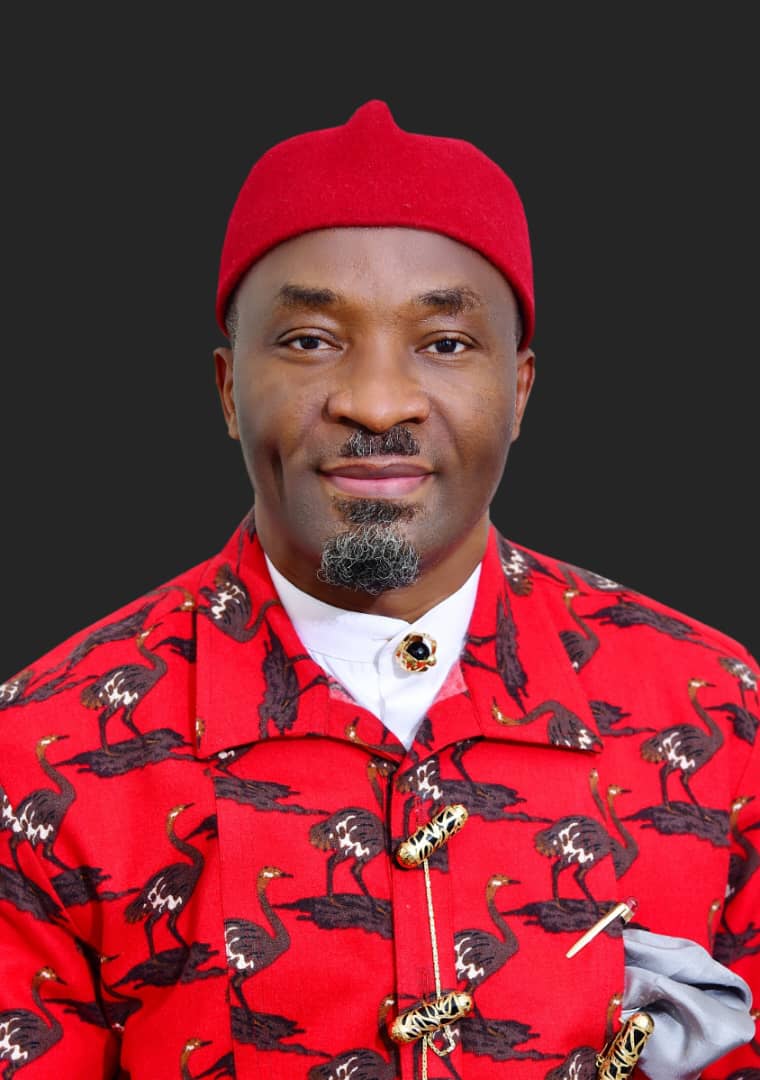
CRG: Politicians Must Stop Witch-Hunting, Focus on Nation Building — Says NYSC Cleared Deputy Speaker Since 2023
By: Boye Ola
The Centre for Responsible Governance (CRG) has called on political actors and interest groups to desist from what it described as needless witch-hunting of the Deputy Speaker of the House of Representatives, Benjamin Okezie Kalu, following renewed controversies surrounding his National Youth Service Corps records.
The organisation noted that the clarification by the National Youth Service Corps (NYSC) regarding the matter is not a recent development, as a formal verification letter had already been issued as far back as May 23, 2023.
The letter, referenced NYSC/CCD/VER/10/5.1/VOL1/02, had already addressed and cleared the questions surrounding the Deputy Speaker’s NYSC records.
Reacting to the renewed debate, the spokesman of the Centre,
Obande George, said it was troubling that issues which had already been clarified by a competent national institution were being resurrected for political purposes.
According to him, the time has come for political actors to move away from destructive engagements and concentrate on building the nation.
“It is important to note that the NYSC had already issued a verification letter dated May 23, 2023 addressing the matter.
Reopening issues that have already been clarified by a competent authority suggests that some individuals are more interested in political witch-hunting than in national progress,” George said.
The CRG stressed that democracy thrives when institutions are respected and their determinations are accepted in good faith rather than constantly questioned for political advantage.

George also commended the Deputy Speaker for demonstrating maturity and composure throughout the controversy, despite what he described as sustained provocations.
“Honourable Benjamin Kalu has shown remarkable calm and maturity in the face of intense public scrutiny and political provocation.
Instead of engaging in unnecessary public confrontation, he allowed institutions to speak through their records.”
The Centre warned that Nigeria’s political culture must evolve beyond constant character attacks and sensational allegations, which often distract public officials from their responsibilities.
According to the organisation, the country’s development requires constructive engagement among political actors rather than continuous attempts to discredit opponents.
“Nigeria cannot move forward if political energy is constantly spent on digging up allegations and amplifying rumours. Our leaders and political actors must redirect their focus to governance, policy and nation building.”
CRG therefore urged Nigerians to rely on verified information from credible institutions and avoid spreading speculative claims that could damage reputations or destabilise public discourse.
The organisation reiterated that respect for due process and institutional integrity remains essential for strengthening Nigeria’s democracy.

@The Centre for Responsible Governance, Email: [email protected], Instagram: crgngo6, Twitter: crgng06, Threads: crgngo6


- African Development Bank, The European Stability Mechanism (ESM) sign Memorandum of Understanding to enhance cooperation April 16, 2026
- Seeing the Unseen – How Canon is Protecting East Africa’s Coral Reefs April 16, 2026
- Sintana Listing Signals New Era for Local Ownership in Namibia’s Oil and Gas Sector April 16, 2026
- The crisis in the Middle East could cost Africa 0.2 percent in economic growth in 2026 April 16, 2026
- Namibia International Energy Conference (NIEC) 2026: Namibia Fast-Tracks Oil Law Reform as President Nandi-Ndaitwah Pushes Amendment Bill Ahead of First Oil April 16, 2026
- Africa’s Energy Wealth: Why Good Governance Must Power a Just Transition (By Sola Adebawo) April 16, 2026
- Emirates and Wesgro sign Memorandum of Understanding (MoU) to Stimulate Inbound Tourism to the Western Cape April 16, 2026
- Banco Sol’s Angola Oil & Gas (AOG) 2026 Sponsorship Affirms Drive to Finance Angolan Service Companies April 16, 2026
- Uganda Development Corporation (UDC) to take 82% of Trade ministry budget April 16, 2026
- Merck Foundation marks ‘World Art Day’ through their Film, Song, Media and Fashion Awards 2026 in partnership with Africa’s First Ladies to raise awareness about social & health issues April 15, 2026
- African Development Bank, The European Stability Mechanism (ESM) sign Memorandum of Understanding to enhance cooperation April 16, 2026
- Seeing the Unseen – How Canon is Protecting East Africa’s Coral Reefs April 16, 2026
- Sintana Listing Signals New Era for Local Ownership in Namibia’s Oil and Gas Sector April 16, 2026
- The crisis in the Middle East could cost Africa 0.2 percent in economic growth in 2026 April 16, 2026
- Namibia International Energy Conference (NIEC) 2026: Namibia Fast-Tracks Oil Law Reform as President Nandi-Ndaitwah Pushes Amendment Bill Ahead of First Oil April 16, 2026
- Africa’s Energy Wealth: Why Good Governance Must Power a Just Transition (By Sola Adebawo) April 16, 2026
- Emirates and Wesgro sign Memorandum of Understanding (MoU) to Stimulate Inbound Tourism to the Western Cape April 16, 2026
-

 news4 months ago
WHO REALLY OWNS MONIEPOINT? The $290 Million Deal That Sold Nigeria’s Top Fintech to Foreign Interests
-

 celebrity radar - gossips3 months ago
Dr. Chris Okafor Returns with Power and Fire of the Spirit -Mounts Grace Nation Altar with Fresh Anointing and Restoration Grace on February 1, 2026
-

 celebrity radar - gossips6 months ago
End of an Era: Nigeria Mourns Evangelist Dr. Uma Ukpai, 80
-

 celebrity radar - gossips4 months ago
Prophet Kingsley Aitafo Releases 2026 Prophecy: ‘Nigeria Will Rise, but the World Must Prepare for Turbulence’