
society
From Dumbbells to DMs: Nigerian Gyms Evolve into Social Hotspots


The Gym Love Triangle: Fitness, Fashion, and Flirtation in Lagos
In the age of fitness influencers, athleisure fashion, and Instagram-worthy workouts, Nigeria’s gym culture is booming. But beneath the sculpted abs and protein shakes lies a more complicated narrative: the gym as a new social playground—and sometimes, a romantic battleground.
From Ikeja to Festac and down to the bustling gyms in Ajah, what was once a space solely for sweat and stamina has evolved into something of a social experiment.
“People are using gyms to hook up,” says Folarin Adekoya, a regular gym-goer in Ikeja. “Some women come in wearing provocative outfits, and it’s not just distracting—it raises questions about their intentions.”
While the body goals are still a priority for many, others are raising eyebrows—and smartphones—as selfies, flirtation, and full-blown relationships begin to rival reps and routines.
“I Came to Lift, Not to Love”
Jason Onwuka, who trains regularly in Festac, says he’s seen it all.
“You have people who are here more for the vibe than the workouts. They spend more time talking and laughing than lifting weights,” he told the News Agency of Nigeria (NAN).
He admits, however, that as society grows more individualistic, gyms have emerged as safe, neutral grounds for forming new connections.
“People are lonely. The gym is now a space to find friends, romance, and a sense of belonging,” he said. “But at the end of the day, it’s on you to stay focused.”
“Indecent Dressing Could Get Girls Banned” – Teddy A Warns
The debate recently went viral when Teddy A, a former Big Brother Naija star, posted a video lamenting what he called “indecent dressing at the gym.”
“We don’t want them to start banning girls from gyms because of indecent dressing,” he said in a video that triggered a flurry of reactions online.
While some praised his candour, others blasted his remarks as misogynistic and controlling, igniting fresh debates over dress codes, freedom of expression, and the sexual politics of the gym floor.
Fitness Centre Managers Respond
A gym manager in Ajah, who requested anonymity, told NAN that they’ve had to lay down the law to maintain order and respect.
“We’ve introduced dress guidelines and behaviour protocols. Still, people come to mingle, and as long as no one’s workout is disrupted, we don’t interfere,” he said.
He admitted that while some gym-goers blur the lines, many—especially professional women—come solely for fitness.
“They wear functional gear. Not everyone’s here for attention,” he added.
A Culture in Transition
As Nigeria’s middle class expands and wellness trends grow, gyms are no longer just places to burn calories—they’re becoming microcosms of urban life, where health, identity, and social dynamics all intersect.
But the question remains: Are gyms still sacred spaces for self-improvement—or just another scene for subtle seduction?
For now, the battle between body goals and “boo goals” continues to play out between the dumbbells and the dance bikes, one rep—and one DM—at a time.




society
How Tinubu’s Government Is Suffering For Ignoring Primate Ayodele’s Early Prophecies On Insecurity
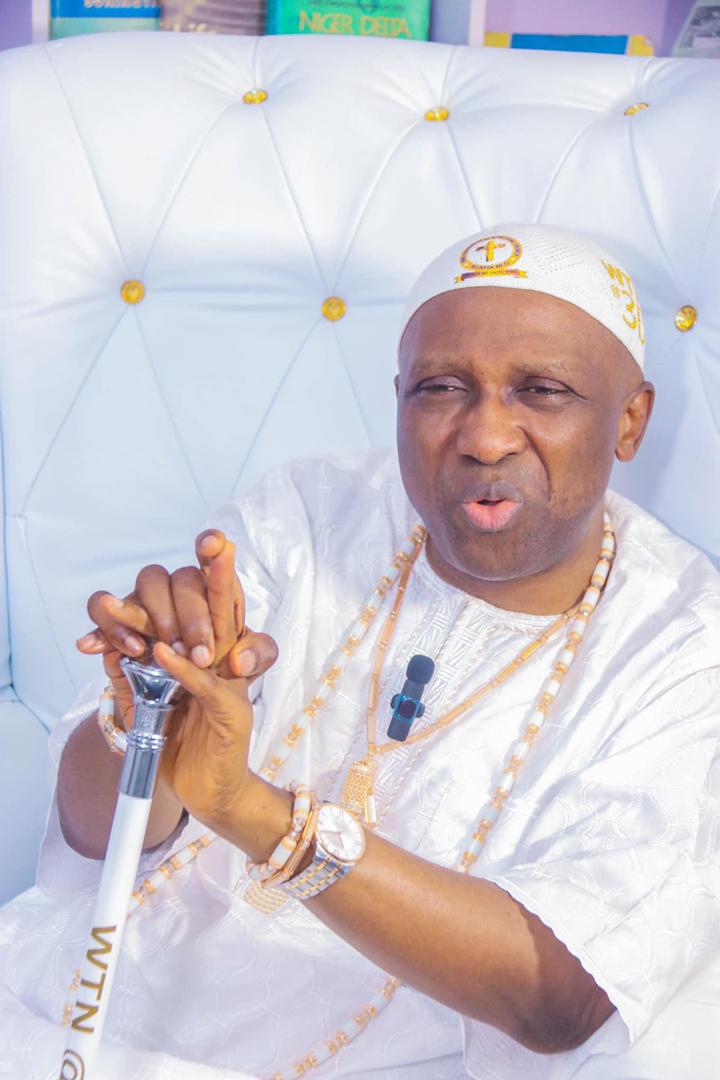
*How Tinubu’s Government Is Suffering For Ignoring Primate Ayodele’s Early Prophecies On Insecurity
After swearing-in on May 29, 2023, President Bola Ahmed Tinubu received goodwill messages from renowned men of God, with many prophesying that his administration would be better, especially in terms of security.
Many of these messages were based on the earlier promise of the All Progressive Congress that the Vice President, Kashim Shettima, would tackle insecurity adequately for the country.
However, in the midst of these praises and goodwill messages, renowned prophet, Primate Elijah Ayodele, who is known for always revealing the future of any new administration, spoke in a prophetic message that went viral, that insecurity will be used as a great tool against Tinubu’s administration.
The prophet had been talking about another APC government since 2022, noting that Nigerians will face several economic hardships, and he was detested by the ruling party and its supporters because of this. They saw him as an opposition party when they were supposed to listen to his prophetic warnings. However, it happened; the major indices of the economy are energy and currency. The exchange rate and price of petrol have never been so much like it has been for the past three years now.
The prophet warned repeatedly that insecurity and the economy would be the major issues President Tinubu would face in his administration, but did they listen? Absolutely not, because if they did, some of the issues being faced in the country would have disappeared.
Beyond his statement before the election, Primate Ayodele continued to warn the government against insecurity, even as far as warning against an impending coup. The prophet had revealed that some powerful Nigerians are angry with the president and have planned to remove him unconstitutionally. Of course, they never believed this till it happened. If not for the prophetic security alert issued by the prophet, the president may have been removed when the coup came to light.
These were his warnings regarding the coup:
“There will be an attempt to unseat Tinubu unconstitutionally; the NSA, DSS, and Chief of Army Staff must be careful about this. There are some gangs planning between November to January to unseat him.”
https://tribuneonlineng.com/some-powerful-nigerians-plotting-to-remove-tinubu-through-coup-primate-ayodele/
Thankfully, they were arrested, and some of them have been detained.
More recently, there were attacks on some states on Easter Sunday, leading to the death of some Christians. This happened as a result of obstinacy on the part of security operatives because just days before it, Primate Ayodele specifically warned that some states would be attacked from Easter Sunday, and it did happen, with security operatives having nothing to do to stop the incident.
These were Primate Ayodele’s warnings.
“Our security operatives must watch Easter Sunday well because plans have been concluded to carry out attacks in seven states starting from that day.
“The states to watch out for include Kogi, Kwara, Ondo, Ogun, Nasarawa, Kebbi, and Kaduna.
“The security operatives must be extra vigilant in these states starting from Easter Sunday.”
https://theeagleonline.com.ng/easter-sunday-primate-ayodele-warns-seven-states-of-terrorist-attacks/
Yesterday, there was an internal memo released by the Nigerian Customs Service that Boko Haram are planning to attack some prisons and airports in the country.
This corroborated the prophetic warning of Primate Ayodele, which he shared some weeks ago, regarding some prisons, specifically mentioning Kuje prison.
These were his words:
“Break jail is imminent, Kuje prison or they send a bomb into Kuje prison, it’s a midnight work…..”
Meanwhile, Primate Ayodele had warned that there are people sponsoring insecurity in President Tinubu’s government. He also urged him to name some of them in order to curb it, but this has yet to be done.
President Tinubu’s government would have been one of the best, but insecurity has tarnished it greatly, and the country is gradually returning to the days of daily killings; even Nigerian high-ranking soldiers are not spared. This insecurity has given the administration a bad record internationally, with the US naming Nigeria as a Country of Particular Concern (CPC).
If the president had listened, Nigerians, and even the government, wouldn’t have suffered this much. However, it’s not too late for them to turn a new leaf.

Nigerian Navy Deepens Ties With Ogun Community
In a deliberate effort to strengthen civil–military relations, the Nigerian Navy School of Music on Wednesday hosted youths from the Lemode Community Development Committee at its premises, in an engagement designed to foster trust and cooperation between the military and the civilian population.
The initiative, aligned with the civil–military cooperation drive under the leadership of the Chief of the Naval Staff, Vice Admiral Idi Abbas, reflects a growing recognition within the armed forces that national security is reinforced not only through operations but also through meaningful connections with civilians, particularly the youth.
The visiting youths from Ifo Local Government Area of Ogun State were received with warmth and professionalism, as naval personnel ensured seamless coordination, adherence to security protocols, and a welcoming atmosphere.
Central to the engagement was a security orientation session aimed at deepening mutual understanding and encouraging intelligence sharing. This was complemented by cultural and social interactions that helped demystify military life, presenting naval personnel as partners in community development. The exercise underscored the Navy’s commitment to openness and sustained engagement with host communities.
Addressing participants, the Commanding Officer, Lieutenant Commander Adelaja Sanni, described the visit as a strategic platform for strengthening ties between the Navy and the civilian population. He emphasised that such initiatives help to build trust, promote unity, and foster a shared sense of responsibility for national development.
“The safety of our collective space relies on the information we share. Security awareness means making the youth our primary partners in intelligence. You understand your environment better than anyone, and we rely on your vigilance to keep our communities safe,” he said.
He commended the discipline and conduct of the participants, noting that while activities of the day may pass, the lessons on cooperation and security consciousness would endure.
Sanni also acknowledged the role of Captain Abiodun Folorunsho, Director of Naval Information, describing him as the key link that made the engagement possible. According to him, Folorunsho’s consistent drive for open communication, and strategic public engagement has been central to bridging the gap.
A highlight of the visit was a novelty football match between personnel of the Nigerian Navy School of Music and the visiting official football team, popularly known as Met Boys. The encounter was lively and competitive, ending 2–1 in favour of the community side. OSBD Hunsa MM scored for the Navy, while Abubakar Onifade netted a brace to secure victory for the visitors in a game defined by skill, energy, and sportsmanship. Officials, however, stressed that the significance of the event extended far beyond the scoreline.
Speaking on behalf of the visiting community, Lateef Owodunni expressed appreciation for the warm reception, noting that the initiative had significantly bridged the gap between the military and the youth.
“The security orientation was enlightening. We now understand that intelligence sharing is not about targeting our own people, but about protecting our communities from criminal elements. We are taking this message of vigilance and cooperation back home,” he said.
Owodunni commended the Nigerian Navy, led by Vice Admiral Idi Abbas, particularly Captain Folorunsho, for promoting a people-centred approach to security communication. He described him as instrumental in fostering inclusive engagement within the Nigerian Navy.
He also applauded the leadership of the institution under Lieutenant Commander Sanni, noting that the Commanding Officer demonstrated that lasting peace and mutual understanding are achievable through consultation, dialogue, and engagement rather than confrontation or exclusion.
The engagement was received by other top officers of the Nigerian Navy School of Music, including the Chief Instructor, Lieutenant Onaolapo Onabolu, senior departmental heads, and other key personnel of the establishment.
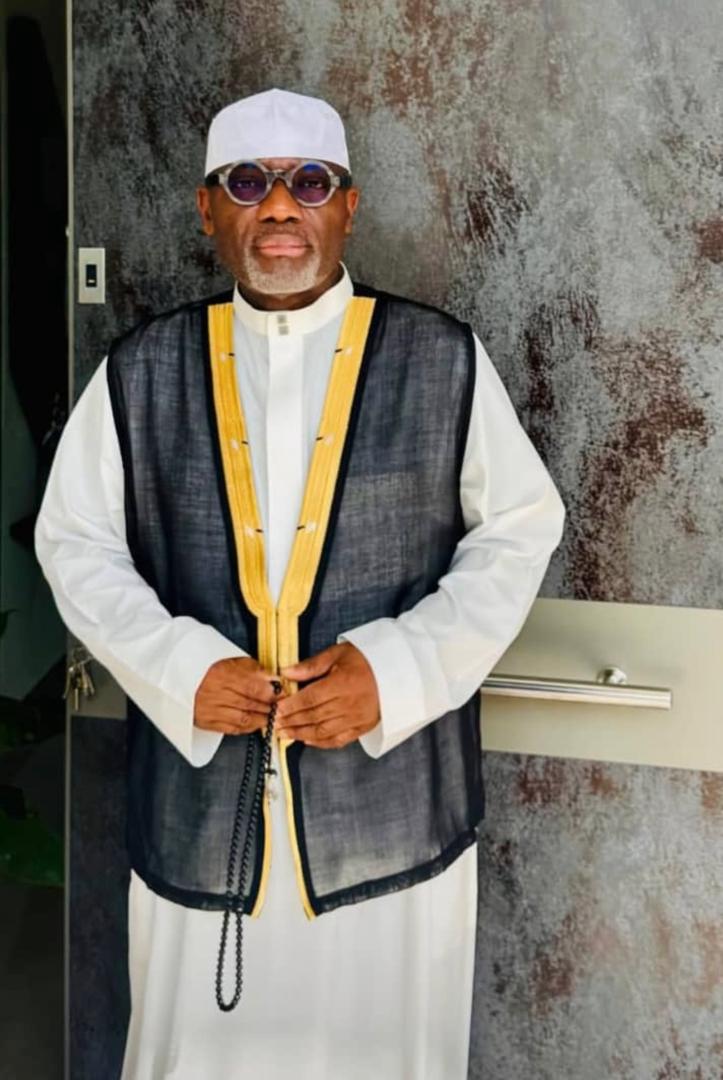
Ijebu Muslim Professionals advocate Okubadejo for Deputy Governorship Candidate for 2027
Ijebu Muslim professionals have thrown their weight behind Hon. Dapo Okubadejo, advocating him for the deputy governorship candidate position of the All Progressives Congress (APC) ahead of the 2027 general elections in Ogun State.
The endorsement was made public by the President of the association, Sherik Abdulazeez Malik Odumosun, who addressed members of the media on the group’s position and reasons for backing Okubadejo.

According to Odumosun, Hon. Okubadejo has demonstrated exceptional leadership capacity and commitment to grassroots development through his role as a commissioner, particularly in the area of infrastructure development across Ijebu land.
He noted that several road projects executed under Okubadejo’s influence have significantly improved connectivity and boosted economic activities within the region, earning him widespread commendation from residents.
Odumosun further highlighted Okubadejo’s contributions to youth empowerment, stressing that his initiatives in skills acquisition, ICT training, financial support, and job creation have positively impacted many young people in the area.
On security, the association praised Okubadejo for strengthening safety measures by supporting security agencies with operational vehicles, thereby enhancing their capacity to tackle emerging security challenges in Ijebu communities.
The group also acknowledged his role in facilitating access to government opportunities at the federal, state, and local government levels, describing him as a bridge between the people and the government.
He described the commissioner as one of the most accessible public office holders, noting that his leadership style has translated into tangible and positive achievements across Ogun State.
While urging party stakeholders and the general public to support the call, Odumosun emphasized that pairing Okubadejo with Senator Solomon Adeola (Yayi) as governorship candidate would ensure balanced representation and sustained development in Ogun State ahead of the 2027 elections.


- Small Enterprise Development and Finance Agency (SEDFA) backs Africa’s next generation of digital businesses at Converge Africa 2026 April 17, 2026
- Enlit Africa 2026: The business of power and the value of compounding impact April 17, 2026
- African Development Bank, The European Stability Mechanism (ESM) sign Memorandum of Understanding to enhance cooperation April 16, 2026
- Seeing the Unseen – How Canon is Protecting East Africa’s Coral Reefs April 16, 2026
- Sintana Listing Signals New Era for Local Ownership in Namibia’s Oil and Gas Sector April 16, 2026
- The crisis in the Middle East could cost Africa 0.2 percent in economic growth in 2026 April 16, 2026
- Namibia International Energy Conference (NIEC) 2026: Namibia Fast-Tracks Oil Law Reform as President Nandi-Ndaitwah Pushes Amendment Bill Ahead of First Oil April 16, 2026
- Africa’s Energy Wealth: Why Good Governance Must Power a Just Transition (By Sola Adebawo) April 16, 2026
- Emirates and Wesgro sign Memorandum of Understanding (MoU) to Stimulate Inbound Tourism to the Western Cape April 16, 2026
- Banco Sol’s Angola Oil & Gas (AOG) 2026 Sponsorship Affirms Drive to Finance Angolan Service Companies April 16, 2026
- Small Enterprise Development and Finance Agency (SEDFA) backs Africa’s next generation of digital businesses at Converge Africa 2026 April 17, 2026
- Enlit Africa 2026: The business of power and the value of compounding impact April 17, 2026
- African Development Bank, The European Stability Mechanism (ESM) sign Memorandum of Understanding to enhance cooperation April 16, 2026
- Seeing the Unseen – How Canon is Protecting East Africa’s Coral Reefs April 16, 2026
- Sintana Listing Signals New Era for Local Ownership in Namibia’s Oil and Gas Sector April 16, 2026
- The crisis in the Middle East could cost Africa 0.2 percent in economic growth in 2026 April 16, 2026
- Namibia International Energy Conference (NIEC) 2026: Namibia Fast-Tracks Oil Law Reform as President Nandi-Ndaitwah Pushes Amendment Bill Ahead of First Oil April 16, 2026
-

 news4 months ago
WHO REALLY OWNS MONIEPOINT? The $290 Million Deal That Sold Nigeria’s Top Fintech to Foreign Interests
-

 celebrity radar - gossips3 months ago
Dr. Chris Okafor Returns with Power and Fire of the Spirit -Mounts Grace Nation Altar with Fresh Anointing and Restoration Grace on February 1, 2026
-

 celebrity radar - gossips4 months ago
Prophet Kingsley Aitafo Releases 2026 Prophecy: ‘Nigeria Will Rise, but the World Must Prepare for Turbulence’
-

 celebrity radar - gossips6 months ago
End of an Era: Nigeria Mourns Evangelist Dr. Uma Ukpai, 80