
society
There Was a Country: Chinua Achebe’s Testament of Nigeria’s Lost Promise


There Was a Country: Chinua Achebe’s Testament of Nigeria’s Lost Promise



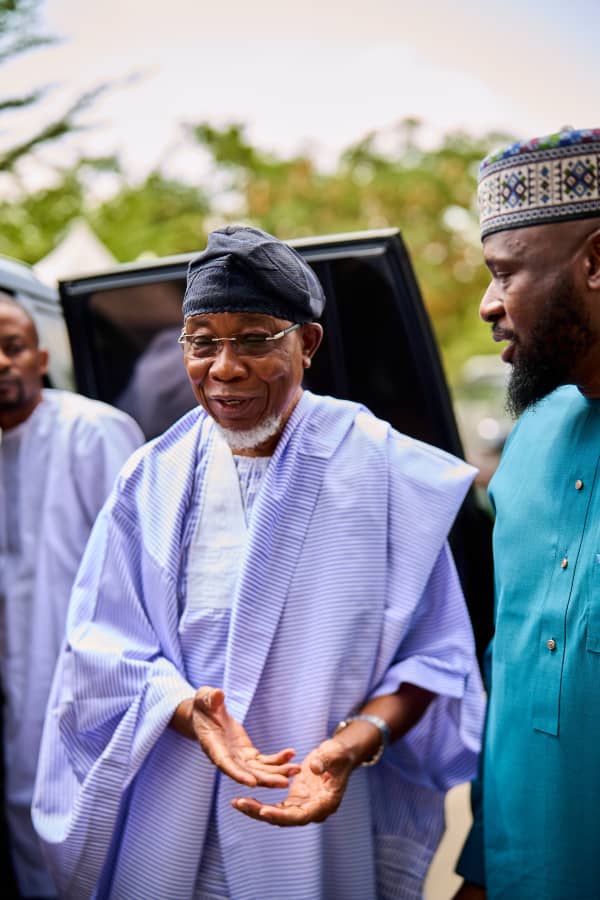
ADC Convention: We Are Unstoppable; “We Dare To Stand Up,” – Rauf Aregbesola
By Shaba Gbenga
In Abuja, under the charged atmosphere of a convention that felt more like a declaration of intent than routine political gathering, Rauf Aregbesola stood before party faithful and delivered a message anchored on inevitability and resistance, insisting that just as no force can halt the rising of the sun, the African Democratic Congress cannot be stopped. Speaking at the party’s 8th National Convention, he cast the ADC not merely as an opposition platform but as a movement forged in defiance, determined to confront what he described as a system defined by incompetence and drift.
He painted a stark portrait of the nation’s economy, reducing official narratives to what he implied were illusions detached from the lived reality of Nigerians. According to him, the figures speak more honestly than any government statement ever could. A currency that has fallen from about seven hundred naira to the dollar to roughly one thousand four hundred, he argued, represents not just depreciation but a complete erosion of economic stability in a country heavily dependent on imports. The ripple effects, he noted, are visible everywhere, from the soaring cost of fuel to the daily struggle of workers who now find the simple act of going to work financially burdensome. In his telling, an economy once strained is now suffocating, and the promise of renewed hope has become a refrain repeated without substance, an echo stretched across years without delivery.
Yet beyond the numbers, he directed his sharpest criticism at what he described as a troubling absence of empathy at the highest levels of leadership. He recalled moments of national grief where, in his view, presence was replaced with distance and compassion substituted with protocol. Communities struck by violence, he suggested, were left to grapple not only with loss but with the symbolism of a leadership that appeared removed from their pain. For him, these were not isolated incidents but defining examples of a deeper disconnect between the governed and those in power, a gap he warned could no longer be ignored.
He then turned to the controversy surrounding the legitimacy of the convention itself, methodically defending the processes that led to the current leadership structure within the party. He traced decisions, meetings, and resolutions, insisting that due process had been followed and acknowledged at every stage. His frustration was reserved for the electoral body, which he accused of abandoning neutrality and failing in its responsibility by refusing to monitor the convention despite formal notification. In his view, such actions were not mere administrative lapses but deliberate steps in a broader design to narrow Nigeria’s political space ahead of the next general election.
From there, his argument widened into a critique of what he described as a dangerous normalization of political manipulation. He questioned a system where, in his words, wrongdoing is increasingly shielded by law and strategy, warning that when illegality becomes a tool rather than an offence, democracy itself begins to lose meaning. Drawing from the legacy of Chief Obafemi Awolowo, he framed opposition not as an inconvenience to power but as its necessary conscience, a force meant to challenge excess and preserve balance. Without it, he cautioned, the country risks sliding quietly into a future where elections become formalities and leadership transitions resemble coronations rather than choices.
Still, his message was not without forward motion. He spoke of a party reorganizing itself from the ground up, refining its policies, strengthening its internal structures, and preparing for the contests ahead. Losses in recent elections, he admitted, had exposed weaknesses, but they had also provided lessons the party intends to build on. What emerged from his address was not a claim of perfection but a declaration of readiness, a belief that momentum is shifting and that the groundwork for a different political outcome is being laid.
As he closed, the rhythm of his speech returned to its central theme, one of courage and inevitability. The struggle, he implied, is not merely about power but about principle, not just about winning elections but about restoring direction. In that conviction, he urged those still watching from the sidelines to make a choice, warning that moments demanding clarity leave little room for neutrality. For him and for the movement he represents, standing up is no longer optional, and in that act of defiance, he placed his faith in victory, not just for a party, but for a nation he believes can still be reclaimed.
society
Governor Dauda Lawal Receives Nigerian Air Force Delegation in Gusau to Strengthen Security, Combat Terrorism
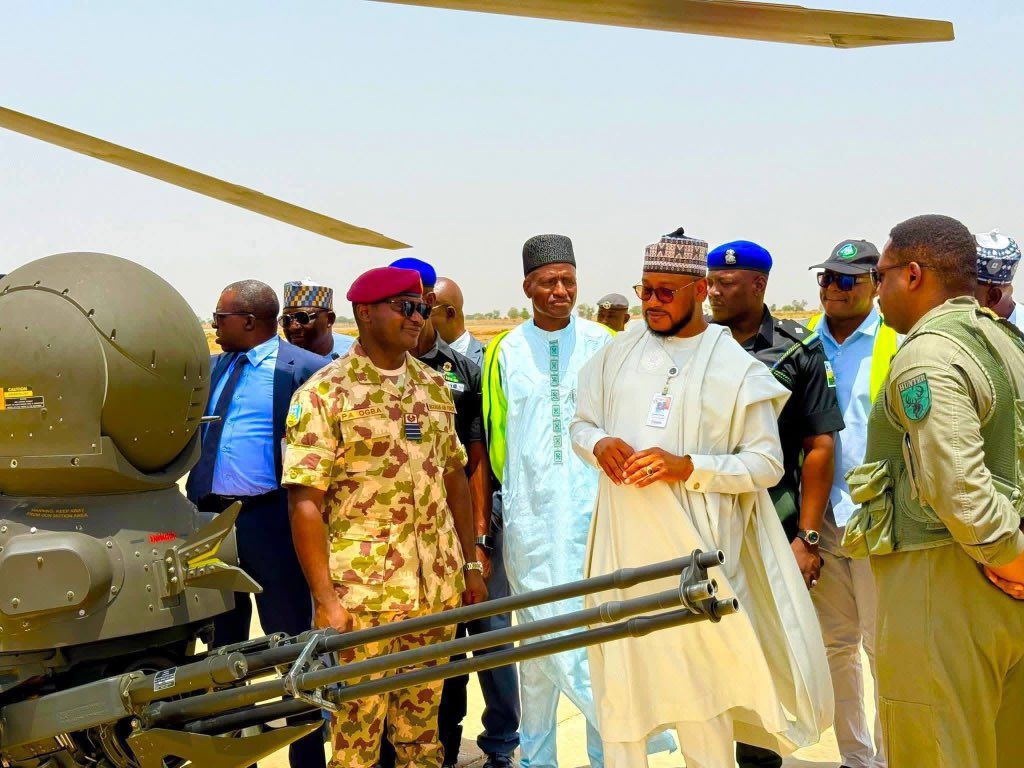
Governor Dauda Lawal Receives Nigerian Air Force Delegation in Gusau to Strengthen Security, Combat Terrorism
Governor of Zamfara State, Dauda Lawal P.hD, received a high-level delegation from the Nigerian Air Force during a strategic visit aimed at strengthening ongoing efforts to combat insecurity across the state.
The visit featured a presentation and inspection of key military air assets, including a combat-equipped helicopter designed for rapid response and real-time operations.
The Governor, alongside top government officials and security chiefs, was briefed on the aircraft’s capabilities, operational features, and its role in tackling banditry and other security challenges.
During the session, Air Force personnel demonstrated key features of the aircraft, including weapon systems and surveillance technology, highlighting its effectiveness in reconnaissance and combat missions.
Governor Lawal expressed strong interest, inspecting the equipment and asking questions about deployment and coordination with ground forces.
He commended the Federal Government and Air Force leadership for their commitment to restoring peace in Zamfara and reaffirmed his administration’s dedication to supporting all security agencies through collaboration and strategic initiatives.
The visit marks a significant step toward enhancing aerial surveillance and rapid response capabilities in Zamfara, reflecting renewed progress in addressing insecurity in the state.


society
Kenya President H. E Williams Ruto Bestows National Peace Hero Honor on Nigerian Diplomat, Amb. Jonathan Ojadah
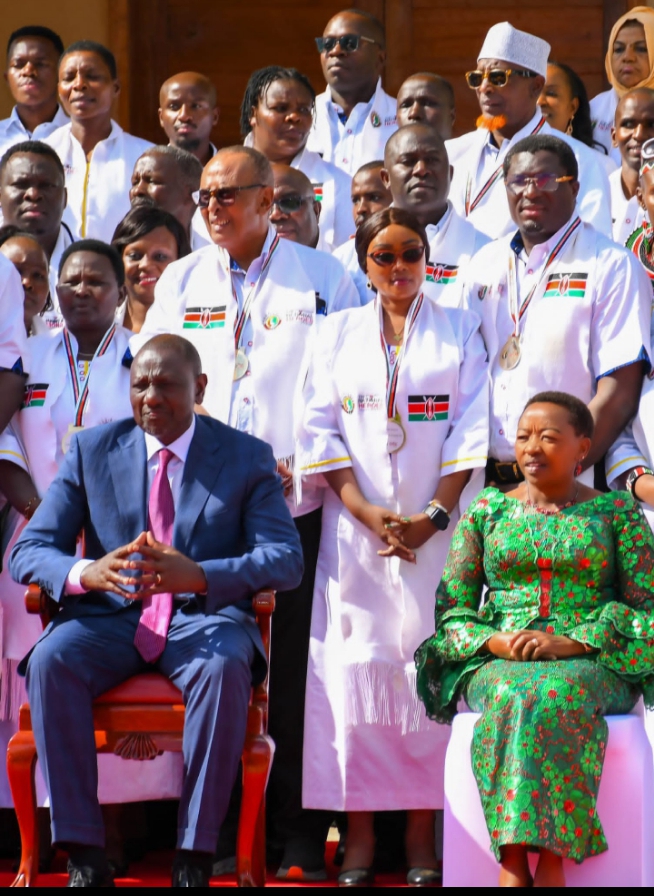
*Kenya President H. E Williams Ruto Bestows National Peace Hero Honor on Nigerian Diplomat, Amb. Jonathan Ojadah*
In a landmark diplomatic moment, Nigerian diplomat Ambassador Jonathan Ojadah has been honored with Kenya’s prestigious National Hero of Peace Medal, a testament to his outstanding contributions to peacebuilding and international cooperation across Africa.
The ceremony, held in Nairobi, witnessed a historic joint presentation of the Medal of Honor by President William Ruto of Kenya and President Bassirou Diomaye Faye of Senegal — symbolizing a pan-African acknowledgment of Ambassador Ojadah’s enduring efforts toward continental unity, conflict resolution, and diplomacy.
The high-profile event is already gaining traction across major television channels, newspapers, and social media platforms, marking a proud moment for both Nigeria and Africa at large.
The celebratory dinner was hosted by former Nairobi Governor, H.E. Mike Sonko, alongside other prominent figures including Bishop John CW and Dr Sophy Kirorei (Mama Sophie).
The dinner event reflected a night of elegance, cultural celebration, and unity, as leaders and supporters gather to celebrate a true icon of peace.
Ambassador Jonathan Ojadah, who holds the Grand Commander of Peace (GCOP) title, continues to inspire global peace initiatives and remains a beacon of hope for a harmonious Africa.
His Excellency, Amb. Dr. Marshall Jonathan Emmamuzo Daniel Ojadah is a Nigerian Diplomat, Businessman, humanitarian & Philanthropist.
A native of Aviarha, Isoko North LGA in Delta State, Nigeria., A distinguished personality in the realm of international trade and investment diplomacy With an expansive mastery in both bilateral and multilateral commerce, He is poised as a significant figure in global economic arenas.
Amb. Jonathan has worked with different diplomats in several high level dialogues including the EU, AU & UN in countries such as Germany, United Kingdom, Canada, Lithuania , DR Congo, Ethiopia, Rwanda, Zambia, Tanzania, Morocco, Kenya, Cameroon, Ghana and Uganda .
He is actively involved in various initiatives promoting international cooperation and diplomacy aimed at promoting sustainable peace and prosperity globally. Some of his notable achievements and initiatives include:
– Advocating for the rights of marginalized communities and promoting social justice.
– Consolidating Peaceful co-existence of societies in Africa
– Promoting sustainable development and climate change mitigation efforts
– Facilitating cultural exchange programs and educational initiatives between countries
– Building partnerships with other organizations and stakeholders to promote peace and prosperity globally.
He has participated in various UN events, conferences and Peace Support Initiatives.
Beyond his professional pursuits, Diplomat Jonathan’s profound philanthropy has been a beacon of hope for many. His dedication to humanitarian cause is further exemplified by the establishment of the Arise O Nigeria Empowerment Initiative, A non-governmental organization (NGO) , launched with the support of UN Women Executives in 2016, a testament to his commitment to empowering vulnerable groups, advocating for the marginalized, tirelessly working towards the attainment of the United Nations Sustainable Development Goals (SDG) in Nigeria.
His Excellency, Amb. Dr.Jonathan Ojadah is presently holding an elective position as the UNIPGC Global President and Chairman of the Supreme Council.
Amb. Jonathan Ojadah’s work with UNIPGC has helped to promote the organization’s goals and objectives, and has contributed to its reputation as a respected and influential international organization.
He has served as the Diplomatic Head Of Mission for Africa and Permanent Representative to the United Nations Hqtrs, New York, USA for the International Royal Diplomatic Club of the United Nations, Lithuania EU.
H. E Amb Dr. Jonathan’s mantle is adorned with over 15 Leadership, merit, and achievers awards, some of which include:
2024 U.S. President Joe Biden’s Lifetime Presidential Achievement Award. which attracted congratulatory messages from top dignitaries worldwide, including Her Excellency, Chief Dr. Jewel Howard Taylor, former Vice President of Liberia; Congresswoman Sheila Jackson Lee of the 18th Congressional District of Texas, USA; Hon. Kevin Uguru, Member of the German Parliament; and others.
United Nations Rescue Marshall , FIN-FORBES Best of Africa Outstanding Leadership Personality in Sustainable Peace Building, Diplomacy & Governance Award 2023 nominated by the Foreign Investment Network (FIN) UK. A recognition of his relentless efforts, unwavering dedication, and steadfast commitment to humanitarian services.
This prestigious FIN-FORBES Award recognition is a culmination of his consistent and impactful Sustainable Development projects that have significantly improved community and organizational effectiveness. These initiatives have also amplified the capabilities of his international team, leading to remarkable accomplishments and thus, meriting him the distinguished FIN-FORBES Award of Excellence, which he was honored with in London, UK, on July 19th, 2023.
In a further commendation of his service. H.E. Amb Dr. Jonathan Ojadah, was bestowed with the Euroknowledge Leadership Award at the British Parliament, House Of Lords. London UK on the 24th Of Nov. 2023.
Honorary Doctorate Causa from ISMT University in the Benin Republic, recognizing his scholarly contributions and societal impact.
ICON of Societal Development award by the Yoruba Youth Assembly, symbolizing his influence and positive change across various communities.
Ambassador Dr. Jonathan Ojadah’s accolades continues with another prestigious ICON of Societal Transformation award, bestowed upon him by the Northern Youths Peace Ambassadors of Nigeria. This honor celebrates his efforts in fostering unity, development, and peace among the diverse communities across Nigeria
Moreover, his work and influence extend beyond national boundaries, earning him the prestigious African Leadership Award. This award highlights his exemplary leadership qualities and his significant contributions to the advancement of African communities through sustainable development and peace-building initiatives.
Amb. Jonathan is presently the Grand Patron of the SPARTAN EAGLES OF NIGERIA.
Ambassador Dr. Jonathan’s illustrious career and philanthropic endeavors have established him as a beacon of Inspiration and a catalvst for positive change. not just in Africa but on the global stage.
Ambassador Jonathan have partnered with organizations with established Offices across the Globe for Professional Consultancy Services in Business Development & Investment Promotion serving as a Reliable Trusted Global Investment & Financial Portfolio Advisor/ Consultancy Company.


- President receives Bishop of Port Victoria, reinforces State–Church collaboration on social priorities April 15, 2026
- World Bank Group’s International Finance Corporation (IFC) and Citi Sign Borrowing Facility to Expand Local Currency Financing in South Africa April 15, 2026
- Uganda: Manufacturers, traders ask gov’t to stay tax increases April 15, 2026
- Eritrea: Sports and educational week in Assab sub-zone April 15, 2026
- Cabo Verde Shapes Africa’s Health Future at High-Level World Health Organization (WHO) Regional Consultation April 15, 2026
- Critical Minerals Africa Group to Speak at Invest in African Energy Forum in Paris April 14, 2026
- Talentz MEDIA Announces Strategic Partnership with Ghanaian Artist Kwaku Cenima to Launch “Emotional Scene” April 14, 2026
- South African Local Government Association (SALGA) and The Global Trust Project announce municipal pilot under new three-year Memorandum of Understanding (MoU) April 14, 2026
- TotalEnergies Strikes New Oil Discovery Offshore Congo Amid National Drive Toward 500,000 barrels per day (BPD) April 14, 2026
- Africa Finance Corporation (AFC) Delivers Côte d’Ivoire’s First Project Finance Green Bond for Landmark Solar Plant April 14, 2026
- President receives Bishop of Port Victoria, reinforces State–Church collaboration on social priorities April 15, 2026
- World Bank Group’s International Finance Corporation (IFC) and Citi Sign Borrowing Facility to Expand Local Currency Financing in South Africa April 15, 2026
- Uganda: Manufacturers, traders ask gov’t to stay tax increases April 15, 2026
- Eritrea: Sports and educational week in Assab sub-zone April 15, 2026
- Cabo Verde Shapes Africa’s Health Future at High-Level World Health Organization (WHO) Regional Consultation April 15, 2026
- Critical Minerals Africa Group to Speak at Invest in African Energy Forum in Paris April 14, 2026
- Talentz MEDIA Announces Strategic Partnership with Ghanaian Artist Kwaku Cenima to Launch “Emotional Scene” April 14, 2026
-

 news4 months ago
WHO REALLY OWNS MONIEPOINT? The $290 Million Deal That Sold Nigeria’s Top Fintech to Foreign Interests
-

 celebrity radar - gossips3 months ago
Dr. Chris Okafor Returns with Power and Fire of the Spirit -Mounts Grace Nation Altar with Fresh Anointing and Restoration Grace on February 1, 2026
-

 celebrity radar - gossips4 months ago
Prophet Kingsley Aitafo Releases 2026 Prophecy: ‘Nigeria Will Rise, but the World Must Prepare for Turbulence’
-

 celebrity radar - gossips6 months ago
End of an Era: Nigeria Mourns Evangelist Dr. Uma Ukpai, 80