
society
BRIDGING DIVIDES, BUILDING UNITY: NIGERIAN ARMY’S INDIGENOUS LANGUAGE COURSE AS A PILLAR OF NATIONAL INTEGRATION

BRIDGING DIVIDES, BUILDING UNITY: NIGERIAN ARMY’S INDIGENOUS LANGUAGE COURSE AS A PILLAR OF NATIONAL INTEGRATION
BY
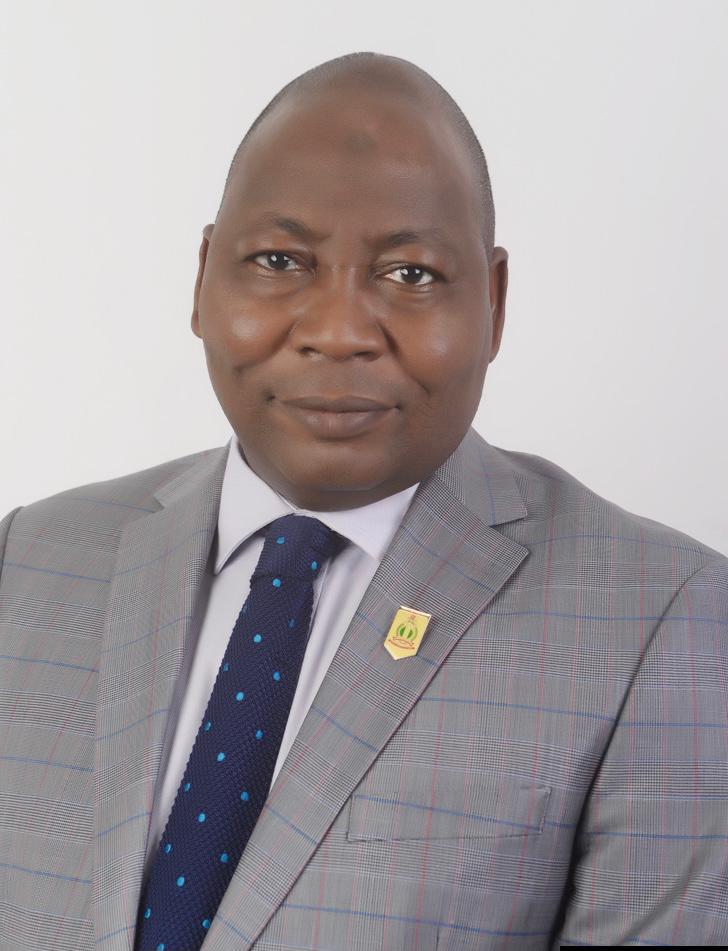
BRIGADIER GENERAL SANI KUKASHEKA USMAN (RTD) mni fnipr
“To have another language is to possess a second soul.”-Charlemagne
In a country as diverse and complex as Nigeria, language is more than just a medium of communication, it is a gateway to understanding, empathy and effective leadership. At a time when many are lamenting the widening ethnic, religious and cultural divides across the nation, the Nigerian Army has chosen a different path, one of unity through language and cultural integration.

The Nigerian Army Resource Centre (NARC), Abuja, marked yet another significant milestone on Friday, 9th May 2025, with the graduation of 150 officers and soldiers from across its various formations and units. These graduates of the Indigenous Languages Course 18/2025 represent the 18th group of personnel to complete this flagship initiative, which, since 2018, has equipped over 2,410 personnel that become proficient in two other languages other than their mother tongues in any of the 3 major Nigerian languages. Thus equipping them to serve not only as protectors of the nation, but also as bridges across its many divides and agents of national unity.

The course is the practical expression of the Nigerian Army Language Policy, which mandates that all personnel must learn at least two indigenous languages apart from their mother tongue. This is not a cosmetic requirement, but a strategic initiative of the Nigerian Army. In the multi-ethnic theatres of Nigeria Army’s counterinsurgency and internal security operations, whether in the Northeast, Northwest, South-South or other geo-political regions, managing community relations has compelled a proficiency in local languages as an important tool in operational effectiveness and mission success of the troops.

The programme is a brainchild of the forward-looking leadership of the Nigerian Army and the management of NARC, in partnership with Laclic Services Limited. It bears eloquent testimony to the evolving role of the military in ensuring law and order in the country. All thanks to this wonderful initiative, today’s soldier is not just a fighter, but also a negotiator, peacebuilder and communicator. Special commendation must go to Laclic Services Limited, the indigenous company that supplies well-trained instructors and high-quality teaching aids. The organisation’s dedication to linguistic excellence and cultural preservation has been central to the programme’s success.
Participants of the programme are immersed in both theoretical and practical learning. Classes include local culture, grammar, vocabulary, phonetics and conversational skills. The course curriculum also integrates photo stories, group work, presentations and rigorous written and oral assessments. One of the most impactful components is the practical field immersion, where trainees visit the nearby Mammy Market at Mambilla Barracks, interact with civilians in their chosen languages, and test their communication skills and proficiency in real-time. On graduation day, participants stage playlets, which are performed entirely in the new languages they’ve acquired. These dramatisations are more than ceremonial; they are symbolic of the bridge-building spirit the programme seeks to instil.

Across the world and here in Nigeria, there are countless examples of how language proficiency has changed the trajectory of military and humanitarian operations. In 2002–2003, during the United Nations Mission in Sierra Leone (UNAMSIL), Nigerian troops earned the admiration of local communities largely because some had taken time to learn Krio, the lingua franca. This linguistic empathy smoothed community engagements and de-escalated tensions. Similarly, in Liberia and Sudan, Nigerian peacekeepers’ knowledge of local languages often made the difference between suspicion and cooperation.
Contrast this with situations where language gaps exacerbate mistrust. During the early stages of the insurgency in Northeast Nigeria, numerous misunderstandings between troops and local communities were linked to poor communication. Civilians misinterpreted military movements and intentions, while troops, unable to decode local dialects or cultural nuances, struggled to build rapport. In several cases, critical intelligence from locals was lost in translation, if not missed altogether.

Outside the military, language differences have triggered or prolonged conflicts, particularly in multi-ethnic settings. A notable example is the 1994 Rwandan Genocide, where the inability to mediate between ethnic groups, compounded by poor communication, allowed propaganda and hate speech to go unchallenged. Even in advanced democracies, language barriers within immigrant or multi-ethnic communities continue to affect law enforcement, healthcare delivery and justice administration.
The Indigenous Languages Course demonstrates that language can be a powerful peacebuilding tool. It allows soldiers to interact with their colleagues, neighbours and host communities in their tongue, breaking down barriers, winning hearts and minds, and enabling more effective civil-military cooperation. It also enhances internal cohesion within the military, fostering mutual respect and unity across Nigeria’s ethnocultural spectrum.
This initiative is as much about national integration as it is about professional development. It empowers personnel to function better, not just on the battlefield, but in their everyday engagements with the very citizens they swore to defend. It reinforces the belief that to secure a nation, you must first understand it, and to understand it, you must speak its many tongues.
This programme undoubtedly stands as a model for other government agencies, institutions, and even private organisations, which can benefit from improved interethnic communication, stronger community engagement, and enhanced operational cohesion through indigenous language proficiency. If the military, an institution often associated with rigid hierarchy and combat discipline, can embrace linguistic diversity as a strength, then so can the rest of the country. We must move from mere tolerance to active appreciation of our differences. Language is where that journey begins.
As Nigeria continues to search for a unifying national identity, initiatives like the Indigenous Languages Course of the Nigerian Army offer a compelling blueprint. It reminds us that nation-building is not only the duty of politicians and intellectuals, but of every institution and indeed every citizen willing to take one more step towards understanding the other.
To further encourage participation, the Nigerian Army supports officers and soldiers who successfully graduate from the course with a monthly stipend. Additionally, to ensure continued proficiency and commitment, such personnel are tested annually, reinforcing both the seriousness of the initiative and its long-term impact. It is also important to highlight the annual online recertification examinations, which serve as a mechanism to ensure that participants continue to practice and retain the languages they have learned at the NARC. In addition, facilitators occasionally reach out to selected graduates at random, offering informal check-ins and gentle reminders to keep their linguistic skills active and relevant.
As the latest graduates take the stage at NARC, let us salute them, not just for their newfound language skills, but for becoming living symbols of Nigeria’s promise: that despite our differences, we can speak as one.
It is now time for all Nigerians, individuals, institutions, and governments at every level, to recognise, commend and emulate this remarkable initiative. Language should not divide us; it should connect us. Just as the Nigerian Army has shown leadership in bridging ethnic and cultural gaps through structured language education, so too should our schools, civil service, institutions and communities embrace multilingualism as a tool for national integration. Let this be a national movement that values every Nigerian tongue, culture, and effort to understand the other. By learning one another’s language, we take the first step toward learning one another’s pain, dreams, fears, and hopes.
Only then can we move beyond mere coexistence to truly live as one, bound not just by geography but by a shared commitment to peace, harmony, and mutual respect. Let us rise above our divisions and embrace the strength in our diversity, building a united Nigeria under God where every voice is heard, every culture is honoured, and every citizen belongs and is respected.
The writer, Brigadier General Sani Kukasheka Usman (rtd), mni fnipr, is a respected public affairs analyst and a specialist in security and strategic communication. He can be reached via his social media platforms using the handle @skusman.





Ajadi Meets Fijabi Family in Ibadan, Calls for PDP Unity Ahead of 2027 Polls
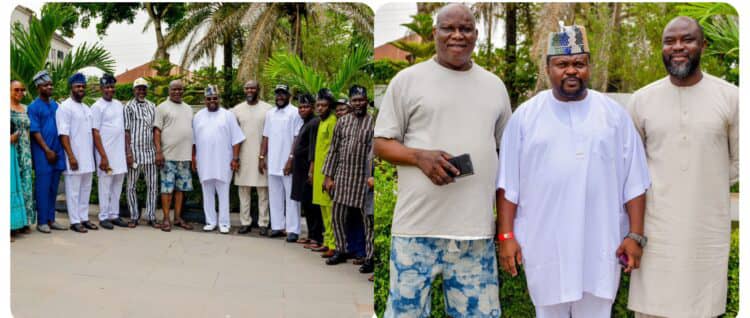
The leading gubernatorial aspirant in Oyo State under the platform of the Peoples Democratic Party (PDP), Ambassador Olufemi Ajadi Oguntoyinbo, on Saturday, April 18, 2026, held a strategic meeting with prominent Ibadan businessman, Chief Akinade Ismail Fijabi, and his son, Hon. Saheed Akinade Fijabi, at the elder statesman’s residence in Ibadan.
Though details of the closed-door meeting were not disclosed to journalists, Ambassador Ajadi described the engagement as a crucial step toward strengthening internal cohesion within the PDP ahead of the 2027 general elections.
Speaking shortly after the meeting, Ajadi stressed the importance of unity among party stakeholders, noting that only a united front would position the PDP for victory in the state.
Our discussion centered on unity, collaboration, and the need to build a formidable structure that will guarantee victory for the PDP in 2027. We must work together as one family if we truly desire progress for Oyo State,” he said.
Ajadi further stressed that consultations with influential stakeholders across the state remain a key component of his political strategy, adding that inclusive dialogue would help consolidate support across party lines and communities.
“This is not about individual ambition; it is about collective responsibility. We are engaging leaders, stakeholders, and grassroots actors to ensure that our party remains strong, focused, and people-oriented,” he added.
Chief Akinade Ismail Fijabi, widely known as the Agba-Akin of Ibadanland, is regarded as a respected figure in business and social circles within the state. His influence, alongside that of his son, Hon. Saheed Akinade Fijabi, underscores the political significance of the meeting.
Hon. Saheed Fijabi, a former two-term member of the House of Representatives representing Ibadan North West/South West under the All Progressives Congress (APC), recently aligned with the PDP and has remained an active player in the state’s political landscape. He notably served as chairman of the Oyo State @50 Committee, inaugurated by Governor Seyi Makinde to oversee the state’s golden jubilee celebrations.
The reports that the political observers believe the meeting may not be unconnected with ongoing realignments and consultations ahead of the 2027 governorship race in Oyo State, where key actors are already positioning and building alliances.
While neither Chief Fijabi nor his son spoke publicly on the outcome of the meeting, sources within the PDP suggest that such high-level engagements are part of broader efforts to reconcile interests and strengthen the party’s electoral prospects.
As the countdown to 2027 continues, Ajadi’s sustained consultations with influential stakeholders signal an intensifying political landscape in Oyo State, where unity, strategy, and grassroots connection are expected to play decisive roles.

Hadjia Akinosun Morhiyam (Omotayenreti): A Rising Star in Islamic Music
By Taofik Afolabi
In a world where talent meets purpose, Hadjia Akinosun Morhiyam, popularly known as Omotayenreti, stands out as a shining light in the Islamic music scene. Young, vibrant, and exceptionally gifted, she is steadily carving a niche for herself with a voice that resonates deeply with the soul.
Blessed with a naturally sonorous and captivating tone, Omotayenreti possesses a rare ability to connect with her audience through heartfelt lyrics and spiritually uplifting melodies. Her music is not just entertainment—it is a message of faith, hope, and devotion, delivered with sincerity and grace.
Despite her youth, she demonstrates remarkable artistry, discipline, and passion that set her apart from many of her peers. Each performance reflects her deep understanding of Islamic values, as she uses her talent as a tool to inspire, educate, and uplift listeners across all walks of life.
Omotayenreti is undoubtedly a star in the making, with all the qualities needed to rise to the top of the Islamic music world. Her dedication, unique sound, and powerful voice position her as one of the most promising female Islamic singers of her generation.
As she continues to grow and evolve, there is no doubt that Hadjia Akinosun Morhiyam will leave an indelible mark on the industry—touching hearts, spreading positivity, and becoming a global ambassador for Islamic music.
Watch out for Omotayenreti, the future is bright, and her voice is just getting started.


society
PDP Guber Aspirant, Ajadi Hails Olubadan, CCII Over Successful Completion Of Ibadan Cultural Festival

PDP Guber Aspirant, Ajadi Hails Olubadan, CCII Over Successful Completion Of Ibadan Cultural Festival
A leading Peoples Democratic Party, (PDP) governorship aspirant in Oyo State, Ambassador Olufemi Ajadi Oguntoyinbo, has commended the peaceful conduct and the success of this year’s edition of Ibadan Cultural Festival, describing it as a pride to all Ibadan Indigenes both at home and abroad.
Ibadan Cultural Week is an annual event and the 2026 edition was held at.the Lekan Salami Stadium Adamasingba Ibadan on Saturday.
The week celebrates the Ibadan’s rich heritage, unity, and pride, which usually features vibrant cultural displays, masquerades, and performances.
Ajadi, in a statement he personally signed on Sunday, lauded the Ibadan Cultural Festival, saying it is best of its kind not only in Ibadanland but in the entire Yoruba nation.
Ajadi said that the well conducted 2026 edition of Ibadan Week shows that the indigenes have deep love for their place of birth.
He said that Ibadan’s legacy of good culture, ambience environment and its status as the political Capital of the South West is a pride to all Indigenes.
He stated that Ibadan’s contribution to the national development and progress cannot be underestimated being the Capital of the old Western Region, which made its political status attracted many firsts to the city, which earn the city of the warriors ‘The Pace Setter.’
According to him, these include the first sky scrapper, Cocoa House, the Western Nigerian Television Services now Nigeria Television Authority (NTA), the Liberty Stadium, now Obafemi Awolowo Stadium, Premier University, University of Ibadan and many others.
He therefore congratulated the indigenes especially the Olubadan of Ibadanland, Oba Rashidi Adewolu (Ladoja Arusa 1), saying his tenure will witness many more developments for the ancient city.
He called on Ibadan descendants to stand firm and ensure that the city continues to witness monumental developments.


- Papyrus Global Partners Talentz MEDIA to Expand Strategic Media and Communications Reach in Africa April 19, 2026
- Ghana: 24-hour economy markets designed to stimulate economic growth - Mahama April 19, 2026
- Ghana: Ignore the mischief, tricycles for the Free Primary Healthcare are not ambulances April 19, 2026
- From Frontline Voices to National Impact: Strengthening Health Systems in The Gambia April 19, 2026
- Seychelles: Upcoming Working Visits of the President, Dr Patrick Herminie, to Russia and Abu Dhabi April 18, 2026
- Seychelles and China sign development cooperation agreement supporting national development priorities April 18, 2026
- Merck Foundation and Kenya First Lady mark a Landmark Moment for Supporting Girl Education with their "Educating Linda" Program at Kenya State House April 17, 2026
- Uganda - Shs46bn Idle Funds for Science Ministry leave Members of Parliament (MPs) furious April 17, 2026
- Ambassador of Belarus D.Krasouski meets State Minister on Agricultural Investment and Input Supply Development Sector of Ethiopia April 17, 2026
- Germany Discusses Strengthening Cooperation and its United Nations (UN) Security Council Bid with Seychelles April 17, 2026
- Papyrus Global Partners Talentz MEDIA to Expand Strategic Media and Communications Reach in Africa April 19, 2026
- Ghana: 24-hour economy markets designed to stimulate economic growth - Mahama April 19, 2026
- Ghana: Ignore the mischief, tricycles for the Free Primary Healthcare are not ambulances April 19, 2026
- From Frontline Voices to National Impact: Strengthening Health Systems in The Gambia April 19, 2026
- Seychelles: Upcoming Working Visits of the President, Dr Patrick Herminie, to Russia and Abu Dhabi April 18, 2026
- Seychelles and China sign development cooperation agreement supporting national development priorities April 18, 2026
- Merck Foundation and Kenya First Lady mark a Landmark Moment for Supporting Girl Education with their "Educating Linda" Program at Kenya State House April 17, 2026
-

 news4 months ago
WHO REALLY OWNS MONIEPOINT? The $290 Million Deal That Sold Nigeria’s Top Fintech to Foreign Interests
-

 celebrity radar - gossips3 months ago
Dr. Chris Okafor Returns with Power and Fire of the Spirit -Mounts Grace Nation Altar with Fresh Anointing and Restoration Grace on February 1, 2026
-

 celebrity radar - gossips6 months ago
End of an Era: Nigeria Mourns Evangelist Dr. Uma Ukpai, 80
-

 celebrity radar - gossips4 months ago
Prophet Kingsley Aitafo Releases 2026 Prophecy: ‘Nigeria Will Rise, but the World Must Prepare for Turbulence’