
society
Decentralizing Policing in Nigeria: The Urgent Case for State-Controlled Law Enforcement


Decentralizing Policing in Nigeria: The Urgent Case for State-Controlled Law Enforcement
By George Omagbemi Sylvester | For Sahara Weekly NG
For decades, Nigeria has endured the consequences of an overstretched, inefficient and highly politicized central policing system. The result? Catastrophic. Rising insecurity, emboldened terrorists, banditry and unchecked violence have ravaged nearly every corner of the country. From the blood-soaked fields of Zamfara to the kidnapping corridors of the South-East and the cult-infested creeks of the Niger Delta, the evidence is irrefutable: centralized policing has failed Nigerians.

Despite its glaring dysfunction, the idea of devolving police powers to state governments remains one of Nigeria’s most controversial debates. Detractors argue that state police may be abused by governors as political thugs, but that’s a distraction from the real question: Do states in Nigeria currently have the financial and structural capacity to run police forces that are accountable, professional and effective; not as political weapons but as agents of justice and peace?
Central Policing: A Colonial Relic Turned Burden

The Nigeria Police Force (NPF), with about 370,000 officers serving over 220 million people, has one of the worst police-to-citizen ratios in the world. According to United Nations standards, a functional ratio is 1 officer to every 450 citizens. Nigeria languishes at roughly 1:600, and that’s before factoring in the lopsided deployment of personnel.
Shockingly, more than 40% of officers are assigned to VIP protection (guarding politicians, their families and business elites) while ordinary Nigerians are left defenceless against armed robbers, kidnappers and insurgents.
This structure is not accidental; it is a colonial legacy. As Professor Jibrin Ibrahim of the Centre for Democracy and Development aptly puts it:
“The Nigerian police are not trained to serve the people. They are trained to protect the state from the people.”
That mindset still dominates. The NPF remains a blunt, top-down instrument of coercion, not community safety. From the excesses of SARS to police complicity during elections, the central police system has consistently shown that it is out of touch and out of control.
The Case for State Policing: Security Must Be Local

Nigeria is a federation on paper but a unitary dictatorship in practice, especially regarding policing. With over 250 ethnic groups, multiple languages and complex regional dynamics, a one-size-fits-all federal police force cannot address the security needs of all states.
Countries like the United States, India, Canada and Germany, all federal in structure, operate decentralized policing models. In the U.S., over 90% of law enforcement is handled by state, county or municipal agencies and not Washington, D.C.
Nigeria has already seen states respond to security failures by creating regional outfits: Amotekun (South-West), Ebube Agu (South-East), Hisbah (North) and others. These are clear expressions of popular no-confidence votes in the federal police. But these outfits remain legally weak and operationally constrained without constitutional backing.
What Nigeria needs now is not just more vigilante groups but a legal and constitutional framework that allows states to form and manage professional, community-embedded police services.
Can States Afford State Police? The Numbers Don’t Lie

One of the most common arguments against state policing is financial incapacity. This argument is misleading and frankly, LAZY.
According to BudgIT and the National Bureau of Statistics (NBS):
Lagos State generates over ₦400 billion annually in Internally Generated Revenue (IGR) which is more than some African countries.
Rivers, Ogun, Delta and Kaduna States each generate over ₦50 billion annually.
25 states generate more than ₦10 billion annually.
So why do we say they “cannot afford” state policing? The issue isn’t capacity, it’s priority and accountability.
If states can build multi-billion-naira airports, mega flyovers and luxurious government houses, surely they can fund training, equipment and welfare for 5,000 to 10,000 well-trained state officers.
In 2024, the federal government allocated over ₦1.3 trillion to police and security services. Yet, most rural communities remain vulnerable. A fraction of that, used efficiently by states, can yield better results. Moreover, states could seek matching grants or partnerships with private and international donors to strengthen their security apparatus.
The Fear of Abuse: A Convenient Excuse
A major objection to state policing is the potential for abuse by state governors. But let’s be clear: the federal police are not immune to abuse. SARS was a federal outfit, yet it became synonymous with torture, extrajudicial killings and robbery.
During the 2023 general elections, federal police were accused of colluding with political parties to suppress opposition and disenfranchise voters. In Lagos, Rivers and Kano, shocking videos of police inaction and collaboration with thugs circulated widely.
The abuse argument is not an argument against decentralization; it is an argument for institutional reform.
A properly crafted State Police Act must include:
Independent oversight commissions
Auditable budgets and public transparency
Cross-border collaboration to prevent jurisdictional loopholes
Community-based recruitment
Strict human rights and use-of-force protocols
National benchmarks for training and ethics
The Federal Government’s role should evolve into providing technical support, forensic labs and inter-state crime coordination not micromanaging state security from Abuja.
Political Bottlenecks: The Elephant in the Room

Why, despite mounting evidence, has Nigeria failed to implement state policing?
Politics.
Centralized policing is a political weapon. Whoever controls the federal police controls elections, opposition suppression and even media narratives. That is why the ruling class is reluctant to devolve power.
In 2021, the National Assembly blocked key constitutional amendments that would have allowed states to establish their own police forces. Why? Because the party in power benefits from centralized force.
As Wole Soyinka warned:
“There’s no way we can continue along this unitarist line. It’s a logical contradiction. You can’t continue with this crude, centralist mindset and expect safety.”
State governors (especially in the South) must form a united front to lobby for this constitutional change. This will require sacrificing political capital, building coalitions across party lines and directly engaging the Nigerian public.
A National Crossroads: Reform or Ruin
Insecurity in Nigeria is no longer an abstract debate, it is an existential crisis. Farmers are abandoning fields. Children cannot go to school. Businesses are closing. Millions live under the daily threat of violence, extortion and death.
We must not allow political cowardice or elite selfishness to deny Nigerians the right to safety.
A decentralized police system is not a luxury; it is a necessity for national survival. Every state should have the constitutional authority, financial framework and legal support to secure its people.
It is time to break free from colonial chains and build a policing system that reflects our federal reality, respects our diversity and protects every Nigerian; rich, middle-class or poor, north, east or south, Muslim, Christian or Pagans.
The time for half-measures has passed.
The time to decentralize is now.




society
Opinion: Doris Ogala should refrain from mentioning Dr. Chris Okafor’s name given his marital status.

Opinion: Doris Ogala should refrain from mentioning Dr. Chris Okafor’s name given his marital status.
…He is not accountable for your predicament; kindly address your case file.
Meta Facebook should take immediate action to sanitize its platform of individuals like Doris who are spreading malicious content, and Doris should be careful when referencing Lagos-based well-known Pastor Dr. Chris Okafor in connection to her faded career
Doris Ogala should be aware that the Generational Prophet is now in a fulfilling marriage with his spouse, and her recent troubles are exclusively attributed to the ancestral curse that has been a persistent issue since her previous union, which her current husband had not yet discovered.

When a grown up woman lack wisdom and good parental upbringing what should be expected from such woman is exactly what Doris Ogala portraying as human beings that fabricated lies against a true man of God and go scout-free so, no one is expected to sympathized with the faded-away actress known as Doris Ogala and she must dearly pay for her evil manipulation as nemesis hunting her back.
It’s prudent for Doris Ogala, or those close to her, to be aware of the potential risks associated with her claims regarding Dr. Chris Okafor, a married man. Without proper justification, such actions could lead to severe repercussions. The challenges she faces might be linked to her actions, and a genuine change might mitigate her situation.
Consider how the spouse of the person you’re criticizing online might feel when you address them so informally. Don’t you think she’s capable of facing you? While she may not respond to provocations, it’s advisable not to provoke further
I am taking this opportunity to advise Doris Ogala to reconsider her actions and prioritize her career by refraining from mentioning the name of a man who does not reciprocate her interest. It would also be prudent for Doris Ogala to reflect on her age and compare it with the age of the person she is so ardently pursuing and to respect the sanctity of his home, which would invite divine blessings and a peaceful life of her own if she dedicates her life to Christ, potentially reversing any adverse fate that may be looming over her.
Sincerely dedicating your life to Christ and amending your behavior can lead to divine mercy and a stable living arrangement; in my considered opinion, reforming one’s ways can yield compassion.
John Linus writes from Onitsha
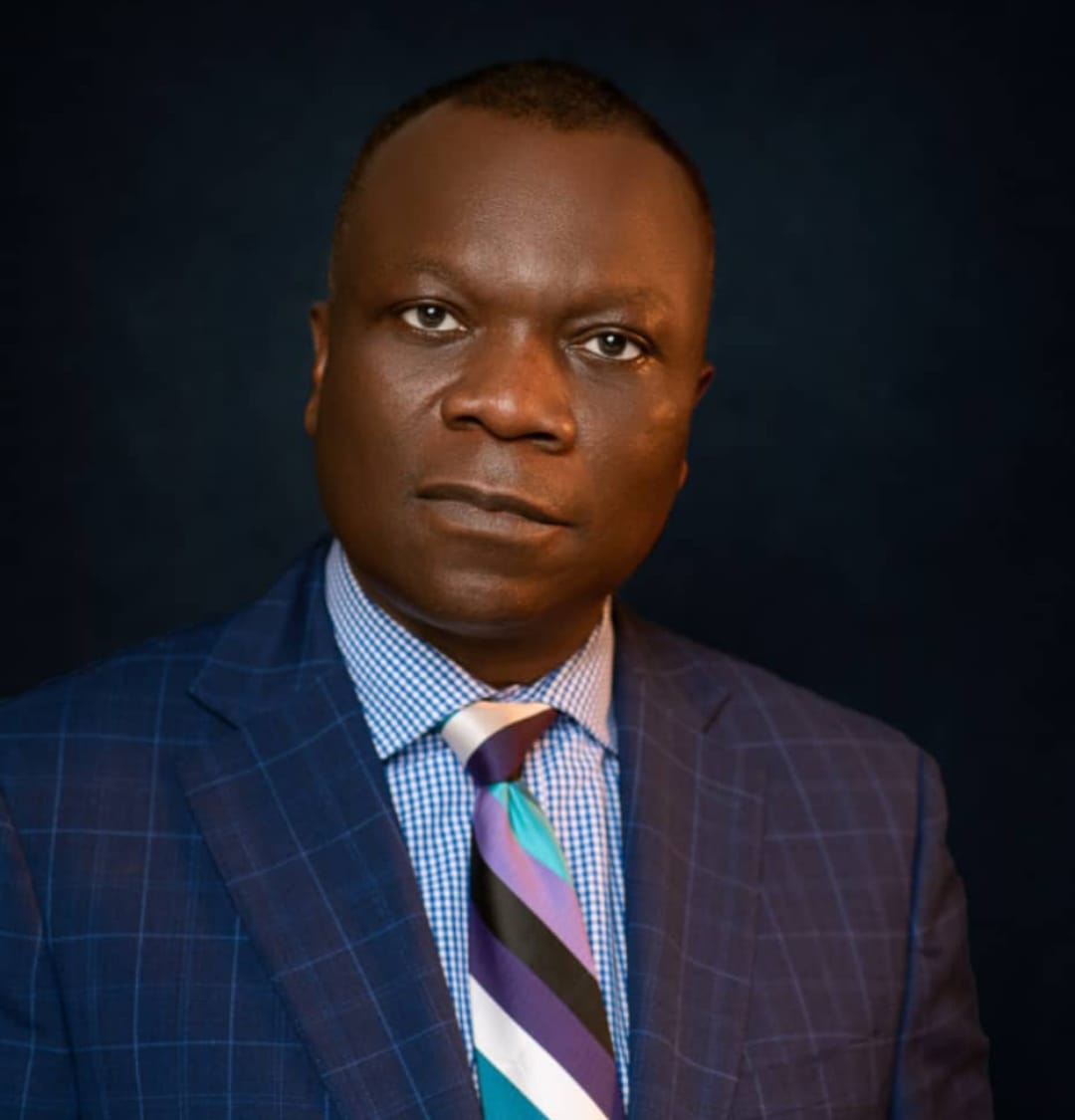
Banwo Identifies Structural Challenges Limiting Opposition
Public commentator Dr. Ope Banwo has identified key structural and strategic challenges limiting the effectiveness of opposition parties in Nigeria.
In a statement released from his base in America, Banwo outlined several factors, including internal divisions, weak grassroots presence, and lack of clear policy alternatives, as major obstacles facing opposition groups.
“One of the biggest issues is fragmentation. There are too many interests and not enough coordination,” he said.
He noted that multiple presidential ambitions within opposition ranks could make it difficult to build consensus around a single candidate.
Banwo also emphasised the importance of grassroots political structures, stating that electoral success in Nigeria depends heavily on local-level organisation.
“Elections are not won on social media. They are won through presence and coordination at the community level,” he explained.
Another concern raised by Banwo is what he described as inconsistent messaging from opposition parties, which he said could make it difficult for voters to identify a clear alternative to the current administration.
“Criticism alone is not enough. Voters want to see a defined direction and credible leadership,” he added.
He further pointed to the challenges of funding and long-term planning, noting that successful political campaigns require sustained investment and discipline.
According to him, defeating an incumbent government demands a high level of coordination, including strong alliances and a unified national strategy.
Banwo, however, suggested that there remains an opportunity for opposition parties to reposition themselves if they address these challenges early.
He stressed the need for compromise among political leaders, urging them to prioritise collective goals over individual ambitions.
“If there is unity, structure, and clarity of purpose, the political landscape can still change,” he said.
He concluded that the strength of any democracy depends on the presence of a viable opposition capable of offering credible alternatives to voters
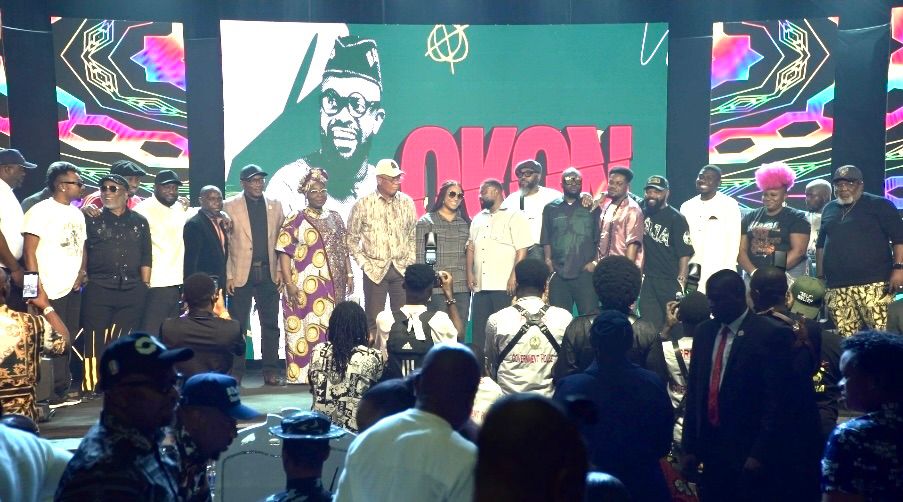
koloman’s: Daddy @pastorumoeno we’re still waiting for your benevolence sir
@igosave @okonlagos @nedu_official @yawnaija @deehumorous @senatorcomedian @akwaibomstategovt


- African Development Bank, The European Stability Mechanism (ESM) sign Memorandum of Understanding to enhance cooperation April 16, 2026
- Seeing the Unseen – How Canon is Protecting East Africa’s Coral Reefs April 16, 2026
- Sintana Listing Signals New Era for Local Ownership in Namibia’s Oil and Gas Sector April 16, 2026
- The crisis in the Middle East could cost Africa 0.2 percent in economic growth in 2026 April 16, 2026
- Namibia International Energy Conference (NIEC) 2026: Namibia Fast-Tracks Oil Law Reform as President Nandi-Ndaitwah Pushes Amendment Bill Ahead of First Oil April 16, 2026
- Africa’s Energy Wealth: Why Good Governance Must Power a Just Transition (By Sola Adebawo) April 16, 2026
- Emirates and Wesgro sign Memorandum of Understanding (MoU) to Stimulate Inbound Tourism to the Western Cape April 16, 2026
- Banco Sol’s Angola Oil & Gas (AOG) 2026 Sponsorship Affirms Drive to Finance Angolan Service Companies April 16, 2026
- Uganda Development Corporation (UDC) to take 82% of Trade ministry budget April 16, 2026
- Merck Foundation marks ‘World Art Day’ through their Film, Song, Media and Fashion Awards 2026 in partnership with Africa’s First Ladies to raise awareness about social & health issues April 15, 2026
- African Development Bank, The European Stability Mechanism (ESM) sign Memorandum of Understanding to enhance cooperation April 16, 2026
- Seeing the Unseen – How Canon is Protecting East Africa’s Coral Reefs April 16, 2026
- Sintana Listing Signals New Era for Local Ownership in Namibia’s Oil and Gas Sector April 16, 2026
- The crisis in the Middle East could cost Africa 0.2 percent in economic growth in 2026 April 16, 2026
- Namibia International Energy Conference (NIEC) 2026: Namibia Fast-Tracks Oil Law Reform as President Nandi-Ndaitwah Pushes Amendment Bill Ahead of First Oil April 16, 2026
- Africa’s Energy Wealth: Why Good Governance Must Power a Just Transition (By Sola Adebawo) April 16, 2026
- Emirates and Wesgro sign Memorandum of Understanding (MoU) to Stimulate Inbound Tourism to the Western Cape April 16, 2026
-

 news4 months ago
WHO REALLY OWNS MONIEPOINT? The $290 Million Deal That Sold Nigeria’s Top Fintech to Foreign Interests
-

 celebrity radar - gossips3 months ago
Dr. Chris Okafor Returns with Power and Fire of the Spirit -Mounts Grace Nation Altar with Fresh Anointing and Restoration Grace on February 1, 2026
-

 celebrity radar - gossips6 months ago
End of an Era: Nigeria Mourns Evangelist Dr. Uma Ukpai, 80
-

 celebrity radar - gossips4 months ago
Prophet Kingsley Aitafo Releases 2026 Prophecy: ‘Nigeria Will Rise, but the World Must Prepare for Turbulence’