
news
Mr. President, This Is Not a Dilapidated Nigeria: An Open Rebuke of Bola Ahmed Tinubu’s Extravagant Governance

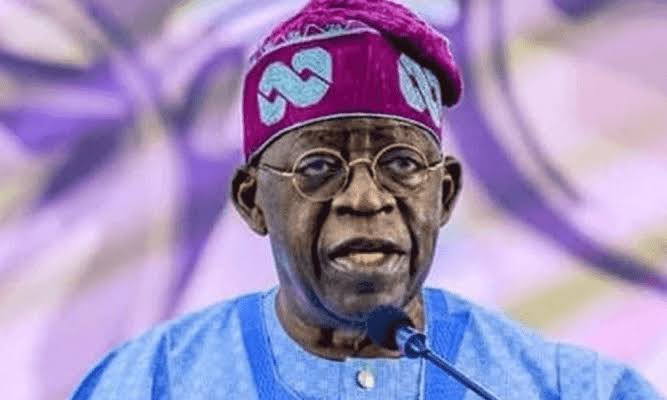
Mr. President, This Is Not a Dilapidated Nigeria: An Open Rebuke of Bola Ahmed Tinubu’s Extravagant Governance.
By George Omagbemi Sylvester | Published by SaharaWeeklyNG.com
When President Bola Ahmed Tinubu declared in 2023 that he inherited a “dilapidated Nigeria” from his predecessor, Muhammadu Buhari, many Nigerians expected an urgent shift toward austerity, fiscal discipline, and a governance style that reflects the dire economic realities facing the nation; but what we have seen under Tinubu’s government is not the leadership of a man burdened with fixing a broken country. Instead, it is the portrait of extravagant ruling elites drowning the nation in reckless spending while millions of citizens are crushed under inflation, joblessness, insecurity, and despair.
It is for this reason that Emir of Kano and former CBN Governor Mohammed Sanusi II bluntly told Tinubu: “You do not claim to have inherited a dilapidated economy and then proceed to spend like a drunken sailor.” His words sting with truth and today, Nigerians demand a response beyond media propaganda and deflection.
Extravagant Spending Amid National Hardship

How can President Tinubu justify allocating ₦21 billion to renovate the Vice President’s residence in Abuja and an international conference center built for ₦240 million in 1991 renovated for ₦39 billion, when public universities are struggling to buy basic laboratory equipment and students sleep on floors? If the country is truly dilapidated, why should National Assembly members be gifted ₦70 billion worth of SUVs at ₦160 million each, in the same year citizens are taxed to death for basic services?
Even more appalling is the ₦5 billion budgeted for vehicles for the office of the First Lady, Senator Oluremi Tinubu (an office that does not exist in the Nigerian Constitution). Is this not fraud with a fancy name?

Then comes the presidential fleet, which received an allocation of ₦5 billion in 2024, while another ₦5 billion was budgeted for a luxury presidential yacht. Let that sink in: a yacht in a nation where nearly 133 million Nigerians live in multidimensional poverty (according to the National Bureau of Statistics, 2022).
Corruption and Nepotism Masked as Governance

How can we take Tinubu’s reform agenda seriously when he awarded a ₦15 trillion Lagos-Calabar Coastal Highway project to Gilbert Chagoury, a Lebanese-Nigerian billionaire and close ally of the President? Let us remember: Chagoury was once deported under former President Obasanjo for economic sabotage. Today, he’s back in favor; not by merit, but by political convenience.
What about the ₦5 billion allocated to the Presidential Tax Reform Committee headed by Taiwo Oyedele? To date, Nigerians have seen no report, no reform outcomes, just photo-ops, and hollow press statements.
And if things are so bad, why appoint the largest cabinet in Nigerian history (48 ministers) when the Oronsaye Report has already recommended the downsizing and merging overlapping ministries and agencies? What happened to that cost-saving reform?
The Subsidy Scam

Tinubu told Nigerians that he removed fuel subsidies to free up funds for development, but where is the money? How much has been saved and how has it been spent? Till now, there’s no transparent accounting.
On the contrary, after removing the subsidy, pump prices skyrocketed from ₦185/liter to over ₦900/liter in many states. Electricity tariffs followed suit. While Nigerians were told to “tighten their belts,” the government loosened theirs with gold-plated policies and unchecked looting.
Governance Without Empathy
Under Tinubu’s watch, education has become a privilege, not a right. Public university lecturers are owed a backlog of salaries from previous ASUU strikes. Students are being priced out of classrooms by inflated fees. And health? Only the wealthy can afford decent hospitals, while public health institutions resemble war zones.
Food prices have doubled. A 50kg bag of rice now costs over ₦75,000. Tomatoes, which used to be ₦300 per basket, now go for ₦10,000 in some markets. Yet, the President and his vice continue globe-trotting at taxpayers’ expense.
According to BudgIT’s 2024 report, the Tinubu government allocated ₦90 billion for Hajj pilgrimage. Is Nigeria now a theocracy? Should religion be more important than education, health, infrastructure, and human capital?
Meanwhile, each Senator reportedly earns ₦21 million monthly, and House of Reps members pocket ₦13.5 million. These increments were passed under Tinubu’s administration without a whisper of concern for the 133 million poor Nigerians.
The Deceptive “Renewed Hope”
Tinubu’s campaign slogan, “Renewed Hope,” has fast become “Renewed Hopelessness.” Nigerians have seen no signs of a turnaround. Instead, what they see is a system where:
Nepotism thrives: critical appointments are handed to cronies, not technocrats.
Security remains elusive: from Zamfara to Plateau, Benue to Borno, killings are rampant.
Inflation is unchecked: currently at 33.69% (May 2025), according to the NBS.
The naira is weak: trading at over ₦1,500/$1 in the parallel market.
Unemployment continues to soar: youth unemployment stands at 53.4%, the highest in West Africa.
IF THESE AREN’T SIGNS OF FAILURE, WHAT ARE?
Words from the Wise
The late Chinua Achebe once warned, “THE TROUBLE with NIGERIA is SIMPLY and SQUARELY a FAILURE of LEADERSHIP. ” That rings louder now than ever. Nobel Laureate Wole Soyinka described our leadership as a “CRIMINAL ENTERPRISE MASQUERADING as GOVERNANCE.”
Even elder statesman Chief Edwin Clark recently declared: “This GOVERNMENT is not BEING SINCERE with NIGERIANS. You don’t REMOVE SUBSIDY and then begin to LIVE a LIFESTYLE of KINGS and EMPERORS.”
In the words of Prof. Pat Utomi: “LEADERSHIP is not about ACQUIRING luxury cars and private jets. It’s about making LIVES BETTER for the AVERAGE CITIZEN.”
Yet, what we see under President Tinubu is the institutionalization of greed. Leaders are getting richer, while citizens can barely survive.
Final Word
Mr. President, the claim that you inherited a “dilapidated economy” is not enough. What matters is what you’ve done with the economy since May 29, 2023. Sadly, the answer is clear: the cost of governance has exploded, the suffering of the people has intensified and trust in public institutions has eroded further.
We demand answers:
Where are the subsidy savings?
Why the jumbo budget for luxuries?
Why ignore the Oronsaye Report?
Why increase electricity tariffs without improved service?y
Why are critical sectors neglected while SUVs are bought in bulk?
Nigerians are watching. The world is watching. This trend must be arrested; urgently. It is time for accountability, not propaganda. If this administration is truly committed to rescuing Nigeria, then start acting like you inherited a failing state and not a treasure chest for elite consumption.
Enough of deception. Enough of waste.
Written by George Omagbemi Sylvester Published by SaharaWeeklyNG.com




By Prince Adeyemi Shonibare
THE CITY, THE CROWN, AND THE CODE OF POWER
Lagos is not merely governed—it is engineered and meticulously organised. A megacity of over 25 million people, the economic heartbeat of Nigeria, and arguably the most strategic sub- national political ecosystem in Africa.
As 2027 approaches, a familiar but profound question echoes across corridors of influence—from Alausa to Marina, from the five Ibile divisions to the 57 LGs and LCDAs, down to wards and grassroots structures:
Who wears the crown?
Yet Lagos does not answer loudly. It whispers.
“Elections may be public, but power in Lagos is negotiated in private and through caucuses—long before ballots are cast.”
HISTORY: FROM PRIMROSE TO JUSTICE FORUM AND MANDATE — THE MAKING OF A POLITICAL MACHINE
Before the consolidation of today’s political order, Lagos politics was shaped by structured caucuses that defined leadership selection.
At the elite level stood the Primrose Group, a discreet but powerful screening body that assessed aspirants in the early 90s and late 1990s. It played a critical role in screening Bola Ahmed Tinubu for the Senate against political heavyweight Odu Onikosi, in what many described as a David-versus-Goliath contest. Tinubu emerged victorious.
Primrose also screened the 1998 governorship aspirants:
Bola Ahmed Tinubu
Wahab Dosunmu
Funsho Williams
The Primrose circle included:
Prince Tajudeen Olusi
Bushura Alebiosu
Mofutau Olatunji Hamzat
Alhaji Kola Oseni
Dapo Sarumi
Oyinlomo Danmole (the youngest member)
Notably, Mofutau Olatunji Hamzat, father of Kadri Obafemi Hamzat, chaired the screening process that produced Tinubu as the 1998 AD governorship candidate.
Alongside Primrose emerged two other critical blocs:
Mandate Group — the grassroots mobilisation engine
Justice Forum — the stabilising and conflict-resolution bloc
Together, they formed a strategic architecture:
Primrose — elite validation
Mandate Group — mass mobilisation
Justice Forum — internal balance and cohesion
From this convergence, Tinubu emerged—not by accident, but by design.
“He was not elected into power—he was processed into leadership.”
FROM BLOCS TO INSTITUTION: THE GAC EVOLUTION
Over time, these blocs evolved into a more formal structure—the Governor’s Advisory Council (GAC).
President Bola Ahmed Tinubu did not create the GAC; he strengthened, harmonised, and institutionalised these legacy blocs into a central decision-making body.
“GAC is the institutional memory of Lagos politics.”
THE DOCTRINE OF SUCCESSION IN LAGOS
Lagos has developed a predictable pattern of leadership transition:
Babatunde Fashola — technocratic consolidation
Akinwunmi Ambode — performance with political rupture
Babajide Sanwo-Olu — consensus restoration
Each transition reinforces a central doctrine:
“The primary is the battlefield. The structure is the judge. Consensus is the verdict.”
And more fundamentally:
“The candidate will always come from within.”
THE INVISIBLE CABINET: GAC AS POWER SOVEREIGN
At the centre of Lagos political architecture sits the Governor’s Advisory Council (GAC)—a body that does far more than advice.
Chairman:
Prince Tajudeen Olusi
Key Members Include:
Babatunde Fashola
Femi Gbajabiamila
Mudashiru Obasa
Adeyemi Ikuforiji
Senator Anthony Adefuye
Tokunbo Abiru,
Musiliu Obanikoro
Oluremi Tinubu
Sarah Sosan
Idiat Adebule
Femi Pedro
James Faleke
Adeseye Ogunlewe
Demola Seriki
Adejoke Adefulire
Kadri Obafemi Hamzat.
Other Influential Figures Within the Structure:
Henry Ajomale
Ganiyu Solomon
Rabiu Oluwa
Muraina Taiwo
Abdul-Wahab Ogundele
Sunmi Odesanya
Kaoli Olusanya.
In addition, almost all former governors, deputy governors, senators, and selected members of the House of Representatives and Primrose, mandate Group and justice forum are embedded within or aligned to the GAC structure.
“At critical moments, the GAC does not merely advise—it decides.”
CRACKS, CONFLICTS AND SYSTEM DISCIPLINE
The political history of Lagos has consistently demonstrated one principle: discipline within the system is non-negotiable.
The experience of Akinwunmi Ambode remains instructive.
“Performance alone is not enough—alignment with the structure is critical.”
In Lagos:
“No individual is bigger than the system.”
THE ASPIRANTS: POWER, PEDIGREE AND POSITIONING
The 2027 governorship race is no longer speculative—it is crystallising into a layered contest of insiders, technocrats, institutional loyalists, and strategic actors. Beneath the surface, resumes are being weighed as much as relationships; pedigree is being measured alongside perception.
Key Aspirants Include:
Kadri Obafemi Hamzat — Deputy Governor; perhaps the most deeply embedded institutional actor in the race. A technocrat with academic depth and governance continuity credentials. Notably headhunted from the United States banking sector by Bola Ahmed Tinubu, his return to public service reflects longstanding trust. His father, Mofutau Olatunji Hamzat, chaired the screening process that produced Tinubu in 1998—placing him at the intersection of legacy and continuity.
Femi Gbajabiamila — Chief of Staff to the President; former Speaker of the House of Representatives. A consummate legislator with vast national reach, elite networks, and deep understanding of federal power dynamics. Bridges Lagos structure with Abuja influence seamlessly.
Tokunbo Abiru — Senator; former Managing Director in the banking sector. Represents fiscal discipline, financial system credibility, and investor reassurance. A technocrat-politician hybrid with strong appeal to the private sector and global investors.
Tokunbo Wahab — Commissioner for Environment. A bold regulator and reformist voice, known for enforcing urban order and environmental compliance. Projects decisiveness, discipline, and administrative courage.
Mudashiru Obasa — Long-serving Speaker of the Lagos State House of Assembly. A master of grassroots politics with deep control of legislative structures and ward-level mobilisation. Represents structure from the ground up.
Olajide Adediran (Jandor) — Media entrepreneur and political mobiliser. Built his base through grassroots engagement and alternative political messaging. Represents outsider energy attempting to penetrate a deeply structured system.
Akinwunmi Ambode — Former governor; technocrat with a proven governance record. His tenure still resonates in infrastructure and public sector efficiency. Carries a redemption narrative, but must reconcile history with structure.
Mojisola Lasbat Meranda — Legislative figure and symbol of gender inclusion. Represents institutional evolution and the expanding role of women in Lagos power architecture.
Kayode Egbetokun (speculative) — Security chief; represents discipline, order, and enforcement capability. A potential “stability candidate” in uncertain times.
Samuel Ajose (speculative) — Former Head of Service; experienced bureaucratic strategist with deep knowledge of Lagos governance machinery. Represents administrative continuity and institutional memory.
Tayo Ayinde (speculative) — Long-serving Chief of Staff in Lagos; a quiet but powerful insider with proximity to executive decision-making and operational governance.
“Some are building alliances. Others are building acceptance. A few are building inevitability.”
THE REAL TEST: CRITERIA FOR THE APC TICKET
Beyond ambition, the Lagos APC operates a strict, unwritten checklist for candidate selection:
Proven Loyalty to the Party
A party defector stands little chance.
Product of the System
The candidate must come from within.
Alignment with the Lagos Master Plan
Continuity over disruption.
Investor Confidence
Lagos cannot risk economic instability.
Political Discipline and Temperament
Arrogance and lawlessness are disqualifiers.
Ibile Balance and Broad Acceptability
Zonal sensitivity remains critical.
Ability to Work with the Structure
Collaboration over confrontation.
Presidential Trust Factor
National confidence is key—but not absolute.
Electoral Value and Grassroots Reach
Structure must meet the street.
Importantly, this will not be a solo decision.
A former, widely respected governor and former minister is expected to play a critical role as the eyes and ears of the President in determining the most suitable candidate.
A reliable source revealed that the President held a private meeting with this former governor and minister in Lagos during the Easter break—signaling early alignment consultations ahead of 2027.
UNDERCURRENTS: SILENT MOVES AND STRATEGIC HEDGING
Quiet political movements are already unfolding beneath the surface.
There are strong rumours that:
One top aspirant is in talks with the ADC to fly their fly.
Another is exploring alignment with the Accord Party.
“Those who sense resistance within the structure begin to shop for alternatives.”
Beyond party alignments, another layer of activity is emerging.
It is widely whispered in political circles that:
Some bank accounts of PR operatives, journalists, and lobbyists have begun to quietly interface with key GAC members.
Certain aspirants are already patronising columnists to shape favourable narratives.
Billions of naira have allegedly been earmarked for lobbying, influence, and perception management.
A reliable source suggests that the real contest has already begun—not on the ballot, but in boardrooms, private residences, and media corridors and newsrooms.
Yet history cautions:
“Breaking away from the Lagos APC structure rarely guarantees victory.”
THE CALCULUS OF POWER
Five decisive variables will ultimately determine the outcome:
GAC consensus
Presidential trust (shared, not unilateral)
Party loyalty
Economic confidence
Public acceptability
Notably, the private sector remains a critical stakeholder. Lagos, as Africa’s commercial nerve centre, cannot afford political uncertainty that threatens capital flow. Investors—local and international—are watching closely.
The international community is equally attentive. Lagos is no ordinary state—it is a golden economic enclave, a city of compounding value and strategic global interest.
The Presidency too cannot be indifferent—notwithstanding that Lagos is its political base. Stability in Lagos is stability in the broader national equation.
THE CROWN AND THE SYSTEM
Lagos does not gamble with leadership,it engineers and groomed it.
No emergency leader in Lagos.
From Primrose…
To Mandate…
To Justice Forum…
To GAC…
The philosophy remains unchanged:
“Power in Lagos is not taken. It is processed.”
As 2027 approaches, one truth stands firm:
The crown will not go to the loudest.
It will not go to the most desperate.
It will not go to ambition alone.
It will go to the most acceptable aspirant.
And in Lagos:
“Acceptability is not declared,it is decided by all the variables and joint gatekeepers before the general public cast their votes.”
Politics, in the end, remains a temple of many tendencies—
the good, the bad, the pretenders, and the presumed righteous.
All contending for one crown.

More than ₦3 billion was targeted, but about ₦677 million reached the culprits, with recovery and prosecutions underway, reflecting how banks are responding to more sophisticated fraud risks.
Nigeria’s expanding digital banking sector is facing increasingly sophisticated fraud attempts, as financial institutions adapt to faster transactions and broader online services.
A recent case involving First City Monument Bank (FCMB), linked to fraudulent activity detected in December 2025, has drawn attention to how banks are responding to such incidents, with a focus on limiting exposure, recovering funds and working with law enforcement.
According to findings referenced in proceedings before the Lagos State Special Offences Court, the incident involved unauthorised transactions tied to a digital product. Early reports erroneously suggested more than ₦3 billion was lost. Subsequent clarification shows that over ₦3 billion was targeted, ₦2.4 billion was blocked and recovered, while ₦677 million got into the possession of the culprits. This outcome reflects the bank’s cyber security and monitoring capabilities, as well as improved collaboration among regulated financial institutions and with law enforcement agencies. Several suspects and beneficiaries have been apprehended, while recovery and prosecution efforts are ongoing, led by the Economic and Financial Crimes Commission (EFCC).
Proceedings at the Lagos State Special Offences Court have resulted in convictions, including that of a repeat offender, with restitution orders issued. Related matters are also being handled at the Federal High Court in Lagos, where additional suspects are being tried in connection with the scheme. This process is aimed at ensuring that bad actors are identified and permanently blacklisted from the financial system.
Authorities say recovery efforts are continuing as additional funds are traced.
Analysts note that the pace of legal action reflects closer coordination between financial institutions and enforcement agencies in addressing cyber-related financial crime.
The case comes as banks contend with more complex fraud methods, including social engineering and automated exploitation of system processes.
As digital products and platforms expand, so too does the risk associated with cyber-crime and related fraud.
“The scale of digital banking means risks are evolving alongside the systems,” said a Lagos-based financial analyst. “Institutions are now judged by how they manage these events.”
Observers say the sector is moving toward a stronger focus on response and recovery, rather than prevention alone.
This includes improving monitoring capabilities, strengthening transaction controls and enhancing collaboration with regulators and law enforcement. The FCMB case, with limited exposure relative to the amount targeted and ongoing recovery, reflects that shift.
For customers, the primary concern is the safety of their funds. In this case, there has been no indication of losses affecting customer deposits. Maintaining that level of protection remains central to sustaining trust in the financial system.
Nigeria’s financial sector continues to grow, supported by digital innovation and expanding access to banking services.
However, analysts say fraud attempts are likely to persist as systems become more complex and interconnected.
They say institutions will increasingly be judged not only on their ability to prevent incidents, but on how effectively they respond and recover when they occur.
news
Ex-APC Deputy Guber flag bearer, Joshua MacIver backs Tinubu, express fears over implosion in Bayelsa APC
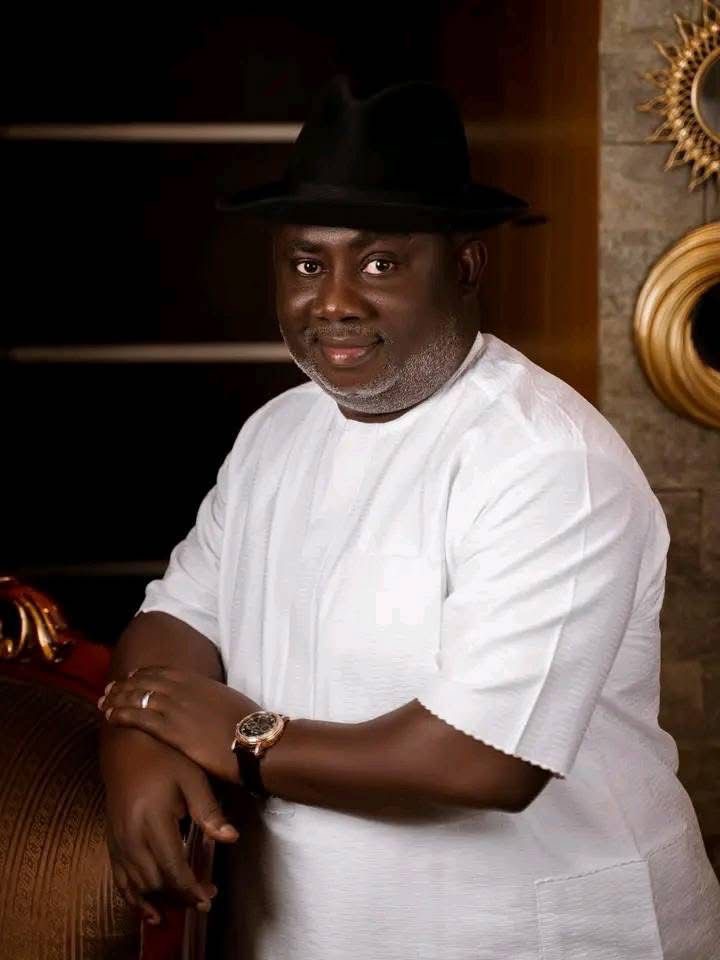
….congratulates new State Party Chairman, Warman Ogoriba
APC Deputy Governorship Candidate in the 2023 general elections in Bayelsa State, Great Joshua MacIver has declared his total commitment to the re-election of President Bola Tinubu come 2027, declaring that the Tinubu re-election project is non-negotiable.
Great Joshua MacIver, in his statement titled ” BAYELSA APC CONGRESSES: GOING FORWARD, A CALL TO LOOK INWARDS” and made available to newsmen in Yenagoa, warned APC leaders in the state to look Inward and take note of certain factors which may hinder or cut short our victory.
According to Great Joshua MacIver, such noticeable pitfalls include the imbalance in the united front being put up by the State Governor,Senator Douye Diri among various political blocs in the state.
In the statement issued at the weekend. Great Joshua MacIver stated that “First, before His Excellency, Senator Douye Diri, joined the APC in the state, there were clearly two political blocs that made up the party, with the approximate population ratios of the blocs standing at 95% to 5%.”
“After the entrance of His Excellency, Senator Douye Diri, ONLY THE SMALLER BLOC IS BEING CARRIED ALONG IN THE AFFAIRS OF THE PARTY, leaving the greater percentage to their fate, and this situation has the potential to build anger and dissatisfaction in our dear party.”
” The consequence of this has been the high level defection we have witnessed in the party recently and we believe more may likely follow, if we do not put our house in order.”
” If we do not pull together as a party, we may witness a situation where we will lose key stakeholders, especially after the State and National Assembly Primaries as well the Gubernatorial Primaries.”
“Finally, while it is very clear that we are the party to beat in the 2027 elections and that our loyalty to Mr. President IS NON-NEGOTIABLE, we must make haste to say that we cannot afford to create situations or loopholes in our unity which will be exploited by other political interests in the state. We cannot afford to under-rate anyone.”
“Our core interest remains the re-election of Mr. President, a project to which we have committed our all. We also pledge our total loyalty to the party as we have no alternative to the APC. However, our concern is that we must, as a party, look inwards and ensure that we do not create loopholes that can impede our common goal.”
Great Joshua MacIver, however congratulated the newly elected State Executives of the APC in Bayelsà State led by Hon. Warman Ogoriba, saying their emergence is welcomed at this critical time in our national history.


- African Development Bank, The European Stability Mechanism (ESM) sign Memorandum of Understanding to enhance cooperation April 16, 2026
- Seeing the Unseen – How Canon is Protecting East Africa’s Coral Reefs April 16, 2026
- Sintana Listing Signals New Era for Local Ownership in Namibia’s Oil and Gas Sector April 16, 2026
- The crisis in the Middle East could cost Africa 0.2 percent in economic growth in 2026 April 16, 2026
- Namibia International Energy Conference (NIEC) 2026: Namibia Fast-Tracks Oil Law Reform as President Nandi-Ndaitwah Pushes Amendment Bill Ahead of First Oil April 16, 2026
- Africa’s Energy Wealth: Why Good Governance Must Power a Just Transition (By Sola Adebawo) April 16, 2026
- Emirates and Wesgro sign Memorandum of Understanding (MoU) to Stimulate Inbound Tourism to the Western Cape April 16, 2026
- Banco Sol’s Angola Oil & Gas (AOG) 2026 Sponsorship Affirms Drive to Finance Angolan Service Companies April 16, 2026
- Uganda Development Corporation (UDC) to take 82% of Trade ministry budget April 16, 2026
- Merck Foundation marks ‘World Art Day’ through their Film, Song, Media and Fashion Awards 2026 in partnership with Africa’s First Ladies to raise awareness about social & health issues April 15, 2026
- African Development Bank, The European Stability Mechanism (ESM) sign Memorandum of Understanding to enhance cooperation April 16, 2026
- Seeing the Unseen – How Canon is Protecting East Africa’s Coral Reefs April 16, 2026
- Sintana Listing Signals New Era for Local Ownership in Namibia’s Oil and Gas Sector April 16, 2026
- The crisis in the Middle East could cost Africa 0.2 percent in economic growth in 2026 April 16, 2026
- Namibia International Energy Conference (NIEC) 2026: Namibia Fast-Tracks Oil Law Reform as President Nandi-Ndaitwah Pushes Amendment Bill Ahead of First Oil April 16, 2026
- Africa’s Energy Wealth: Why Good Governance Must Power a Just Transition (By Sola Adebawo) April 16, 2026
- Emirates and Wesgro sign Memorandum of Understanding (MoU) to Stimulate Inbound Tourism to the Western Cape April 16, 2026
-

 news4 months ago
WHO REALLY OWNS MONIEPOINT? The $290 Million Deal That Sold Nigeria’s Top Fintech to Foreign Interests
-

 celebrity radar - gossips3 months ago
Dr. Chris Okafor Returns with Power and Fire of the Spirit -Mounts Grace Nation Altar with Fresh Anointing and Restoration Grace on February 1, 2026
-

 celebrity radar - gossips6 months ago
End of an Era: Nigeria Mourns Evangelist Dr. Uma Ukpai, 80
-

 celebrity radar - gossips4 months ago
Prophet Kingsley Aitafo Releases 2026 Prophecy: ‘Nigeria Will Rise, but the World Must Prepare for Turbulence’